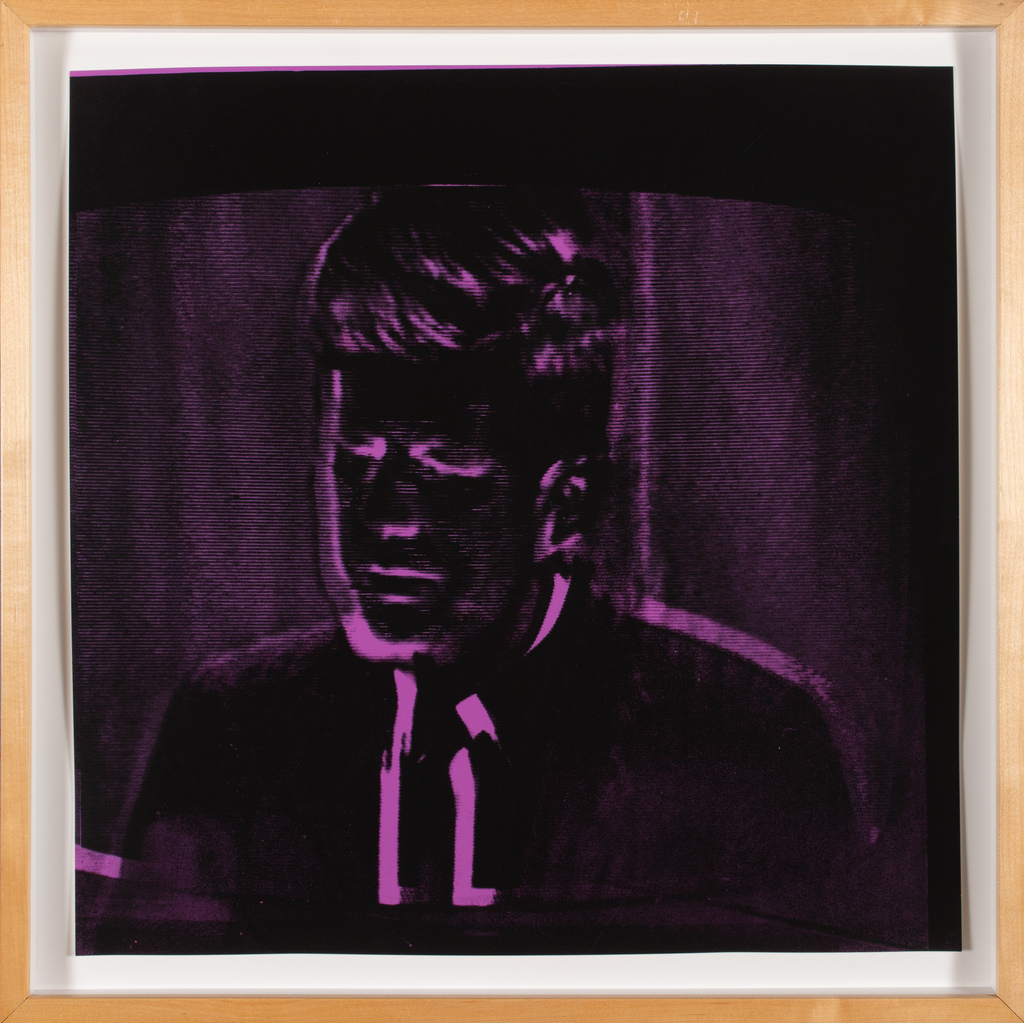
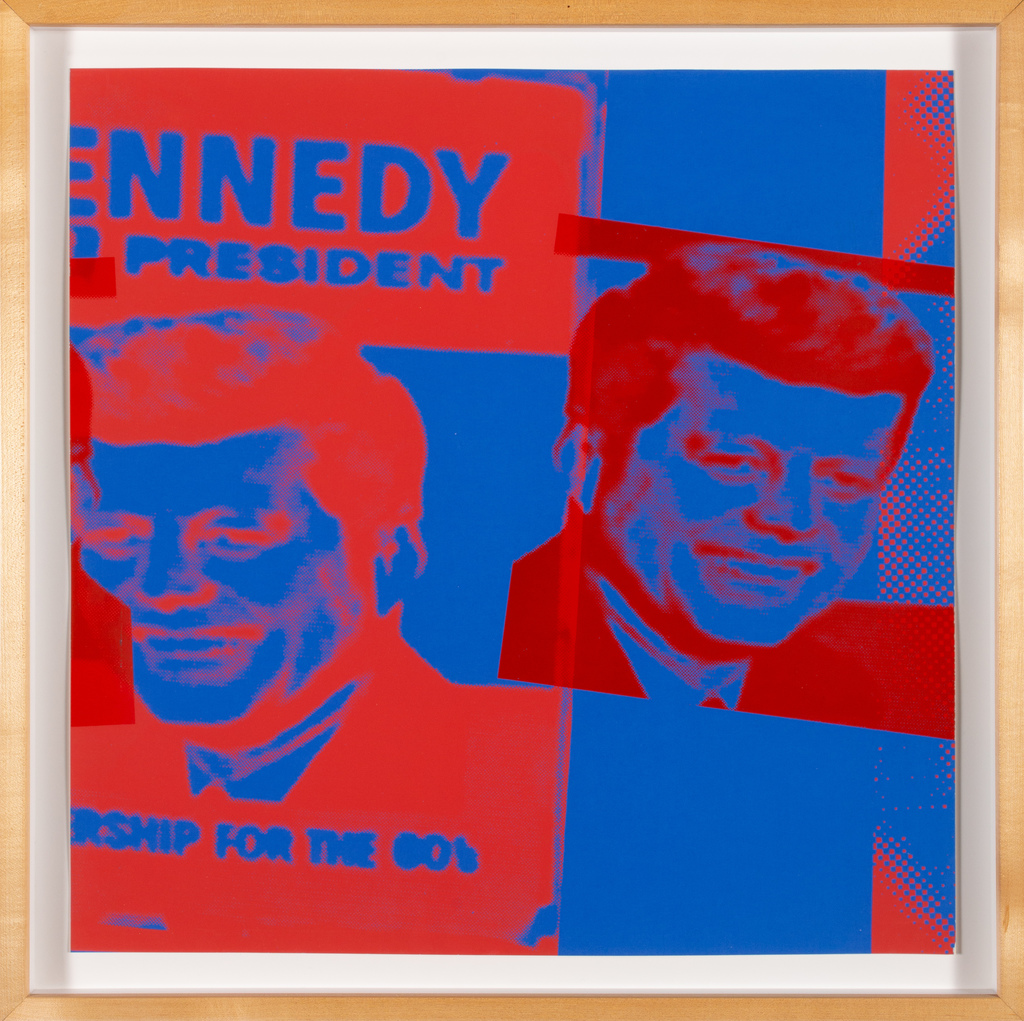
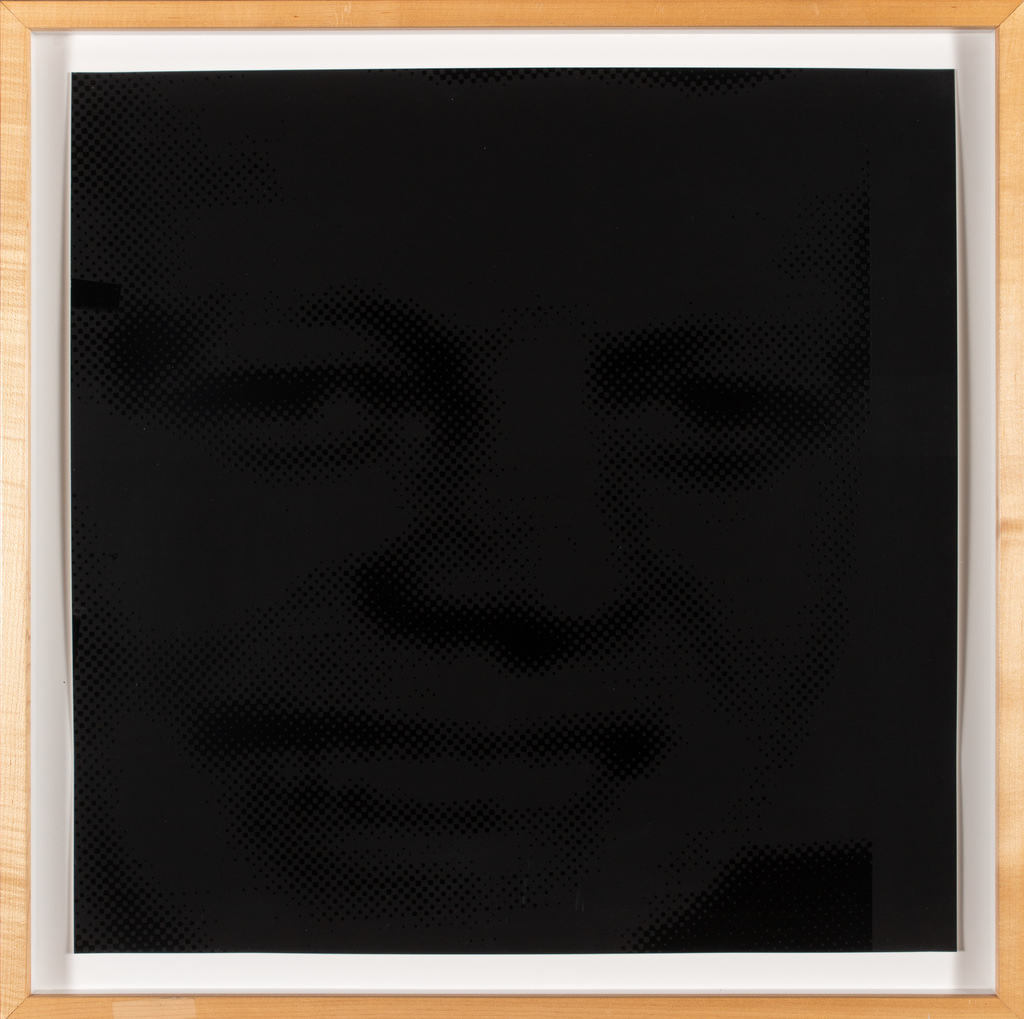
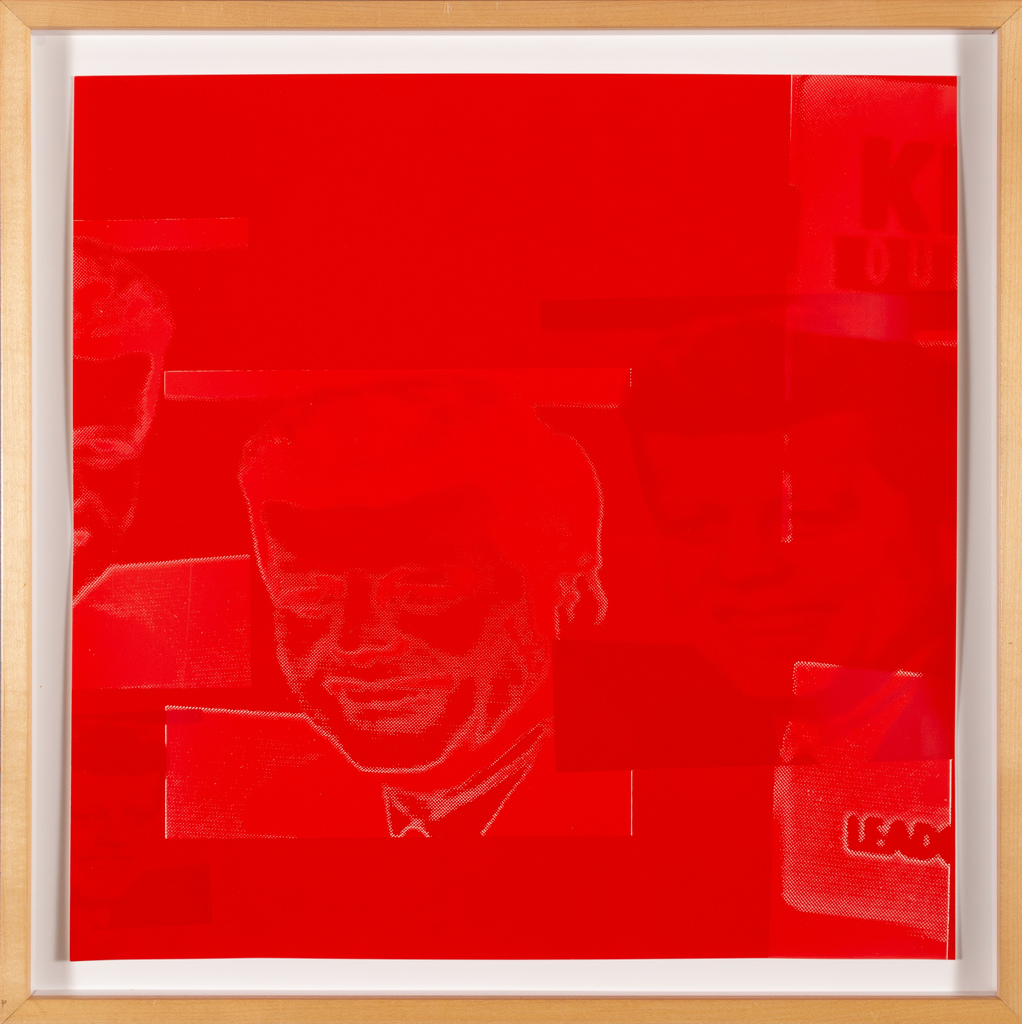
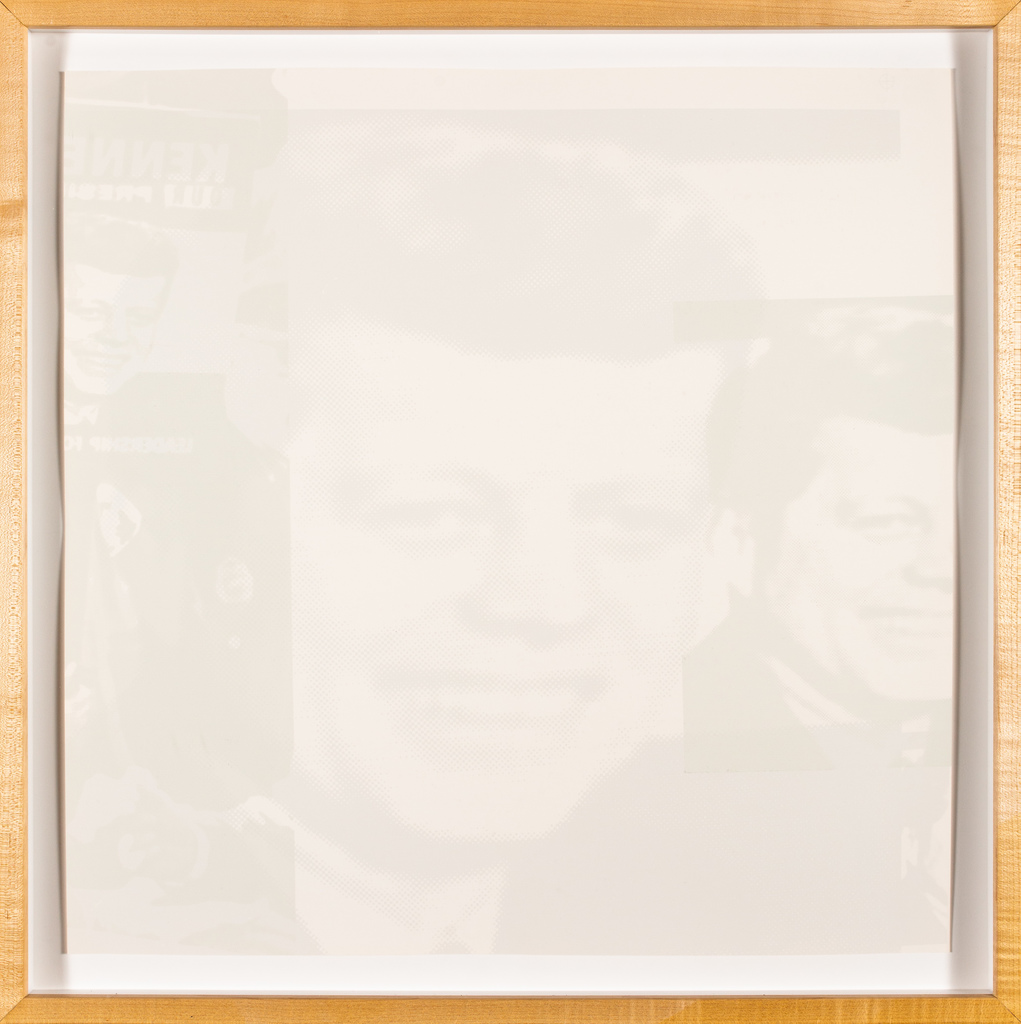
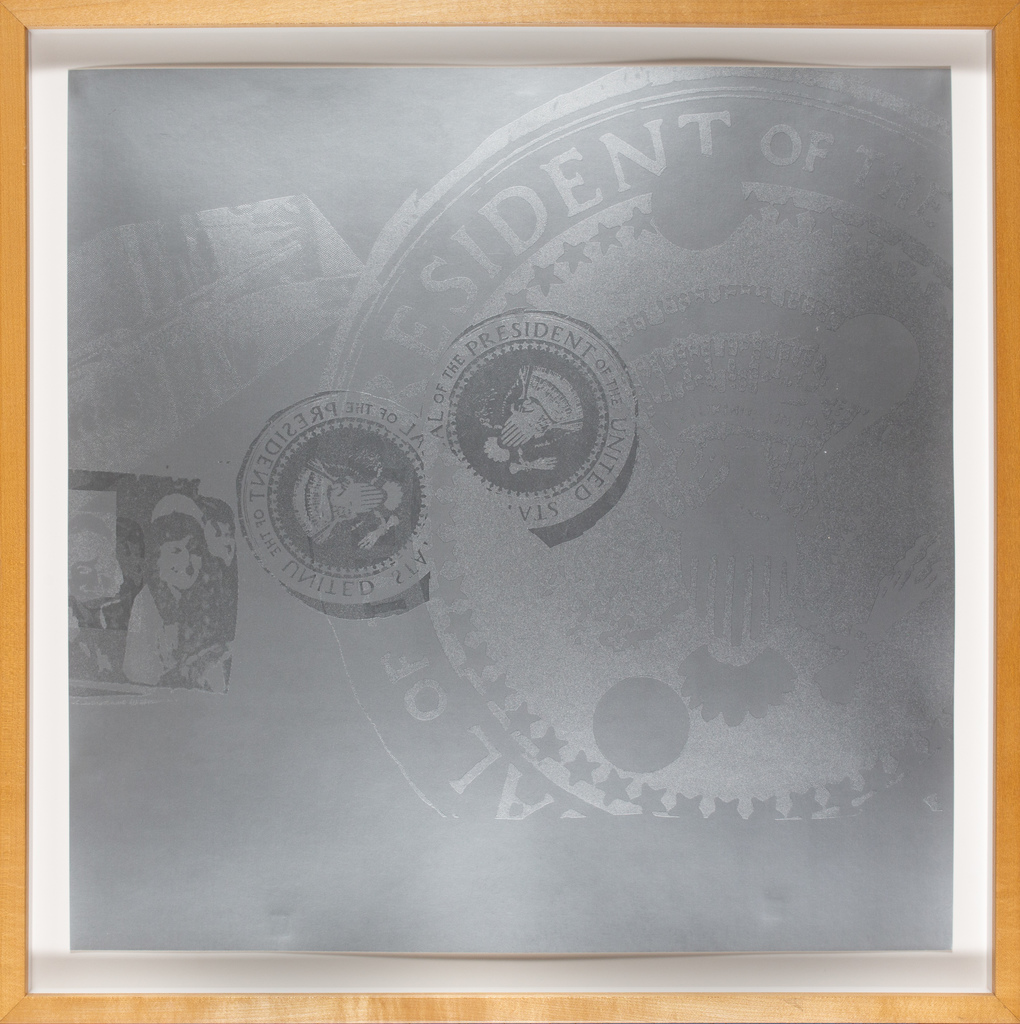
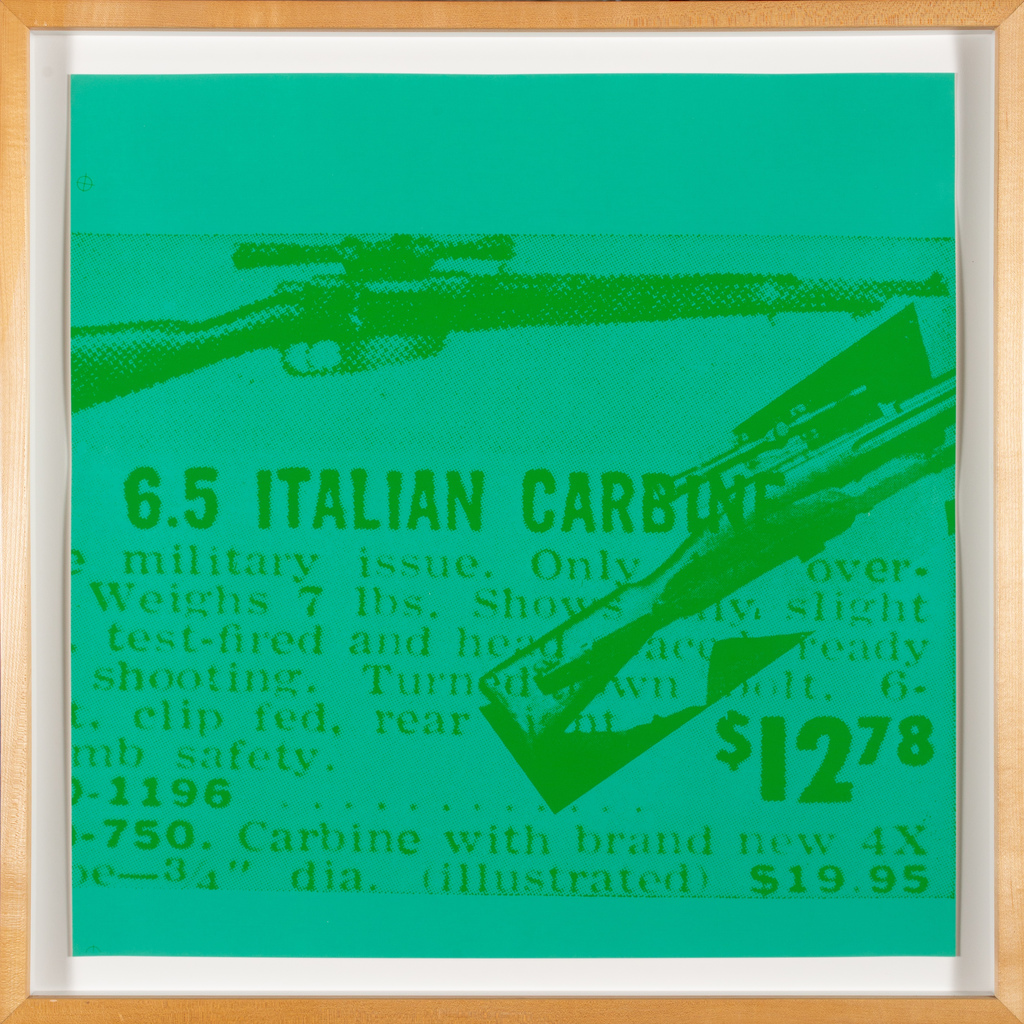
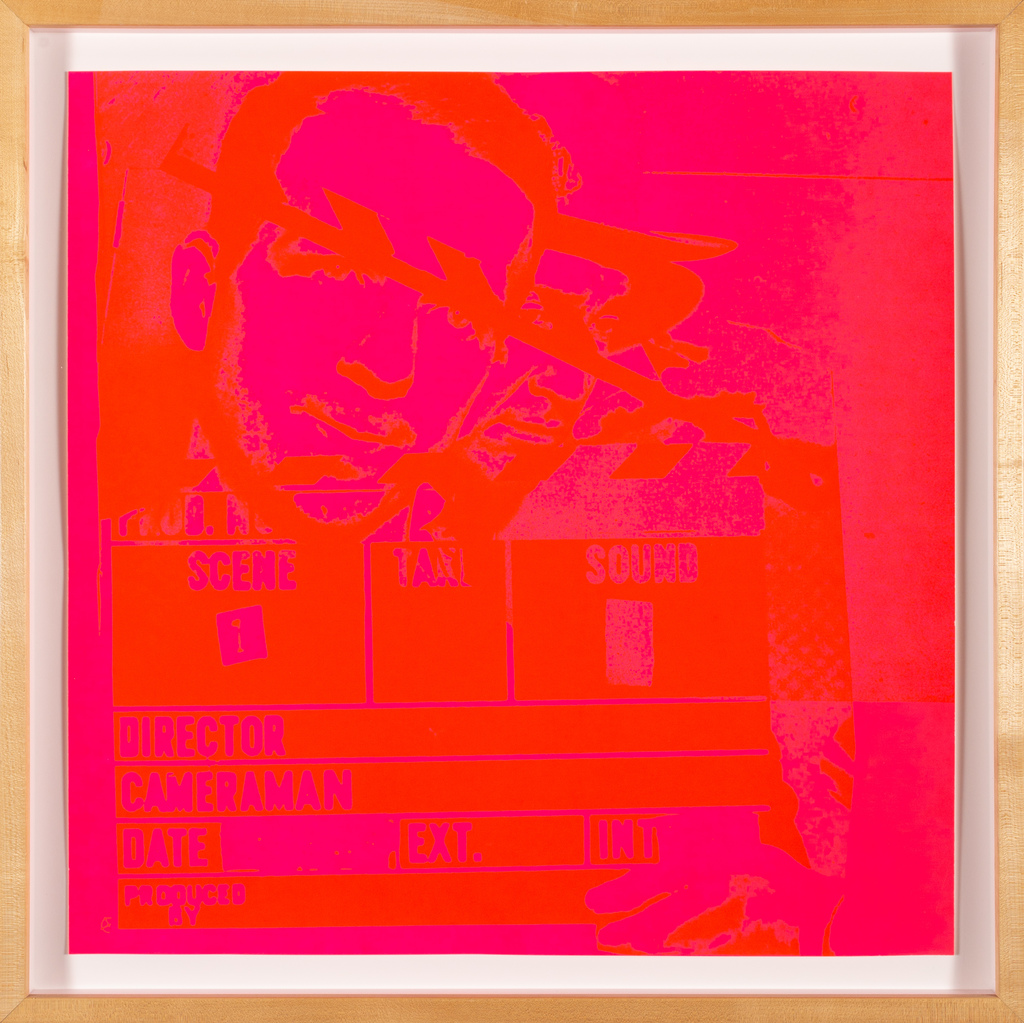
Flash - November 22, 1963
1968
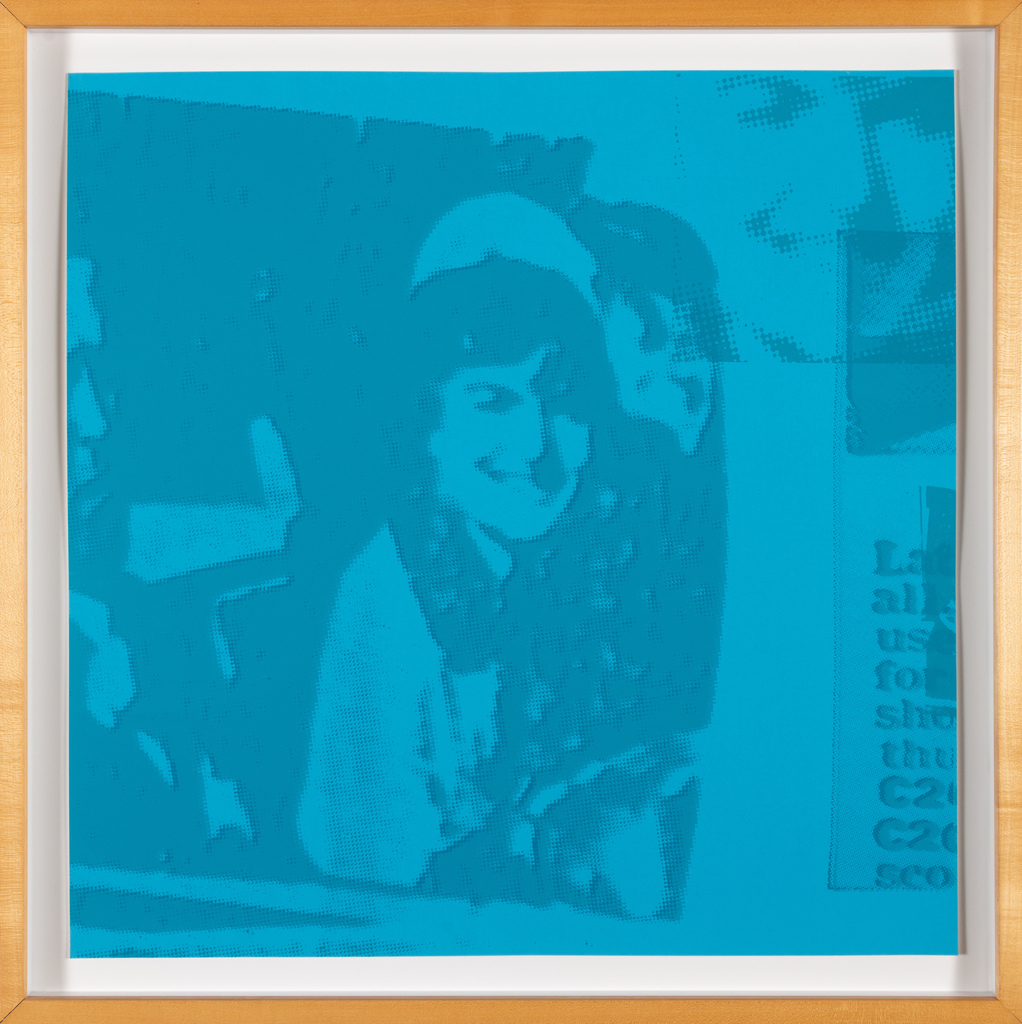
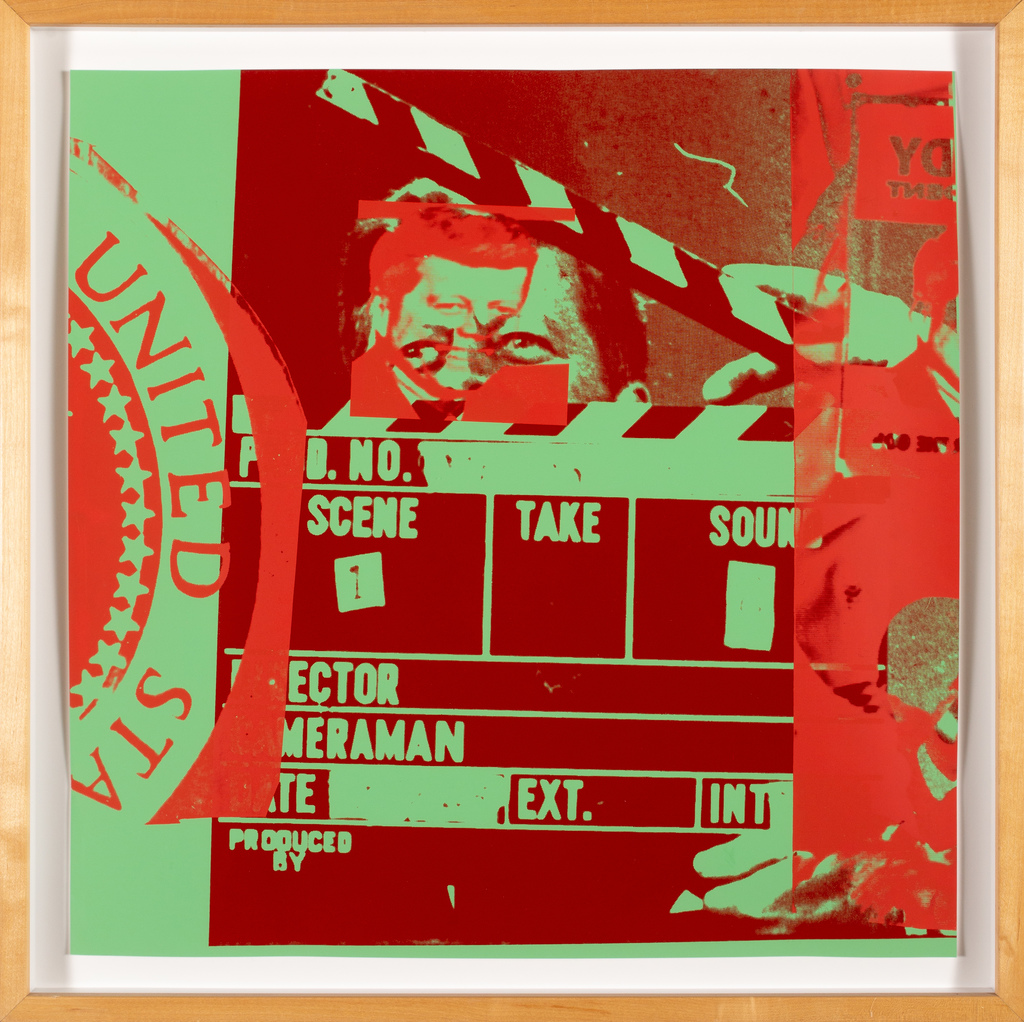
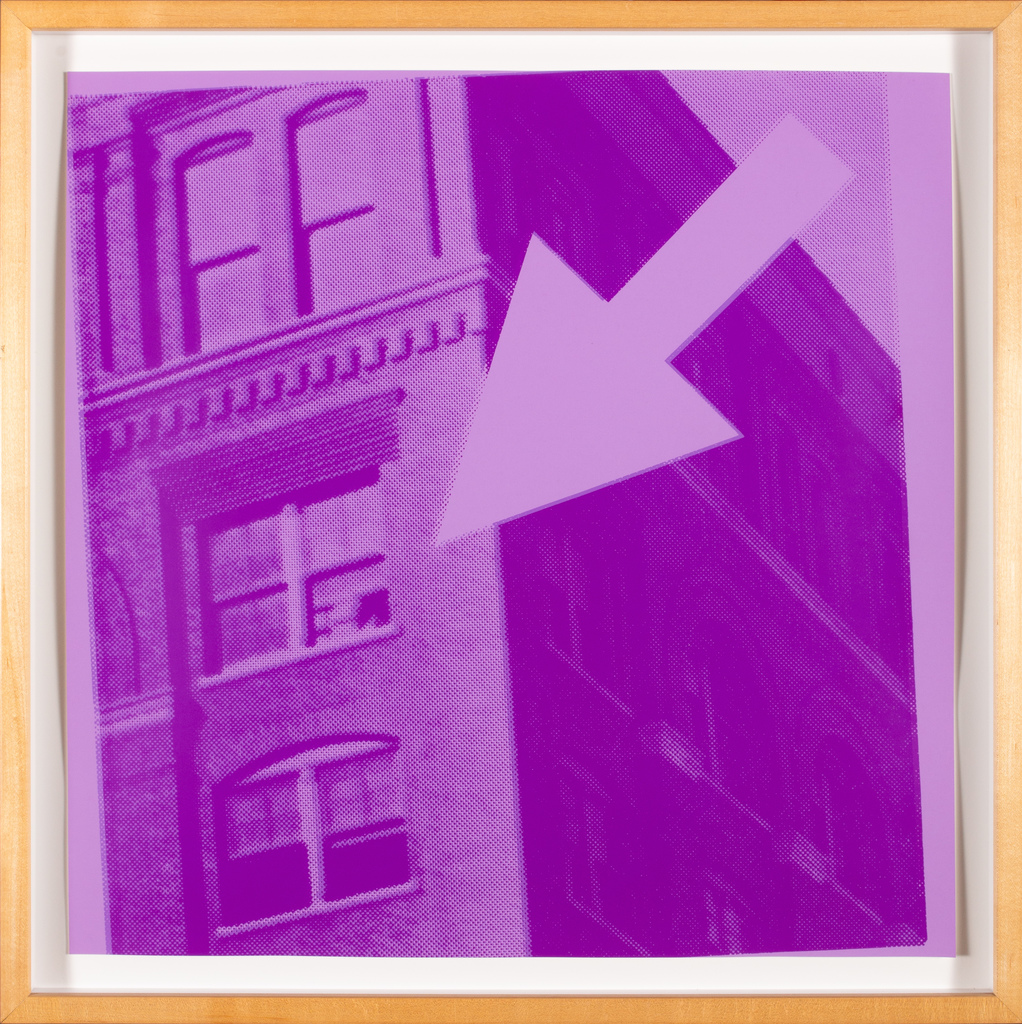
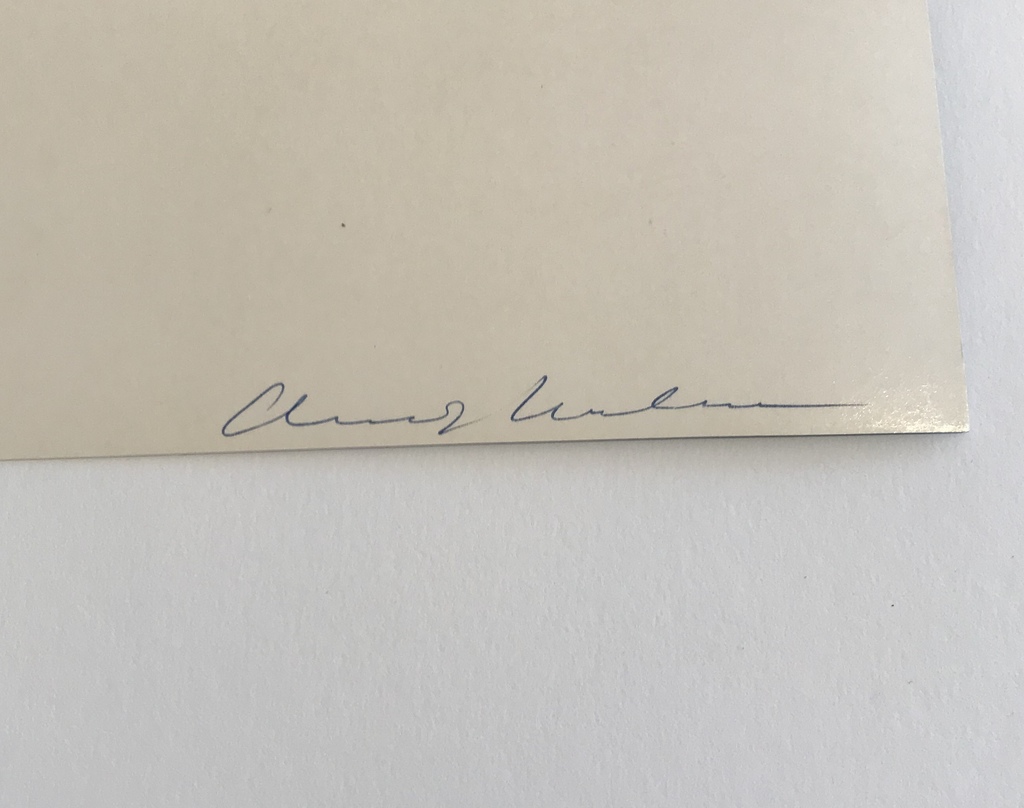
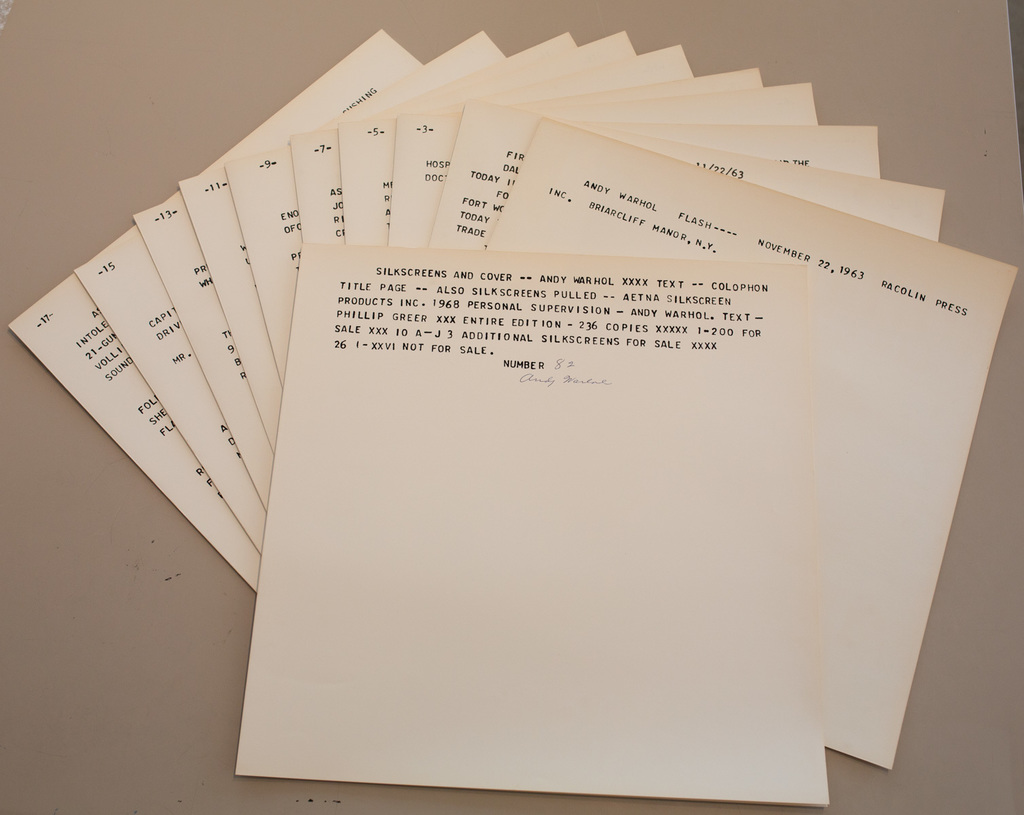
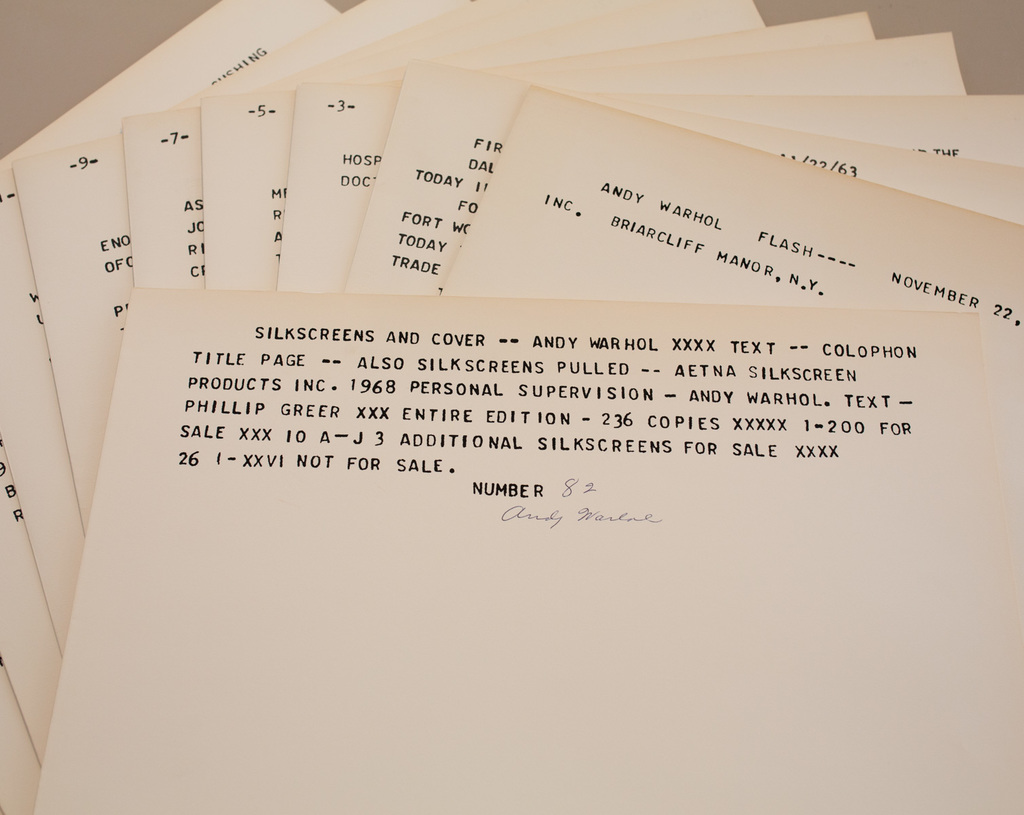
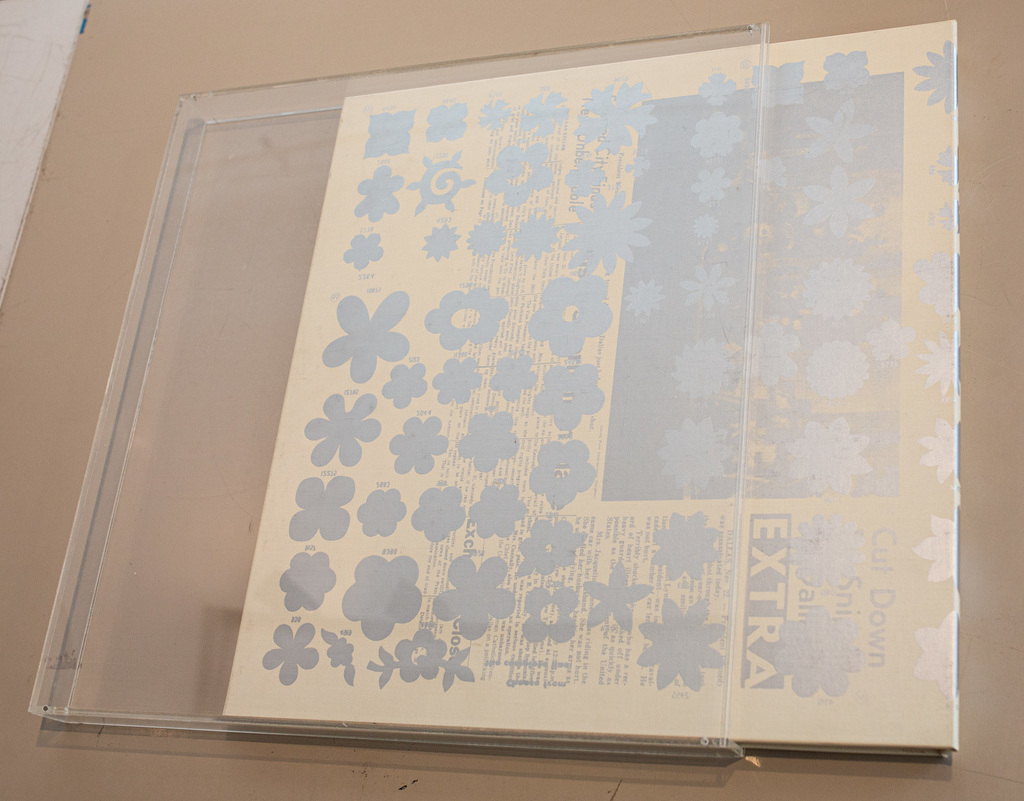
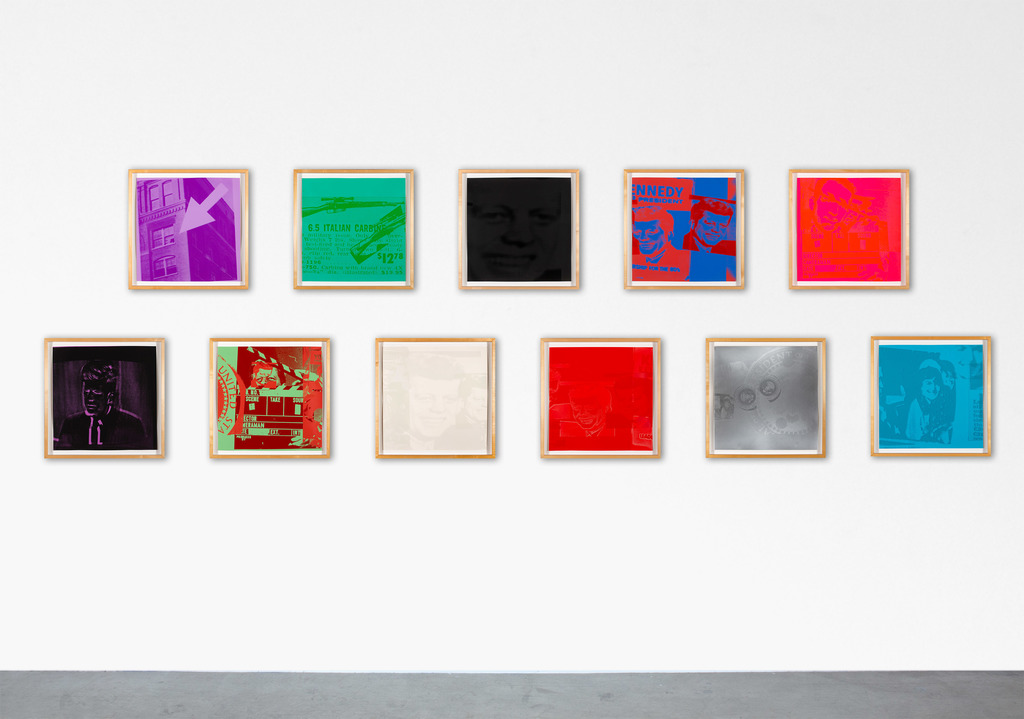
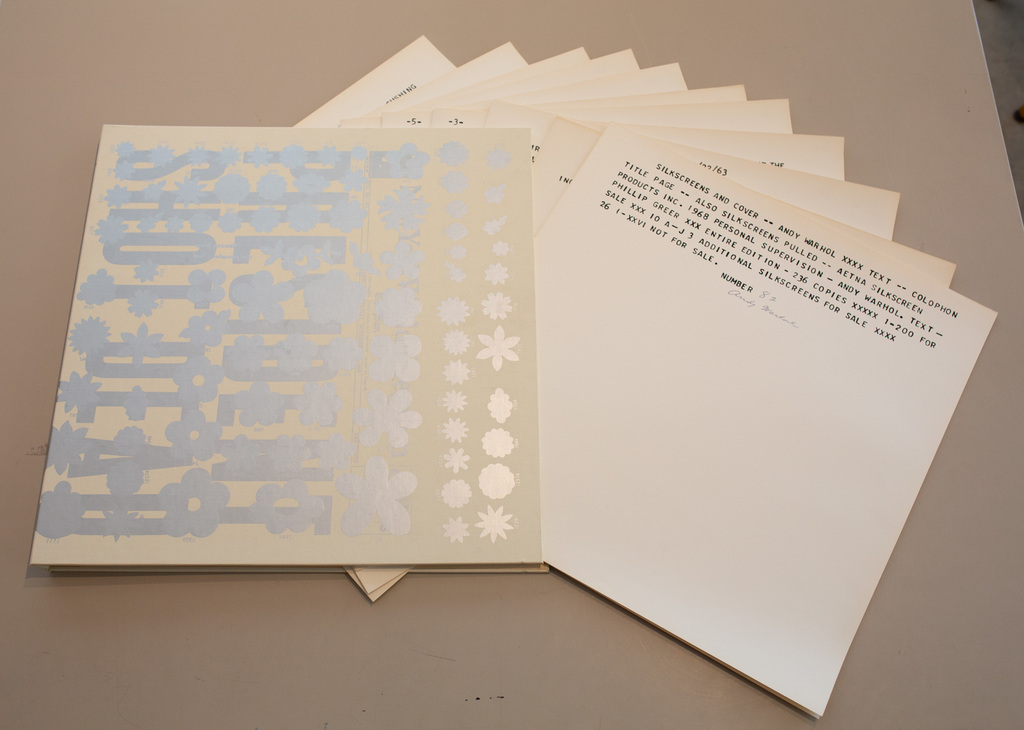
Conceived five years after the shots rang out in Dealey Plaza, Flash, November 22, 1963 reconstructs one of the twentieth century's most traumatic days not through elegiac portraiture but through the raw, fragmented language of breaking news. Warhol sourced his imagery directly from Associated Press newswire bulletins, the blurred, high-contrast photographs and terse dispatches that first carried word of the assassination to a stunned public, and translated them into eleven screenprints whose lurid, shifting colorways feel simultaneously urgent and strangely detached. The result is less a memorial than a meditation on how catastrophe enters consciousness: through repetition, through the flattening effect of mass media, through images stripped of context and saturated with color until meaning itself becomes unstable. Housed in its distinctive Plexiglass box and accompanied by a colophon and period texts, the portfolio functions as a kind of artifact of collective shock as much as a work of art. Printed by Aetna Silkscreen Products, Inc. and published by Racolin Press in Briarcliff Manor, New York, Flash was issued in an edition of 200 signed examples, a deliberately limited run for a work whose subject saturated every medium of its era. The tension between scarcity and ubiquity is entirely characteristic of Warhol's practice, and here it carries particular weight: the assassination of John F. Kennedy was perhaps the first event in American life to be experienced primarily as an image, and Warhol understood that more clearly than almost anyone. By working from wire photographs rather than the iconic frames already hardened into cultural memory, he returned to something rawer and more provisional, closer to the actual texture of that Friday afternoon. Catalogued F&S II.32, 42, Flash occupies a singular position within Warhol's engagement with American tragedy, sitting alongside the Death and Disaster series as among his most searching and formally rigorous work. For collectors, the portfolio represents a rare alignment of historical gravity and market significance: complete signed examples in their original Plexiglass enclosure are seldom encountered, and the work's thematic resonance, the media loop, the image as event, the aestheticization of public grief, has only deepened with time. It is, in the fullest sense, both a primary document of 1968 and an enduring statement about how modern America processes loss.
- Medium
- Portfolio of 11 screenprints, colophon and texts; in Plexiglass box
- Overall
- Signed
- Yes
- List Price
- $120,000
- Spotted At
- Gallery · Track 16 Gallery




Artists in conversation
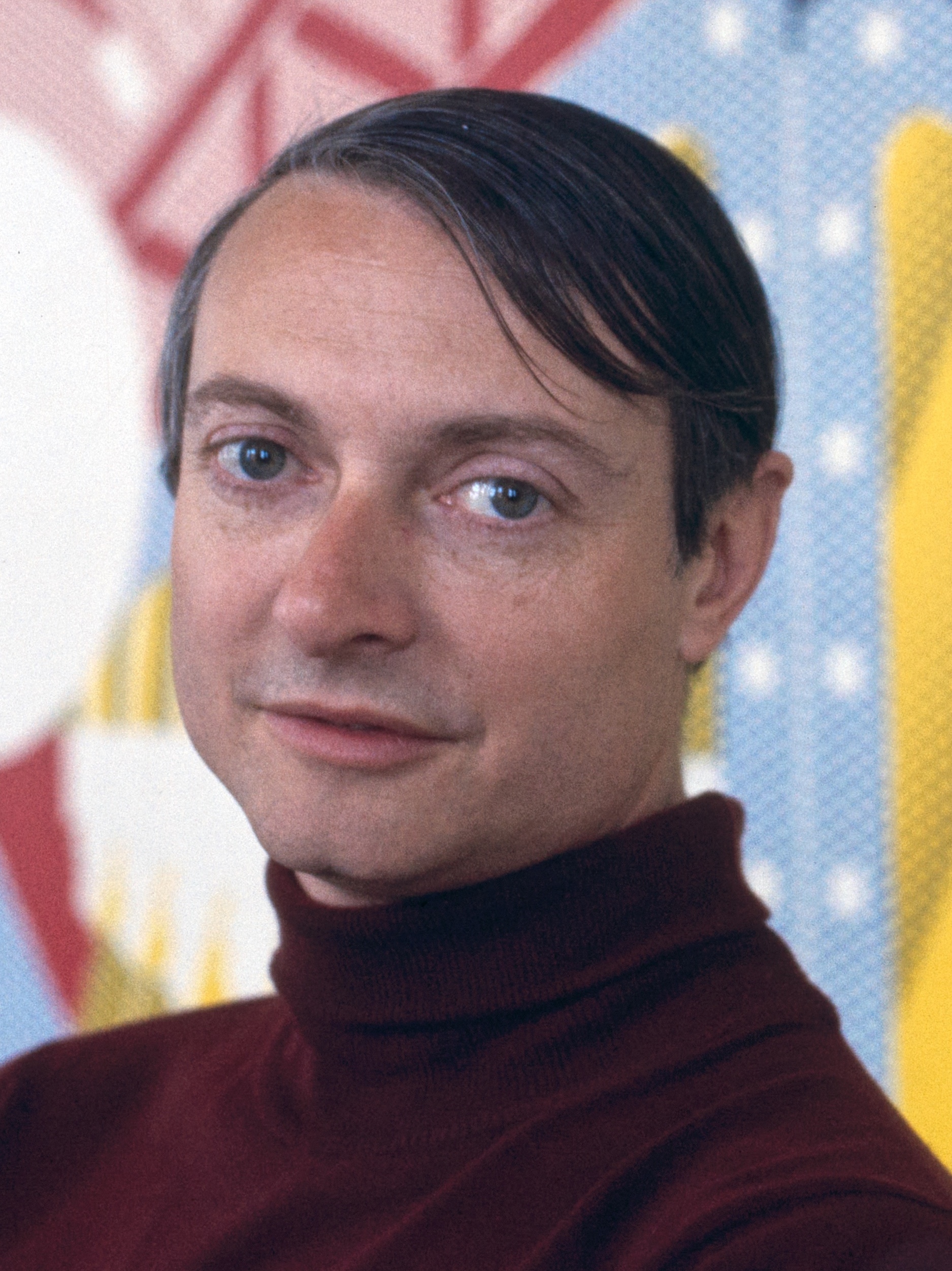
Roy Lichtenstein
American · b. 1923
Lichtenstein shared Warhol's commitment to Pop Art by transforming mass media imagery and consumer culture into high art. Both artists elevated commercial and popular sources through bold graphic techniques that questioned the boundary between fine art and everyday imagery.

Richard Hamilton
British · b. 1922
Hamilton pioneered the use of consumer advertising and celebrity imagery as artistic subject matter in ways that directly parallel Warhol's preoccupations. His collage work incorporating mass media products and glossy commercial aesthetics makes him an essential discovery for any Warhol collector.

Takashi Murakami
Japanese · b. 1962
Murakami mirrors Warhol's practice of blending fine art with commercial production, celebrity culture, and serialized imagery through his Superflat movement. Like Warhol he operates studios that function as factories and collaborates with luxury brands, deliberately dissolving the line between art and commerce.
Start the Discussion
Request access to join the discussion