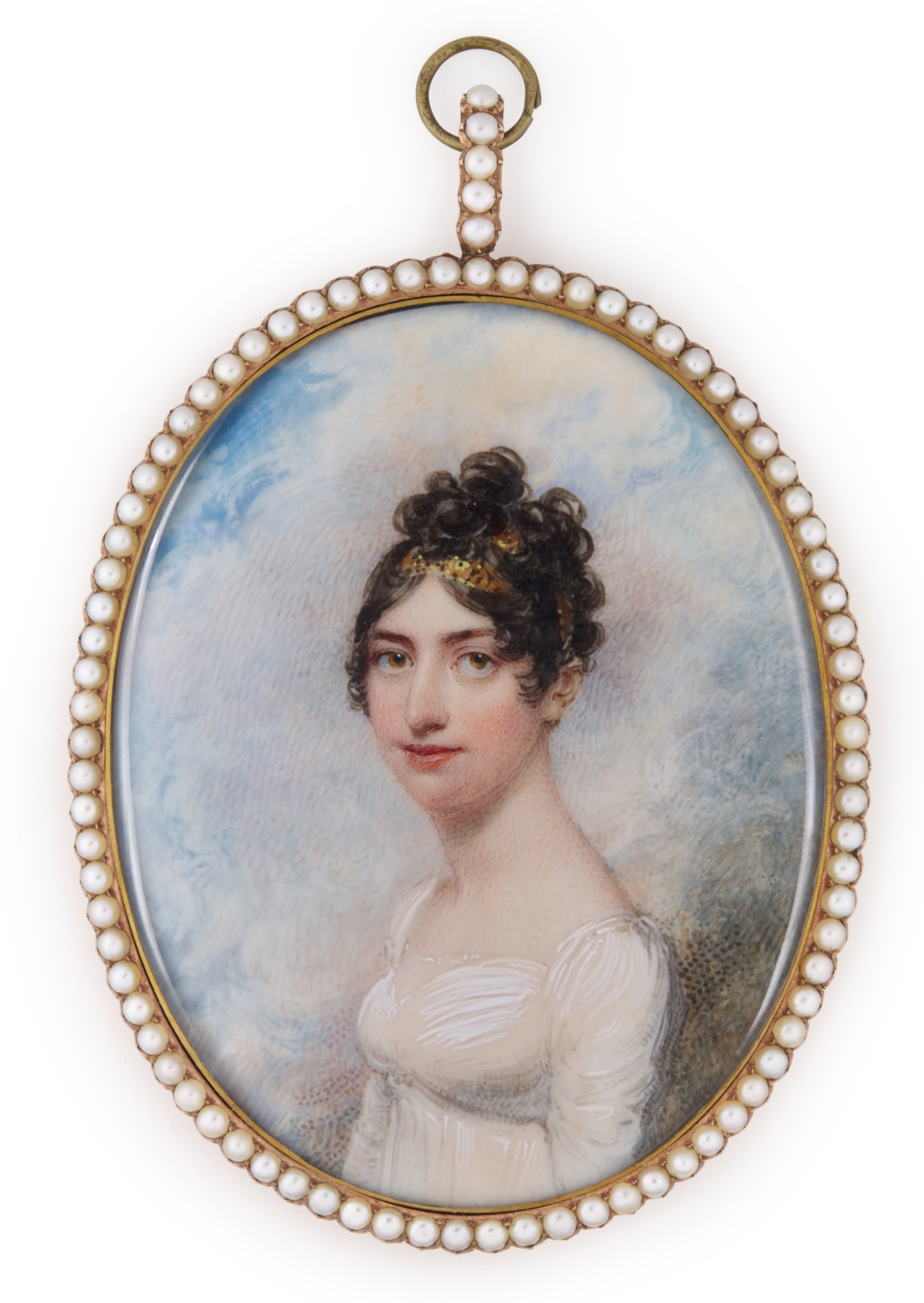
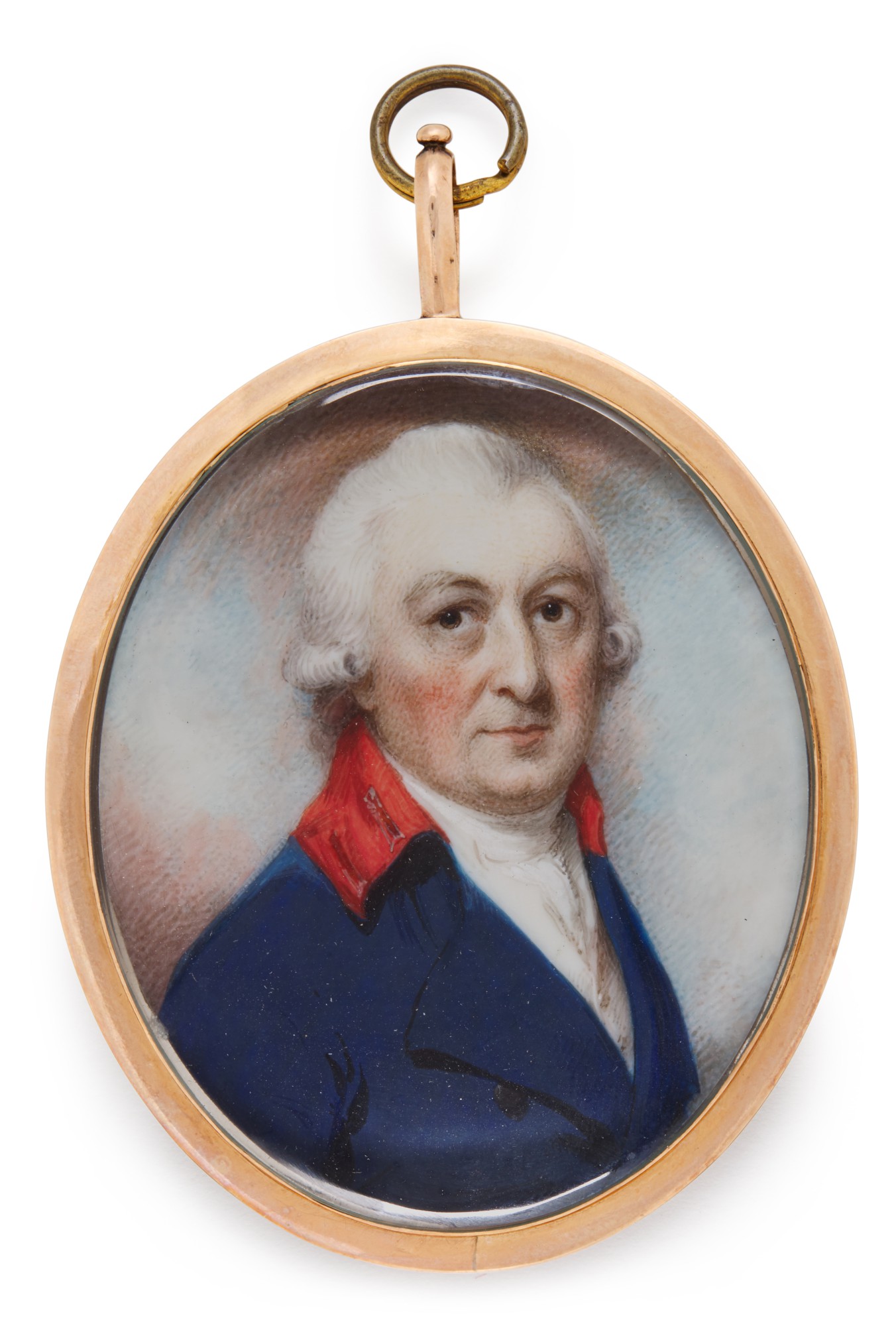
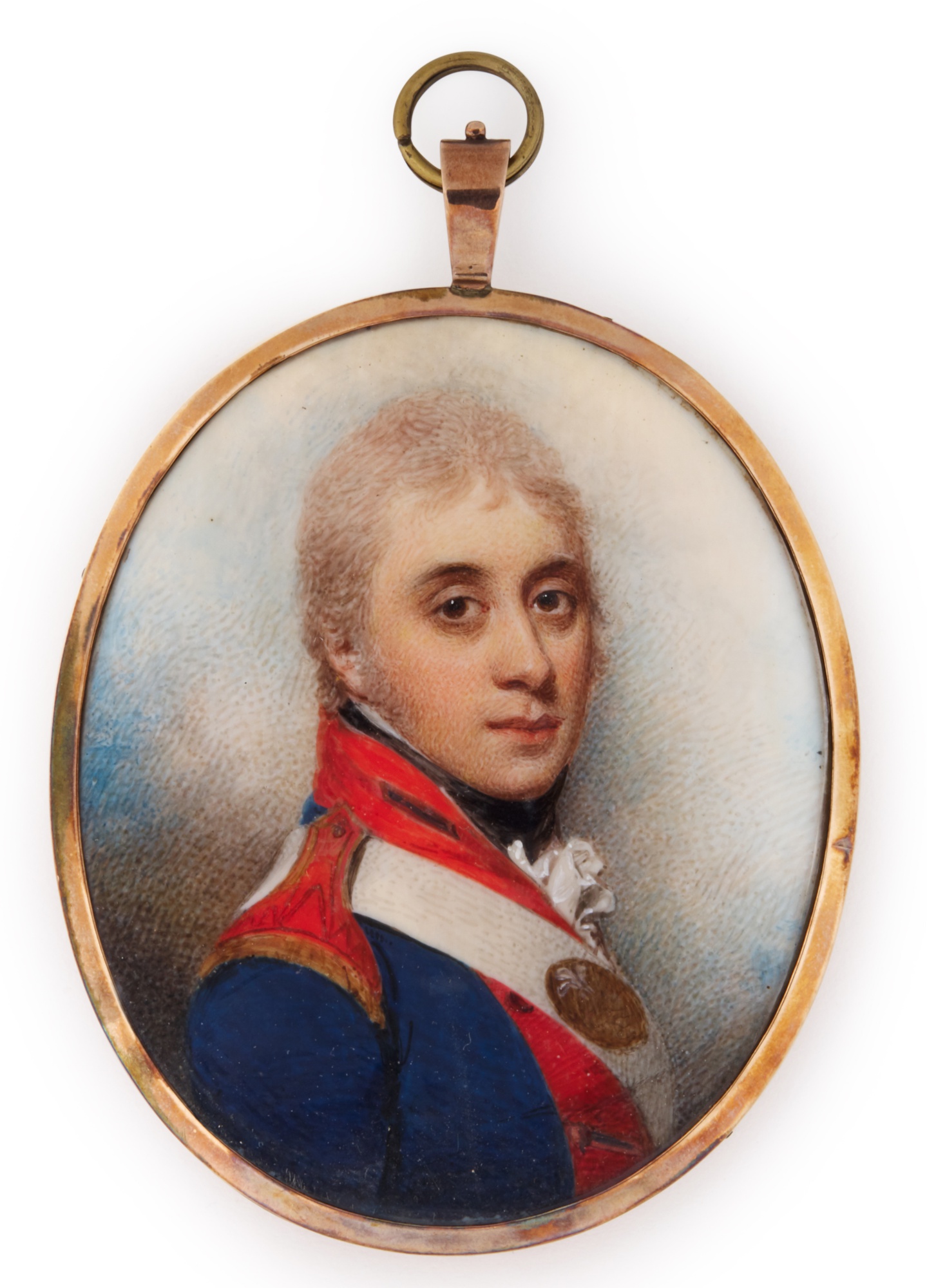
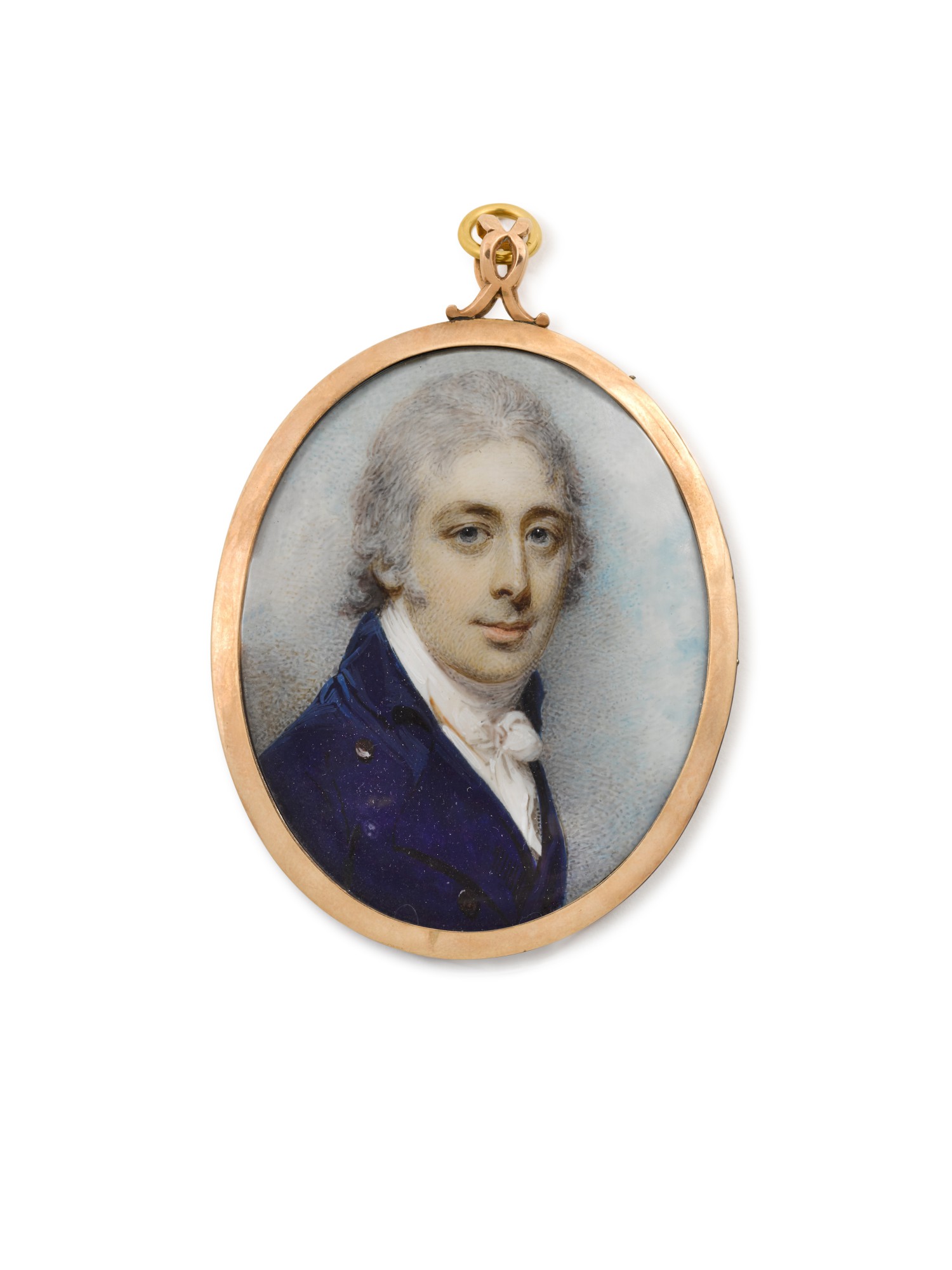
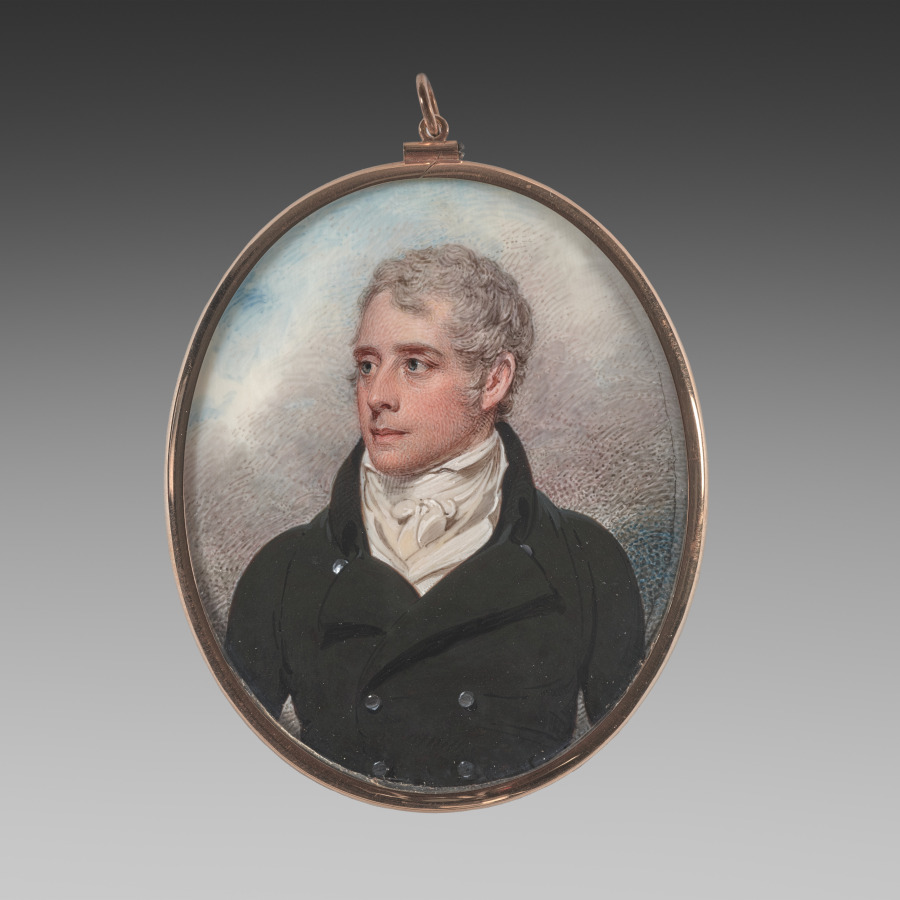
There is a moment, standing before a miniature portrait from the late eighteenth or early nineteenth century, when the sheer audacity of the undertaking becomes overwhelming. In a space no larger than a palm, an artist has conjured a complete human presence: the gleam of an eye, the particular set of a jaw, the faint suggestion of character and biography compressed into a few square centimetres of ivory or vellum. William Wood understood this challenge more completely than almost any of his contemporaries, and the ongoing rediscovery of his work by collectors and institutions speaks to an enduring appetite for the intimate and the exquisitely rendered. Wood was active in Britain during one of the most fertile periods in the history of portrait miniature painting, the decades straddling the turn of the nineteenth century. This was an era when the demand for likenesses was enormous and the craft was at a genuine peak of technical sophistication. Richard Cosway, John Smart, and George Engleheart were the celebrated names of the age, producing works for aristocratic patrons and the emerging professional classes alike. Wood moved within this same world, absorbing its conventions while developing a sensibility that was distinctly his own. His training placed him squarely within the British tradition of watercolour on ivory, a technique that had revolutionised miniature painting since its introduction in the mid eighteenth century, allowing for a luminosity and delicacy that the older vellum supports simply could not match. The ivory support that Wood favoured was itself a relatively recent innovation when he began working, introduced to the British miniature tradition largely through the influence of Richard Cosway and the example of the Venetian painter Rosalba Carriera. By adopting this material, Wood aligned himself with the most progressive practice of his moment. His handling of watercolour on ivory achieves a translucent warmth that gives his sitters a quality of inner life, as though the light were emanating from within the portrait rather than simply illuminating its surface. This was not an accident of technique but a studied artistic choice, one that required consummate skill to execute consistently across a demanding professional practice. Among the works that best demonstrate Wood's gifts, his portrait of John Hedley, painted to commemorate the life of a gentleman who lived from 1726 to 1797, stands as a particularly affecting example. The commission to capture someone recently deceased required the artist to work from existing likenesses or from the memories and descriptions of family members, and the fact that the resulting portrait carries such conviction is testimony to Wood's imaginative sympathy as much as his technical command. Equally striking is his portrait of Sandford Peacocke, dated 1801, executed in watercolour on ivory and set within a gold frame. The precision of that date tells us something important: Wood was working at the height of his powers at the very opening of the nineteenth century, in full command of the vocabulary of the Regency miniature. His portrait of a lady from circa 1805, presented in a gold frame decorated with pearls, hair, enamel, and a pearl reverse bearing the initial C, reminds us that miniature portraits were not merely pictures but deeply personal objects, often commissioned as tokens of love, mourning, or commemoration. The integration of hair and pearl into the frame transforms the object into a reliquary of sorts, charged with emotional significance far beyond the purely aesthetic. The portrait of an officer from circa 1800 and the portrait of a gentleman from the same period round out a picture of an artist who served a wide social range of clients. Military men, professional gentlemen, and members of the landed classes all sat for or were commemorated by Wood, and across this varied clientele his approach remained consistently distinguished. His officers carry themselves with appropriate gravity without stiffness; his gentlemen possess individuality without vanity. This balance between social convention and personal truth is one of the hardest things to achieve in portrait practice, and Wood managed it with apparent ease. For collectors, the appeal of William Wood sits at a particularly compelling intersection of aesthetic and historical value. Miniature portraits of this period have enjoyed sustained collector interest for well over a century, appreciated both for their extraordinary technical achievement and for the intimate window they open onto the social world of Regency Britain. The gold frames, often enriched with pearls, enamel, or hairwork as seen in several of Wood's surviving pieces, are themselves objects of considerable craftsmanship and add material value to the whole. Works in this category by comparable artists including Andrew Plimer, Samuel Shelley, and Adam Buck appear regularly at specialist sales at Bonhams and Christie's, where fine examples consistently attract serious bidding from private collectors as well as institutional buyers. Wood's portraits, with their combination of strong draughtsmanship and warm characterisation, occupy an honourable place within this market. Placing Wood within art history more broadly, he belongs to the final and in many ways most accomplished generation of British miniature painters before the medium was overtaken by photography in the 1840s and 1850s. His near contemporaries John Cox Dillman Engleheart and Charles Hayter were navigating the same technical and social terrain, serving a clientele that still valued the handmade likeness as something photography would never quite replicate: a unique object, made by a human hand, carrying the traces of a direct encounter between artist and subject. This is the quality that gives all great miniatures their strange, persistent power, and it is a quality that Wood's work possesses in abundance. The continuing presence of Wood's portraits in serious private collections is a quiet but eloquent testament to his achievement. At a moment when the broader art world is returning its attention to skill, craft, and the overlooked histories of British art, Wood stands as an artist whose moment of fuller recognition feels genuinely close. His portraits ask us to slow down, to look carefully, and to appreciate that great art has never required a large canvas or a monumental ambition. Sometimes a few centimetres of ivory and a steady, gifted hand are more than enough.