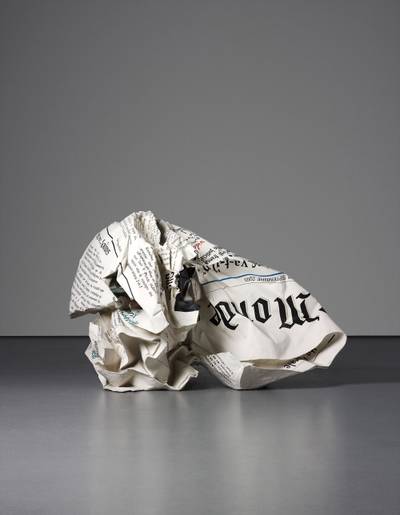
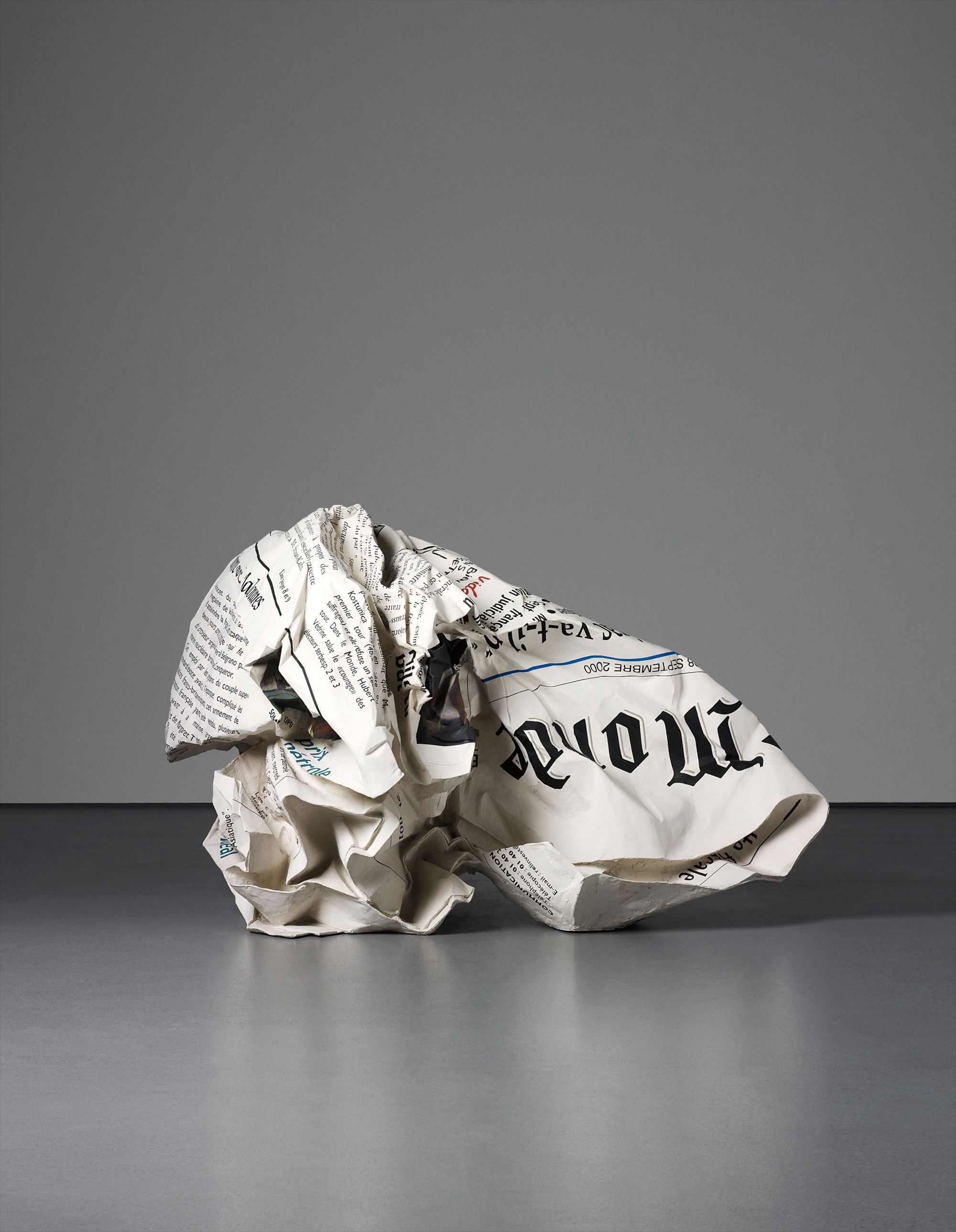
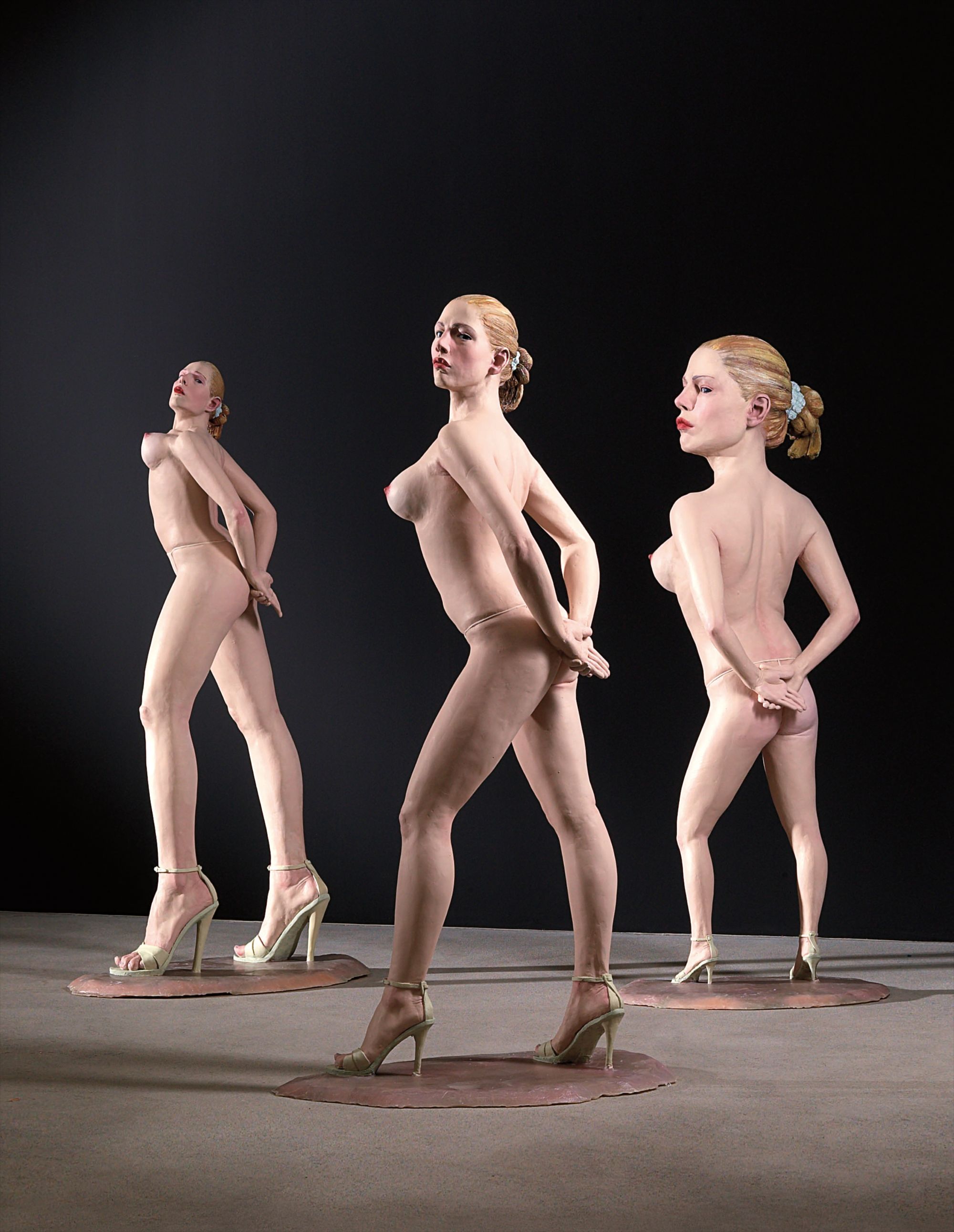
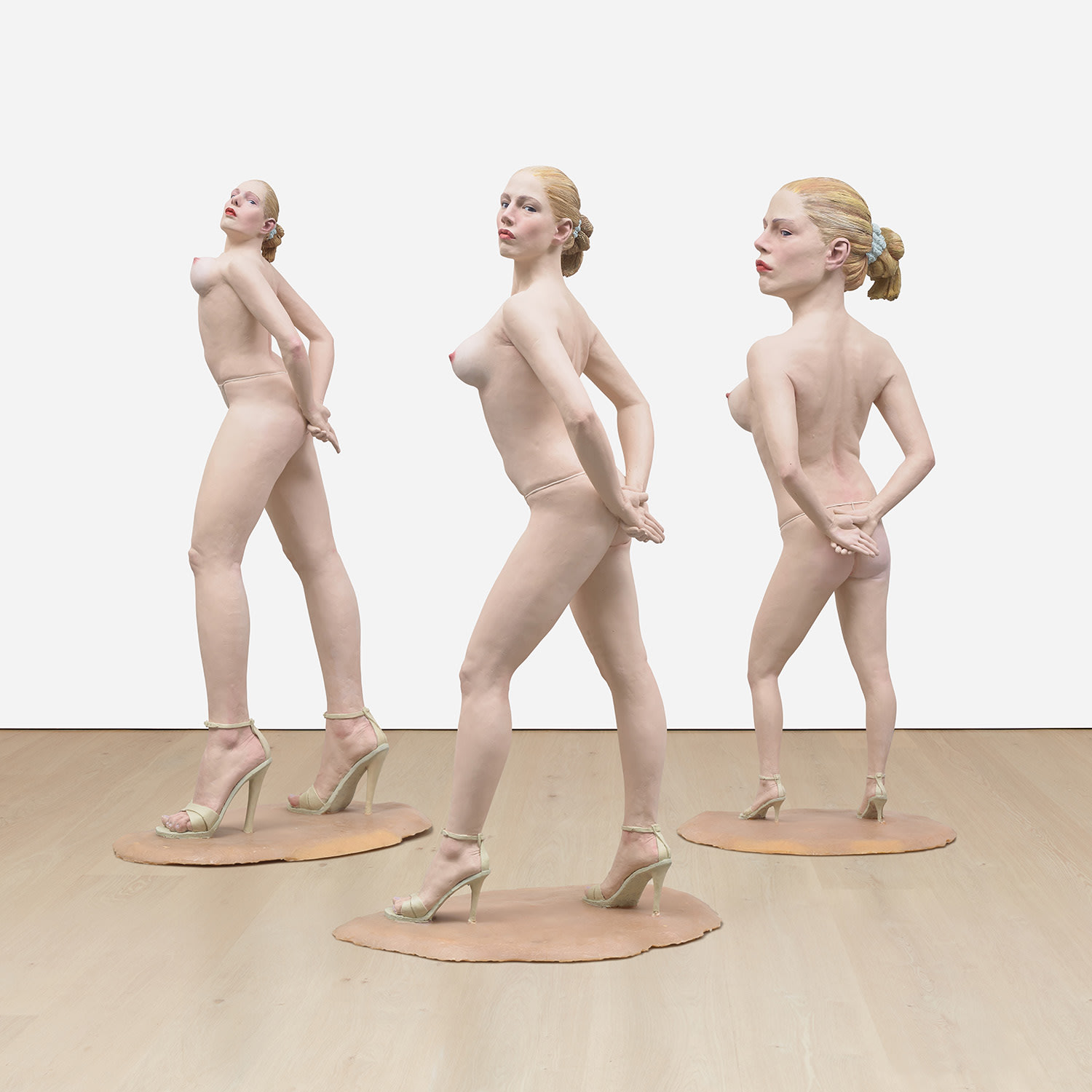
In the grand halls of the Palais de Tokyo in Paris, visitors have stopped in their tracks before sculptures that seem to vibrate with a kind of anxious energy, objects pulled directly from the torrent of daily news and frozen in resin at a scale that makes the familiar feel suddenly strange. Wang Du, the Beijing born, Paris based artist who has spent decades interrogating the machinery of mass media, occupies a singular position in contemporary art. His practice asks a question that only grows more urgent with each passing year: what happens to reality when it is processed, amplified, and returned to us through the filters of journalism, advertising, and spectacle? Wang Du was born in 1956 in Wuhan, China, a city with a long and complicated relationship to political history. He came of age during the Cultural Revolution, a period that profoundly shaped an entire generation of Chinese artists by demonstrating, with terrible clarity, how images and language could be weaponized by those in power. The experience of living inside a totalizing propaganda apparatus gave Wang Du an unusually acute sensitivity to the mechanics of representation, to the gap between what is shown and what is real. He studied at the Guangzhou Academy of Fine Arts, where he was part of a generation beginning to question the constraints of official aesthetics. In 1990, Wang Du relocated to Paris, a move that proved transformative. France offered both distance and immersion: distance from the political pressures of China, and immersion in a Western media landscape that was, in its own way, equally saturated with manufactured imagery. Paris also placed him at the center of a vibrant community of international artists wrestling with questions of globalization, consumerism, and visual culture. It was in this context that Wang Du began developing the practice that would define his career, a method of selecting images from newspapers, magazines, and television broadcasts and translating them into large scale three dimensional sculptures rendered in resin and polyester. The technical process Wang Du employs is as conceptually loaded as its results. He selects a media image, often one that has already achieved a kind of viral ubiquity in the press, and then reconstructs it as a sculptural object, distorting its scale and surface in ways that expose the artifice of the original. The use of acrylic paint on polyester resin gives his works a slick, almost lurid surface quality that mirrors the high gloss finish of magazine photography. There is something deeply disorienting about encountering a work like Luxe Populaire, in which the language of luxury advertising meets the democratic aspirations implied in the title, rendered as a physical object that you can walk around, that occupies real space, that refuses the flatness of the page it came from. The work implicates the viewer in the very system of desire and consumption it dissects. Among his most celebrated bodies of work are the Femme series, in which the word itself dissolves across three sculptural panels: Femme, Femmme, Femm, Fem, Fe. The fragmentation is not merely formal play. It enacts the way media representation erodes the specificity of the human subject, particularly women, reducing persons to types, types to images, images to commodities. Across three parts, rendered in resin, polyester, and acrylic, the series stages a kind of linguistic and visual entropy. The letters fall away as the figure is consumed by its own mediation. Collectors and curators have responded deeply to this work precisely because it operates simultaneously as aesthetic object and critical argument, a combination that is far harder to achieve than it appears. Wang Du has exhibited widely across Europe and beyond, with significant presentations at institutions including the Centre Pompidou and venues associated with major European biennials. His work entered serious critical conversation in the late 1990s and through the 2000s, a period when artists working with media critique, among them contemporaries such as Thomas Hirschhorn and Subodh Gupta, were receiving sustained institutional attention. Wang Du's practice shares with Hirschhorn a commitment to the materiality of information and a refusal of aesthetic comfort, though Wang Du's formal elegance and his particular focus on the sculptural object distinguish his approach in important ways. His Chinese background and the shadow of the Cultural Revolution also give his media critique a geopolitical depth that enriches every work. For collectors, Wang Du presents a genuinely compelling proposition. His works occupy a thoughtful space between critical theory and sensory pleasure, between the conceptual rigour of Arte Povera and the visual seductiveness of Pop. The resin and polyester works have aged with distinction, their surfaces retaining the uncanny quality that made them so striking upon completion. Works from the Femme series and from the broader Luxe Populaire body of work represent the artist at the height of his powers, offering both historical significance within the narrative of media critique art and an immediacy that speaks directly to our present moment of information overload and digital image saturation. As institutional interest in artists who engaged with globalization and mass media continues to deepen, Wang Du's market position is well supported by critical consensus. What makes Wang Du genuinely important, finally, is not simply that he diagnosed a condition but that he found a formal language equal to it. At a time when the boundaries between news and entertainment, between fact and spectacle, have collapsed almost entirely, his sculptures stand as monuments to the cost of that collapse. They are beautiful and they are troubling, and they hold both qualities without resolving the tension between them. That is the hallmark of art that endures. Wang Du has spent more than three decades building a body of work that the present moment was always going to need.