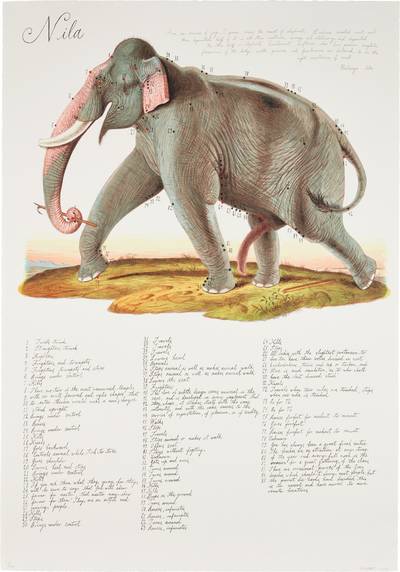
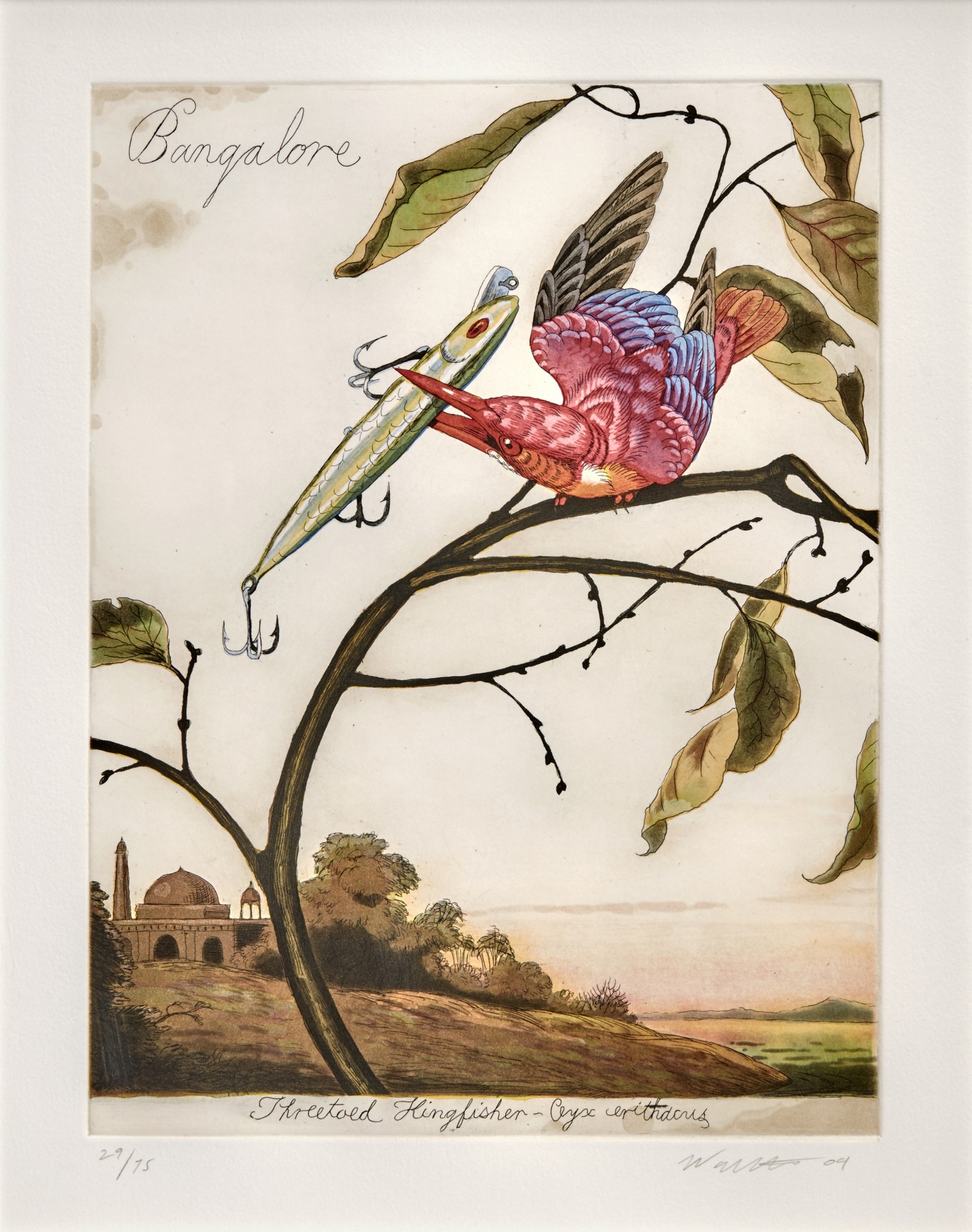
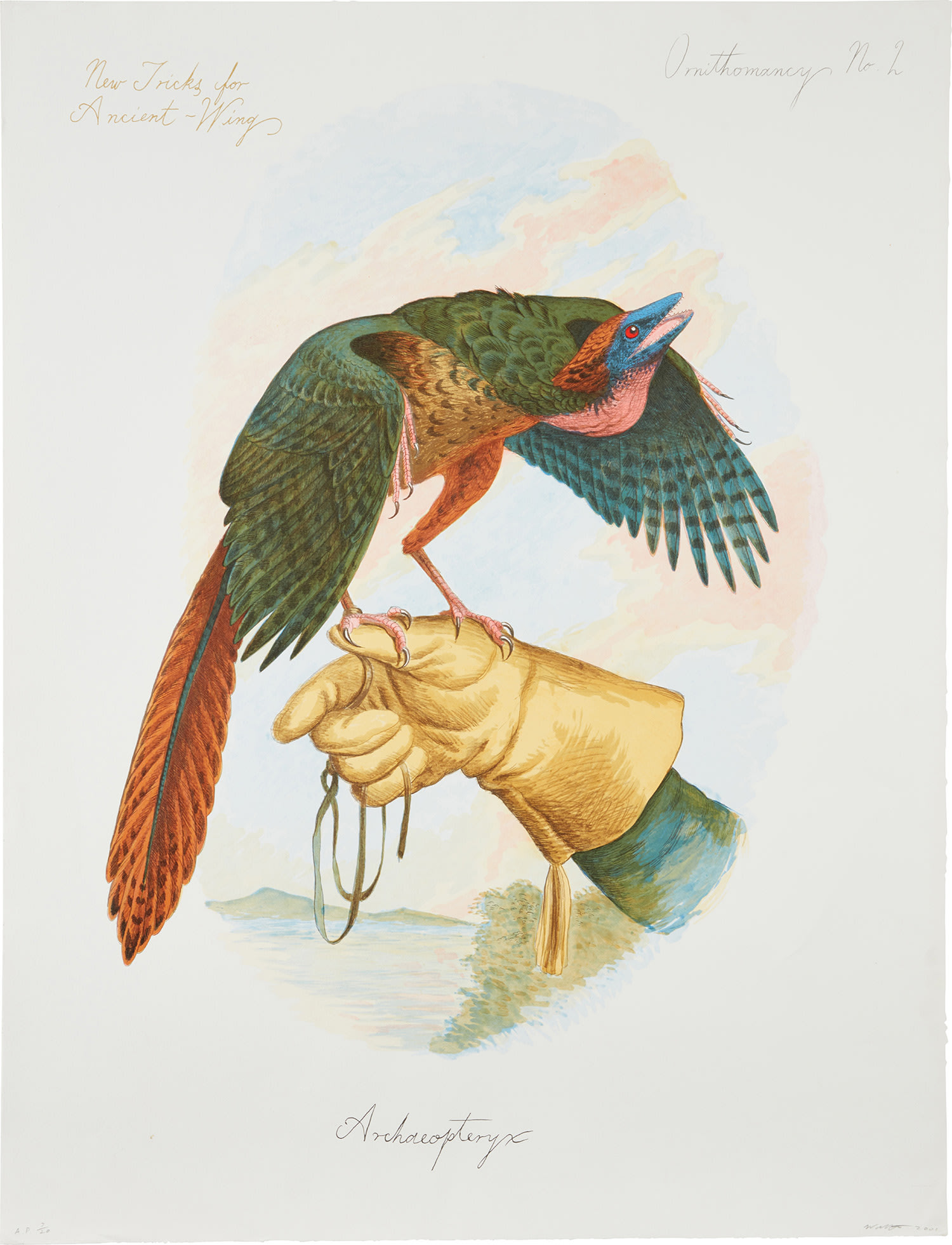
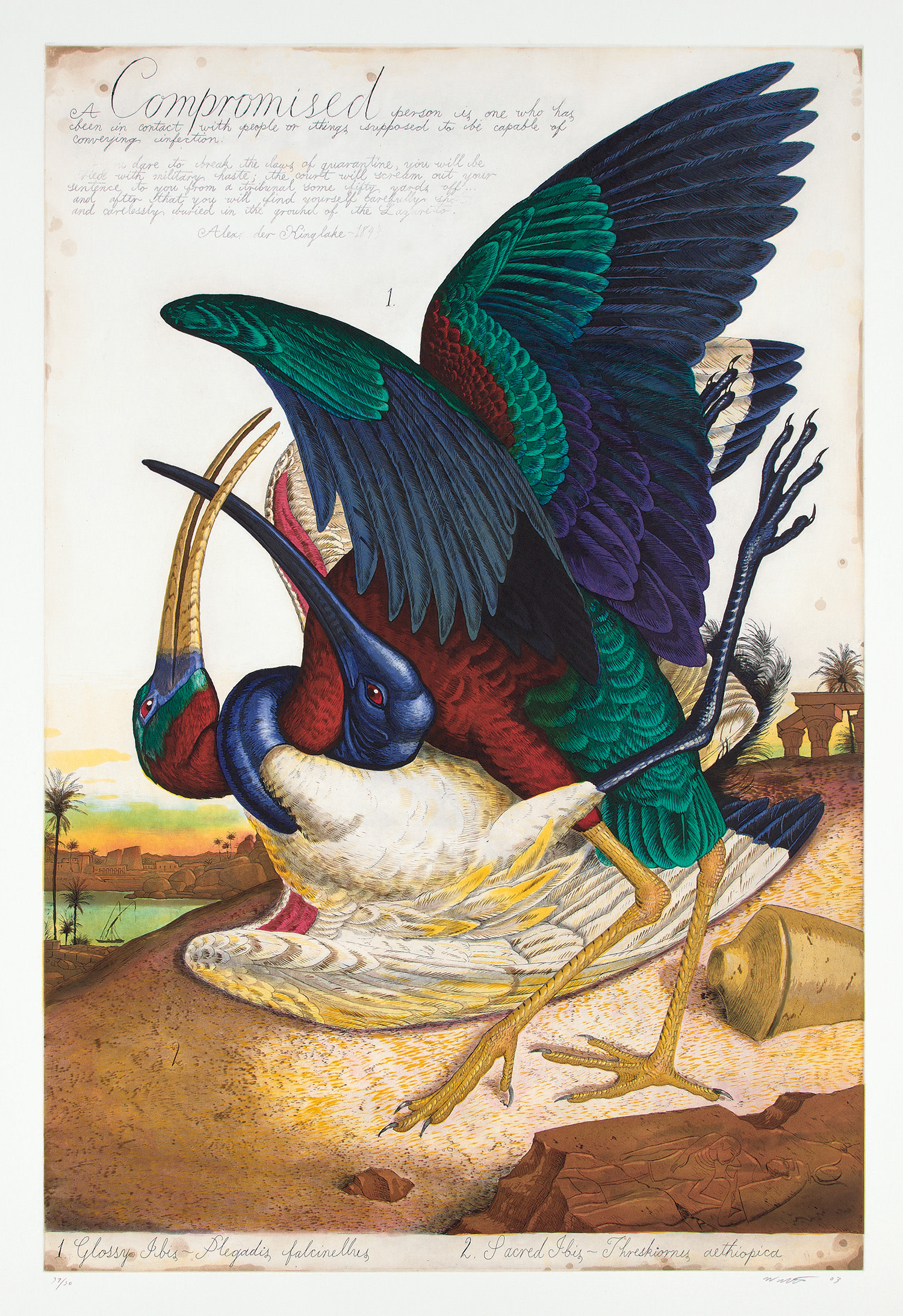
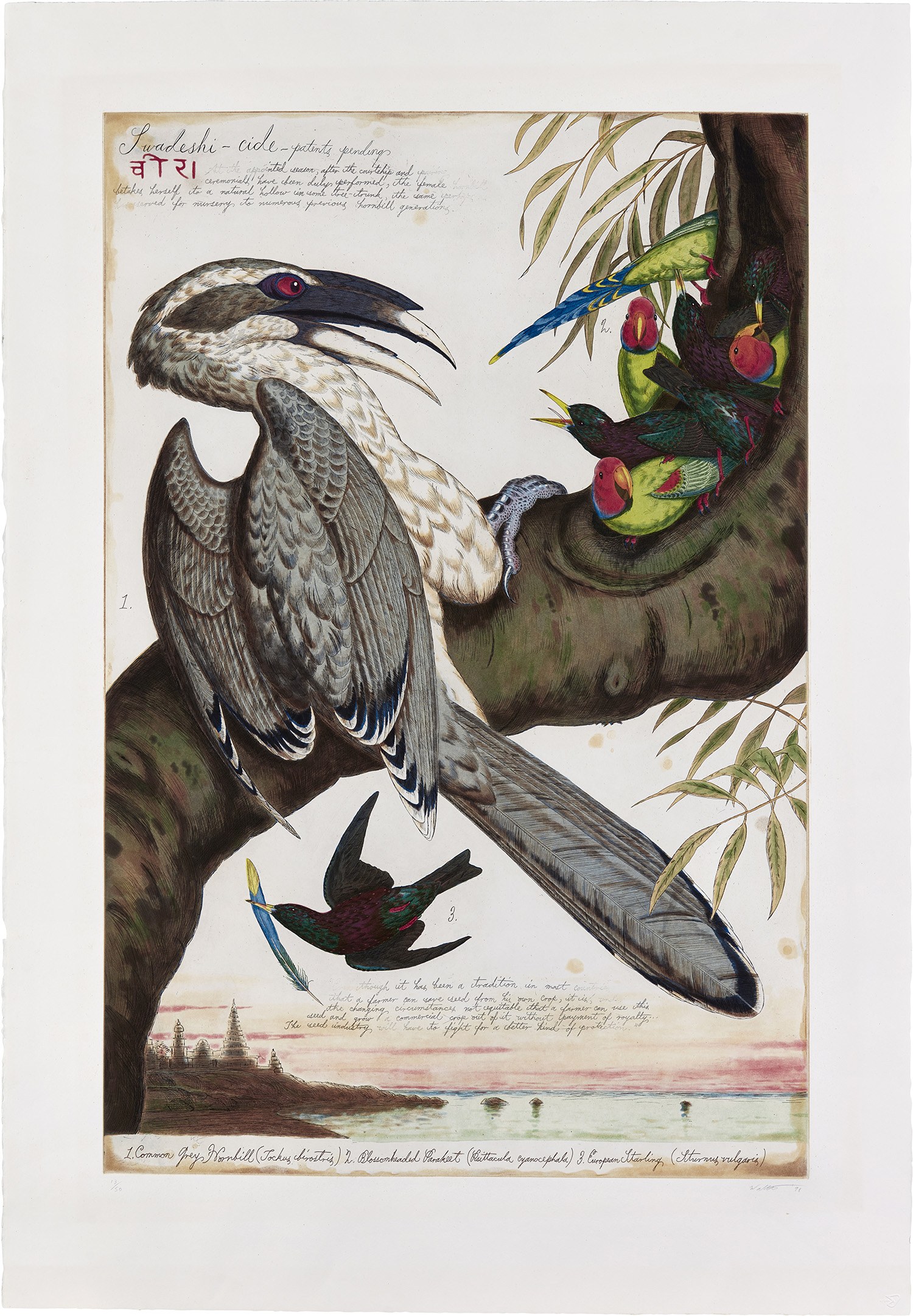
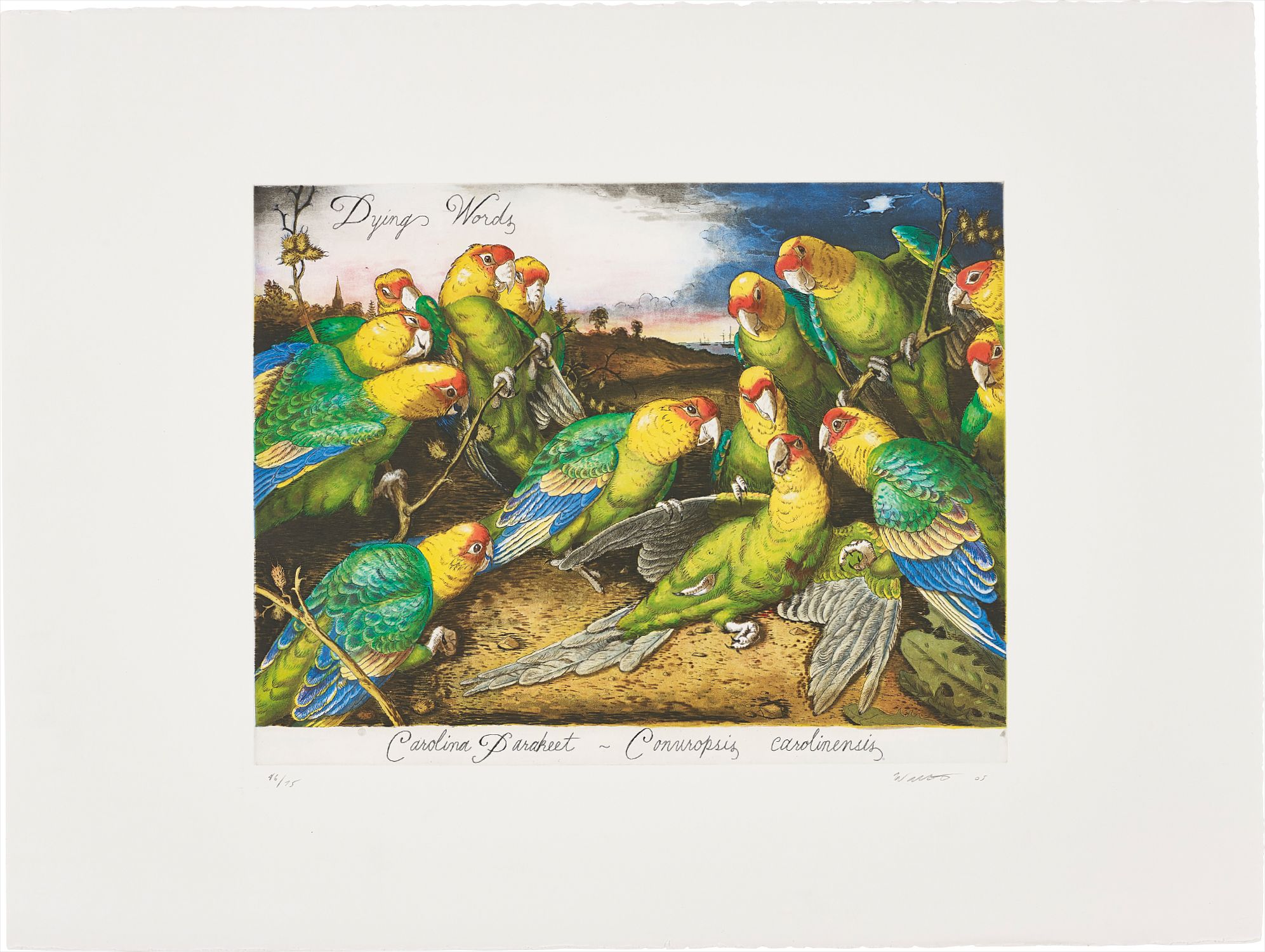
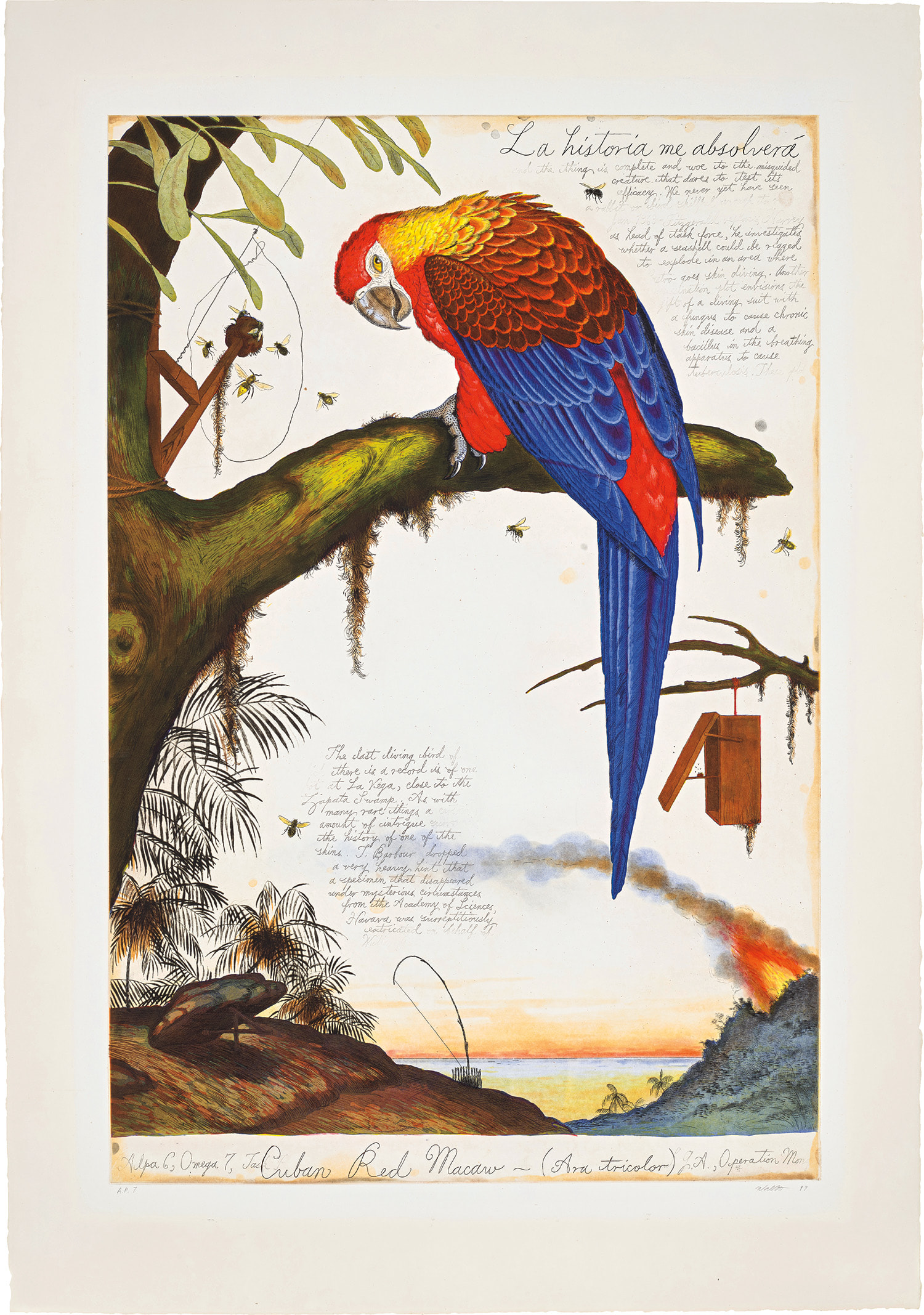
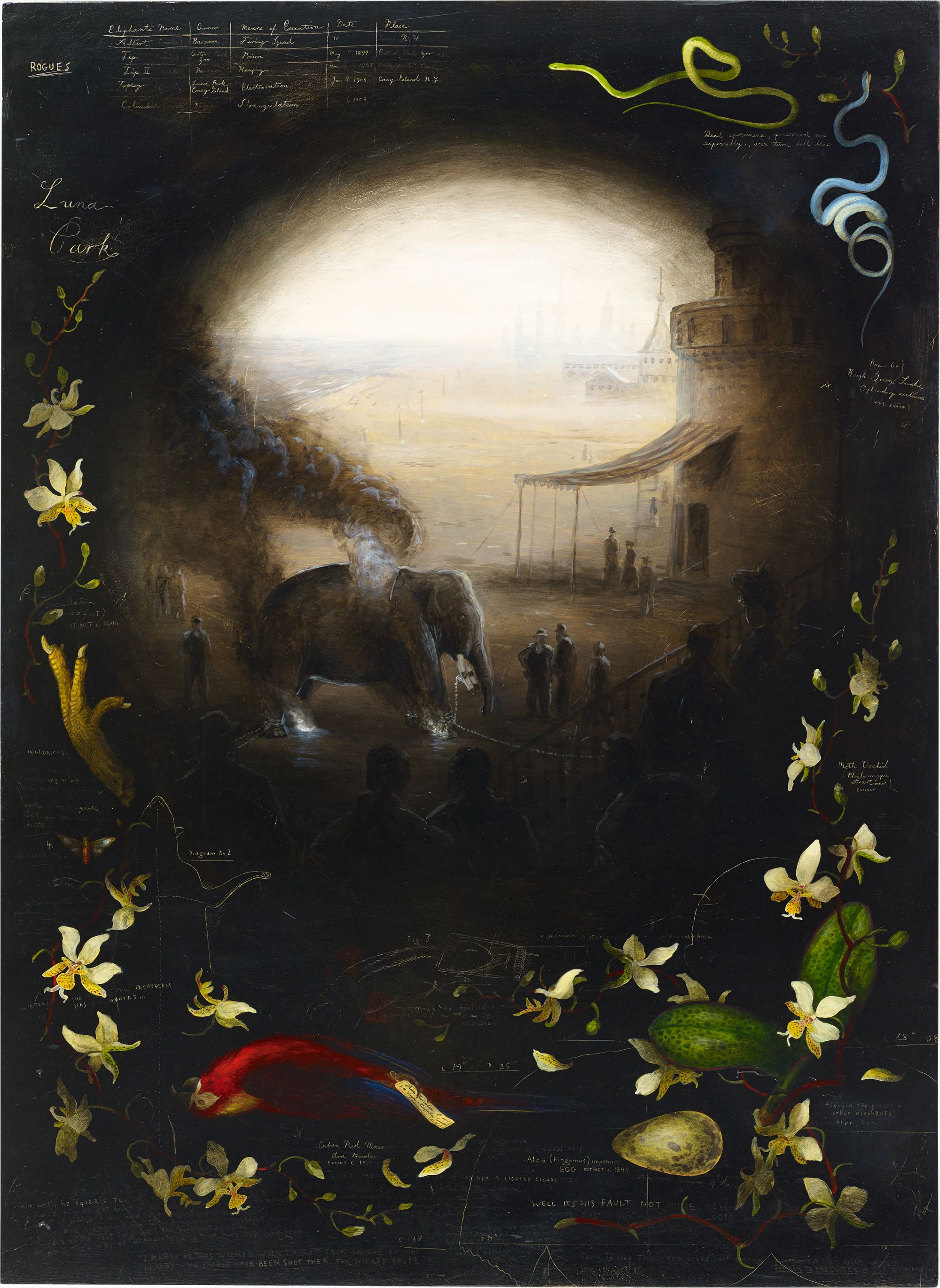
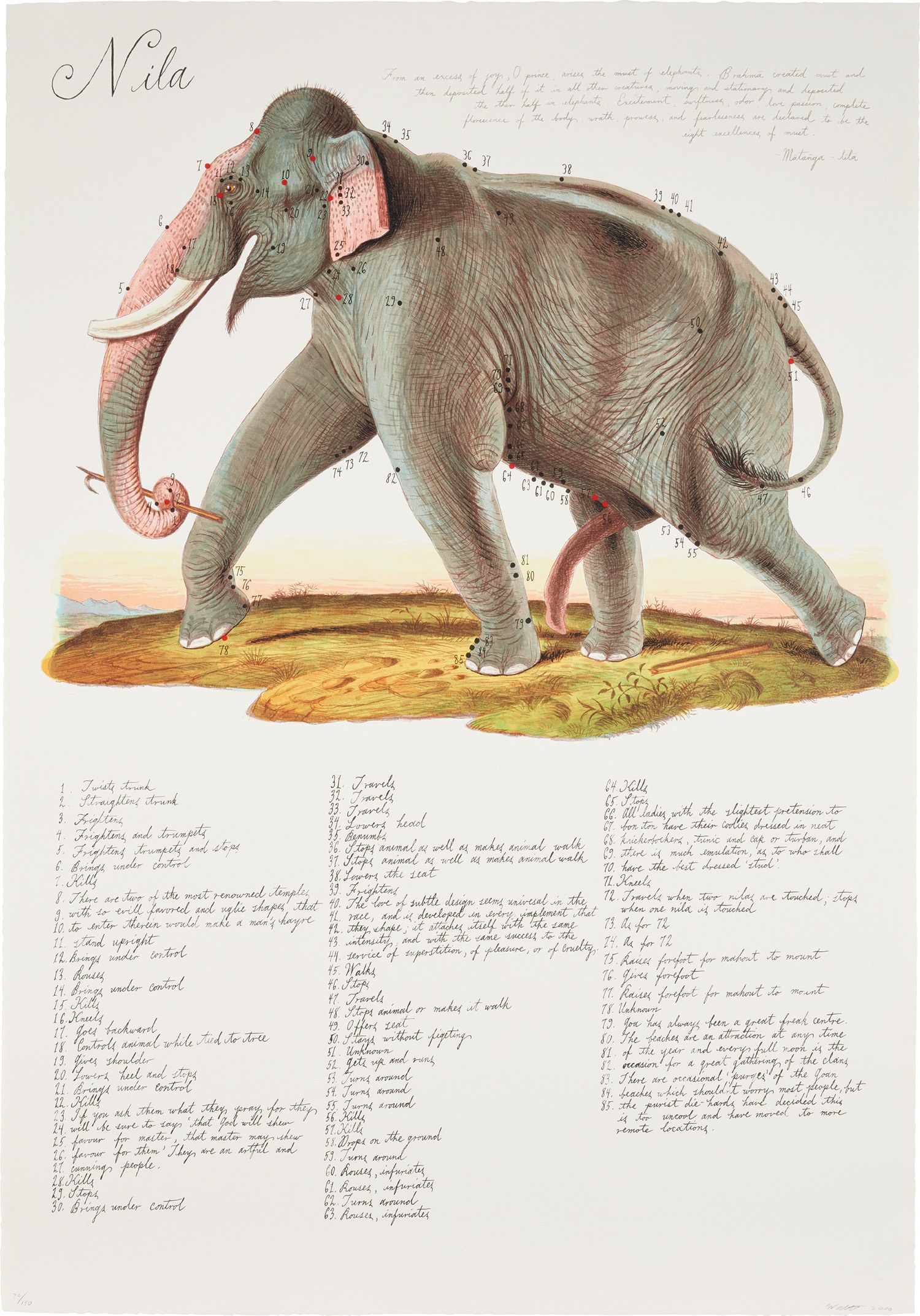
When the Brooklyn Museum mounted a sprawling survey of Walton Ford's work in 2006, visitors encountered something that defied easy categorization. Here were enormous watercolors rendered with the meticulous care of a nineteenth century naturalist, populated by animals that seemed to carry the full weight of human history on their feathers and fur. The show stopped people cold. It confirmed what a growing circle of devoted collectors and curators already understood: that Ford had quietly constructed one of the most intellectually rigorous and visually intoxicating bodies of work in contemporary American painting. Nearly two decades later, his reputation has only deepened, his canvases commanding serious attention at auction and his prints becoming among the most sought after works on paper in the secondary market. Ford was born in 1960 and grew up in the United States during a period when the natural world and the political world were colliding in urgent, consequential ways. He studied film at the Rhode Island School of Design, a background that infuses his work with a distinctly cinematic sensibility. Each painting functions almost like a frozen frame, a single charged moment drawn from a longer narrative that the viewer must piece together from visual clues scattered across the surface. That training in sequential storytelling, in atmosphere and dramatic lighting, is visible in every composition he constructs. His early exposure to illustration, natural history texts, and the grand tradition of American landscape painting gave him a vocabulary that he would spend decades reanimating and interrogating. The pivotal influence on Ford's practice is John James Audubon, the nineteenth century naturalist and artist whose Birds of America remains one of the most celebrated achievements in the history of illustration. Ford absorbed Audubon deeply, not merely as a formal model but as a subject of sustained critical inquiry. He recognized in Audubon a figure of profound complexity: a man of extraordinary observational gifts who was also a product of colonial violence, slavery, and the relentless westward expansion that was erasing the very wilderness he documented. Ford's work stages a kind of reckoning with that legacy, using Audubon's own visual language to expose the contradictions that the original images politely concealed. The result is a body of painting that is simultaneously an homage and a correction, a love letter written in a critical hand. Ford works primarily in large scale watercolor on paper, a medium that carries its own art historical freight. Watercolor was the medium of the field naturalist, portable and precise, used to capture specimens in situ before they were lost to taxonomy or extinction. In Ford's hands the medium becomes something far more theatrical. His animals inhabit richly layered scenes drawn from colonial literature, natural history archives, travelers' accounts, and his own deeply researched imagination. A tiger may reference a specific incident from British imperial India. A flock of birds may encode a story of ecological devastation rooted in real historical events. The humor is often dark, the symbolism dense, but the surfaces are ravishing, built up with a technical command that rewards prolonged, careful looking. Among his most celebrated canvases is Nila, which depicts an Indian elephant with a grandeur and psychological intensity that elevates the subject to the level of portraiture. It is a work that collectors respond to viscerally before they have parsed a single layer of its meaning. Ford's printmaking practice is equally significant and represents a remarkable body of work in its own right. Editions such as Swadeshi cide, Benjamin's Emblem, Compromised, and Limed Blossoms demonstrate the full range of his technical ambition, combining etching, aquatint, drypoint, and color in ways that rival the complexity of his paintings. New Tricks for Ancient Wings, produced as a lithograph on Somerset Velvet paper, showcases his command of the softer tonal registers that lithography allows, giving his birds a luminous, almost breathing quality. These works were largely published through Blue Heron Press in New York, which served as a key collaborator in bringing Ford's imagery to collectors who wanted access to his vision at a scale and price point suited to a broader range of collections. A complete suite of prints from this era, signed and numbered, represents one of the more compelling collecting opportunities in the contemporary American works on paper market. From a collecting perspective, Ford occupies a genuinely distinctive position. He is associated with the roster of Kasmin Gallery in New York, which has long championed his work and helped place it in institutional collections of lasting importance. His paintings are held by the Whitney Museum of American Art, the Smithsonian American Art Museum, and the Hamburger Bahnhof in Berlin, among others. At auction, major paintings have achieved results that confirm the sustained appetite for his work among serious collectors. What draws buyers again and again is the quality that defines the very best art: the sensation that no matter how many times you return to a work, it yields something new. The prints in particular offer entry points at various levels of the market, and the early oil on wood panel works, such as Guilty Sow from 1994, carry the additional fascination of showing Ford's thinking before his signature watercolor practice fully crystallized. In the context of art history, Ford stands in a lineage that connects the great natural history illustrators of the eighteenth and nineteenth centuries to a strain of contemporary painting preoccupied with the politics of representation and the violence embedded in Western scientific and colonial enterprise. One thinks of artists like Mark Dion, whose archival installations similarly excavate the ideological structures of natural history museums, or the German Neo Expressionists whose narrative ambitions Ford shares even if his surfaces are more precisely controlled. He is also, in his commitment to virtuosic craft deployed in service of critical content, a spiritual heir to Francisco Goya, an artist who understood that beauty and horror are not opposites but accomplices. What secures Walton Ford's place in the longer story of American art is precisely this refusal to choose between pleasure and conscience. His paintings are among the most beautiful objects being made today, and they are also among the most searching and morally alert. They honor the tradition of careful observation while insisting that observation is never innocent. For collectors who believe that art should ask something of its audience as well as reward them, Ford's work represents one of the most satisfying and durable investments available in contemporary painting. To live with one of his images is to live with a question that never stops being interesting, posed in the most magnificent terms imaginable.