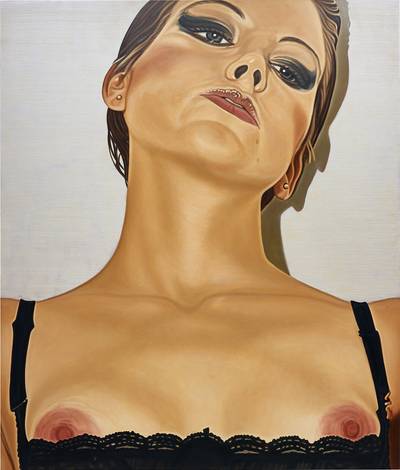
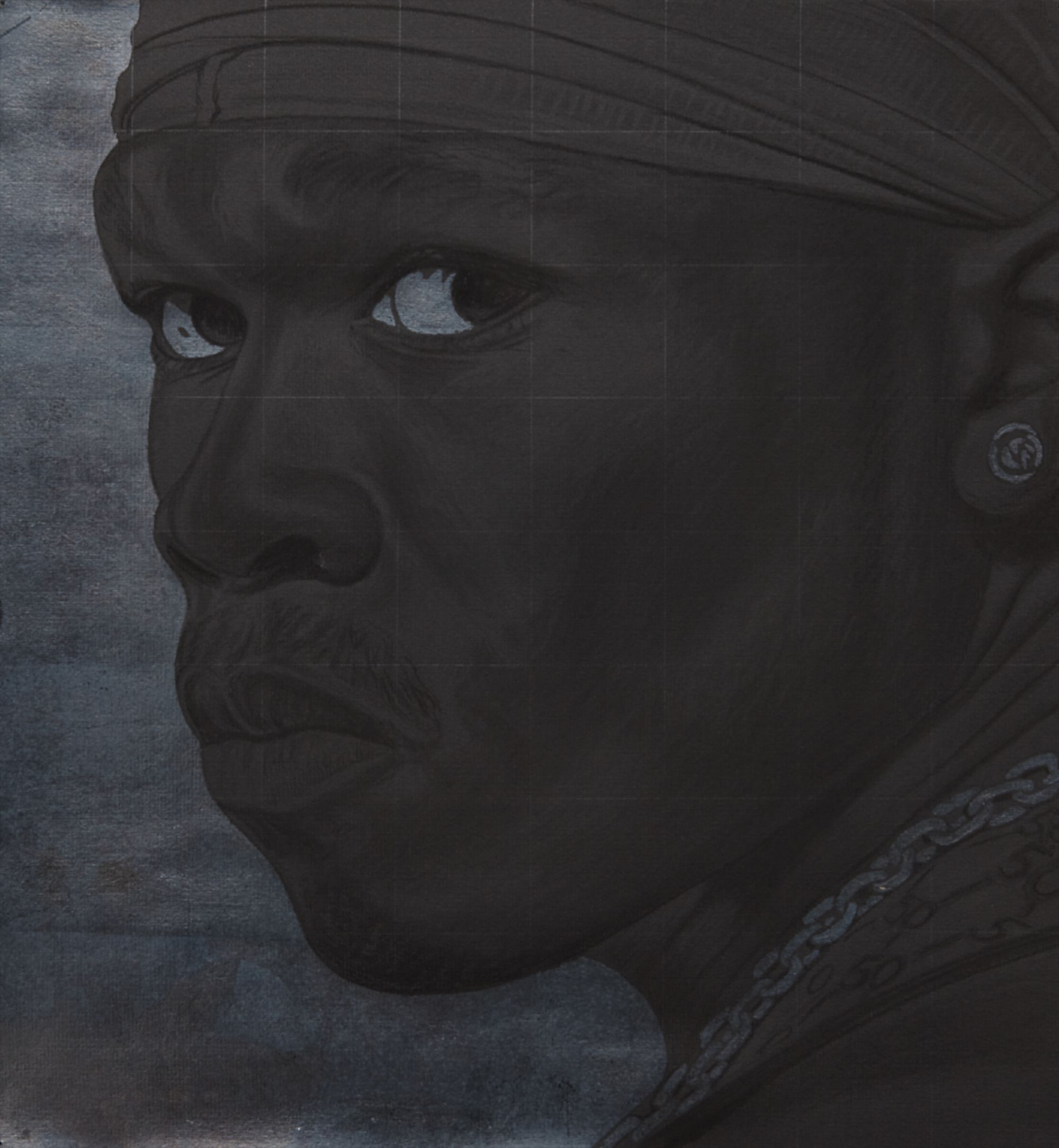
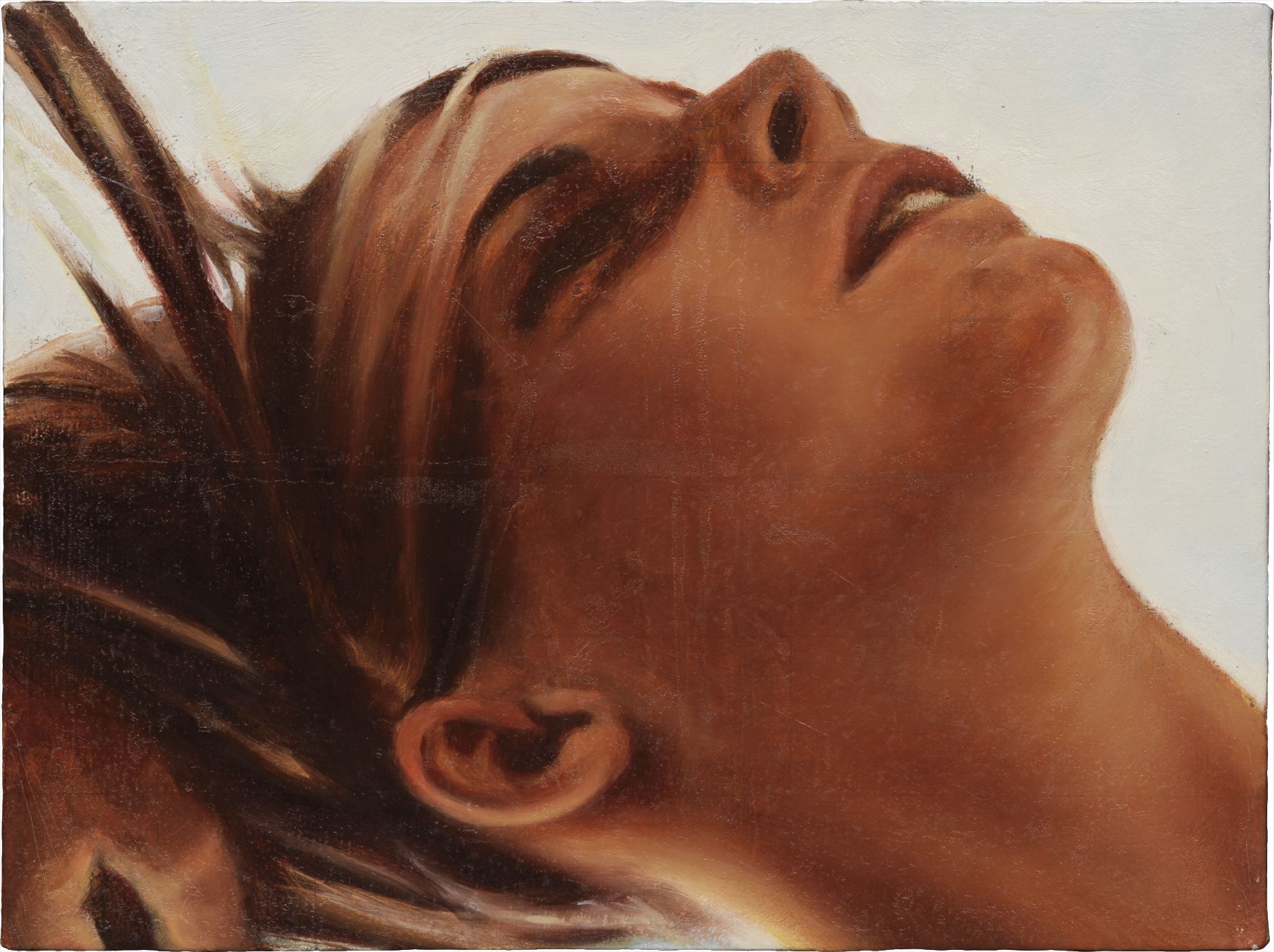
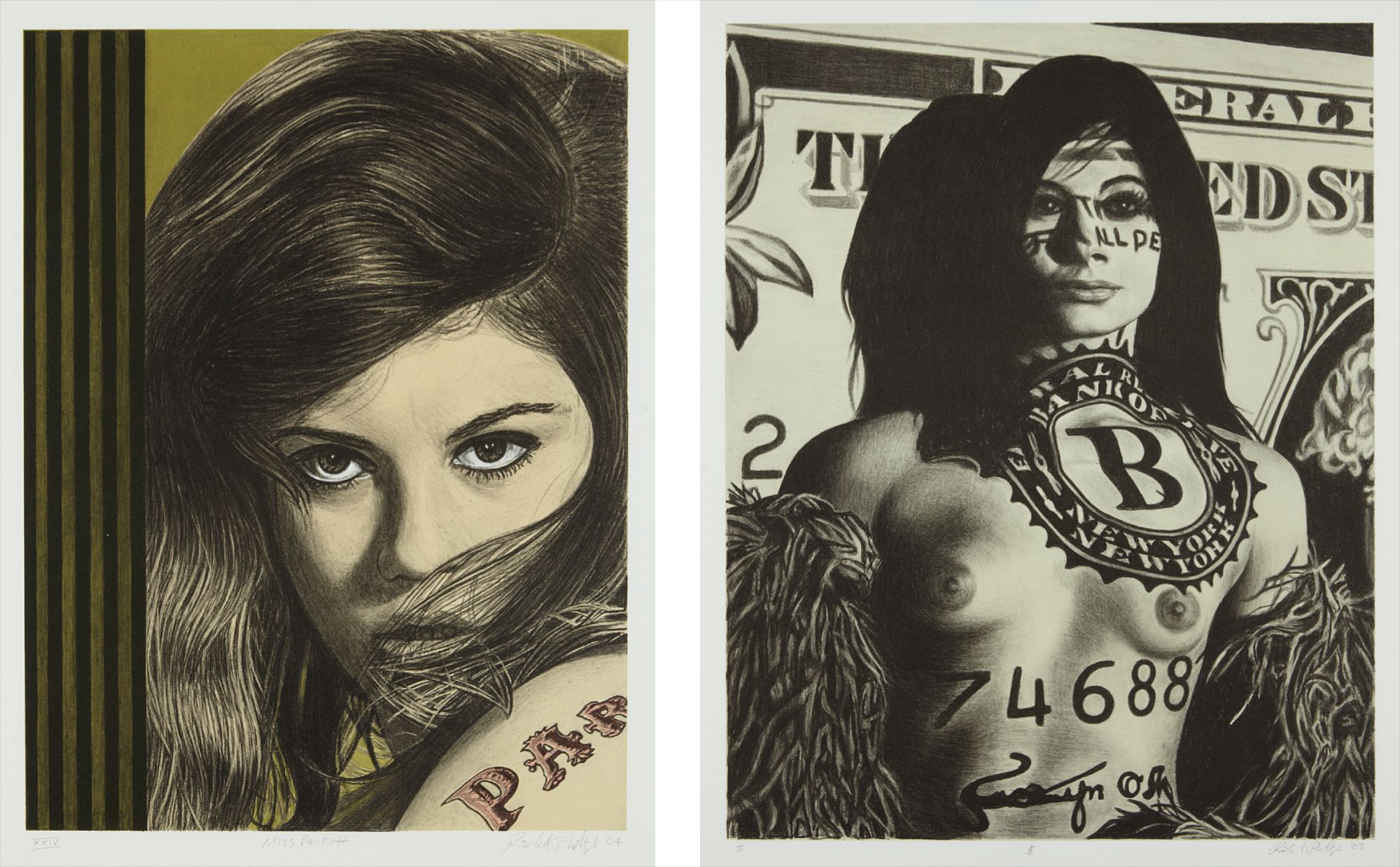
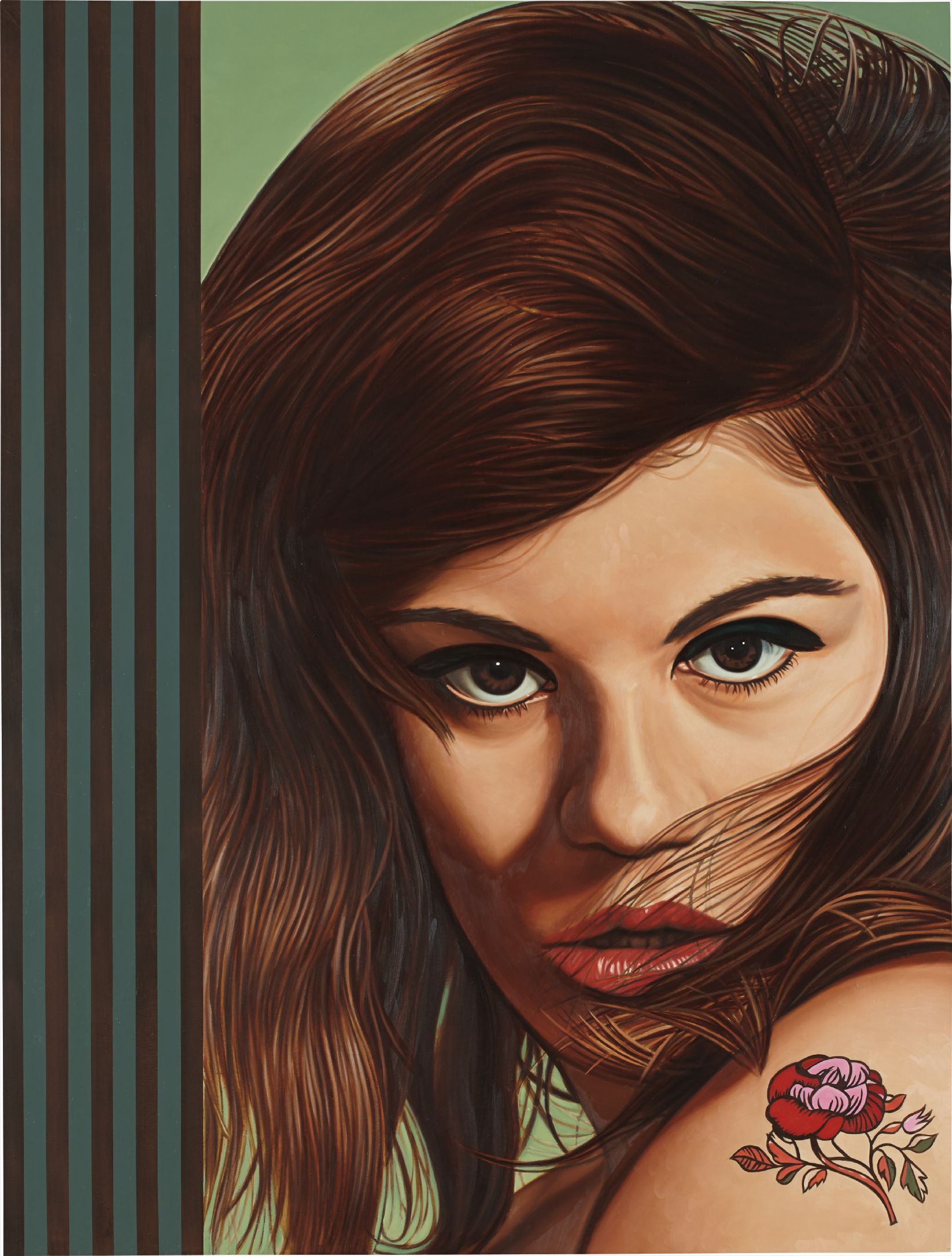
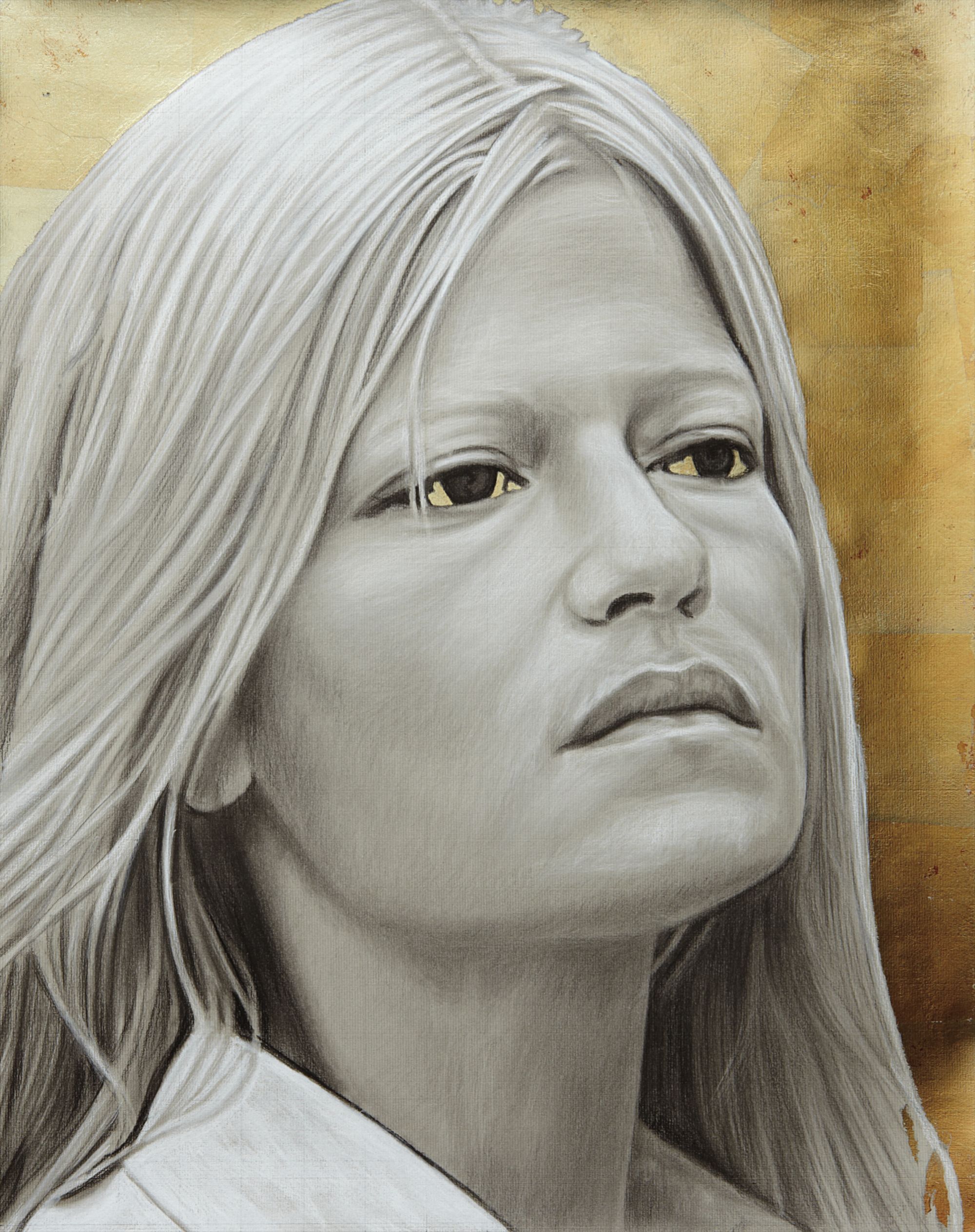
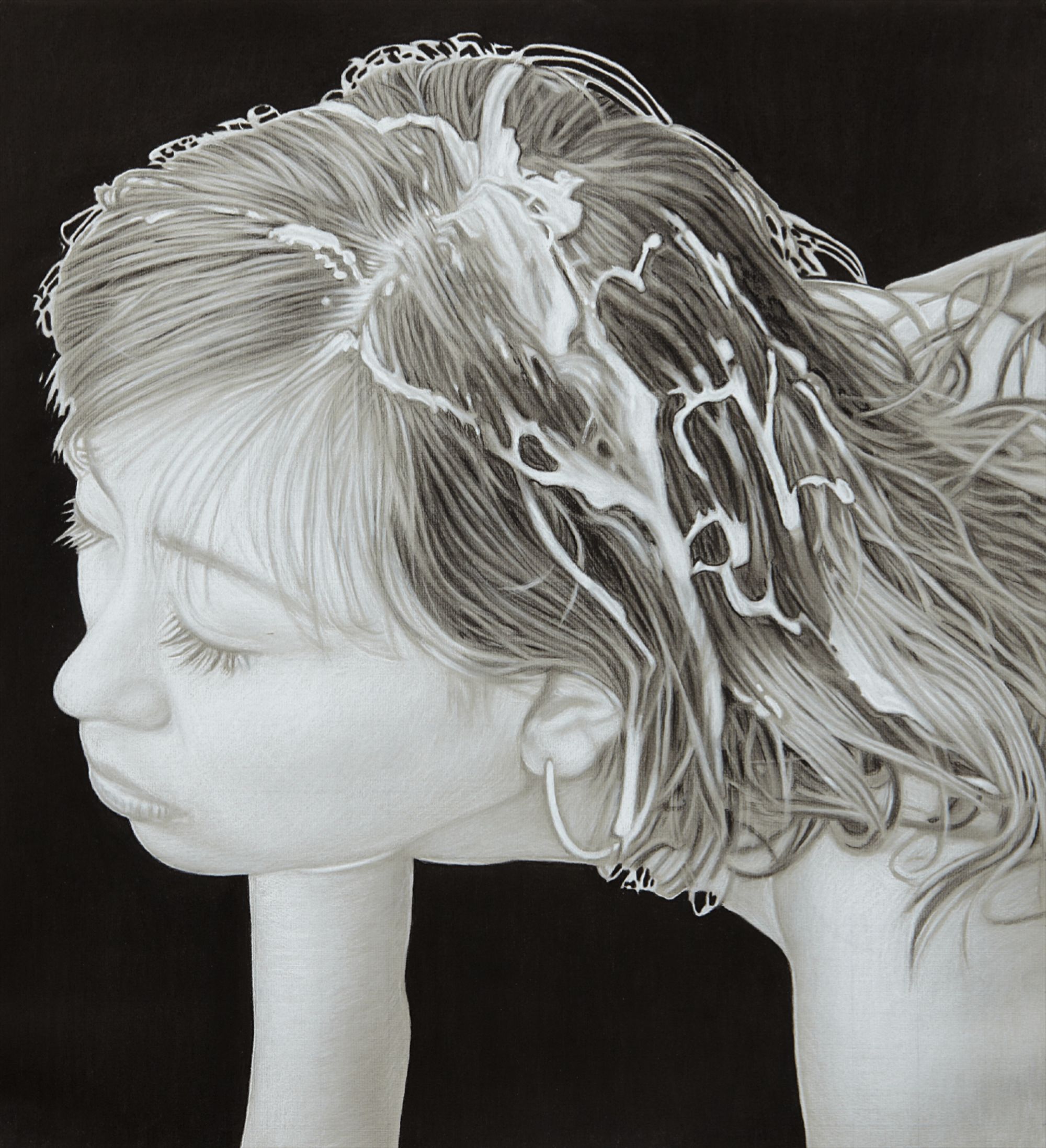
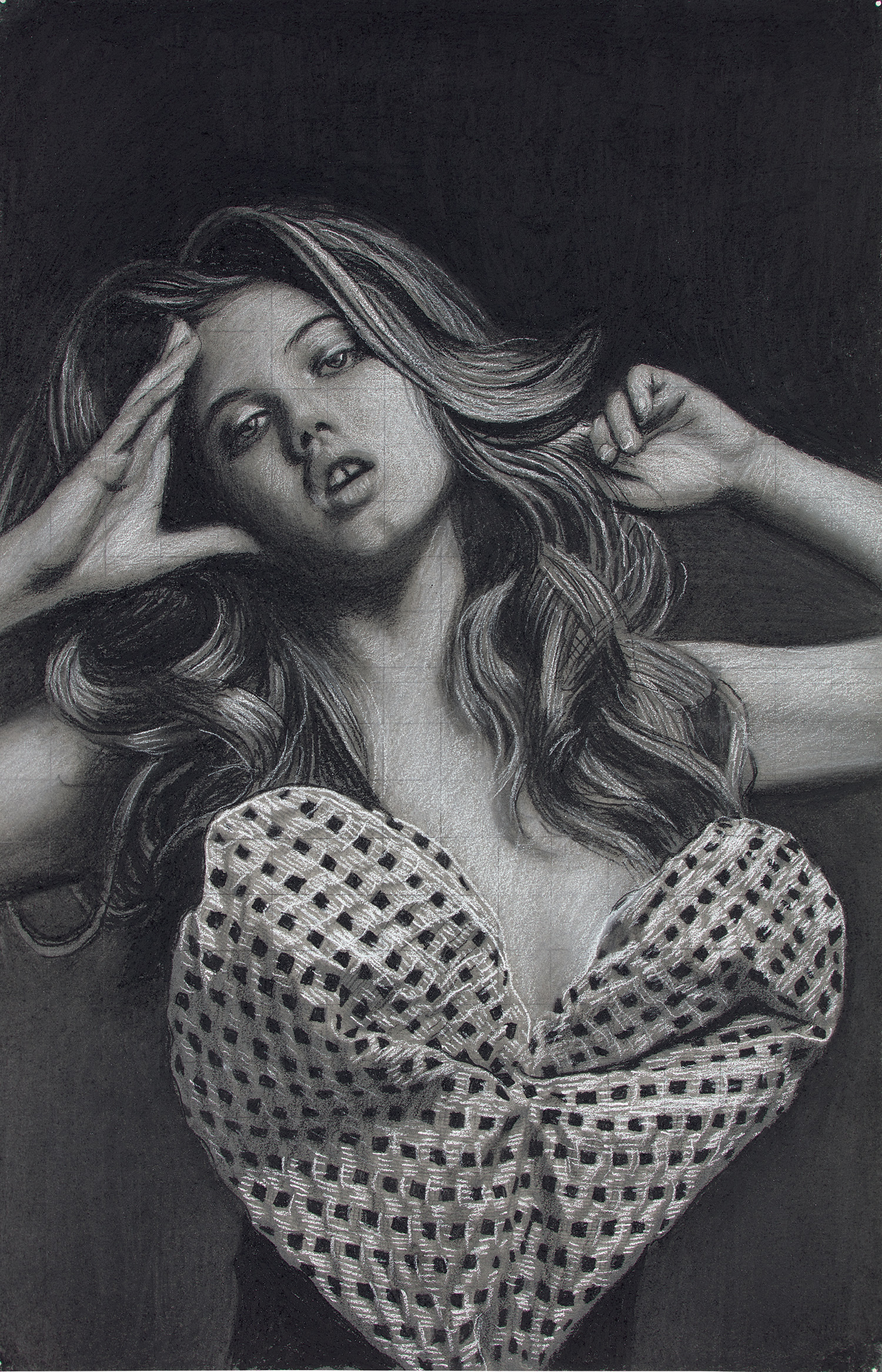
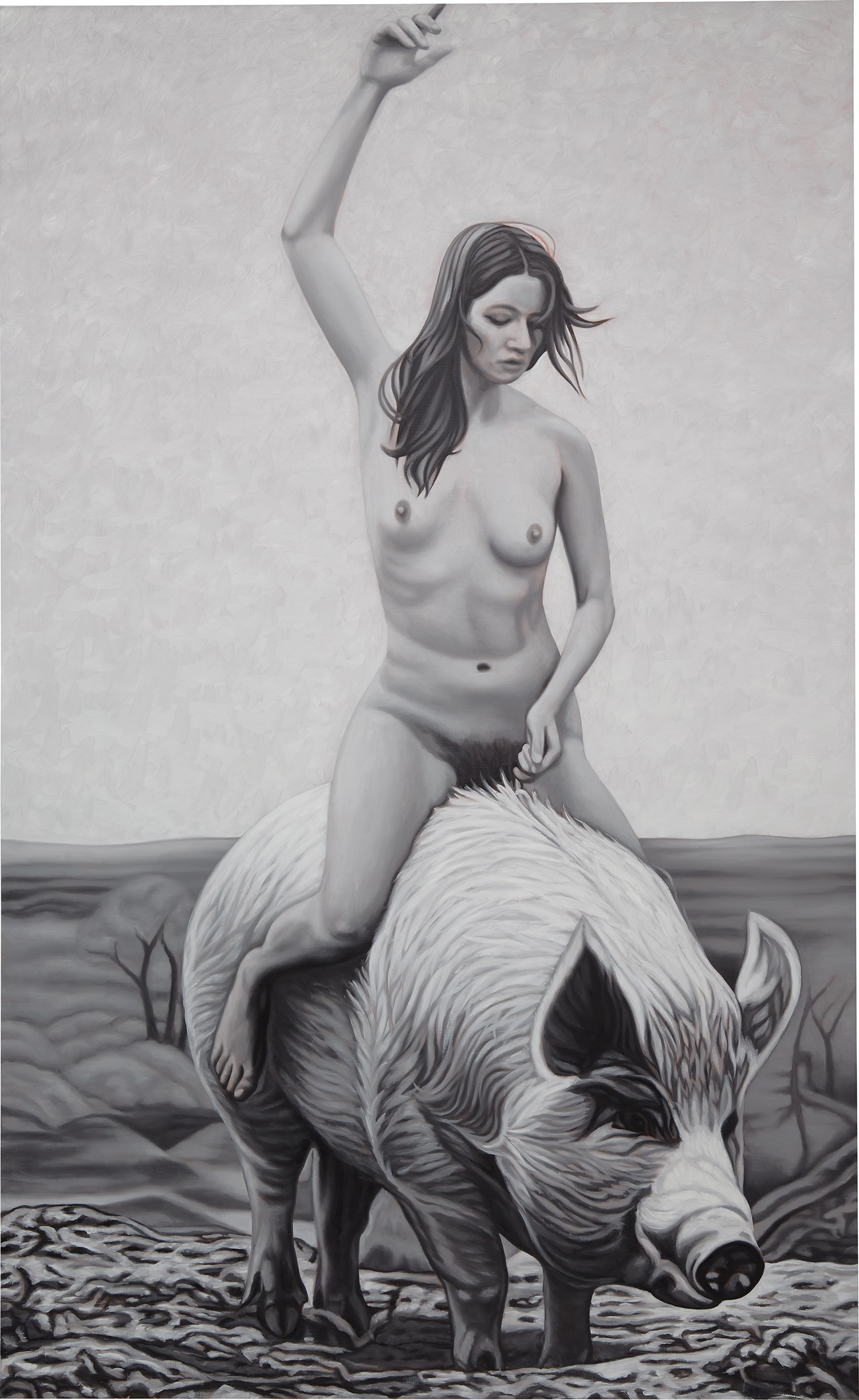
There is a particular kind of tension that Richard Phillips has always known how to hold. It lives in the space between seduction and critique, between the polished surface of mass media imagery and the slow, deliberate hand of a painter who refuses to let that imagery go unexamined. In recent years, Phillips has continued to attract serious institutional and collector attention, with works appearing at major auction houses and in significant private collections across the United States and Europe. His position within the conversation around American figurative painting feels more secure and more urgent than ever, precisely because the cultural pressures he has spent decades excavating have only intensified. Phillips was born in 1962, and his formation as an artist unfolded during a period when American culture was saturating itself with image. The rise of advertising, celebrity, and fashion photography as dominant visual languages shaped not just his subject matter but his entire aesthetic sensibility. He studied painting with a seriousness that would root his practice firmly in the technical traditions of Western art, even as his gaze turned relentlessly toward the contemporary world. That combination, deep formal training applied to thoroughly modern subject matter, would become the engine of everything that followed. His emergence on the New York art scene in the 1990s coincided with a broader return to painting after the conceptual rigors of the preceding decade. Phillips brought something distinctive to that moment. Where some painters sought ironic distance, Phillips leaned into the allure of his sources with a kind of unflinching directness. His large scale oil on linen canvases reproduced the look and feel of magazine spreads, advertising campaigns, and celebrity portraiture with a technical virtuosity that forced viewers to slow down and look, to notice the brushwork beneath the apparent seamlessness. The experience of standing before one of his paintings is one of gradual revelation: what reads from a distance as a photograph announces itself, up close, as a tour de force of painterly construction. The work from the mid to late 1990s established the terms of his practice with remarkable clarity. "Transfixed" from 1996, oil on linen, is a strong example of how Phillips uses the conventions of glamour imagery to create something psychologically charged. The painting draws from the visual grammar of fashion and celebrity but slows that grammar down to the pace of careful looking, transforming familiar tropes into something genuinely unsettling and beautiful. By 2001, Phillips was pushing the work in new directions. "Liberation Monument" from that year incorporates oil and gold leaf on linen, a combination that introduces a ceremonial, almost devotional quality to imagery that might otherwise feel purely contemporary. The gold leaf does not simply decorate; it elevates and complicates, asking what we worship and why. "Artist," also from 2001, carries a quietly self referential charge that adds another layer of meaning to his ongoing investigation of how images construct identity. The paintings of the early 2000s deepened and expanded his inquiry into portraiture and public persona. Works like "Kathy McKee" and "Elizabeth Grubman," the latter rendered in charcoal, chalk, and pewter leaf on paper, demonstrate his range across both medium and register. The paper works, in particular, reveal a different kind of intimacy. The pewter leaf on the Grubman drawing creates a cooled, silvery atmosphere that recalls old photographic processes while remaining entirely contemporary in its subject and execution. "Threesome" from 2005 demonstrates his willingness to push into more charged territory, addressing the codes of desire and spectacle that run through so much of popular visual culture. His edition works published by Texte zur Kunst in Berlin and Parkett Editions in New York and Zurich brought his practice to a broader audience and placed him firmly within the international critical conversation around painting and its relationship to reproduction. The drawing "Lindsey Wixon" from 2013, in charcoal and chalk on grey toned paper, points to the continued refinement of his approach to the celebrity portrait. Phillips is deeply interested in the way that fame constructs a kind of second skin around its subjects, a visual persona that both reveals and conceals the person beneath. Working in charcoal and chalk allows him to explore that tension through the materiality of mark making itself, through erasure and accumulation, through the way a surface can be worked and reworked toward something that feels simultaneously present and elusive. These works on paper have attracted dedicated collector interest as strong examples of his draftsmanship outside the grand scale of his canvas paintings. For collectors approaching Phillips, the breadth of his output across mediums and scales offers meaningful points of entry. His large oil on linen paintings represent the most ambitious statement of his practice and carry the greatest institutional weight. Works from the late 1990s through the mid 2000s, a period of particularly concentrated energy and critical recognition, are especially sought after. The edition works published with Parkett and Texte zur Kunst are significant not only as works in their own right but as documents of his dialogue with the critical and publishing community. Collectors drawn to artists who occupy the intersection of painting and contemporary cultural theory, those with affinities for John Currin, Elizabeth Peyton, Lisa Yuskavage, or Glenn Brown, will find in Phillips a rigorous and visually compelling counterpart whose commitment to the painted surface is absolute. Phillips belongs to a generation of painters who took seriously the challenge posed by postmodern theory to representation and authorship, and who answered that challenge not by abandoning painting but by making it more knowing, more self aware, and ultimately more resonant. His work asks what it means to paint a world already saturated with images, and it answers that question through sustained, technically extraordinary attention. The fact that his paintings can stop you in your tracks, that they can generate genuine aesthetic pleasure even as they complicate and question the sources of that pleasure, is what makes them enduring. In a moment when the relationship between image and reality feels more fraught and more contested than at any point in recent memory, the paintings of Richard Phillips feel not like relics of a cultural debate but like active, living contributions to it.