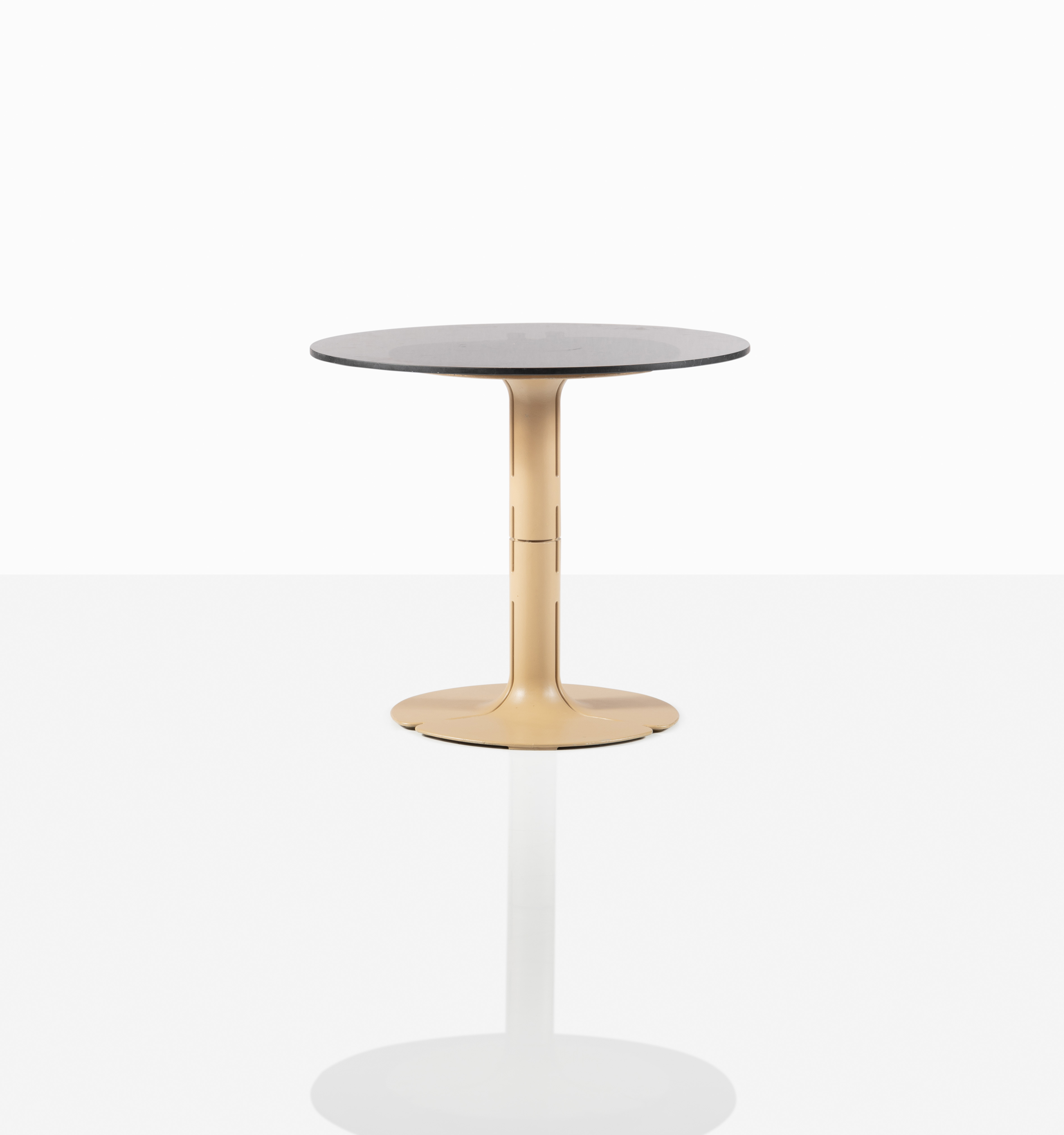
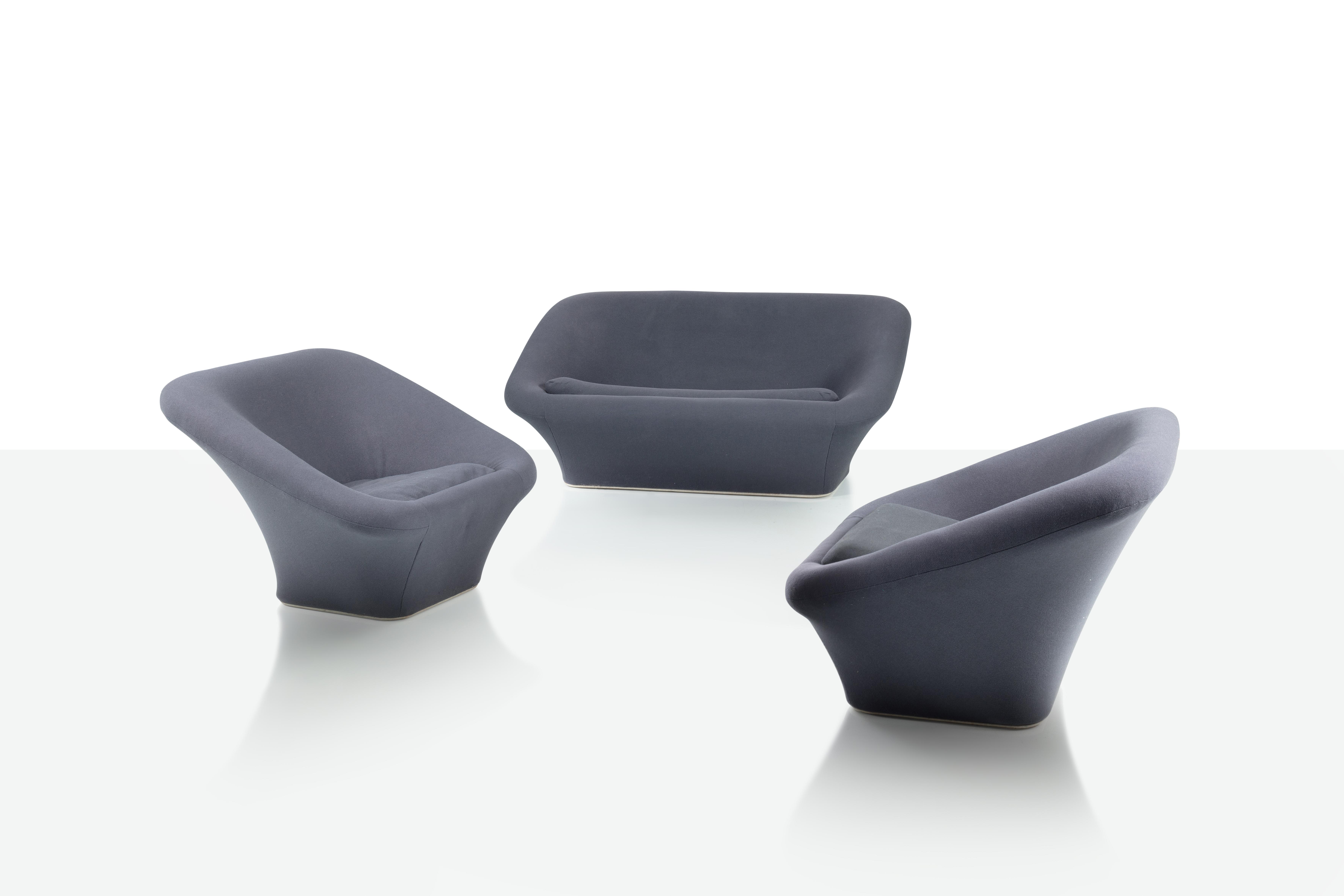
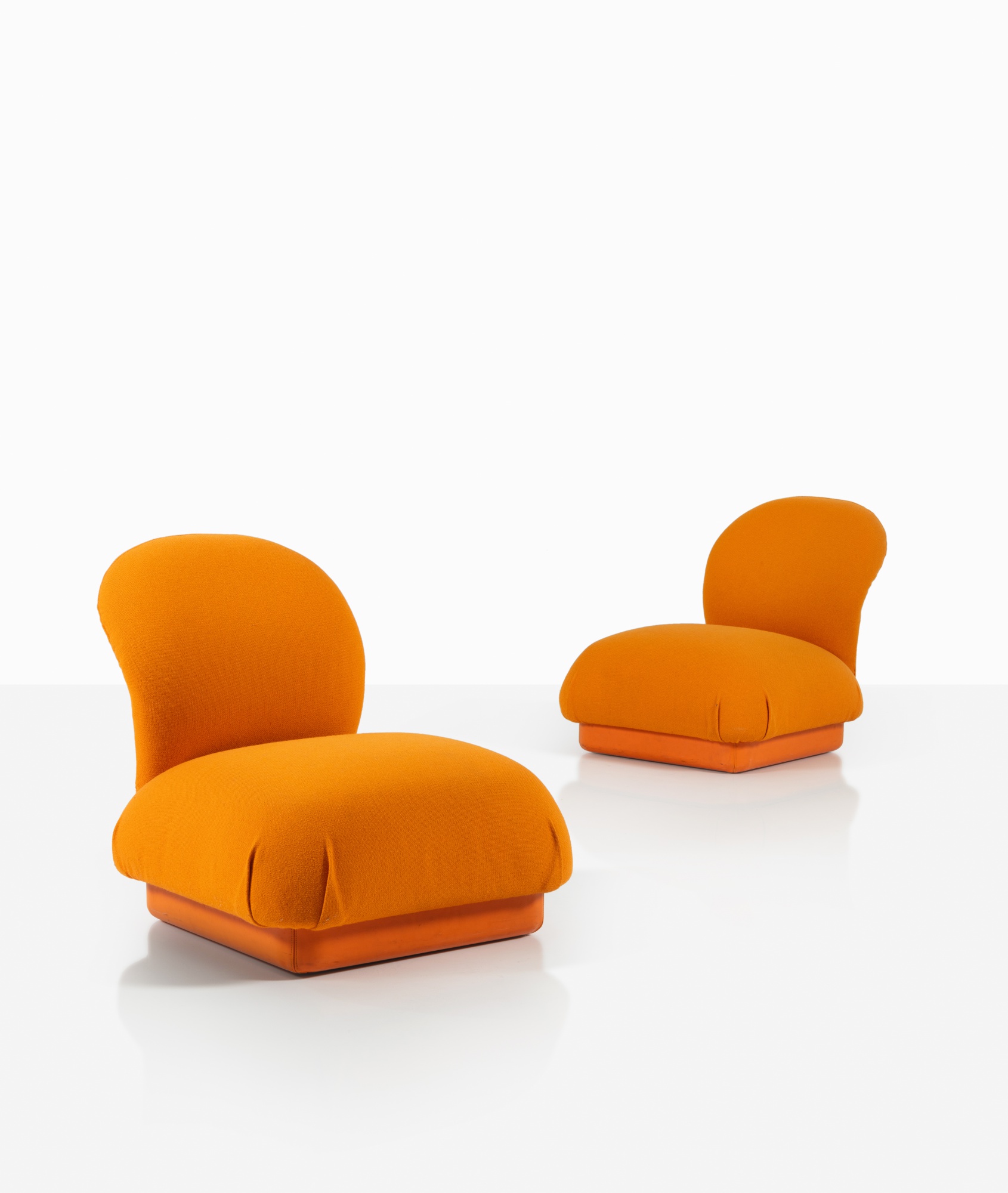
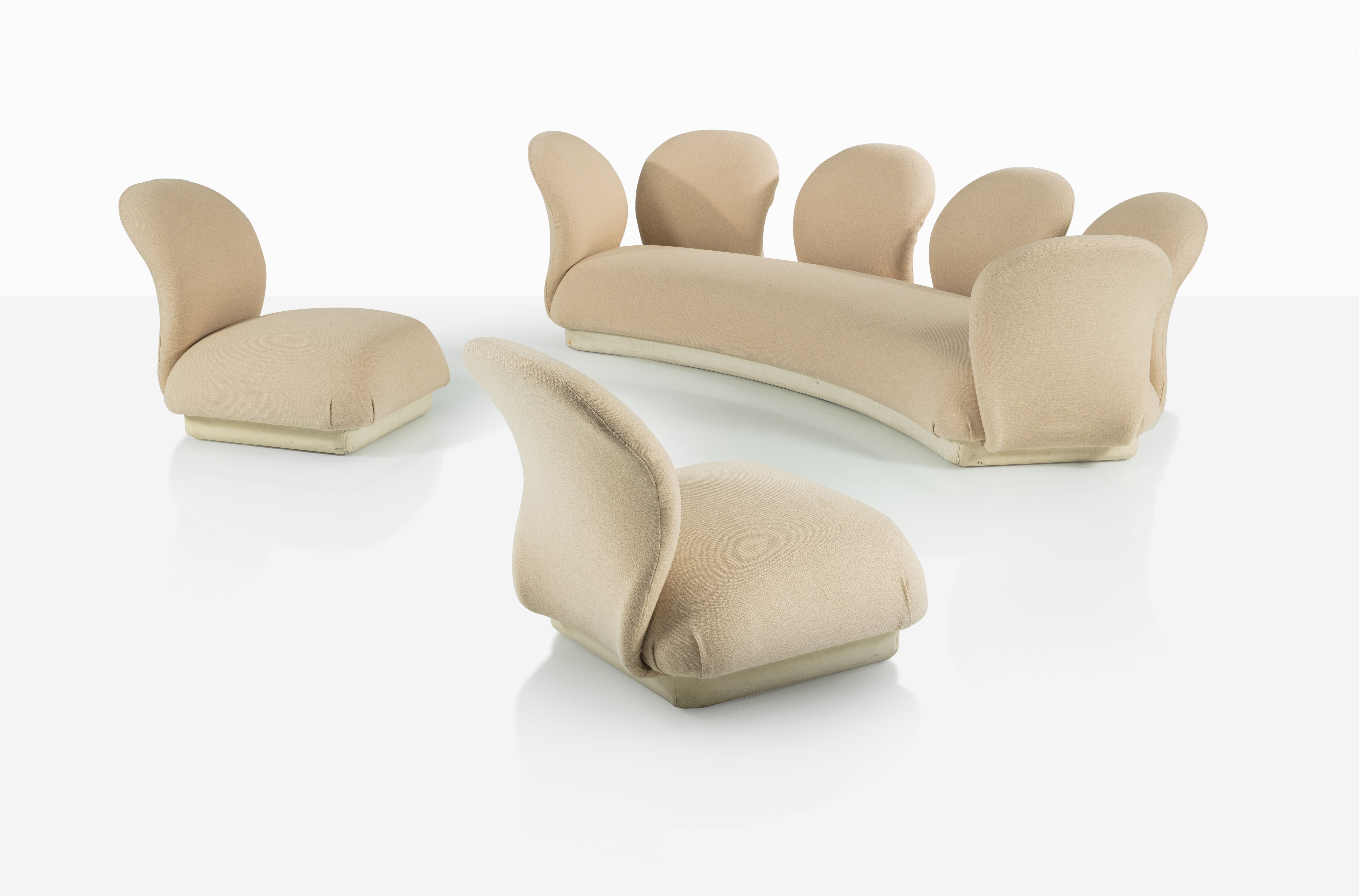
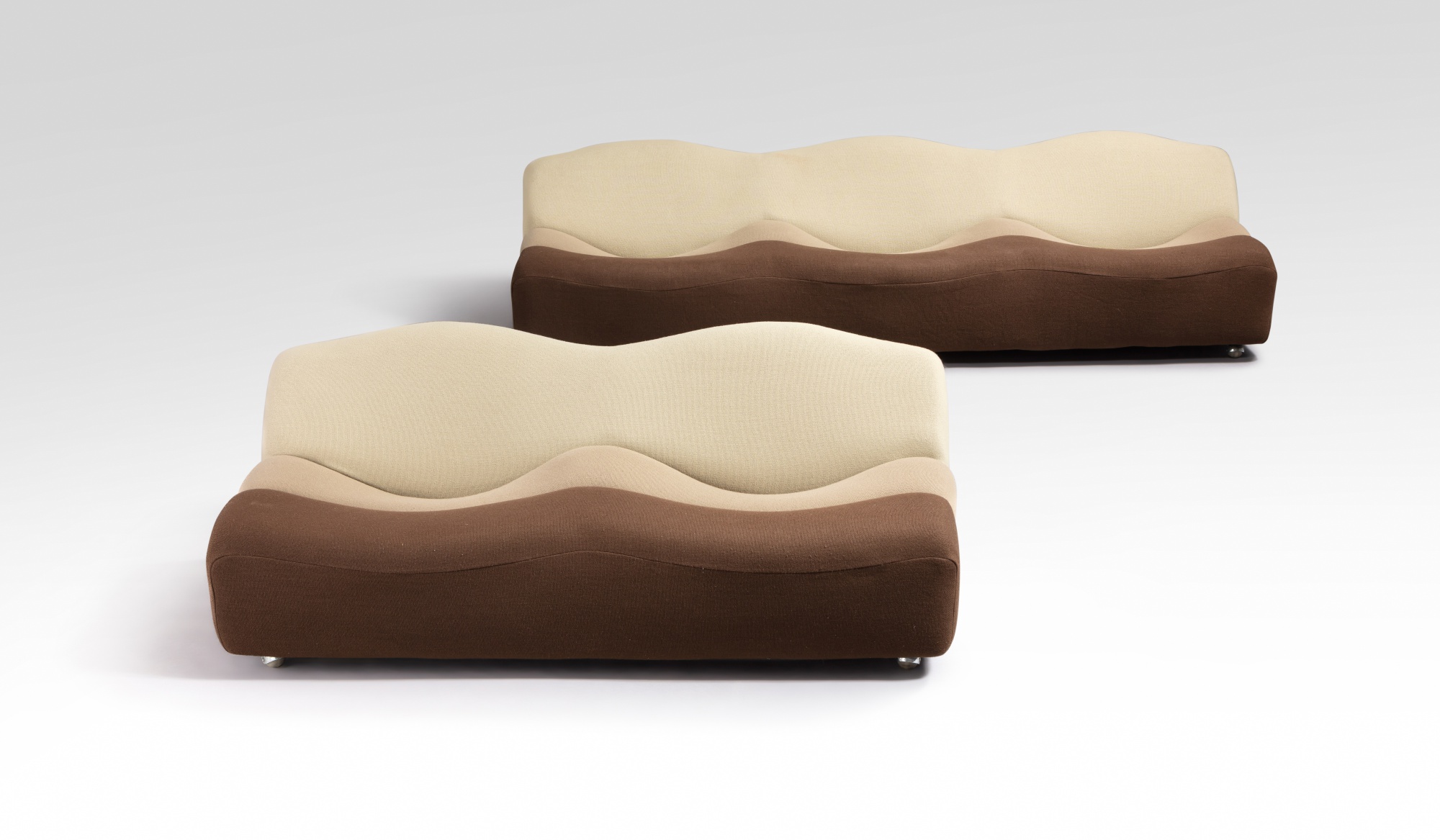
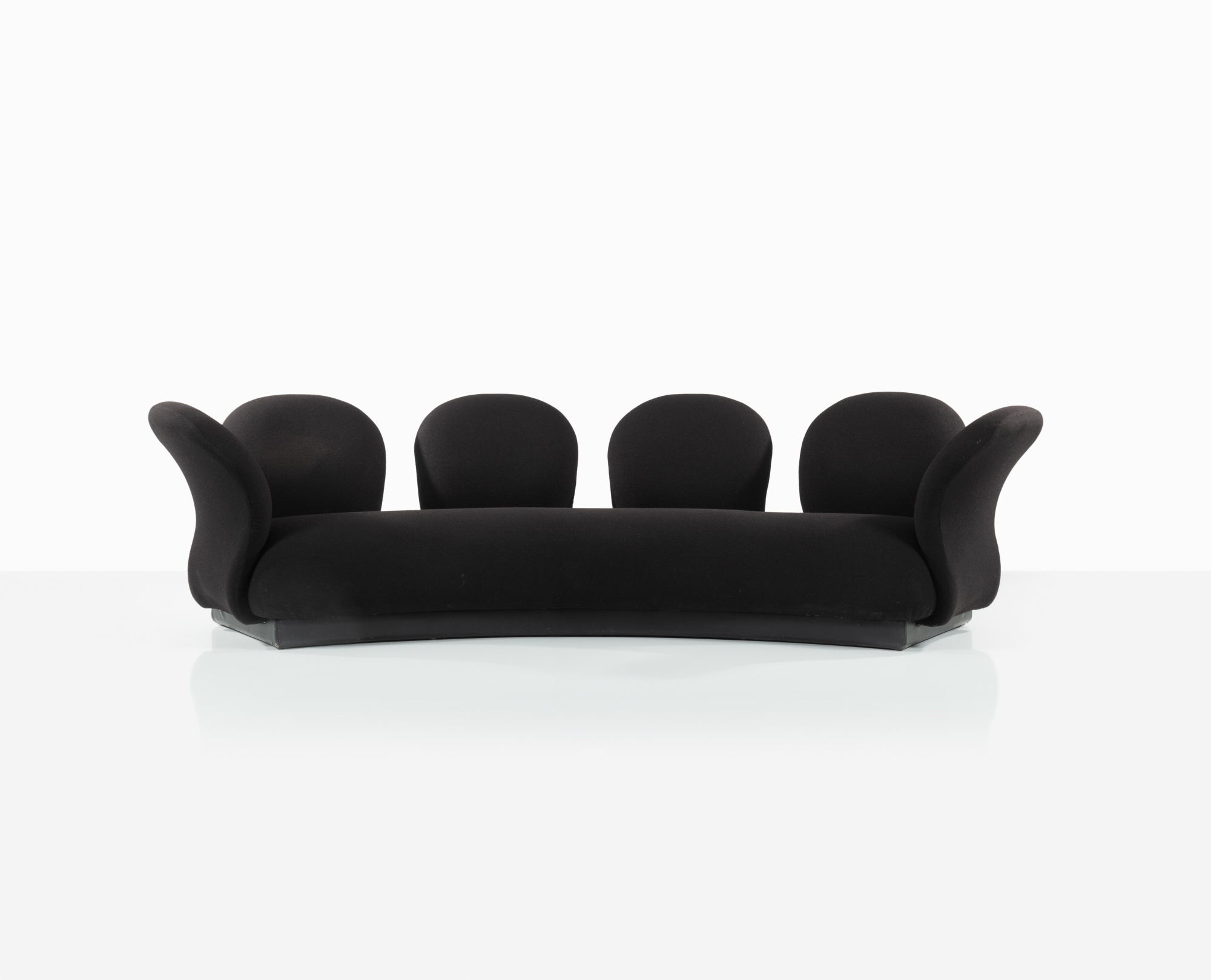
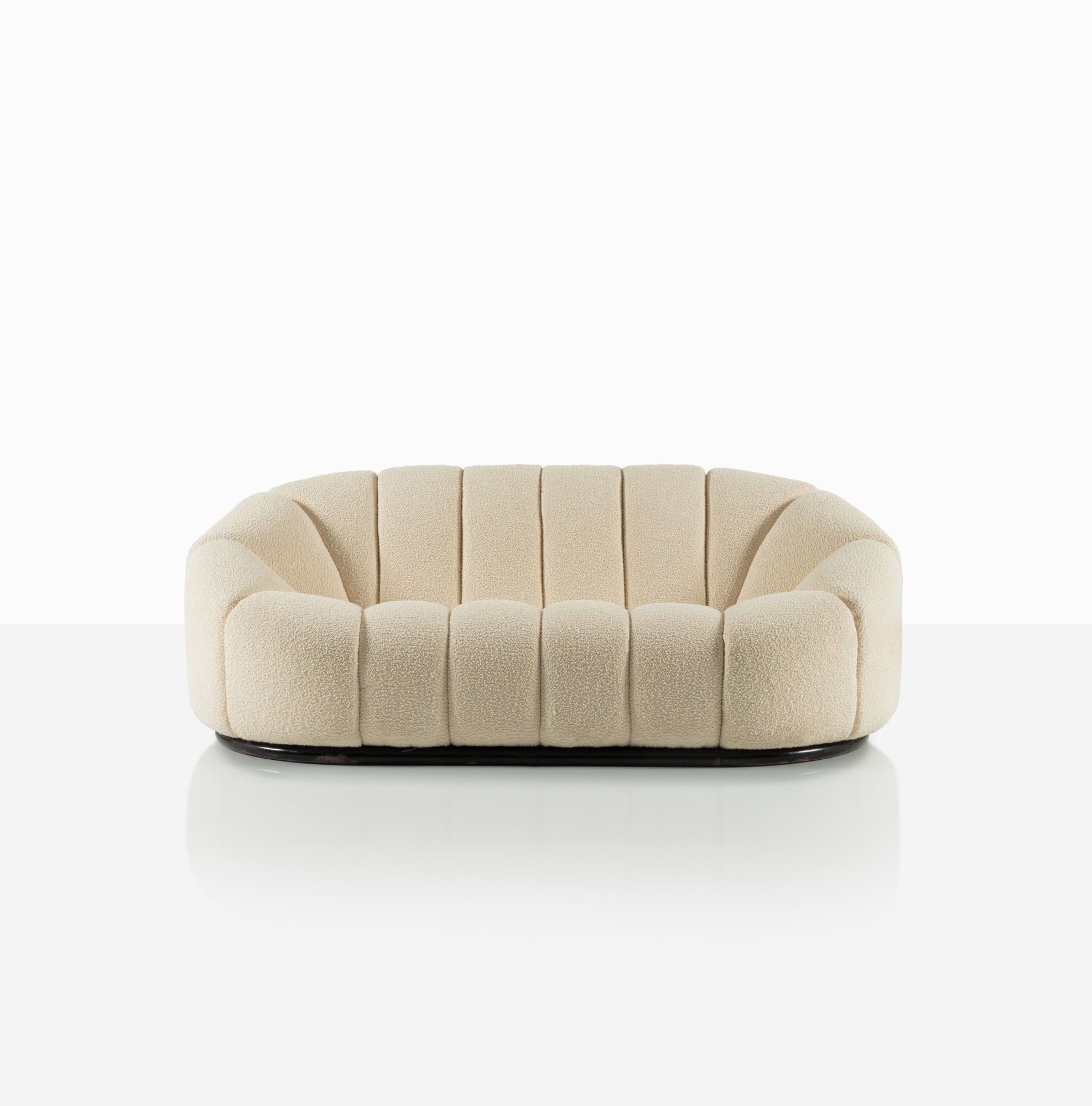
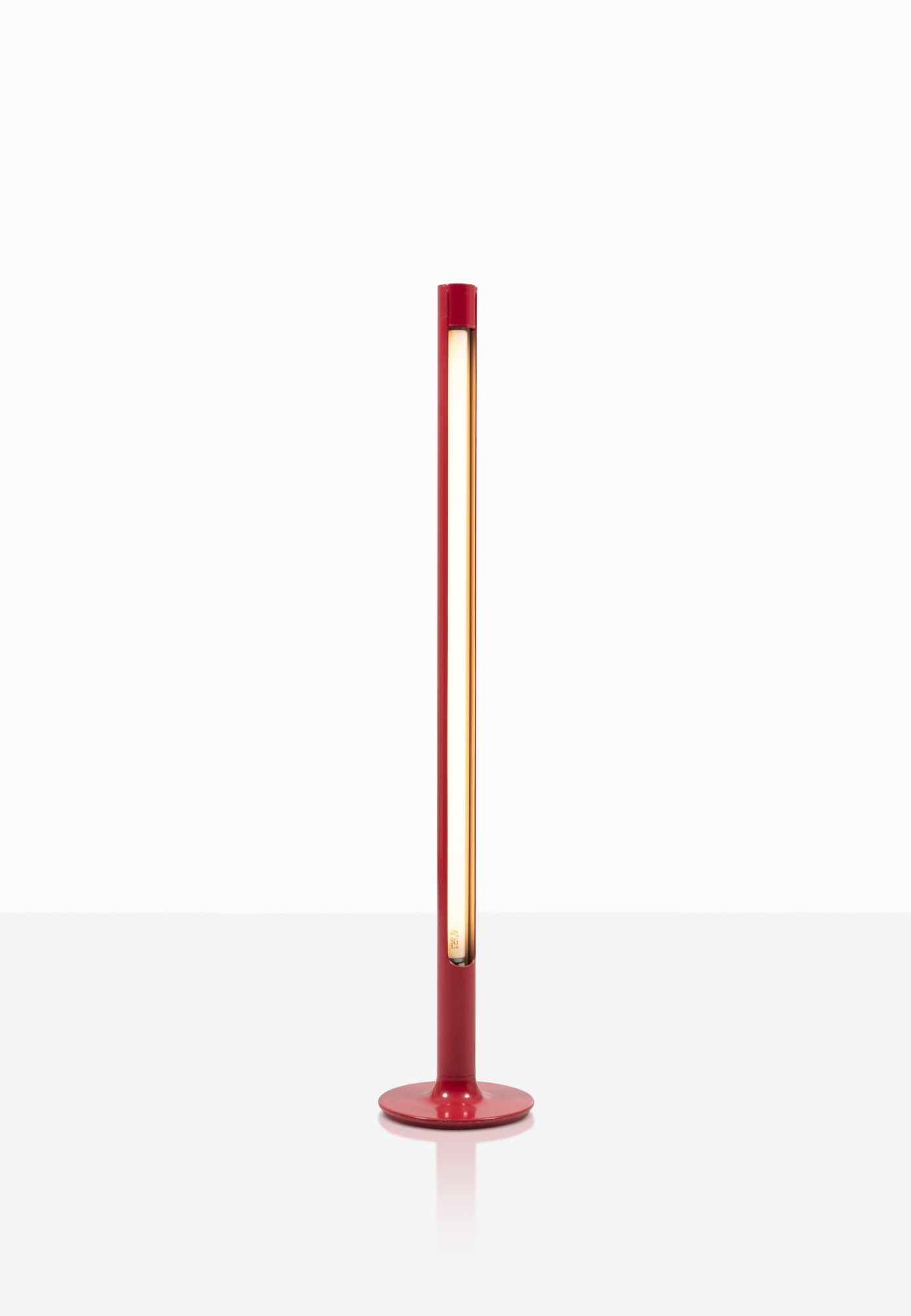
There is a moment, somewhere between sitting and floating, that Pierre Paulin spent a lifetime engineering. It arrives when you lower yourself into one of his great low slung chairs and feel the foam and jersey stretch and yield around you like a second skin. That sensation, so physical and so immediate, is the clearest entry point into understanding why Paulin remains one of the most beloved and avidly collected designers of the twentieth century. In the years since his passing in 2009, the market for his work has strengthened considerably, with major auction houses in Paris and London regularly presenting his pieces to enthusiastic rooms, and museum collections from the Pompidou Centre to the Vitra Design Museum holding his work as canonical examples of postwar European design at its most humane and inventive. Pierre Paulin was born in Paris in 1927, and his early life carried the particular texture of midcentury France, marked by the upheavals of the Second World War and followed by the heady optimism of reconstruction and modernisation. He trained at the École Camondo in Paris, one of the great French schools of decorative arts and design, where he absorbed both the rigorous traditions of French craft and the liberating influence of Scandinavian modernism that was washing through European design culture in the late 1940s. A formative period spent working in the studio of Marcel Gascoin, a key figure in the renewal of French interior design, gave Paulin practical grounding in furniture making and a belief that good design should be available to everyone, not merely the privileged few. His breakthrough came through his long and deeply productive relationship with the Dutch furniture manufacturer Artifort, which began in the late 1950s and extended through the 1960s, the decade that would define his legacy. Artifort gave Paulin the manufacturing support and creative latitude to pursue forms that no one had attempted before at scale. Where most furniture of the era remained bound by rectilinear logic and conventional upholstery, Paulin began to think sculpturally, treating the chair as a continuous surface that could wrap, fold, and flow. The technical key to his vision was the combination of tubular steel frames, elastic webbing, foam padding, and stretch jersey fabric, a material vocabulary that allowed him to create shapes of extraordinary fluidity without sacrificing structural integrity or comfort. The results were a sequence of iconic pieces that arrived in rapid succession and collectively transformed what a chair could be. The Mushroom Chair of 1960 introduced his rounded, enveloping aesthetic to wide notice, its low profile and seamless upholstery suggesting something grown rather than constructed. The Ribbon Chair of 1966 pushed further still, its single sinuous form looping and supporting the body with a kind of structural poetry that has never been bettered. The Tongue Chair of 1967, with its tilted petal shape and vivid colourways, became an emblem of the optimism and sensory pleasure that defined design's contribution to the cultural revolution of the late 1960s. These are not merely period pieces. They remain in production, in museum collections, and in the hands of collectors who understand that Paulin solved, with genuine elegance, the fundamental problem of how a human body should meet a piece of furniture. Beyond Artifort, Paulin's career took a remarkable turn into the highest reaches of official French culture. He was commissioned to redesign private apartments within the Élysée Palace for President Georges Pompidou in the early 1970s, a mandate that asked him to bring contemporary French design into the symbolic heart of the Republic. The project required Paulin to develop entirely new pieces suited to the grandeur and function of a presidential residence, and the resulting Élysée series, including the refined AT 101 armchair, the AT 102 sofa, and a family of cast aluminium tables finished with Nextel paint and topped with smoked glass, represent some of the most considered and historically significant work of his career. He returned to the Élysée for a second commission under President François Mitterrand in the 1980s, confirming his status as the designer France trusted most when it wished to represent itself to the world through the language of contemporary design. The Élysée works that appear on the market are among the most sought after of all his pieces precisely because of this historical weight and their relative rarity. For collectors approaching Paulin's work today, the field is rich and genuinely varied. The Artifort collaboration pieces from the 1960s represent the heart of the market and the core of his artistic achievement. Within that category, early production examples in original jersey, particularly in the olive, orange, and warm earth tones that Paulin favoured, command significant premiums. The ABCD sofa system, which allowed modular configurations and demonstrated Paulin's thinking about flexible, democratic living spaces, attracts collectors drawn to his more architecturally ambitious side. The Multimo seating series, with its stainless steel bases and rigorous geometric silhouettes, reveals a cooler, more minimalist register within his work that appeals to those who love the formal rigour of Italian Rationalism alongside the warmth of French organic modernism. Condition of the jersey upholstery and the integrity of the foam are the principal considerations for any serious acquisition, and period reupholstery in correct materials by knowledgeable specialists is widely accepted within the collecting community. Paulin sits within a constellation of designers who collectively redefined comfort and form in postwar Europe. His organic approach to seating finds natural companions in the work of Verner Panton, whose 1967 Panton Chair pursued a related sculptural logic in moulded plastic, and in the sinuous furniture of Olivier Mourgue, whose Djinn series shared both Paulin's material palette and his appetite for biomorphic form. Further afield, the influence of Charles and Ray Eames in America, with their commitment to ergonomics and their willingness to treat furniture as a problem of both engineering and empathy, was clearly present in Paulin's thinking, even as his solutions remained distinctly and proudly French. Collectors who love one of these designers almost invariably find themselves drawn to the others, recognising a shared belief that the designed object should be, above all else, a generous gift to the human body. What makes Pierre Paulin matter today, more than fifteen years after his death, is precisely what made him remarkable during his lifetime: an absolute refusal to separate beauty from use. His chairs are not sculptures that you admire from a distance. They are objects that ask to be inhabited, that reward physical engagement, and that deliver something close to joy every time they are used. In an era when design is often discussed in terms of concept or branding, Paulin's work stands as a reminder that the deepest ambition of a designer is simply to make ordinary life feel better. That ambition, pursued with such intelligence, warmth, and formal mastery across a career of more than five decades, is his lasting gift to all of us who sit down.