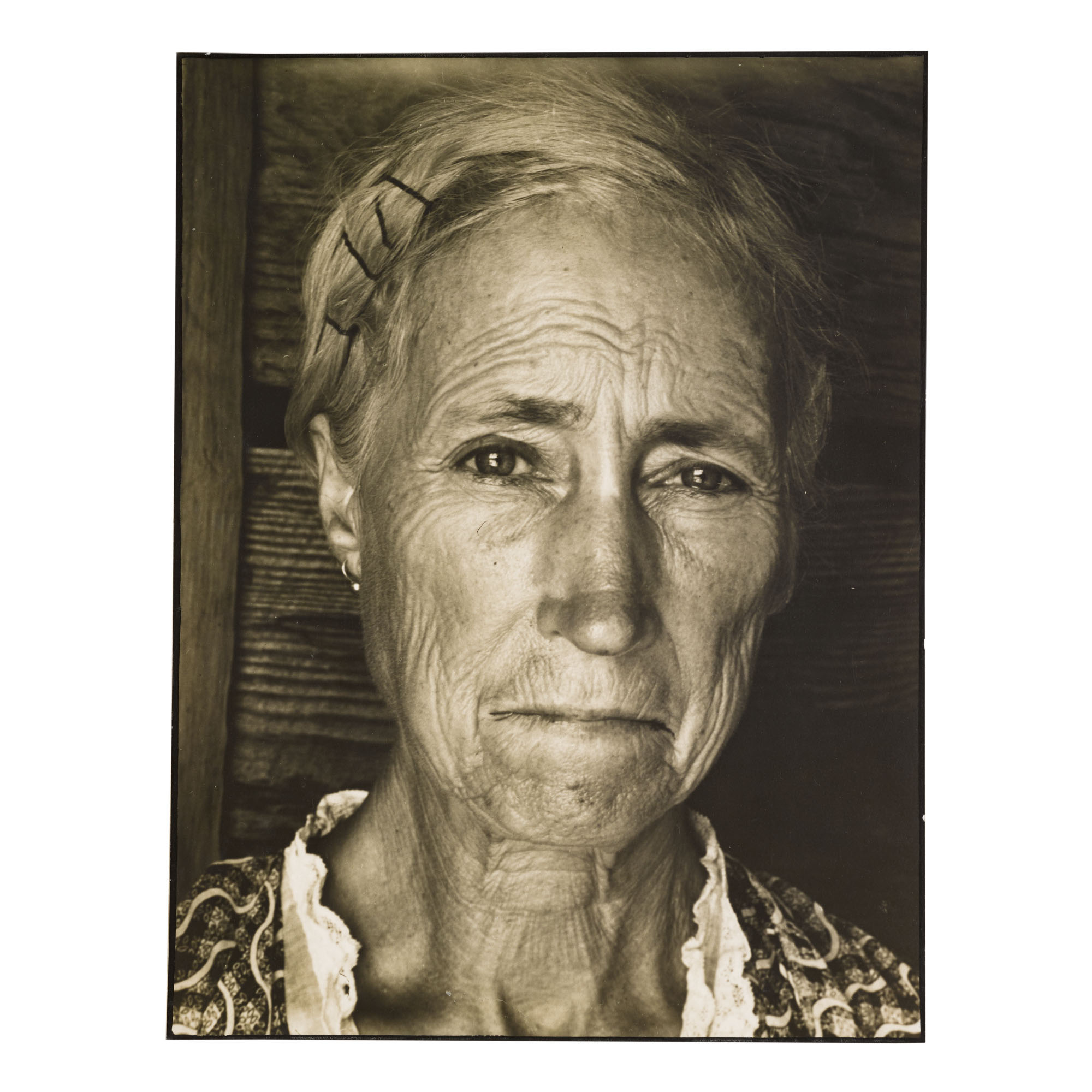
There are photographs that simply record the world, and then there are photographs that remake it. Margaret Bourke White belonged emphatically to the second category. When the International Center of Photography honored her legacy in a landmark retrospective survey, curators noted that her images did not merely capture history in progress but shaped how entire generations understood what history looked like. To stand before one of her prints is to feel the full weight of the twentieth century pressing through the paper, a sensation that has only grown more powerful with time. Bourke White was born in New York City in 1904 and grew up in Bound Brook, New Jersey, the daughter of Joseph White, an engineer and amateur photographer, and Minnie Bourke, a woman of formidable intellectual ambition. Her father introduced her early to the idea that machinery could possess a kind of beauty, taking her as a child to witness the interior workings of a printing press. That foundational experience of finding wonder inside industrial process would shape every frame she ever made. She studied at several universities, including Cornell, where she first began photographing campus architecture and discovered that the camera was not merely a tool but a language she spoke fluently. Her professional ascent was swift and decisive. By the late 1920s she had established herself in Cleveland as a photographer of steel mills and factories, drawn to the fire and steam and rhythmic forms of industrial America at a moment when the country was still glorying in its own productive power. The resulting images brought her to the attention of Henry Luce, who invited her to become one of the founding photographers of Fortune magazine in 1929. This appointment was transformative. It gave her both a platform and a license to pursue the grand visual ambitions she had already begun to articulate. Her images for Fortune in those early years stand among the finest industrial photography ever made, combining rigorous formal composition with a genuine feeling for the human scale of mechanical labor. The arc of her practice broadened dramatically through the 1930s. When Luce launched Life magazine in 1936, Bourke White contributed what became the publication's very first cover image, a photograph of the Fort Peck Dam in Montana. That single image announced the ambitions of an entire publication and cemented her reputation as one of the defining visual voices of her era. That same year she collaborated with writer Erskine Caldwell on a project documenting the lives of sharecroppers across the American South, work that would be published in 1937 as You Have Seen Their Faces. The book remains one of the most morally serious and aesthetically accomplished works of documentary photography produced in the twentieth century. Bourke White approached her subjects with a directness that was never exploitative, finding in the faces and gestures of ordinary people a dignity that her compositions insistently affirmed. Among the works that survive from that extraordinary project, Tenant Farmer's Wife, made in Georgia in 1936, stands as one of the most resonant. The image shows a woman holding a small locket, the gesture intimate and the expression complex, hovering somewhere between endurance and something more private. Printed in warm tones with characteristic black inked edges and mounted in the manner of the period, with Bourke White's own credit stamp and a penciled caption on the reverse, the photograph carries with it an entire archive of feeling. It appeared on page 65 of You Have Seen Their Faces, a page that readers would have turned to and stayed with, and it retains exactly that quality of demanding attention today. Works of this provenance and period, carrying direct stamps and contemporary captions, are among the most prized documentary photographs in the collecting world. Her career continued to expand in ways that few photographers of any era have matched. She was the first woman photographer to be accredited to the United States armed forces during the Second World War, covering the North African campaign, the siege of Moscow, and eventually the liberation of the Buchenwald concentration camp in 1945. Her photographs from Buchenwald, made alongside General George Patton, are among the most shattering documentary images in the history of the medium. After the war she traveled to India, documenting the partition and making what remains one of the most recognized photographic portraits of Mahatma Gandhi, taken just hours before his assassination in 1948. Each of these assignments demanded not merely technical excellence but a form of moral courage that Bourke White possessed in apparently limitless supply. For collectors, works by Bourke White occupy a compelling position at the intersection of aesthetic achievement and historical witness. Vintage prints from the 1930s and 1940s, particularly those carrying her studio stamps, handwritten captions, or publication proofs, command serious attention at auction and in the specialist photography market. Her industrial photographs from the late 1920s and early 1930s appeal to collectors drawn to the formal rigors of Modernist photography, while the documentary work of the Depression era attracts those who prize photography's capacity to function as social record and humanist statement simultaneously. Comparable figures in terms of market positioning and cultural significance include Dorothea Lange, whose work from the same period explored similar terrain, as well as Walker Evans, whose photographs for the Farm Security Administration represent a parallel and equally celebrated chapter in American documentary practice. Within the broader context of twentieth century photography, Bourke White also stands in productive relationship with the traditions of European Modernism, sharing certain compositional sensibilities with figures such as Alexander Rodchenko and László Moholy Nagy, though her grounding was always emphatically American. What makes Bourke White so vital today, beyond the historical record her images constitute, is the quality of her seeing. She was not a passive recorder but an active shaper of visual meaning, someone who understood that the formal decisions made at the moment of exposure would determine how a subject was understood for generations. In an era when photography is everywhere and attention is fragmented, her work models a form of sustained looking that feels increasingly necessary. Museums, scholars, and collectors continue to return to her archive precisely because the photographs never stop giving. They reward slow attention, reveal new layers on each encounter, and insist with quiet authority that the world, in all its beauty and difficulty, is worth this quality of regard.