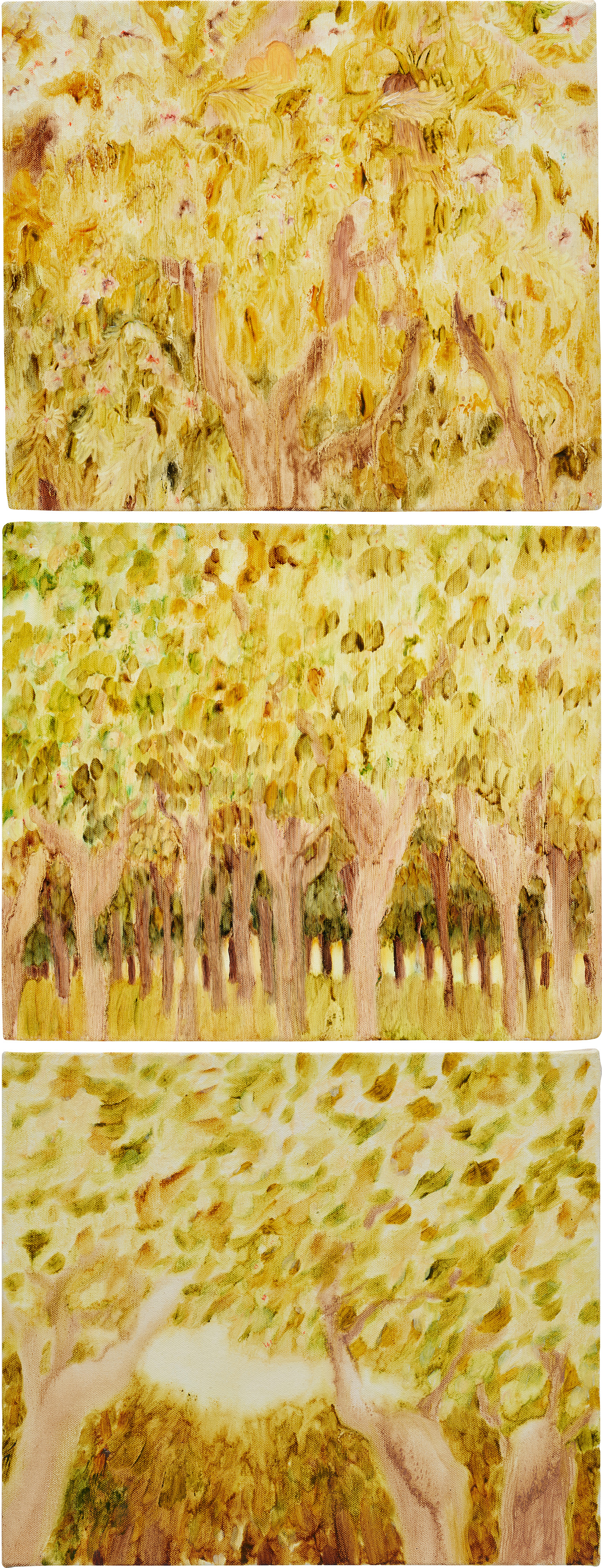
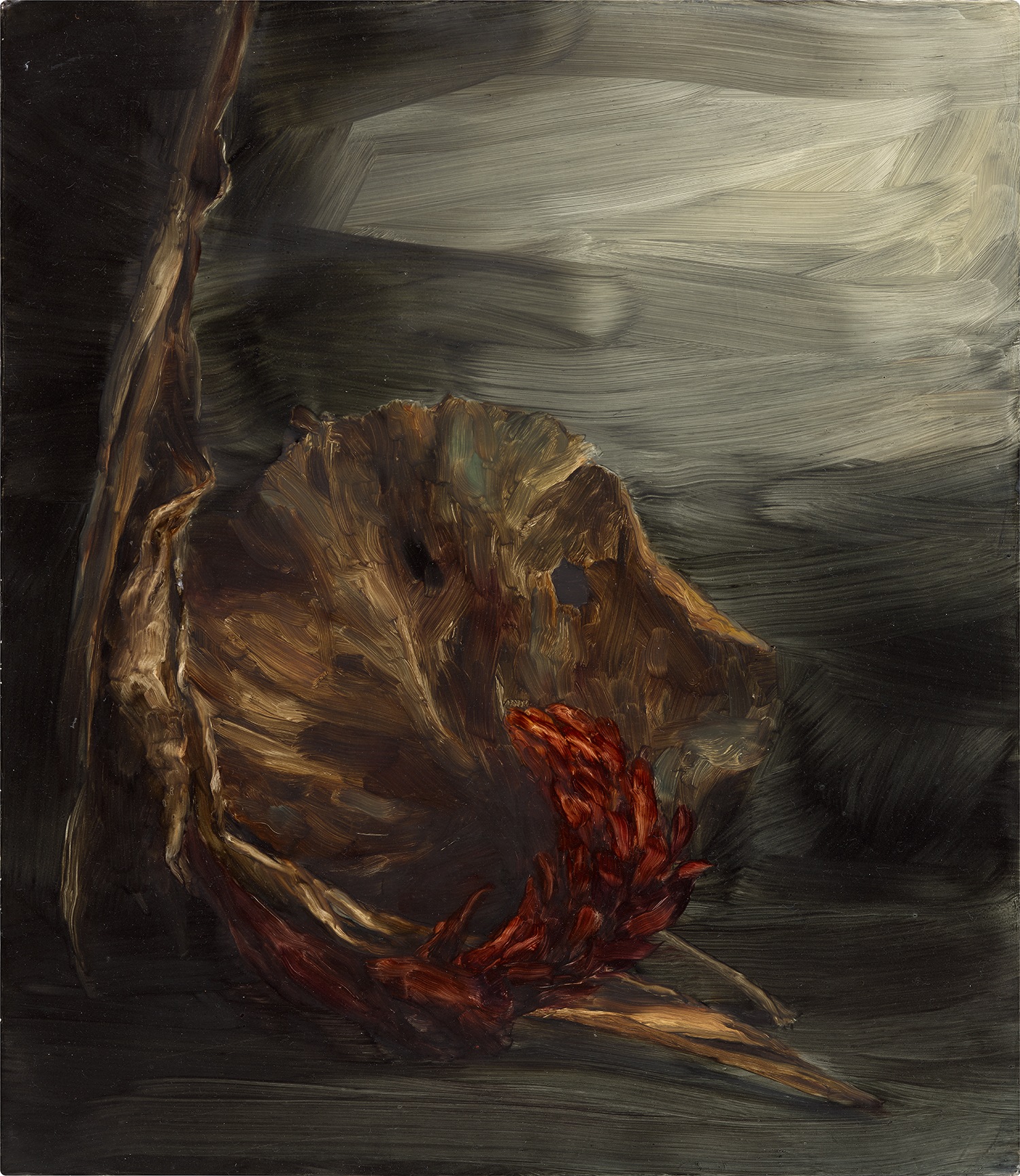
There is a particular kind of attention that Lesley Vance demands of her viewers, a slow and rewarding looking that takes time to yield its pleasures. In recent years, her work has moved steadily into the permanent collections of major institutions and the homes of discerning private collectors, while her paintings continue to achieve strong results at houses including Christie's and Phillips. That sustained market confidence is not incidental. It reflects a growing consensus among curators, dealers, and collectors that Vance occupies a singular position in contemporary American painting, one that rewards the patient eye and the open mind in equal measure. Vance was born in 1977 and grew up in the American Midwest, a biographical fact that feels quietly relevant when you spend time with her paintings. There is something in her work that speaks to interiority, to the particular quality of light and shadow that accumulates when attention turns inward rather than outward. She studied at the School of the Art Institute of Chicago and later at UCLA, where she completed her MFA. That dual formation, in the traditions of Chicago and Los Angeles, gave her a rich inheritance to draw from and, perhaps more importantly, a rigorous set of questions to ask about what painting could still do. Her practice took shape in the early 2000s, when she began working from still life arrangements of natural objects, flowers, leaves, shells, and organic forms gathered in her studio. This is not the still life of the seventeenth century Dutch masters in any literal sense, though Vance is clearly a student of that tradition and its devotion to surface, light, and the passage of time. What she extracts from her source material is something more fugitive: a gesture, a curve, the memory of a form rather than its fact. The result is a body of work that hovers beautifully between figuration and abstraction, never quite settling into either camp. The paintings from the mid to late 2000s represent an early flowering of what would become her signature approach. Works from this period, including the oil on linen piece known as Ginger Flower with Leaf from 2007, demonstrate the characteristic qualities that have defined her practice ever since. Against grounds of deep, almost velvety darkness, luminous forms emerge in jewel toned oranges, greens, and crimsons, as if lit from within. The surfaces are built up through layers of oil that create a physical presence on the canvas, a tactile richness that photographs struggle to capture. Seeing these works in person is an experience of a different order entirely, which is one reason they have built such a devoted following among collectors who encounter them in galleries and fair booths rather than on screens. The 2004 work known as Three Works (i through iii), oil on canvas, offers an earlier and equally compelling window into her developing language. The triptych format invites the eye to move and compare, to find the rhymes and variations across three distinct but related fields of color and form. It is a quietly ambitious choice for a young painter, and the work rewards close attention across time. These early paintings feel like conversations with painting history, with Morandi's quietude, with the atmospheric density of late Rembrandt, and with the American abstract tradition as filtered through artists like Joan Mitchell and early Philip Guston. Vance has been represented by David Kordansky Gallery in Los Angeles, one of the most respected galleries working with contemporary painters in the United States today. That relationship has been central to the visibility and critical reception of her work, placing her alongside a roster of artists who share a serious commitment to the material and conceptual possibilities of painting. Her work has been presented at major international art fairs and in exhibitions across the United States and Europe, building an audience that spans continents and generations of collectors. For those who follow the Los Angeles painting scene with any depth, her name has long been understood as essential. For collectors considering her work, there are several things worth understanding. Her paintings are not easily read at a glance, and that quality is precisely where their value resides. They ask for return visits, for the kind of sustained looking that most objects in our visual culture no longer require. The dark grounds that characterize her canvases are not merely aesthetic choices but structural ones: they create a perceptual environment in which color appears to radiate outward, making each painting feel like a source of its own light. Works on linen, in particular, tend to carry a warmth of surface that adds another dimension to this effect. The early works from the 2000s, now with some two decades of critical conversation behind them, represent a compelling entry point for collectors building a thoughtful collection around contemporary American painting. In the broader arc of art history, Vance sits at an interesting junction. She inherits the abstract expressionist belief in painting as an arena of psychic and physical intensity, but she is also a deeply cultured artist whose work is steeped in the history of European still life and the tradition of painting from observation. This combination places her in conversation with a generation of painters who came of age in the 1990s and 2000s committed to renewing painting from within rather than against its own history. Artists such as Amy Sillman, Laura Lancaster, and in some respects the late great Cy Twombly in his later work, share something of her commitment to the luminous, the layered, and the emotionally direct. What Lesley Vance offers, ultimately, is a vision of painting as an act of profound and generous attention. She looks closely at the world, at its flowers and leaves and curving forms, and she transforms that looking into something that has no equivalent outside of paint. At a moment when the art world moves fast and the image economy moves faster, her work insists on slowness, on depth, and on the irreplaceable experience of standing before a physical object and feeling genuinely moved. That is not a small thing. It is, in fact, everything that painting at its best has always promised.