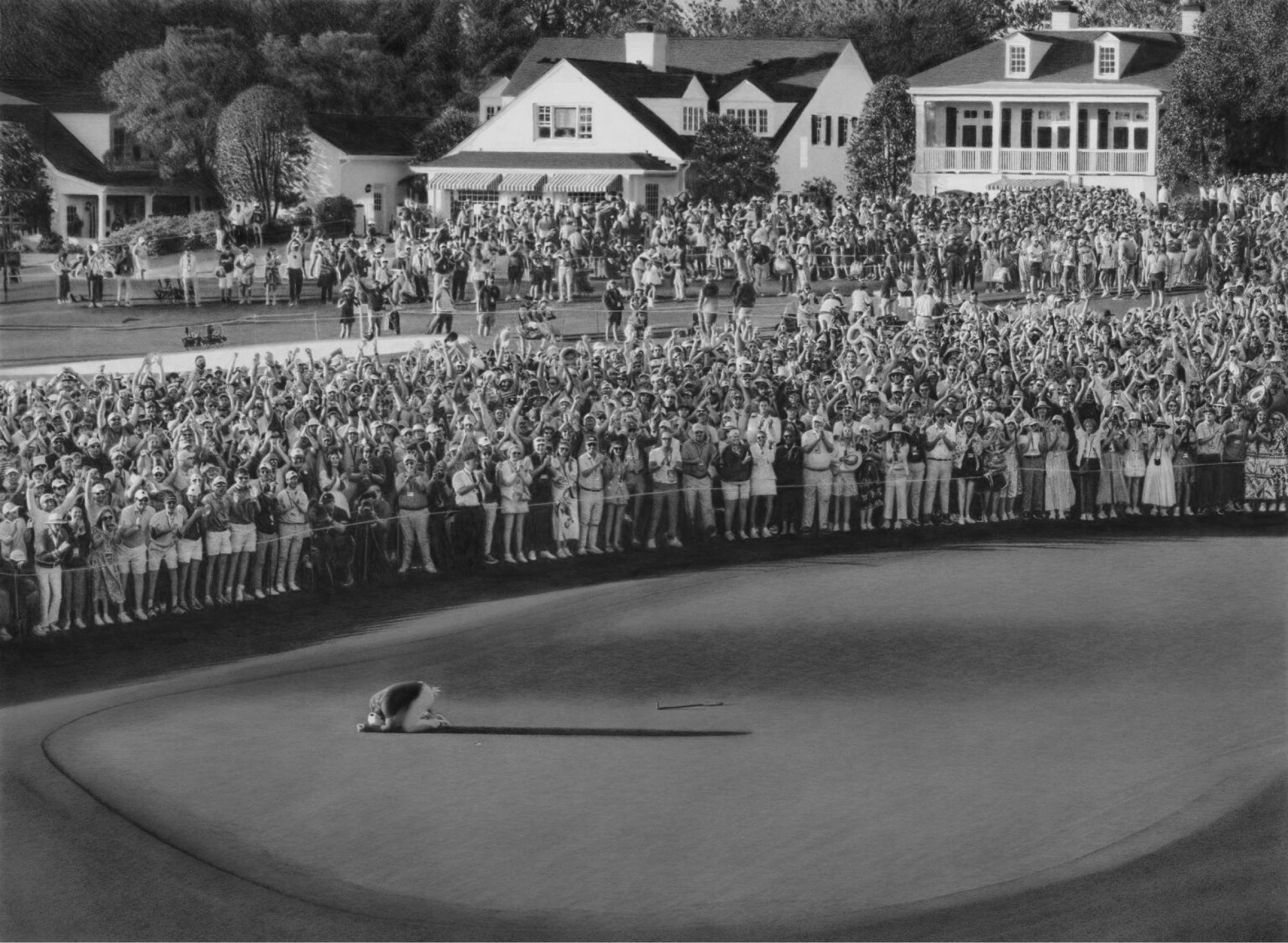
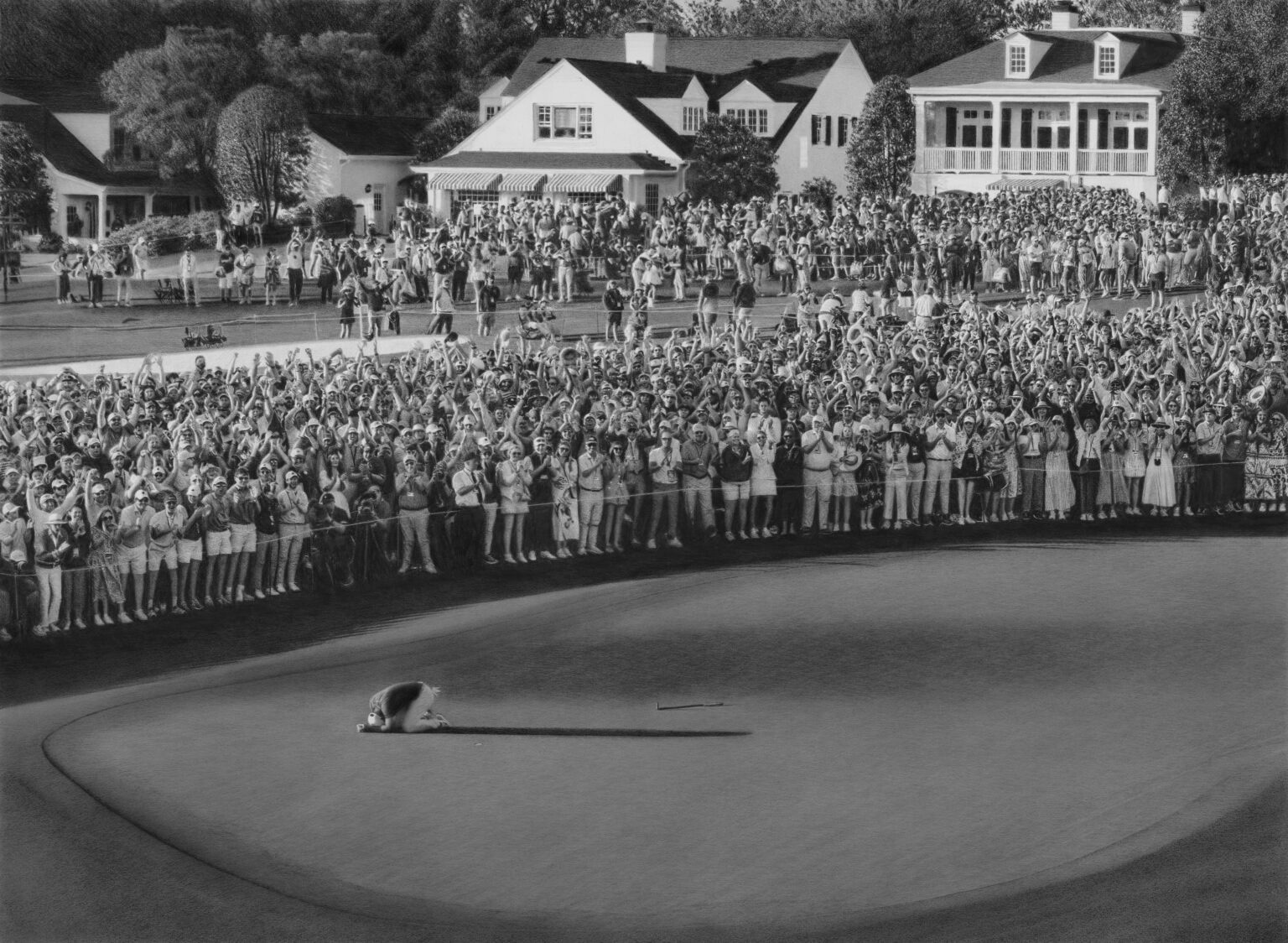
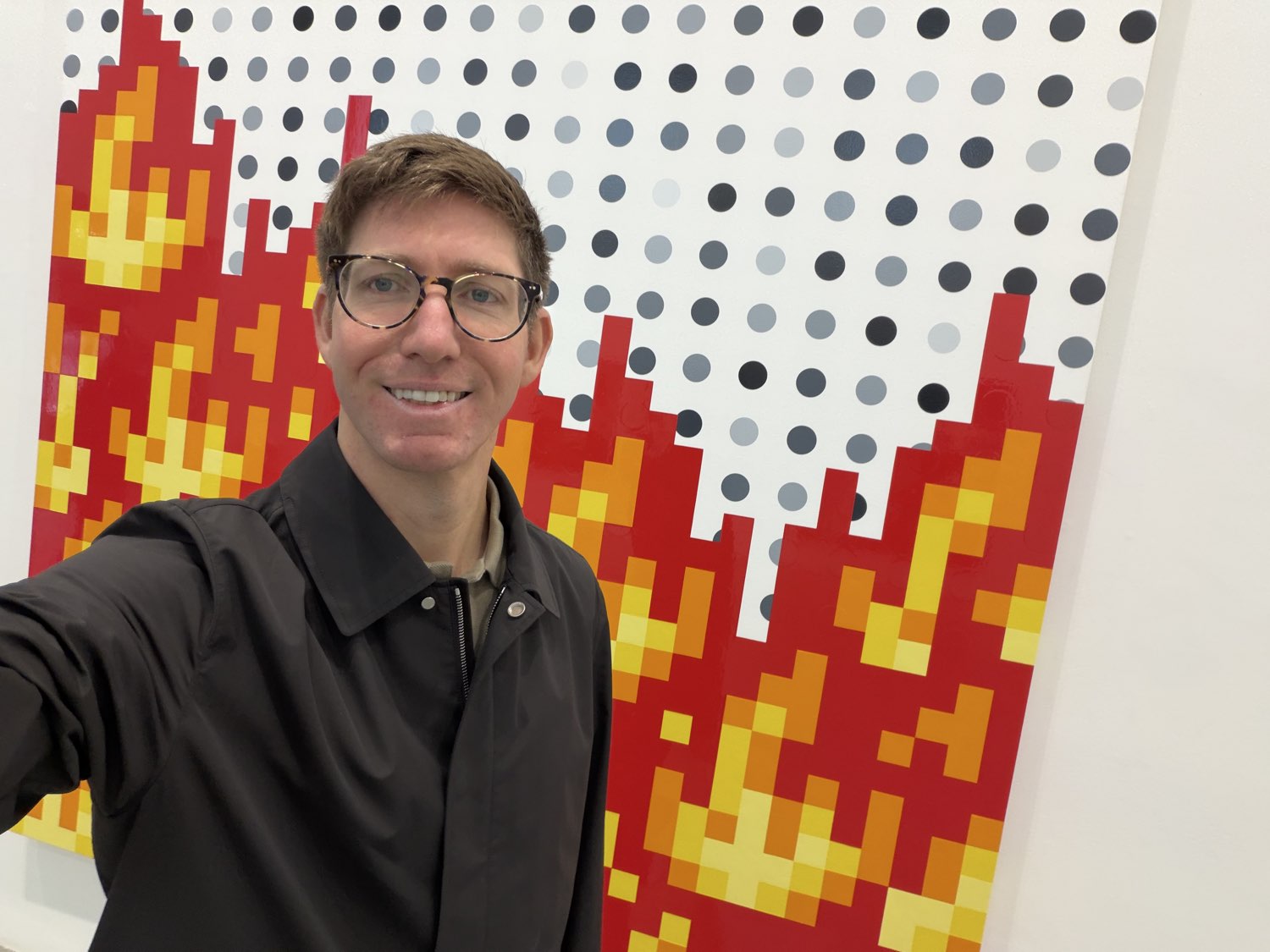
Something is shifting in the conversation around American painting, and Keegan Hall finds himself at a genuinely compelling moment within it. As galleries and institutions across the country reckon with what it means to make urgent, emotionally truthful work in the current era, Hall's paintings arrive with the quality that serious collectors and curators have come to prize above almost anything else: they feel necessary. His canvases do not merely occupy wall space. They generate a kind of atmospheric pressure, the sense that something real and hard won has been pressed into the surface and left there for the viewer to reckon with. Born in 1985, Hall came of age in the particular American moment that shaped an entire generation of artists who would grow up to grapple seriously with questions of selfhood, collective belonging, and the reliability of memory. The cultural turbulence of the late 1990s and early 2000s, the fragmentation of shared narrative, and the simultaneous explosion and erosion of personal identity as a concept all left their marks. These are not abstract concerns for Hall. They are the raw material of his practice, the sediment he layers, scrapes back, and layers again in the studio. Hall works primarily in oil and acrylic on canvas, and his command of both mediums is evident in the way he moves between their very different demands. Oil rewards patience and allows for the kind of slow, considered revision that supports his more architecturally structured compositional passages. Acrylic, with its faster drying time and capacity for opacity, enables the gestural, almost improvisational mark making that gives his paintings their sense of live presence. The tension between these two modes, the deliberate and the spontaneous, the built up and the torn away, is not incidental to his work. It is the work. Hall has said in conversation that he is most interested in what survives the process, in which marks insist on remaining visible no matter how many times the surface is reworked. The development of his practice reflects a rigorous engagement with the history of painting rather than a retreat from it. Hall is clearly fluent in the legacy of American Neo Expressionism, the raw emotional charge of Jean Michel Basquiat, the bodily intensity of Julian Schnabel, and the psychological density of Eric Fischl. He is equally conversant with the gestural abstraction lineage that runs from Willem de Kooning through Joan Mitchell and into the more recent generation of painters such as Dana Schutz and Amy Sillman, artists who have insisted on figuration and abstraction not as opposing camps but as overlapping territories to be explored simultaneously. Hall occupies that same expansive middle ground with confidence and genuine originality. Among his notable works, the 2021 graphite drawing on paper titled "The Moment" offers a window into the quieter, more intimate register of his practice. Where his paintings can be overwhelming in their saturated color and layered gestural energy, this work demonstrates that Hall's intelligence operates just as compellingly in reduction. The graphite surface rewards close looking, revealing a nuanced relationship between mark and negative space, between what is stated and what is withheld. For collectors who have encountered Hall's paintings first, "The Moment" often comes as a genuinely surprising counterpoint, evidence of an artist whose thinking is not dependent on scale or chromatic intensity to make itself felt. From a collecting perspective, Hall represents exactly the kind of opportunity that experienced collectors recognize and emerging collectors are beginning to understand. He is a living American artist whose work is substantive enough to be taken seriously at the institutional level while still accessible at the market level that makes early acquisition meaningful. His color palette, rich and saturated with those characteristic passages of raw, unpainted surface breaking through, gives his canvases an immediate visual authority on the wall, the quality that matters enormously when living with work over time. Collectors drawn to the energy of Neo Expressionism but seeking something more psychologically complex, more attuned to contemporary questions of identity and collective memory, consistently find Hall's work to be exactly what they were looking for. The conversation around artists like Hall benefits enormously from understanding the broader context in which his practice sits. Alongside contemporaries working in the gestural figurative space, he participates in a genuinely vital moment for American painting, one in which the old divisions between abstraction and figuration, between personal expression and conceptual rigor, have largely dissolved. This is painting that thinks and painting that feels, and the best work in this space achieves both simultaneously. Hall achieves both. That is not a common thing, and it is precisely why sustained attention to his career is warranted. What Hall is building, canvas by canvas and drawing by drawing, is a body of work that takes seriously both the pleasures and the responsibilities of painting. Memory, identity, the friction between private experience and shared cultural life: these are not small subjects, and Hall does not treat them as such. He brings to them a painter's full attention, a willingness to fail and revise and fail again in pursuit of something true. The collectors and institutions that recognize this quality early, that invest their attention and their trust in an artist at this stage of a genuinely promising career, are making the kind of decision that the history of collecting has repeatedly vindicated. Keegan Hall is an artist worth knowing now.