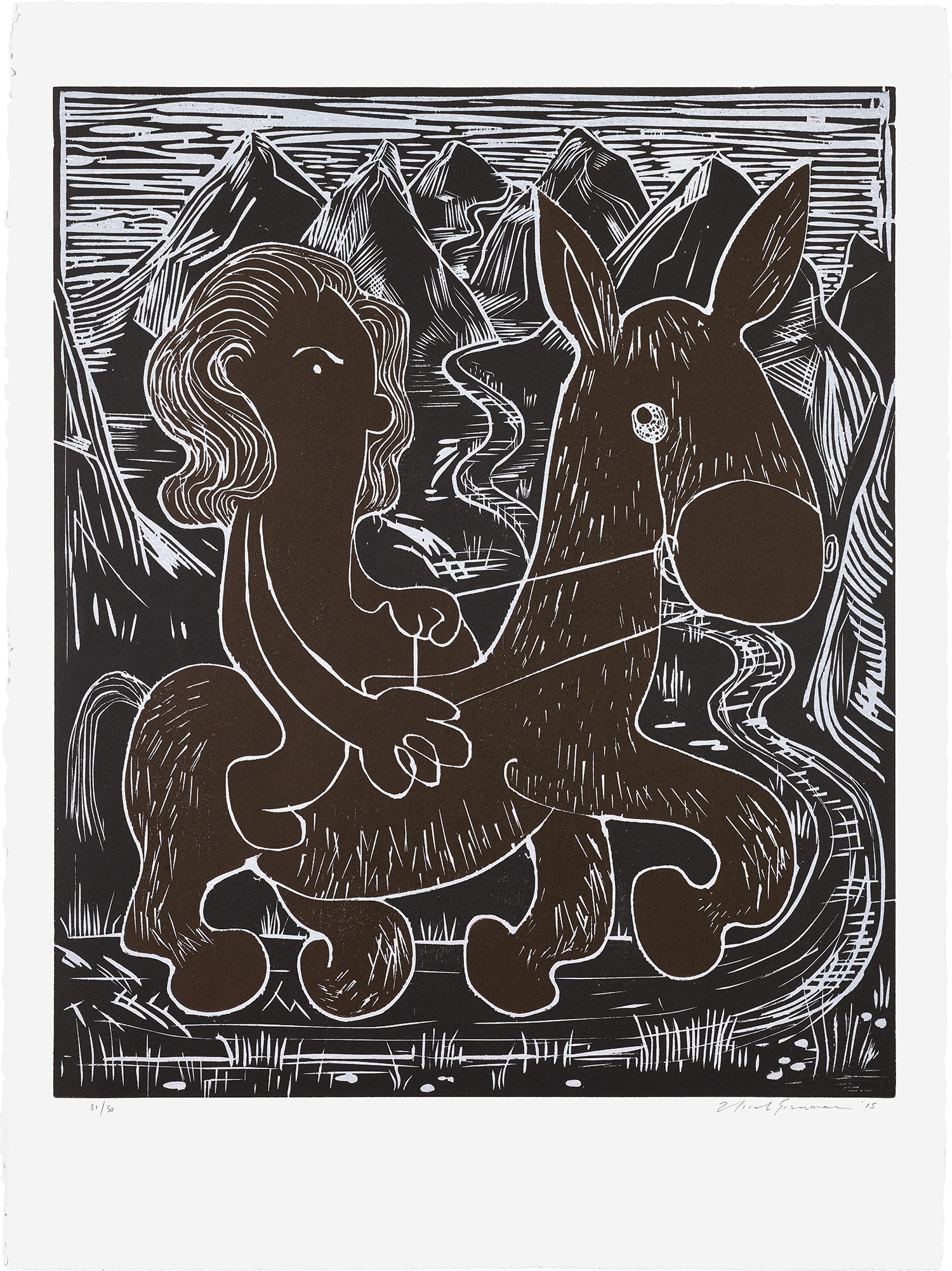
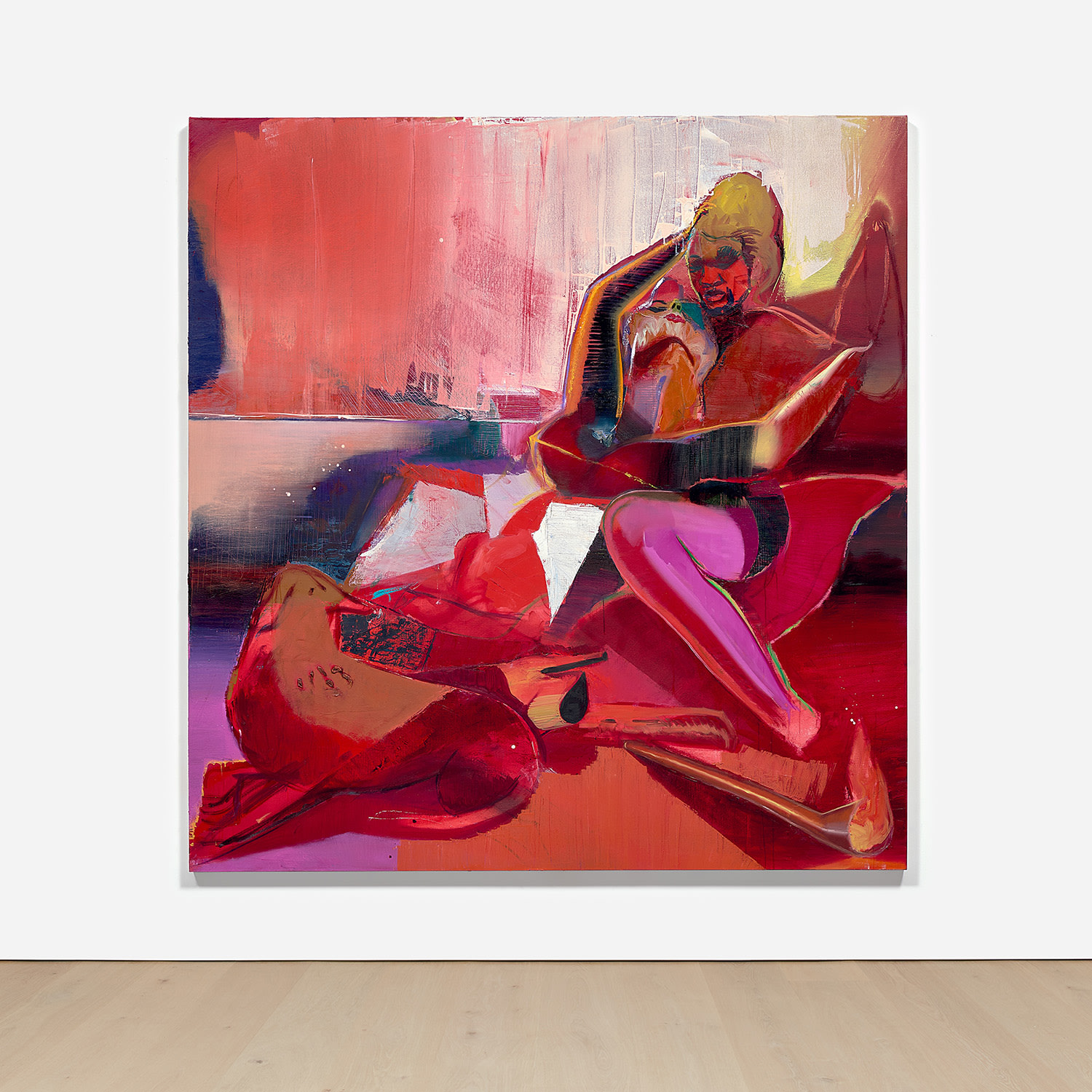
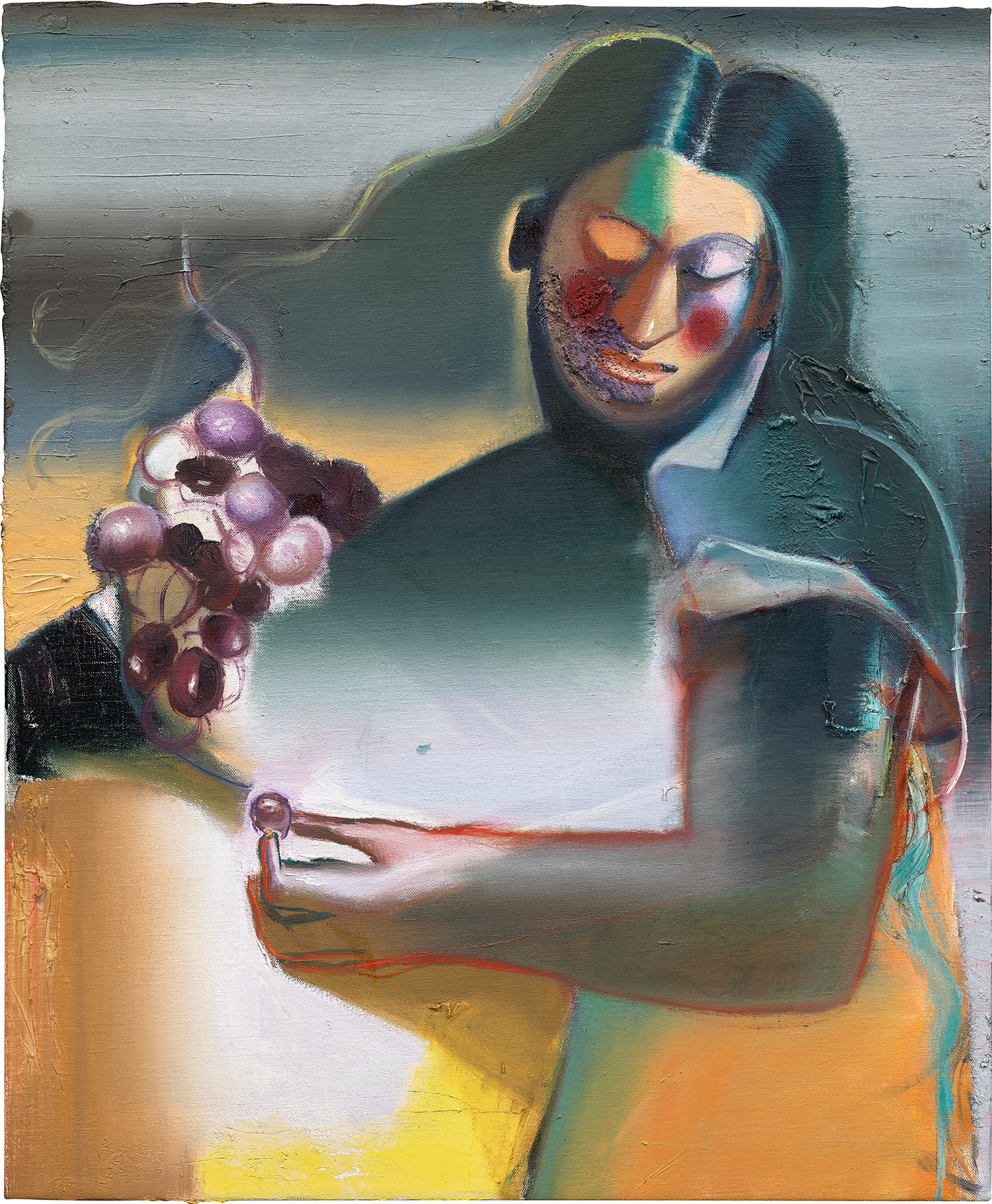
In the past several years, a distinctive voice has emerged from the crowded field of contemporary figurative painting, one that refuses easy categorization and rewards sustained looking. Katherina Olschbaur, the Austrian American painter whose large scale canvases pulse with mythological weight and psychological unease, has steadily built a reputation that now reaches across Europe and the United States. Her work has appeared in group and solo exhibitions at galleries in Vienna, New York, and Los Angeles, drawing attention from curators and collectors who recognize in her paintings something rare: a genuine synthesis of art historical literacy and raw expressive feeling. That recognition, long building among those who follow painting closely, has arrived at a moment when the art world is hungry for figurative work that operates with genuine intellectual seriousness. Olschbaur was born in 1981 and came of age between two distinct cultural worlds, the richly layered visual traditions of Central Europe and the expansive, restless energy of American contemporary art. That dual inheritance is not merely biographical texture; it is visible in the work itself. Her paintings carry the density of someone who has absorbed the great European tradition, from the dramatic figure painting of the Baroque through the psychologically charged imagery of the early twentieth century, while also remaining alert to the freedoms and improvisations that define contemporary practice. The tension between those two orientations gives her canvases their particular electricity. Her artistic development reflects a painter who has taken her time and trusted the process of genuine formation. Rather than arriving at a signature style quickly and repeating it for commercial reward, Olschbaur has worked through problems of composition, surface, and meaning with patience and evident intellectual seriousness. Her practice draws on a remarkable range of references, mythology both classical and Northern European, the history of allegory, the theatrical staging of the Old Masters, and the gestural freedoms of postwar European expressionism. What distinguishes her from painters who merely quote art history is her ability to metabolize those sources and produce something that feels genuinely alive and genuinely her own. The paintings do not feel like citations; they feel like memories. Among her most discussed works, "The Lovers" from 2021 stands as a compelling example of her command of oil on linen and her ability to stage psychological drama without narrative resolution. The painting carries the atmosphere of a scene observed at an oblique angle, figures present but not fully legible, emotion present but not easily named. Her 2020 canvas "Grapes" demonstrates another register of her practice, an engagement with still life and symbol that reaches back through centuries of Western painting while remaining entirely of the present moment. Then there is "Sexy Horse," a giclée print in colors with hand coloring applied in crayon and watercolor on wove paper. That work reveals an artist willing to move across media and to introduce intimacy and humor into a practice that might otherwise be read as purely weighty. The hand coloring transforms a printed image into something closer to a manuscript, personal and unrepeatable. For collectors, Olschbaur's work presents a genuinely compelling proposition. She occupies a position in the lineage of European figurative painters who have always attracted serious private collections, and her American dimension gives her work a currency and a visibility that purely European painters of comparable ambition sometimes lack. The large scale canvases make strong architectural statements and reward life with a painting, revealing new details and shifting moods as light changes and one's own attention deepens. Collectors who have followed her career from its earlier stages have found themselves with works that have grown in critical stature as the artist's reputation has expanded. For those encountering her now, there remains genuine opportunity to acquire work by a painter who has not yet received the full institutional recognition that her practice deserves. In the broader context of contemporary painting, Olschbaur belongs to a conversation that includes artists such as Cecily Brown, whose large scale figurative canvases similarly draw on Old Master sources while maintaining an insistently contemporary energy, and Maria Lassnig, the great Austrian painter of psychological interiority whose influence on subsequent generations of Central European painters has been enormous. One might also invoke Neo Rauch, whose dreamlike figurative canvases similarly draw on German and Central European visual traditions to construct scenes that operate somewhere between narrative and pure psychological atmosphere. Olschbaur shares with these painters a commitment to figuration as a mode of genuine inquiry rather than mere style, and a willingness to make paintings that are genuinely difficult in the best sense, paintings that ask something of the viewer. What makes Olschbaur matter in this particular cultural moment is precisely the seriousness with which she takes the inheritance of painting. At a time when the art world moves quickly and rewards novelty above almost everything else, she has built a practice that is rooted, that accumulates meaning over time, and that demonstrates what painting can still do when approached with full commitment and genuine learning. Her blend of mythological ambition and expressive, gestural freedom speaks to a collector who understands that the best contemporary art is always in conversation with history, not fleeing from it. As her international profile continues to grow, the work she has already made will come to be seen as foundational to an understanding of where figurative painting went in the early decades of this century. To encounter a Katherina Olschbaur painting is to stand in front of something that takes painting seriously enough to demand that you do the same.