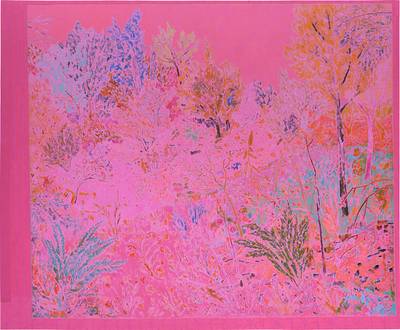
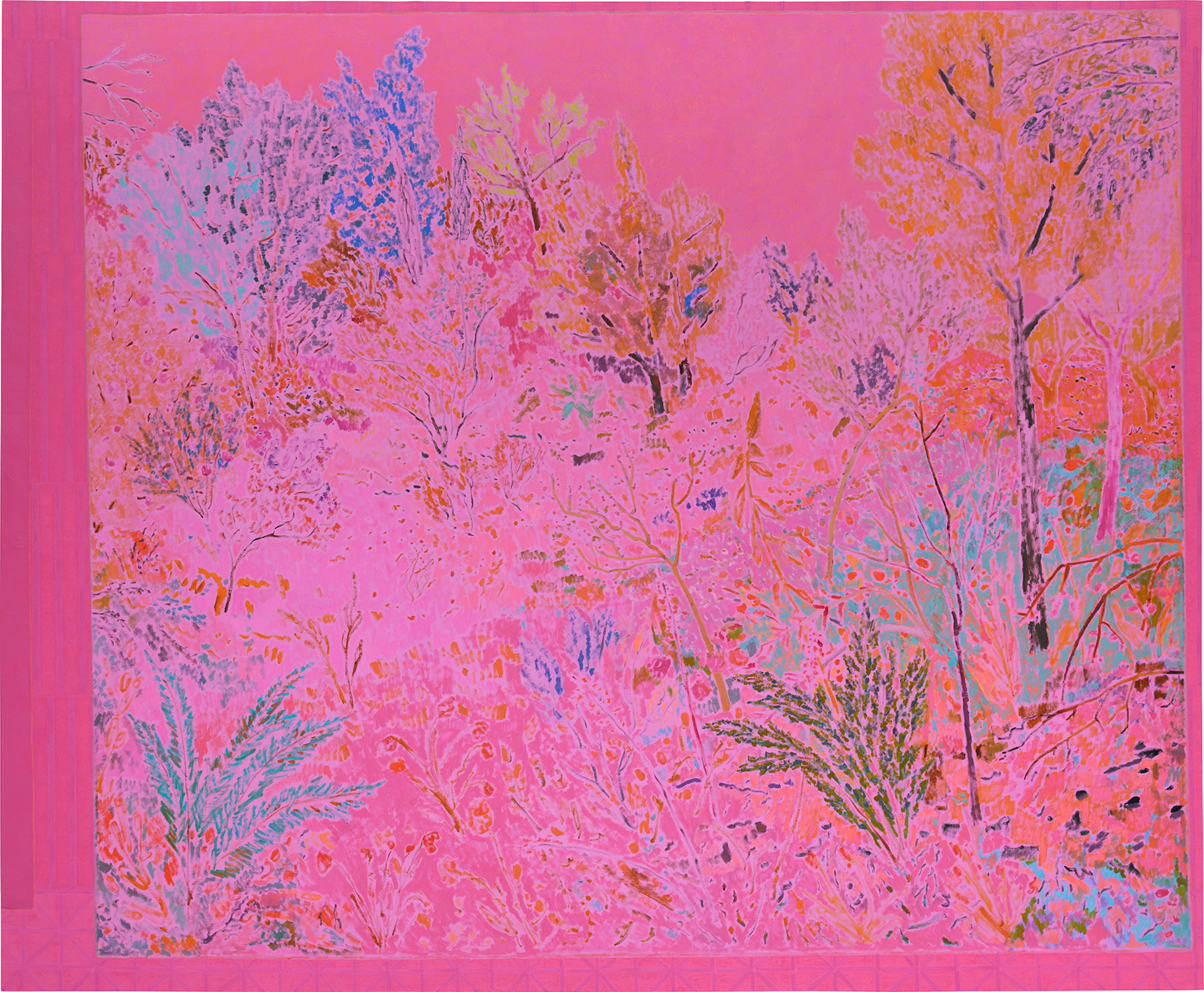
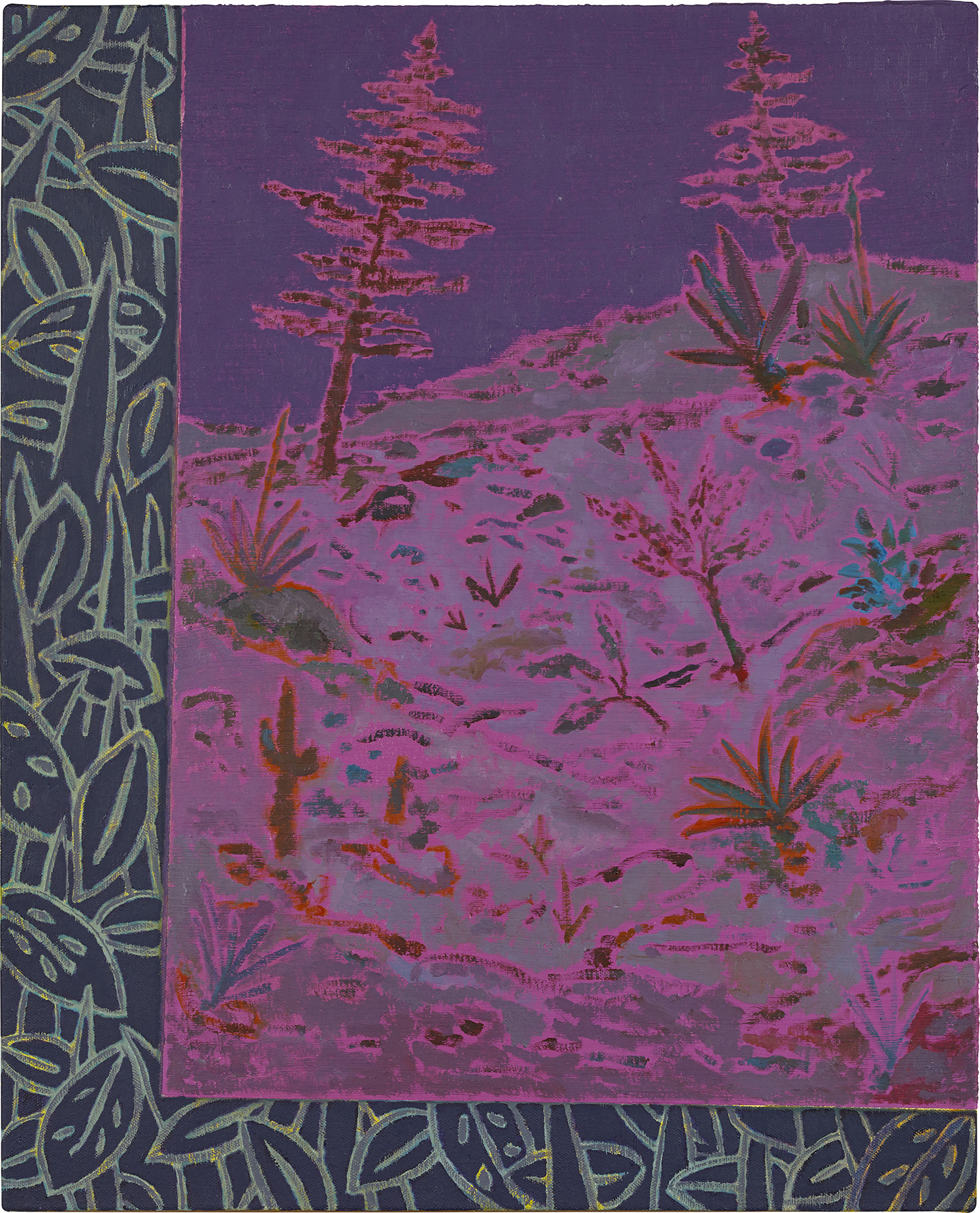
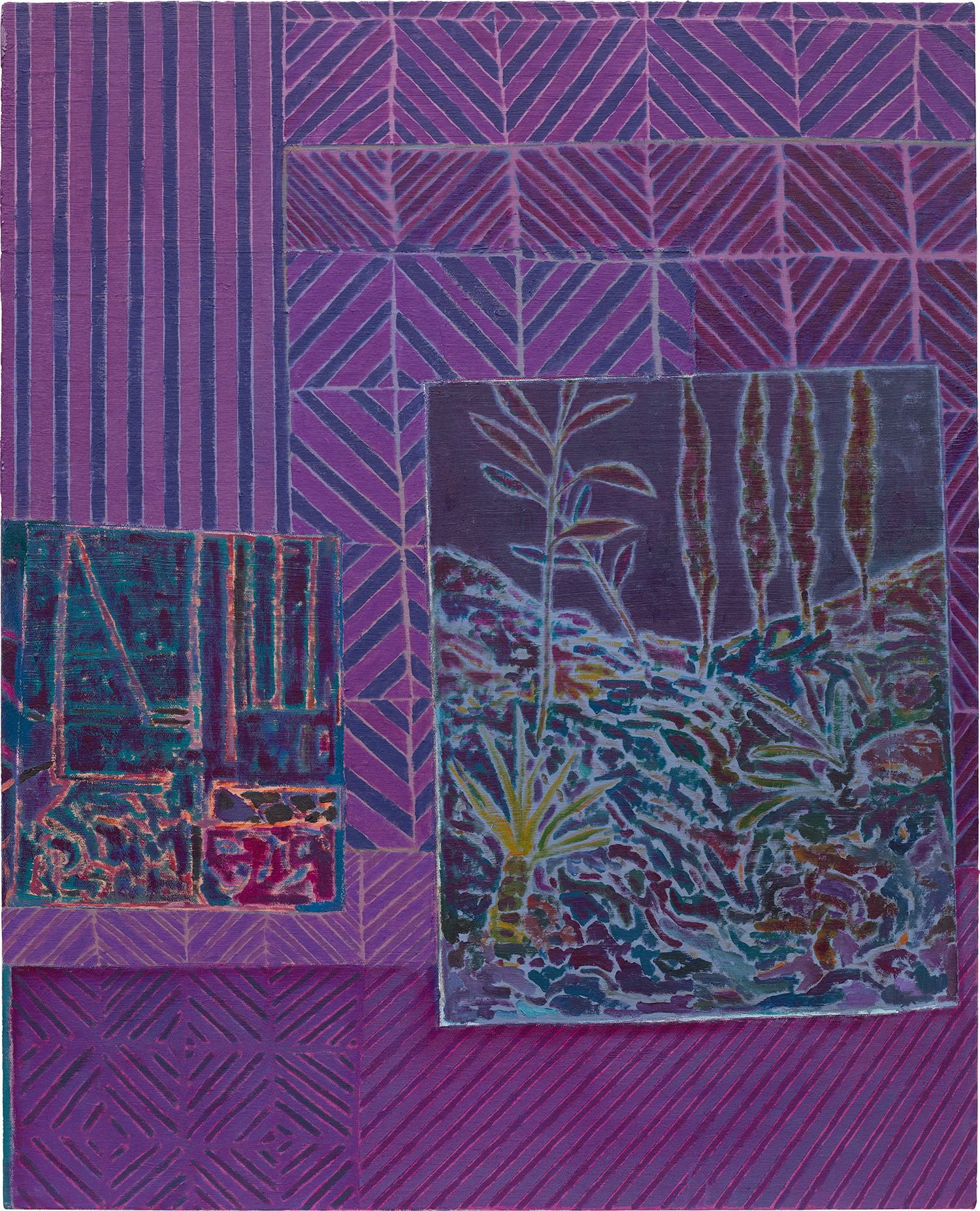
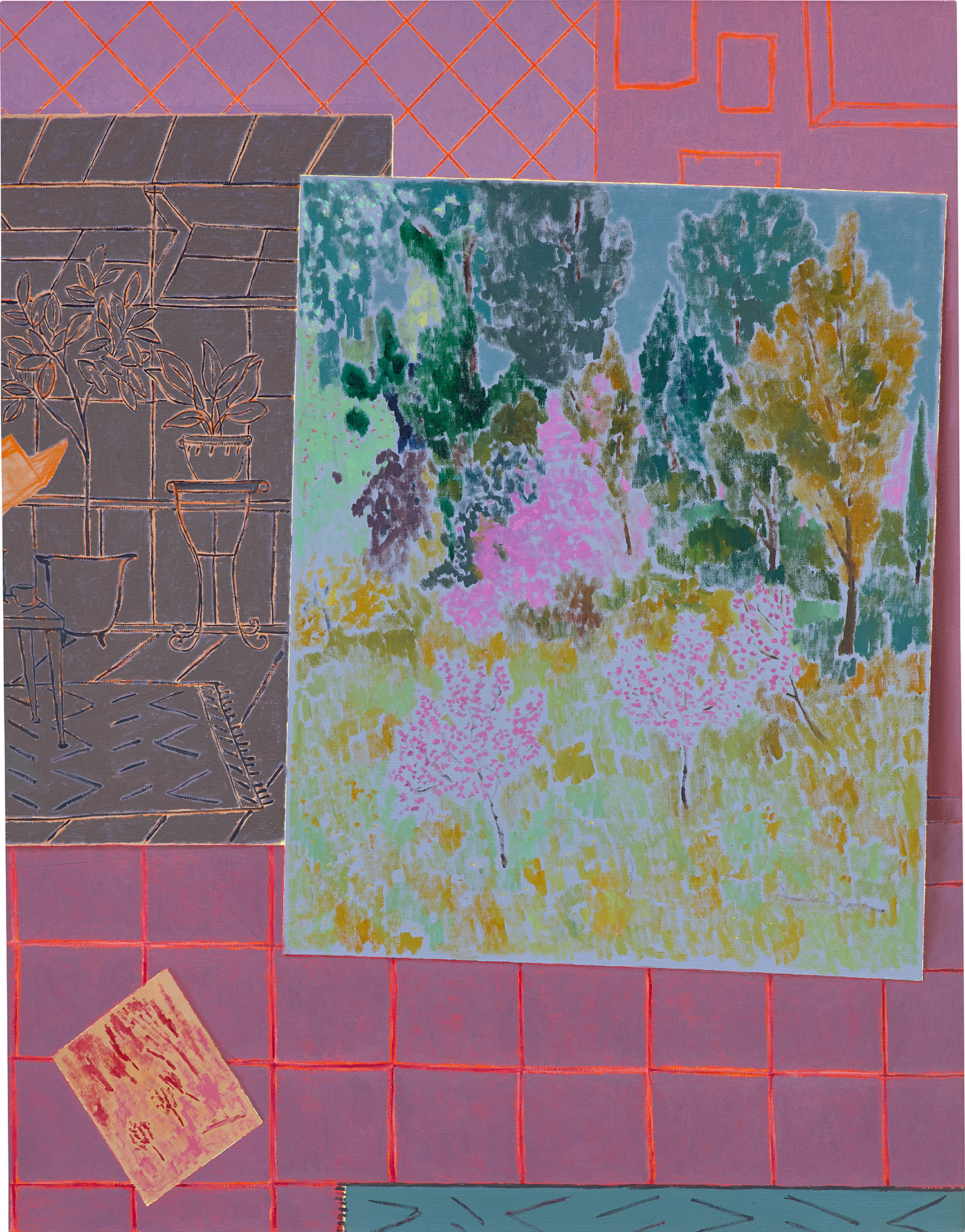
There is a moment, standing before a John McAllister canvas, when the eye simply gives up trying to locate itself. Foreground dissolves into background, a spray of blossoms becomes a geometric field, and a wash of tangerine or cobalt suddenly feels less like paint and more like weather. It is a sensation that has drawn devoted collectors and curators to his work for well over two decades, and one that continues to feel urgently necessary in a cultural moment hungry for beauty that refuses to be simple. McAllister's paintings do not offer easy resolution. They offer something rarer: the pleasure of sustained looking. John McAllister was born in 1971, and his formation as an artist unfolded across a period of intense cross pollination in American painting. The 1990s art world he came of age in was marked by a renewed interest in abstraction and decoration, a rethinking of what had been dismissed as merely ornamental. McAllister absorbed these conversations eagerly, but his eye was drawn as much to the sensory archive of the wider culture as to the gallery circuit. Textile traditions, botanical illustration, the electric palette of 1960s psychedelic graphics, the optical shimmer of Bridget Riley and Victor Vasarely: these became the coordinates of his visual education, a set of references he would spend his career learning to synthesize on his own terms. His artistic practice developed into something genuinely distinctive by the mid 2000s. Working primarily in oil on canvas, McAllister builds compositions through a process of layered mark making that is both disciplined and ecstatic. Repeated motifs drawn from nature, particularly flowers, vines, and foliage, are rendered in a palette of startling intensity and then interwoven with geometric structures that echo the logic of pattern design. The result sits at an exhilarating intersection: neither purely representational nor purely abstract, but alive to the possibilities of both. His canvases have been exhibited at venues including Marianne Boesky Gallery in New York, which has long championed his work, and his reputation has grown through consistent international exhibition across Europe and the United States. The titles McAllister gives his works are themselves a kind of poetry, and they reward attention. "Summer's Summary," painted in 2011 in oil on canvas, offers one of his most fully realized statements: a canvas in which botanical abundance is pressed so tightly against decorative rhythm that the painting seems to breathe in and out as you look at it. "Tinted and Towering" from 2012 pushes verticality and color saturation toward a kind of visual aria, while "echoes mingling gleaming," also from 2012, achieves something more atmospheric and dissolved, as though the composition were caught mid transformation. "Days Gently Embered" from 2013 shows his sensitivity to temporal feeling, the way a particular quality of late afternoon light can saturate memory as much as vision. Taken together, these works from the early 2010s represent a sustained peak of ambition and execution that firmly established his place among the most compelling colorists working in American painting. What draws collectors to McAllister is a combination of sensory power and intellectual honesty. His paintings are unambiguously pleasurable to live with, and yet they reward sustained engagement in ways that purely decorative work does not. There is a rigorous intelligence behind the excess, a structural logic beneath the chromatic abundance, and experienced collectors tend to sense this even before they can articulate it. His work occupies a confident position in the broader landscape of contemporary abstraction, sitting comfortably in conversation with artists such as Cecily Brown, Jonathan Lasker, and Thomas Nozkowski, each of whom has navigated the space between gestural freedom and compositional control with comparable seriousness. McAllister's particular contribution is the degree to which he has foregrounded pattern and decorative history as legitimate and generative sources rather than apologetic influences. In terms of the broader arc of art history, McAllister's practice participates in a long reclamation project. The decorative has been a contested category in Western art discourse for much of the twentieth century, dismissed by formalist critics and gradually rehabilitated by artists and scholars attentive to its vitality. McAllister's work aligns him with a tradition that includes Henri Matisse's late cut outs, the Pattern and Decoration movement of the 1970s championed by figures such as Miriam Schapiro and Robert Kushner, and the renewed engagement with color field painting that has shaped much of the most exciting abstract work of the past two decades. He brings to this lineage his own insistent contemporaneity: his canvases feel unmistakably of the present moment even as they carry their art historical awareness lightly and gracefully. For collectors considering McAllister's work, the works from the early 2010s represent a particularly strong entry point, offering both the full development of his signature vocabulary and the historical clarity that comes with a body of work now settled into its significance. His paintings tend to be acquired by collectors who trust their instincts and who are drawn to work that generates genuine daily pleasure without sacrificing depth. That combination is rarer than it sounds, and it is precisely what makes McAllister's canvases so enduring as objects to live alongside. Institutions and private collections that have committed to his work have consistently found that it holds and deepens over time, revealing new visual relationships and new resonances with each season. John McAllister matters today because he insists on joy as a serious artistic proposition. At a moment when painting is again being asked to justify its relevance, his canvases offer an answer that is both generous and uncompromising: beauty is not a retreat from complexity, it is one of complexity's most demanding forms. His work invites collectors not just to acquire an object but to alter the visual atmosphere of their lives in ways that accumulate meaning slowly and richly. That is a rare gift, and one that continues to deepen with each new painting he brings into the world.