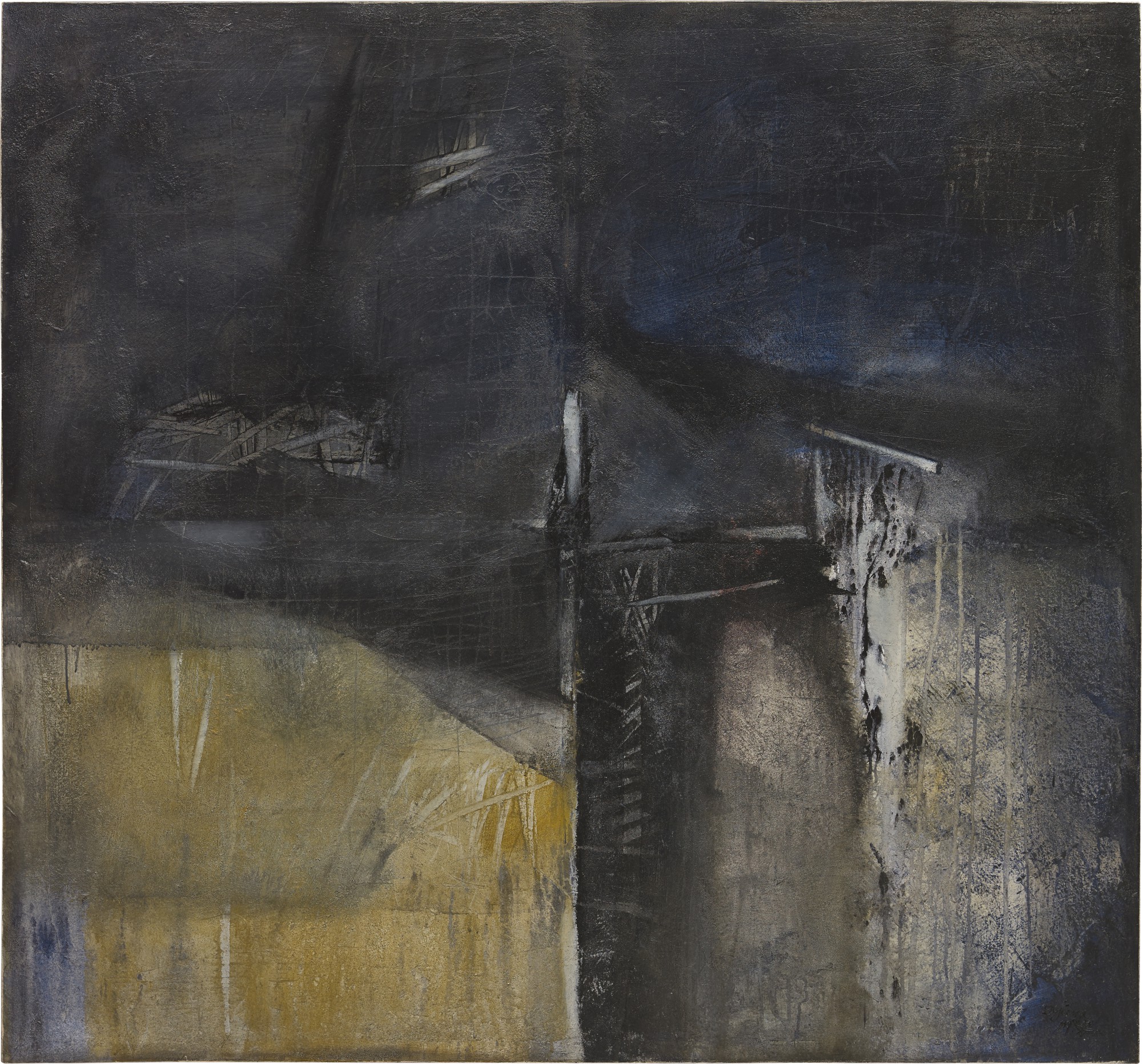
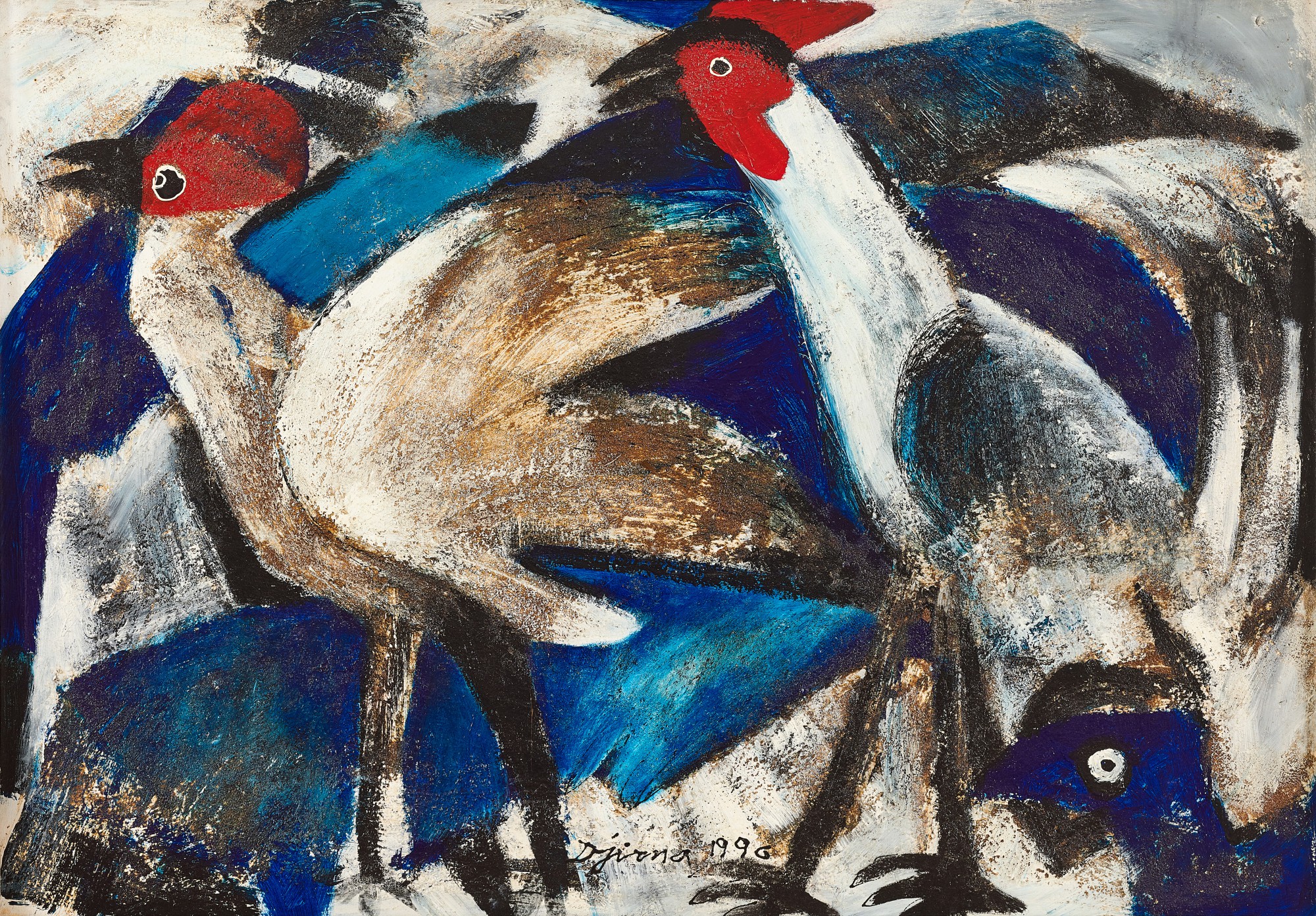
In the lush cultural ecosystem of Ubud, Bali, a quiet revolution has been unfolding across canvases for decades. I Made Djirna, one of the most compelling voices to emerge from the island's storied modern art tradition, has steadily built a body of work that commands attention not through spectacle but through depth. His paintings arrive at you slowly, the way a dream does, layered with symbolism drawn from Balinese cosmology, daily ritual, and the charged emotional life of living between worlds. As international collectors and institutions continue to turn their eyes toward Southeast Asian contemporary art with renewed seriousness, Djirna stands as an artist whose moment of wider recognition feels not only deserved but long overdue. Djirna was born in 1959 in Bali, Indonesia, and came of age within a cultural environment saturated with artistic tradition. Balinese life is, in its very structure, an aesthetic practice: offerings are arranged with care each morning, temple ceremonies are choreographed to invoke divine presence, and the visual language of myth is woven into architecture, textile, and performance alike. For a young artist growing up in this context, the boundary between the sacred and the artistic was never clearly drawn, and Djirna absorbed this sensibility deeply. He went on to study at the Indonesian Institute of the Arts in Yogyakarta, known as STSI, a formative period that brought him into contact with the broader currents of Indonesian modernism and gave him a rigorous formal foundation alongside artists from across the archipelago. The Yogyakarta years were significant not only for technical training but for the conceptual expansion they offered. Djirna encountered the tensions that defined Indonesian contemporary art in the late twentieth century: how to honor a profound indigenous visual inheritance while also engaging honestly with the pressures and provocations of modernism. He returned to Bali carrying both, and what followed was a practice that refused easy resolution. His early works began drawing on the iconography of Balinese Hinduism, the shadow puppet tradition of wayang, and the dense, patterned aesthetics of ceremonial art, but filtered through a sensibility that was unmistakably personal and searching. The work was never folkloristic or nostalgic; it was, from the beginning, something stranger and more urgent. Over the years Djirna developed a distinctive visual vocabulary centered on figures that seem to exist at the threshold between states of being. His compositions are crowded in the best sense, alive with incident, texture, and the kind of compressed narrative energy one associates with altarpieces or illuminated manuscripts. He works in acrylic and mixed media, and his surfaces carry the weight of that layering process, with passages of dense impasto sitting alongside areas of translucent wash. The painting titled Sandikala is a prime example of this approach. The word itself refers to the transitional moment of twilight in Balinese tradition, a liminal time when the boundary between the human and the supernatural becomes permeable. Djirna uses this concept not merely as subject matter but as a structuring principle, building a composition that itself seems to hover between resolution and dissolution, between clarity and mystery. The work titled Cockerels, rendered in mixed media on canvas, reveals another dimension of Djirna's practice: his capacity for observation grounded in the physical, sensory world of Bali. The cockerel carries enormous symbolic weight in Balinese culture, appearing in ritual contexts, in the economy of the village, and in the mythological imagination of the island. Djirna approaches this subject with neither sentimentality nor detachment but with a kind of reverent specificity, rendering the birds with an energy that feels simultaneously documentary and incantatory. The mixed media approach allows him to incorporate textural elements that push against the flatness of the picture plane, giving the work a tactile presence that photographs can only partially convey. For collectors, Djirna represents an opportunity that sits at the intersection of art historical significance and genuine aesthetic pleasure. His work belongs to a generation of Indonesian artists who have received serious critical attention in regional contexts, with exhibitions across Southeast Asia and participation in major art fairs in the region. The market for serious Indonesian contemporary art has deepened considerably in the past fifteen years, with auction results at houses including Christie's and Sotheby's demonstrating sustained collector appetite for artists who combine cultural rootedness with formal ambition. Djirna's work rewards the kind of close, repeated looking that defines a genuinely compelling collection, and his paintings function beautifully as anchors in a broader presentation of Southeast Asian modernism alongside artists such as Nyoman Masriadi, Made Wianta, and the late Affandi, whose emotional directness and Indonesian particularity offer useful points of comparison. The broader art historical frame for Djirna's practice is rich and illuminating. His work participates in a long conversation about what it means to make modern art outside of the Western canon's centers of gravity, a conversation that includes the Balinese modernism catalyzed in the 1930s through the presence of artists like Walter Spies and Rudolf Bonnet and their collaborations with local painters. But Djirna's vision is neither derivative of that colonial encounter nor simply reactive to it. He works from within the tradition with the authority of someone who has lived it, and his engagement with Yogyakarta's more conceptually oriented contemporary art scene gives his practice an additional layer of critical self awareness. He is an artist who knows what he is doing and why. What makes Djirna matter today, beyond the pleasures of the individual canvases, is the model his practice offers for thinking about cultural continuity and artistic originality as things that are not in opposition. In a moment when the global art world is genuinely reckoning with how to expand its frame of reference beyond a handful of metropolitan centers, artists like Djirna provide not a corrective but an enrichment. His paintings ask you to slow down, to sit with uncertainty, to find meaning in the act of looking itself. That is, in the end, what the best art has always done, and it is why the collectors who encounter his work tend to find it quietly, persistently unforgettable.