Indonesian
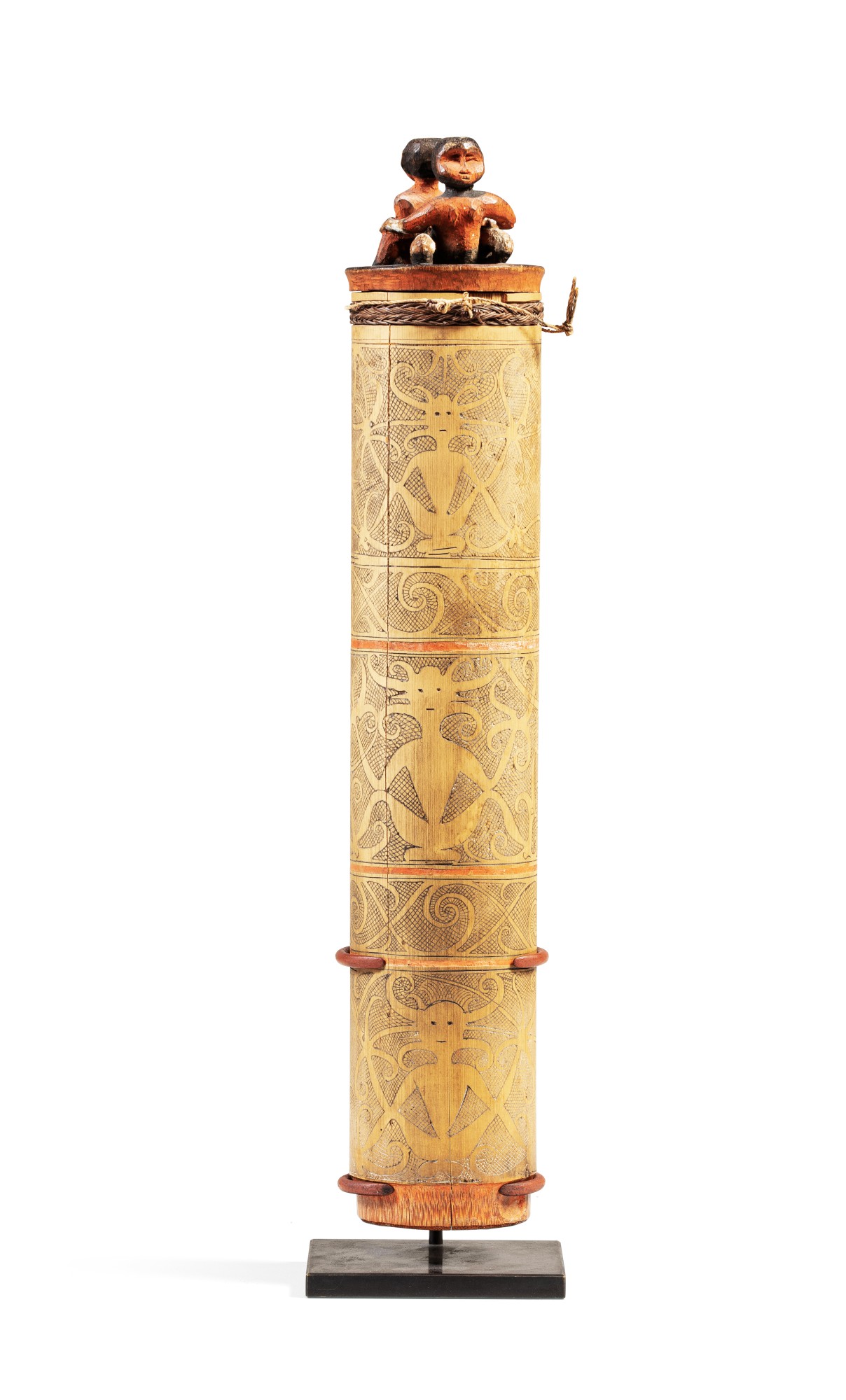
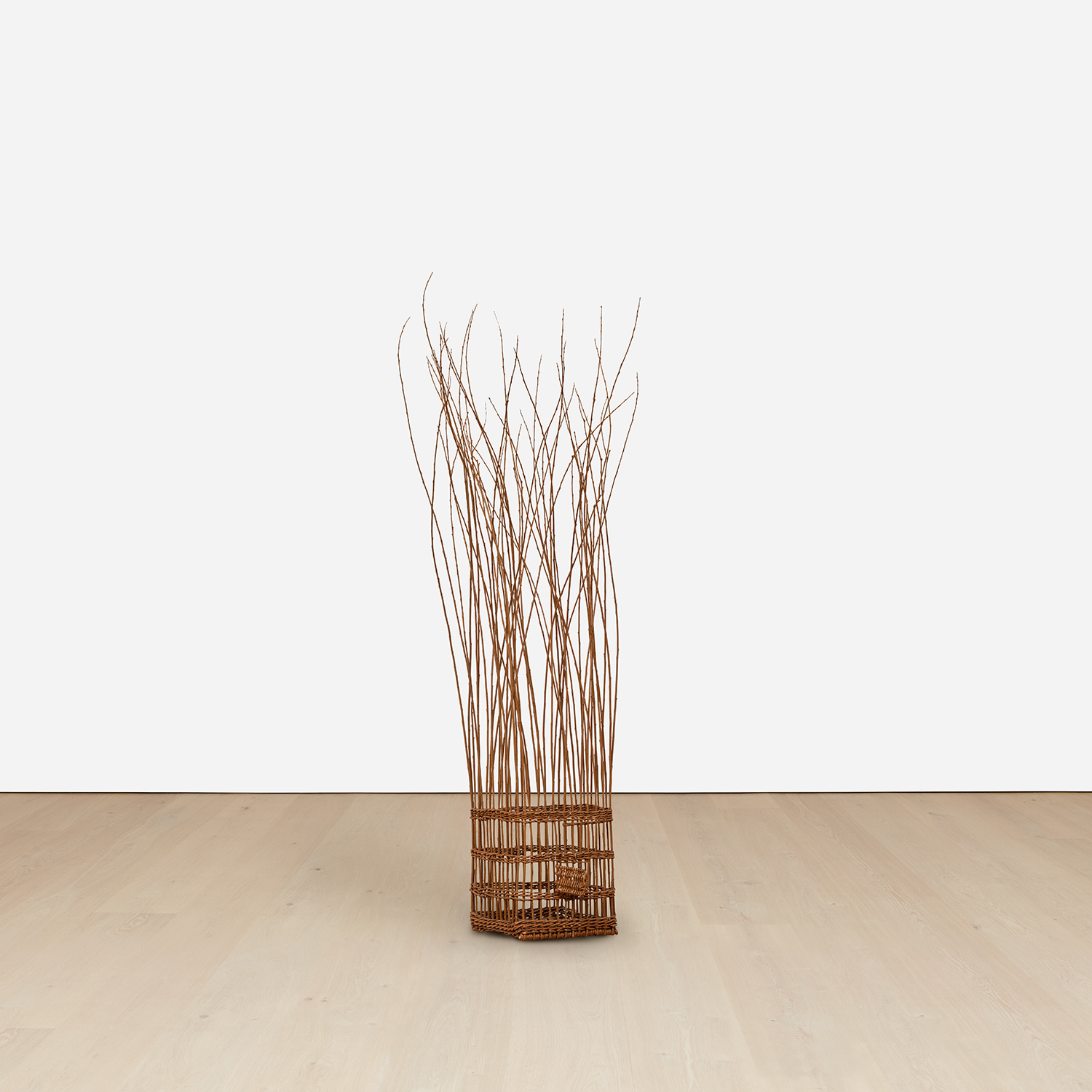
Récipient Dayak, Kalimantan, Bornéo, Indonésie
Dayak receiver, Kalimantan, Borneo, Indonesia
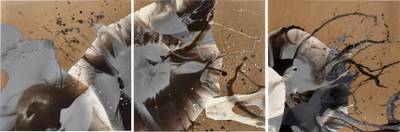
An Archipelago That Refuses to Stand Still
There are few places on earth where the act of making art carries as much accumulated weight as Indonesia. Spread across more than seventeen thousand islands, this is a civilization that has been layering visual languages for millennia, absorbing Hindu and Buddhist cosmologies, Islamic geometries, Dutch colonial aesthetics, and the urgent political energies of a young nation, and somehow transforming all of it into something that feels entirely, defiantly its own. To collect Indonesian art is to engage with one of the most genuinely complex artistic traditions in the world, one where a carved mask from Java and a painting by a post independence expressionist both speak to the same restless, searching spirit. The roots of Indonesian visual culture run extraordinarily deep.
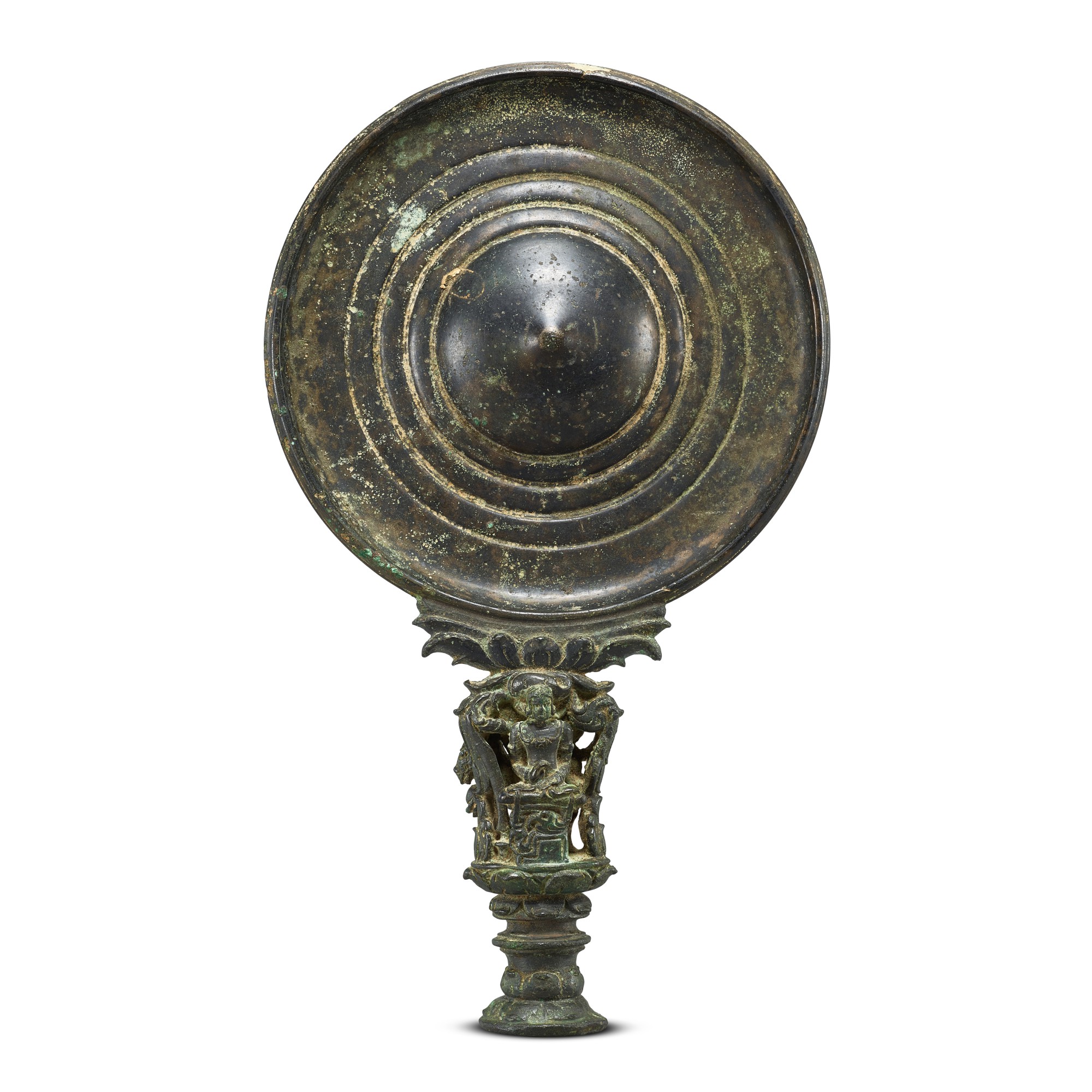
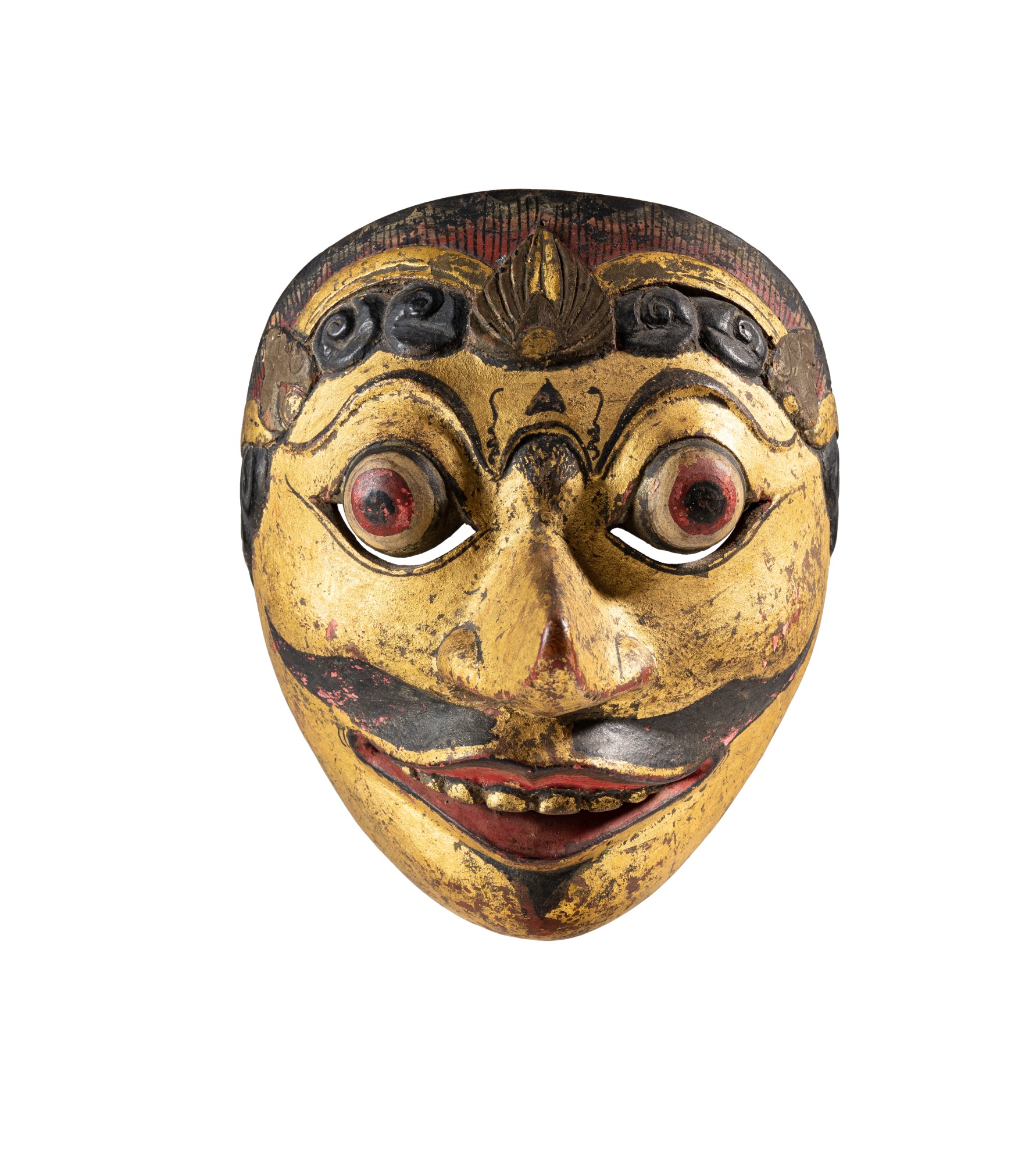
The bronze mirror with a Buddhist style handle that appears in any serious survey of the archipelago's pre colonial material culture is a reminder that long before European contact, Indonesian craftspeople were working within sophisticated aesthetic and spiritual frameworks that connected them to trade routes stretching from India to China. The ceremonial objects produced by the Dayak peoples of Kalimantan, including the monumental hampatong ancestor figures and the elaborately worked mandau swords, represent a tradition of carving and metalwork that served profound ritual functions within communities that understood art not as decoration but as a form of active participation in the cosmos. These objects are not merely ethnographic curiosities. They are among the most formally resolved sculptures produced anywhere in the world.
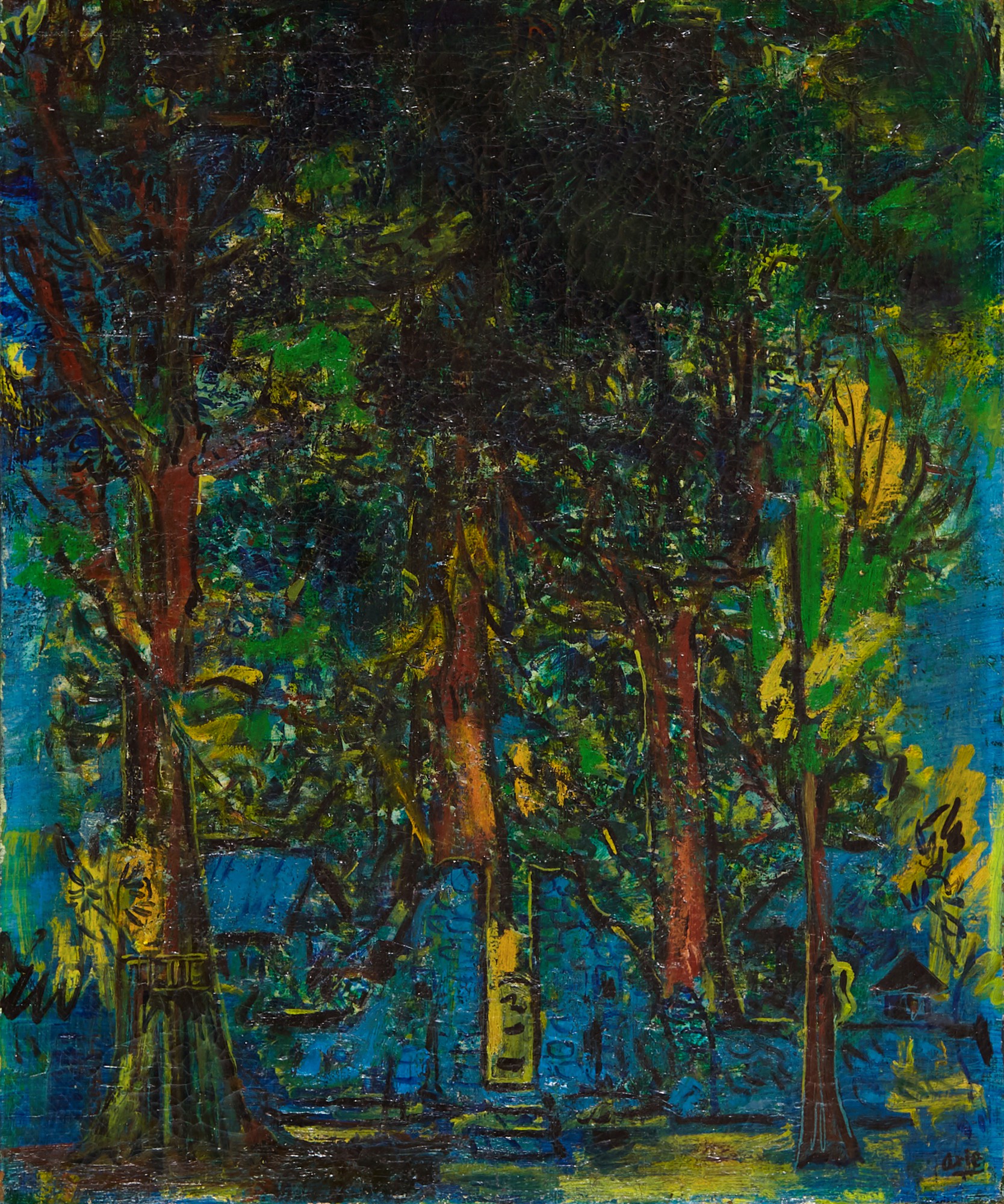
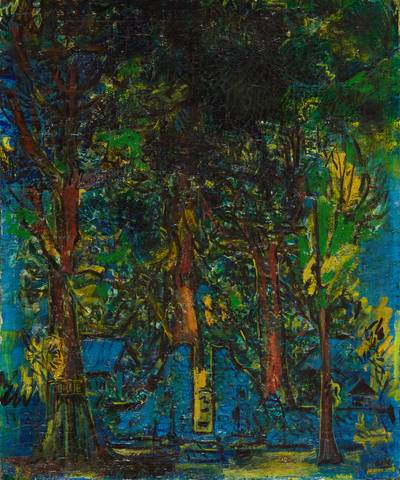
Arie Smit
The Blue Temple 藍色神殿, 1967
The arrival of European artists in the early twentieth century introduced a new and complicated chapter. Figures like the Belgian painter Adrien Jean Le Mayeur de Merprès, who settled in Bali in 1932 and spent decades painting the island's light and its people with an almost devotional intensity, and the Dutch artist Arie Smit, who arrived in Indonesia in the 1950s and eventually became one of the most beloved figures in Balinese art history, brought Western techniques and sensibilities into contact with local visual traditions. Their presence was not without its colonial ambiguities. Yet their genuine absorption in Balinese life produced work of real beauty, and Smit in particular played a crucial role in nurturing a generation of young Balinese painters in the 1960s, encouraging children in Penestanan village to paint freely and giving rise to what became known as the Young Artists movement.
Rudolf Bonnet, another Dutch artist who made Bali his home, served alongside the Mexican artist Walter Spies as a founder of the Pita Maha artists' association in 1936, an organization that sought to protect and elevate traditional Balinese artistic production at a moment when tourism threatened to reduce it to mere commodity. It is the generation that came of age around Indonesian independence in 1945 that produced perhaps the most urgent and searching body of work in the nation's history. S. Sudjojono, often called the father of modern Indonesian painting, argued passionately in the 1930s and 1940s that Indonesian artists needed to abandon romanticized depictions of idyllic landscapes and engage with the real conditions of their people.
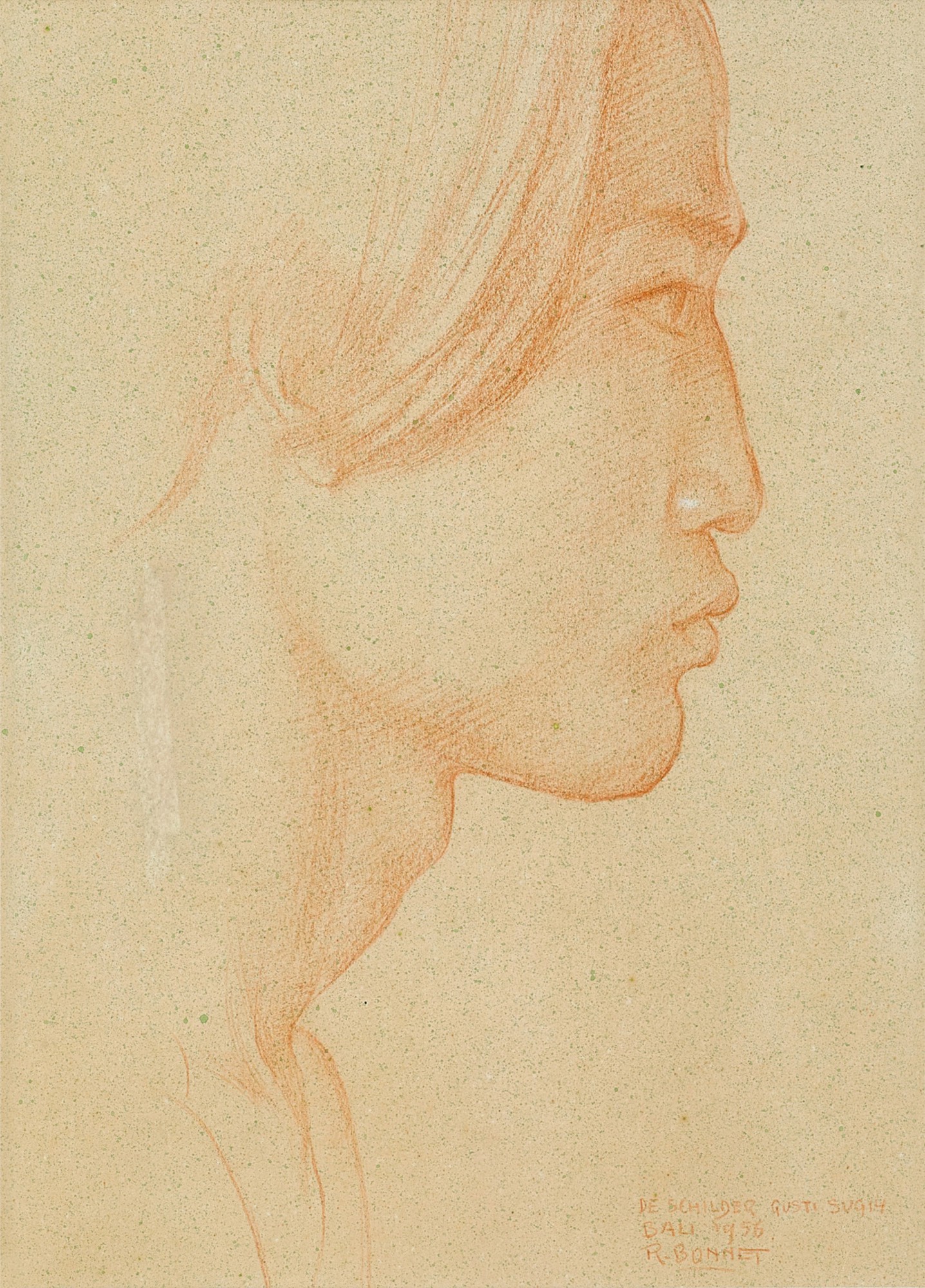
Rudolf Bonnet
De Schilder Gusti Sugih (The Painter Gusti Sugih) 畫家古斯提·蘇吉肖像
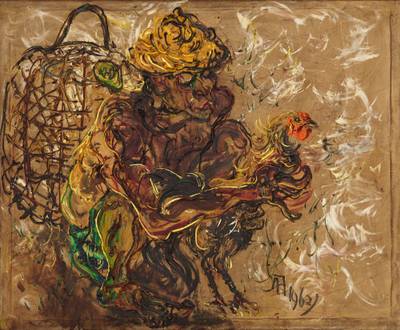
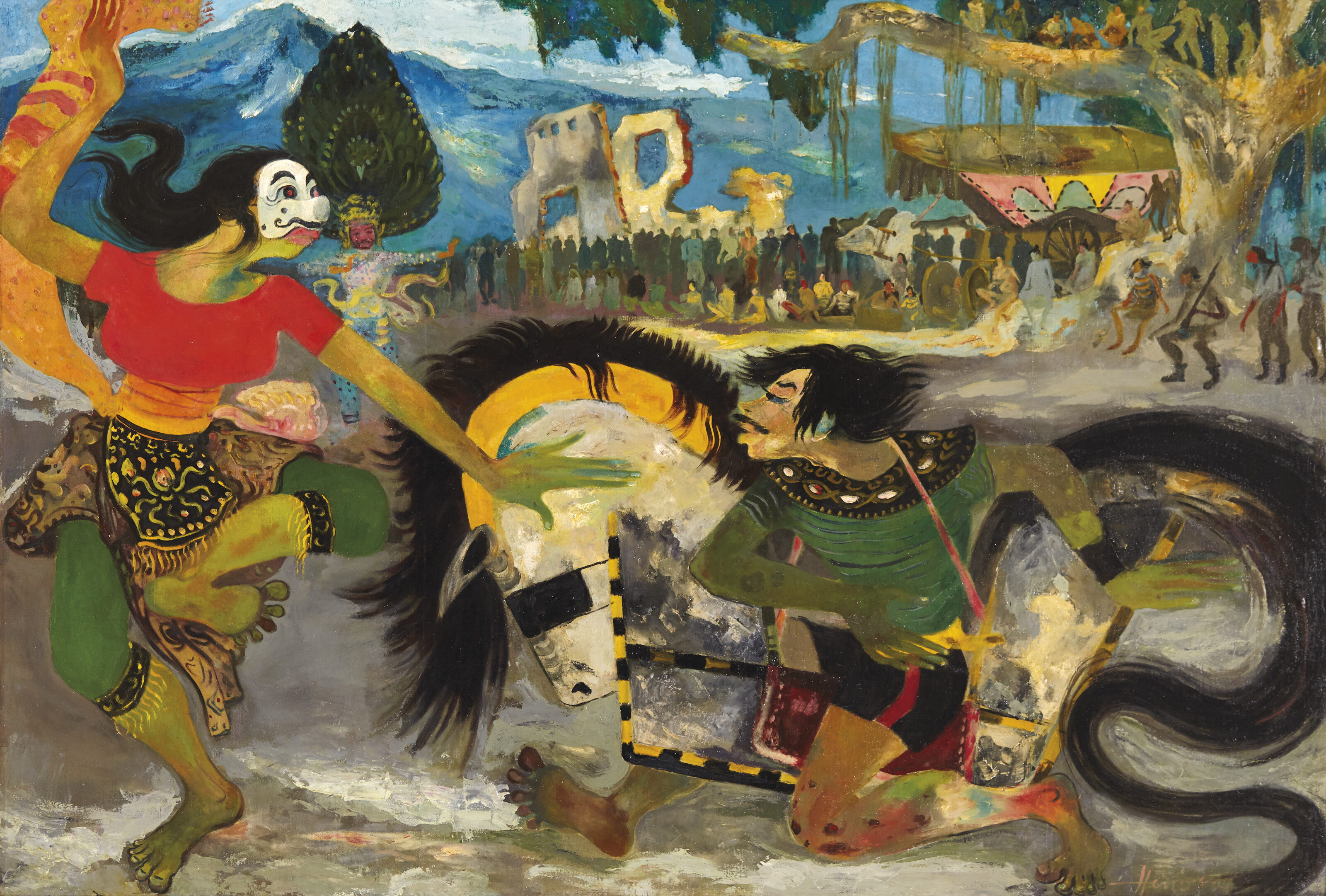
His manifesto energy shaped an entire generation. Affandi, whose raw, impasto laden canvases squeezed paint directly from the tube in gestures of almost violent emotional directness, became one of Indonesia's most internationally recognized figures, representing the country at the Venice Biennale in 1954. Hendra Gunawan brought a similarly urgent expressionism to scenes of ordinary Indonesian life, and his work carried a political charge that eventually landed him in prison following the events of 1965. Ahmad Sadali, who studied at the Art Students League in New York and later developed a profoundly meditative abstract practice rooted in Islamic spiritual principles, added another dimension entirely to the conversation about what Indonesian modernism could be.
Srihadi Sudarsono brought an elegant restraint to Indonesian abstraction, his canvases often evoking the horizon lines of the sea with a simplicity that feels both deeply Indonesian and in quiet dialogue with international minimalism. The textile traditions that run beneath all of this should not be overlooked either. The batik sarongs of Java, some dating to the nineteenth century and worked in intricate patterns of extraordinary technical refinement, represent a form of knowledge encoded in cloth, a visual language passed between generations of women and weavers that carries enormous cultural and spiritual significance. The tapis textiles of Lampung in Sumatra, similarly, are among the most sophisticated woven objects produced anywhere in Southeast Asia.
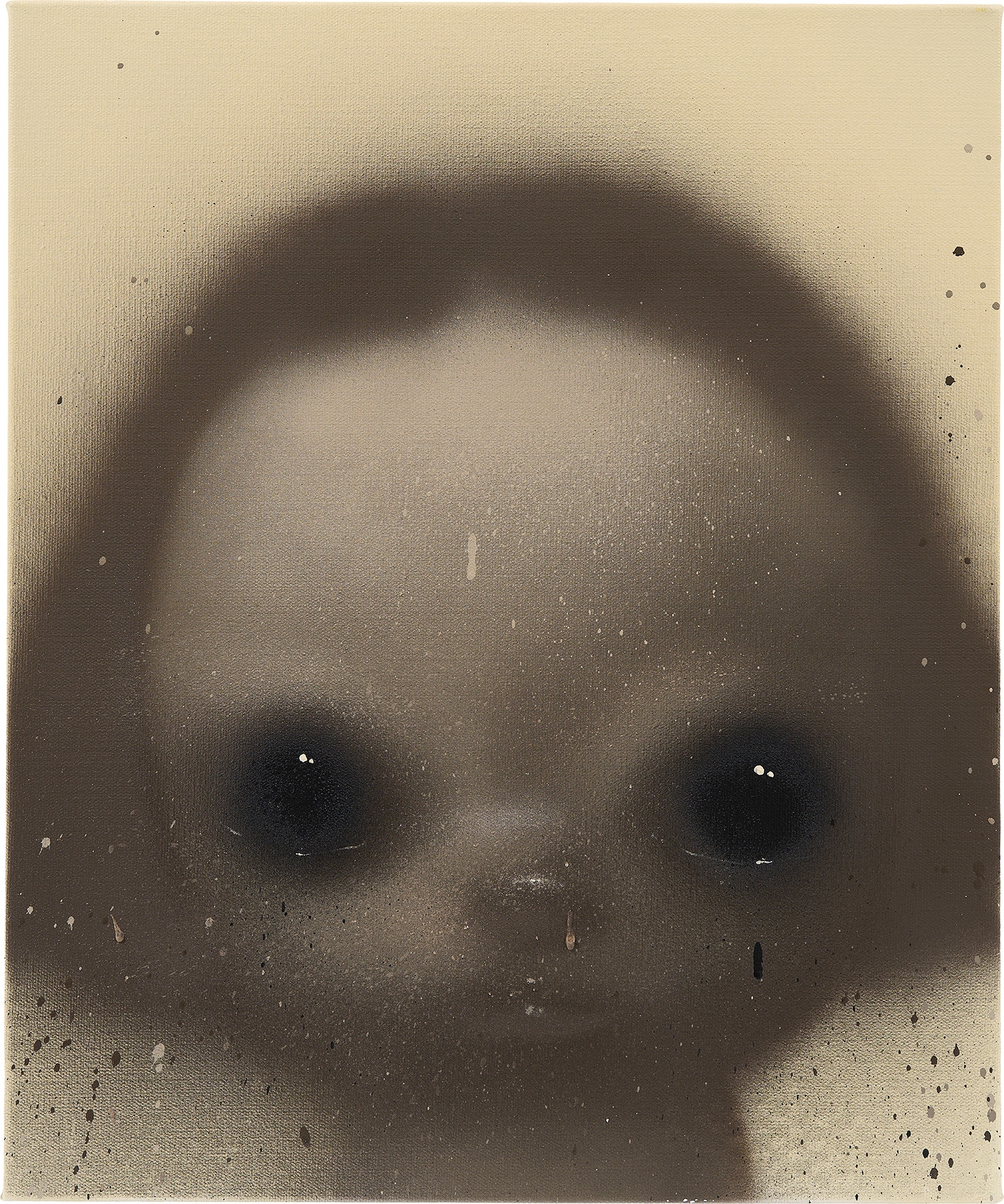
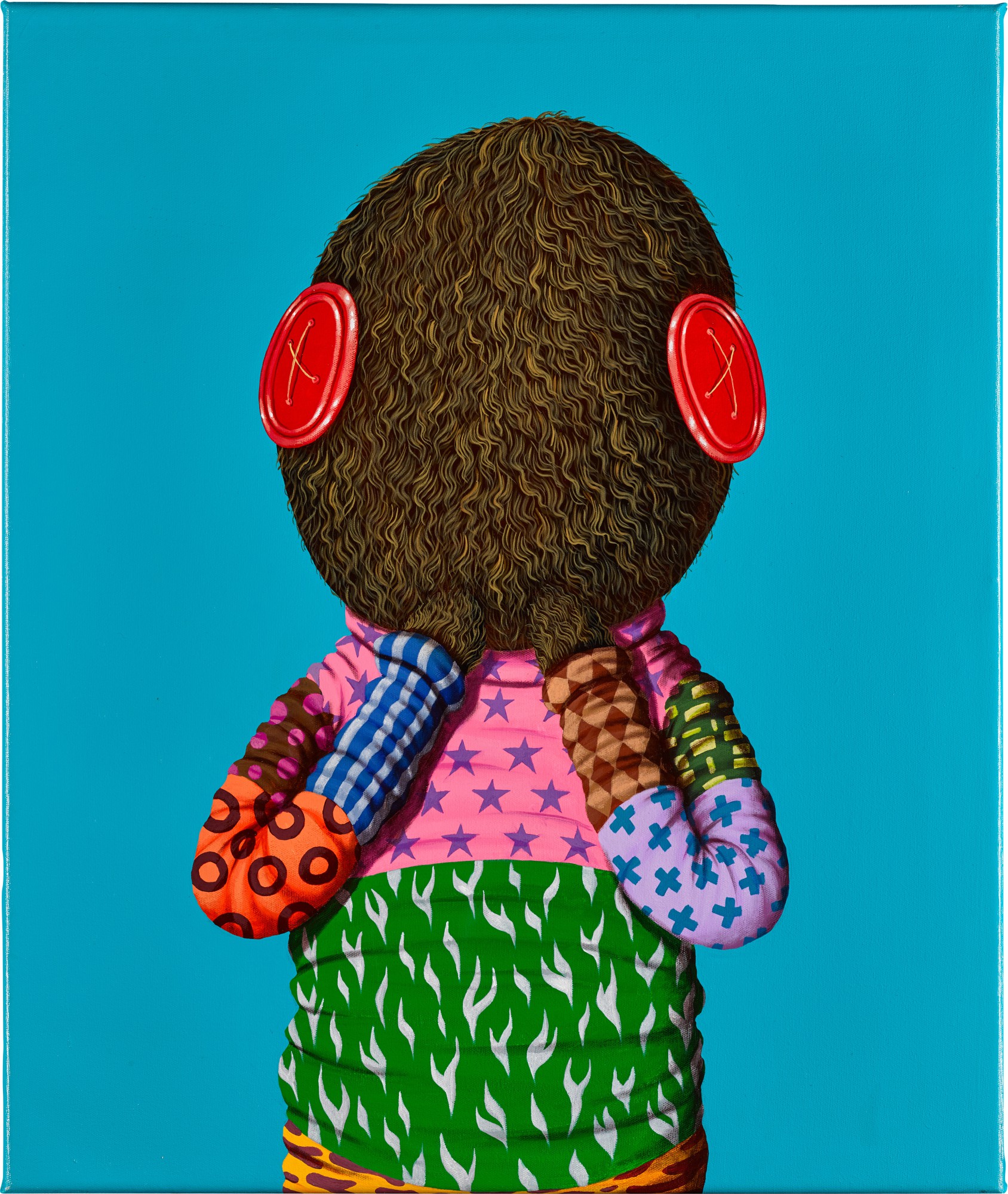
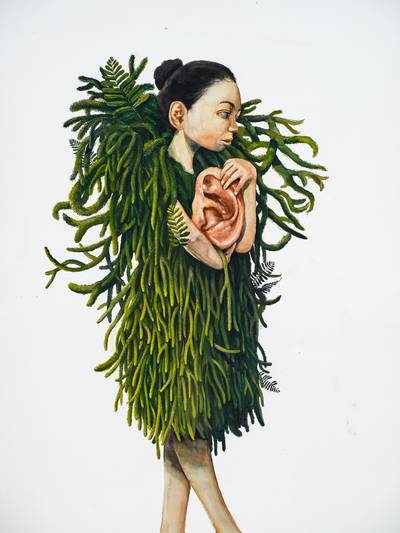
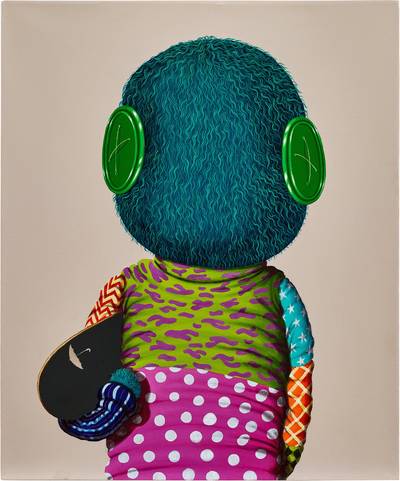
Roby Dwi Antono
Verdue, 2021
The contemporary generation has taken all of this inheritance and pushed it into genuinely surprising territory. Roby Dwi Antono has built an internationally recognized practice around paintings and works on paper that draw on surrealism, Japanese aesthetics, and Indonesian folk imagery to create unsettling and tender portraits of figures caught in states of psychological liminality. I Nyoman Masriadi works with a sardonic figurative language that addresses power, identity, and the hypocrisies of contemporary life with a wit that feels utterly contemporary while remaining rooted in the storytelling traditions of Balinese visual culture. Christine Ay Tjoe, one of the most significant Indonesian artists working today, creates densely worked canvases and prints that operate somewhere between emotional mapping and pure visual turbulence, and her presence in major international collections and exhibitions confirms the global reach of Indonesian art's current moment.
Arin Dwihartanto Sunaryo works with volcanic material from Indonesia's own geological history, embedding lava into his canvases in gestures that are as conceptually rigorous as they are visually arresting. What The Collection brings together across its Indonesian holdings is a genuine cross section of this remarkable story, from ceremonial objects of the pre colonial world to the restless contemporary practices of artists who are reshaping how Indonesian identity is understood on the global stage. The breadth of the representation here is unusual and genuinely valuable for a collector seeking to understand not just individual artists but the long arc of a civilization's visual thinking. Indonesian art rewards exactly the kind of slow, attentive looking that serious collecting demands.
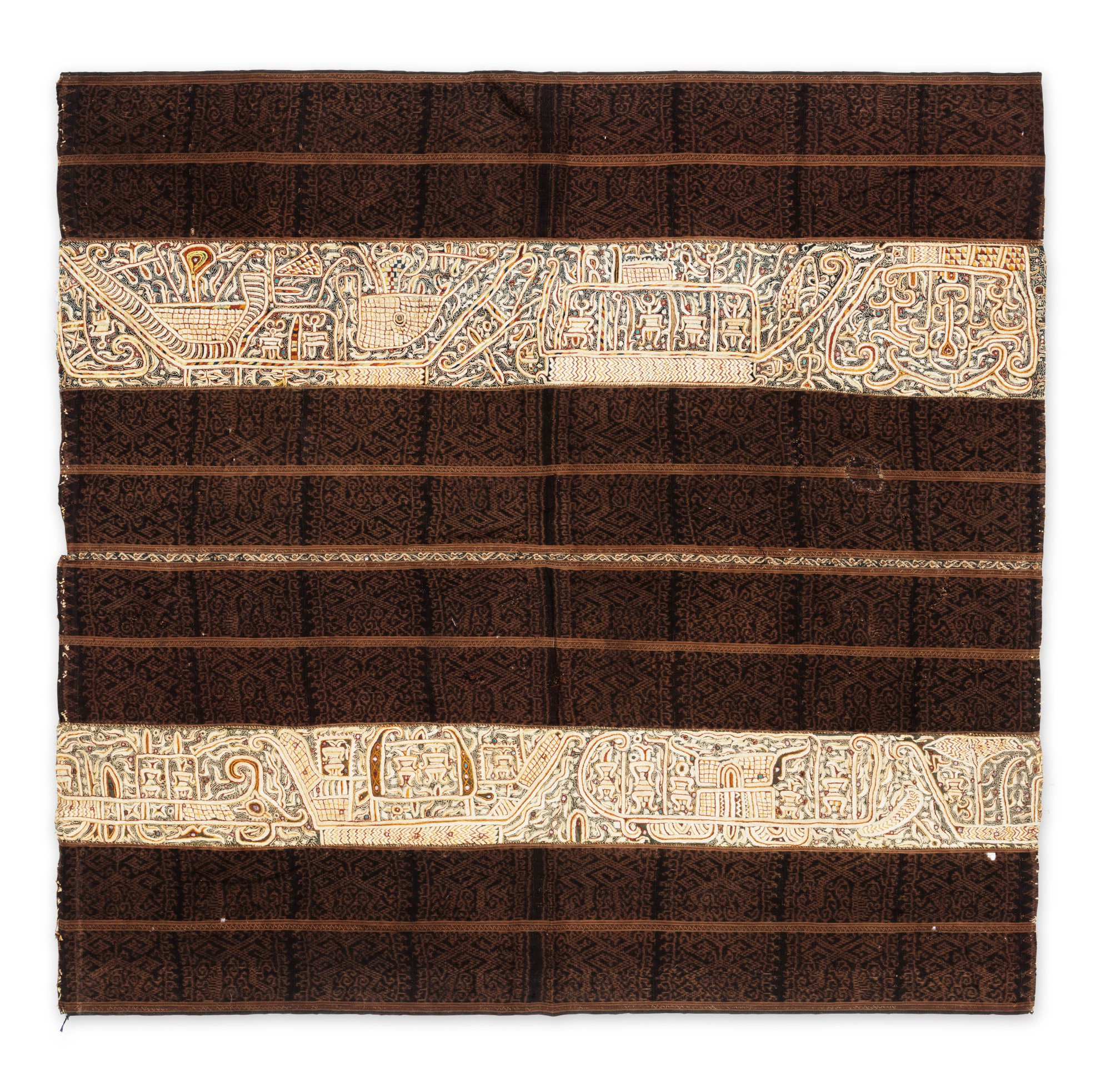
Deux jupes de femme tapis, Lampung, Sumatra, Indonésie, fin du 19e siècle
Two woman’s wrappers tapis, Lampung, Sumatra, Indonesia, late 19th century
The more you know, the more there is to find.