Veduta
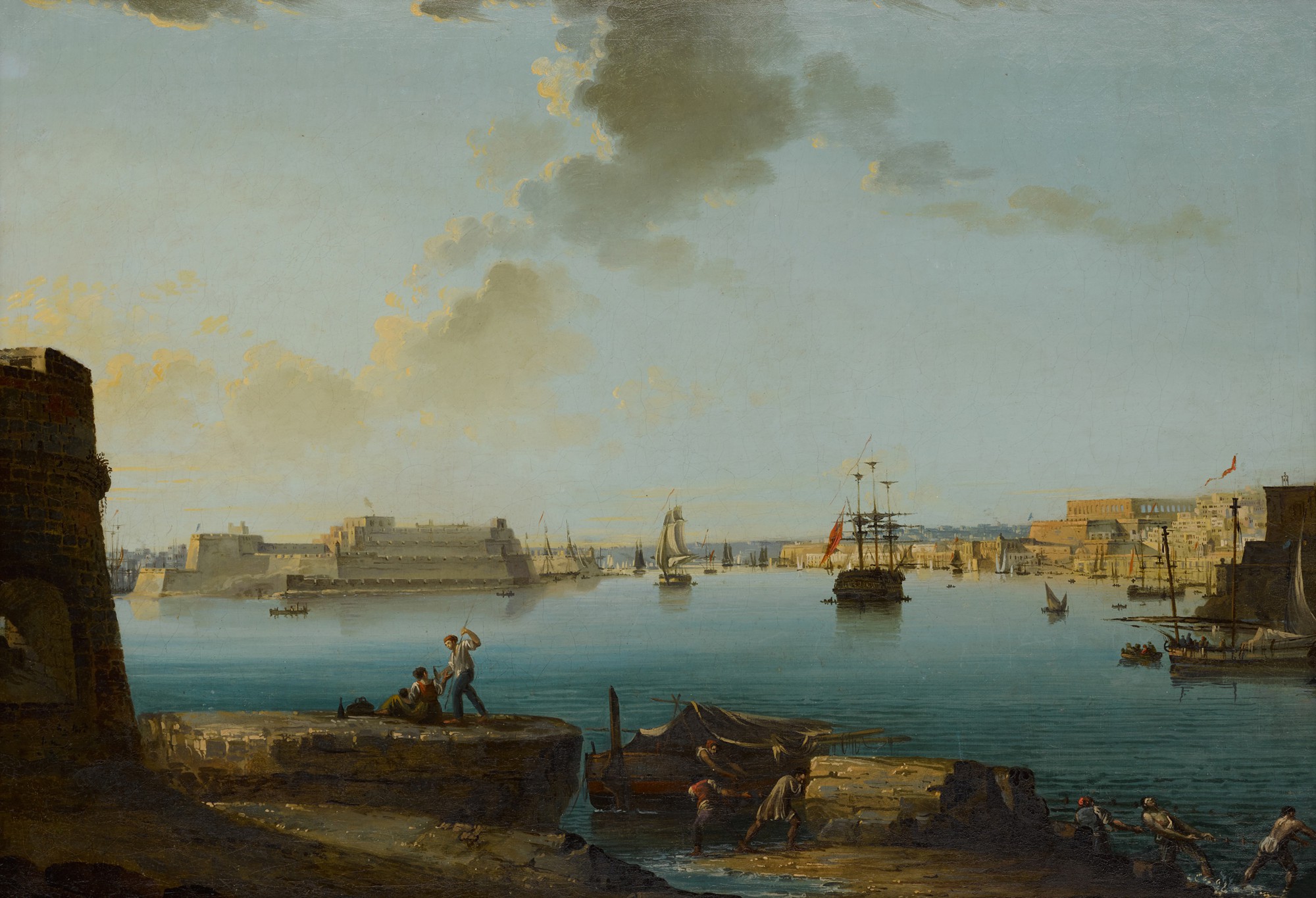
Neapolitan School, circa 1800
Malta, a view of the Fort St. Angelo and the Grand Harbor at Valletta
The View From Then: Veduta's Unlikely Now
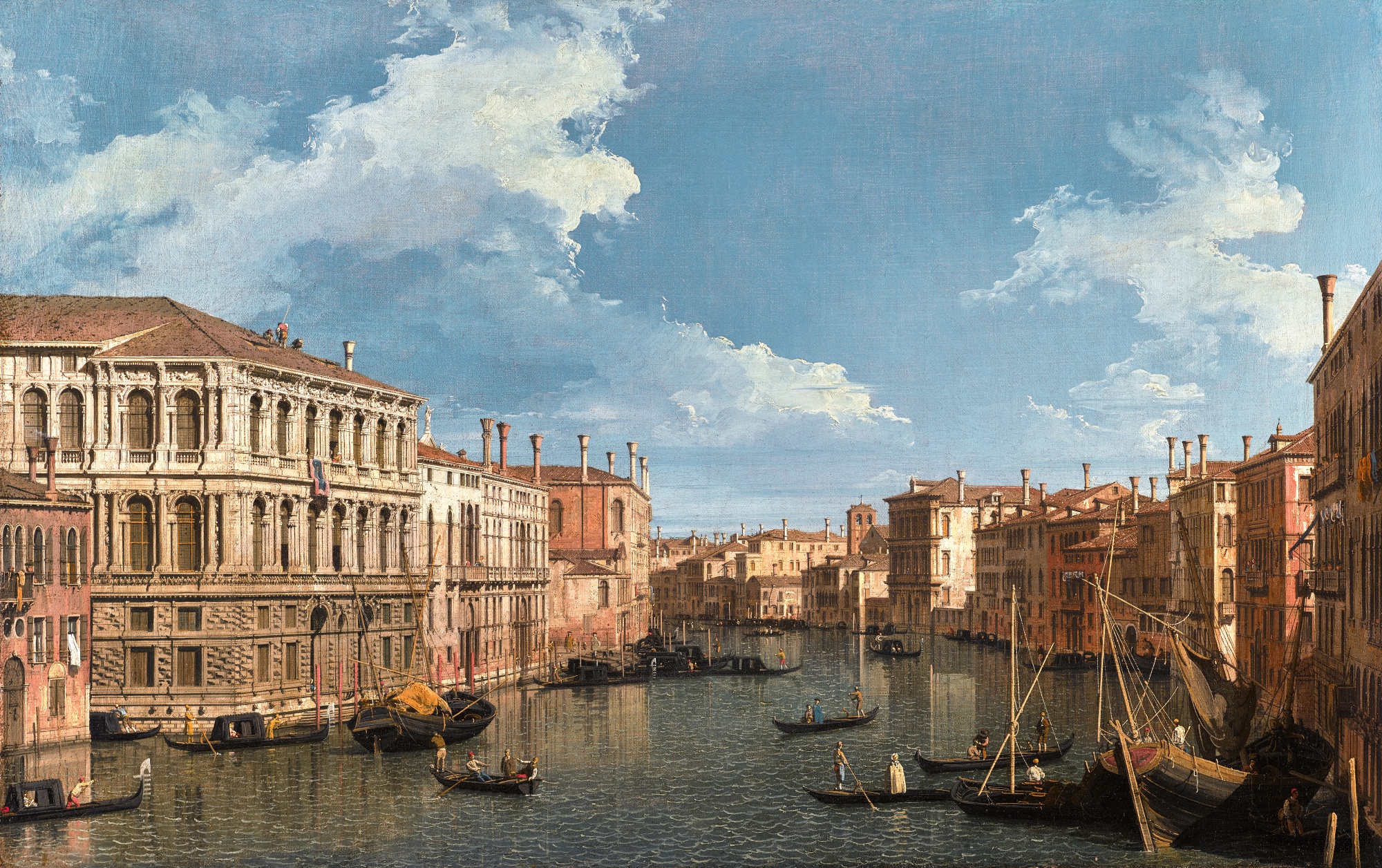
When Sotheby's London brought a major Canaletto veduta to the block in 2022, the room held its breath in a way that surprised even seasoned observers. The work, a luminous rendering of the Grand Canal thick with gondolas and the particular silvered light that Venetian painters seemed to breathe as naturally as air, exceeded its high estimate by a considerable margin. It was a reminder that the appetite for the painted view, for that sustained act of attention to a specific place at a specific moment, has not dimmed. If anything, the market is behaving as if it has just remembered something it should never have forgotten.
The veduta as a genre is sometimes spoken about as though it were simply a precursor to the photograph, a functional document of cities that wealthy travelers wanted to remember. That framing has never been quite right, and the current critical conversation is finally catching up to what collectors have quietly understood for generations. The best vedute are not records. They are arguments about what a city means, how light organizes space, and how the eye moves through a world that is simultaneously specific and ideal.
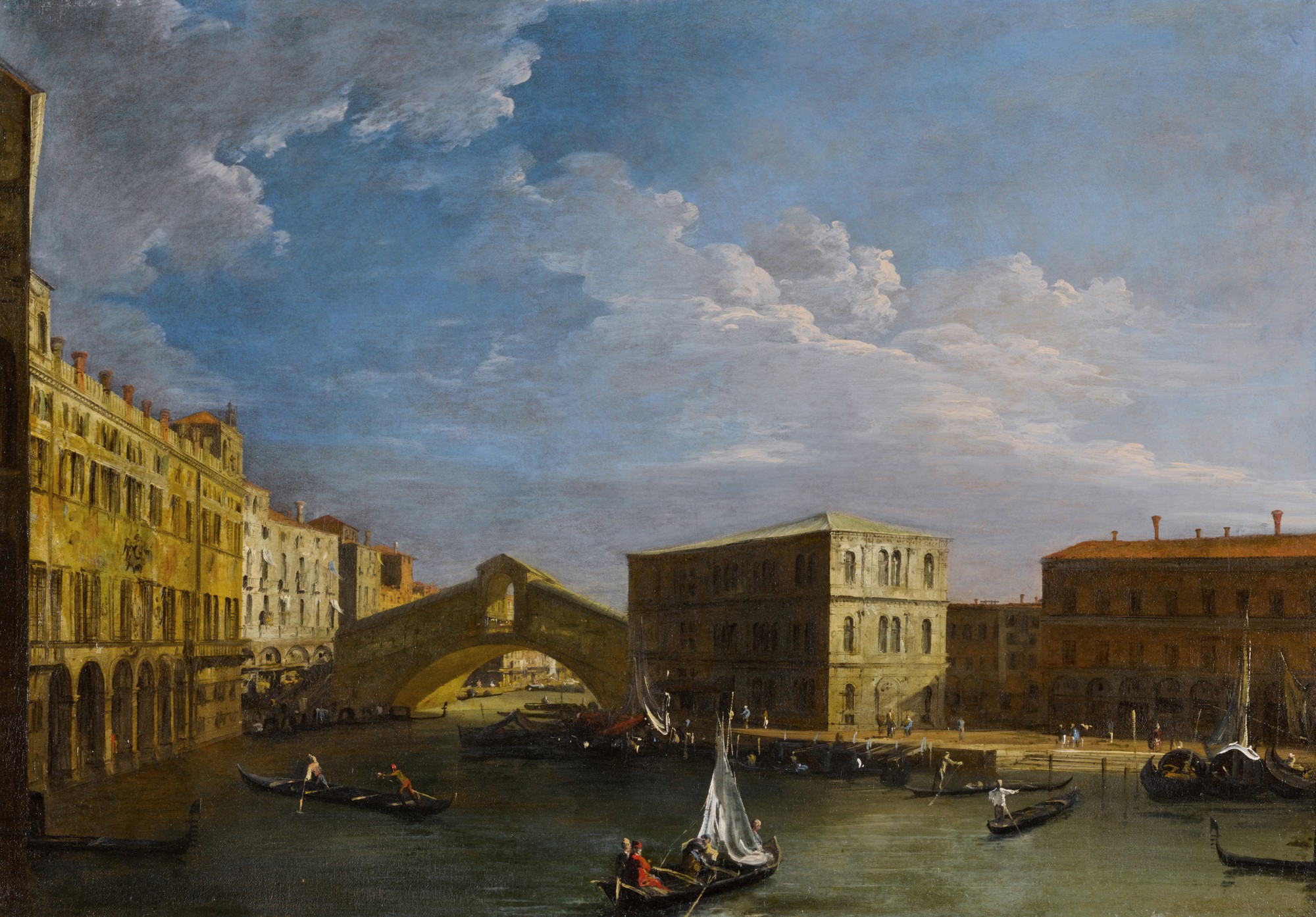
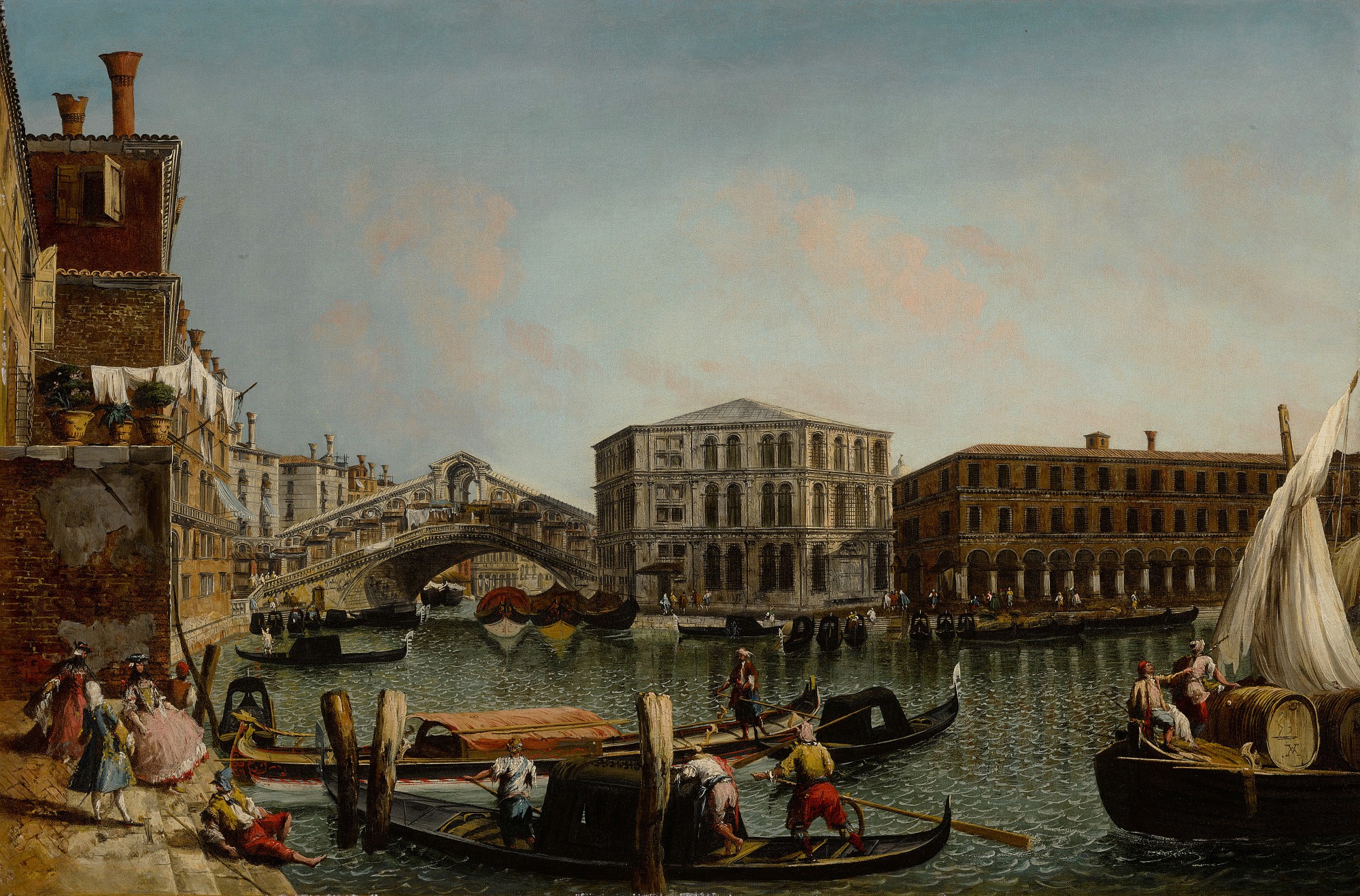
Giovanni Antonio Canal, called Canaletto
Venice, a view of the Grand Canal and the Rialto Bridge from the North
Giovanni Antonio Canal, called Canaletto, understood this perhaps more than anyone. His works on The Collection make the case immediately: there is a precision in them that is almost architectural, yet the emotional atmosphere they generate is something no blueprint ever achieved. The institutional appetite for this material has been growing in ways worth tracking. The Royal Collection Trust has long held one of the great repositories of Canaletto's work, and their touring exhibitions in recent years have attracted audiences who might not have considered themselves veduta enthusiasts before arriving.
The Museo Correr in Venice continues to be the essential pilgrimage destination, but exhibitions in London, Amsterdam, and New York have brought this conversation to broader publics. The National Gallery in London mounted a substantial reassessment of the genre that drew renewed critical attention to artists who had been somewhat overshadowed by the Venetian giants, including Hubert Robert, whose romantic ruins occupy a fascinating space between veduta and capriccio, and whose work on The Collection demonstrates exactly why that distinction matters less than the quality of feeling produced. At auction, the hierarchy is clear but more nuanced than the headline names suggest. Canaletto commands the upper atmosphere, with important works reaching into the tens of millions at the major London and New York houses.
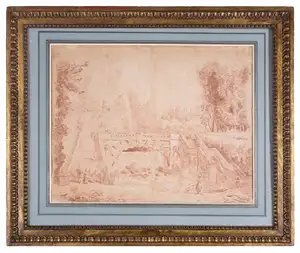
Hubert Robert
Stair and Fountain in the Park of a Roman Villa
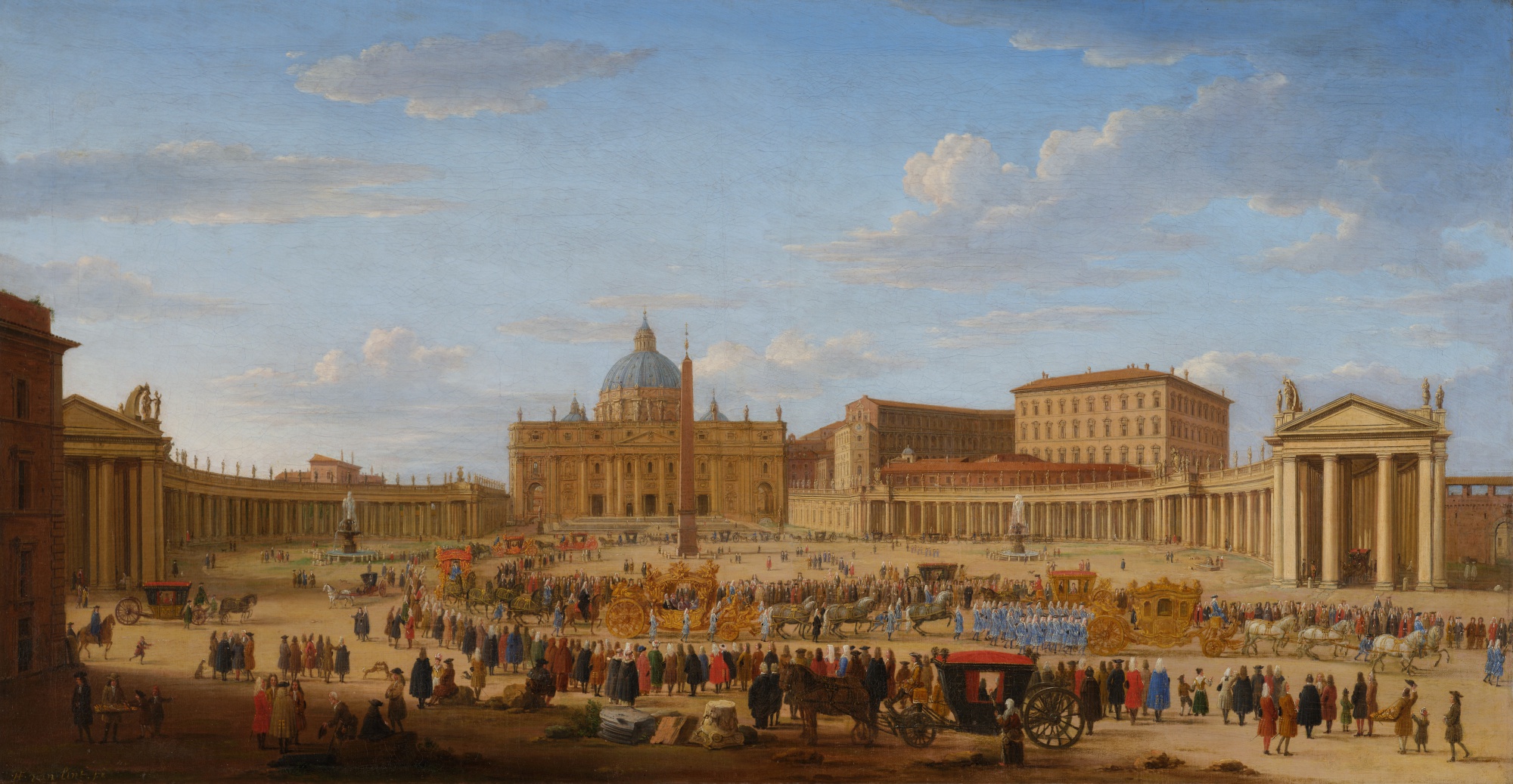
Gaspar van Wittel, called Vanvitelli, who is sometimes credited as the father of the genre in its developed form, has seen growing institutional and private interest, with his Roman views in particular attracting serious competition. Michele Marieschi, who worked in Canaletto's shadow during his lifetime but is now understood as a genuinely distinct artistic intelligence, has been climbing steadily. His handling of water and the atmospheric haze of Venice has a looseness and energy that reads as surprisingly contemporary. Antonio Joli brings another dimension entirely, having worked across Venice, London, and Spain, giving his views an almost cinematic range of reference.
Works by Joli have appeared with increasing frequency at the secondary market, and prices have responded accordingly. The critical literature is in the middle of an interesting revision. For decades, the veduta was assessed primarily through the lens of the Grand Tour market, understood as a luxury commodity produced for northern European travelers who wanted a souvenir with artistic pretensions. Scholars including Bozena Anna Kowalczyk and, in the English language market, Andrew Moore, have worked to expand that frame considerably.
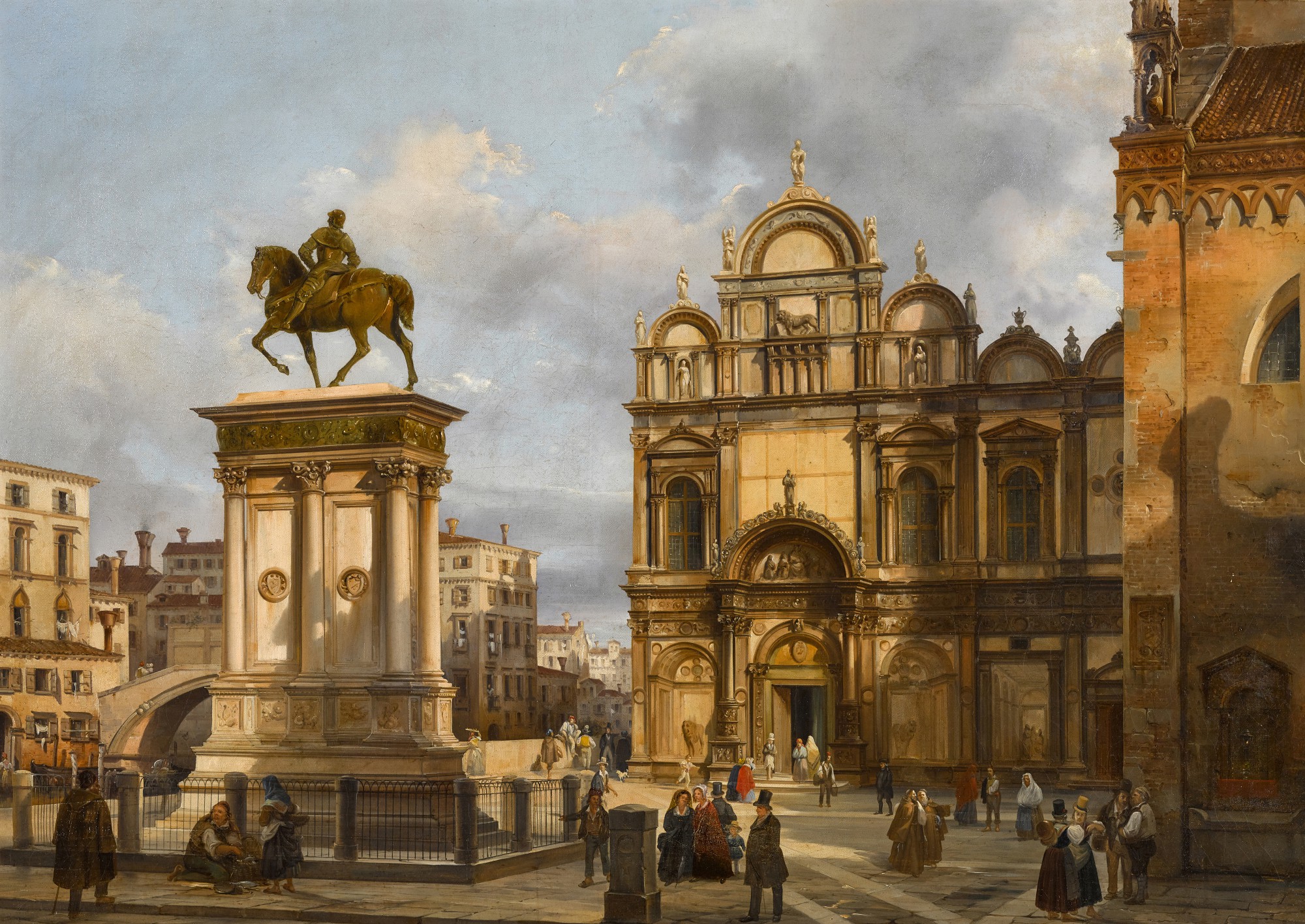
Federico Moja
Venice, a View of the Campo Santi Giovanni e Paolo, with the Equestrian Monument to Bartolomeo Colleoni and the Scuola Grande di San Marco in the Background
The focus now falls on what these paintings reveal about urban identity, about how cities chose to represent themselves and to whom, and about the relationship between commercial image making and genuine artistic ambition. This is a richer conversation, and it has made the work more interesting to look at rather than less. Artists like Hendrik Frans van Lint, called Lo Studio, who spent most of his career in Rome after training in Antwerp, embody precisely the cosmopolitan complexity that newer scholarship is drawing out. His views of Rome carry a northern European sharpness of observation filtered through decades of Italian immersion, producing something that neither tradition could have achieved alone.
Federico Moja, working in the nineteenth century, represents the genre's evolution into a more romantic register, his views carrying a nostalgia for the very cities he was depicting, as though even in the act of painting them he was already mourning their transformation. The Neapolitan School around 1800 produced vedute of the bay and the city that feel operatic in their scale and drama, a tradition that has been somewhat undervalued relative to the Venetian material but is attracting fresh attention from collectors with sharp eyes. What feels alive in this space right now is the reassessment of the second tier, meaning artists who were well regarded in their own time but were eclipsed by the fame of the canonical names. The French School practitioner working in the circle of Giovanni Paolo Panini represents exactly this kind of opportunity.
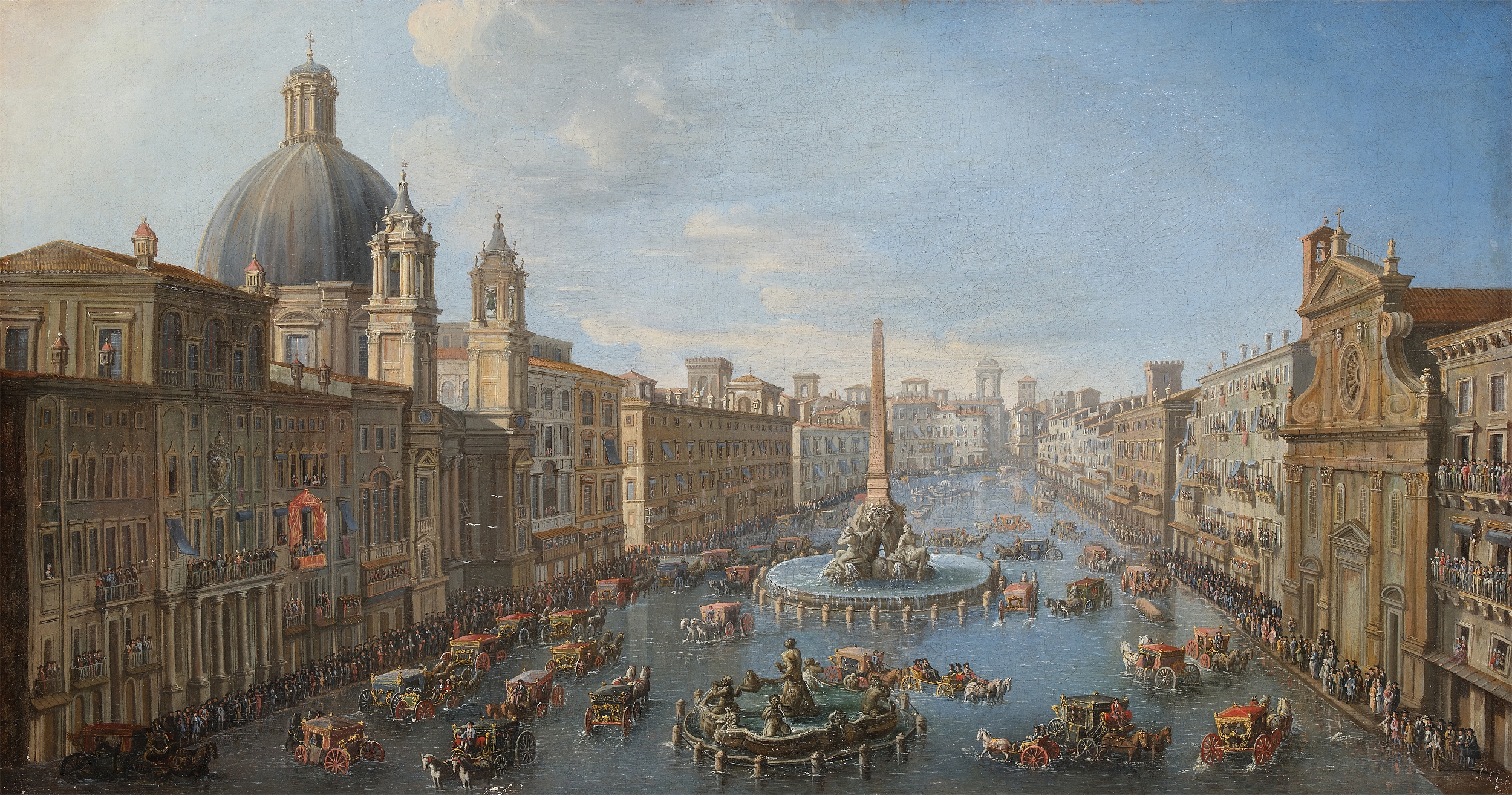
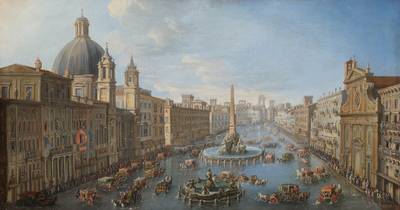
Antonio Joli
Rome, a view of Piazza Navona flooded
Panini's influence on how Rome was imagined and commodified was enormous, and artists working in his orbit produced works of genuine quality that the market is still pricing with relative conservatism. For collectors willing to engage with attribution questions and to do the scholarly homework, this is where the most interesting discoveries are being made. The veduta is also benefiting from a broader cultural shift in how we think about place and its representation. In a moment when the relationship between a city and its image has become intensely contested, when questions about tourism, gentrification, and visual ownership feel urgent, the genre that made the painted city a global commodity feels newly relevant rather than merely historical.
Collectors coming to this material now are not simply buying beautiful paintings of places they love, though they are certainly doing that. They are also engaging with a long conversation about what it means to look at a city, to claim it through the act of attention, and to carry that claim across time. That is a conversation with no settled conclusion, which is precisely what keeps it interesting.