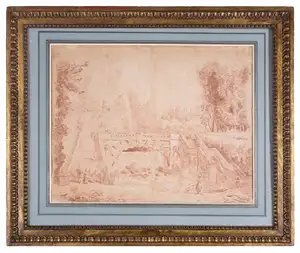
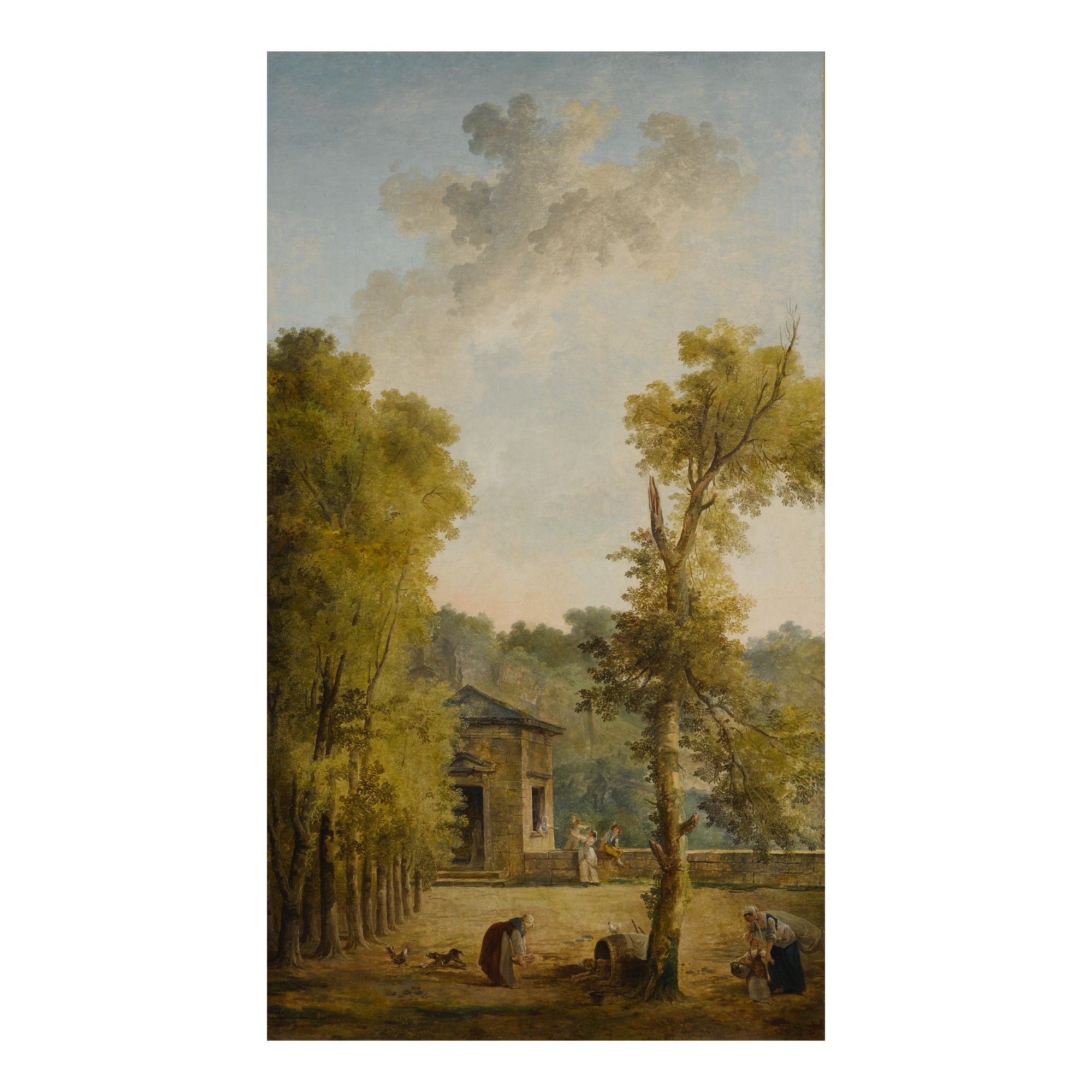
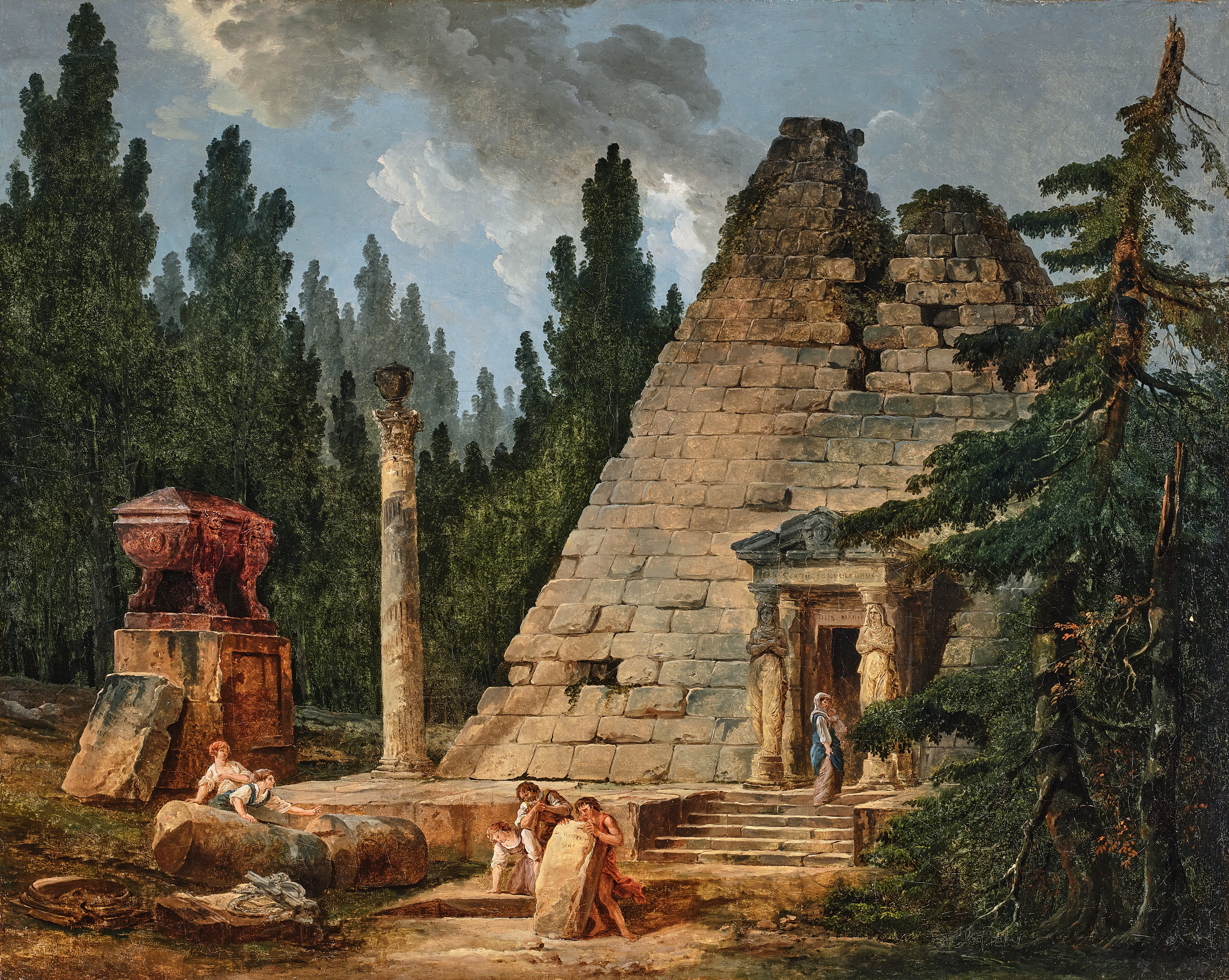
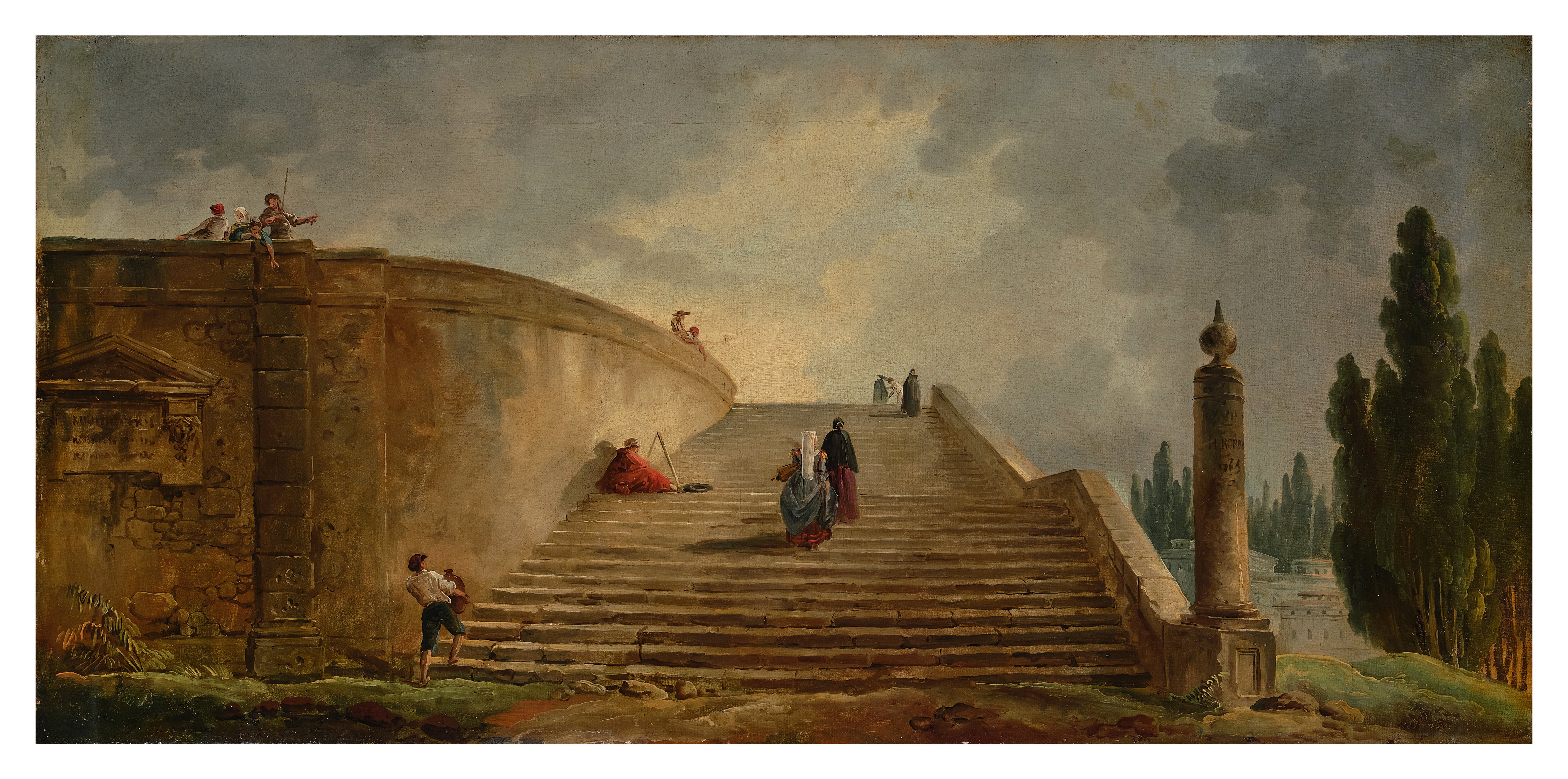
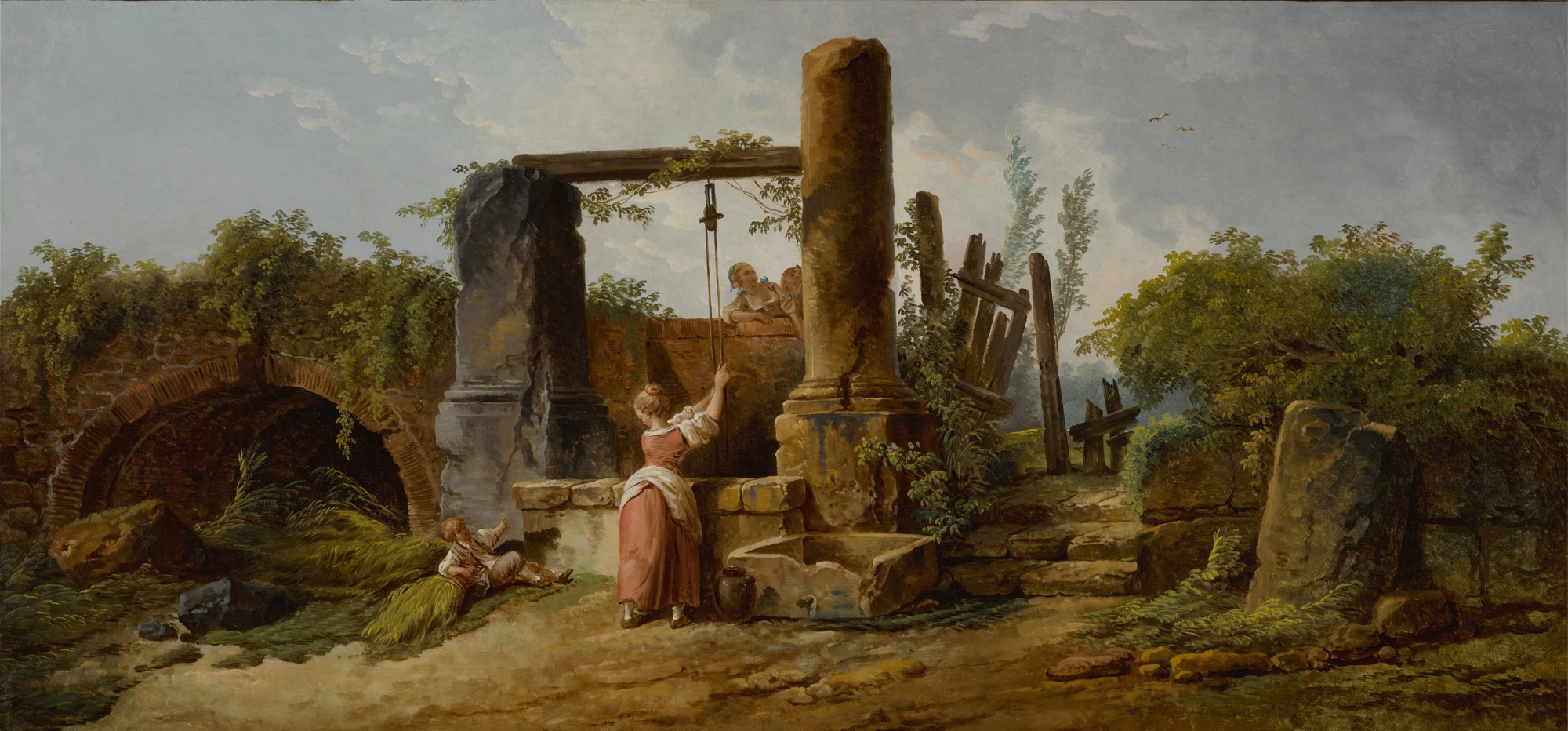
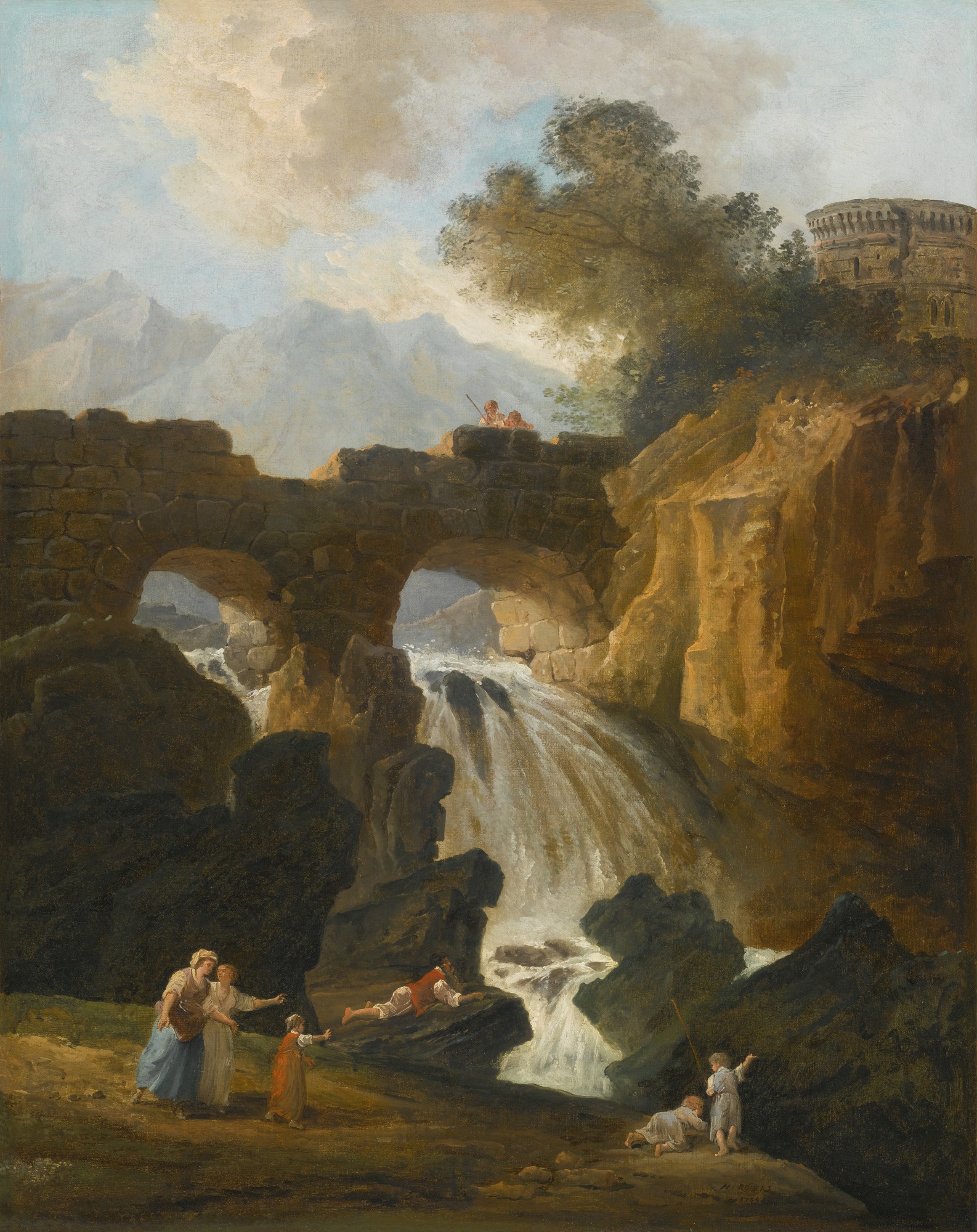
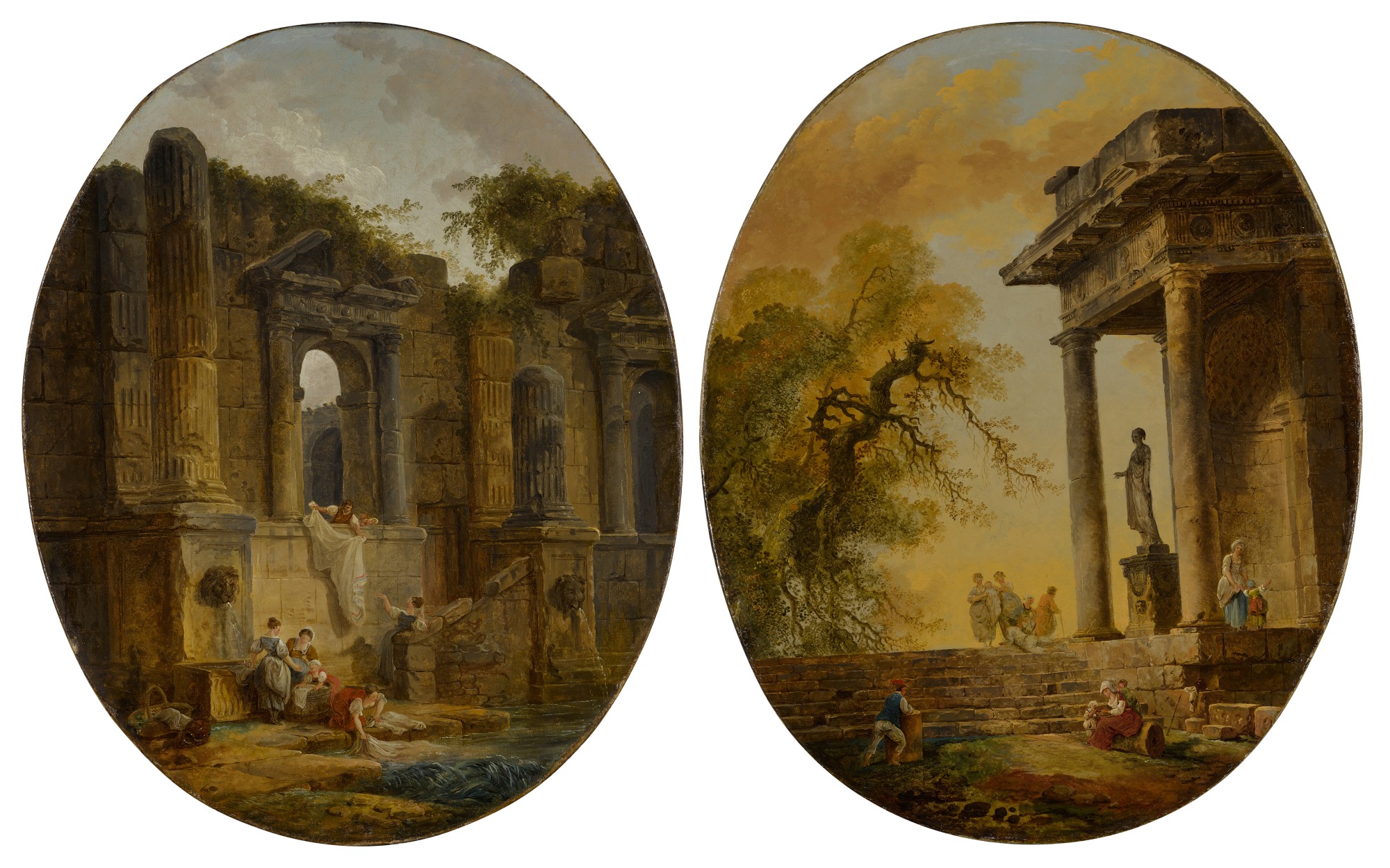
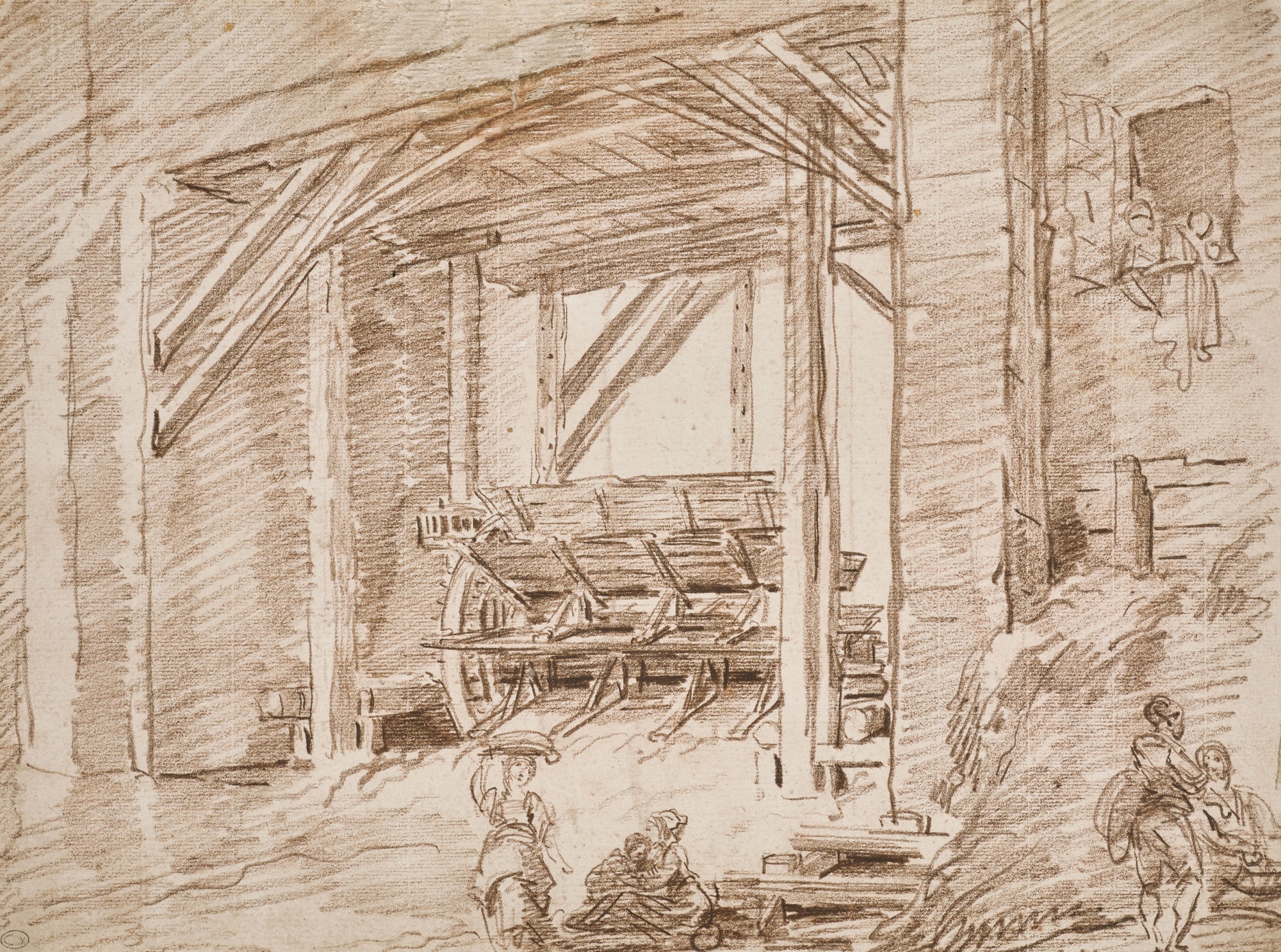
Stand before one of Hubert Robert's great canvases and something quietly extraordinary happens. Time becomes elastic. A washerwoman leans over a pool at the foot of a crumbling Roman portico, entirely unbothered by the grandeur dissolving around her. Sunlight falls on mossy stone. The past and the present occupy the same breath. It is a sensation few painters in the history of Western art have managed so consistently, and it is why Robert, who spent his long career moving between Rome and Paris in the second half of the eighteenth century, continues to feel so alive and so necessary to collectors and museum visitors today. Hubert Robert was born in Paris in 1733 and spent his formative years in the household of the Comte de Stainville, later the Duc de Choiseul, one of the most powerful figures at the French court. This proximity to aristocratic patronage and cultivated taste shaped his sensibility from an early age. In 1754, Robert travelled to Rome, where he would remain for eleven transformative years. He studied at the French Academy at the Villa Medici alongside Jean Honoré Fragonard, with whom he formed a lasting friendship and a creative rapport that left visible traces on both their practices. Under the mentorship of Giovanni Paolo Panini, the great master of architectural capricci, Robert absorbed a deep love for the drama of ruins and for the imaginative possibilities of composing real and invented fragments into a single coherent world. Rome in the 1750s and 1760s was a crucible of ideas. The city was being excavated, theorised, and reimagined by philosophers, architects, and artists from across Europe. Robert moved through it with insatiable curiosity, filling sketchbooks with red chalk drawings of temples, fountains, staircases, and courtyards. He drew the Villa d'Este at Tivoli, the Colosseum, the markets of Trajan, and the overgrown gardens of forgotten villas. These studies were never mere documentation. They were the raw material for a lifelong meditation on the relationship between human ambition and natural time. When he returned to Paris in 1765 and was admitted to the Académie Royale de Peinture et de Sculpture the following year, he arrived not simply as a well trained painter but as a fully formed poetic intelligence. Robert's ascent in Paris was swift and enduring. He became a favourite of the court and of the great collectors of the Enlightenment, earning a royal appointment as Keeper of the King's Pictures under Louis XVI. His nickname, Robert des Ruines, attached itself to him with the warmth of genuine admiration rather than mere categorisation. His paintings hung in the most significant collections of the age, and he received commissions for decorative ensembles that would adorn some of the grandest interiors in France. Among the most celebrated of his late works is The Fountains, painted in 1787, a monumental canvas of breathtaking spatial confidence that demonstrates his mastery of light, water, and architectural scale. Works like this one place him firmly alongside the leading figures of French neoclassicism while also anticipating the Romantic sensibility that would dominate the following century. What collectors have long understood about Robert is that his range was far greater than his famous ruins suggest. His paired oval canvases of washerwomen by a pool before the ruins of a palace and figures resting by a portico with a statue of a woman show his gift for intimate human observation set within grand architectural theatre. His View of a Walled Garden Courtyard, with a woman feeding chickens and other figures in the foreground, reveals a tender domesticity, a quieter register that reminds us he was as interested in the rhythms of ordinary life as in classical grandeur. His capricci, such as the Capriccio with the Pyramid of Maupertuis, demonstrate his willingness to invent freely, constructing imaginary landscapes of great internal logic and beauty from fragments of real places. These are not escapist fantasies but serious philosophical propositions about memory, impermanence, and the consolations of beauty. On paper, Robert is equally commanding. His red chalk drawings, made with a confidence and fluency that speaks to decades of disciplined looking, are among the finest works on paper from the French eighteenth century. A work such as the Stair and Fountain in the Park of a Roman Villa, executed in red chalk on fine laid paper around 1775 and measuring a generous 365 by 485 millimetres, gives an unmediated view into his working process. The sheet, which passed through the collection of the distinguished British architectural historian and writer Joseph Rykwert before descending to a private London collection, carries with it a provenance that enriches its already considerable art historical significance. Rykwert's lifelong engagement with architecture and its meanings makes his ownership of such a work feel entirely fitting. For collectors who understand works on paper, Robert's drawings offer a point of access to one of the great minds of the European Enlightenment at the moment of direct creative impulse. In terms of art historical context, Robert belongs to a lineage that connects Giovanni Paolo Panini and Gian Battista Piranesi before him to Caspar David Friedrich and J. M.W. Turner after him. He shared the imaginative terrain of ruins and romantic landscape with his close friend Fragonard, and his influence on subsequent French landscape painting, from the Barbizon school onward, has been well documented by scholars. The great museums of the world, including the Louvre, the Hermitage, the Metropolitan Museum of Art in New York, and the National Gallery of Art in Washington, hold significant bodies of his work, a testament to the consistent institutional regard in which he has been held across three centuries. At auction, fine examples of Robert's paintings have commanded prices well into the millions of euros and dollars, with major works appearing regularly at Christie's, Sotheby's, and Artcurial. Works on paper have shown particular strength in recent years as collectors have developed a more sophisticated appetite for the intimacy and directness that drawings offer. For anyone building a collection with a serious engagement with the European tradition, Robert represents a rare combination of historical importance, aesthetic pleasure, and genuine intellectual depth. He is an artist whose work rewards sustained looking and sustained collecting. The ruins he painted with such love have not crumbled further. If anything, they seem more beautiful, and more resonant, with every passing year.