Tropical Imagery
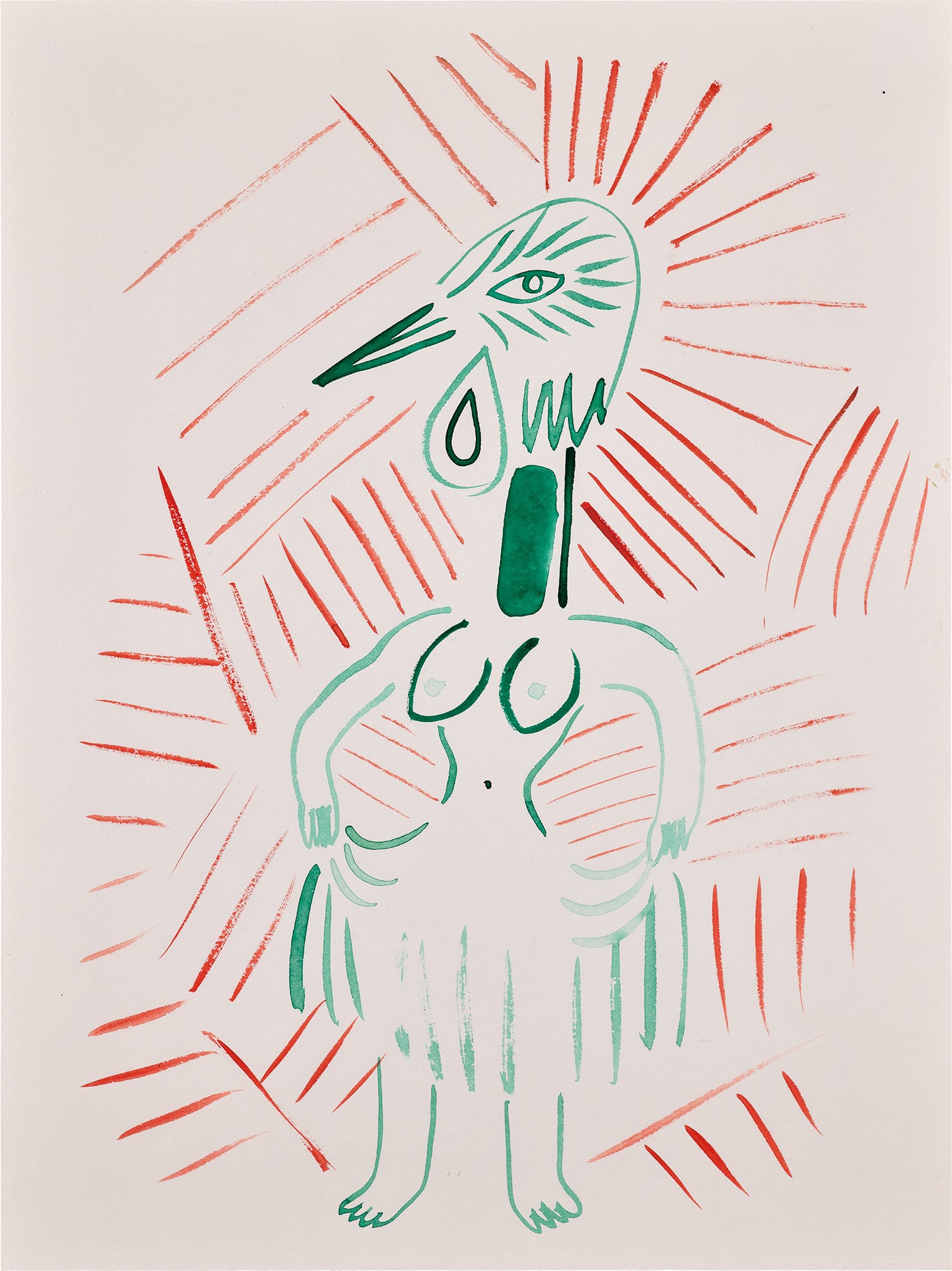
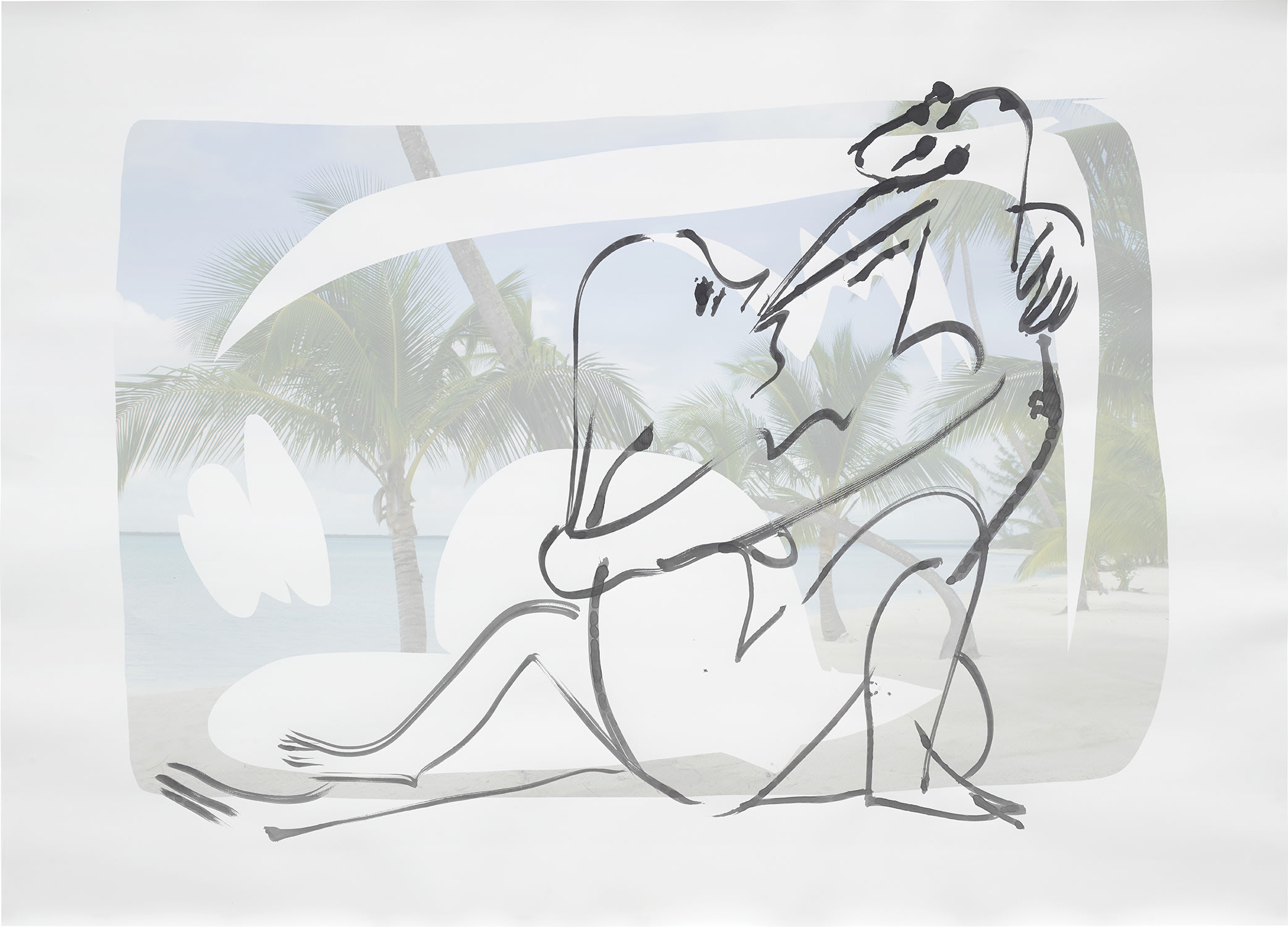
Camille Henrot
Tropics of Love (double-sided), 2013
Paradise Has Always Been a Provocation
There is something deeply unsettling about a palm tree rendered in paint. It looks like pleasure, like escape, like the postcard you send when you want someone to know you are somewhere better than where they are. But the history of tropical imagery in Western art is far more tangled than that, wound up in colonialism and longing, in the violence of the gaze and the seduction of the unfamiliar. To collect works in this vein is to engage with one of art history's most contested and generative territories, one that has never stopped producing urgent, complicated, and visually astonishing work.
The appetite for tropical imagery in European art crystallized in the nineteenth century, when scientific expeditions and colonial expansion brought back specimens, sketches, and stories from regions that most artists would never visit. Alexander von Humboldt's writings on equatorial nature, particularly his influential Cosmos published in the 1840s, set off a wave of landscape painters who sought to capture what he called the physiognomy of vegetation. Frederic Edwin Church traveled to South America in 1853 and again in 1857, producing monumental canvases that treated the tropics as both spectacle and moral theater. These were paintings in which lushness operated as a kind of argument, a claim about the abundance and strangeness of a world that Europe had decided it needed to possess.
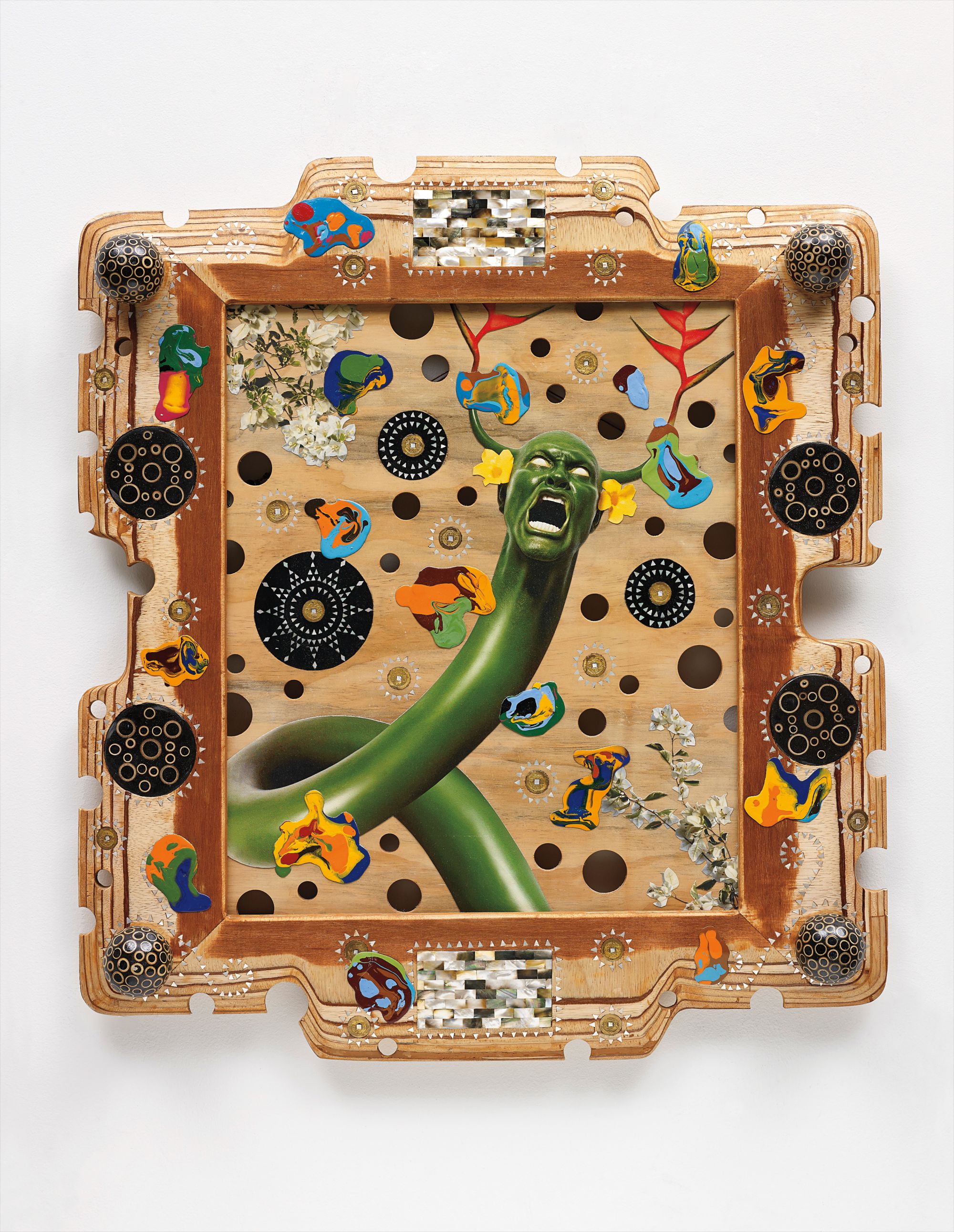
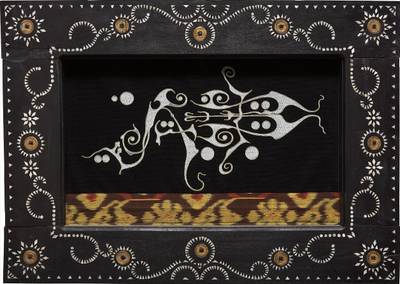
Ashley Bickerton
Snake Head Painting
Paul Gauguin's departures to Martinique in 1887 and then to Tahiti beginning in 1891 marked a turn that would shape modernism's relationship to tropical imagery for generations. His Polynesian paintings delivered warm chromatic flatness and an insistent primitivism that was as much projection as observation. Gauguin constructed a fantasy, and he knew it, and it proved irresistible anyway. The work unlocked something in the modernist imagination: the idea that the tropics could serve as a space of formal liberation, a place where color could be pushed beyond European decorum and form could breathe differently.
Henri Matisse followed a similar logic in his Moroccan paintings of 1912 and 1913, using the warmth and light of North Africa to crack open his own chromatic possibilities. By the mid twentieth century, tropical imagery had become something more self aware and more politically loaded. Artists from the Caribbean, Central America, and the Pacific began reframing the terrain on their own terms, pushing back against a century of being viewed rather than viewing. This shift matters enormously when looking at the work of Ashley Bickerton, whose practice is deeply rooted in his time living in Bali and whose work on The Collection engages with tropical imagery from a position of genuine immersion rather than touristic extraction.
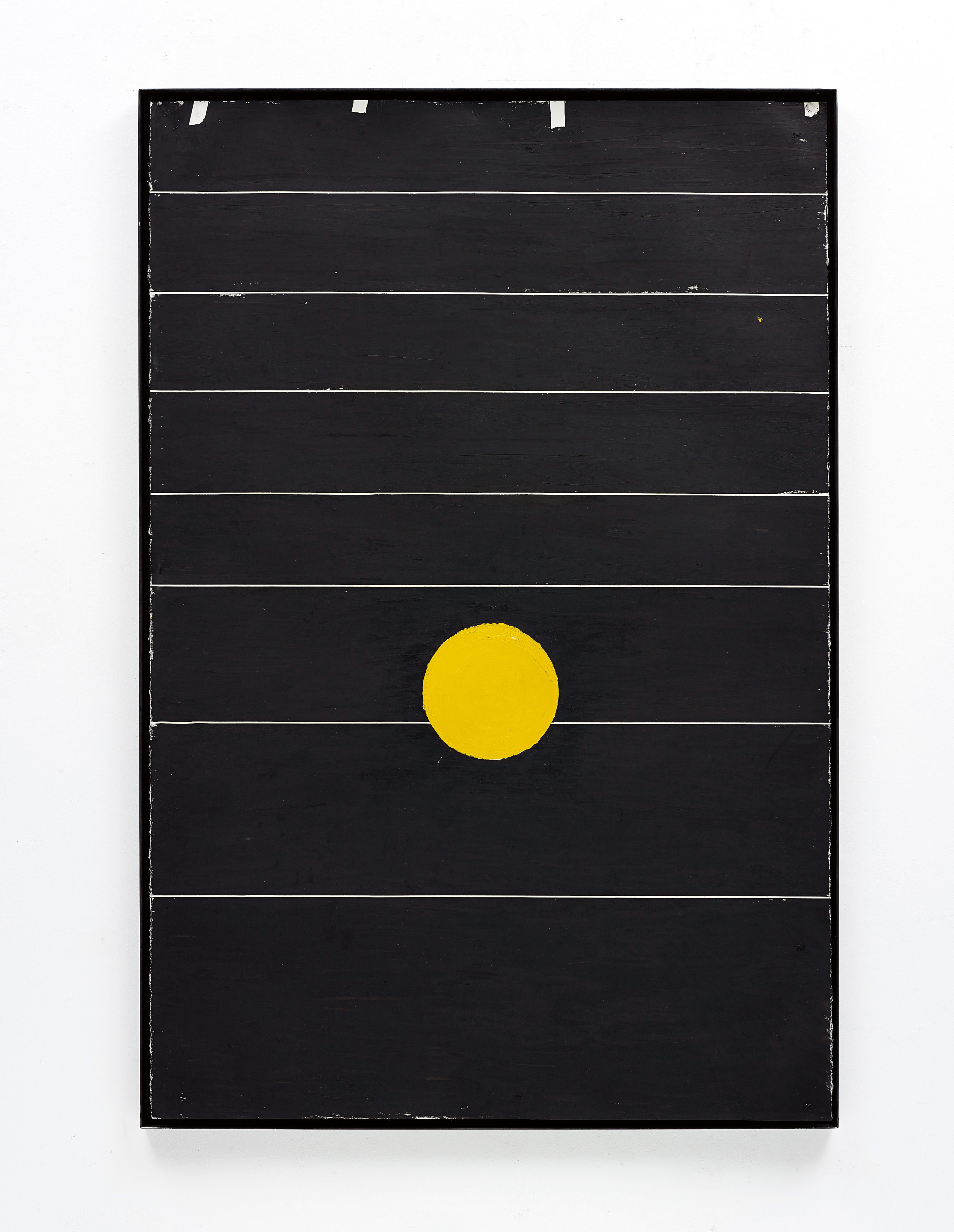
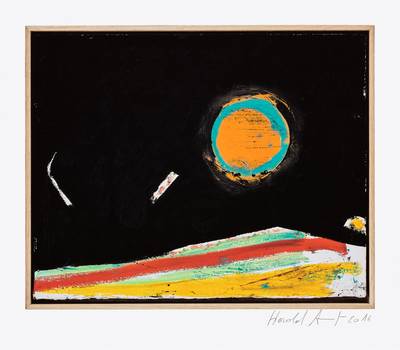
Harold Ancart
In soot, dust and burning, Harold Ancart finds a fragile and fugitive elegance. Often working with found media – he sets photographs of tropical beaches aflame – motifs such as palm trees and parrots recur in his work, only to be offset by the delicate restraint of his works on paper. His is a practice concerned with removal and destruction, and the spaces between objects.
Bickerton's imagery is saturated and strange, refusing the easy pleasures of the exotic while still acknowledging their pull. His work operates in the space between seduction and critique, which is precisely where the most interesting art about the tropics tends to live. The question of how to paint something that has been so thoroughly aestheticized is one that artists continue to wrestle with. Harold Ancart, whose work appears on The Collection, often uses tropical plant forms and warm light as compositional anchors, but his approach is gestural and subjective rather than illustrative.
Ancart came to wider attention through shows at David Zwirner in New York and has been associated with a generation of painters who treat the natural world as emotional territory. His palm trees and botanical forms are not decorations. They are presences, sometimes tender and sometimes ominous, shaped by the way paint itself moves and pools on the surface. Camille Henrot's practice brings an entirely different set of tools to the encounter with tropical or natural imagery.
Camille Henrot
Tropics of Love (double-sided), 2013
Henrot, who represented France at the Venice Biennale in 2013 and whose video work Grosse Fatigue won the Silver Lion that year, works across film, sculpture, drawing, and installation, often cycling through images and ideas with a restless, associative logic. Her engagement with natural history collections and the classification of the world's flora and fauna carries an inherent critique of the colonial frameworks that organized that knowledge in the first place. The works by Henrot on The Collection participate in this broader questioning, asking how we look at living things and what assumptions we carry when we do. John Little, whose work also appears on The Collection, offers a different lineage.
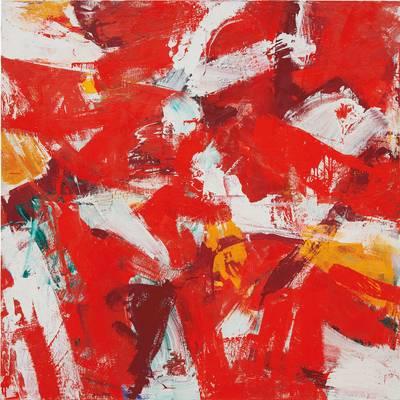
An American painter associated with the Abstract Expressionist orbit, Little spent significant time in the Gulf South, and his gestural canvases often carry the heat and density of subtropical atmosphere without ever becoming illustrative. His work reminds us that tropical imagery does not require a literal palm tree or a hibiscus blossom. Sometimes it is simply the feeling of air that is too warm and too thick, rendered through the weight of pigment on canvas. What makes tropical imagery so persistent and so productive as a category is its refusal to stay still.
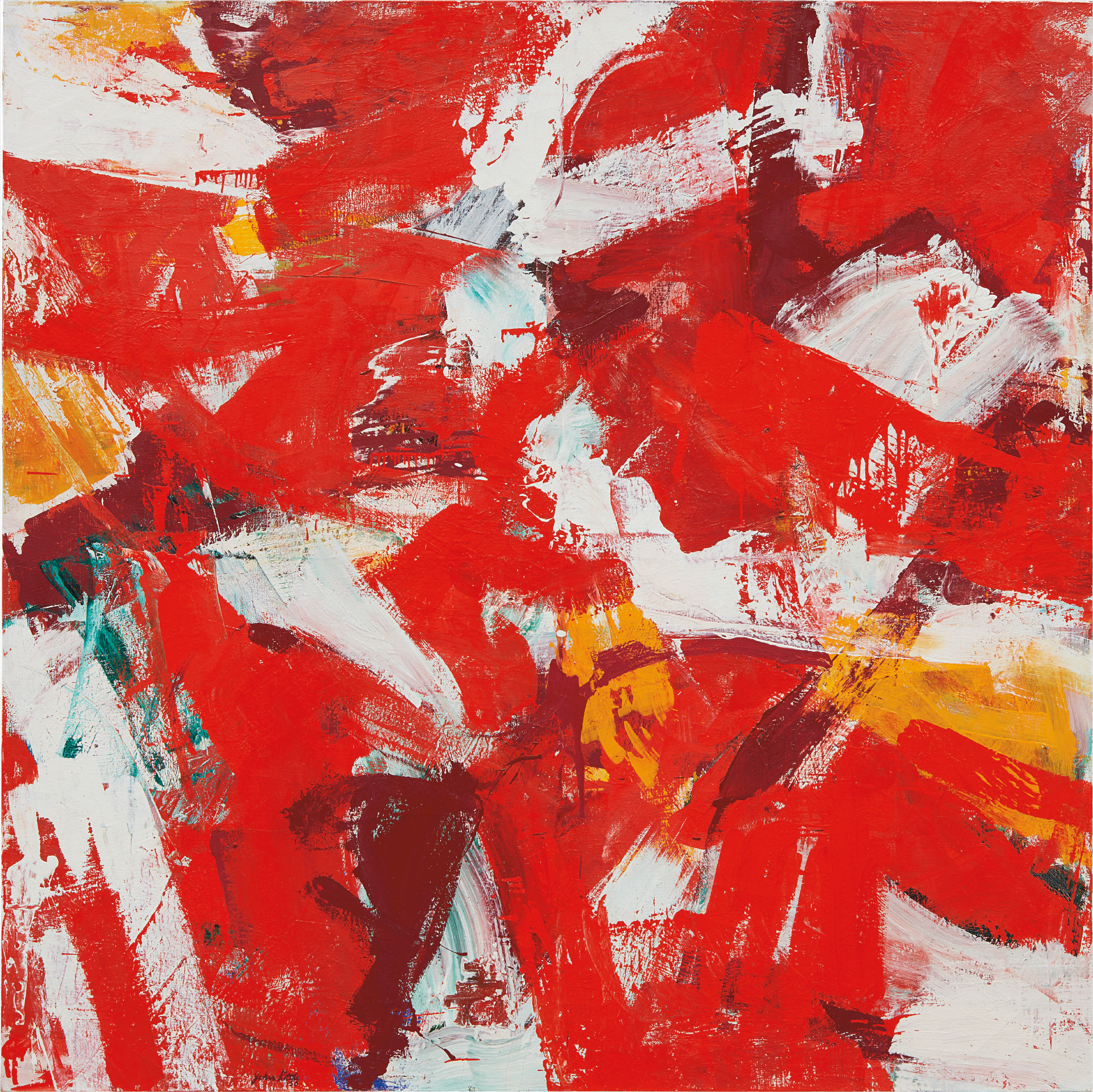
John Little
Tropic of Cancer, 1958
It is always moving between the personal and the political, between formal invention and cultural reckoning. Collectors who are drawn to this work are often responding to something they cannot quite name, a combination of visceral pleasure and vague unease, which is the signature of imagery that still has something to say. The best works in this tradition do not let you rest in the beauty. They hold you there and then ask you what you are actually looking at, and why it matters, and who decided it was paradise in the first place.