Oil And Charcoal
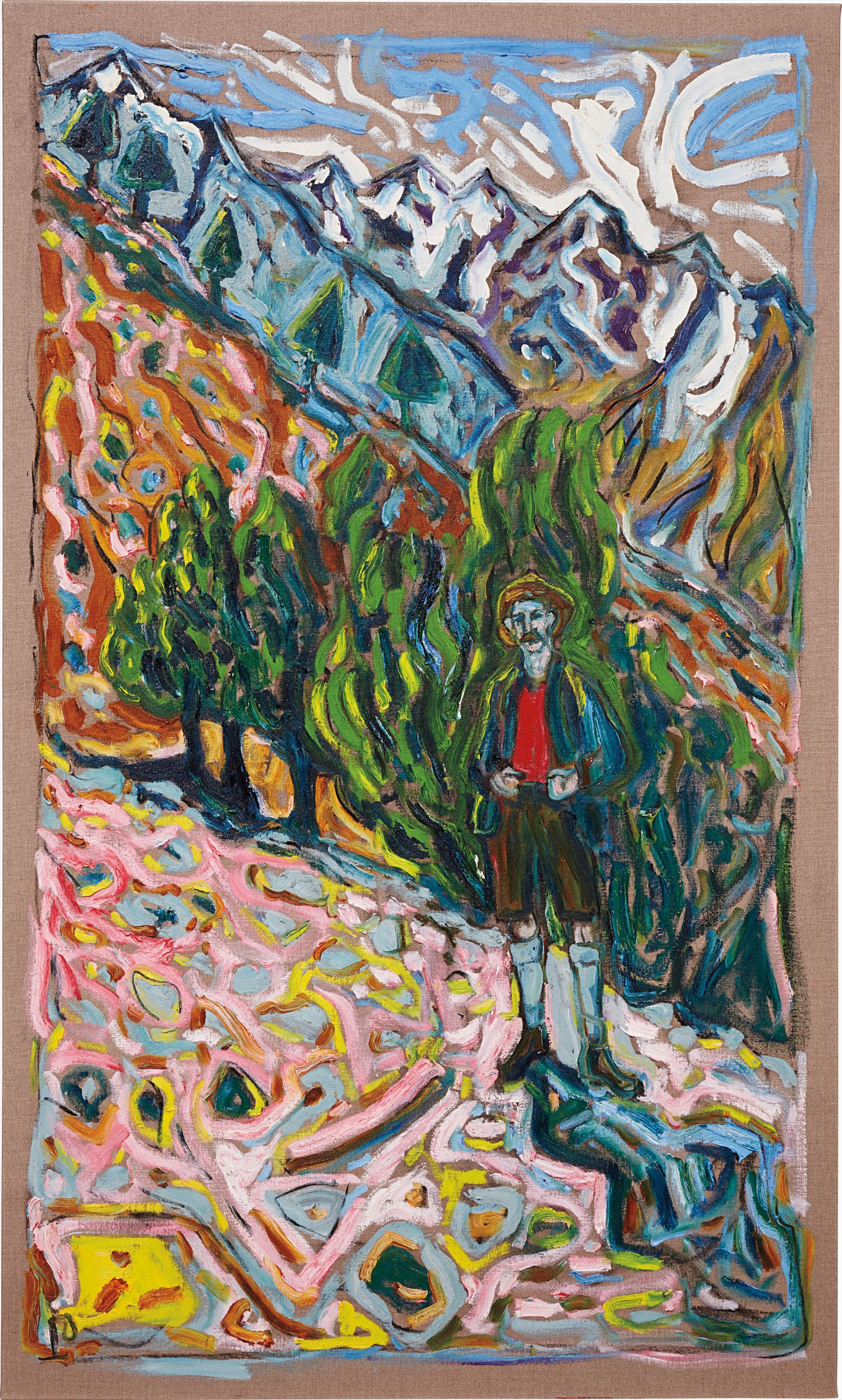
Billy Childish
Stood Before Juniper Trees - High Atlas

The Mark That Cannot Be Undone
When a Georg Baselitz canvas appeared at Sotheby's London in early 2024 and cleared well above its high estimate, the room took notice not because of the scale or the inverted figure but because of the raw charcoal underdrawing visible at the edges, ghosting through oil like a confession left in plain sight. That combination of materials, oil and charcoal working in tension and sometimes in open argument on the same surface, has become one of the most scrutinised and commercially vital territories in contemporary collecting. What once read as preparatory, as mere process, now reads as the whole point. The medium combination is not new, of course, but the critical appetite for it has sharpened considerably over the past decade.
Charcoal carries a particular weight in art history. It is the material of first thought, of cave walls, of life drawing classes and of revision. When an artist chooses to leave it visible beneath or alongside oil paint, they are making an argument about how a work comes into being, about the legitimacy of doubt and the beauty of accumulation. The tension between charcoal's erasability and oil's permanence creates a kind of drama that purely painted surfaces often cannot match.
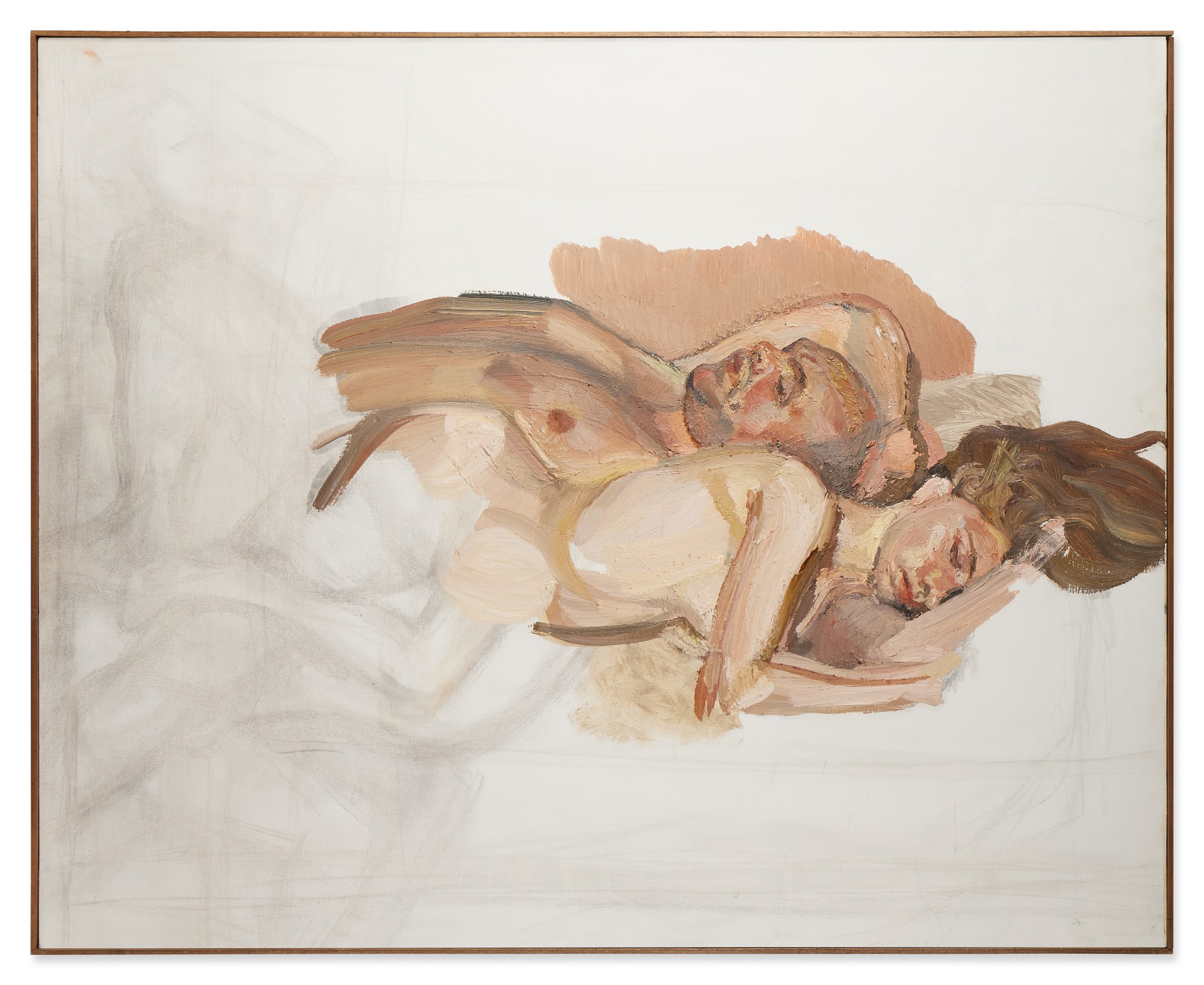
Lucian Freud
And the Bridegroom (first version, fragment), 1993
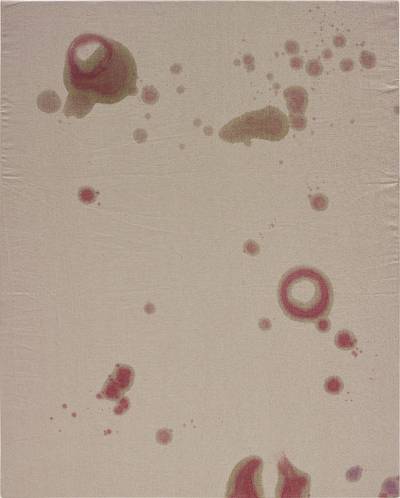
Museum programming has caught up with this conversation in meaningful ways. The Lucian Freud retrospective at the National Portrait Gallery in London, which ran through 2022, made visible how central drawing was to Freud's entire practice, not as preparation but as a mode of seeing that ran parallel to his painting. Works on paper and mixed surface pieces in that show stopped visitors cold in a way that the large figurative oils did not always manage. There was an intimacy to them, a sense of the artist's hand moving in real time, that struck collectors and critics alike as something richer than technique.
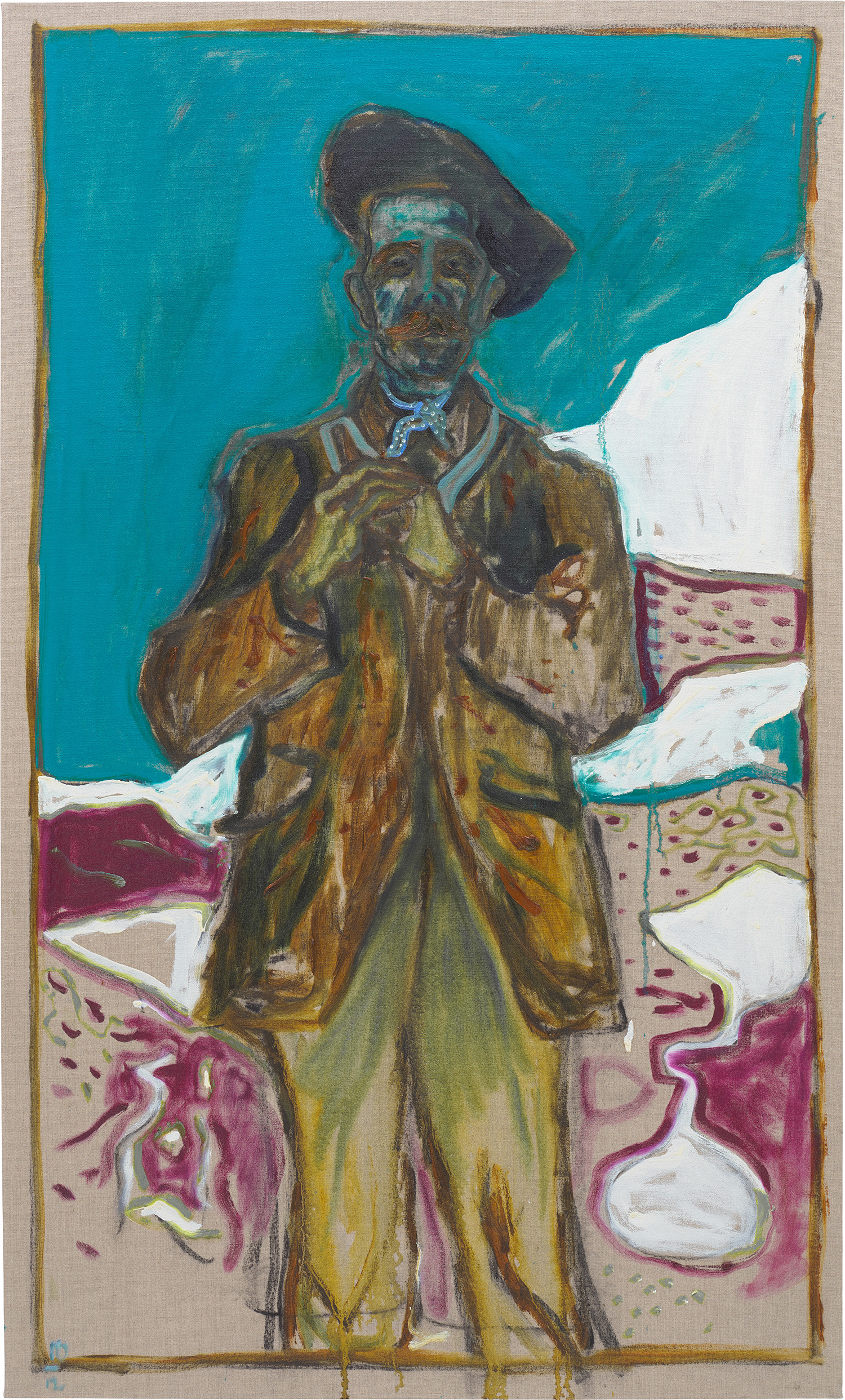
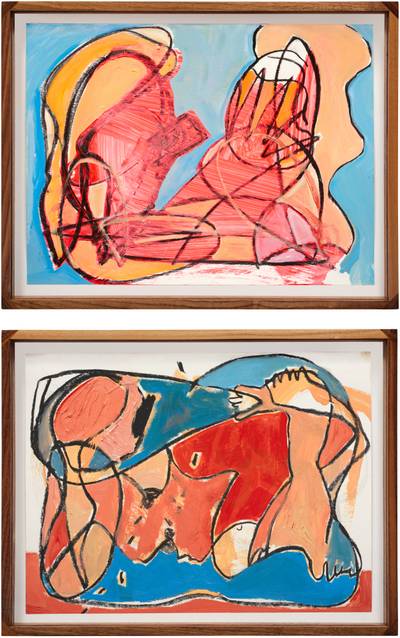
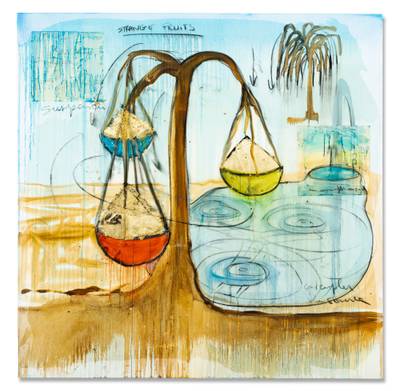
That show shifted the conversation about materiality in a lasting way. On the auction market, oil and charcoal works by artists who move between raw drawing and painterly surface have consistently outperformed expectations when condition and provenance align. Billy Childish, whose work is strongly represented on The Collection, occupies a particular position in this landscape. His canvases, often worked in oil and enamel with visible drawing beneath, carry a directness that collectors find increasingly rare in an era of heavily mediated image making.
Billy Childish
Stood Before Juniper Trees - High Atlas
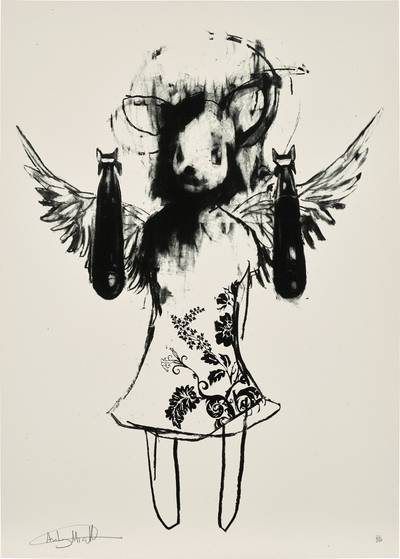
His prices have risen steadily at auction across the past five years, with strong results at Rye and London based sales, and his critical standing has benefited from renewed attention to outsider adjacent painting traditions that value mark making above finish. Austyn Weiner, also well represented on The Collection, works in ways that foreground the physical act of applying material to surface, and her growing presence in Los Angeles gallery programming has translated into meaningful secondary market interest. Antony Micallef and Nick Farhi both occupy spaces where drawing and painting are not sequential activities but simultaneous ones, where charcoal functions less as underpainting and more as a structural element in its own right. Collectors who have moved through purely photorealist or conceptual phases of their collecting often find themselves drawn to this kind of work precisely because it refuses the false comfort of resolution.
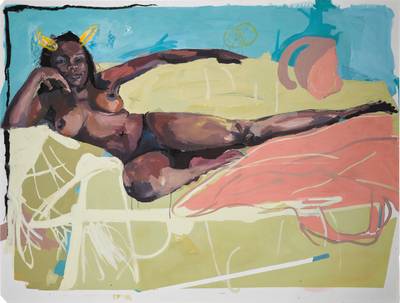
Kudzanai Violet Hwami, whose large scale figurative paintings have entered major institutional collections including the Tate, uses layered drawing and painted surface in ways that speak to both European painterly traditions and southern African visual culture simultaneously, creating works that institutional curators and private collectors are competing to acquire. The institutions collecting most aggressively in this space include the Museum of Modern Art in New York, which has long championed works on paper and mixed media as primary rather than secondary objects, and the Hammer Museum in Los Angeles, which has been particularly attentive to artists working outside traditional fine art academic frameworks. The Broad in Los Angeles and the Rubell Museum in Miami have both made significant acquisitions of works that foreground raw mark making alongside paint, signalling to the market that this is not a fringe interest but a central one. When institutions of that calibre acquire in a particular direction, collectors pay attention, and asking prices at the primary level adjust accordingly.
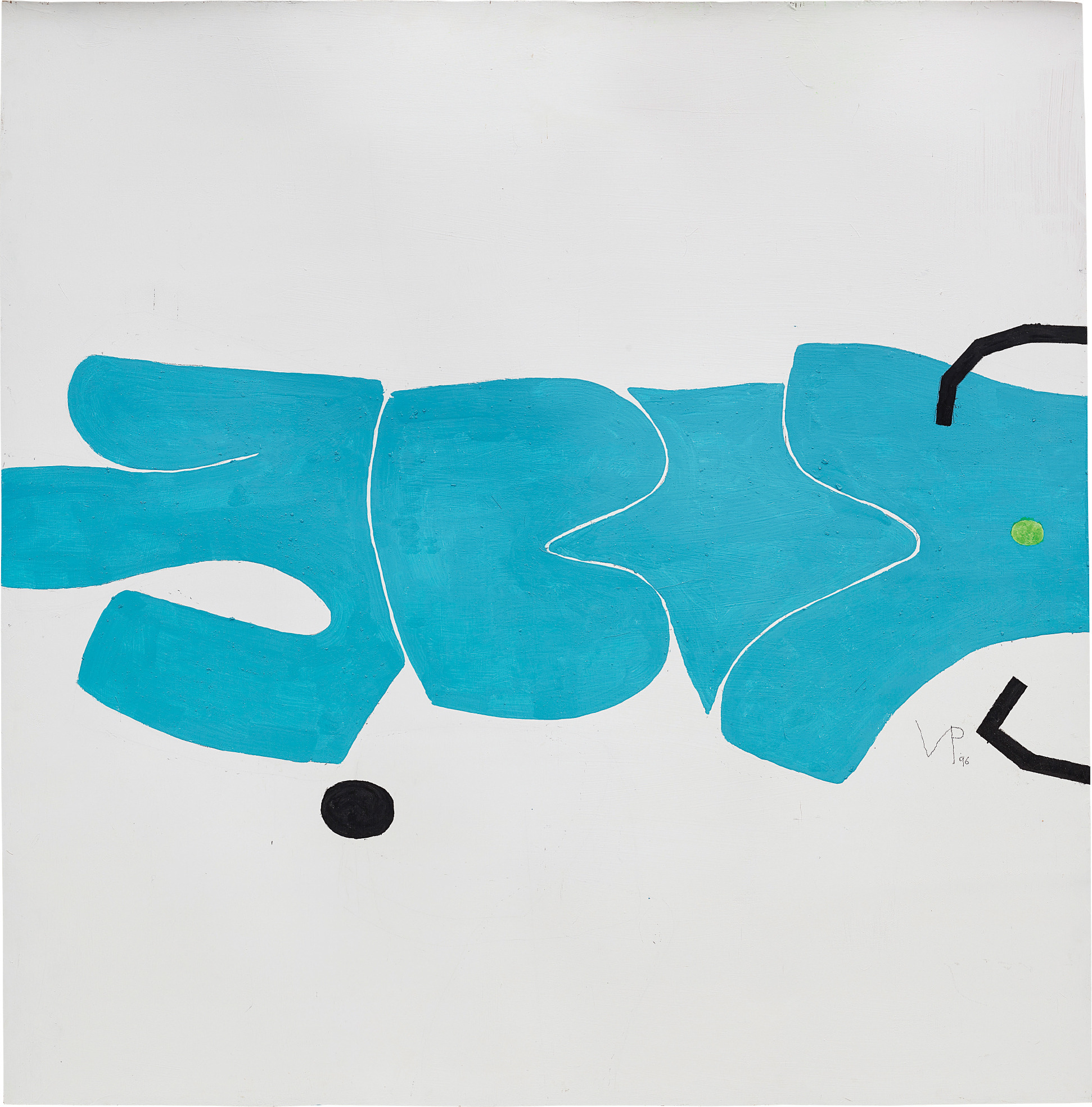
Victor Pasmore
Reason and Impulse, 1996
The critical writing shaping this territory is coming from several directions at once. Hyperallergic has published sustained critical essays on the return to materiality in contemporary painting. Frieze has given significant space to artists for whom drawing is not subordinate to painting but coequal with it. The catalogue essays from recent Victor Pasmore retrospective programming, which traced his movement from gestural abstraction toward constructions and back again, offered a useful framework for thinking about how artists move between mediums without hierarchy.
Curators such as Kelly Taxter and Jenelle Porter have written about drawing as a mode of thinking rather than a mode of recording, and that framing has genuinely changed how collectors approach acquisitions in this space. What feels alive right now is the willingness of both artists and collectors to sit with incompletion. The finished, fully resolved surface has lost some of its authority. What feels settled is the commercial premium attached to works where process is legible, where you can see the decisions being made in real time across the picture plane.
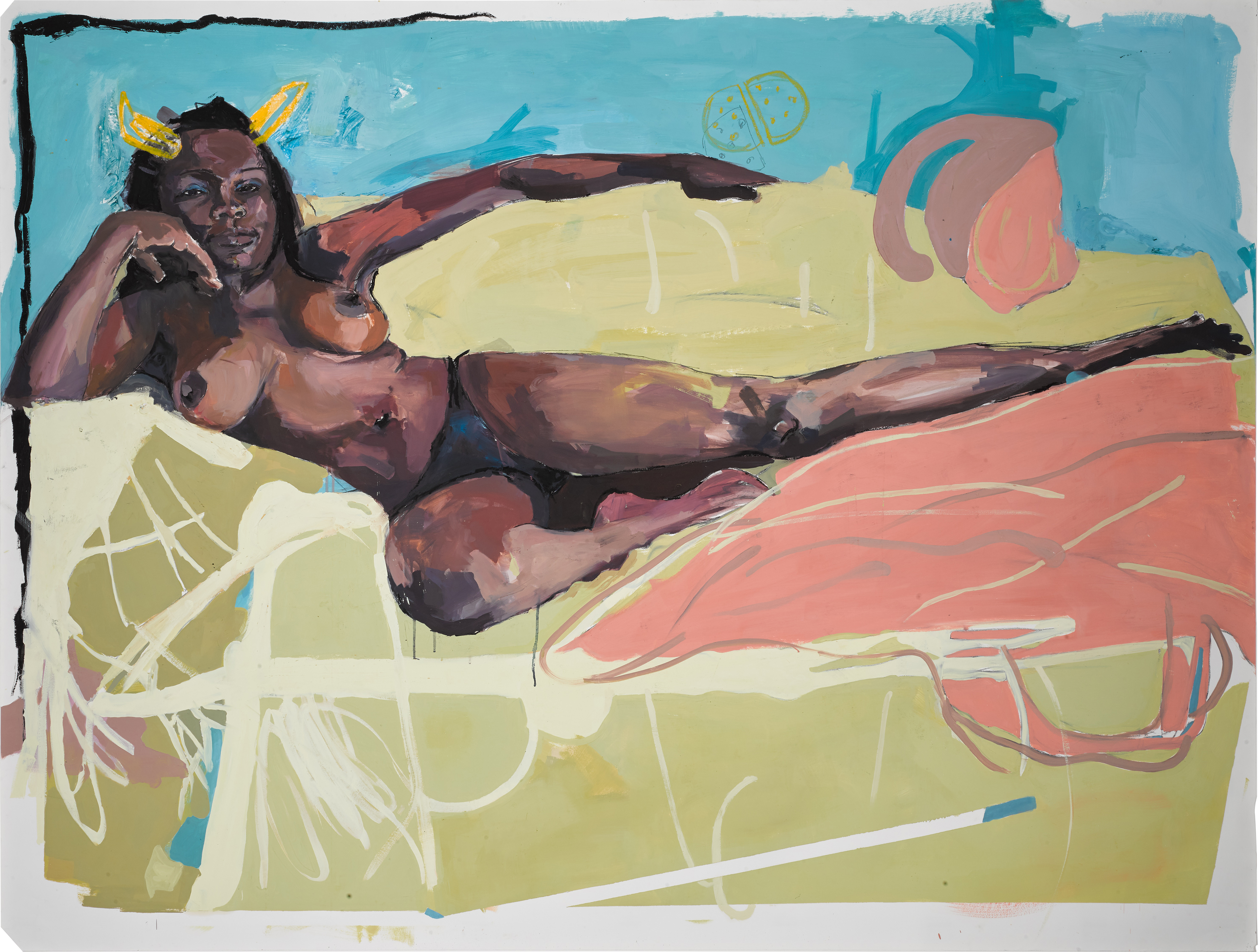
Kudzanai-Violet Hwami
Study Sisi Themba’s Post Surgery, Harare General Hospital, 2050, 2016
What feels like a genuine surprise in the making is the degree to which younger collectors, many of whom came to art through digital image culture, are responding most intensely to the most physical and irreducibly material work available. There is a hunger for the handmade that goes beyond nostalgia. It reads, in the current moment, almost like a political act. The smudge of charcoal beneath the oil paint is not a mistake left uncorrected.
It is the whole argument, stated plainly and left for you to find.