Narrative Mood
Elizabeth Peyton
Disraeli's First Day in Parliament


The Stories Paintings Tell Without Words
There is a particular kind of looking that happens when a painting stops you cold, not because of its technical bravado or its price tag, but because it seems to know something about you. The image holds a feeling in suspension, a tension between what is shown and what is withheld, and you find yourself leaning in rather than moving on. This is narrative mood at work, and it is one of the most quietly powerful forces in the history of art. It operates in the space between storytelling and pure sensation, and for centuries it has been the invisible architecture that gives the greatest paintings their staying power.
The roots of narrative mood stretch back to the history paintings of the Renaissance and Baroque periods, when artists were commissioned to depict scenes from scripture, mythology, and antiquity. But the most sophisticated painters understood early on that the literal event was only a pretext. Caravaggio, working in Rome around the turn of the seventeenth century, understood this with extraordinary intuition. His figures do not merely enact a scene; they seem to have arrived at a psychological precipice, and the viewer feels implicated in whatever happens next.
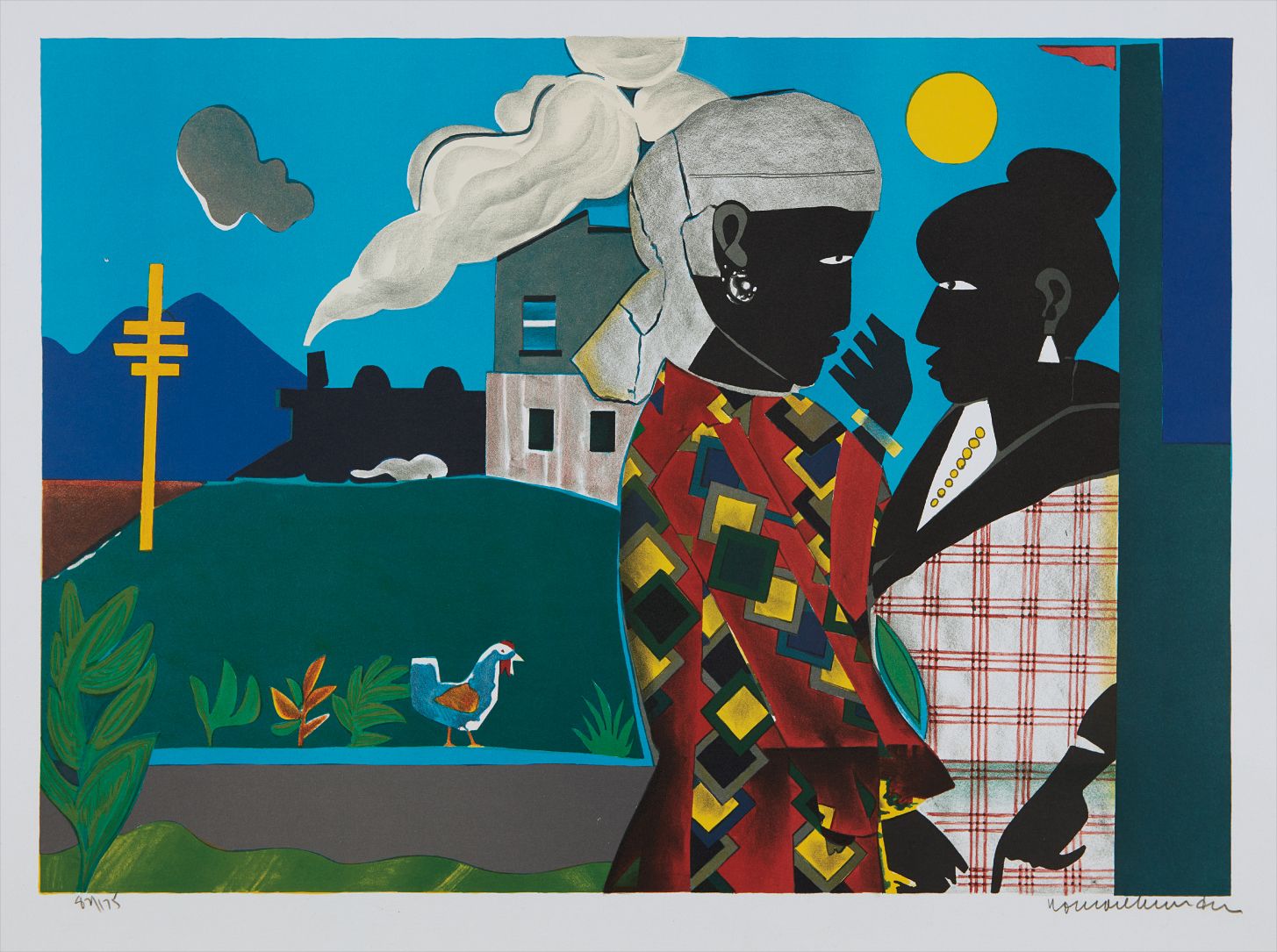
Romare Bearden
Conversation
The darkness pooling around his subjects was not just a technique. It was an emotional condition, a grammar for dread and revelation that artists are still borrowing from today. By the nineteenth century, the Romantic movement transformed narrative mood into a full philosophical program. Caspar David Friedrich placed solitary figures before vast and indifferent landscapes, and the effect was something new in Western art: the external world rendered as interior life.
His 1818 painting "Wanderer above the Sea of Fog" is perhaps the most famous articulation of this, a lone figure whose back is turned to the viewer, inviting a kind of projective identification that feels almost uncomfortably modern. The Symbolists pushed further still, dissolving narrative logic altogether in favor of atmosphere and symbol. Gustave Moreau and Odilon Redon were less interested in what happened than in how a painted surface could induce a specific quality of feeling, trembling and unresolved. The twentieth century brought new urgency to these questions.
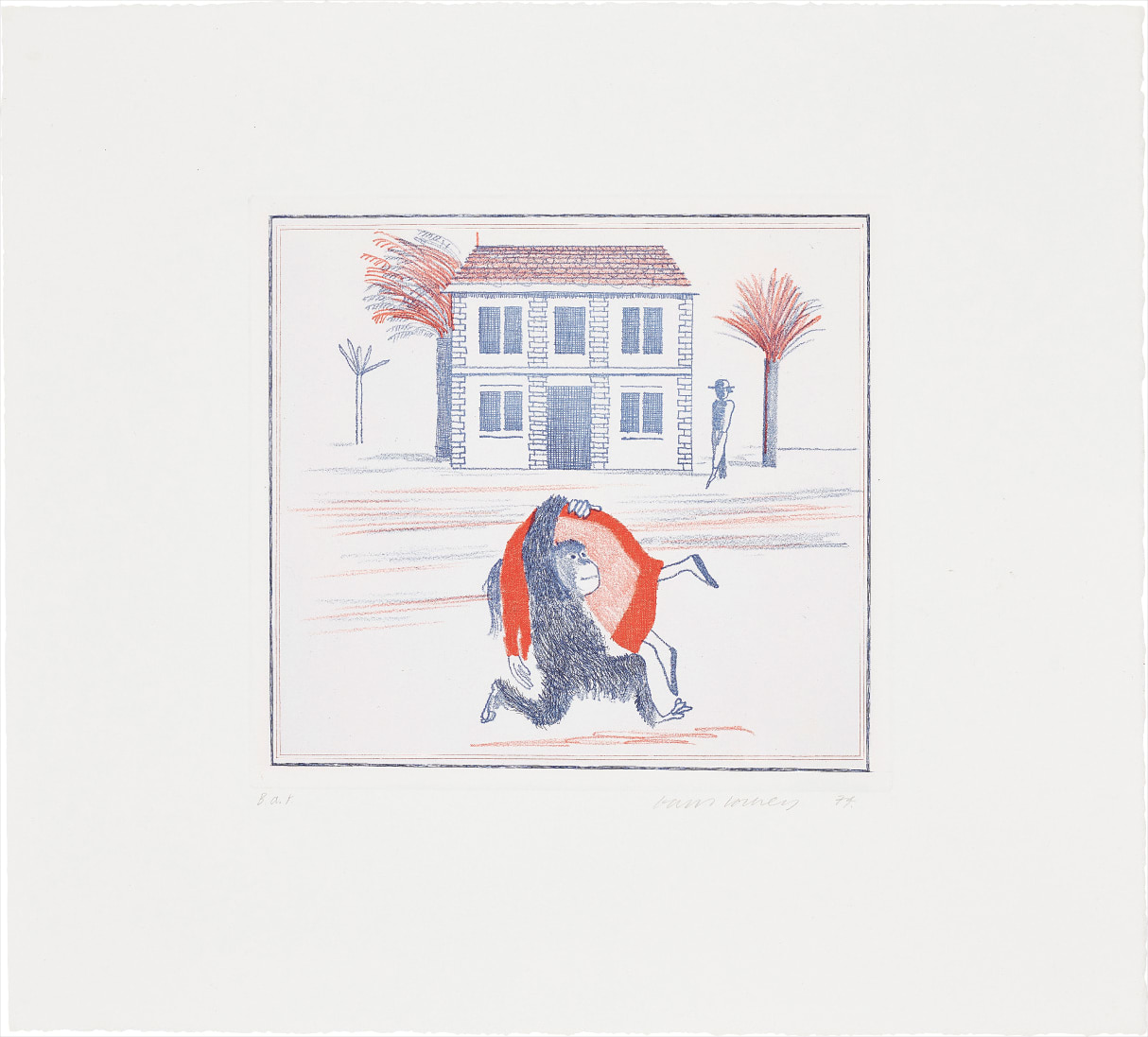
David Hockney
Geography Book (Félicité's Only View From Abroad): Illustration for "A Simple Heart" of Gustave Flaubert
Romare Bearden, working through the Civil Rights era and beyond, understood narrative mood as inseparable from collective memory and cultural inheritance. His collages layer photographic fragments, torn paper, and paint into compositions that vibrate with lived history. Bearden does not illustrate stories so much as reconstruct their emotional residue, and the result is work that carries the weight of the blues, of migration, of American life in its most complicated registers. His 1964 "Projections" series at Cordier and Ekstrom Gallery in New York marked a pivotal moment, and the work on The Collection gives a clear sense of how he made mood into meaning.
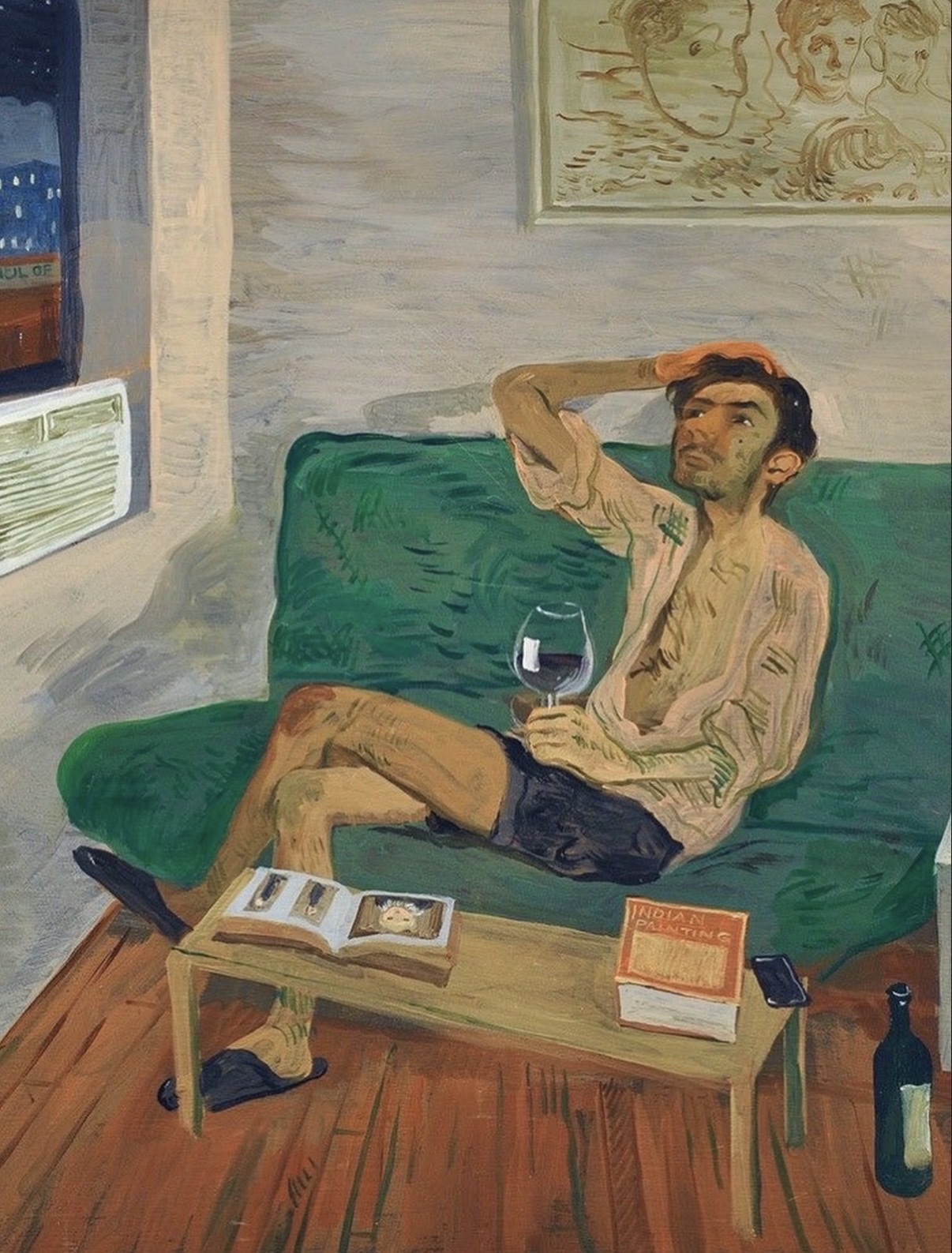
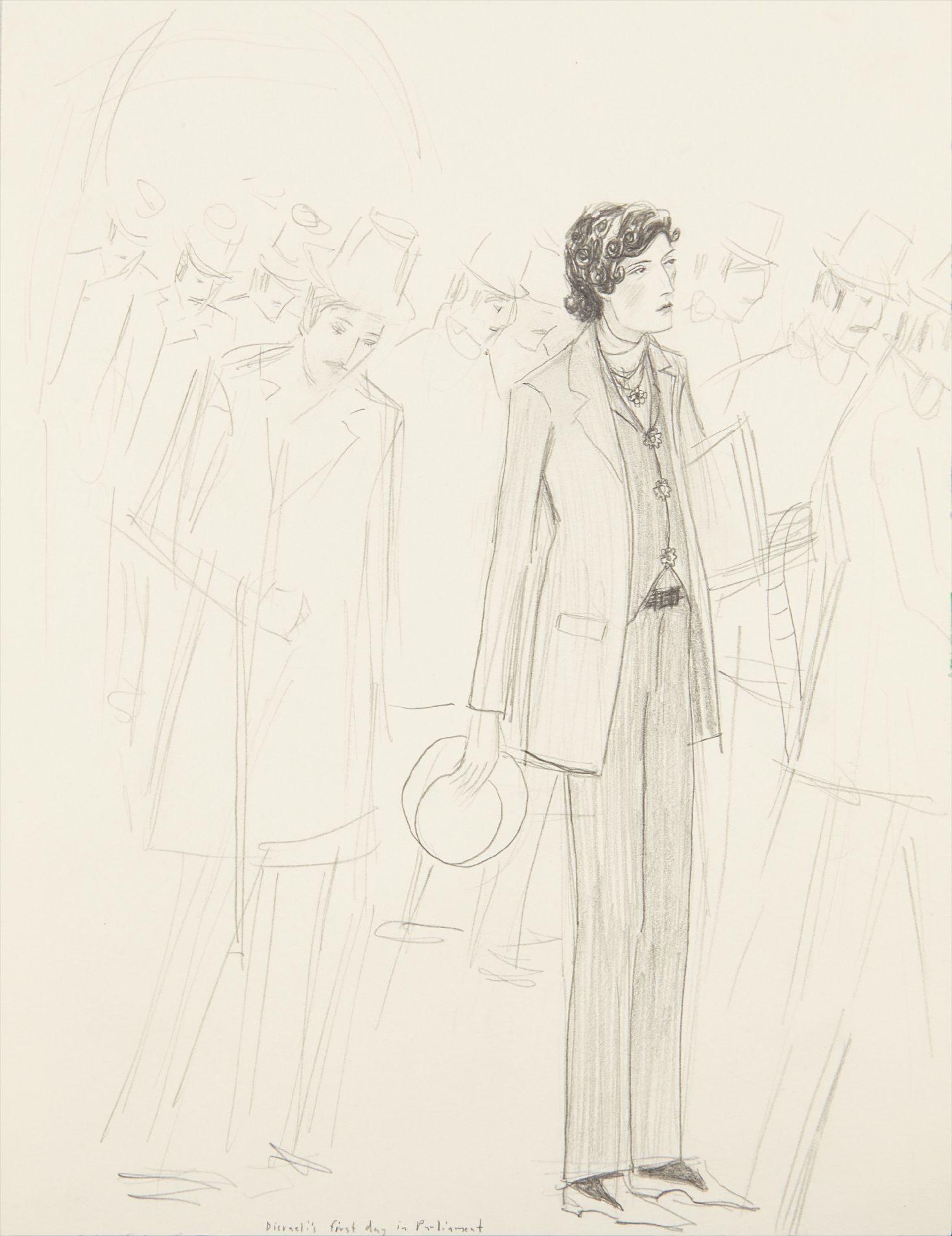
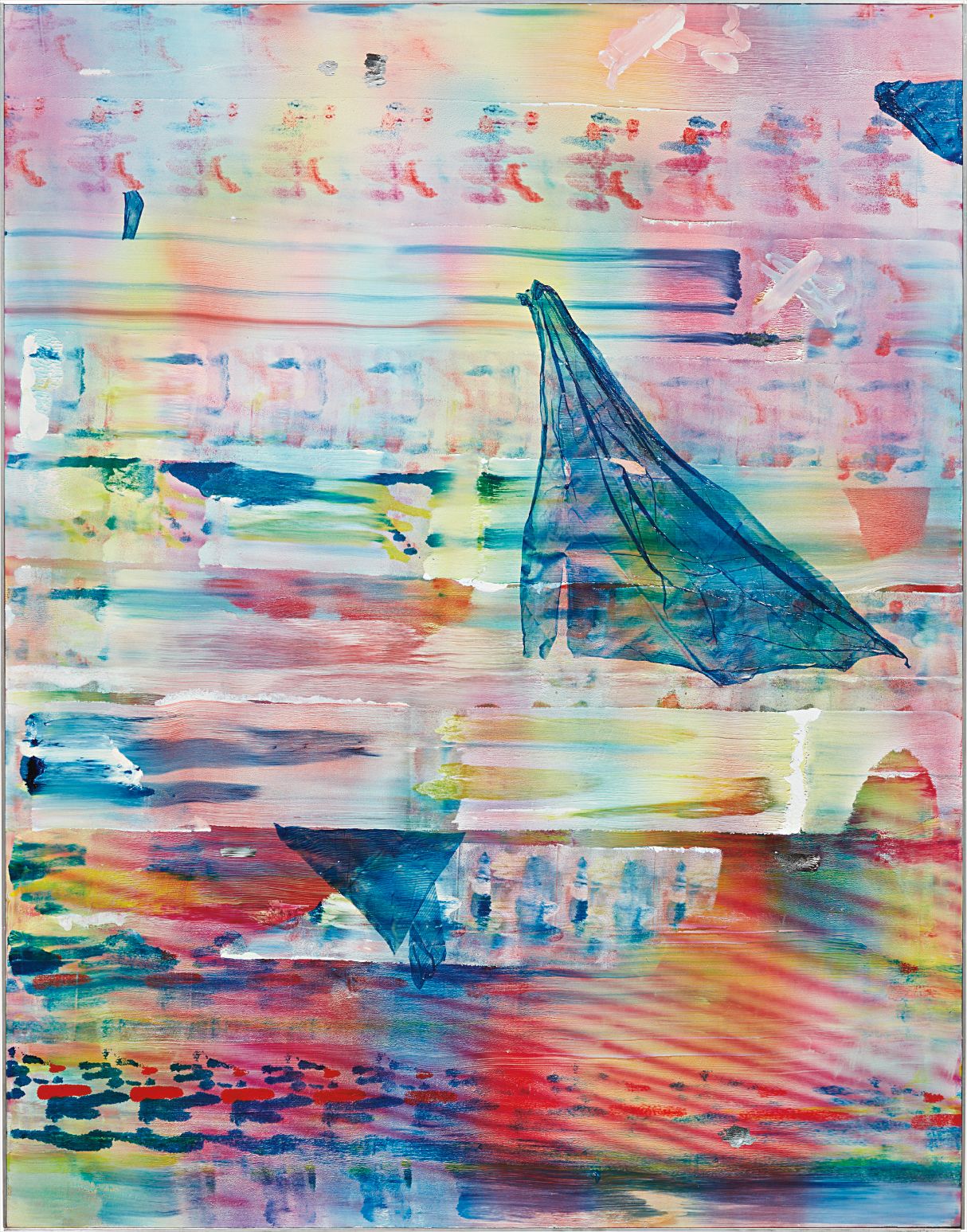
Elizabeth Peyton operates in a very different register but shares that same preoccupation with the interior life of the painted moment. Her small, intense portraits of friends, lovers, musicians, and historical figures are saturated with longing and admiration in equal measure. There is something diaristic about her work, a sense of looking at someone from across a room and feeling the full weight of that person's particularity. Her paintings appeared in a landmark solo exhibition at Gavin Brown's Enterprise in New York in 1997, and since then her reputation has only deepened.
Elizabeth Peyton
Disraeli's First Day in Parliament
She reminds us that narrative mood does not require grandeur. It can live in a glance, in the curve of a shoulder, in the way light falls on a familiar face. David Hockney's relationship to narrative mood is one of the art world's most sustained and evolving conversations. His California swimming pool paintings from the late 1960s and early 1970s are suffused with a particular kind of melancholy that their bright surfaces seem designed to deny.
"A Bigger Splash" from 1967 captures a moment after an event, the diver already beneath the water, the splash caught in midair, the house silent and watching. The tension between presence and absence in that image is a masterclass in how narrative mood operates through implication rather than declaration. Hockney has spent decades testing what a scene can withhold and still communicate. Alexis Rockman brings a more unsettling temperature to these concerns.
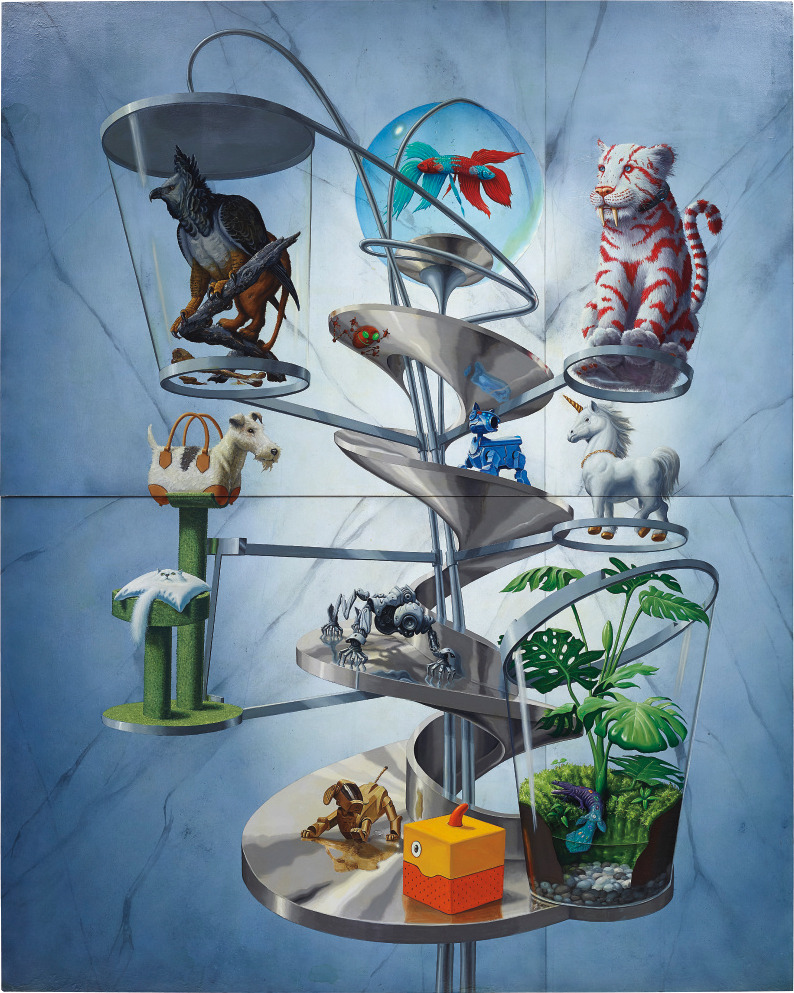
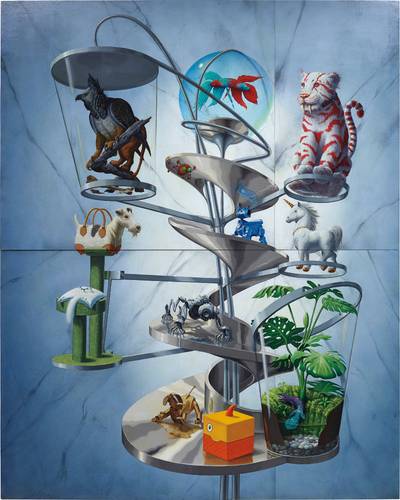
Alexis Rockman
Pet Store, 2003
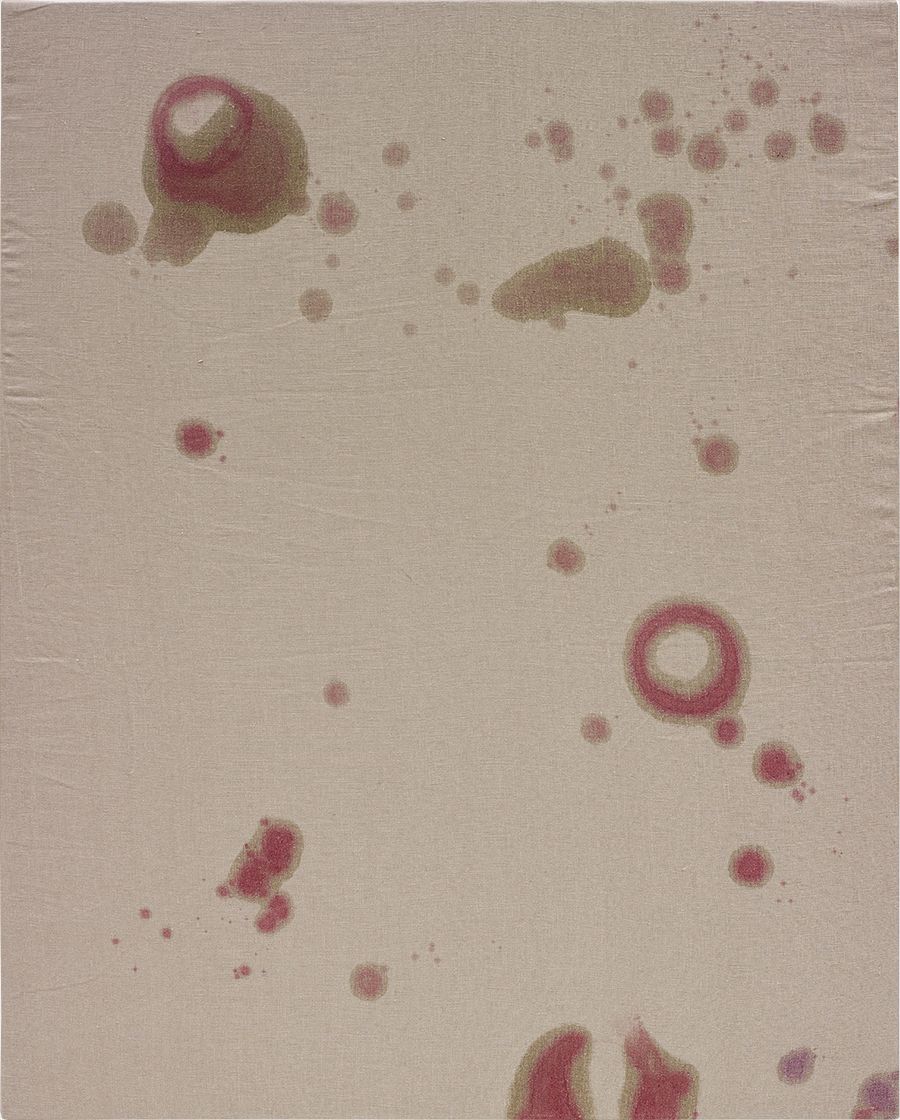
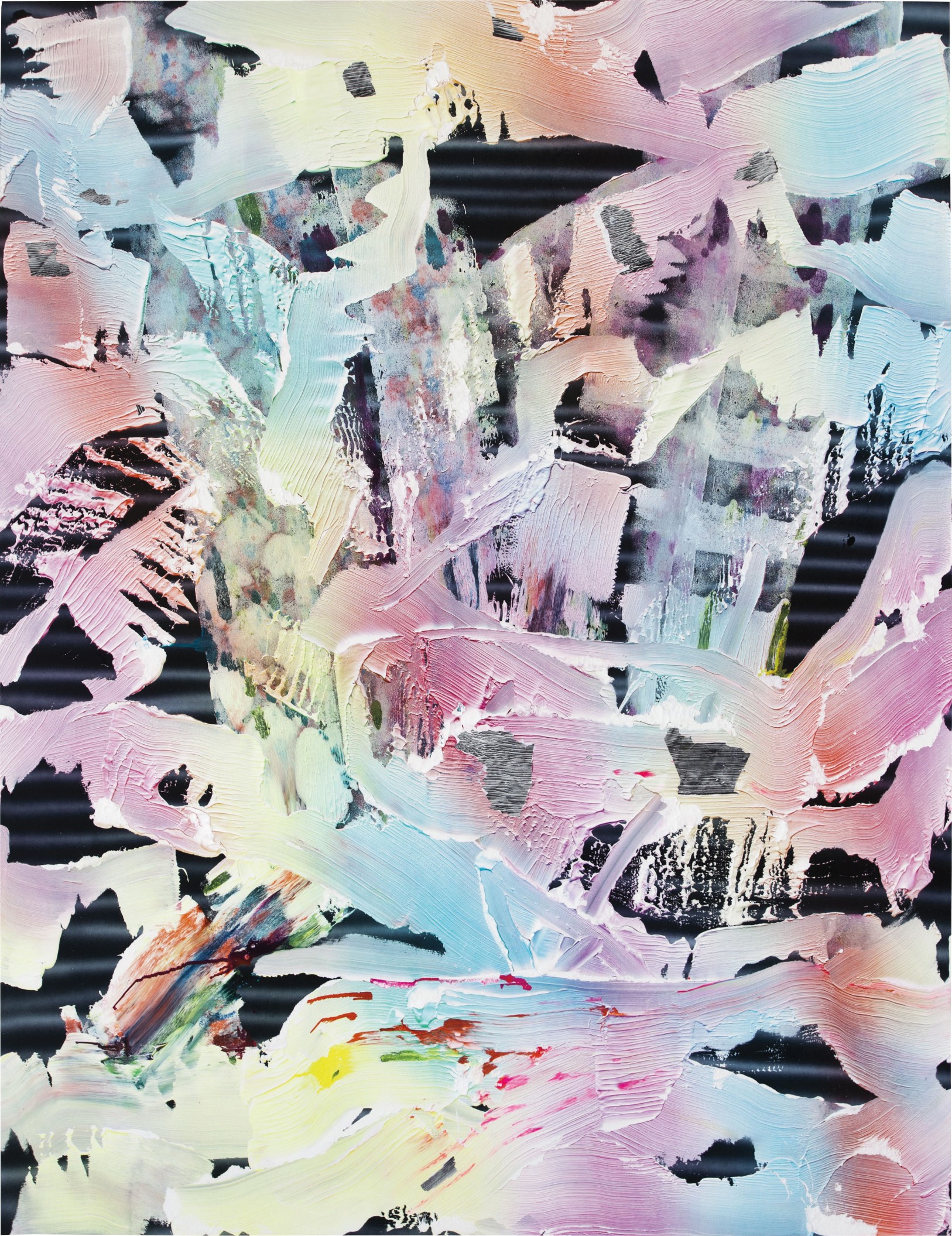
His large scale paintings imagine natural and industrial landscapes in states of transformation or catastrophe, and the mood they generate is one of beautiful dread. His 2004 mural "Manifest Destiny," painted for the Brooklyn Museum, depicts Brooklyn's waterfront submerged in a far future warming scenario, and it lands somewhere between prophecy and elegy. Rockman uses the conventions of natural history illustration against themselves, so that what looks like documentation reads as nightmare. Nick Farhi and Joe Reihsen, both represented on The Collection, bring their own distinct sensibilities to this territory, working with image, memory, and atmosphere in ways that reward sustained attention.
What connects all of these artists across centuries and continents is a shared conviction that painting can hold emotional states that language cannot fully name. Narrative mood is not the same as narrative: it does not require a beginning, a middle, or an end. It requires only that the image put you somewhere specific, emotionally and psychologically, and trust you to know where you are. This is a high demand to make of a viewer, and it is also a form of deep respect.
In the current art world, where images circulate faster than feeling and attention is the scarcest commodity, the works that operate through narrative mood have become more important, not less. Collectors who spend time with this category of work tend to describe their experience in terms that sound almost therapeutic: the sensation of being held still, of being seen by a painting that cannot see. That quality, at once ineffable and entirely real, is what The Collection continues to seek out and offer. Some things are worth sitting with.