Mythological Imagery
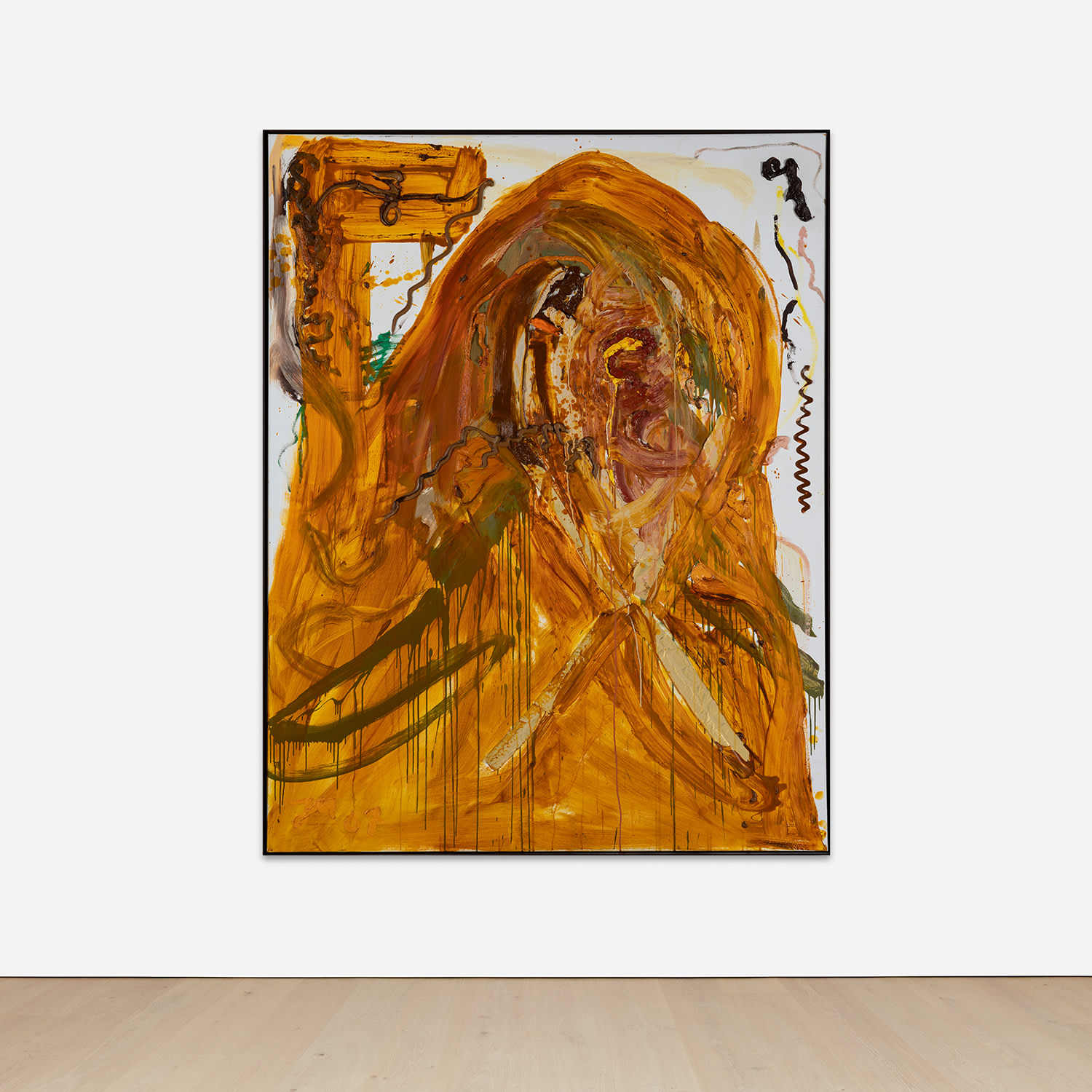
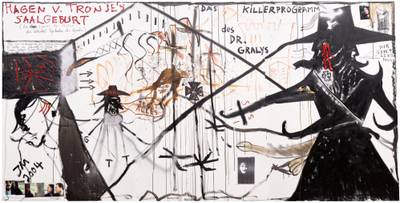
Jonathan Meese
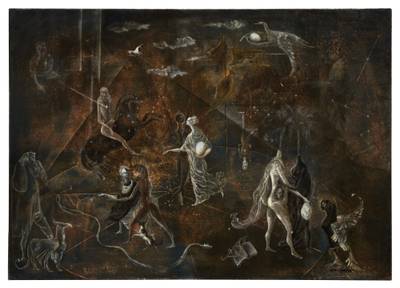
Pharao Messegurke mit Tinten-fischaugen, im Sakrophagys de Pflaumenmus, 2003
Gods, Monsters, and the Art of Desire
There is something quietly radical about choosing to live with myth. In a market saturated with abstraction and conceptual cool, collectors who gravitate toward mythological imagery are making a particular kind of declaration: that the old stories still have teeth, that the figures from antiquity and folklore and sacred tradition carry emotional weight that purely formal work simply cannot access. These are images that arrive in your home already loaded. They carry millennia of interpretation behind them, and yet in the hands of the right artist, they feel urgently, even uncomfortably, new.
What draws serious collectors to this territory is not nostalgia. It is the recognition that myth functions as a kind of shared grammar, a symbolic vocabulary that allows artists to speak about power, desire, transformation, and mortality without the limitations of autobiography or journalism. When you acquire a work operating in this register, you are acquiring something that participates in a very long conversation. Living with such a piece changes over time.
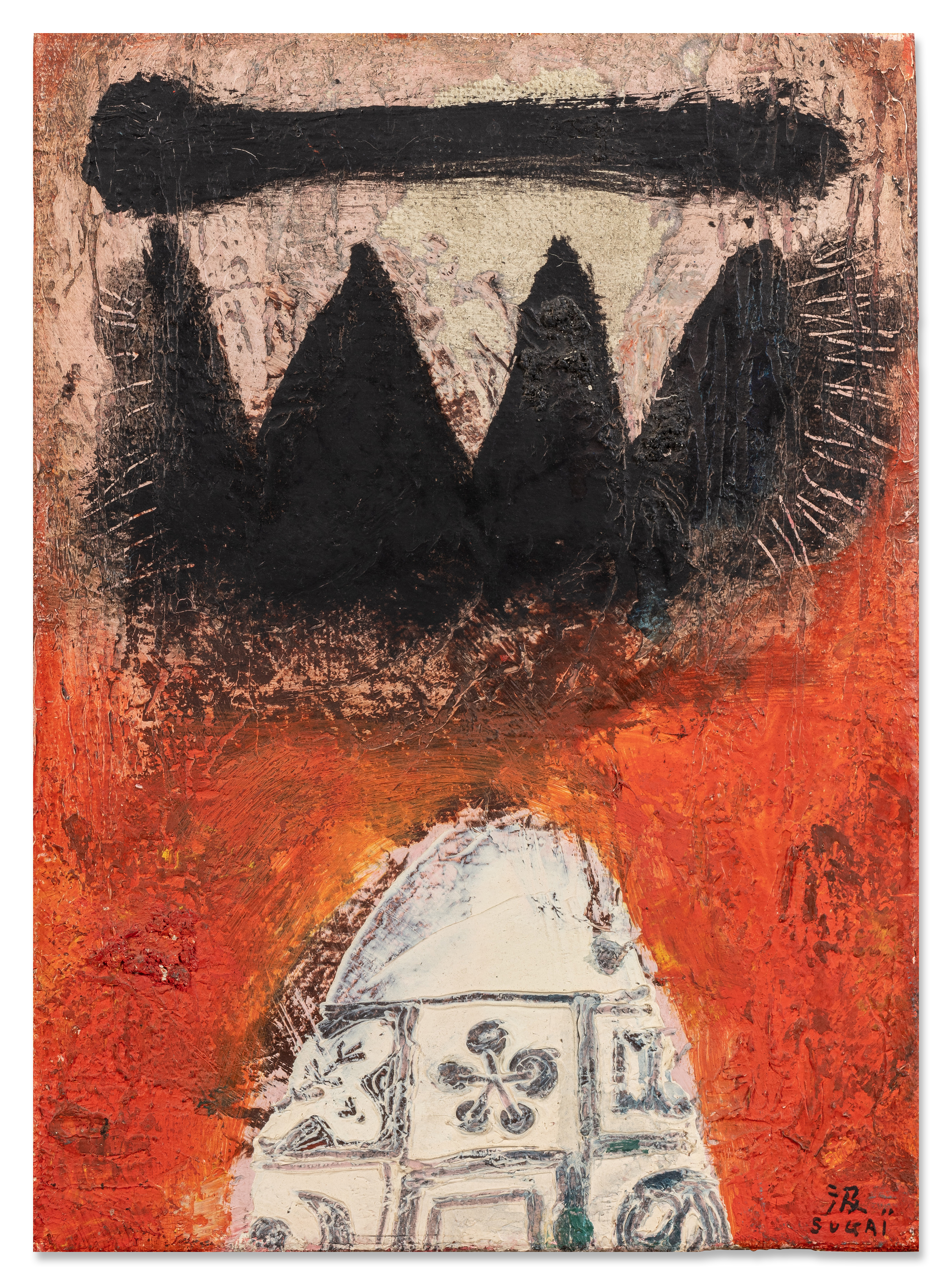
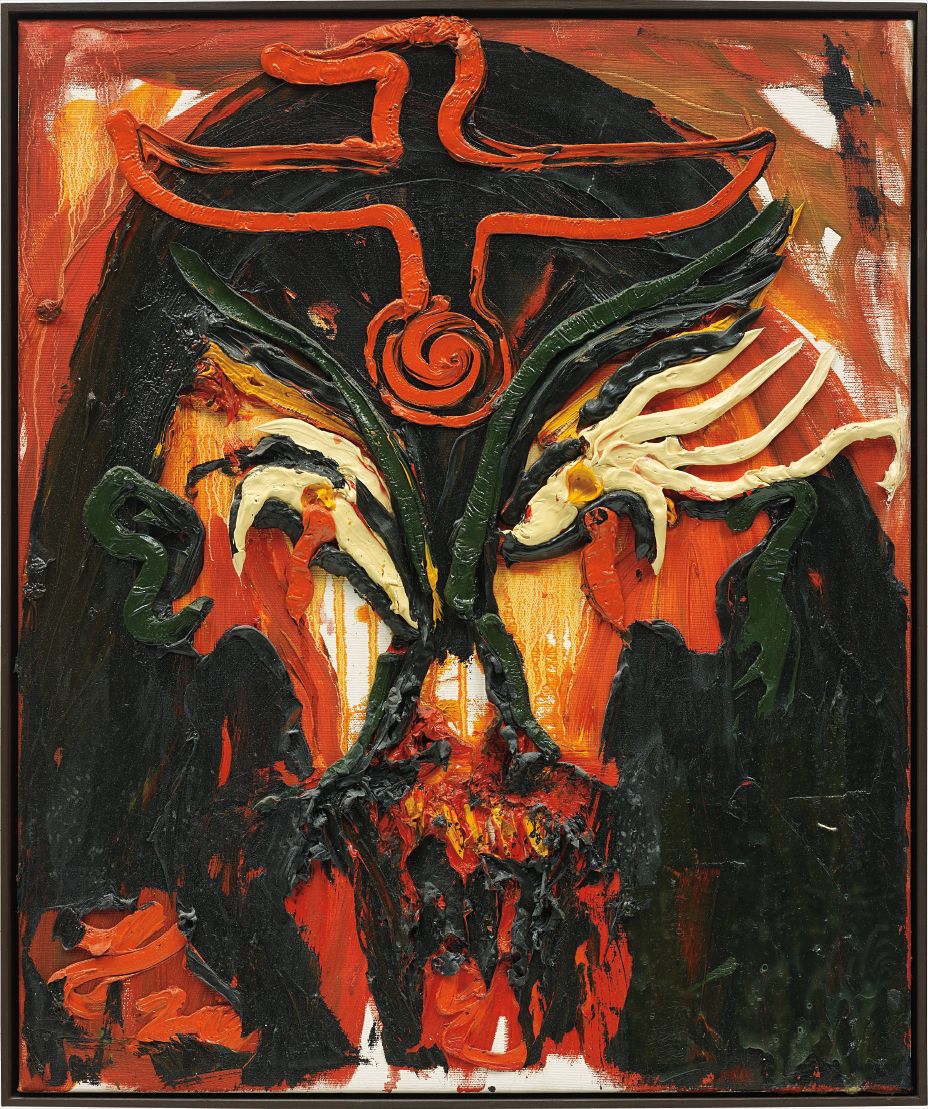
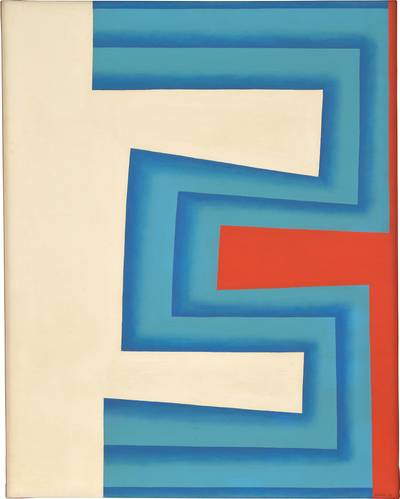
Kumi Sugaï
Diablotin
The longer you know it, the more the references open up and the more the artist's particular intervention into that tradition becomes visible. Separating a good mythological work from a great one requires looking carefully at what the artist is doing with the source material rather than simply illustrating it. Illustration is the trap. The weakest works in this category are essentially decorative retellings: technically accomplished perhaps, but passive in relation to their subject.
The strongest works use mythological imagery as a critical tool, bending the narrative to expose something that the original story either conceals or assumes. This tension between tradition and rupture is where the real energy lives, and collectors should train their eye to find it. Ask yourself whether the artist is in conversation with the myth or simply in service of it. Several artists on The Collection demonstrate this quality of genuine critical engagement at an exceptional level.
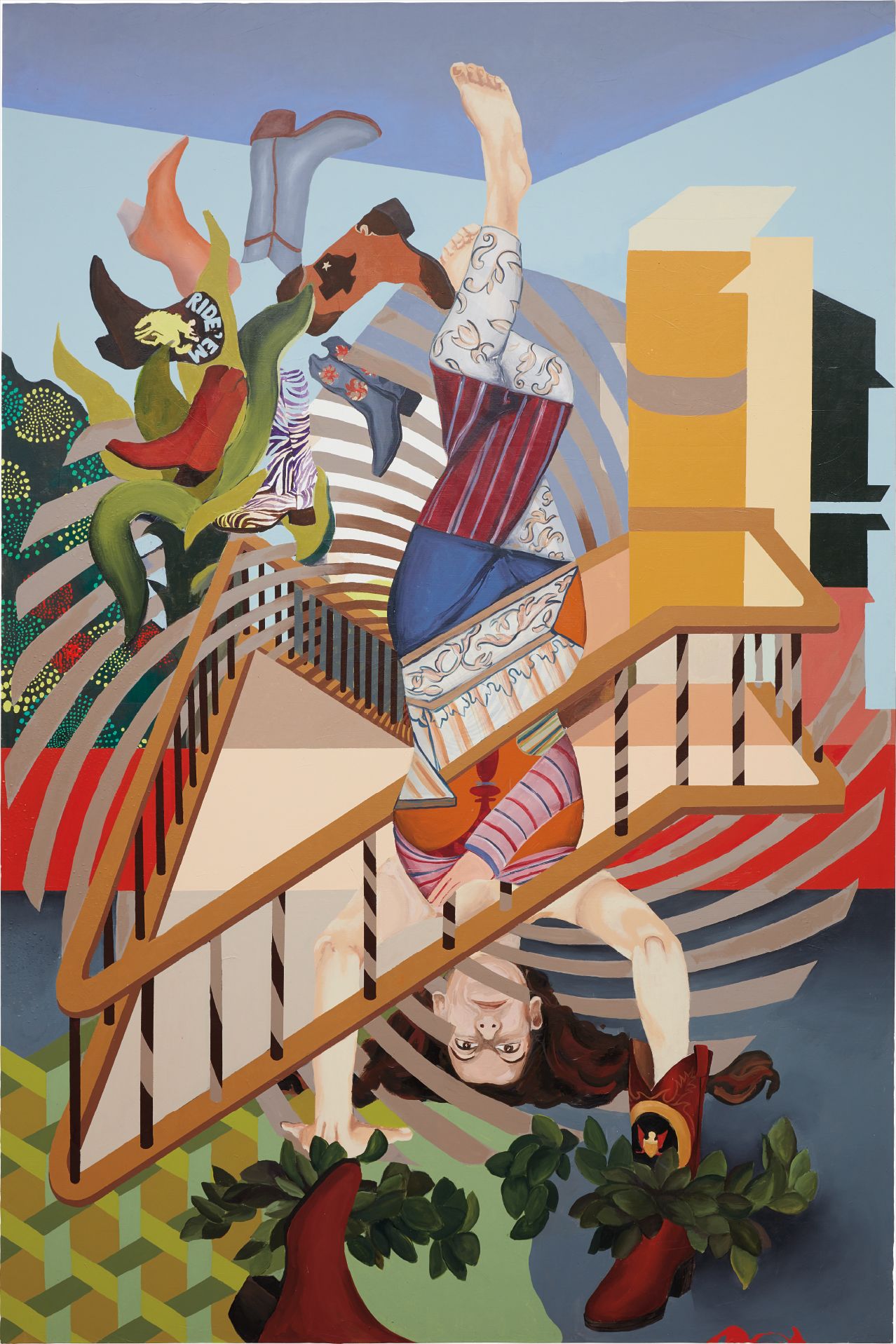
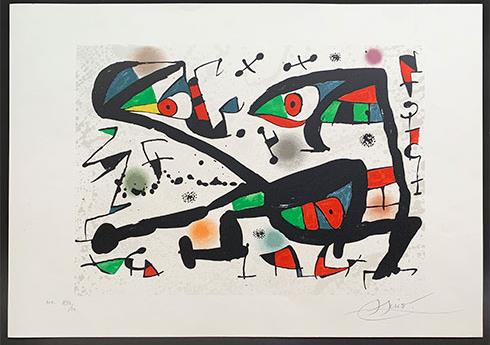
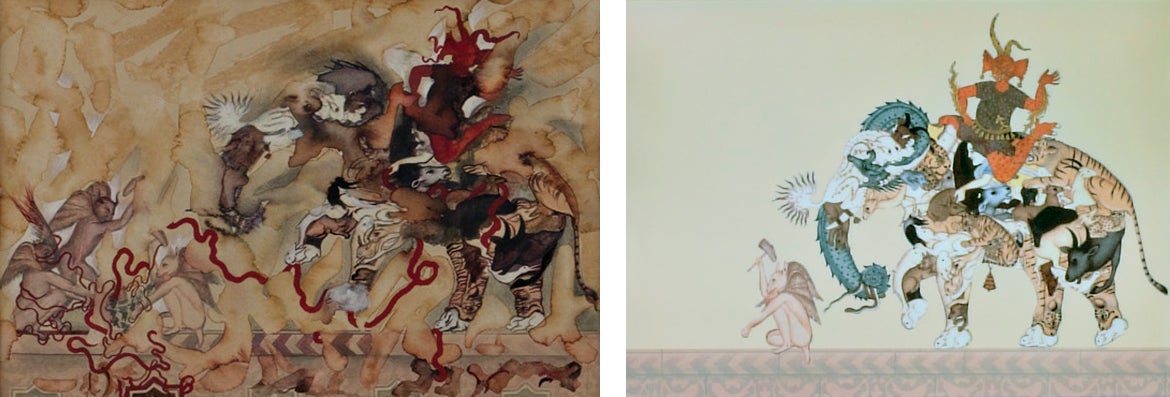
Shahzia Sikander
Elusive Realities #1, 2000
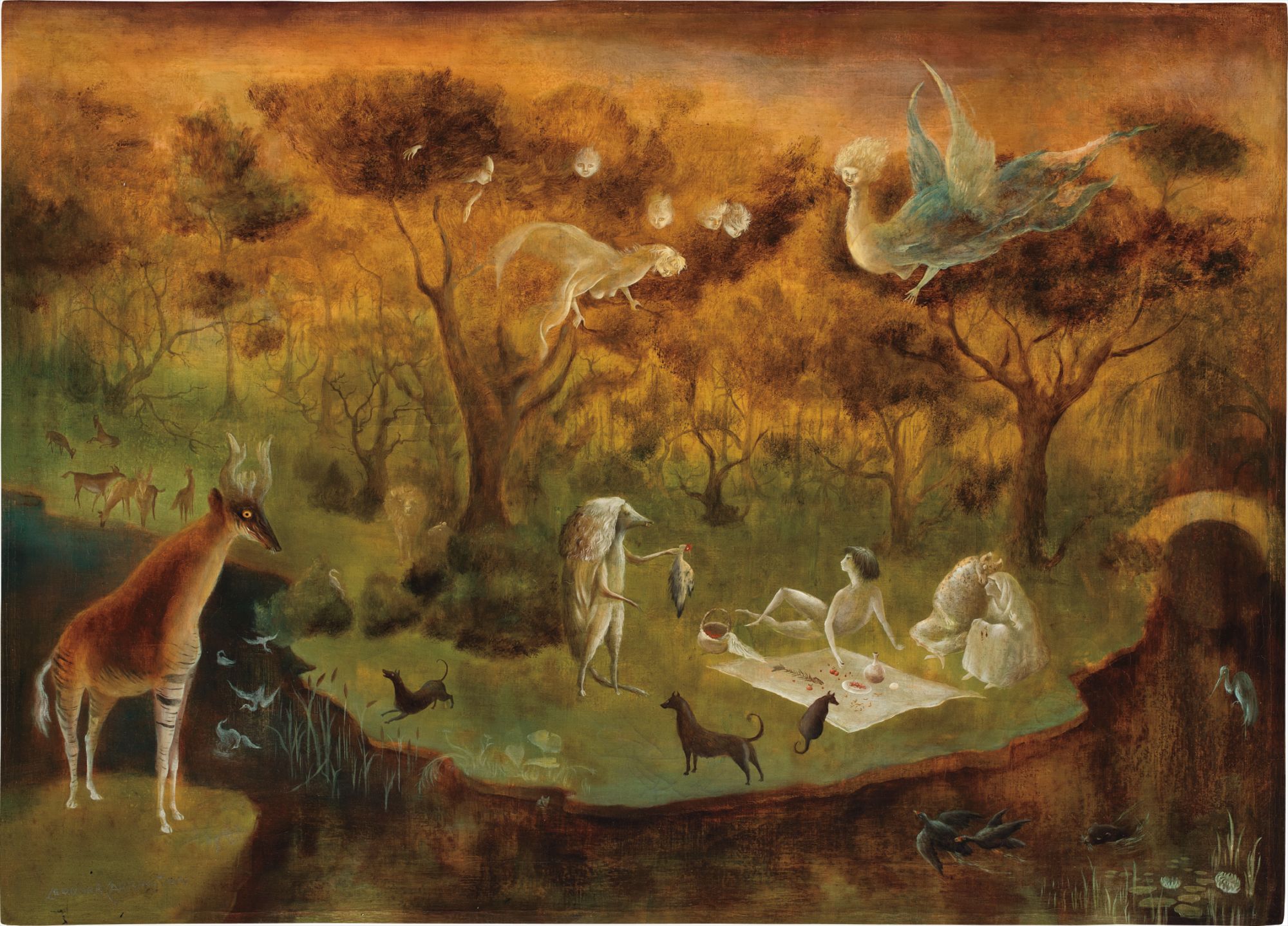
Shahzia Sikander, whose practice draws on Mughal miniature painting while weaving in Hindu and Islamic iconography alongside contemporary feminist concerns, is one of the most important figures working in this space. Her work refuses to separate the mythological from the political. Leonora Carrington, the Surrealist painter whose imagery drew from Celtic legend, alchemy, and her own elaborately constructed personal mythology, produced works that remain among the most intellectually dense and visually alive of the twentieth century. Carrington built an entire cosmology, and collectors who live with her work report that it never stops revealing itself.
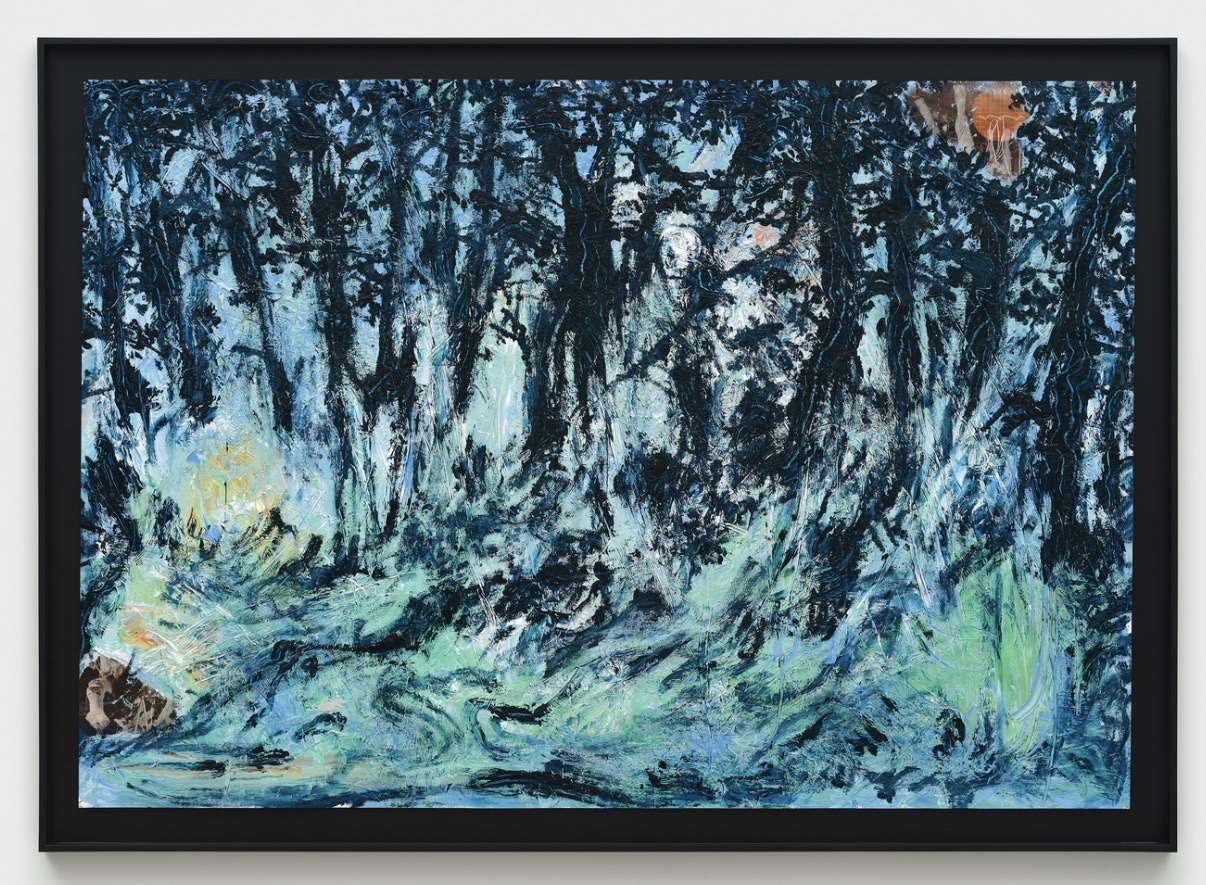
Tammy Nguyen brings a different but equally rigorous approach, weaving together Southeast Asian folklore, political history, and manuscript traditions in paintings of extraordinary density that are increasingly recognized by curators internationally. The German artist Jonathan Meese occupies a singular position in this conversation. His work engages with myth through a kind of frenzied totalizing gesture: he absorbs Wagner, Germanic legend, kitsch, and art historical reference and processes it all through a painterly practice that is deliberately excessive, deliberately unresolved. There are collectors who find this alienating, and there are collectors who find it absolutely essential.
Jonathan Meese
Pharao Messegurke mit Tinten-fischaugen, im Sakrophagys de Pflaumenmus, 2003
His market has been consistent in the German speaking world for well over a decade, and his institutional profile continues to grow. Kumi Sugai, the Japanese painter who spent much of his career in Paris, worked with archetypal and totemic imagery that sits between abstraction and symbolic figuration, and his place in the canon is if anything undervalued given the current appetite for postwar artists whose work bridges East and West. For collectors watching emerging positions, the most interesting developments are happening at the intersection of mythological imagery and postcolonial critique. Artists are returning to traditions that were suppressed or misrepresented by Western canonical frameworks and reclaiming their symbolic systems on their own terms.
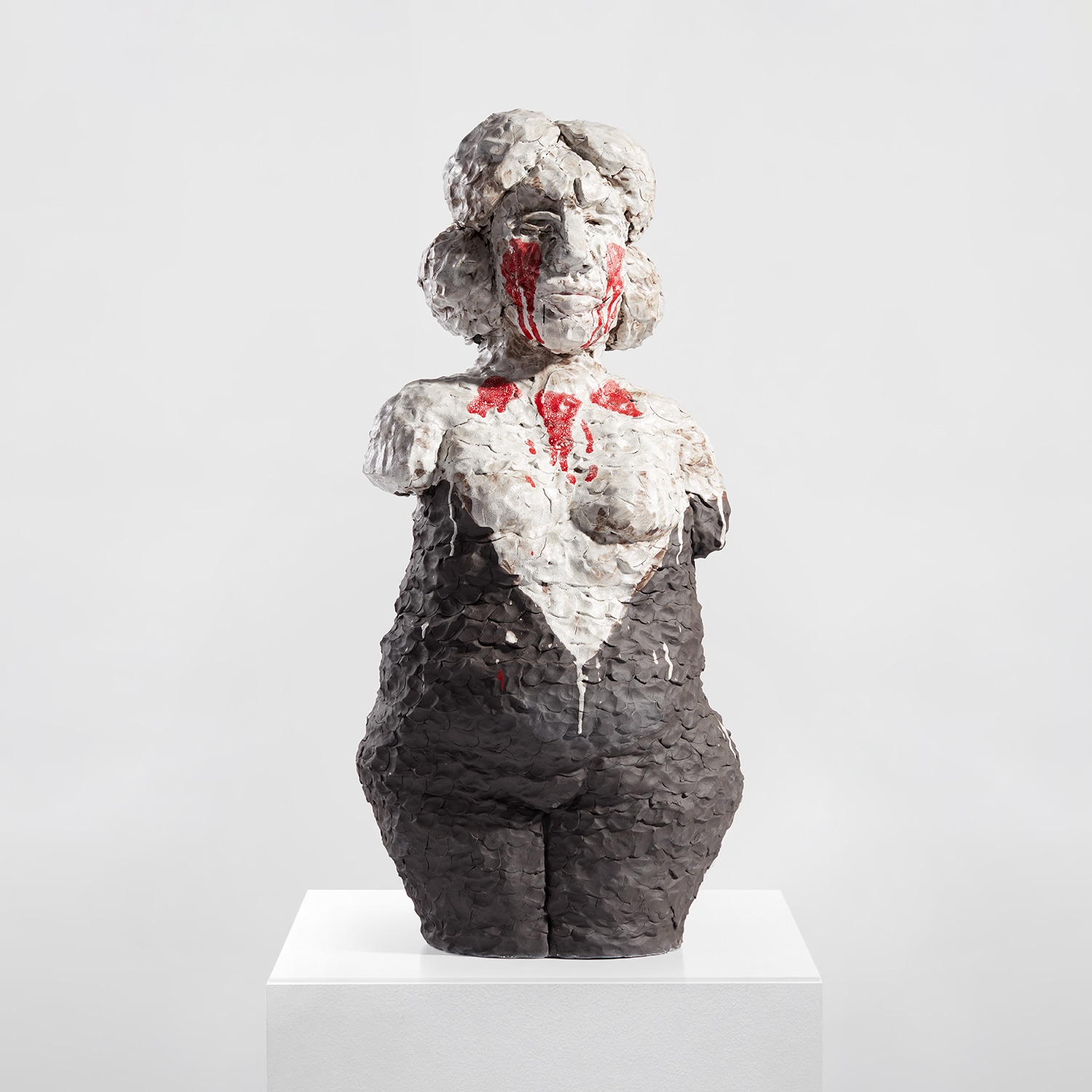
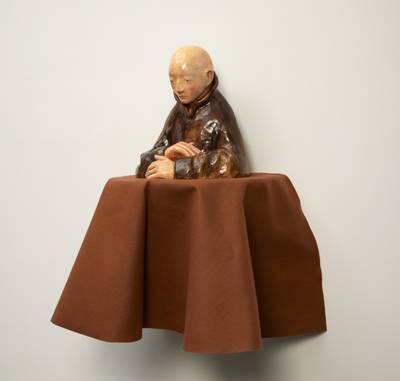
Paloma Varga Weisz, the German sculptor whose figures draw from folk tradition and the uncanny, is well represented on The Collection and deserves more attention than she typically receives in the English language art press. Her work sits in major institutional collections in Europe and carries the kind of formal authority that tends to solidify auction performance over time. On the secondary market, mythological imagery as a category performs in ways that reflect its diversity. Works by canonized Surrealists with strong mythological programs, Carrington being a prime example, have seen sustained price growth at auction over the past decade, with major works achieving multimillion dollar results at Christie's and Sotheby's.
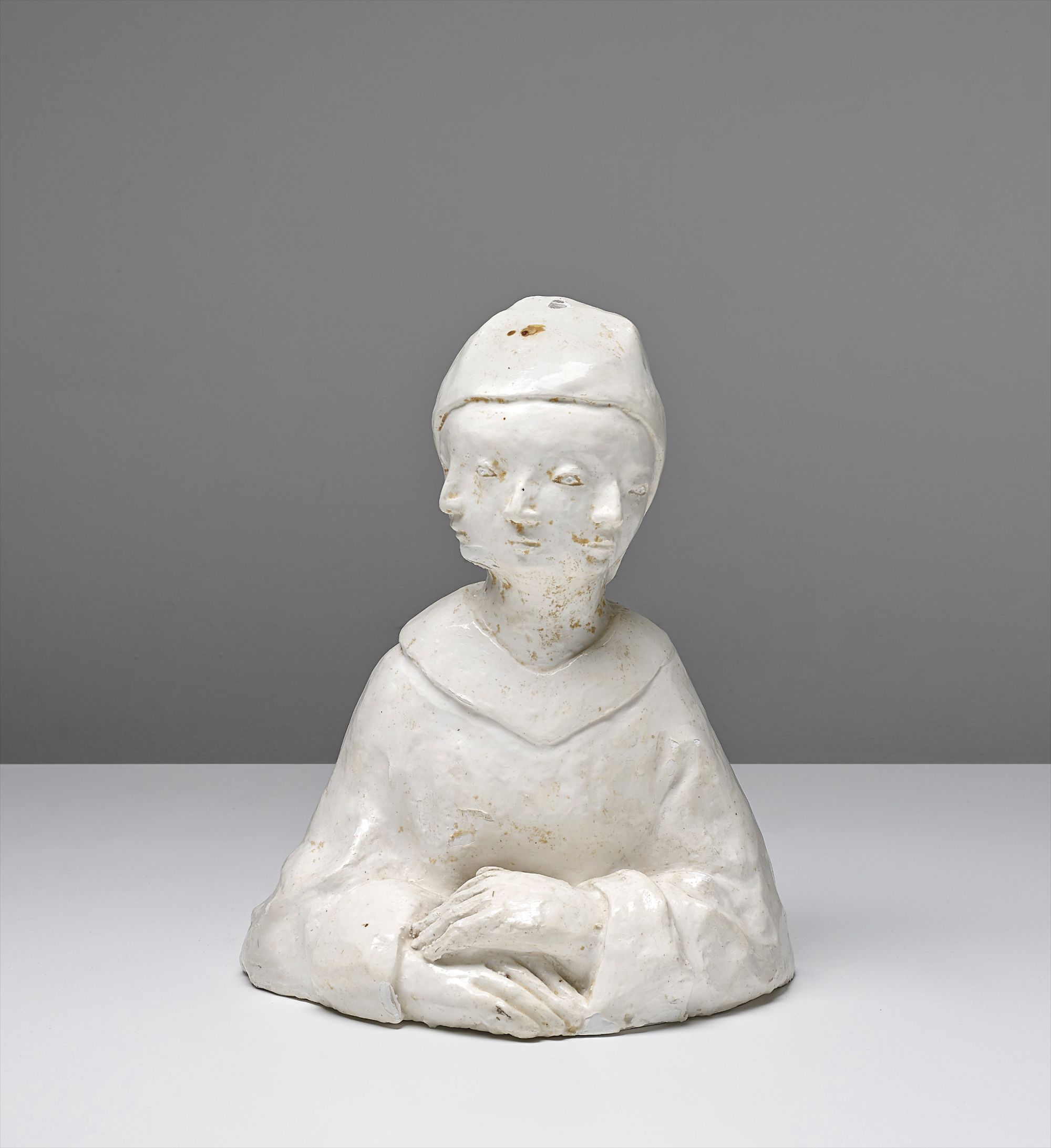
Paloma Varga Weisz
Dreigesichtfrau, 2005
The market for more recent artists working in this territory is more variable and therefore more interesting for collectors willing to build a position before institutional consensus fully forms. The smart money pays attention to which younger artists in this space are being acquired by museums rather than simply celebrated in the press. Museum acquisition is a stronger signal than critical attention alone. Practically speaking, works on paper in this category require careful attention to light exposure and environmental stability, since many of the most compelling mythological works combine delicate media with rich chromatic complexity that fades unevenly.
If you are considering a work that incorporates traditional materials, whether that means gold leaf, natural pigments, or hand prepared surfaces, ask the gallery directly for the artist's conservation recommendations and find out whether there is existing scholarly or institutional literature on the material practices involved. Condition reports should be read with a specialist eye, and for works by artists whose techniques draw from non Western traditions, a conservator with relevant regional expertise is worth consulting before purchase. When speaking with a gallery about a mythological work, the most useful questions go beyond provenance and exhibition history. Ask what the artist's stated relationship to the source tradition is.
Ask whether the work belongs to a sustained series or represents a more isolated inquiry, since sustained engagement tends to produce stronger and more legible works. Ask who else has collected the artist and in what institutional context. These questions will tell you not just about the object but about the seriousness of the artist's investment in the territory, which is ultimately what you are acquiring when you bring myth into your home.