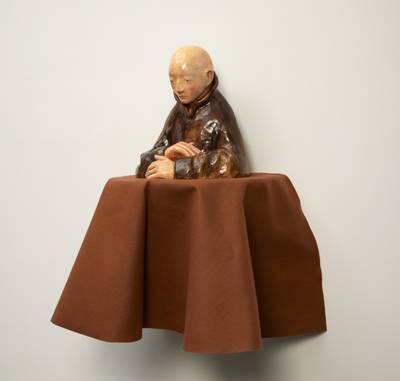
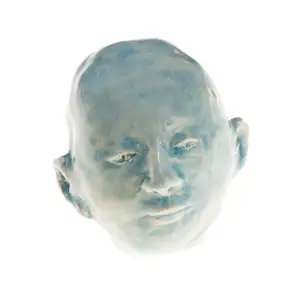
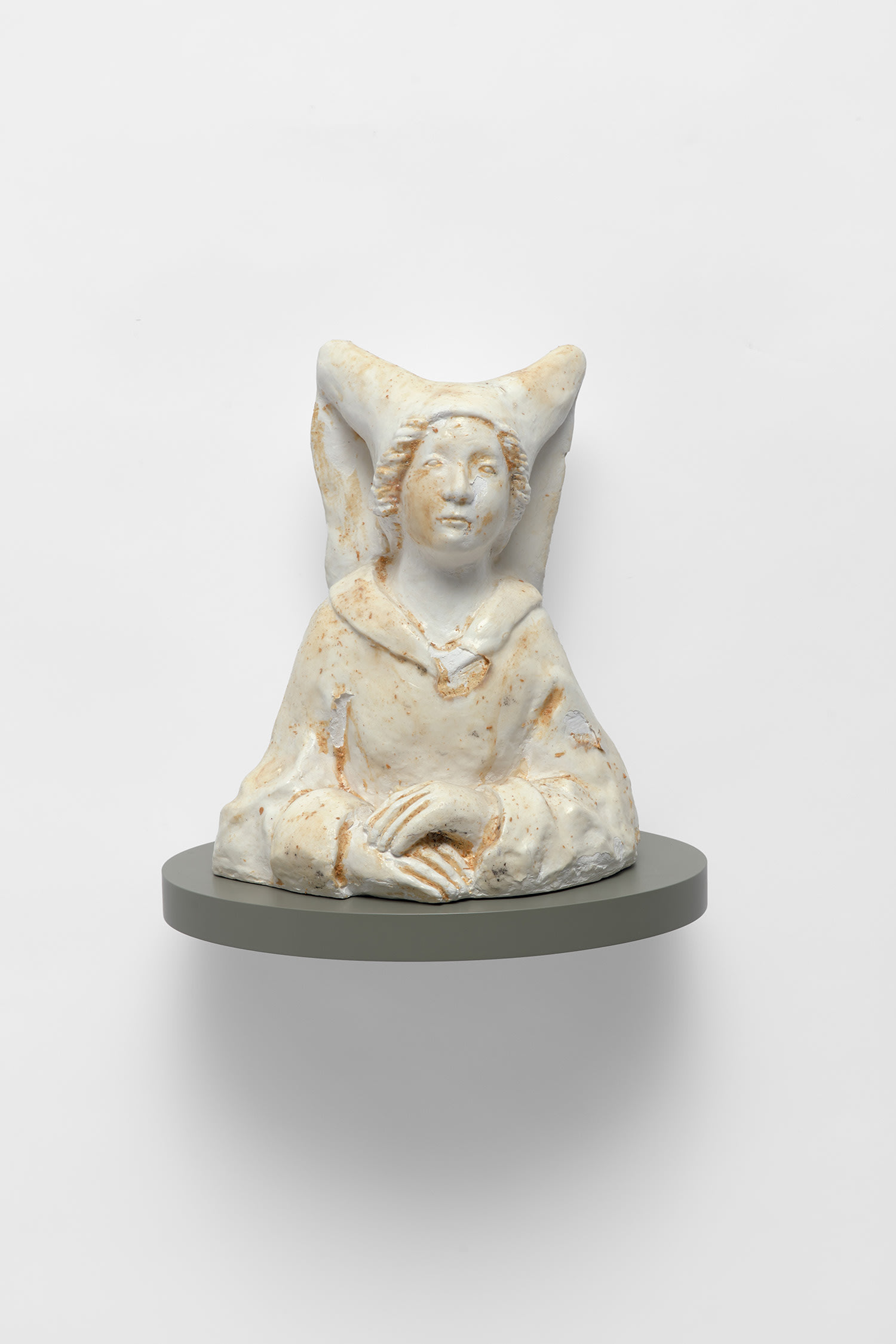
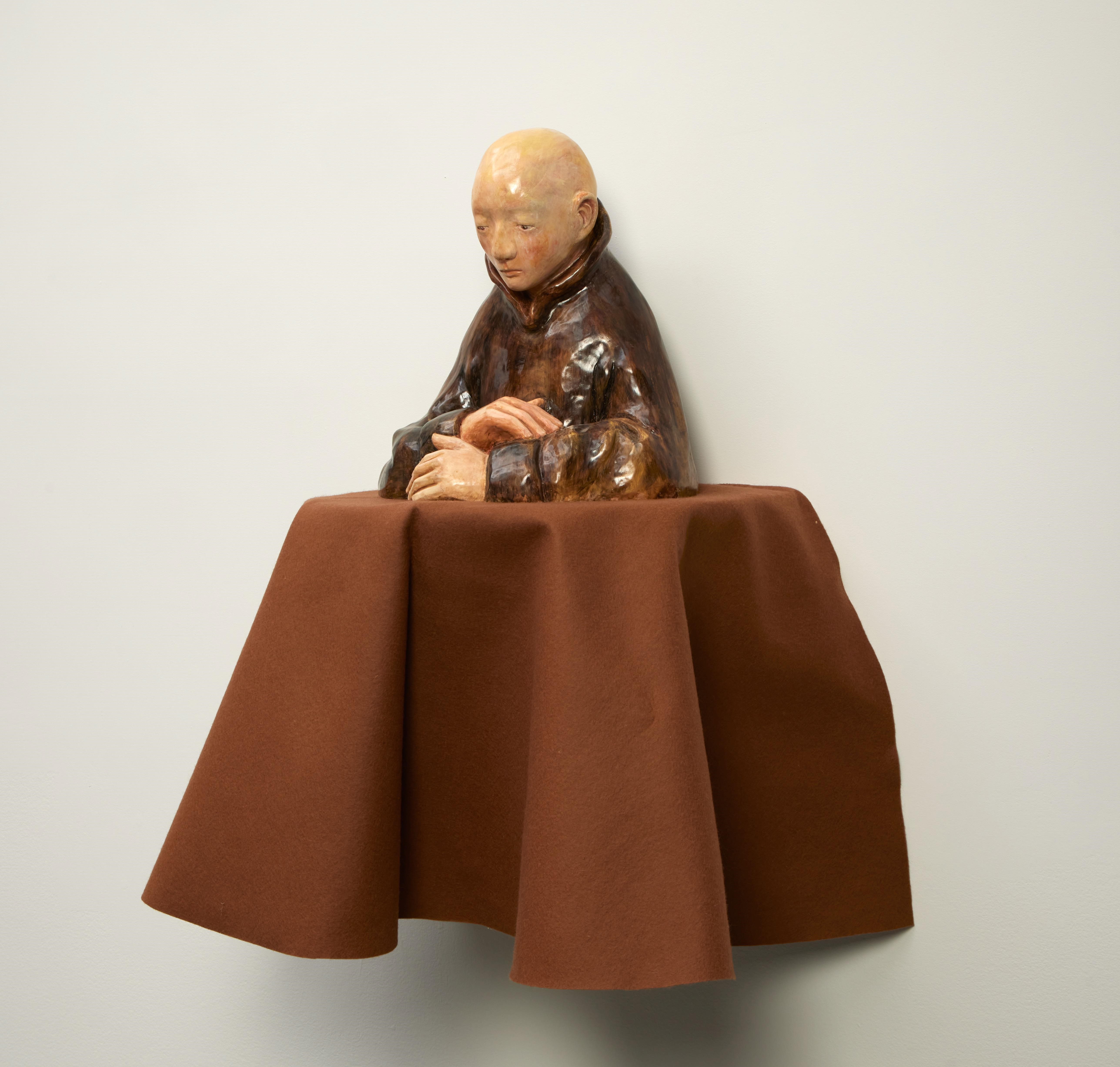
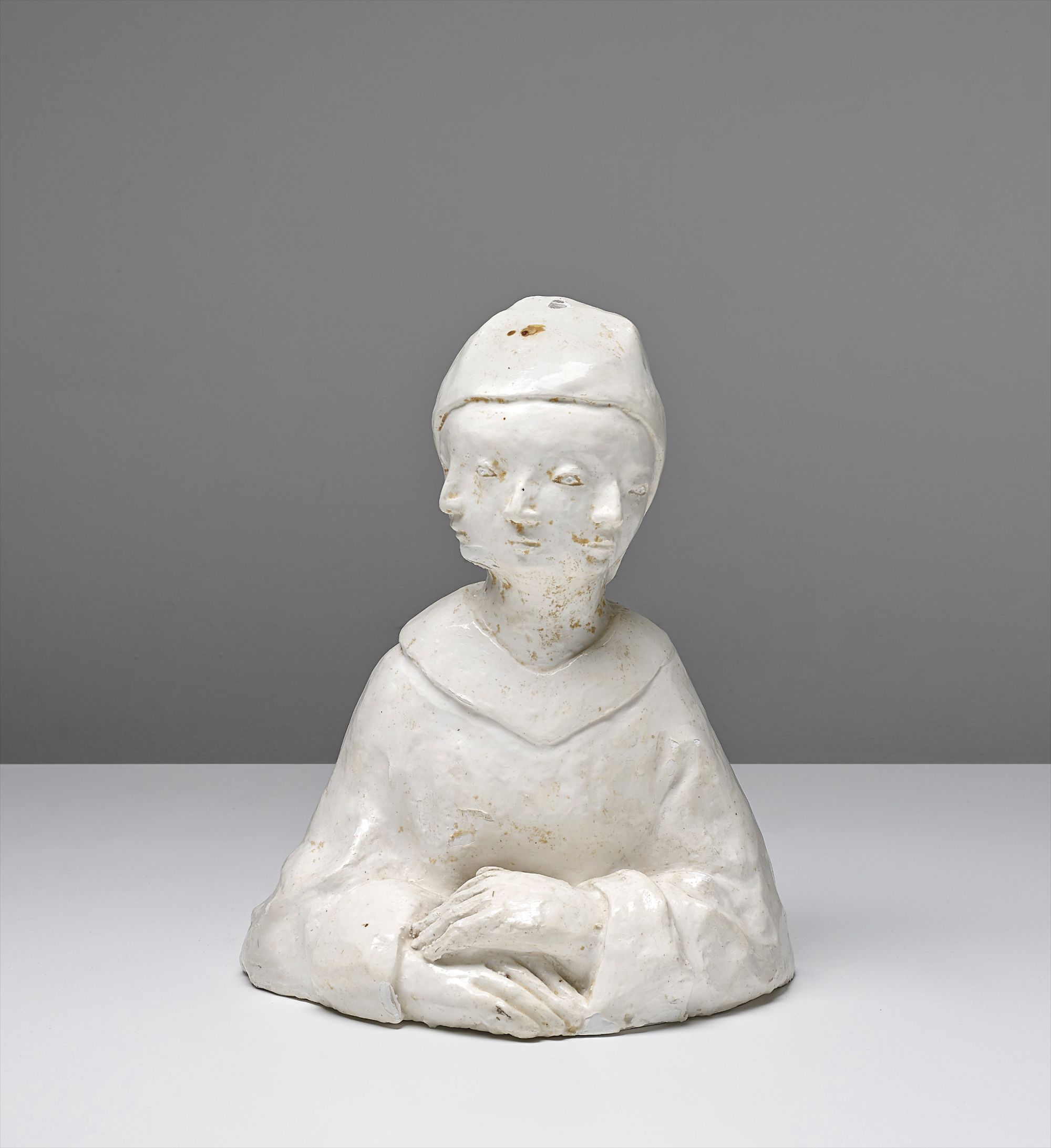
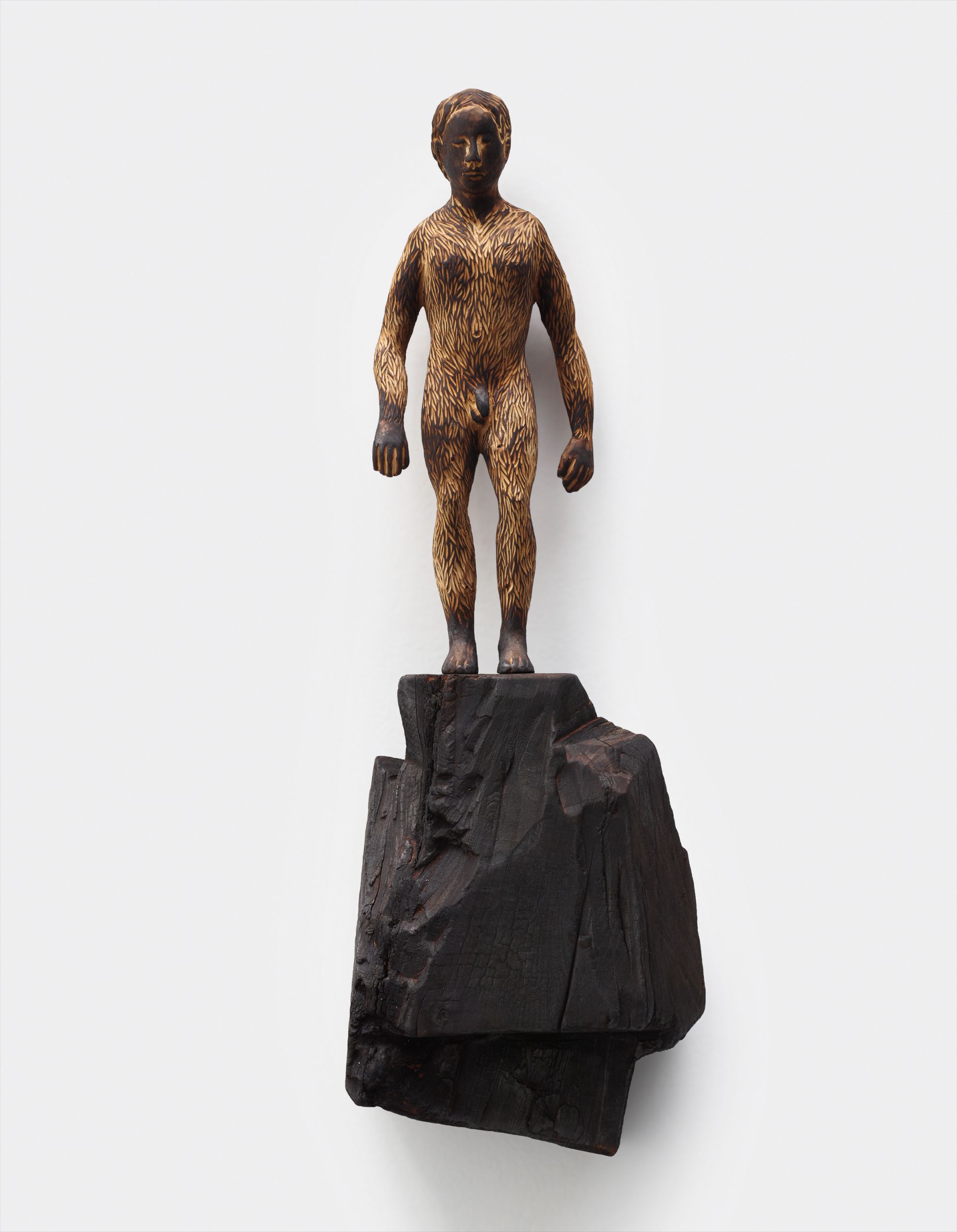
There is a particular kind of stillness that settles over a room when Paloma Varga Weisz's sculptures are present. Her carved wooden figures, glazed plaster forms, and ceramic multiples do not demand attention so much as earn it, drawing viewers into a hushed, intimate conversation about the nature of sleep, transformation, and the stories we carry in our bodies. That quality of earned presence has seen her work enter major international collections across Europe and beyond, and as her sculptures continue to surface at significant venues and in discerning private holdings, the art world is increasingly recognizing what her most devoted collectors have long understood: Varga Weisz is one of the most singular sculptural voices working today. Born in 1966, Paloma Varga Weisz emerged from the rich cultural confluence of German and Hungarian traditions, a dual inheritance that would prove foundational to her artistic sensibility. Central European folklore, with its dense thicket of archetypes and its comfort with the uncanny, saturated the imaginative world she grew up in. The fairy tale logic that runs through her work, where human figures blur into something more ancient and less easily named, speaks directly to that inheritance. She studied at the Kunstakademie Düsseldorf, one of Europe's most celebrated art schools, where a rigorous engagement with materials and conceptual depth became central to her formation as an artist. Düsseldorf in those years was a crucible of ambition, and Varga Weisz absorbed its lessons while developing a voice that was entirely her own. Her practice has always resisted easy categorization, moving fluidly between sculpture, textile work, and ceramics while maintaining a consistent thematic gravity. The human figure is her constant subject, but she approaches it through the lens of vulnerability and liminality rather than heroism or idealization. Her figures are often sleeping, crouching, or caught in some state of becoming, as though suspended between one condition and another. This psychological attentiveness, rooted as much in Jungian archetype as in art historical tradition, gives her work a dreamlike authority that few contemporaries can match. She draws on craft traditions with genuine reverence, treating the skills of carving and modeling not as nostalgic exercises but as living languages with real expressive power. Among the works that best illuminate her practice are pieces like "Schwarzer Haariger" from 2001, a figure whose title, meaning something like the dark hairy one, evokes the folkloric imagination at the core of her vision. "Mönch" from 2005 presents a monkish solitary form that condenses centuries of European spiritual and visual tradition into a single compelling object. "Dreigesichtfrau" from the same year, rendered in glazed plaster, introduces the motif of multiple faces, a device drawn from religious iconography and psychological symbolism alike, suggesting a self that contains multitudes. "Burgfrau" from 2006 continues her exploration of female identity filtered through medieval and folkloric tropes. Then there is the "Untitled (Head) (Version J)" of 2018, a glazed ceramic multiple produced on the occasion of her exhibition at the Whitechapel Gallery in London, titled ISelf Collection: The End of Love, which ran from August through November 2017. Published by Whitechapel Gallery in a series of ten unique variants, each hand initialled and accompanied by a certificate of authenticity, this work represents a fascinating chapter in her practice: the intimate scale of the object, measuring just 70 millimetres across, concentrates all of her characteristic psychological intensity into something you can hold in your hand. The Whitechapel presentation was a landmark moment, placing her work in dialogue with one of London's most storied contemporary art institutions and introducing her to a new generation of collectors and curators. Her ability to move between large scale carved wooden figures and intimate ceramic objects without losing coherence or depth is one of the markers of her exceptional range. Collectors drawn to her practice often speak of the way her works seem to generate a kind of private mythology in the spaces they inhabit. A single figure placed in a domestic interior can alter the emotional atmosphere of an entire room, not through dominance but through presence. For those building collections with genuine intellectual ambition, her sculptures offer something increasingly rare: objects that reward sustained looking and that deepen in meaning over time. In the broader landscape of contemporary sculpture, Varga Weisz occupies a position alongside artists who have similarly recovered the figurative tradition and reanimated it with psychological and cultural complexity. Her work invites comparison with the carved figures of Thomas Houseago, the folkloric sensibility of Berlinde De Bruyckere, and the quiet intensity of Miroslaw Balka, though her particular fusion of Central European narrative traditions and contemporary art discourse remains distinctly her own. She is also part of a longer lineage that includes the German Expressionist sculptors of the early twentieth century, artists who understood that distortion and dream logic were tools of emotional truth rather than formal failure. Within that lineage, her contribution is both faithful and genuinely innovative. For collectors and institutions looking to engage with her work, the appearance of significant pieces on the market represents a real opportunity. Her carved wooden sculptures, produced in limited numbers and deeply labor intensive, are among the most sought after examples of her practice. The glazed plaster works from the mid 2000s, including pieces like "Dreigesichtfrau" and "Burgfrau," have a raw material presence that photographs cannot fully convey; they reward physical encounter. The Whitechapel ceramic multiples, issued in very small editions, offer a more accessible point of entry without any diminishment of her artistic intention. Across all of these formats, what one is acquiring is not merely an object but a point of entry into a coherent and deeply felt imaginative world. Paloma Varga Weisz matters to the art of our moment because she reminds us that sculpture can still be a form of storytelling, and that storytelling can still be a form of knowledge. In an era saturated with image and spectacle, her quietly insistent figures ask for something different from the viewer: patience, stillness, and a willingness to sit with ambiguity. These are demanding requests, but the rewards they offer are proportionally generous. Her work belongs to the tradition of objects that outlast their moment, that speak differently to each generation that encounters them, and that accumulate meaning the way that the best art always does, slowly, surely, and with lasting grace.