Japanese American
Ruth Asawa
Untitled
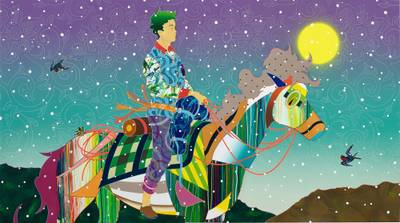
Between Two Worlds, Entirely Their Own
There is a particular kind of creative force that emerges when an artist must negotiate between two distinct cultural inheritances. Not a compromise, not a dilution, but something more generative than either tradition could produce alone. Japanese American art represents one of the most compelling and underexamined chapters in the history of twentieth and twenty first century creativity, a body of work shaped by displacement, resilience, aesthetic philosophy, and an extraordinarily fertile collision of Eastern and Western visual languages. The story does not begin neatly.
Japanese immigration to the United States accelerated in the late nineteenth century, and by the early twentieth century, Japanese American communities had taken root across California, the Pacific Northwest, and Hawaii. But the history of Japanese American art is inseparable from the history of Japanese American suffering. The forced incarceration of approximately 120,000 people of Japanese descent following Executive Order 9066 in 1942 is a wound that runs through the work of multiple generations of artists. Some responded directly.
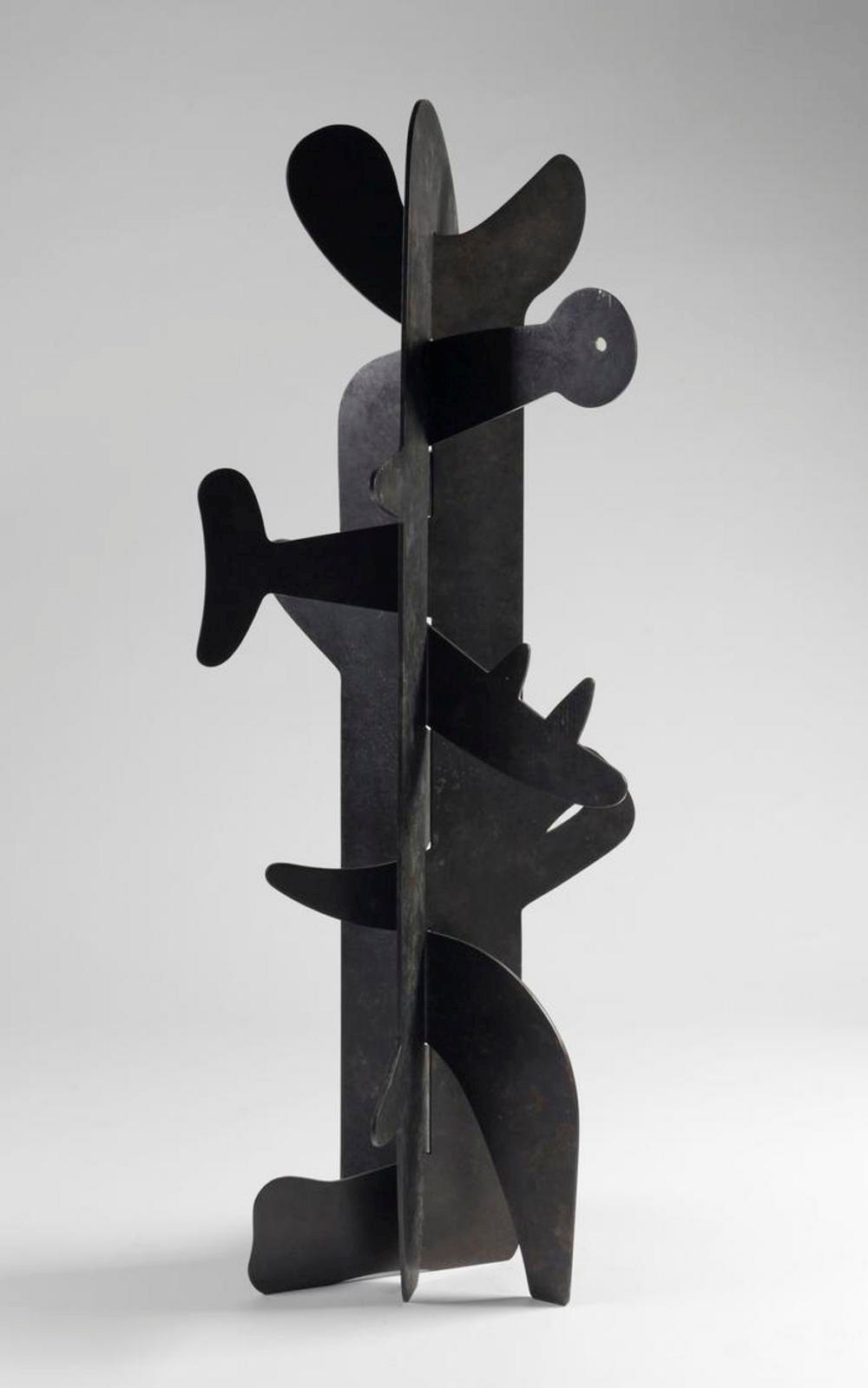
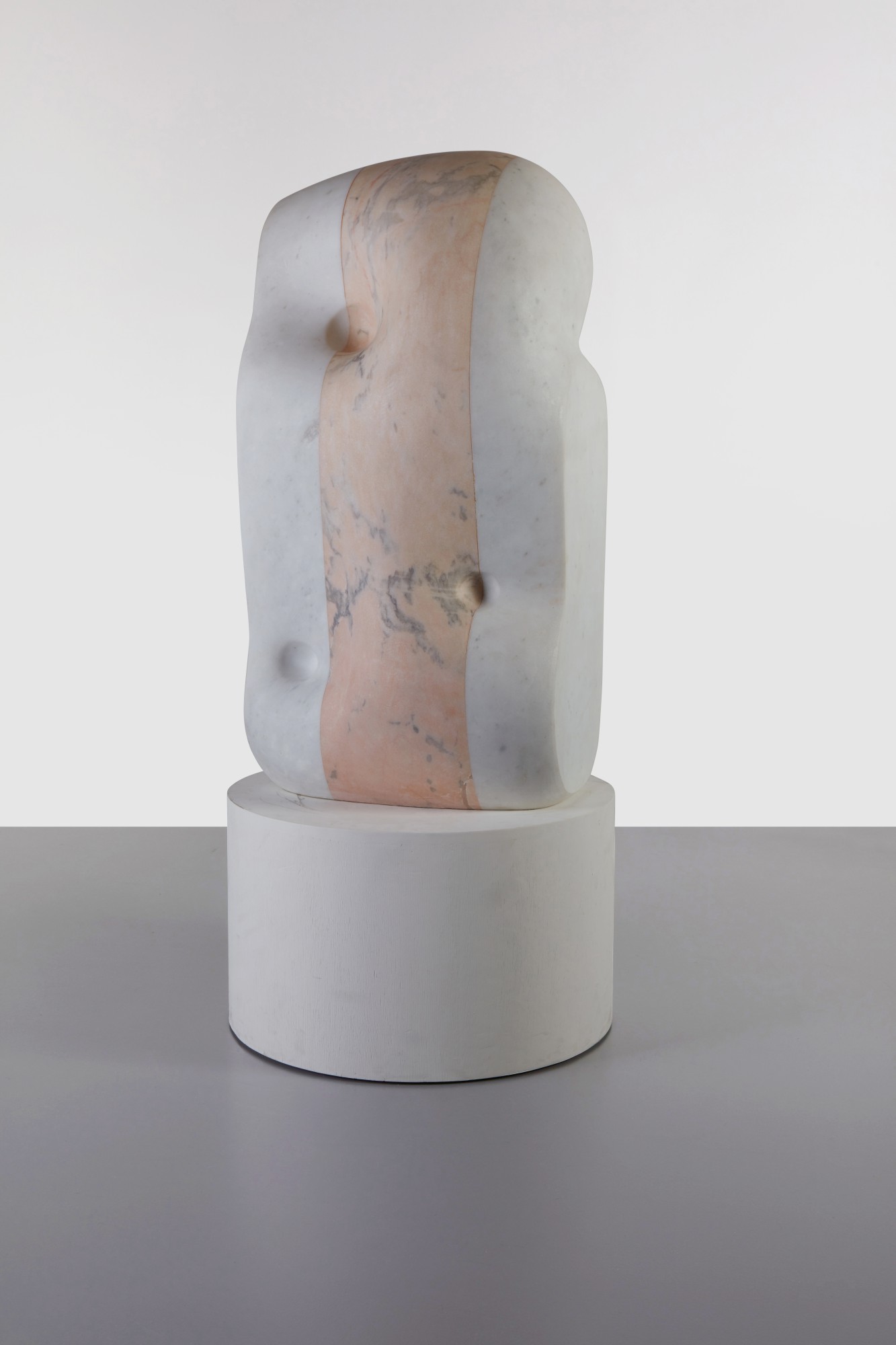
Isamu Noguchi
Trinity, 1945
Others carried the weight of that rupture in ways more oblique but no less present. Isamu Noguchi is perhaps the single most important figure in understanding how Japanese American artists transformed trauma and duality into a universal visual language. Born in Los Angeles in 1904 to an American writer mother and a Japanese poet father, Noguchi spent much of his life navigating a sense of belonging to no place entirely. He famously volunteered to enter the Poston War Relocation Center in Arizona in 1942, seeking solidarity with incarcerated Japanese Americans, and was then effectively trapped there for months.
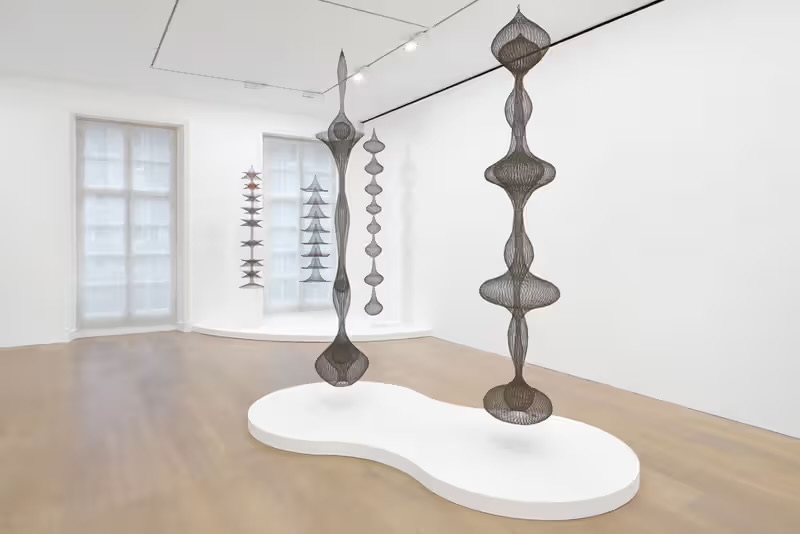
His sculpture, with its biomorphic forms and profound engagement with stone, space, and emptiness, draws directly on Japanese aesthetic philosophy, particularly the concept of ma, the meaningful pause or interval between objects. Yet Noguchi's idiom is fully internationalist, shaped equally by his apprenticeship with Constantin Brancusi in Paris and his lifelong dialogue with architecture and landscape. Ruth Asawa worked in a different register but carried a similarly layered biography. A student of Black Mountain College in the late 1940s, where she studied under Josef Albers and Buckminster Fuller, Asawa developed her iconic looped wire sculptures after learning a traditional Japanese basketry technique during a trip to Oaxaca, Mexico.
Ruth Asawa
Untitled
The result is work that feels simultaneously ancient and radically modern, airy and dense, transparent and labyrinthine. Asawa was incarcerated at the Rohwer War Relocation Center in Arkansas as a teenager, and her family lost their farm as a consequence. She rarely spoke of the incarceration explicitly, but her commitment to community, beauty, and the dignity of craft never wavered. The generation that came of age in the postwar decades faced a different but related set of questions.
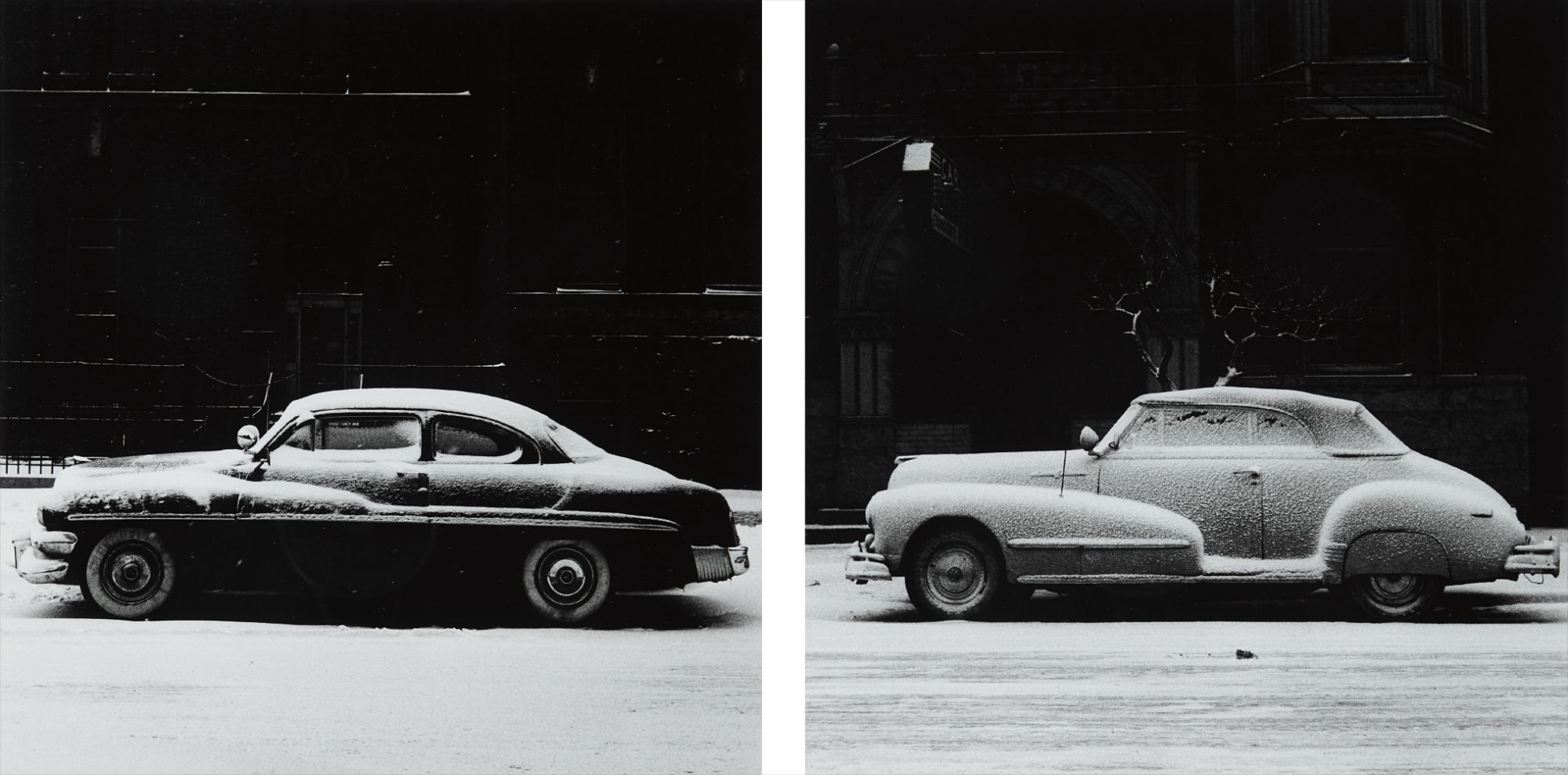
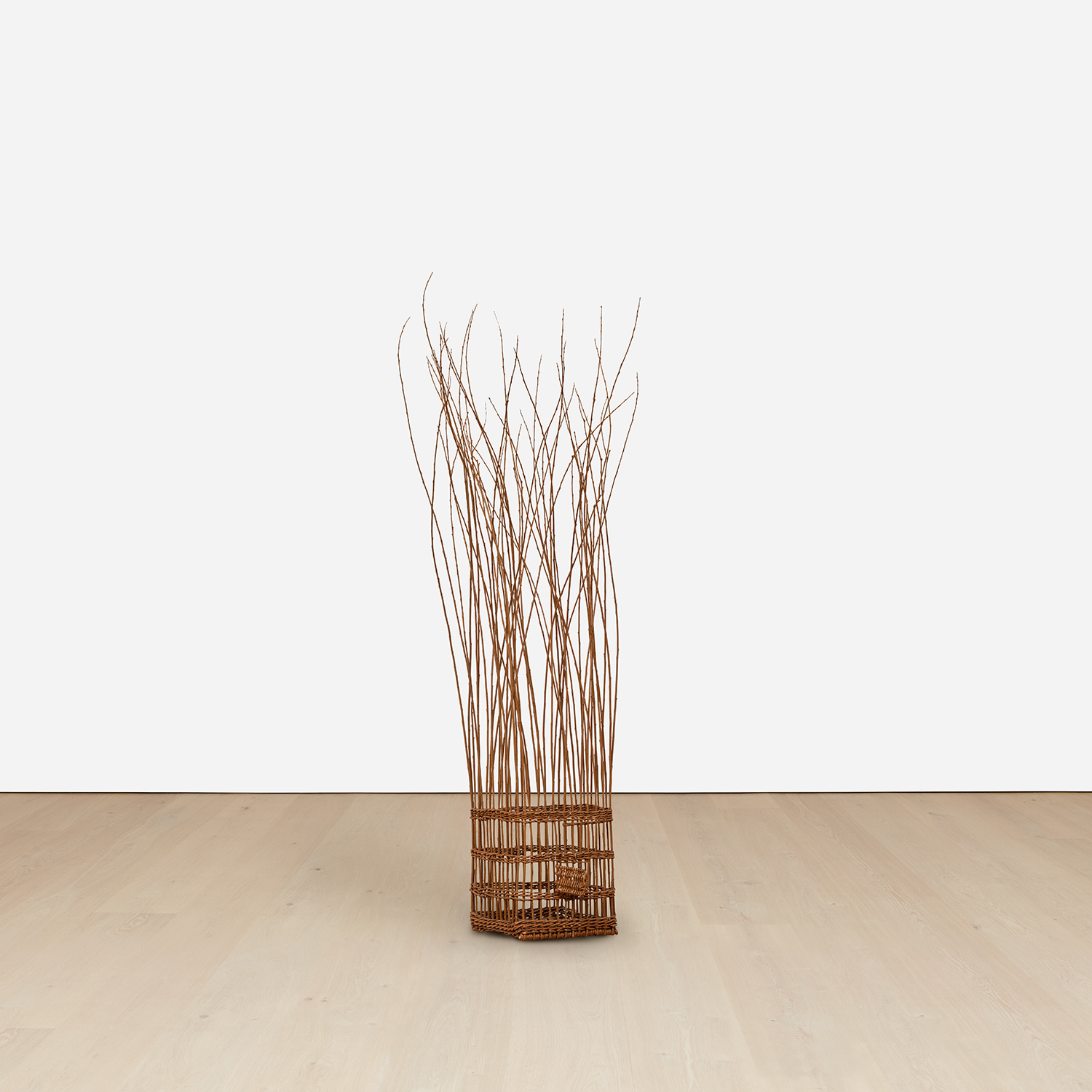
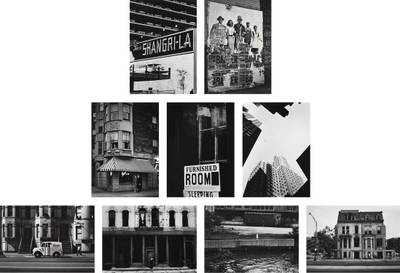
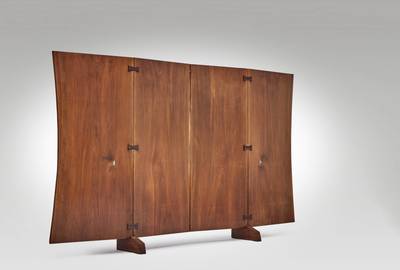
Yasuhiro Ishimoto, born in San Francisco and raised in Japan before returning to the United States to study at the Institute of Design in Chicago under László Moholy Nagy, became one of the most sophisticated photographers working at the intersection of the two cultures. His landmark book Katsura, published in 1960 with architect Kenzo Tange, brought Japanese spatial philosophy into direct conversation with Bauhaus visual thinking. Ishimoto's photographs possess a structural intelligence, a feeling that every shadow and interval is considered with the same precision as any architectural element. George Nakashima, the furniture maker and architect who was also incarcerated during the war, developed a philosophy of working with wood that honoured the natural grain and spirit of each individual plank.
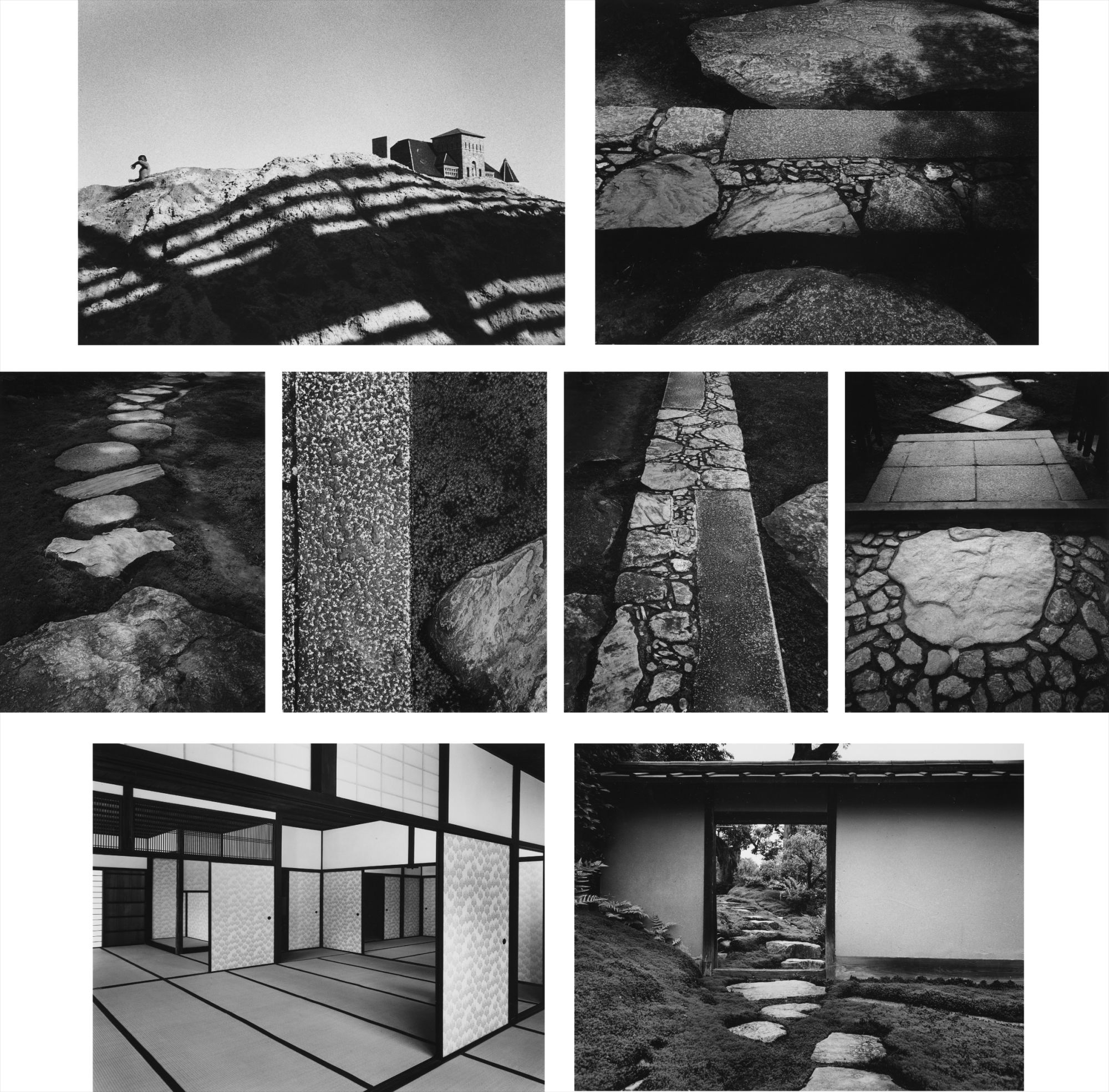
Yasuhiro Ishimoto
Selected Images
His tables and chairs are not simply functional objects. They are meditations on material, time, and the relationship between human hands and living matter. By the 1960s and 1970s, as identity politics sharpened and the Asian American movement gave collective voice to previously fragmented communities, a new generation of artists began asking harder questions about visibility, representation, and the terms on which Asian American artists were admitted into the mainstream art world. The 1980s and 1990s brought increasing institutional recognition, though many artists rightly noted that their work was too often filtered through an Orientalist lens, valued for its perceived exoticism rather than its intellectual rigor.
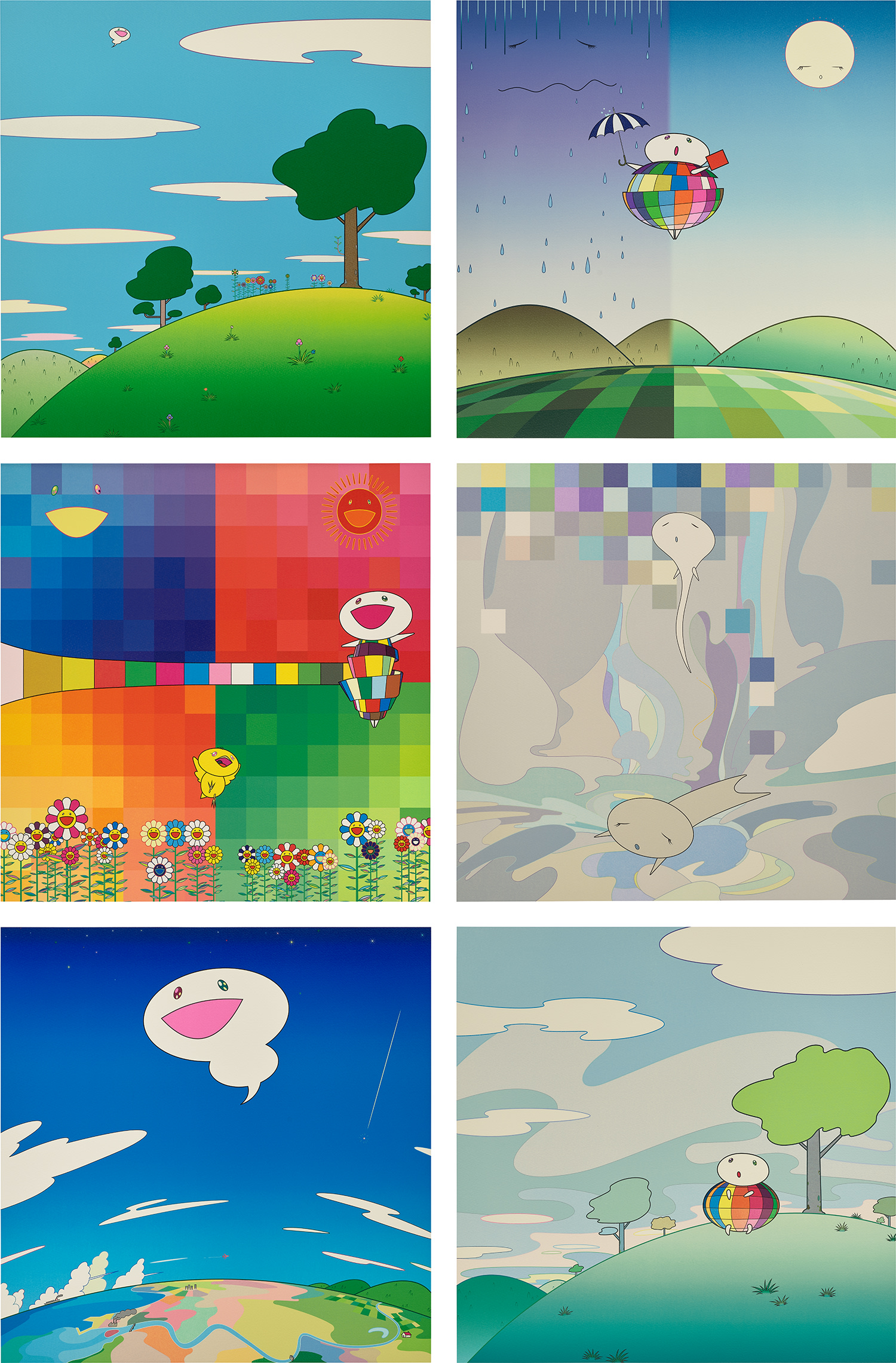
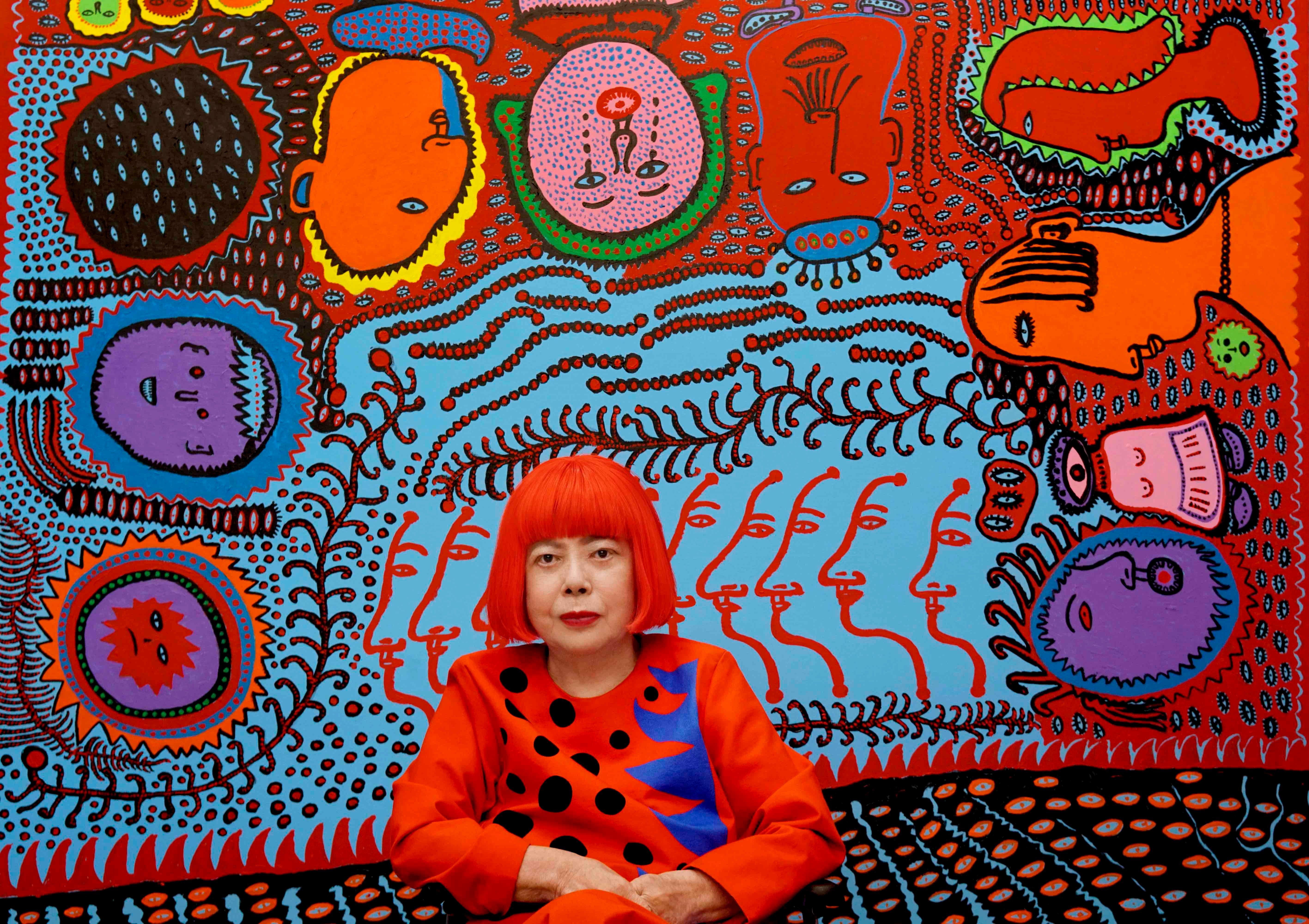
The contemporary artists associated with this tradition have moved far beyond those early battles without forgetting them. Takashi Murakami, who trained rigorously in Nihonga traditional Japanese painting before developing his Superflat theory in the late 1990s, proposed a radical rereading of the relationship between fine art, commercial culture, and the history of Japanese visual representation. Superflat argued that the compressed, two dimensional quality of Japanese pop imagery was not a deficit but a distinct aesthetic logic, one that anticipated and perhaps superseded Western postmodern strategies. Yayoi Kusama, whose polka dots and infinity rooms have made her among the most recognisable artists alive, has lived in New York since 1958 and has always resisted simple categorisation, her work flowing between feminist art, Pop, Minimalism, and an obsessive personal mythology that belongs entirely to her.
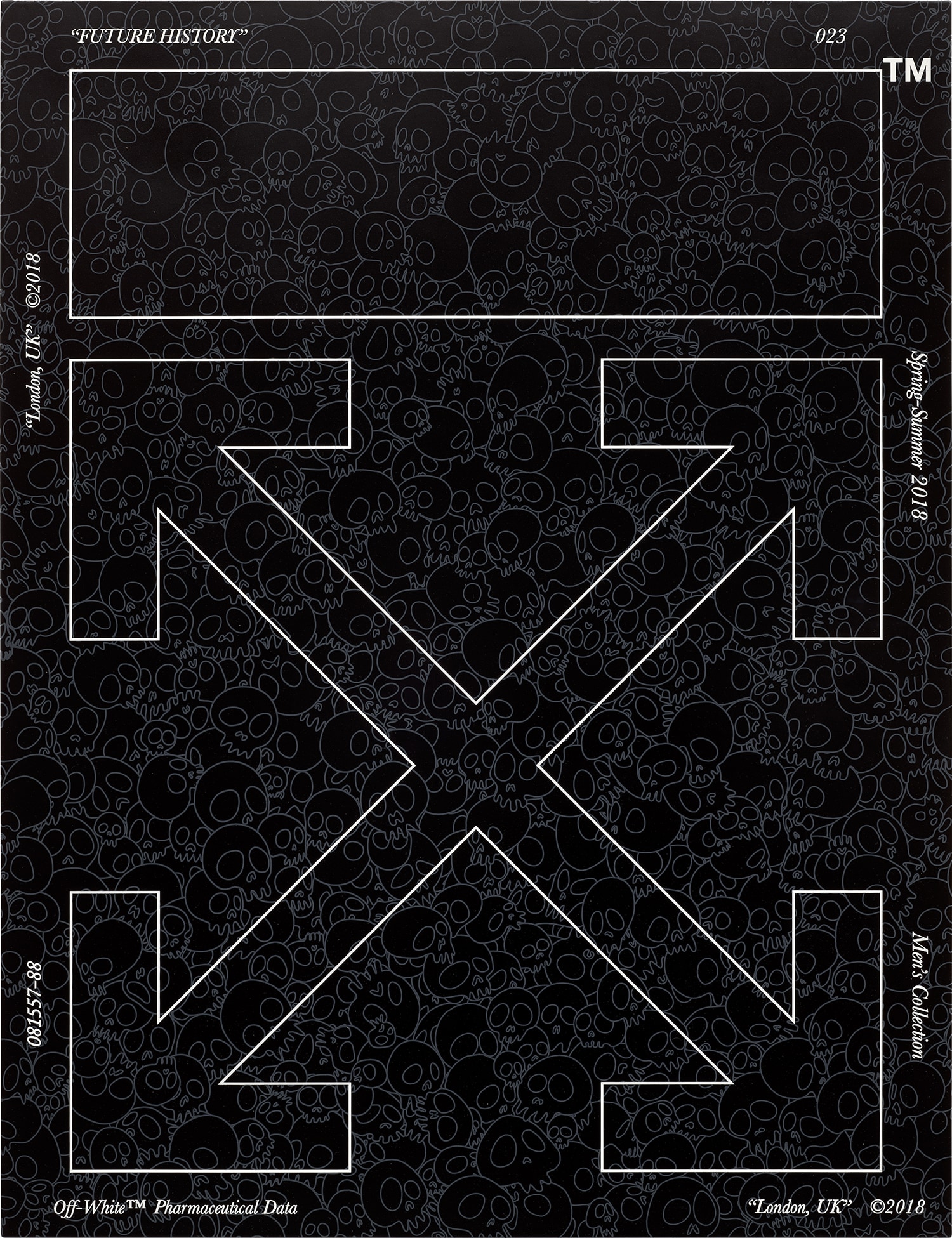
Takashi Murakami
Memento Mori: Stone Black, 2018
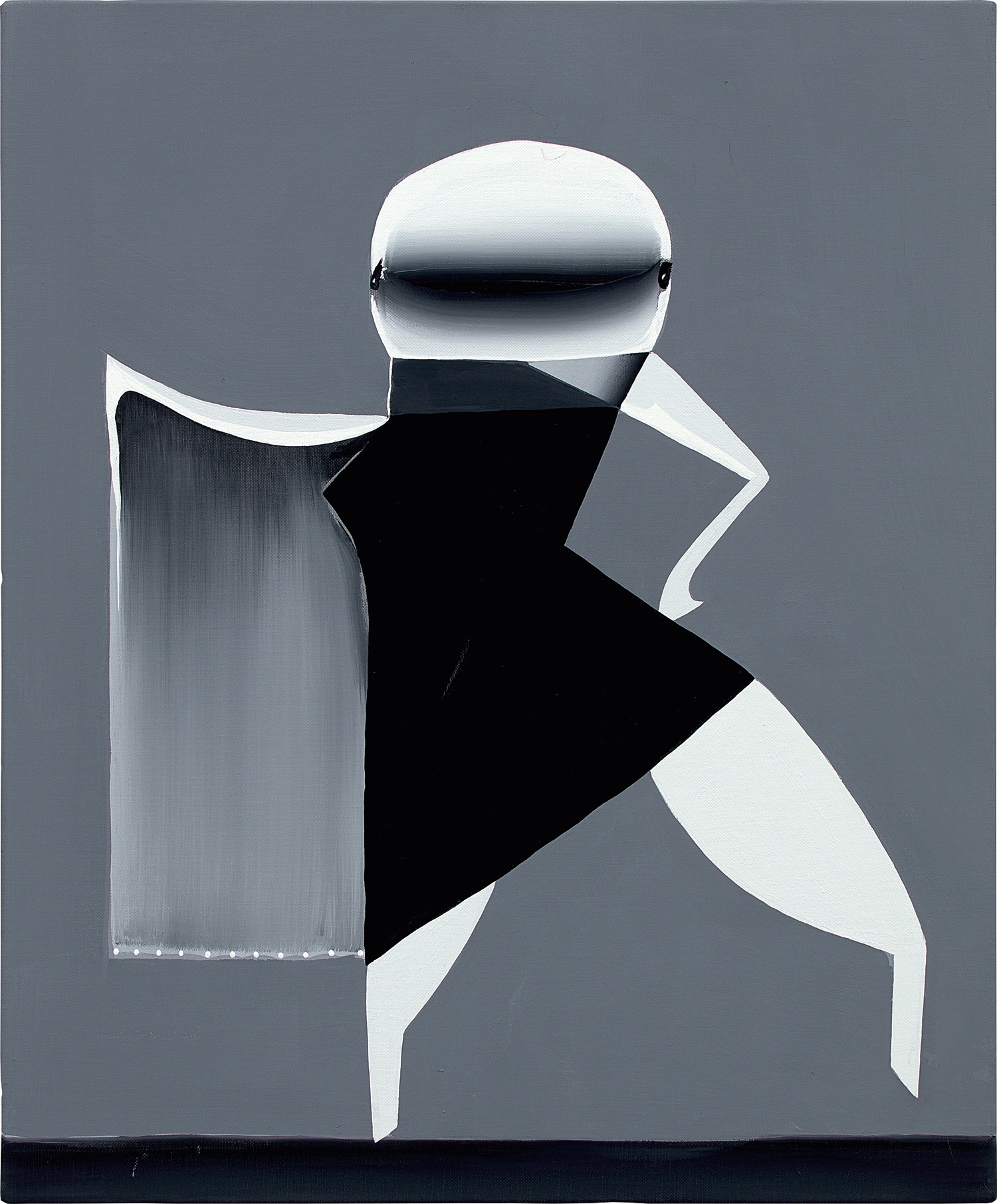
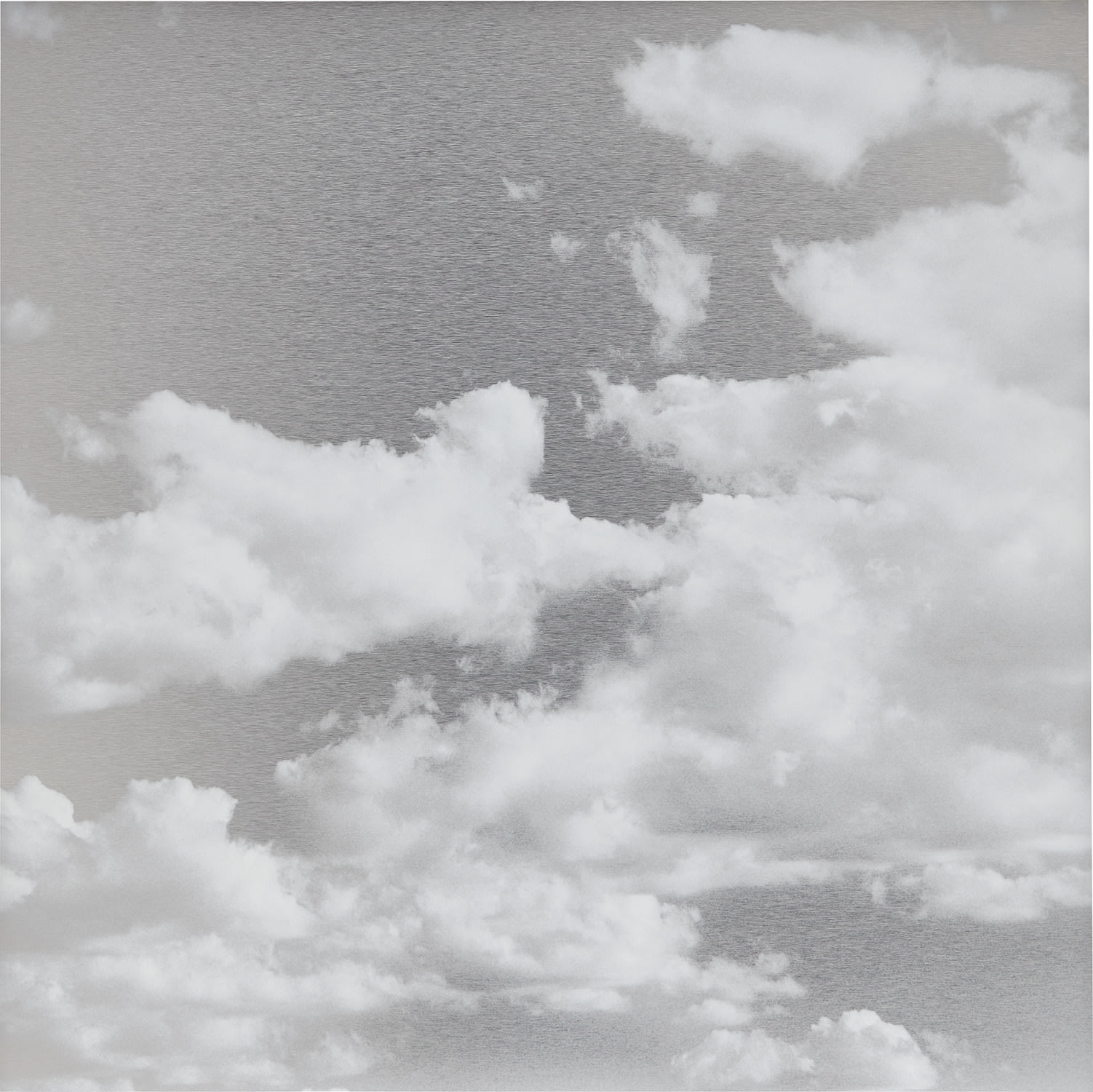
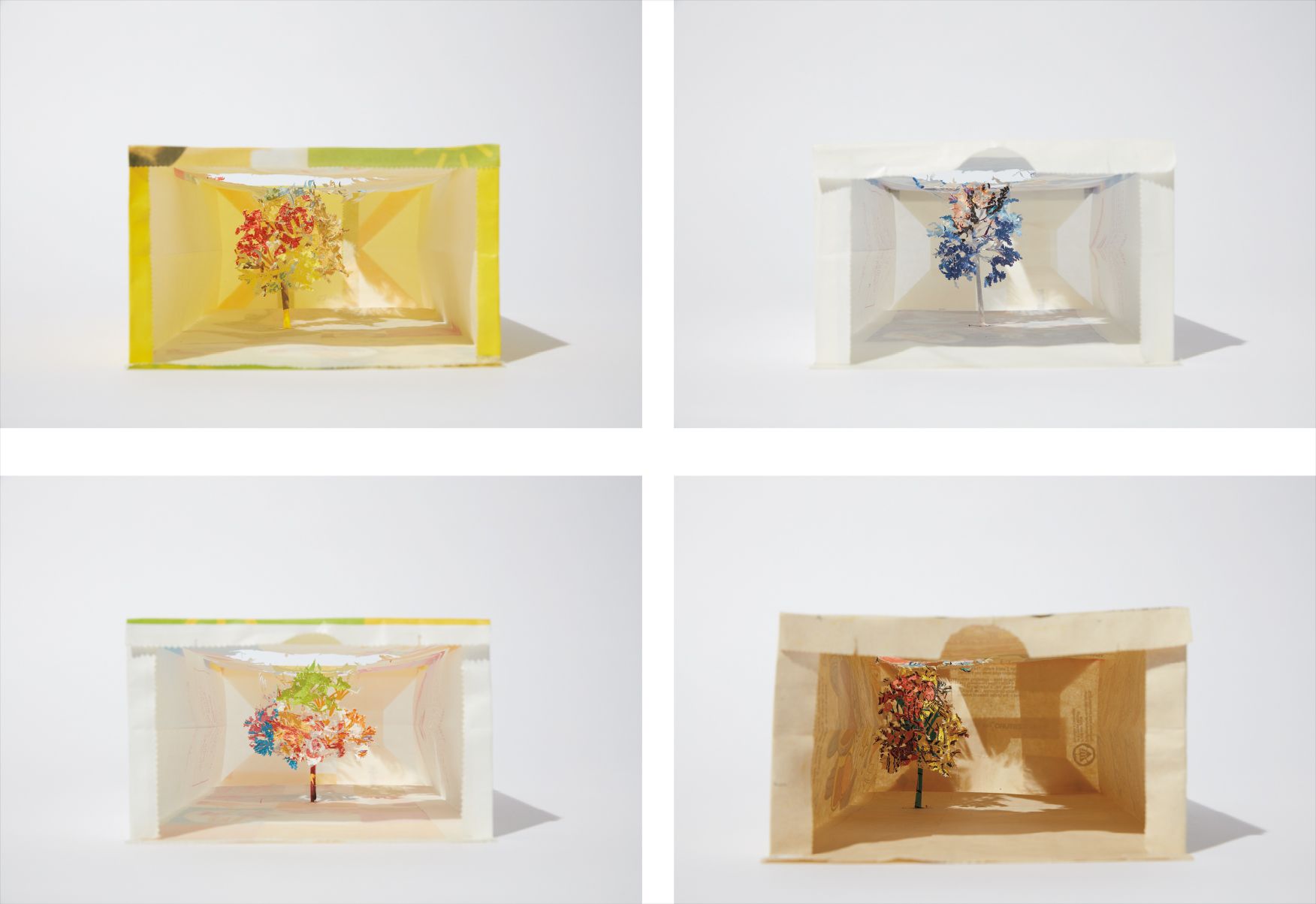
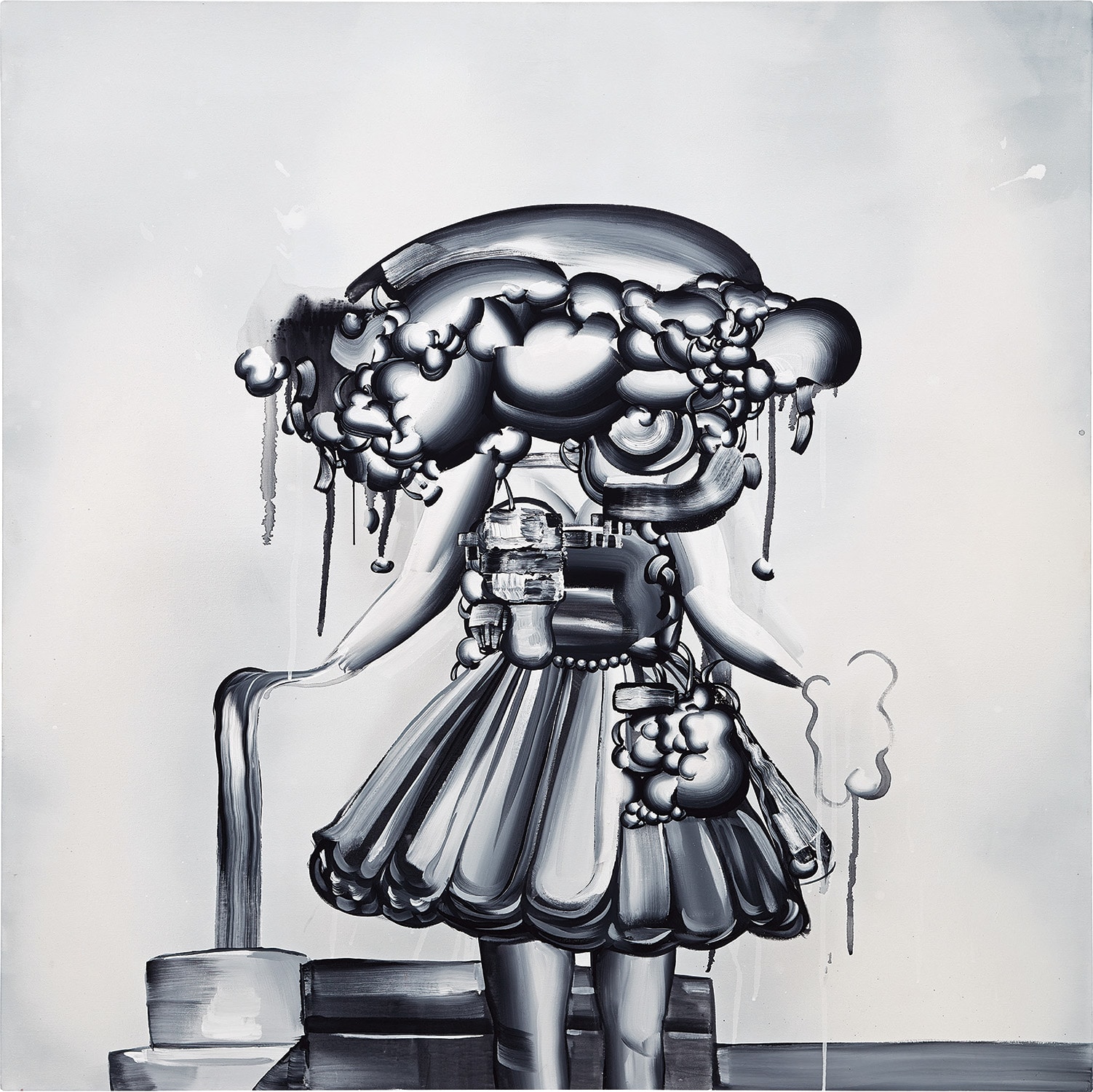
Yuken Teruya makes quiet, devastating work from consumer packaging, cutting intricate trees from the interiors of paper bags from luxury brands, finding nature buried inside capitalism with a delicacy that is both formally exquisite and conceptually pointed. Tomokazu Matsuyama layers imagery from Japanese woodblock print traditions alongside American commercial graphics, creating canvases that feel like a lived cultural memory rather than an academic exercise. Tomoo Gokita works in black and white gouache, distorting figurative imagery into something dream soaked and morally ambiguous. Miya Ando works with metal and light in ways that recall both Japanese lacquer traditions and the cool materiality of West Coast finish fetish sculpture.
What unites these artists is not shared style or subject matter but a shared condition of productive negotiation. The best Japanese American art does not announce its influences; it metabolises them. It produces something irreducible that could not have come from either tradition alone. For collectors, this body of work offers not just aesthetic pleasure but genuine historical depth, the record of what happens when people are forced to find beauty on their own terms, in territory they had to invent themselves.