Grand Canyon
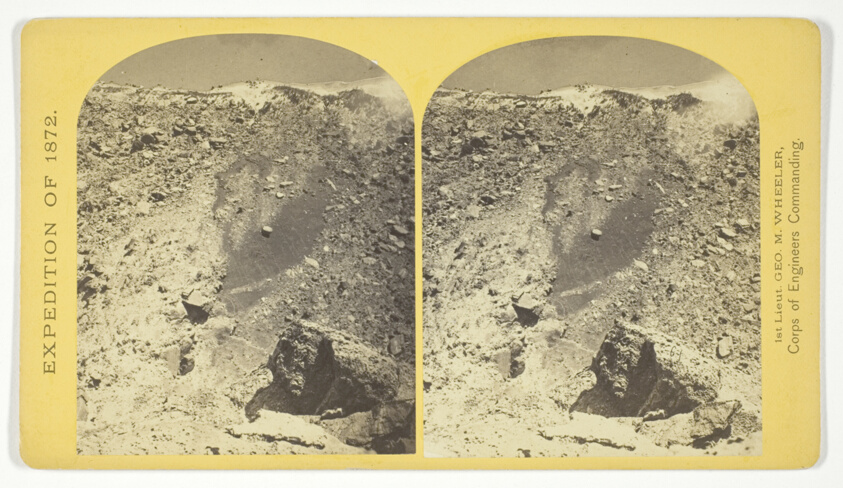
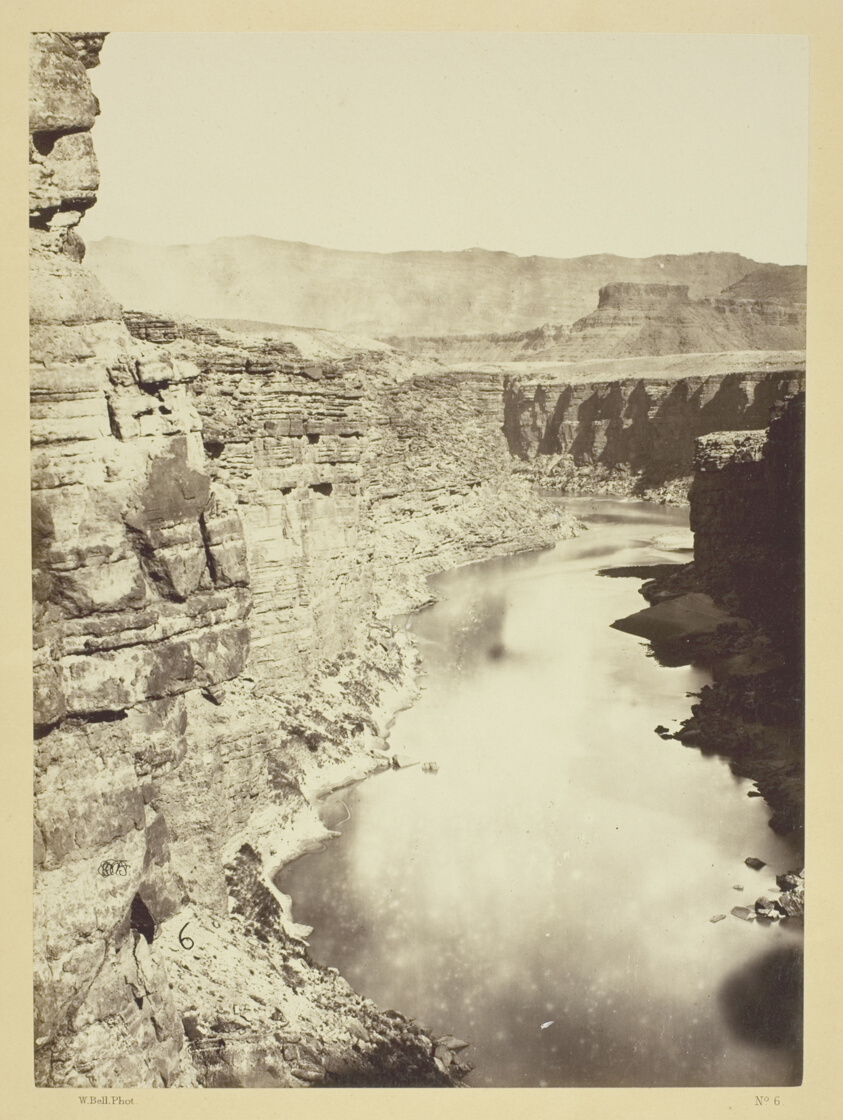
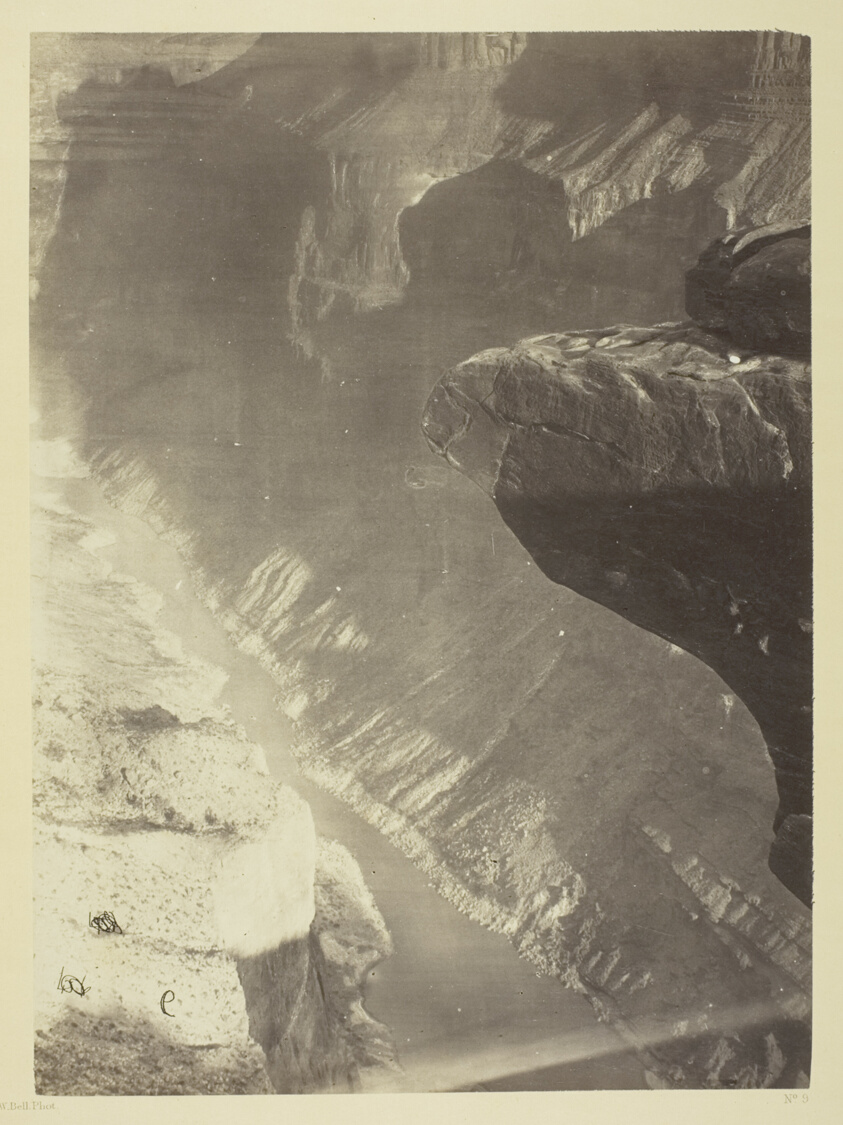
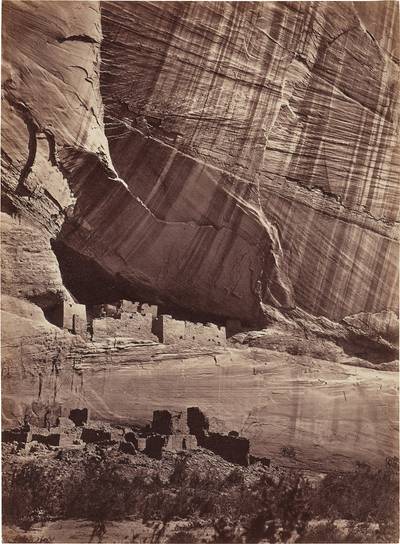
William H. Bell (American, 1830–1910)
View in the Grand Cañon of the Colorado River, No. 12 from the series "Geographical Explorations and Surveys West of the 100th Meridian", 1872

The Abyss That Made America Look
There are landscapes that merely depict a place, and then there are landscapes that constitute an argument. The Grand Canyon belongs to the second category. Since the mid nineteenth century, artists, photographers, and image makers of every stripe have stood at its rim and faced the same impossible task: how do you translate something that refuses human scale into something a human can hold, hang, and understand? The answers they have produced form one of the most fascinating and contested bodies of work in American art history.
The canyon entered the American visual imagination with serious force in the decades following the Civil War, when the federal government began funding surveys of the western territories. These expeditions were part scientific, part political, and entirely optimistic about what the land could yield. Photography and painting traveled alongside geology and topography, and the resulting images were meant to do real work: persuade Congress, stir public pride, and confirm a national mythology that the continent's extraordinary terrain was proof of providential favor. The artists who participated in these surveys were not illustrators in any diminished sense.
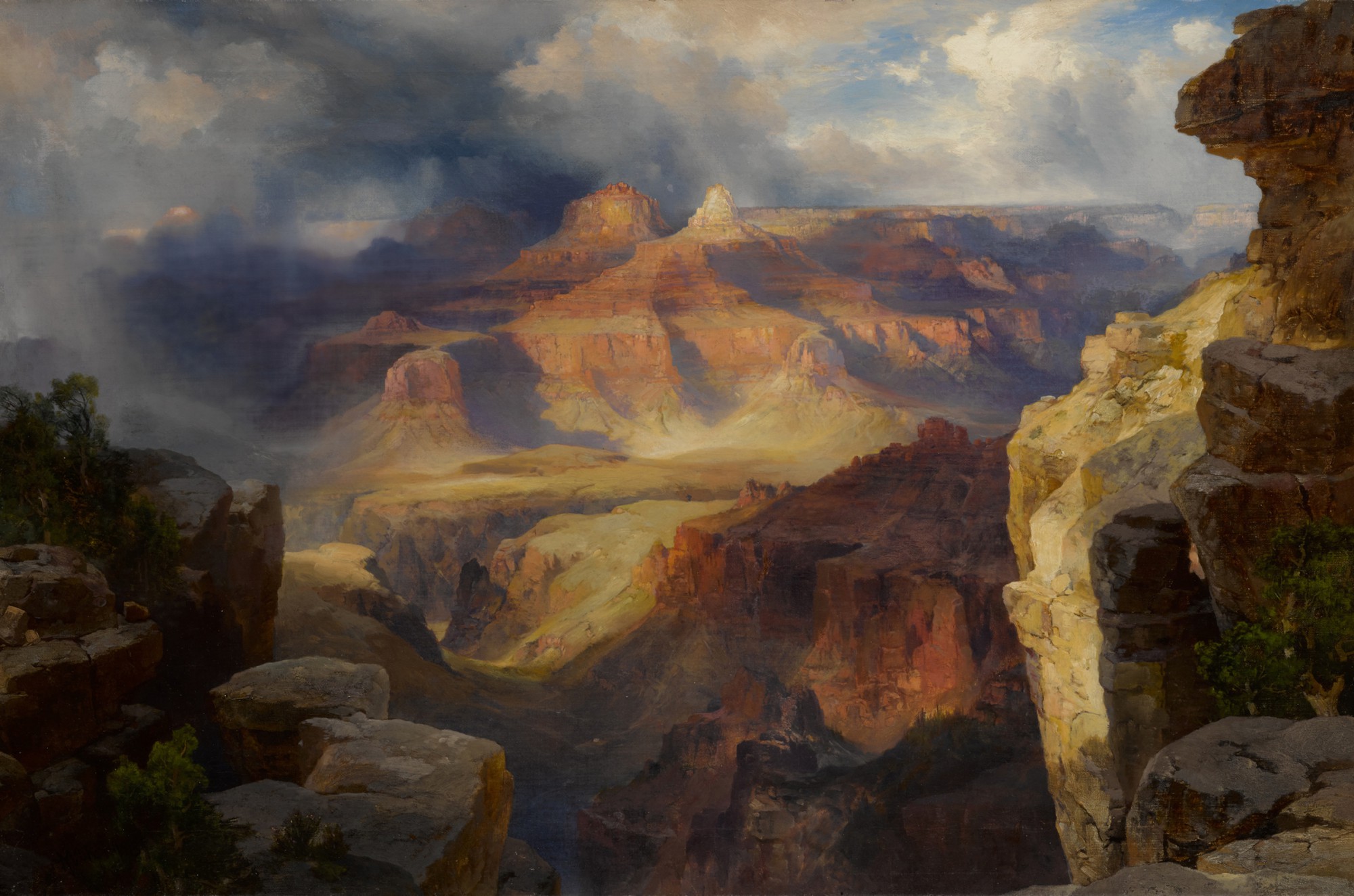
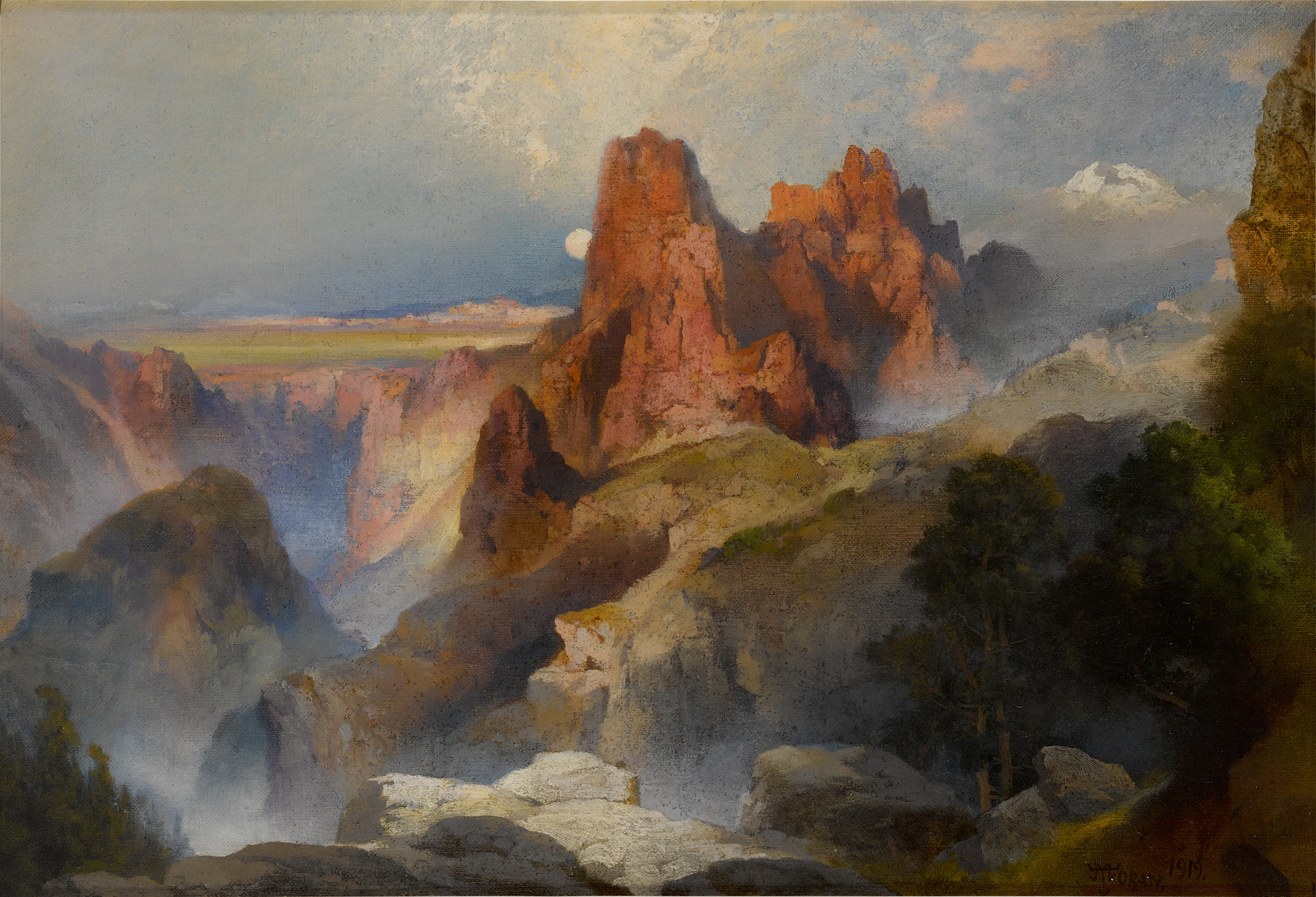
Thomas Moran
Grand Canyon, Arizona (A Miracle of Nature) (Zoroaster Peak, Grand Cañon)
They were shaping how a nation would understand itself. William H. Bell joined the Wheeler Survey in the early 1870s and produced photographs of the canyon that are still startling in their formal intelligence. Bell understood that the canyon's power lay partly in its refusal of conventional pictorial logic.
Depth here meant something geological rather than perspectival. His stereoview images, distributed commercially and consumed in parlors across the country, gave Americans a sense of vertiginous three dimensionality that was entirely new. Timothy O'Sullivan, working a separate survey under Clarence King, was pursuing related problems. O'Sullivan brought to the western landscape a documentary severity that left little room for romantic softening, and his canyon images have a quality of confrontation that aligns them more with twentieth century photography than with the pastoral tradition they nominally belonged to.
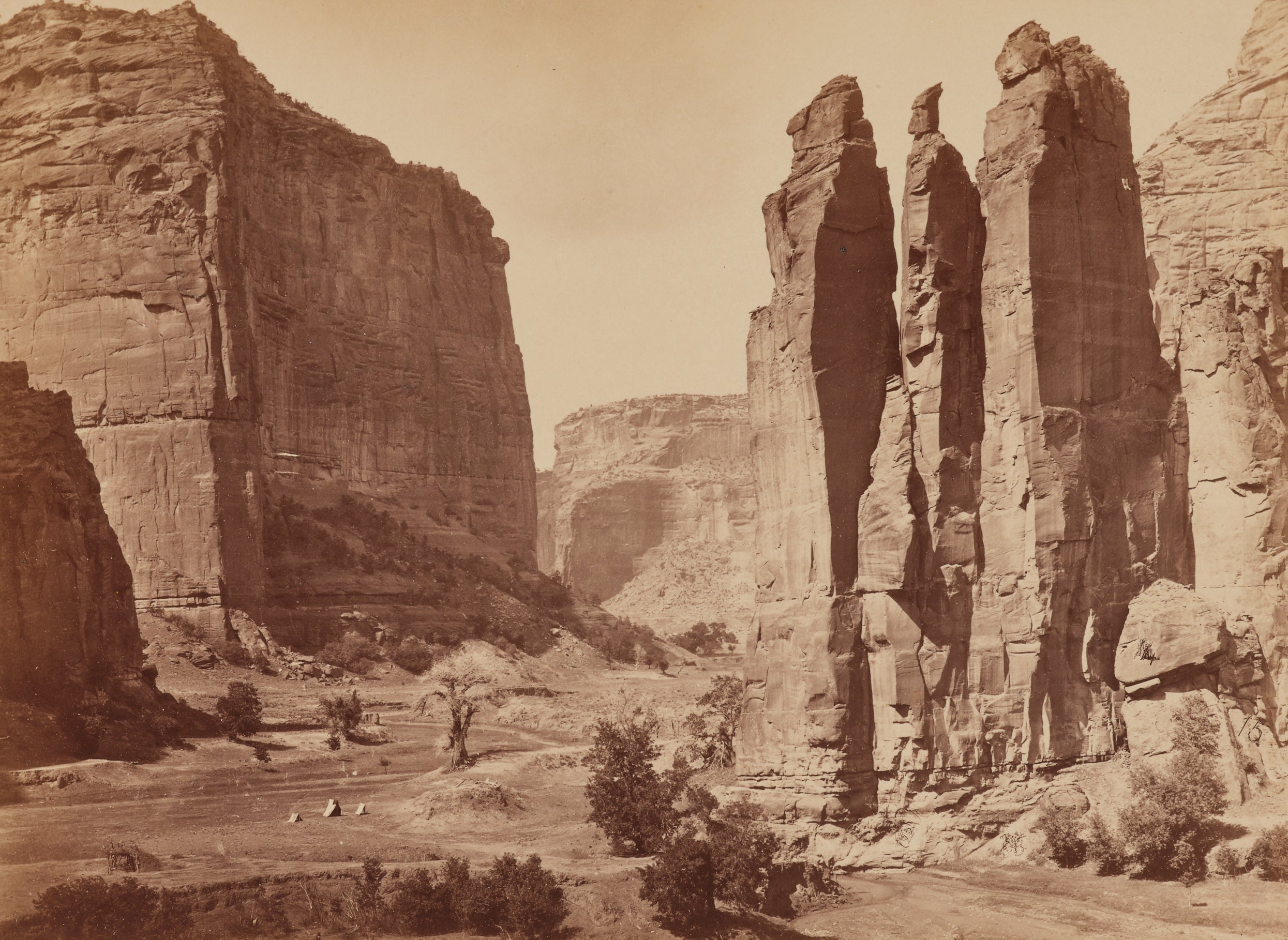
Timothy O'Sullivan
Cañon de Chelle, Walls of the Grand Cañon about 1200 feet in height
Thomas Moran arrived at the canyon in 1873, fresh from his triumph with Yellowstone, where his paintings had helped persuade Congress to establish the first national park the previous year. His Grand Canyon work operates at a different register than Bell or O'Sullivan. Moran was interested in chromatic excess, in the geological drama of sedimentary layers reading as almost theatrical lighting. His large scale oils, some measuring twelve feet across, were not merely landscapes but performances.
They asked viewers to feel overwhelmed and grateful simultaneously. The works on The Collection that represent Moran offer a compelling window into this ambition, the way he used the canyon as an occasion for thinking about what sublime painting could still accomplish in an age of mechanical reproduction. The tension between painting and photography was never more productively alive than in the representations of the Grand Canyon. Both mediums were, in different ways, testing their own claims to truth.
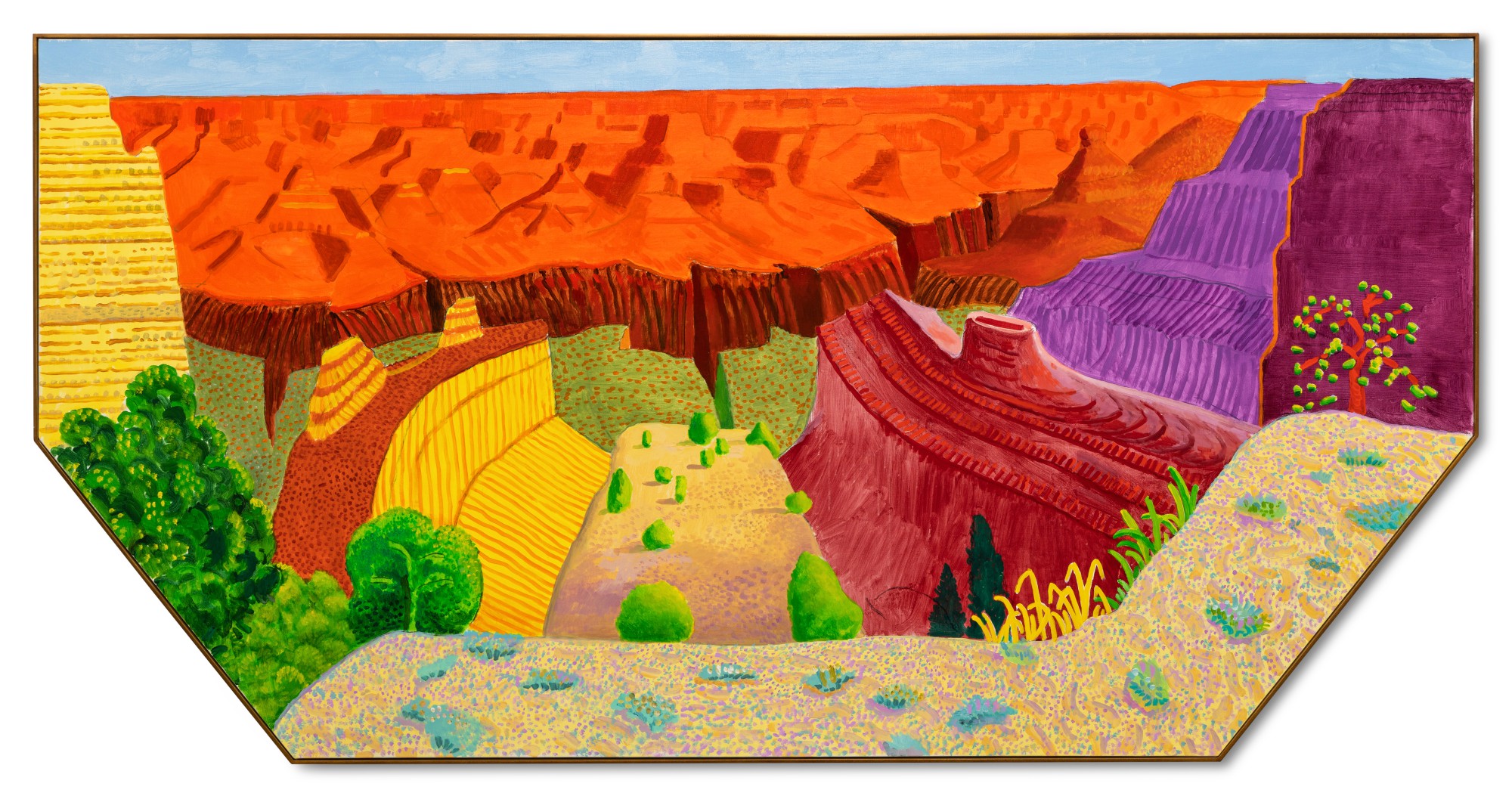
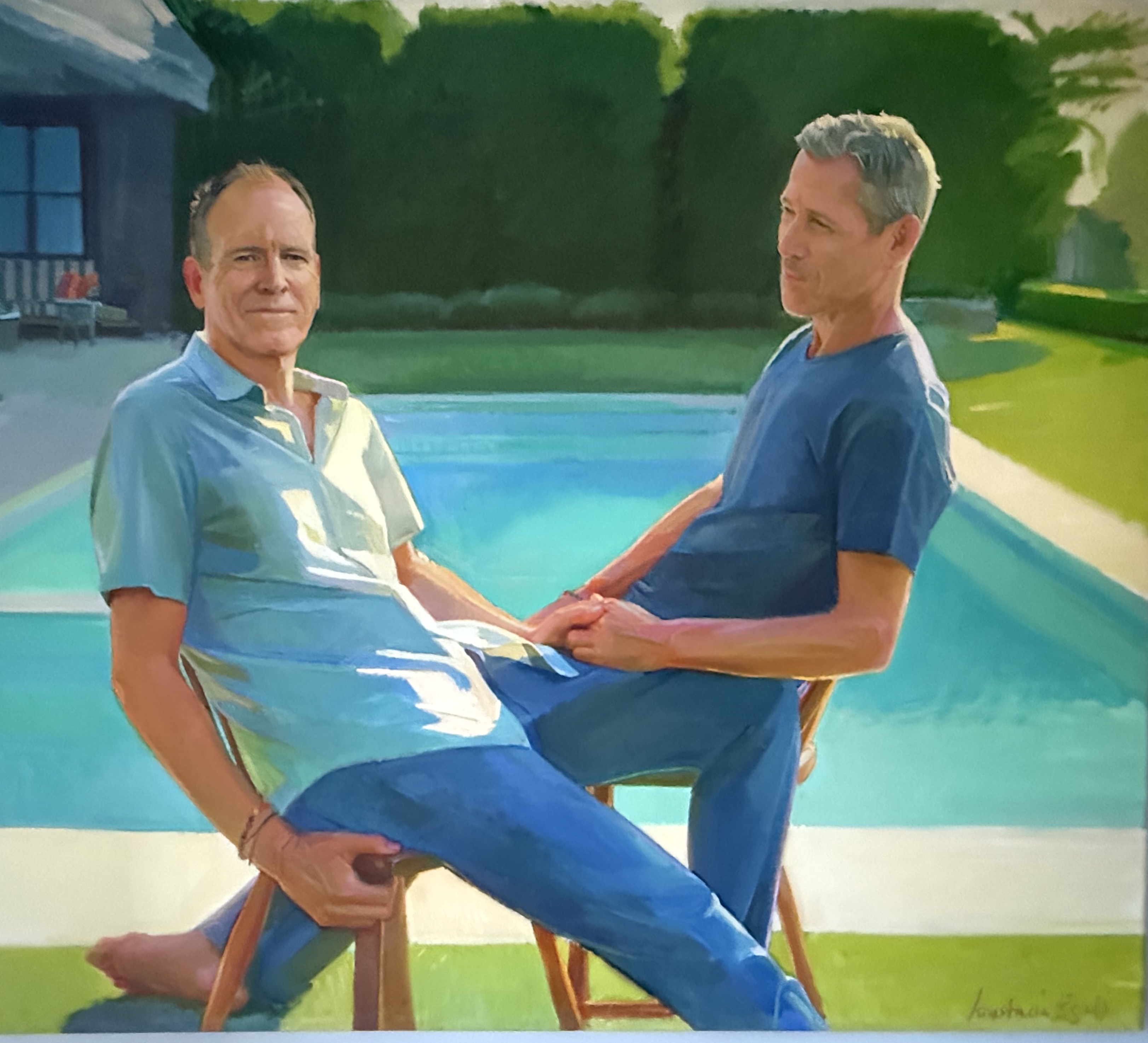
David Hockney
Grand Canyon II, 2017
Photography argued from chemistry and light, from indexical connection to the world as it existed. Painting argued from interpretation, from the artist's right to intensify and select. Neither argument was settled by the canyon, but both were sharpened by it. This productive friction is something collectors of American landscape work return to again and again, because it anticipates debates about representation and mediation that would not reach their fullest theoretical articulation until the late twentieth century.
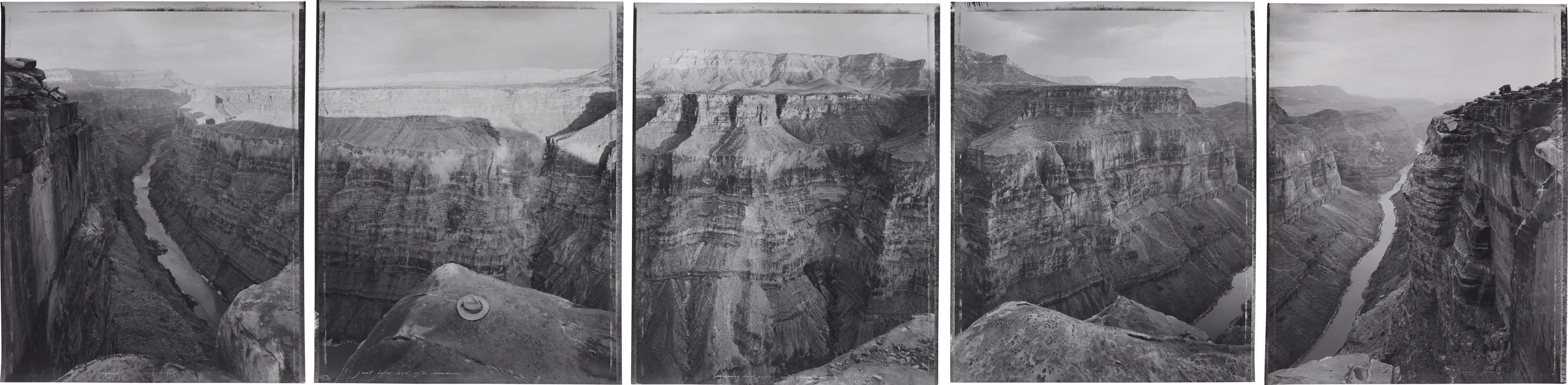
Mark Klett represents a fascinating later chapter in this conversation. Beginning with the Rephotographic Survey Project in 1977, Klett made it his practice to locate the precise positions from which nineteenth century survey photographers had made their exposures, and then to photograph the same views again. The project was conceptually elegant and historically rigorous. By placing the old and new images in dialogue, Klett turned the canyon into a kind of durational portrait, a record not just of geology but of the changing relationship between American culture and its most symbolic terrain.
Mark Klett
Around Toroweap Point, just before and after sundown, beginning and ending with views used by J.K. Hillers over 100 years ago, Grand Canyon
The work insists that looking is never neutral, that every photograph carries within it the history of all the photographs that preceded it. David Hockney's engagement with the Grand Canyon offers yet another kind of reckoning. His large composite photographic works from the 1980s and his later paintings made on site challenged the single viewpoint that both photography and traditional perspective painting rely upon. Hockney was interested in how we actually experience a vast landscape, through time, movement, and accumulated partial glances rather than from a fixed and omniscient vantage.
His canyon works are exercises in perceptual honesty, acknowledging that the eye does not behave like a lens. They are also, characteristically, intensely pleasurable, rich with color and energy even as they make a rigorous argument. What makes the Grand Canyon such a generative subject across so many periods and practices is that it poses the same fundamental question each time: what does representation owe to experience? The canyon is too big, too old, and too chromatic for any single medium to fully account for.
Every work made there is therefore also a meditation on the limits of its own form. This is why the subject has attracted artists working across such different traditions and has never been exhausted despite more than a century and a half of sustained attention. For collectors, the Grand Canyon category is also a study in how American identity gets constructed through images. The artists and photographers who have worked there were never simply recording scenery.
They were participating in ongoing arguments about wilderness, progress, national character, and the proper relationship between culture and nature. The works gathered on The Collection span enough of this history to let those arguments become visible in all their complexity. To collect in this area is to engage with a subject that is simultaneously geological and philosophical, genuinely American and genuinely universal. The canyon waits for every artist the same way it waits for every visitor: patient, indifferent, and entirely prepared to outlast the attempt.