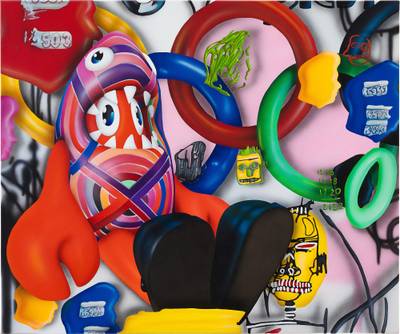
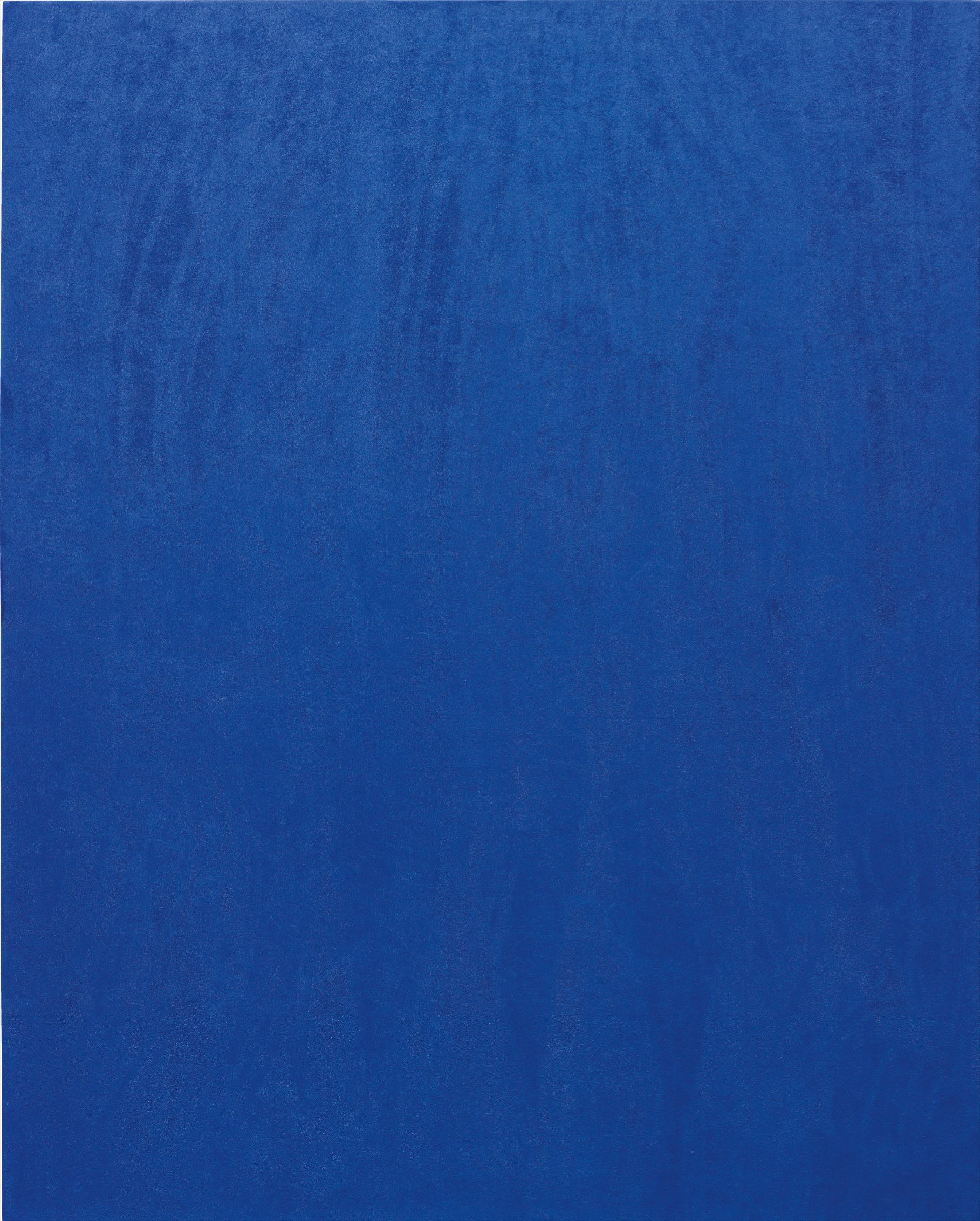
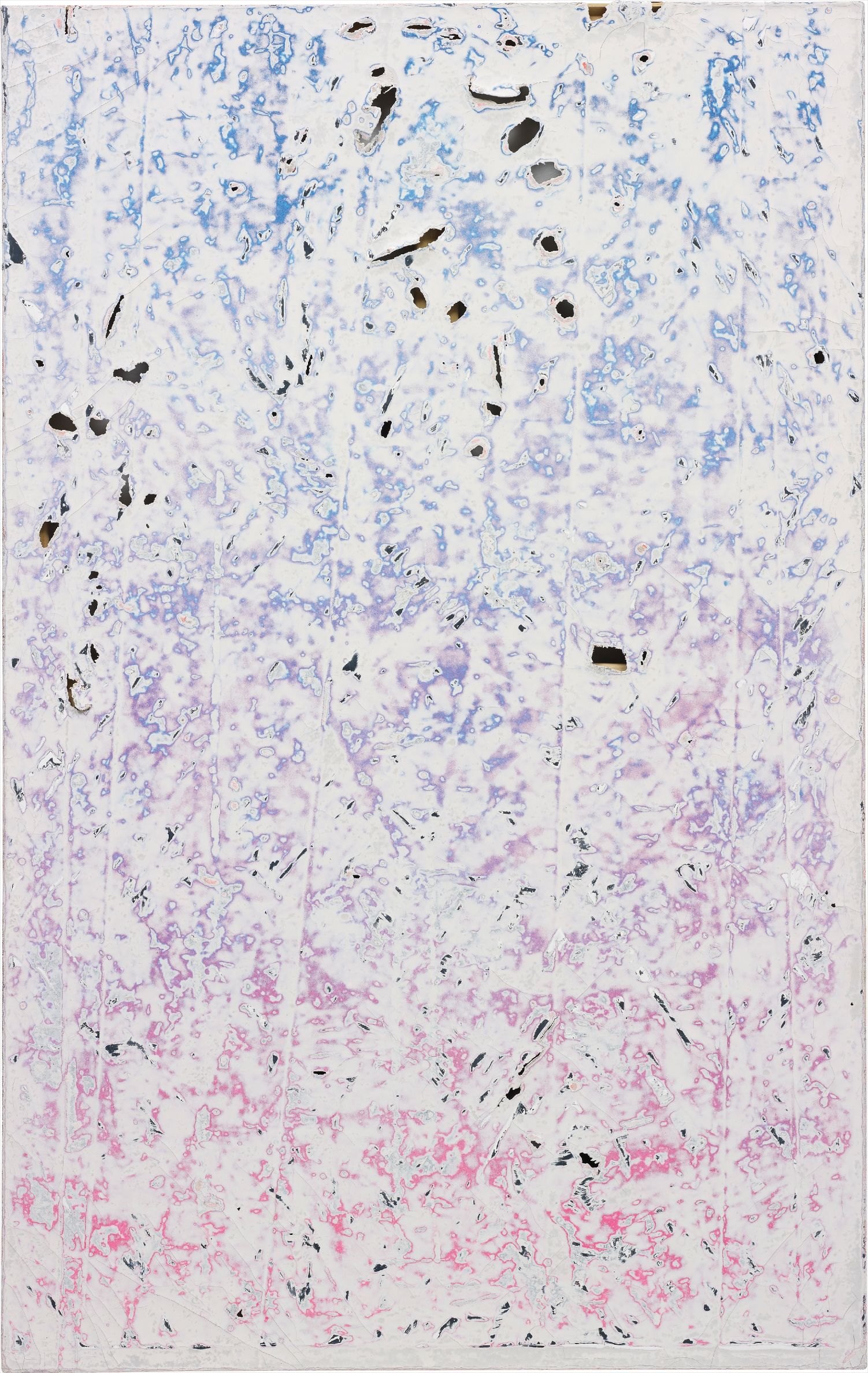
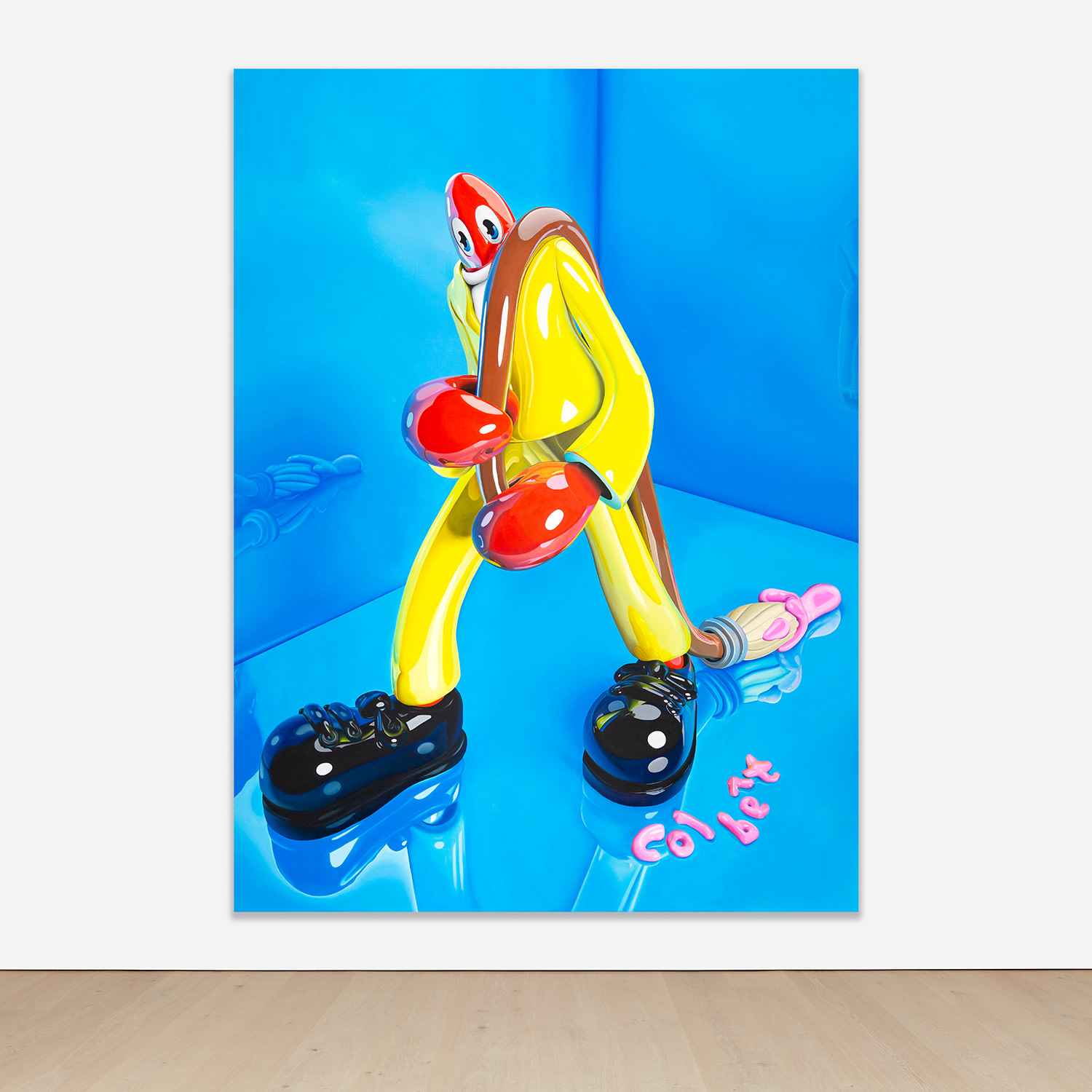
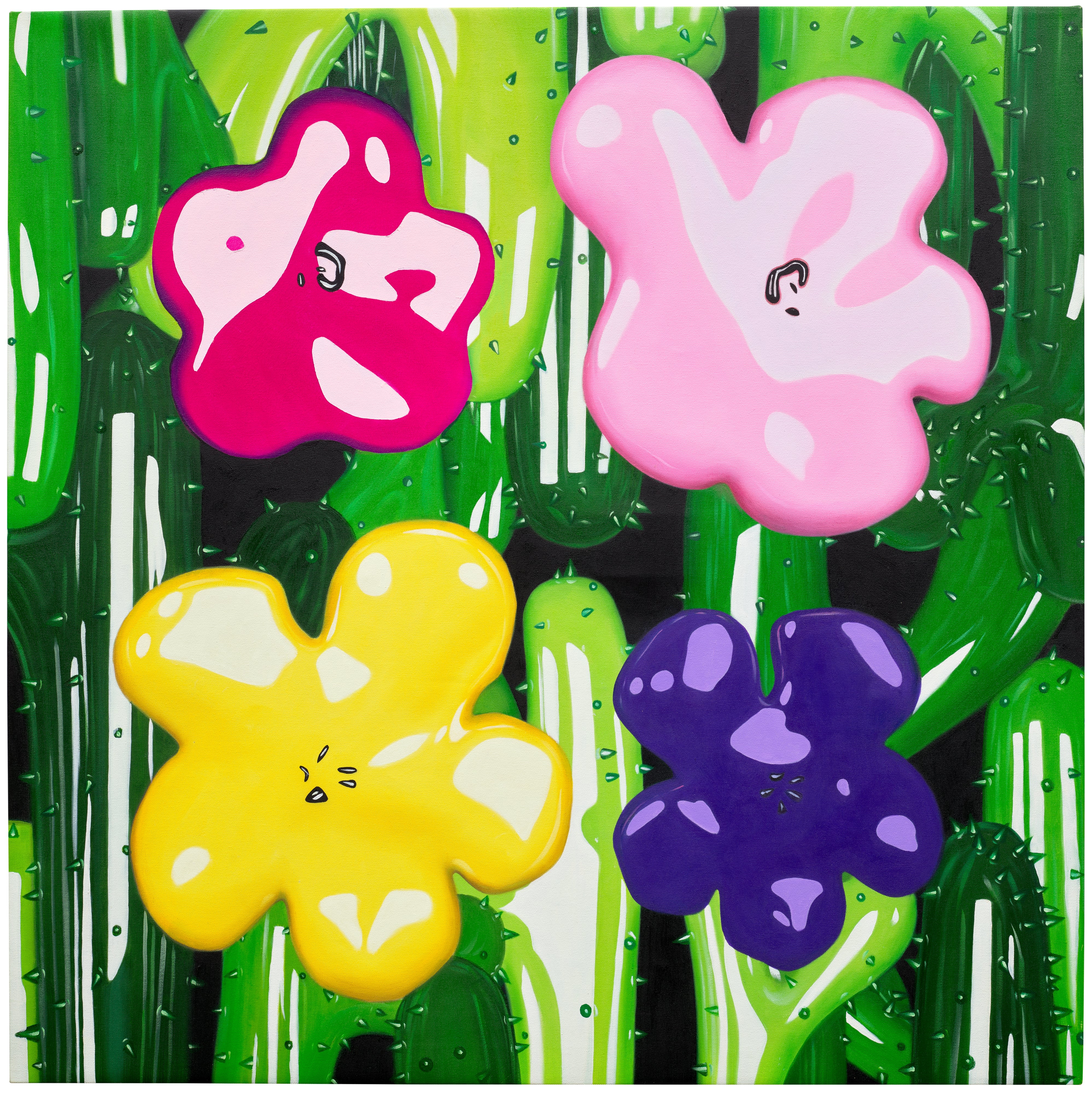
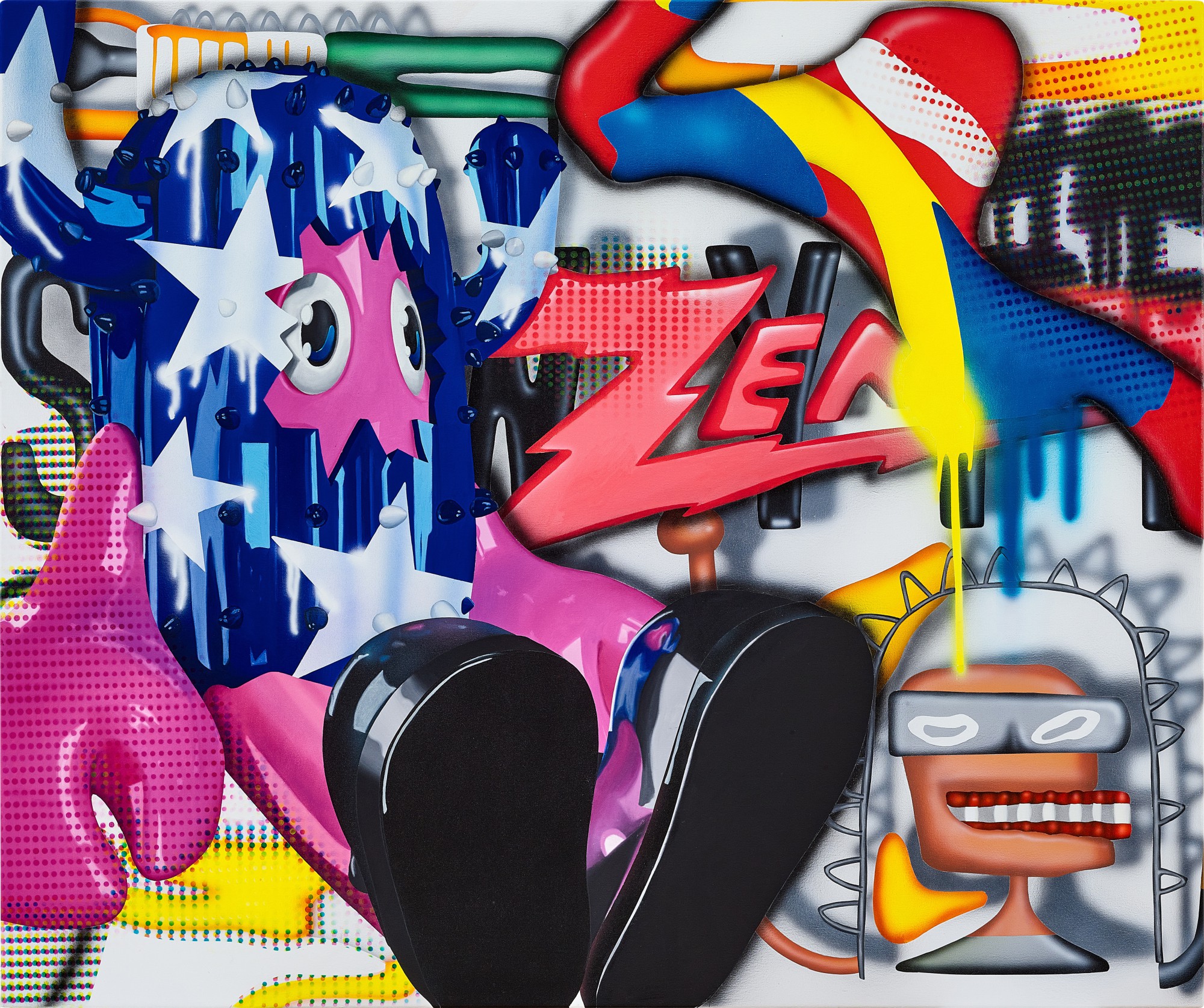
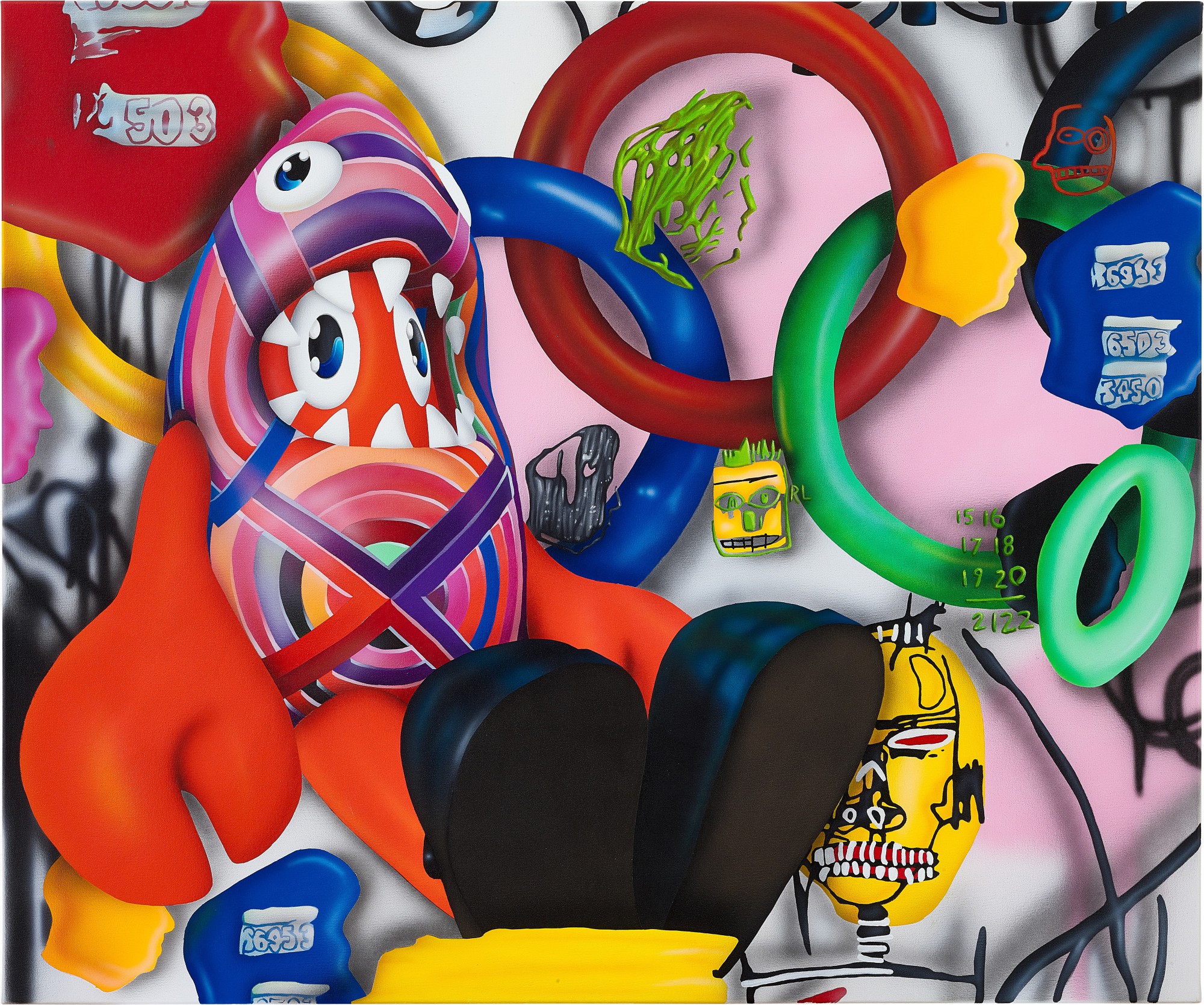
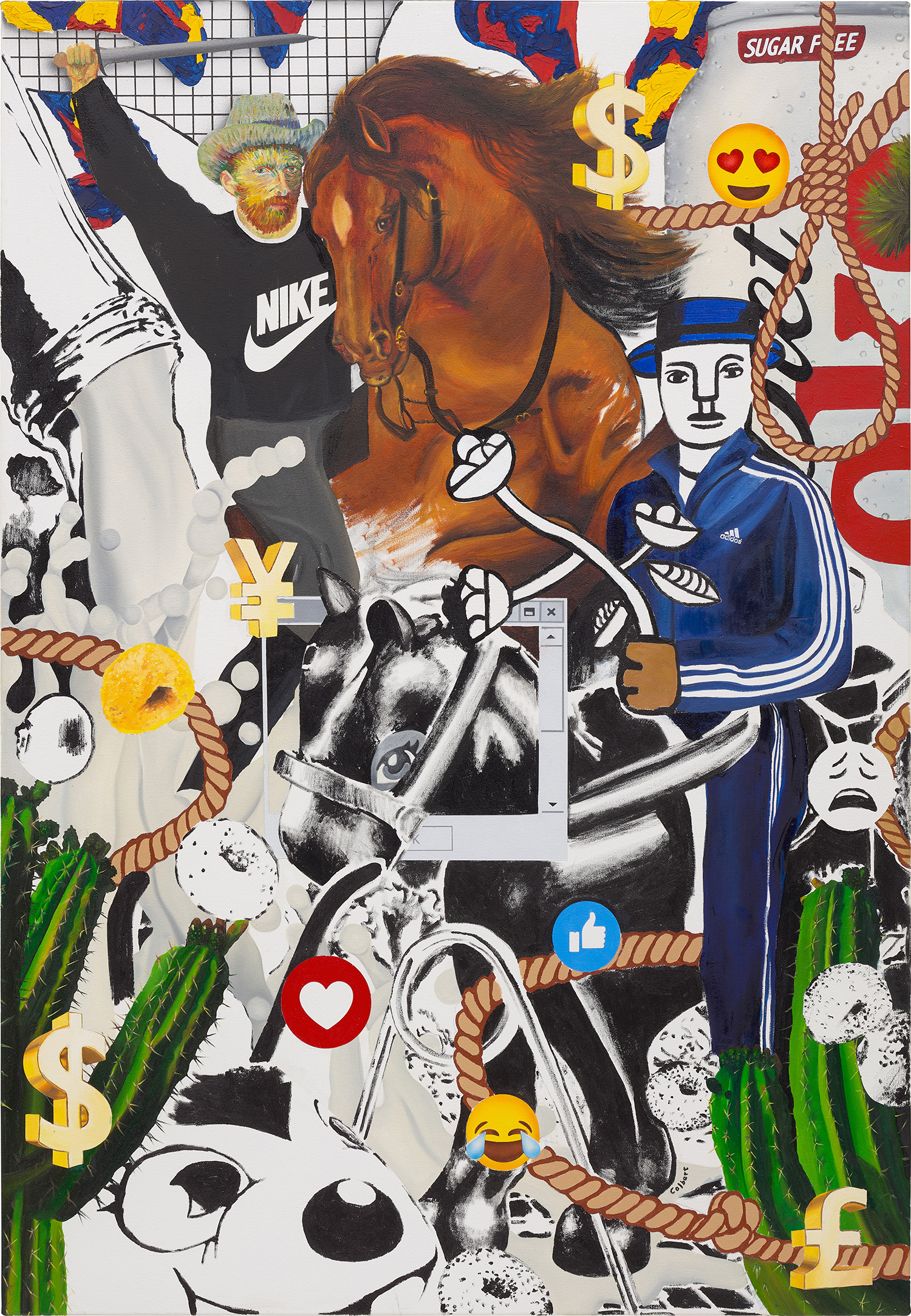
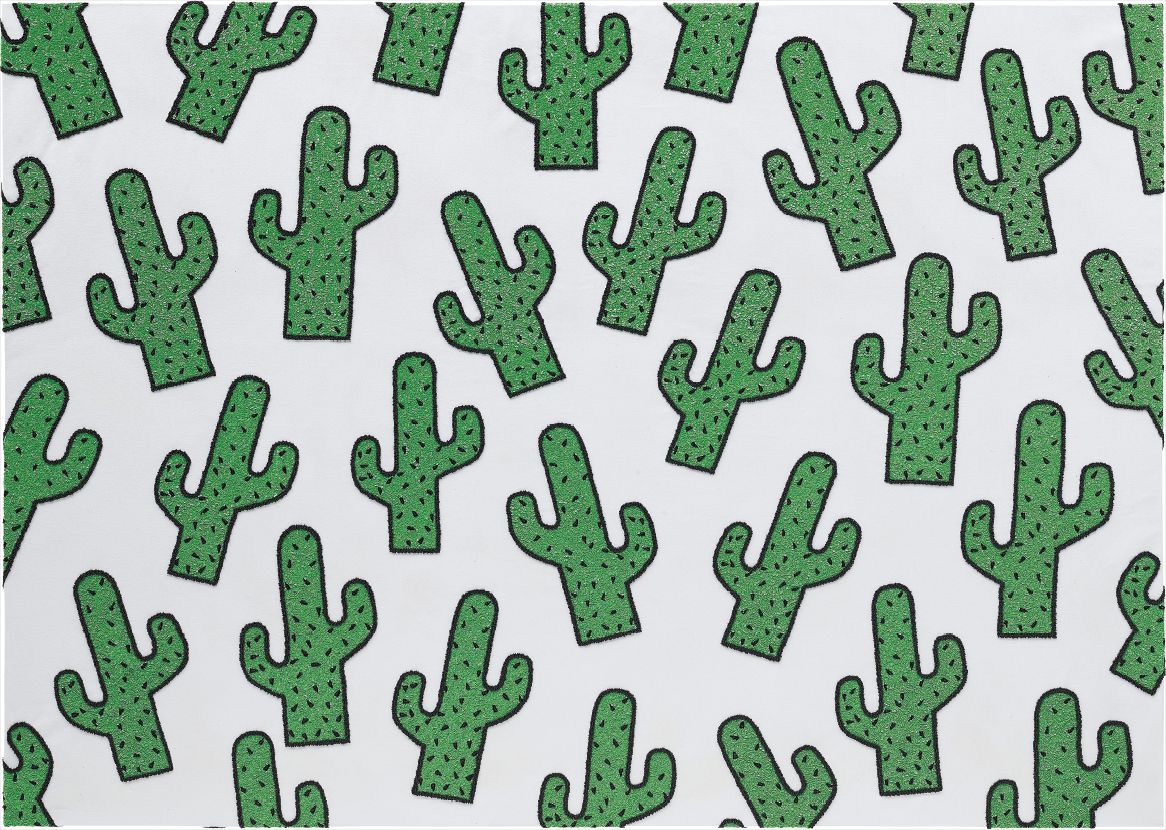
In the spring of 2023, Philip Colbert staged one of the most talked about events in contemporary art: a large scale immersive exhibition at the Saatchi Gallery in London that transformed the storied institution into a cartoon fever dream of lobsters, pop culture references, and painterly bravado. The show drew queues around the block and generated the kind of social media energy that most artists spend careers chasing. It was a moment that confirmed what a growing circle of collectors and curators had suspected for years: Colbert is not simply a novelty, but a genuinely serious force in contemporary painting, one who has found a way to make maximalism feel meaningful and joy feel intellectually rigorous. Philip Colbert was born in Scotland in 1979, and his formation as an artist was shaped by a sensibility that was always drawn to the theatrical and the conceptual in equal measure. He studied philosophy at the University of St Andrews, a background that would prove formative in ways that are still visible in his work today. Rather than leading him toward austerity or abstraction, his philosophical training gave him a framework for asking questions about identity and representation, questions he would eventually answer not with text or theory but with paint and with the most unlikely of protagonists: a cartoon lobster. Colbert moved to London and established himself first as a fashion designer, founding his label Rodnik Band, which became known for its irreverent, art world referencing aesthetic. The label attracted admirers including Karl Lagerfeld and became something of a cult phenomenon in its own right. But fashion, for Colbert, was always a stepping stone rather than a destination. The visual language he developed through clothing, the bold graphics, the art historical quotations worn literally on the body, translated almost seamlessly into his painterly practice when he committed fully to the canvas. By the early 2010s, he was painting with the intensity and focus of someone who had been waiting his whole life to arrive at exactly this point. The Lobster emerged as Colbert's alter ego and central character with a logic that feels both absurdist and entirely coherent. The creature, rendered in vivid cartoon lines and saturated colour, allowed Colbert to sidestep the ego of the self portrait while still making deeply personal work. The Lobster is a proxy self, a mascot, a philosophical stand in for questions about how we perform identity and navigate a world saturated with images. The character appears across canvases that reference everyone from Botticelli to Warhol to Lichtenstein, inserting itself into the canon with a cheerful irreverence that masks genuine art historical scholarship. Works such as Splash Hunt Study from 2018 and the series of large scale canvases produced in collaboration with the Lobster Land Museum project in 2020 demonstrate the full range of his ambition, from intimate studies in acrylic and oil to monumental set pieces that reimagine the history of Western painting through his unmistakable lens. Among the works available to collectors through The Collection, several pieces stand out as particularly significant windows into Colbert's practice. The Painter Portrait 2022 in Sky Blue is a quietly confident work that shows Colbert in dialogue with the tradition of the artist self portrait, refracting it through his Pop sensibility with a result that feels both timeless and completely of its moment. The 2020 works produced in collaboration with the Lobster Land Museum project, painted in oil and acrylic on canvas, represent some of the most ambitious and layered paintings of his career to date, dense with cultural reference and executed with a confidence that rewards extended looking. Cactus Infinity from 2016 offers an earlier moment in his development, a work that shows the aesthetic fully formed but still crackling with the energy of a painter who is discovering just how far his language can travel. From a collecting perspective, Colbert occupies an increasingly interesting position in the market. His work has found homes with serious collectors across Europe, the United States, and Asia, and his gallery relationships, including representation through leading contemporary spaces, have helped establish a secondary market that reflects genuine demand rather than manufactured hype. His prices have risen steadily and consistently, which collectors and advisors tend to view as a healthier sign than the volatile spikes and corrections that accompany some artists whose fame outpaces their substance. The works on paper and smaller studies offer accessible entry points, while the large scale canvases have become genuinely sought after. Collectors who came to him early, drawn by the sheer visual pleasure of the work, have found that the pieces hold up in the way that only work with genuine conceptual underpinning tends to do. Colbert sits within a lineage that is both clear and distinguished. His debts to Andy Warhol and Roy Lichtenstein are worn openly, even proudly, but the comparison that perhaps illuminates him most usefully is to Jeff Koons, another artist who uses the language of popular culture and manufactured desire as a vehicle for genuinely complex ideas about value, authenticity, and the nature of the image. Like Koons, Colbert has been underestimated by those who mistake accessibility for shallowness. He also draws meaningfully from the Old Masters, and the visual game of spotting the compositional debt to Titian or the colour echo of Rubens in a Colbert canvas has become one of the pleasures that rewards collectors who live with his work over time. What Colbert ultimately represents is something that every generation of art history needs: an artist who makes the conversation feel alive, who finds a way to make looking feel like an event. The Lobster, for all its cartoonish charm, is a serious philosophical proposition about selfhood and spectacle in the contemporary world. The paintings are generous, learned, and made with a technical ambition that is easy to overlook beneath the surface exuberance. For collectors who want work that will continue to yield new readings and new pleasures across years and decades, Philip Colbert is among the most rewarding painters working anywhere in the world right now.