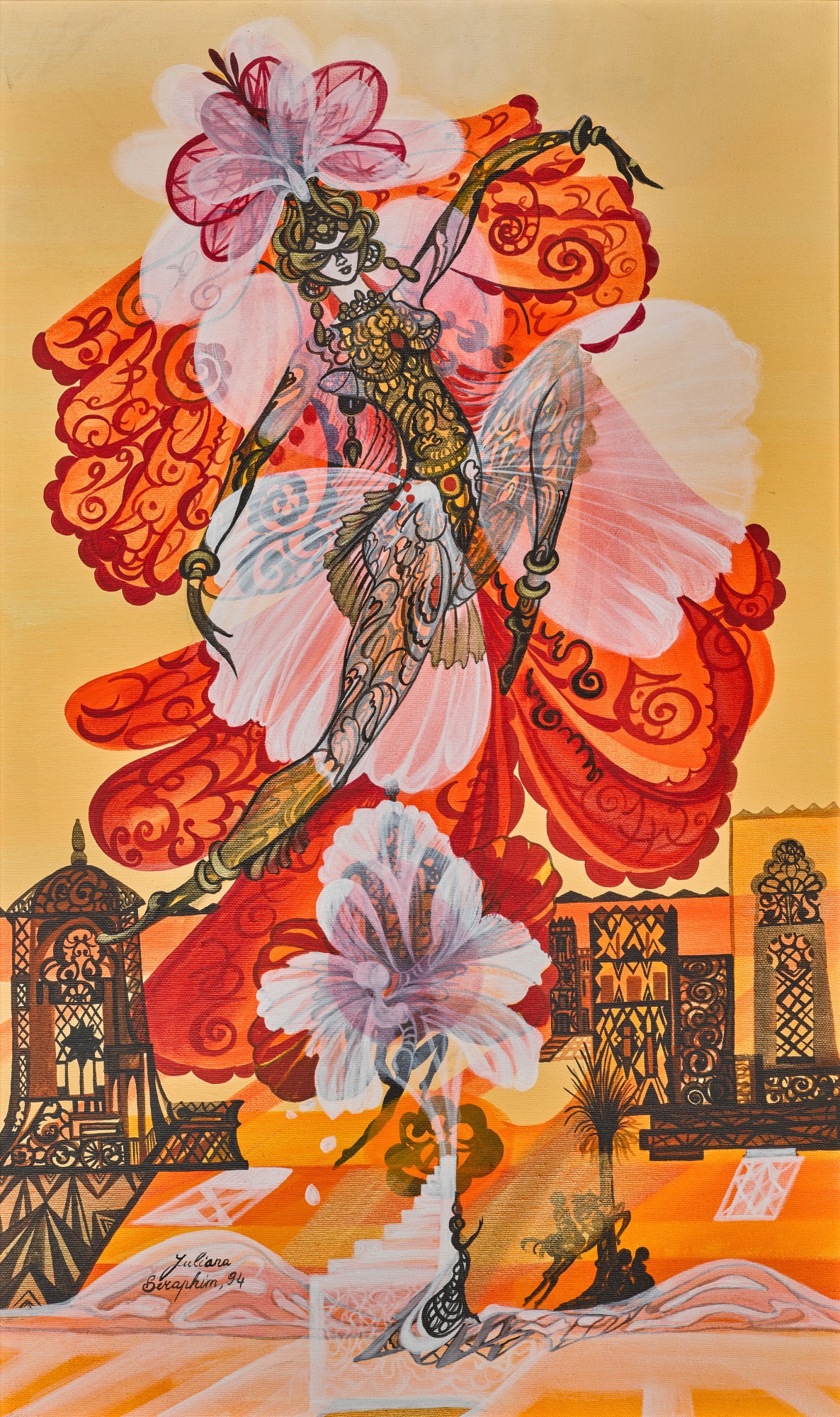
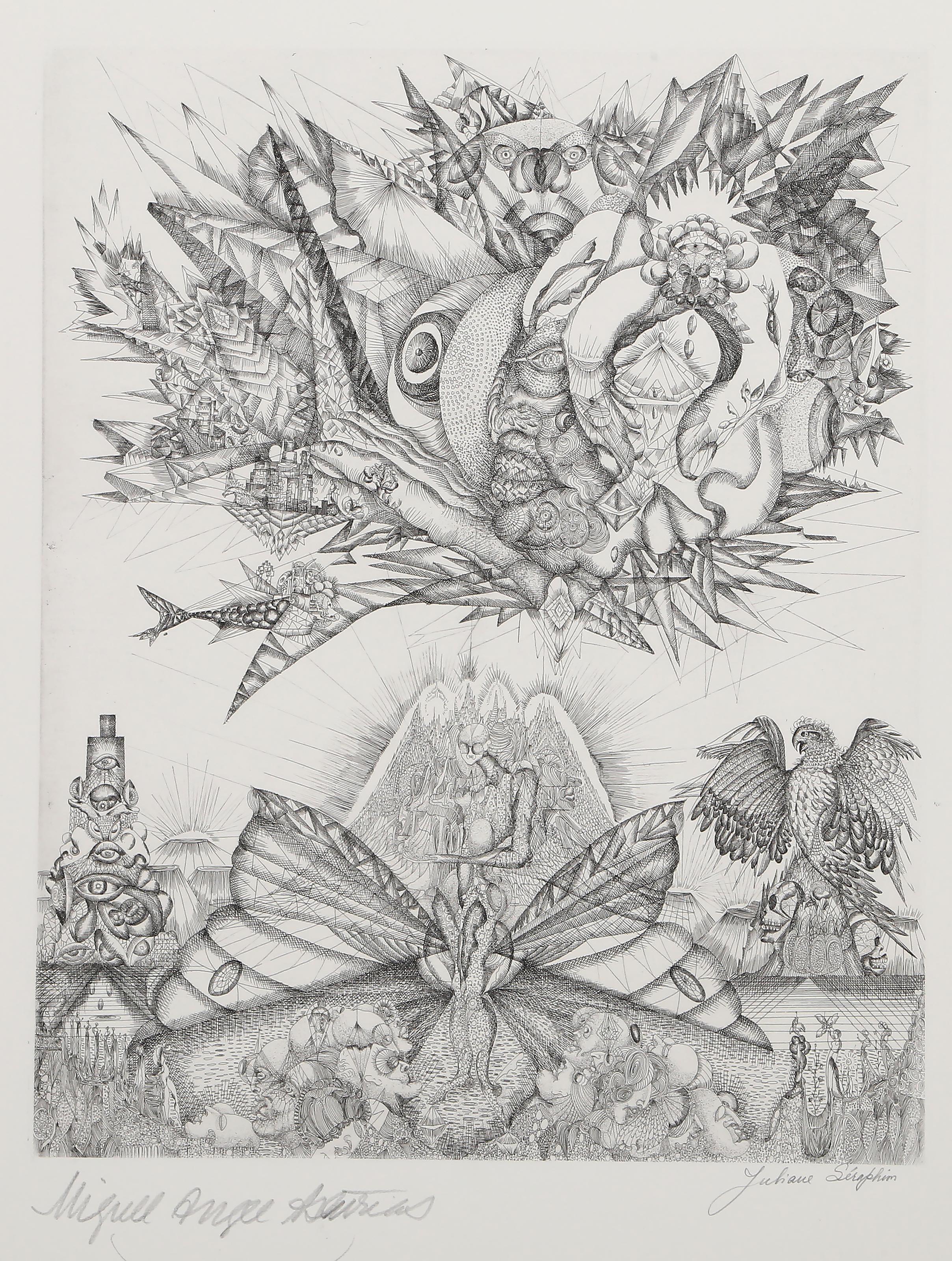
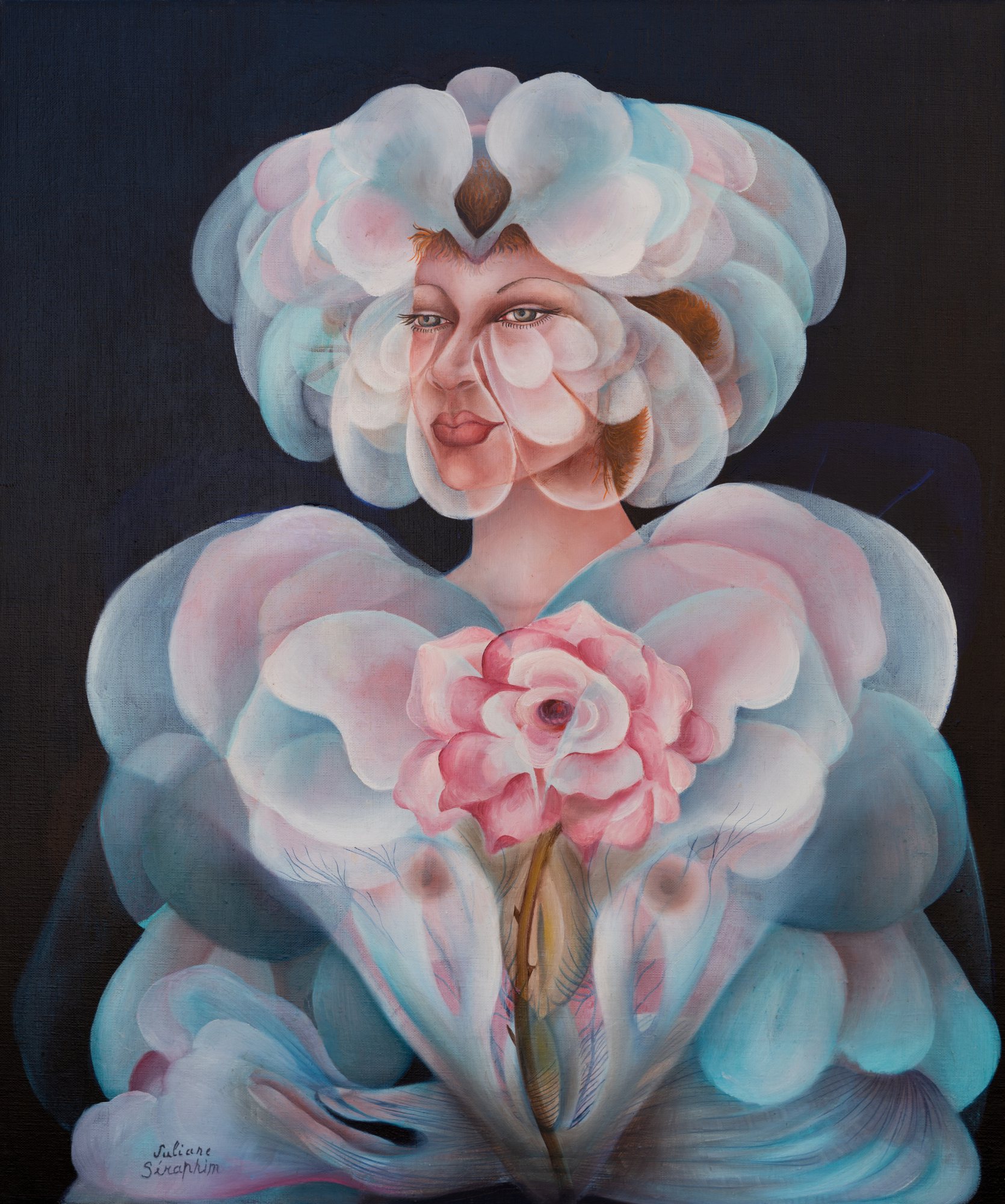
There are artists whose work arrives in a room before you do, whose canvases carry a particular atmospheric weight that stops conversation mid sentence. Juliana Seraphim is such an artist. Born in Palestine and shaped by a life lived across continents, Seraphim developed a painterly language that fuses the sensory richness of the Arab world with a deeply European formal education, producing images of women, memory, and interiority that feel simultaneously ancient and urgently present. In recent years, growing international interest in modernist voices from the Arab world has brought renewed attention to her singular contribution, and institutions and collectors alike are revisiting her decades long practice with fresh admiration. Seraphim was born in Haifa in 1934, and her early years were defined by the profound displacement that shaped so many Palestinian families of her generation. That experience of rupture and longing, of beauty held alongside loss, would quietly permeate everything she made. She pursued her formal training in Rome and later in Paris, cities whose academies and museum collections immersed her in the grand traditions of European figuration while her inner life remained rooted in the landscapes and textures of the Levant. This dual inheritance was never a contradiction for Seraphim. It was the very source of her originality. Her development as a painter unfolded with a distinctive sense of patience and accumulation. Through the 1960s and 1970s she refined a figurative approach that drew on Symbolism and post Impressionist color while reaching toward something more personal and mythic. The women in her paintings are not portraits in any conventional sense. They are presences, bearers of cultural memory, draped in rich pigment and surrounded by decorative motifs that speak of carpets, ceramics, manuscript illumination, and the decorative traditions of the Islamic world. By the time she settled in Beirut and later made Amman her home, her reputation in the Arab world was firmly established, her work collected by individuals and institutions across the region. Among the works that best illuminate her sensibility, her 1994 oil on canvas known as Madame Butterfly stands as a particularly compelling achievement. The title invokes Puccini, longing, and the theater of femininity, but Seraphim transforms these references into something that is wholly her own. The figure is rendered with the tenderness and psychological depth that define her mature style, color used not to describe light as it falls in the natural world but to describe feeling as it accumulates in the body. Her etching Asturias II demonstrates another dimension of her practice, showing her command of the graphic medium and her ability to sustain emotional complexity within the more austere demands of the printed line. Her earlier Untitled canvas from 1980 offers a window into the decade when her visual vocabulary was crystallizing, and the work rewards close attention for the confidence already evident in her handling of form and atmosphere. For collectors approaching her work, several qualities distinguish a Seraphim canvas. Her surfaces carry a quality of sustained attention, built slowly through layers that reveal themselves differently in different lights. The figural compositions balance decorative richness with genuine psychological depth, a combination that is rarer than it might seem and that elevates her work well above the merely ornamental. Her works on paper, including her etchings, offer an entry point that is accessible while demonstrating the same structural intelligence that governs her large scale oils. As interest in modern and contemporary Arab art has deepened through auction houses in Dubai and London and through the programming of institutions such as the Barjeel Art Foundation and the Arab Museum of Modern Art in Doha, Seraphim's position in that larger story has become more clearly understood. Her works represent not only personal artistic achievement but a significant chapter in the cultural history of the region. To place Seraphim within the broader arc of art history is to situate her among a remarkable generation of Arab modernists who navigated between East and West with sophistication and courage. She shares certain affinities with artists such as Inji Efflatoun of Egypt, whose figurative practice carried both formal ambition and cultural rootedness, and with the Syrian painter Fateh al Moudarres, who similarly drew on folklore and myth to construct an image of collective memory. Within the Palestinian artistic tradition, she stands alongside Ismail Shammout and Tamam al Akhal as a figure who transformed personal and national experience into enduring visual form. The international art market has been discovering and rediscovering these artists in earnest, and Seraphim's sustained technical mastery and thematic depth make her among the most rewarding of this generation to collect and to study. What makes Seraphim's legacy so durable is precisely the quality that has sometimes made her harder to categorize: she belongs fully to no single movement or nationality or school. She is a Palestinian artist, a modernist, a painter of women and dreams, a practitioner of printmaking, and a figure shaped by Rome and Paris and Beirut and Amman. All of these things are true simultaneously, and her work holds them together without strain. In an era when the art world is actively and rightly expanding its sense of which histories matter and which voices deserve sustained attention, Seraphim's practice reads not as a recovered footnote but as a central chapter. Her canvases remind us that the great modernist conversation was never confined to a handful of Western capitals, that it was spoken in many languages and imagined in many forms of light.