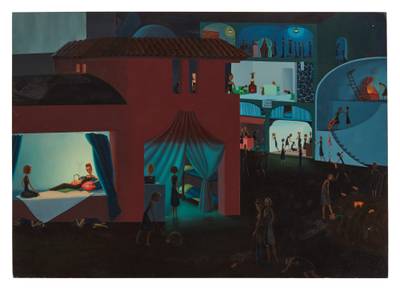
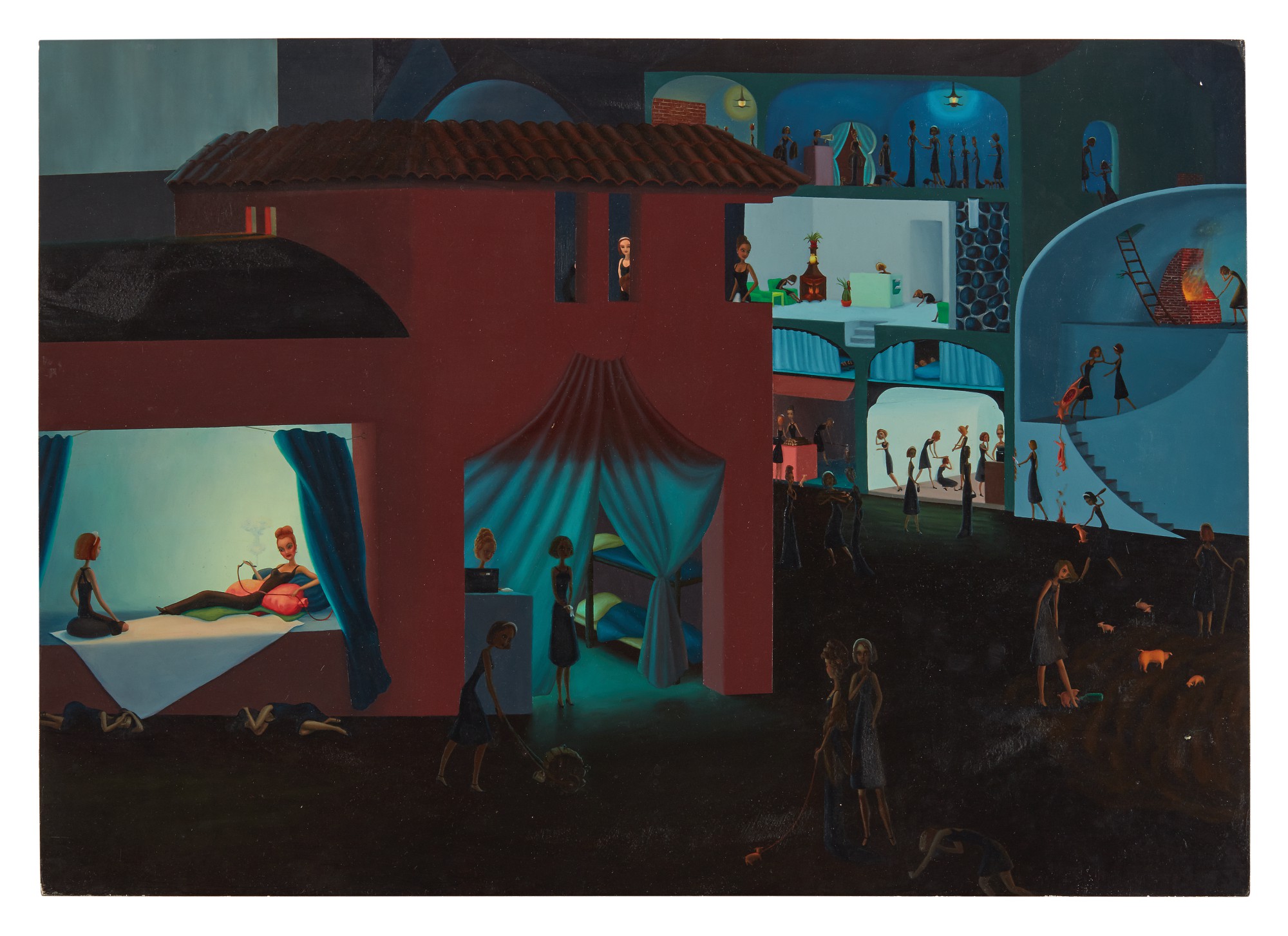
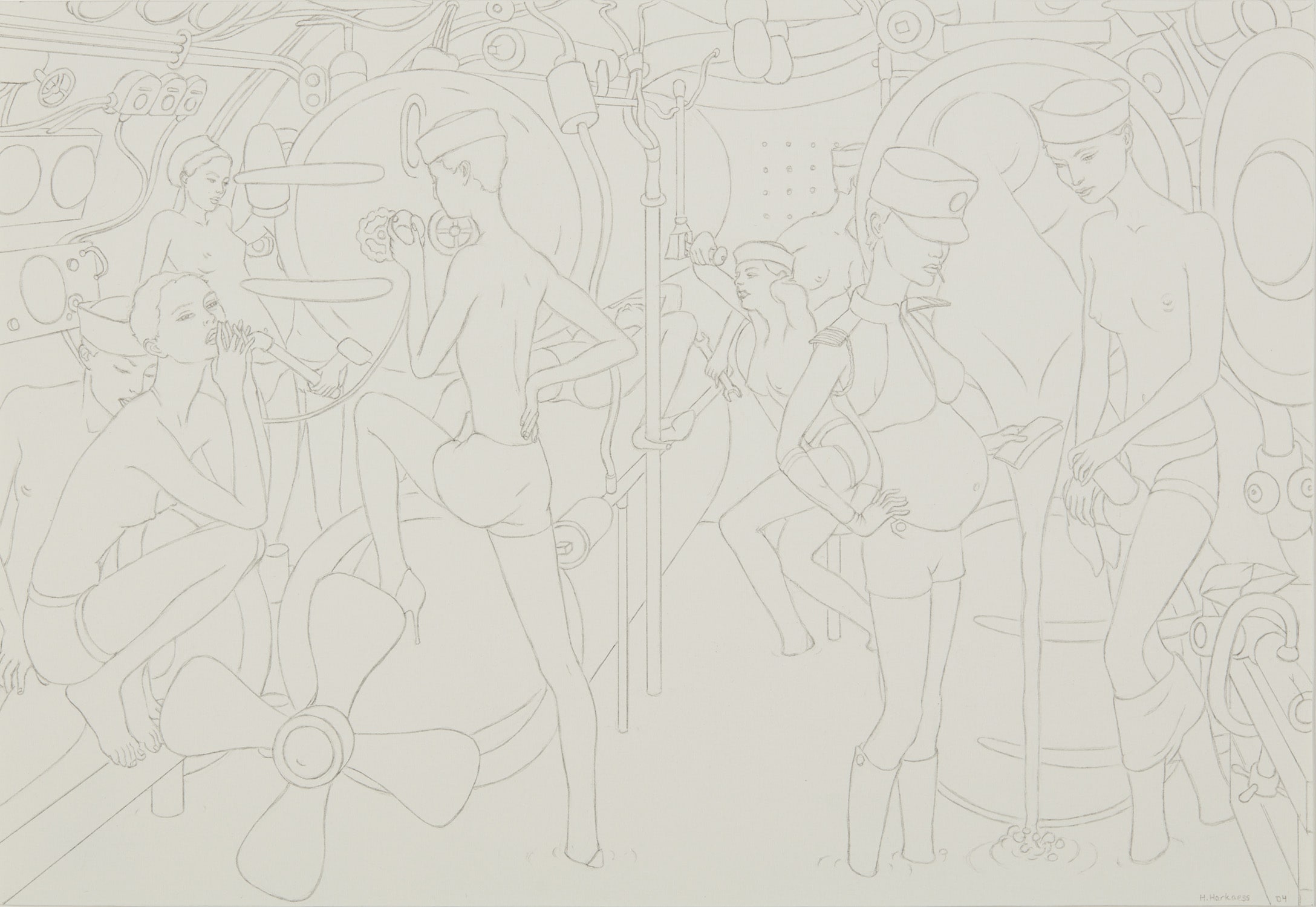
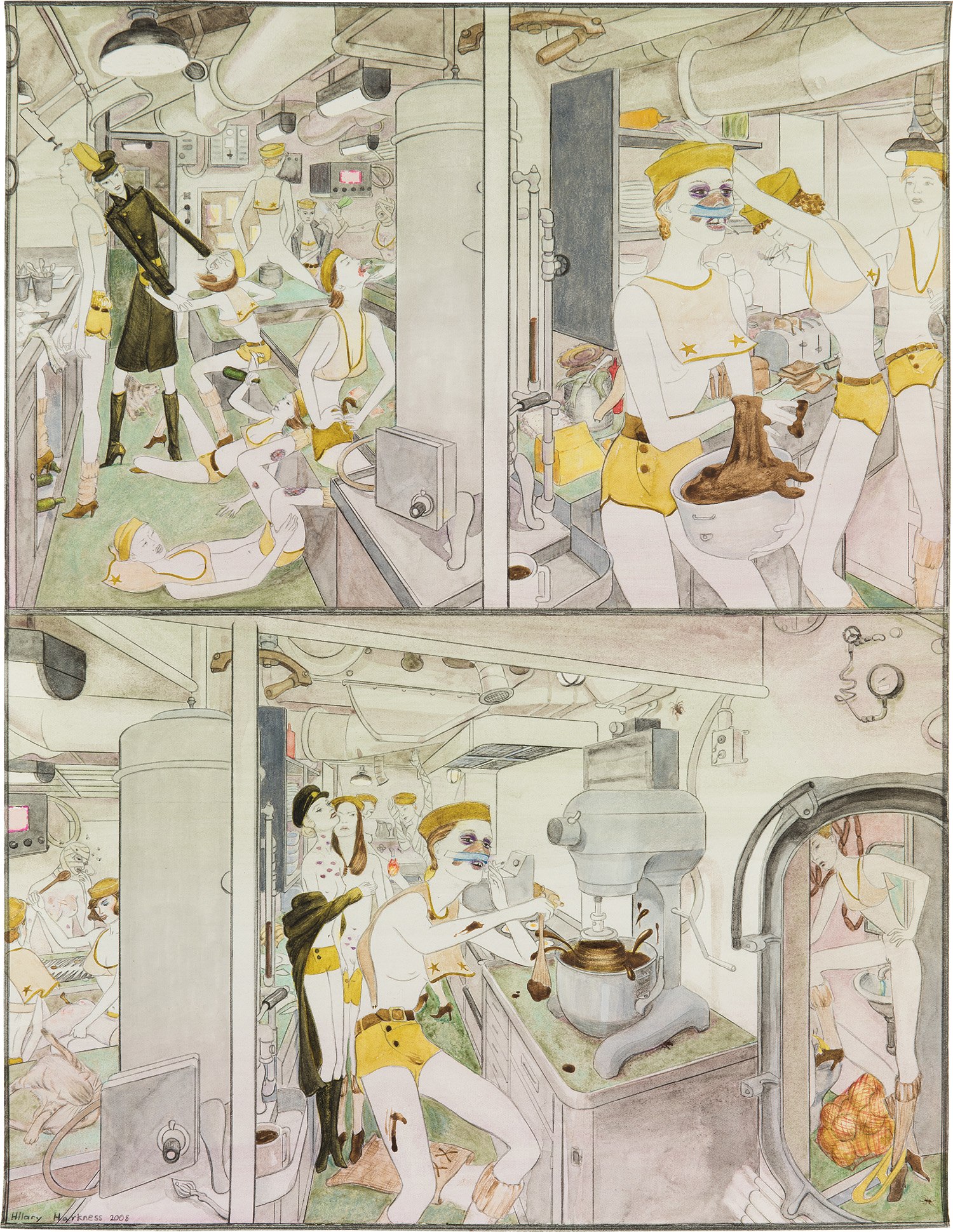
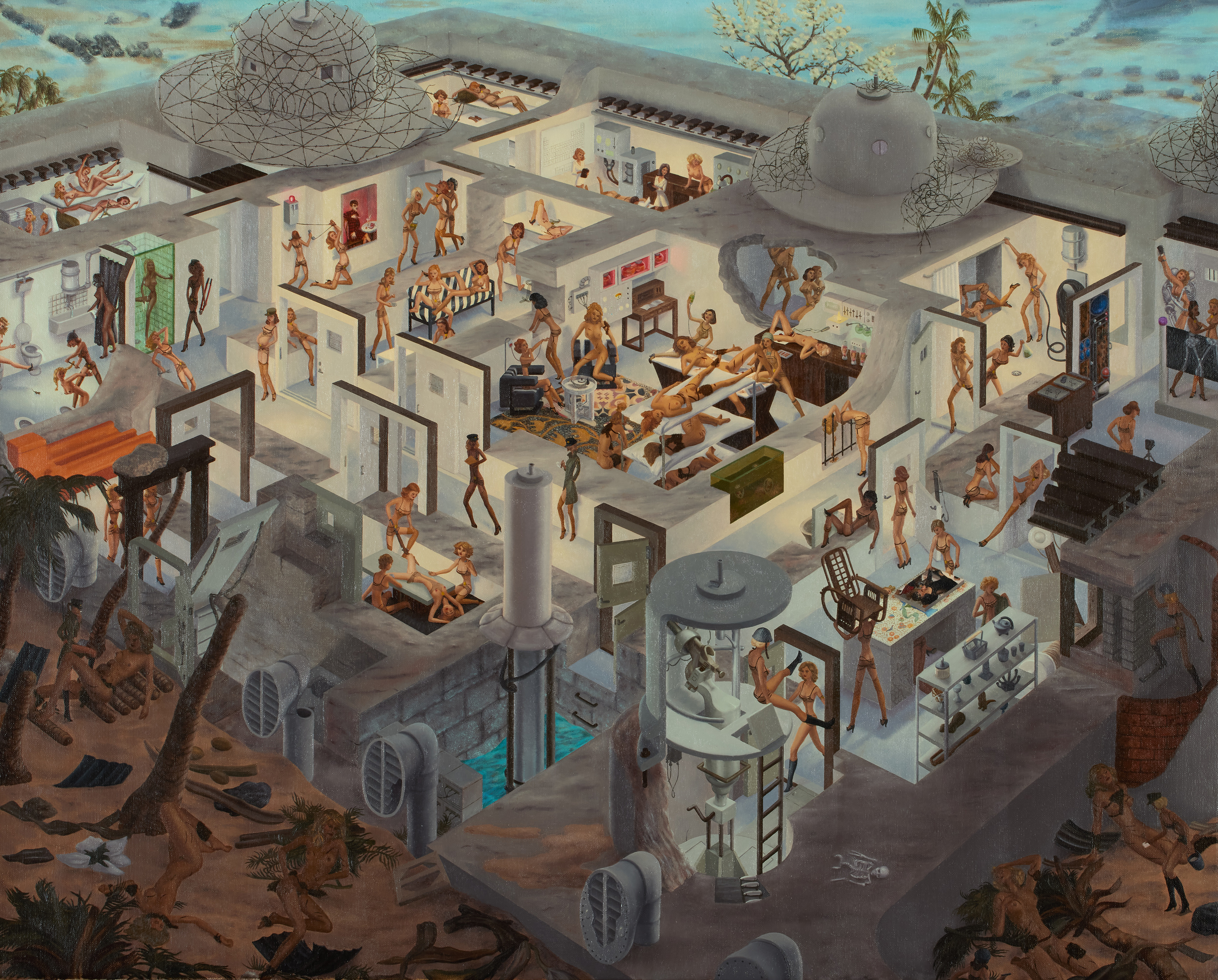
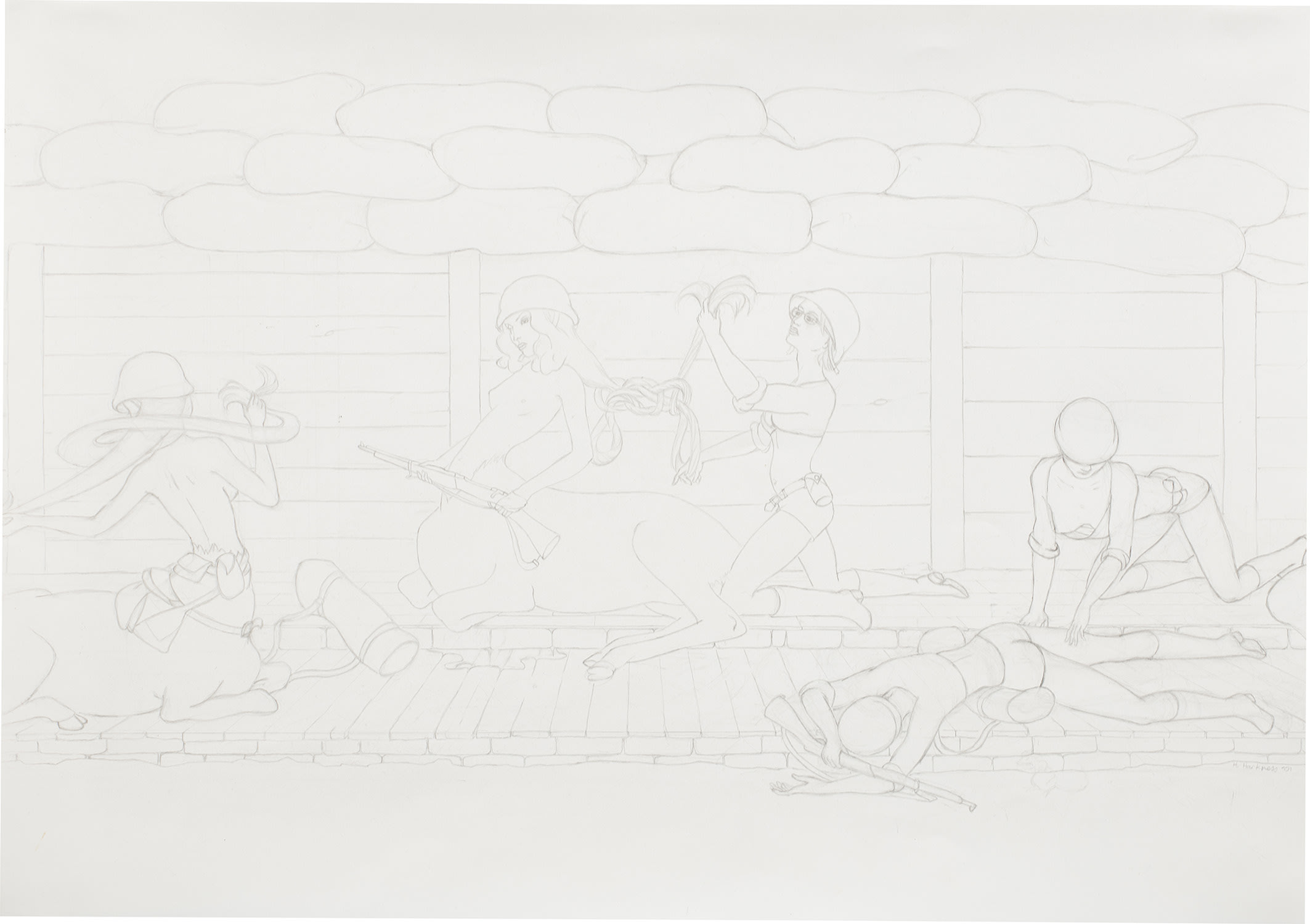
There is a particular kind of looking that Hilary Harkness demands from her audience. You must lean in, literally and figuratively, because her paintings reward proximity in a way that few contemporary works can match. In recent years, her reputation has grown steadily among serious collectors and institutional curators alike, with her paintings appearing in significant private collections across the United States and Europe, and her profile continuing to rise at a moment when the art world has become newly attentive to the politics of desire, representation, and historical power. The timing feels less like coincidence and more like a long overdue recognition of an artist who has been working with extraordinary rigor and ambition for more than two decades. Harkness was born in 1971 and came of age in the United States during a period of cultural and political friction that would leave a clear imprint on her practice. She studied at the Maryland Institute College of Art and later at Yale University, where she received her MFA, an institution whose influence on American painting has been enormous and whose alumni tend to emerge with both technical confidence and a sophisticated understanding of art historical lineage. Yale sharpened what was already present in her sensibility: a fascination with the mechanics of institutions, the grammar of power, and the way history is told through the bodies of those who hold authority and those who are denied it. Her artistic development has been defined by a commitment to slowness that is almost radical by contemporary standards. Harkness works in oil on wood or linen at an intimate scale, and individual paintings can take years to complete. This is not precious hesitation but genuine dedication to a method that requires the accumulation of hundreds of decisions, each one deliberate. Her technique draws on the traditions of Northern European panel painting and the miniaturist tradition, artists like Hans Holbein or the Flemish masters who understood that a small surface could contain an entire world if the painter was willing to build it with sufficient care. She absorbs these lineages and transforms them into something unmistakably contemporary and politically alive. The subject matter of her paintings is where the real provocation begins. Harkness populates her meticulously rendered environments exclusively with women, placing them in militaristic settings, naval vessels, institutional corridors, and spaces of conquest and command. Within these spaces, her figures engage in scenes of lesbian desire and erotic play, acts that reframe and subvert the historical narratives that such environments have traditionally encoded. The effect is not simply transgressive for its own sake. It is structural. By inserting queer female desire into the iconography of empire and military authority, she exposes the extent to which those institutions were always organized around the exclusion of women and the policing of sexuality. Her paintings ask what these spaces would have looked like, and what they might mean, if history had unfolded differently. Among her most celebrated works, Pomeranian Line from 2007, executed in oil on linen, demonstrates her ability to sustain visual narrative across a tightly organized surface, drawing the eye through a scene that rewards extended contemplation. Big Chicken Dinner from 2008, rendered in watercolor and graphite on paper, shows a different register of her practice, one that is slightly looser in medium but no less precise in its conceptual architecture. Le Classique des Noeuds from 2001 is an early work that already shows her mature voice fully present, the knotwork of the title functioning as both literal subject and metaphor for the entanglements of power and intimacy. Dishonorable Discharge, signed and dated in pencil and presented framed, carries in its very title the double meaning that Harkness has always wielded with such intelligence, invoking military punishment and sexual climax simultaneously. Drunk Girl Observing A Flower, executed in oil on wood, demonstrates her quieter register, a work that seems at first almost tender before its layers of irony and observation come into focus. For collectors, Harkness represents an opportunity that is both aesthetically and historically significant. Her work is genuinely rare by the nature of its production. Because each painting takes years to complete, the number of finished works in existence is small relative to her reputation, and demand has consistently outpaced supply among those who follow her closely. She has been represented by Mary Boone Gallery in New York, which brought her work to the attention of a broad collecting audience, and her paintings have found homes with collectors who understand that they are acquiring not just beautiful objects but arguments, works that will continue to generate meaning as the culture around them shifts. The physical intimacy required to fully experience her paintings, the need to stand close and look carefully, also means they tend to dominate the environments in which they are hung, however modest their dimensions. In the context of art history, Harkness sits within a rich tradition of painters who have used the conventions of history painting and allegory to subversive ends. One might think of Paula Rego, whose figurative work similarly rewrites the scripts of patriarchal narrative, or of Lisa Yuskavage, whose explorations of the female body and desire share a certain irreverence toward received ideas of decorum. The influence of illustrators and cartoonists is also present in Harkness, a willingness to use the vocabulary of popular visual culture in the service of serious content that connects her to artists like Peter Saul or even the more politically charged strands of Pop. She is nonetheless singular: there is no one else doing quite what she does, with quite the combination of technical mastery and conceptual precision that she brings to her canvases. The legacy of Hilary Harkness is still being written, which is part of what makes this moment so interesting for collectors and institutions paying attention. She has expanded what figurative painting can contain, demonstrating that the smallest surface can hold the largest arguments about history, desire, and who gets to be the subject of narrative rather than its object. At a time when the art world continues to reckon with whose stories have been centered and whose have been marginalized, her paintings feel not like historical curiosities but like urgent and beautiful contributions to an ongoing conversation. To live with a Harkness is to have a patient, witty, and deeply serious interlocutor on your wall, one that will keep returning your gaze with new intensity for as long as you are willing to look.