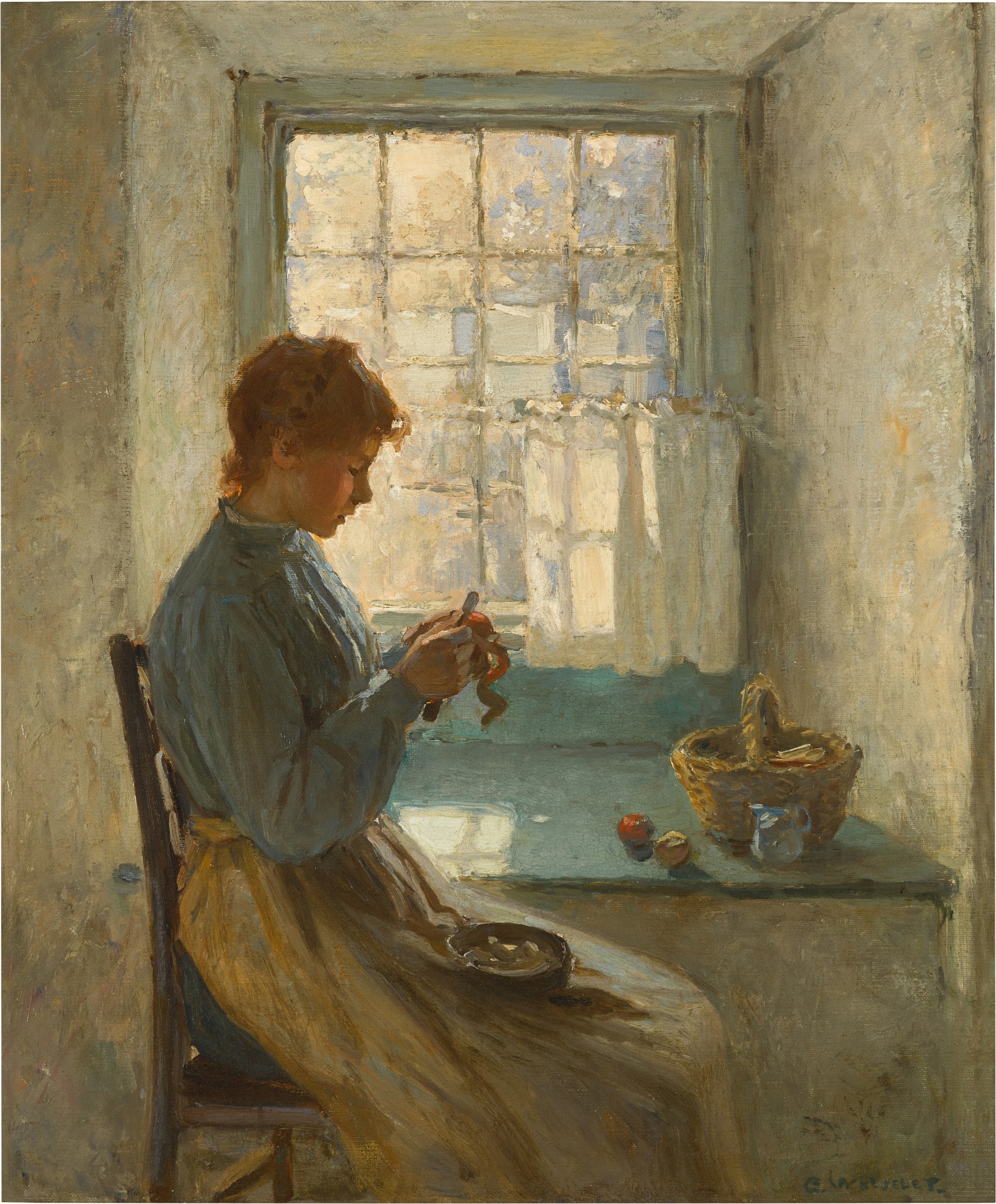
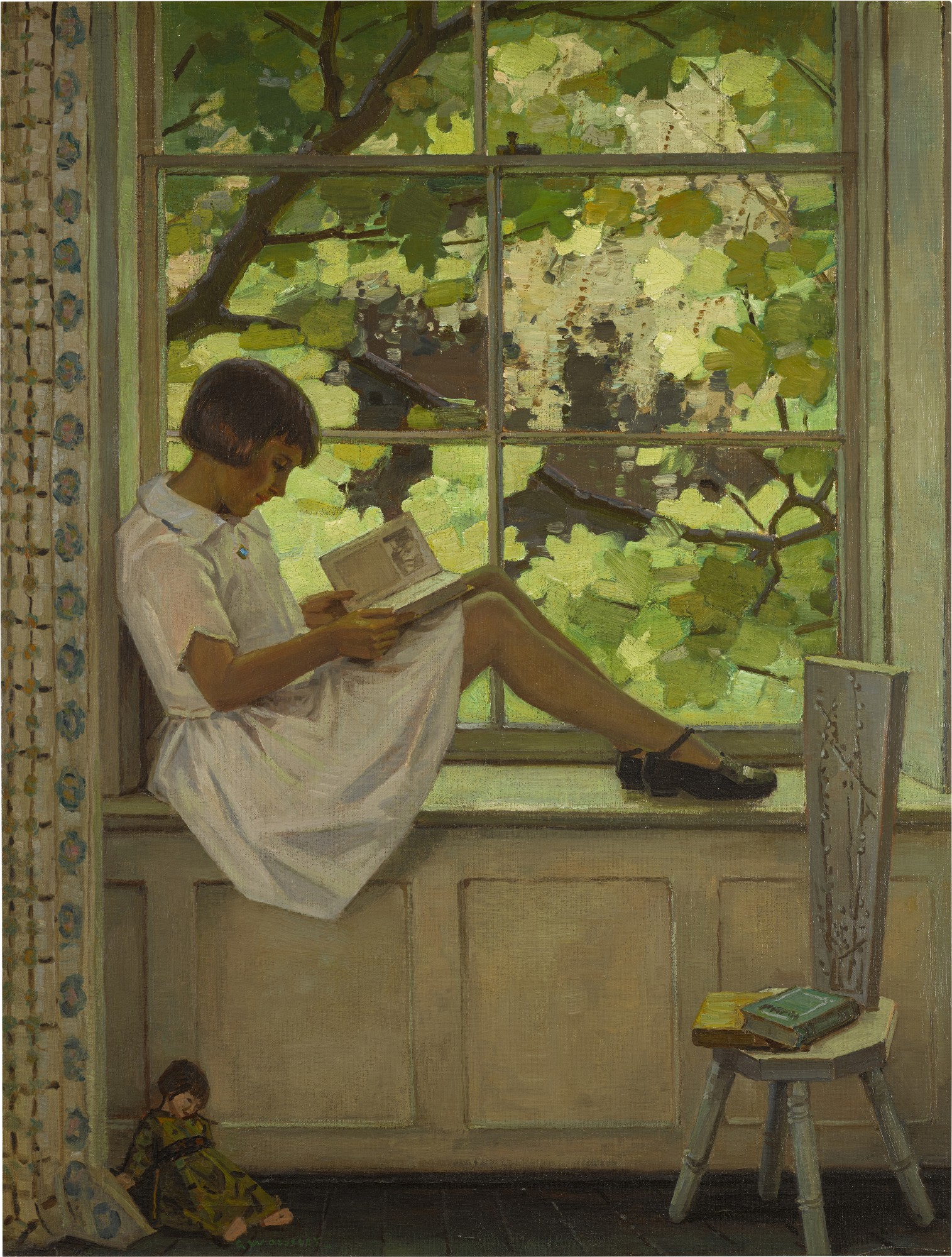
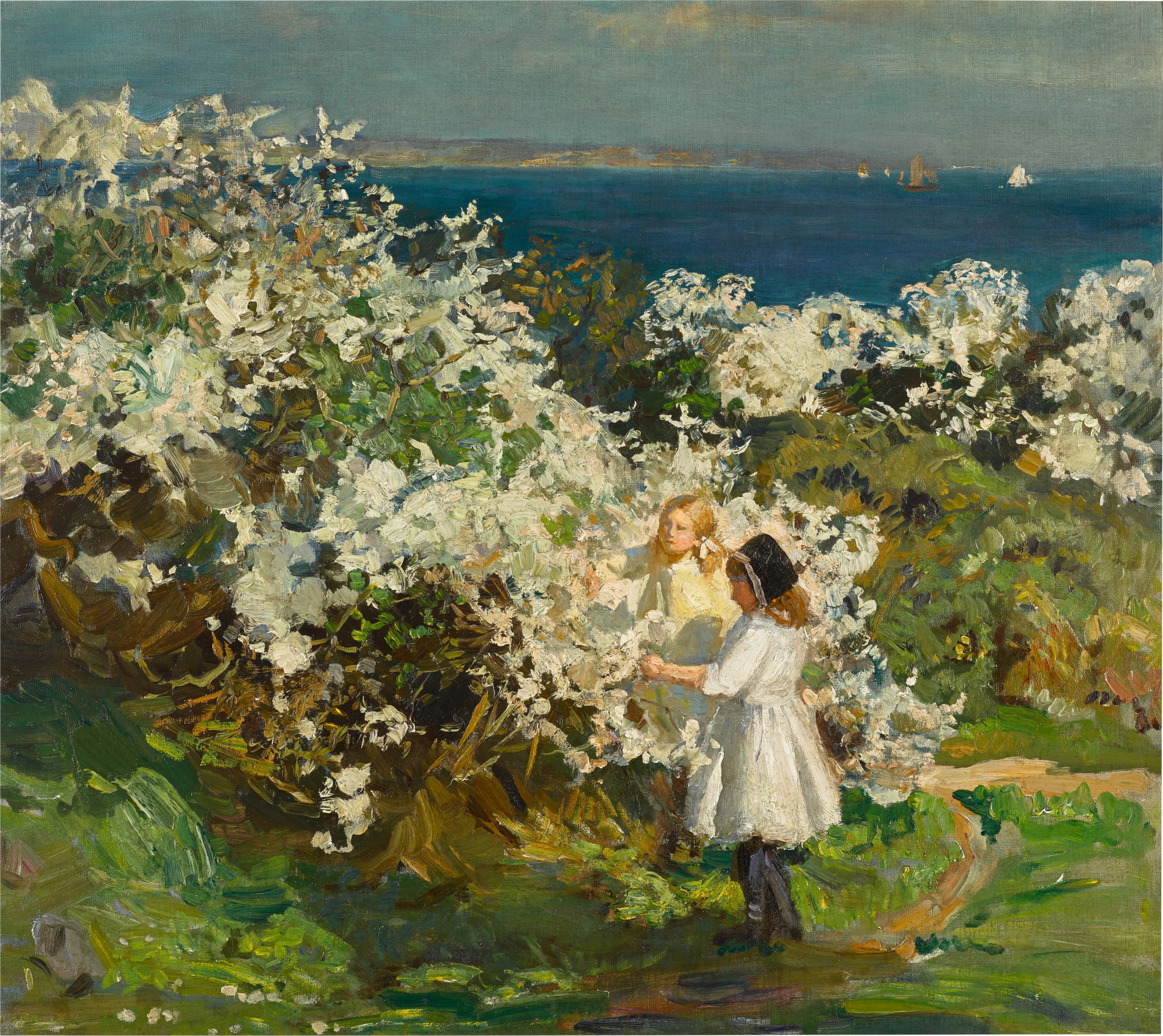
There is a particular quality of British coastal light that painters have chased for centuries, the kind that arrives sideways through a salt washed window or filters through apple blossom in a way that makes the ordinary feel charged with meaning. Garnet Ruskin Wolseley has spent a career learning to catch that light on canvas, and the results are works of genuine emotional intelligence. With a small but quietly arresting body of painting now available through The Collection, Wolseley is drawing the attention of collectors who understand that restraint and sensitivity are not weaknesses but rather the most demanding of artistic virtues. The name itself is a small story in British culture. Garnet Ruskin Wolseley carries the legacies of two very different Victorian figures embedded in it: Field Marshal Garnet Wolseley, the model for Gilbert and Sullivan's very model of a modern major general, and John Ruskin, the great critic and champion of beauty in everyday life. Whether by inheritance or by temperament, the painter has absorbed something of Ruskin's belief that close looking at the natural world is both a moral and an aesthetic act. That sensibility runs through every canvas, in the tender attention paid to a figure at a windowsill, in the careful rendering of fruit gathered in a kitchen, in the wide sweep of a Cornish bay seen through flowering branches. Wolseley belongs to a tradition of British painters for whom landscape and domestic life are not separate territories but continuous ones. The artistic formation that shaped this vision draws on the long lineage of British colourists, from the intimist warmth of Gwen John to the more expansive chromatic ambitions of the St Ives School. Cornwall, and specifically the extraordinary light around Mount's Bay in the far west of the county, appears to have been a formative and enduring presence. Mount's Bay, with its wide arc of water, the distant profile of St Michael's Mount, and the particular clarity of the Penwith sky, has served as a touchstone for generations of painters seeking a landscape that insists on colour as a primary language. What distinguishes Wolseley's practice from straightforward landscape or figurative painting is the way it positions itself at the edge of abstraction. The artist engages with principles associated with Colour Field painting, a movement that took hold in mid twentieth century America through figures such as Mark Rothko, Helen Frankenthaler, and Morris Louis, but translates those principles into something distinctly and unself consciously English. Where the American Colour Field painters tended toward the monumental and the metaphysical, Wolseley works in a register that is more intimate and more grounded in observed experience. The result is a body of work that feels genuinely original: neither purely representational nor purely abstract, but hovering in the productive space between the two. Three paintings available through The Collection offer an ideal introduction to this practice. Peeling Apples, rendered in oil on canvas, belongs to a venerable tradition of kitchen table still life that stretches back through Chardin, but Wolseley brings to it a chromatic looseness that lifts it free of mere documentation. The greens and golds of the fruit dissolve slightly at their edges, as if the act of attention itself has caused them to tremble. Reading on the Windowsill is perhaps the most tender of the three, a figure absorbed in a book, light coming from outside, the world held temporarily at bay by the private act of reading. It is the kind of painting that reminds you why oil on canvas has survived every technological disruption: no medium catches the quality of indoor afternoon light with quite the same warmth. Picking Blossom over Mount's Bay is the most expansive of the group, reaching outward to that beloved Cornish panorama while keeping its attention anchored to the intimate gesture of a hand among flowers. The bay in the distance is not a backdrop but a participant, its blue weight giving the foreground blossoms their full meaning. For collectors, Wolseley represents a particularly compelling proposition. The work sits at a point of intersection that is historically significant and presently undervalued, bringing together British figurative tradition and the chromatic ambitions of mid century abstraction in a way that has strong precedent among collected artists of the last hundred years. Collectors who came early to painters working in comparable territory, such as Peter Lanyon, John Tunnard, or the later work of Patrick Heron, found themselves holding work that not only gave daily pleasure but appreciated substantially as critical consensus caught up with private enthusiasm. Wolseley's paintings have the quality that serious collectors learn to recognise over time: they change with the light in a room, they reveal new things on the twentieth viewing that were invisible on the first, and they generate a kind of quiet loyalty in the people who live with them. The relationship between Wolseley's practice and the broader history of British abstract and semi abstract painting is worth dwelling on for a moment. The St Ives School, centred on that remarkable concentration of talent in Cornwall from the 1940s onward, established a precedent for work that is simultaneously rooted in a specific landscape and reaching toward universal chromatic and formal principles. Artists including Barbara Hepworth, Ben Nicholson, Roger Hilton, and Terry Frost made St Ives and the surrounding landscape into one of the most generative artistic territories in post war British culture. Wolseley's engagement with Mount's Bay and the Penwith peninsula places this work squarely within that lineage, while the domestic subjects, the windowsills, the fruit, the figures absorbed in private tasks, add a dimension of intimist warmth that is entirely the artist's own. What ultimately makes Garnet Ruskin Wolseley a painter worth knowing and worth collecting is the quality of conviction that comes through in every canvas. These are not paintings made to fill a brief or satisfy a formula. They are the record of sustained attention paid to specific moments of light and life in a particular corner of the world, rendered with enough technical assurance to make that attention transmissible. In an art world that sometimes privileges spectacle and scale, there is something genuinely radical about a painter who insists that a woman reading, a bowl of apples, and a view across a Cornish bay are subjects adequate to the full resources of oil painting. Ruskin himself would have approved.