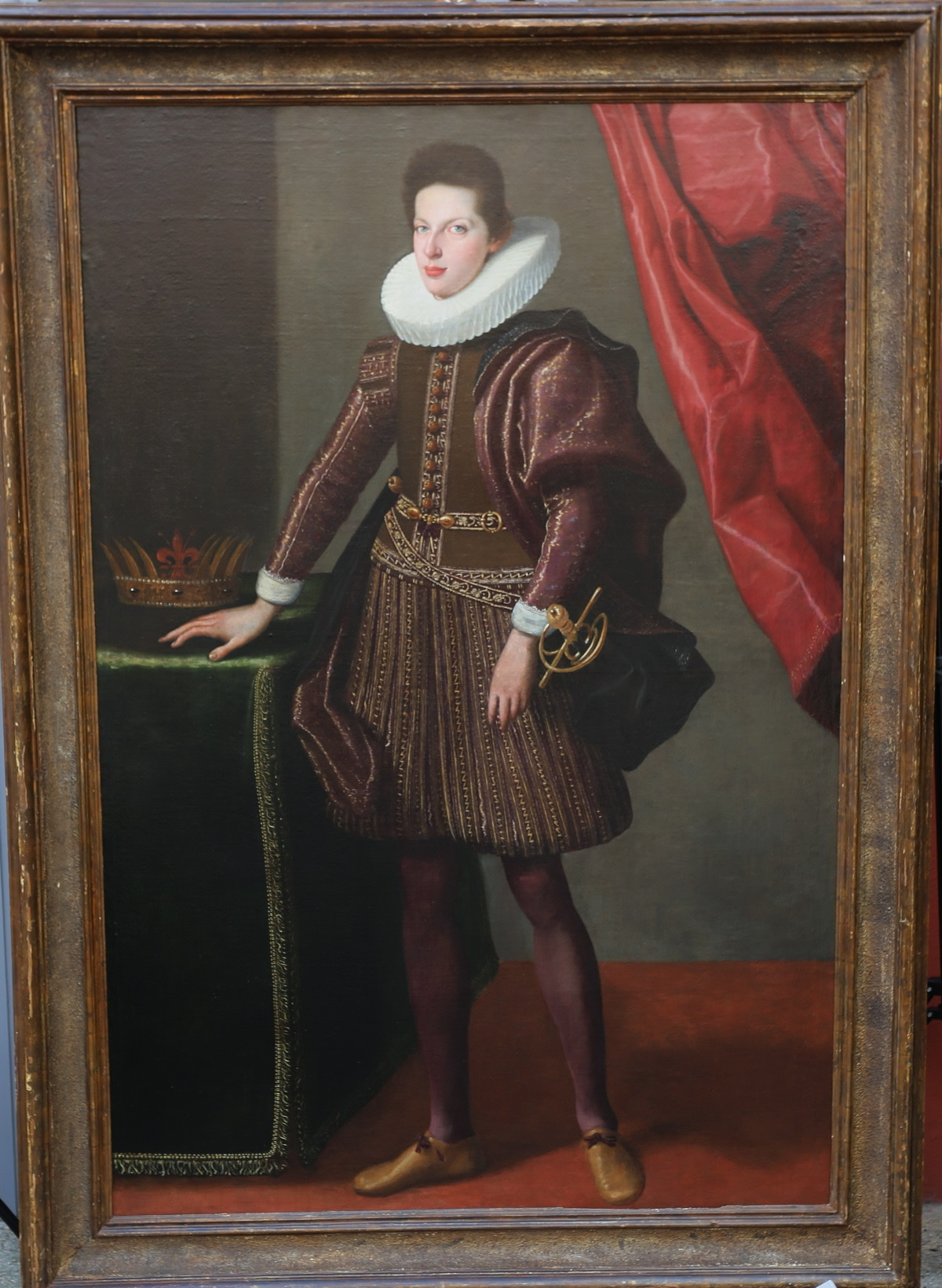
Cristofano Allori
1
Works
1
Followers
Cristofano Allori was a prominent Florentine Baroque painter who worked during the late Renaissance and early Baroque periods. Born into an artistic family as the son of Alessandro Allori and grandson of Bronzino, he inherited a rich artistic legacy but developed his own distinctive style characterized by refined technique, dramatic intensity, and psychological depth. Allori trained in his father's workshop and was deeply influenced by the Florentine Mannerist tradition, though he evolved toward a more naturalistic and emotionally charged Baroque sensibility that reflected the broader artistic changes of his era. Allori is best known for his masterpiece "Judith with the Head of Holofernes" (circa 1613), housed in the Palazzo Pitti in Florence. This iconic painting depicts the biblical heroine holding the severed head of the Assyrian general, and according to tradition, Allori used his former lover, La Mazzafirra, as the model for Judith, himself for Holofernes, and La Mazzafirra's mother for the maidservant, transforming the work into a deeply personal meditation on love, betrayal, and revenge. The painting exemplifies his mastery of color, chiaroscuro, and psychological penetration, combining the elegance of Mannerism with the dramatic naturalism of the emerging Baroque style. His other notable works include religious paintings, portraits, and mythological scenes that demonstrate his technical virtuosity and ability to infuse traditional subjects with emotional complexity. As one of the leading painters in early 17th-century Florence, Allori played a significant role in the transition from Mannerism to Baroque aesthetics in Tuscan art. His works were highly sought after by the Medici court and other aristocratic patrons, and he maintained a successful workshop that trained numerous students. Despite his relatively short life, Allori's influence on Florentine painting was substantial, and his "Judith" remains one of the most celebrated and analyzed paintings of the Italian Baroque period, admired for its technical brilliance, dramatic composition, and the fascinating biographical narrative embedded within it.
Collectors
Artists in conversation