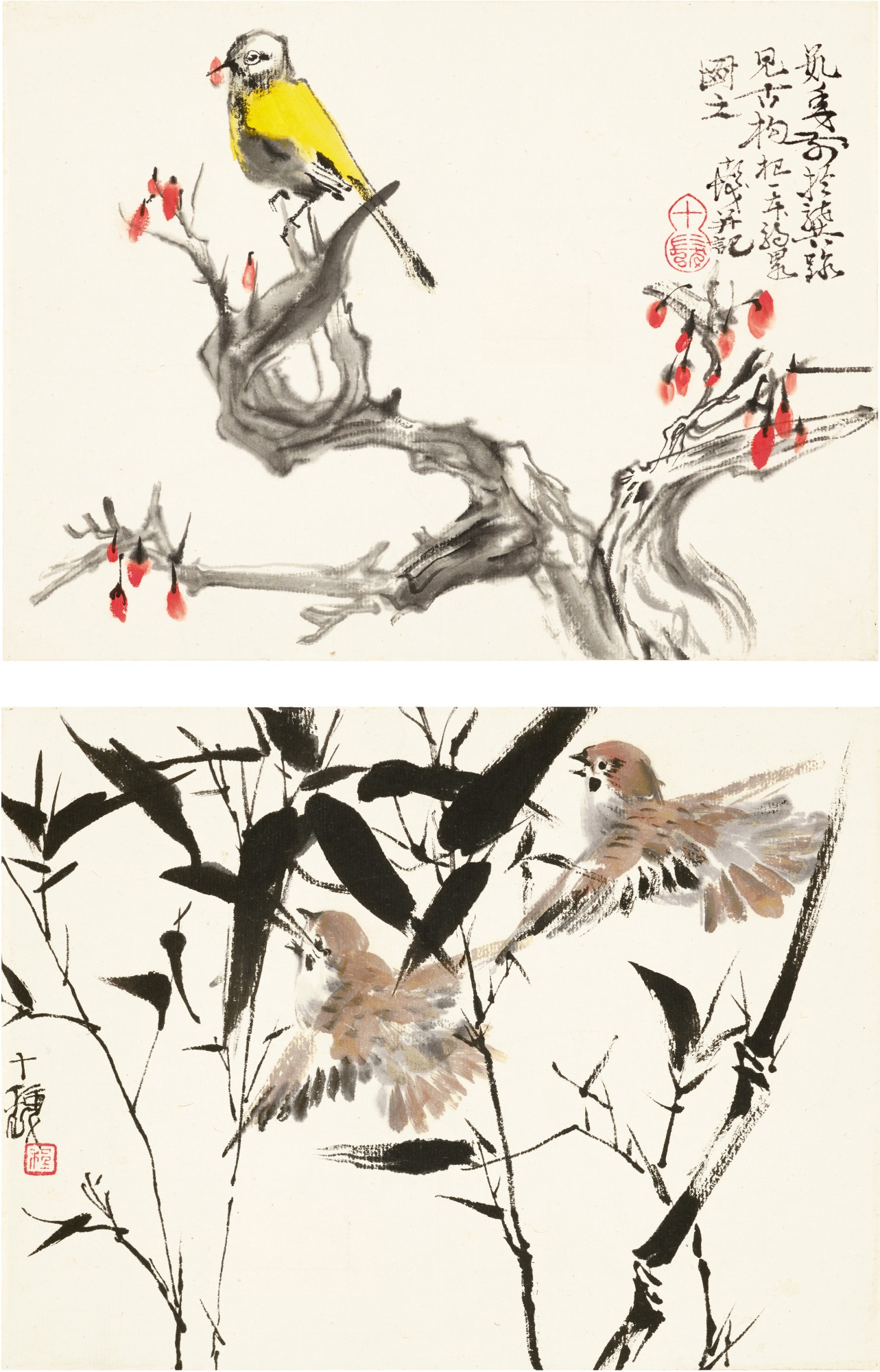
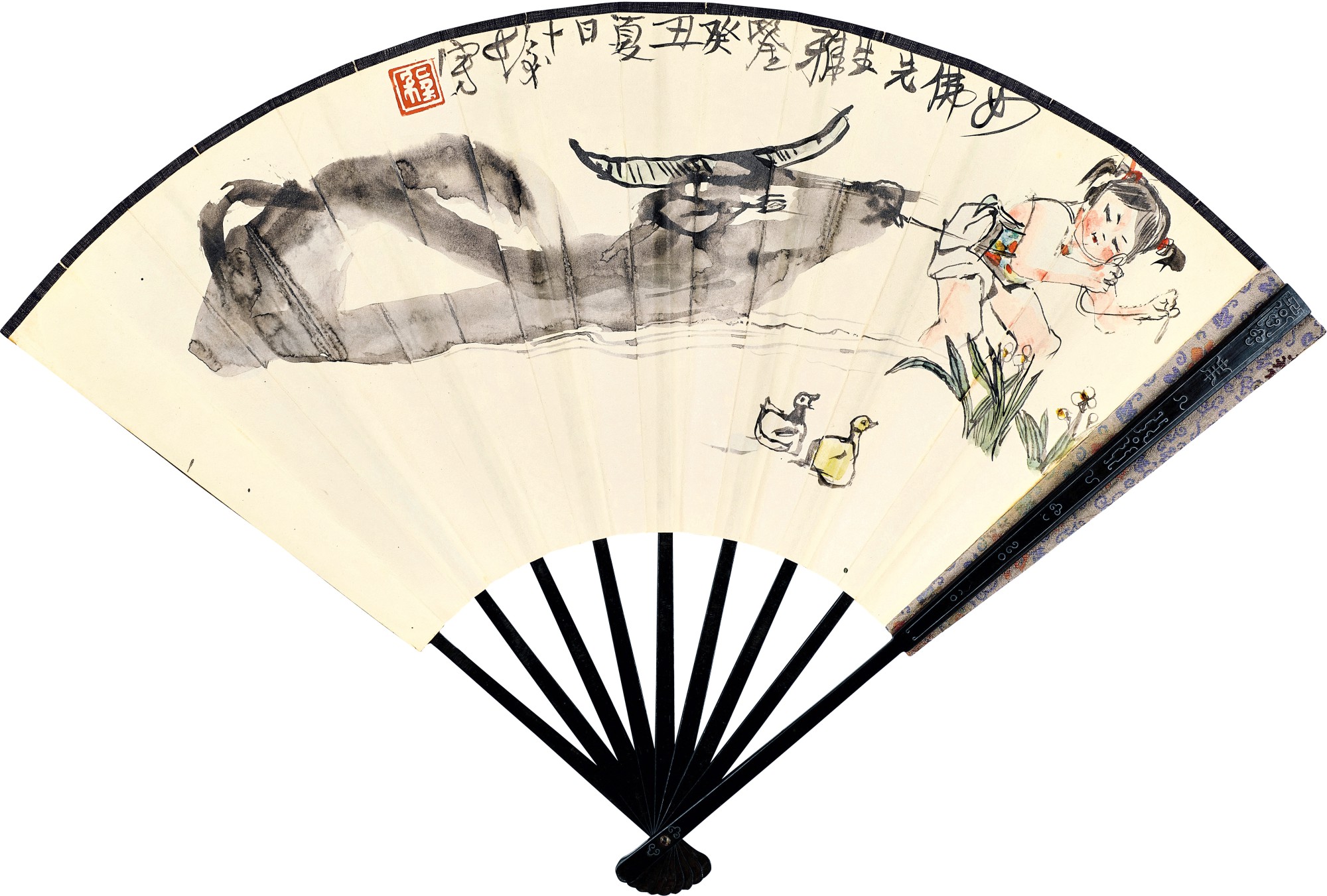
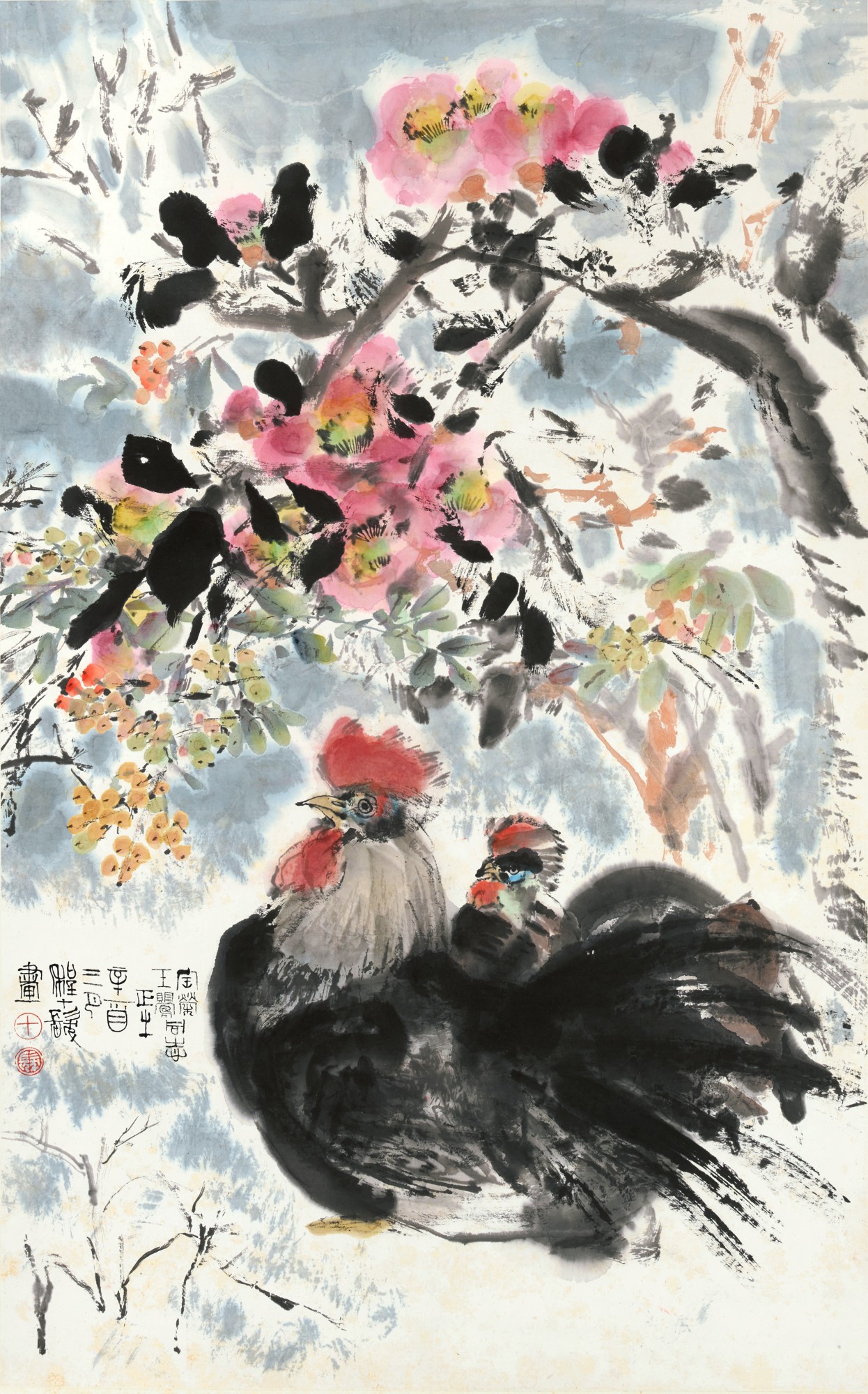
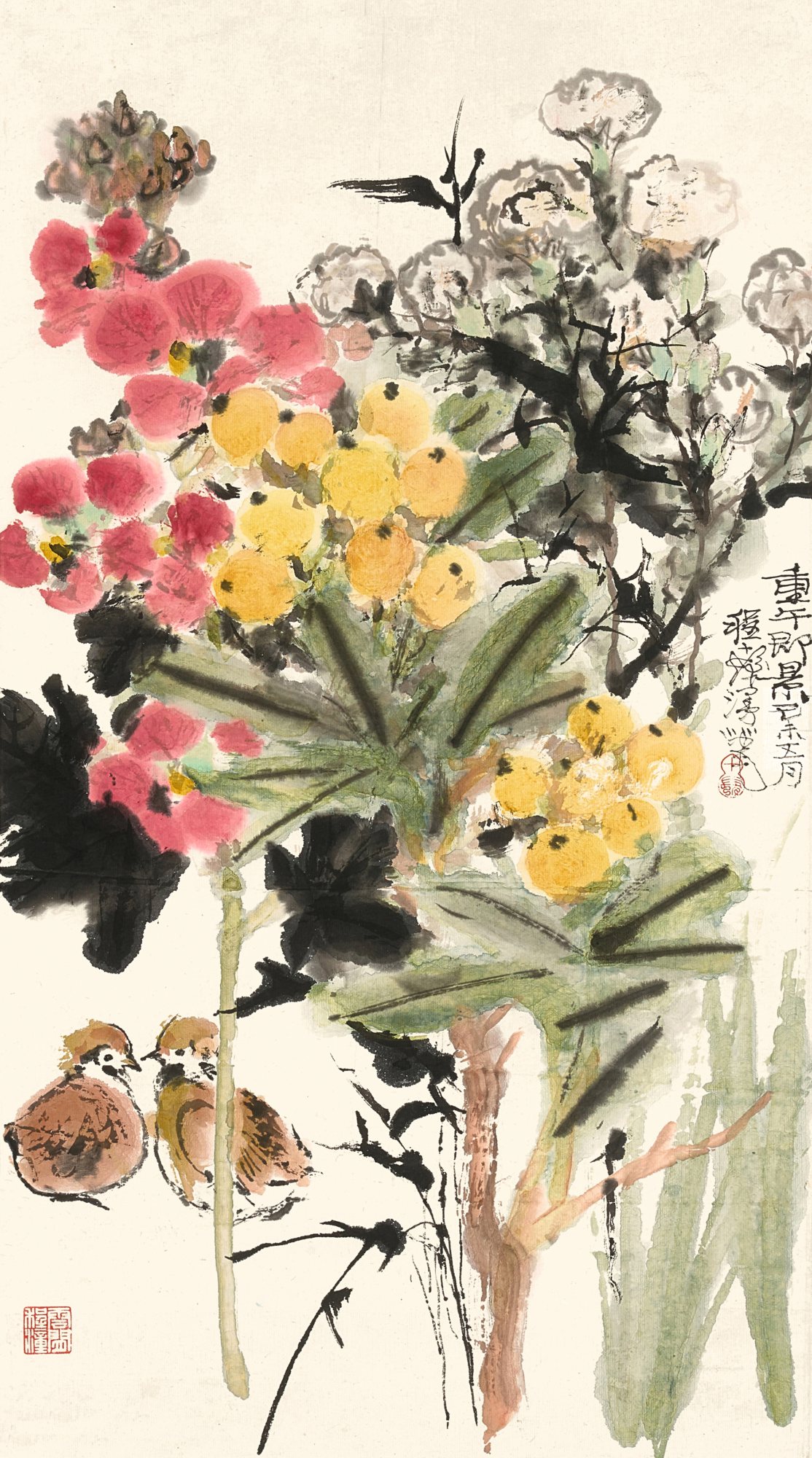
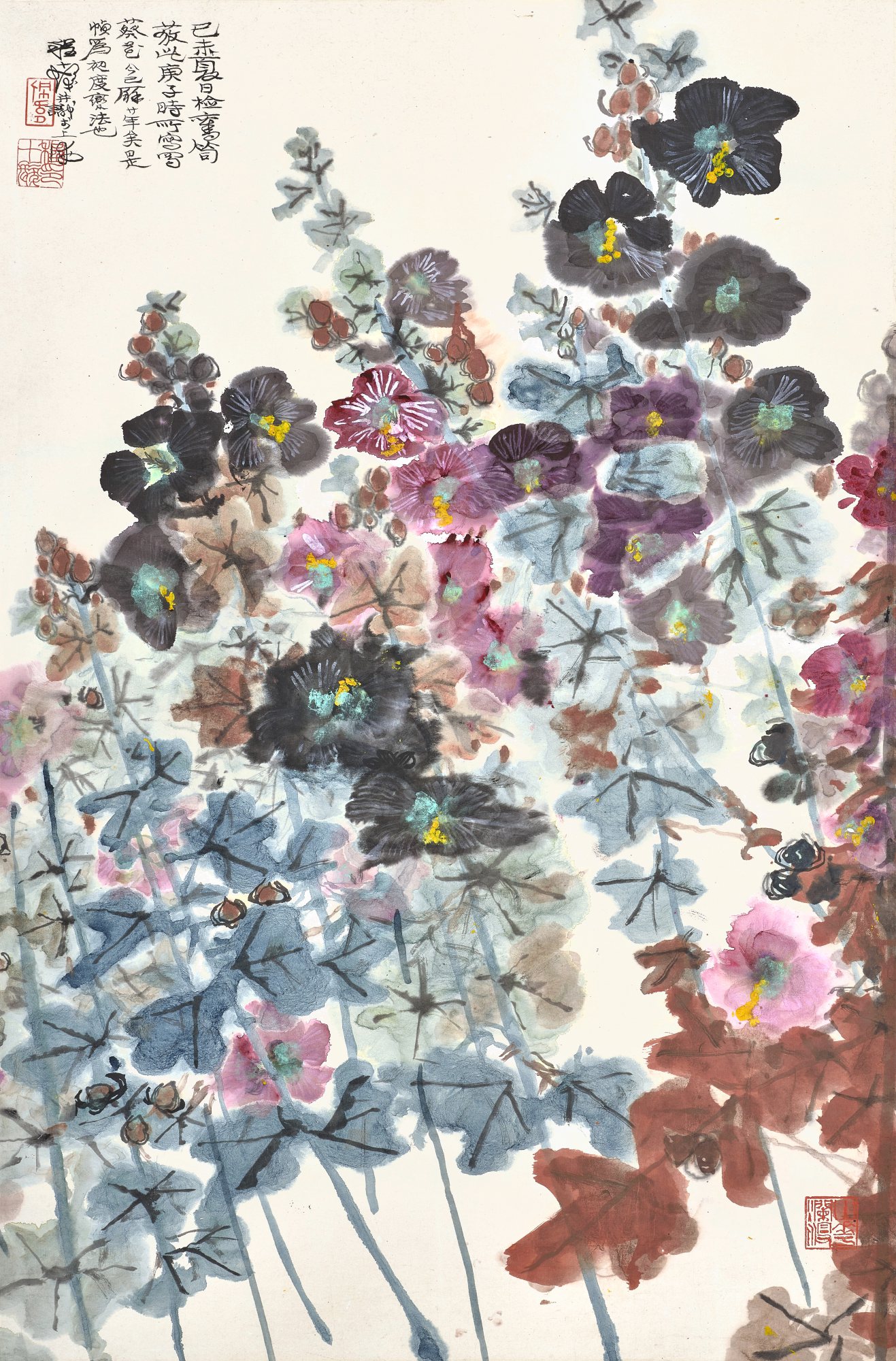
There is a moment, standing before a Cheng Shifa painting, when the boundary between the ancient and the immediate dissolves entirely. His brushwork carries the weight of centuries of Chinese pictorial tradition yet feels as alive and spontaneous as a conversation overheard in a Shanghai lane. It is this quality, at once deeply rooted and utterly present, that has secured his place among the most beloved Chinese painters of the twentieth century, and that continues to draw collectors and institutions back to his work with renewed devotion. Cheng Shifa was born in 1921 in Songjiang, a district southwest of Shanghai with a long history of scholarly culture and artistic refinement. From an early age he absorbed the classical traditions of Chinese painting and calligraphy, studying under the guidance of masters who held firm to the values of the literati tradition. His early formation was steeped in the works of the great painters of the Ming and Qing dynasties, and this grounding gave him a technical foundation of rare depth. Yet Shanghai itself, with its cosmopolitan energy and its restless appetite for the new, also pressed upon his imagination and widened his sense of what painting could do. He studied formally at the Shanghai Academy of Chinese Painting, where he deepened his command of figure painting, landscape, and the bird and flower genre that would become one of his defining modes of expression. His teachers included figures who had themselves trained in the classical tradition, and Cheng proved an exceptional student, absorbing not merely technique but the philosophical disposition that underlies the best Chinese painting: a belief that the artist's inner cultivation and the outward form of the work are inseparable. By the time he emerged as a mature painter in the 1950s, he had already developed a personal language that set him apart from his contemporaries. Cheng Shifa's breakthrough came partly through his work as an illustrator, a discipline he approached with the same seriousness he brought to painting on silk and paper. His illustrations for classical Chinese literary texts, including works drawn from folk tales and minority culture narratives, brought him widespread recognition and demonstrated his extraordinary gift for capturing the human figure with warmth, economy, and psychological presence. His figures, whether a woman turning in a gentle wind or a farmer pausing beside a water buffalo, seem to possess an inner life that extends beyond the edges of the picture plane. This capacity for narrative suggestion within a minimal, lyrical visual language was something entirely his own. As a painter of birds and flowers, Cheng Shifa drew on the rich legacy of the xieyi tradition, the freehand or expressive mode of Chinese painting that prizes vitality and spirit over meticulous description. His roosters and hens, his plum blossoms and chrysanthemums, his river birds and flowering branches are painted with a looseness and joy that seem effortless yet reveal, on closer inspection, an almost architectural control of composition and tonal value. Works such as his celebrated bird and flower albums demonstrate how he could fill a single leaf with an entire world: a branch weighted with blooms, a bird caught mid movement, a sense of seasonal light that feels entirely specific. The album format suited him particularly well, allowing him to modulate mood and subject across a sequence of leaves in the way a poet moves through stanzas. The works available through The Collection offer a generous window into the full breadth of his practice. The album known as Celebration of Vitality, comprising ten leaves of ink and colour on paper, is among the most significant groupings of his bird and flower imagery to come to market in recent years. The hanging scroll Blooming Flowers and Birds, known in Chinese as 重午即景, reflects his habit of rooting imagery in specific seasonal or calendrical moments, the fifth day of the fifth lunar month in this instance, a date associated with vitality and protective ritual. His fan painting Leading an Ox by the Pond reveals his mastery of figure and landscape composition within the compressed and elegant constraints of the folding fan format, a format that demands both discipline and spontaneity in equal measure. From a collecting perspective, Cheng Shifa occupies a position of considerable esteem in the market for modern Chinese painting. His works have been sought after at major auction houses in Hong Kong, Beijing, and Shanghai, where albums and hanging scrolls in good condition consistently attract serious bidding from both institutional and private collectors. What distinguishes his work in the market is the combination of scholarly pedigree, decorative beauty, and emotional directness: his paintings give pleasure at first glance and reward sustained attention. Collectors drawn to the Shanghai school of modern Chinese painting, and to figures such as Wu Changshuo, Ren Bonian, and the later masters who carried that tradition forward, will find in Cheng Shifa a natural and deeply satisfying point of focus. His work also appeals to collectors who prize illustration and graphic art as a serious fine art practice, given the central role that illustration played in his career and identity. Within the broader arc of twentieth century Chinese art, Cheng Shifa stands alongside painters such as Lin Fengmian, Zhang Daqian, and Li Keran as one of the figures who navigated the pressures and possibilities of the modern era without sacrificing the integrity of the classical tradition. Where some of his contemporaries moved toward radical experimentation or ideological subject matter, Cheng remained committed to the expressive possibilities of ink, colour, and the human and natural world as he encountered them directly. This fidelity was not conservatism but confidence: a deep trust in the capacity of the tradition he had inherited to speak meaningfully to the present. Cheng Shifa passed away in 2007, leaving behind a body of work that spans painting, illustration, calligraphy, and design across more than six decades of creative life. His legacy endures in the collections of major museums in China and internationally, in the continuing influence he exerts on younger Chinese painters, and in the sustained enthusiasm of collectors who recognise in his work a rare combination of mastery and warmth. To own a Cheng Shifa is to hold something that connects the great traditions of Chinese visual culture to the living world with grace, intelligence, and an undiminished sense of joy.