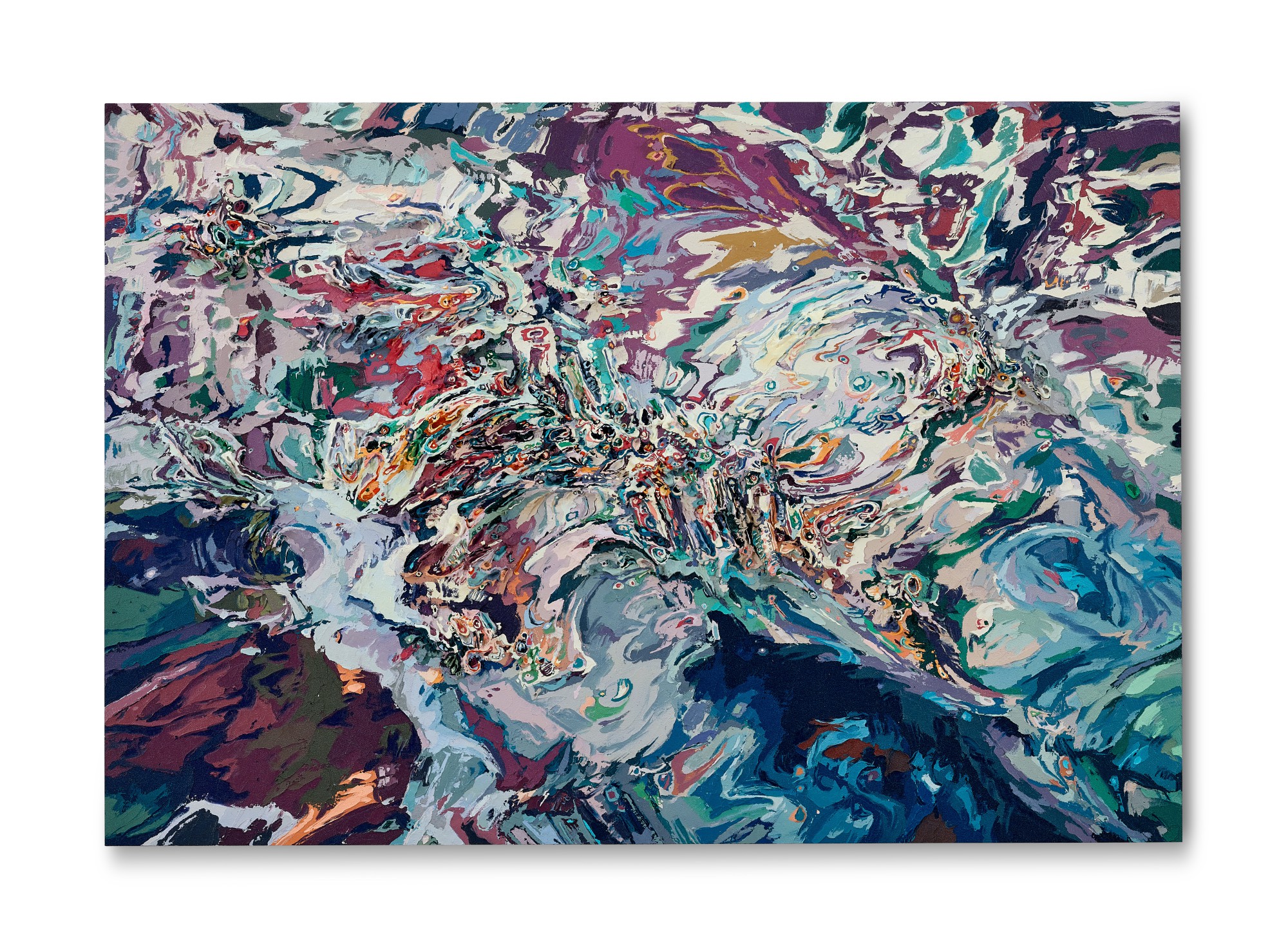
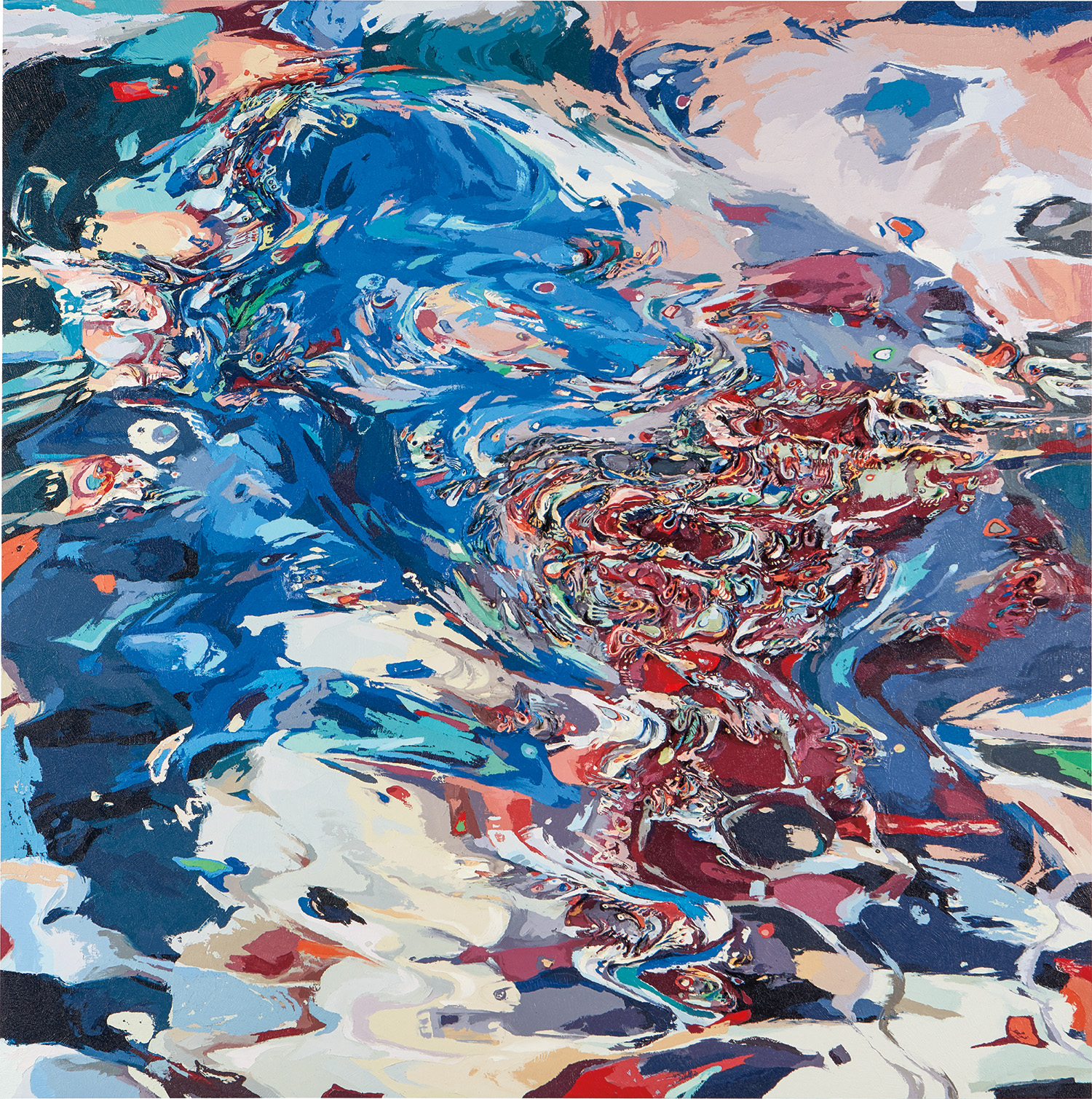
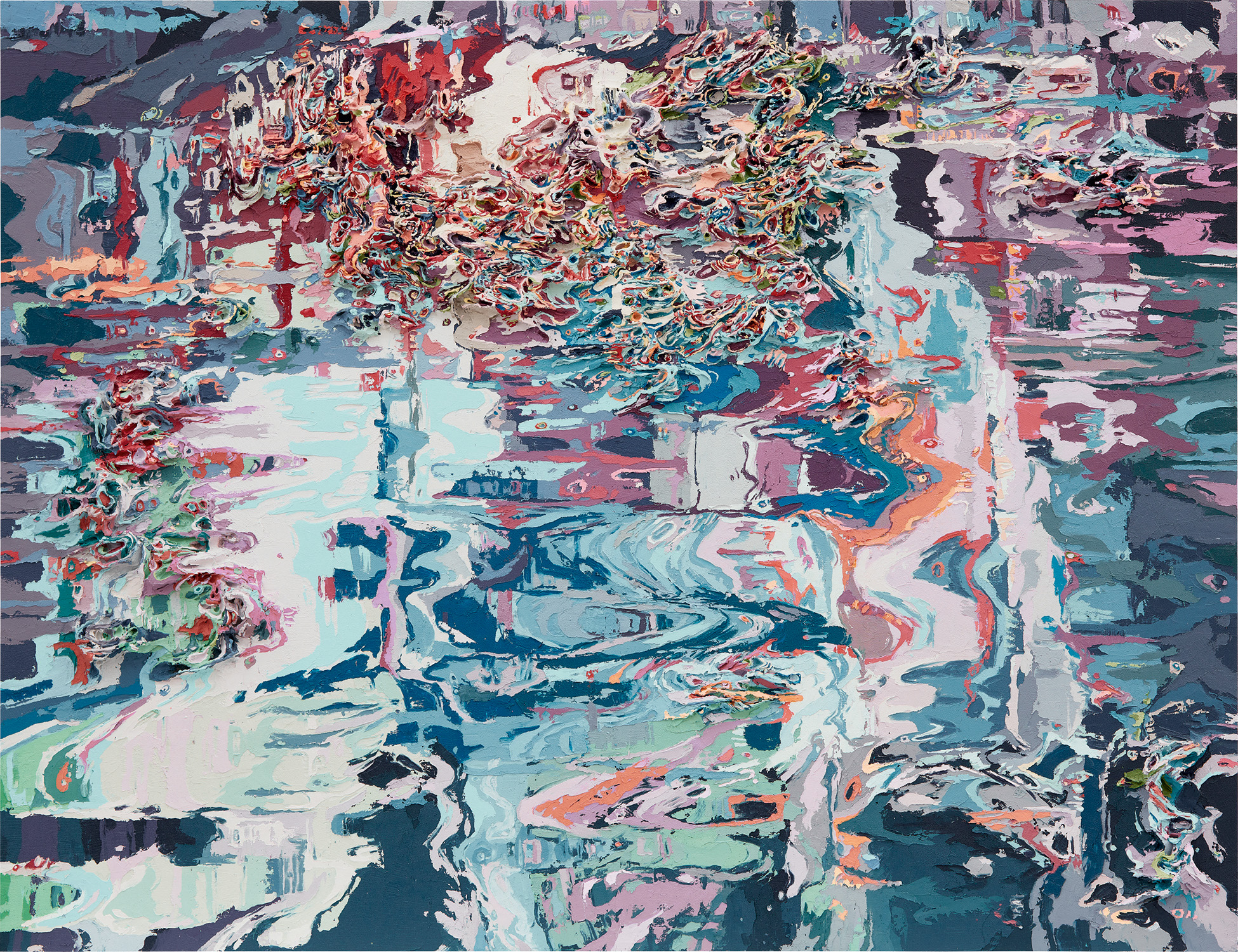
There is a particular kind of painter whose work arrives in a room before you fully understand it, whose canvases seem to hold their breath until you lean in close enough to hear them. Anne Kagioka Rigoulet is such a painter. In recent seasons, her oil and mixed media panels have drawn sustained attention from collectors and curators drawn to the question at the heart of her practice: what does it mean to carry two cultures inside a single body, and how does that doubling become not a tension but a gift. Her work has appeared at major auction houses and in gallery presentations across Europe, and the momentum around her name continues to build in a market that increasingly prizes artists who refuse easy categorization. Rigoulet was born into a heritage that is itself a kind of conversation across oceans. French and Japanese in equal measure, she grew up navigating the aesthetic, linguistic, and philosophical inheritances of both traditions. This is not merely biographical color. It is the structural fact around which her entire artistic vision organizes itself. From an early age she would have encountered the radical differences between Western oil painting traditions, with their emphasis on pictorial depth and narrative gesture, and the Japanese sensibility rooted in surface, emptiness, restraint, and the profound meaning of what is left unsaid. Rather than choosing between these inheritances, she spent her formative years learning to hold them simultaneously. Her development as an artist reflects a serious engagement with the history of painting on both sides of her heritage. The gestural tradition of postwar European painting, the lyrical abstraction that flows from painters like Nicolas de Staël and Sam Francis, is legible in her work alongside something quieter and more considered, an attention to the panel as a field of accumulated time rather than simply a support for image. She works in oil and mixed media, a combination that allows her to build surfaces of genuine complexity, surfaces that reward slow looking and reveal different aspects depending on the quality of the light and the patience of the viewer. Her technique involves layering in a way that makes the history of each painting visible in its finished state. The series of works titled with the prefix Reflection, of which Reflection h 7 from 2016 and the later Reflection K 49 are among the most compelling examples, establishes the conceptual and visual vocabulary that defines her mature practice. These are not mirrors in any simple sense. They are meditations on the nature of seeing oneself through more than one cultural lens, on the way identity is constructed through accumulation and revision rather than fixed declaration. The panels themselves behave like memory: certain passages are dense and layered, others are scraped back or allowed to breathe, and the overall effect is of something perpetually in the process of becoming rather than arrived at. The inclusion of Japanese characters in the titling of works such as Reflection K 49, where the Japanese reads as an equivalent rather than a translation, underscores the bilingual intelligence at work throughout her practice. Figure k h 7, completed in 2020, shows a further evolution in Rigoulet's engagement with the human presence within abstraction. The figure in her work is never quite resolved into full representation, never allowed to settle into portraiture, but it is also never fully dissolved into pure abstraction. This liminal quality is entirely intentional and constitutes one of the most distinctive aspects of her vision. The figure hovers, suggests, implies, in a manner that recalls the approach of painters such as Marlene Dumas or Maria Lassnig while remaining thoroughly its own thing. There is an emotional directness to these works that is genuinely affecting, a sense that something true and personal is being communicated through a visual language that the artist has constructed herself rather than borrowed wholesale from any existing tradition. For collectors, Rigoulet's work represents a compelling proposition that extends well beyond the biographical interest of her dual cultural heritage. The physical quality of her panels is exceptional, and the mixed media approach she employs means that each work is genuinely unique in its material constitution. The scale of her works tends toward the intimate without ever feeling modest in ambition, making them suitable for serious private collections where sustained, close engagement with individual works is possible. Collectors who have been drawn to the generation of European painters working in the tradition of lyrical abstraction, or to artists exploring identity and memory through the materiality of paint itself, will find in Rigoulet a figure who speaks directly to those interests while opening new territory. Within the broader context of contemporary painting, Rigoulet occupies a position that connects several important conversations happening simultaneously. The renewed critical and market interest in painting that takes cultural hybridity as both subject and method, a category that includes artists from Hurvin Anderson to Cecily Brown to Lui Liu, places her in excellent company. The specific combination of French painterly tradition and Japanese aesthetic philosophy that informs her work also recalls, in different ways, the legacy of the Gutai movement and the cross cultural exchanges that characterized avant garde practice in the second half of the twentieth century. She is not a follower of any single lineage but a thoughtful inheritor of several, and that independence of position is increasingly recognized as a marker of lasting significance. The story of Anne Kagioka Rigoulet is still being written, which is precisely what makes this a rewarding moment to encounter her work and to follow her practice closely. She has established a visual language of genuine originality and depth, and the critical recognition now gathering around her name reflects a broader understanding that the most important painters of her generation are those who bring something irreducibly personal to the universal questions of painting. Memory, identity, belonging, the beauty of holding complexity without resolving it into simplicity: these are her subjects, and she addresses them with a seriousness and a painterly intelligence that demands and repays the fullest attention a collector can bring.