Wire Sculpture
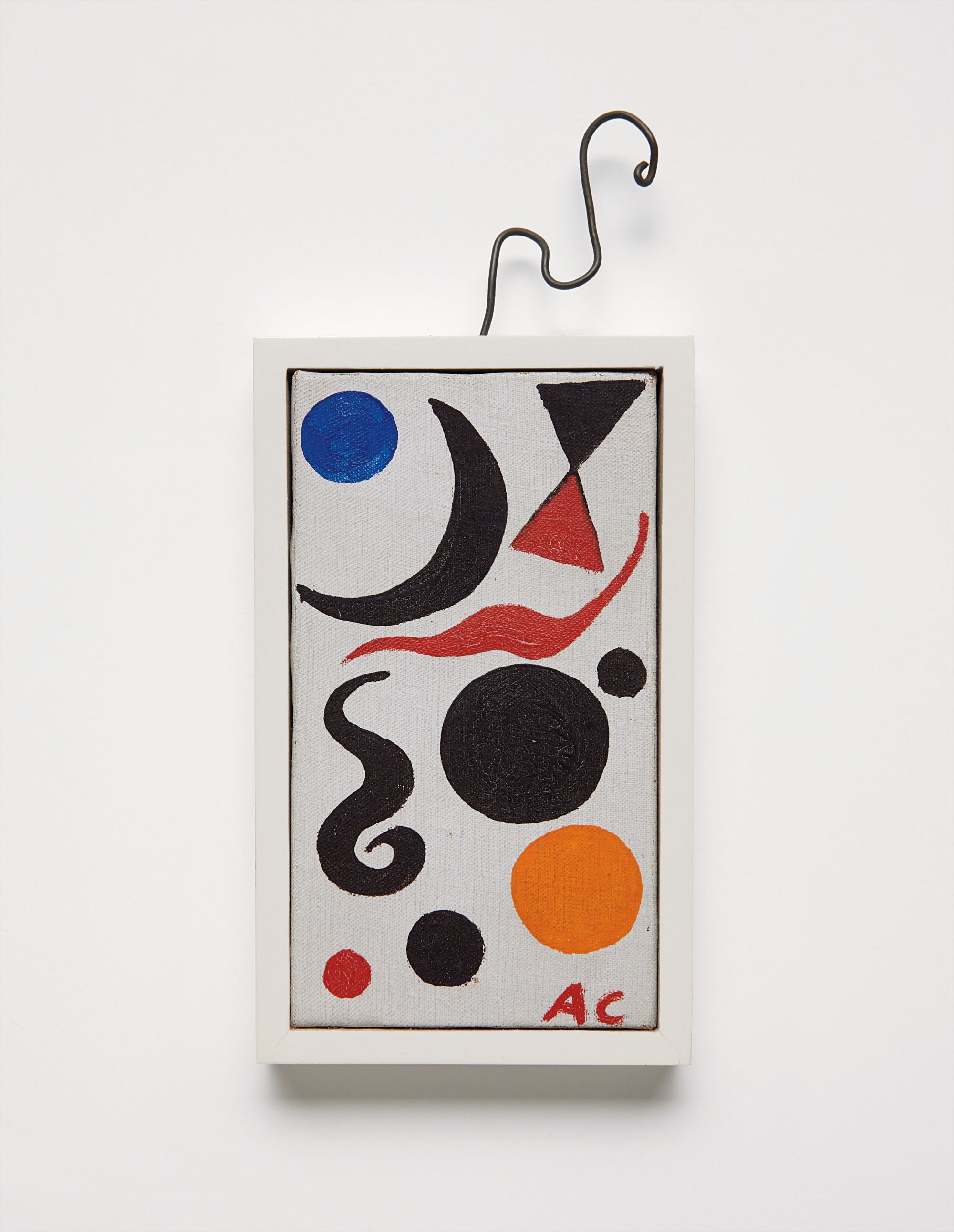
Alexander Calder
Composition with Blue Sphere

The Art of Nothing: Wire Bends Everything
There is something almost philosophical about wire sculpture. You take the most elemental of industrial materials, a line given physical form, and you draw in space. The result is an art that is simultaneously present and absent, solid and transparent, finished and forever in the act of becoming. It asks the eye to complete what the hand has left open, and in that invitation lies one of the more quietly radical propositions in modern art.
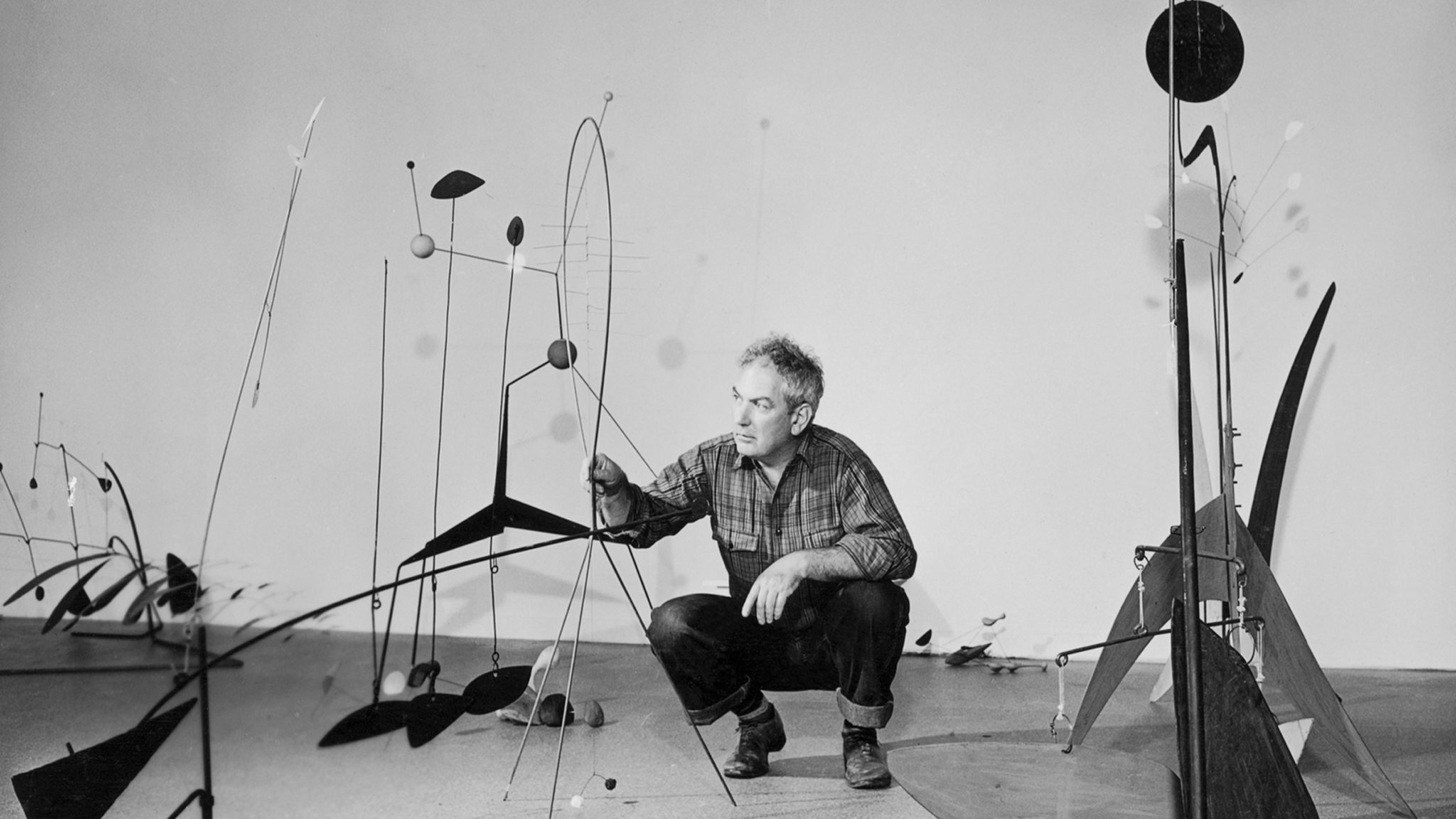
The story of wire as a serious sculptural medium really begins in the twentieth century, though artists had long understood metal's potential for delicacy. It was Alexander Calder who transformed that understanding into something unprecedented. Working in Paris in the late 1920s and early 1930s, Calder began fashioning portraits and circus figures from wire with a wit and lightness that had no real precedent. His Cirque Calder, the miniature performing circus he assembled and performed with beginning around 1927, used wire not merely as armature but as expressive line, capturing movement and personality through the most economical of means.
Alexander Calder
Composition with Blue Sphere
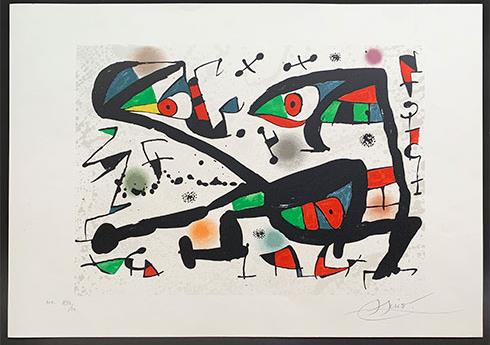
When he showed this work to artists including Joan Miró and Piet Mondrian, the response was one of genuine astonishment. Here was sculpture that felt like drawing, that moved through three dimensions the way a pencil moves across paper. Calder's wire portraits from this period, sparse renderings of figures like Josephine Baker, distilled a person to their essential gesture. The negative space around and through the wire was not emptiness but information.
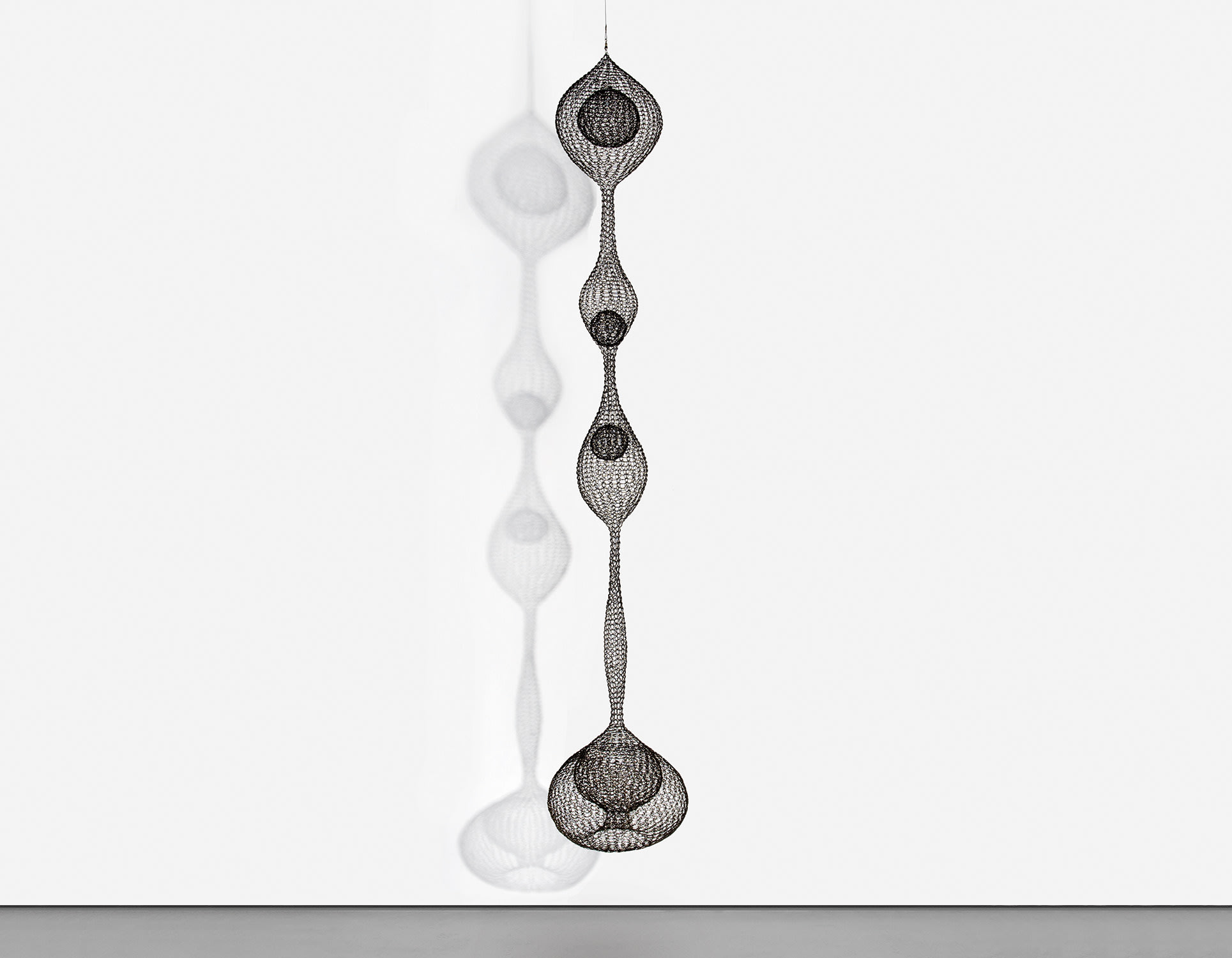
This insight, that what surrounds a sculptural form is as active as the form itself, became one of the defining contributions wire sculpture made to the broader language of modern art. It anticipated the spatial concerns that would occupy sculptors for decades. Ruth Asawa arrived at wire through a different path, one rooted in craft, community, and a deeply personal understanding of form. Studying at Black Mountain College in the late 1940s under Josef Albers, she encountered rigorous thinking about structure and material.
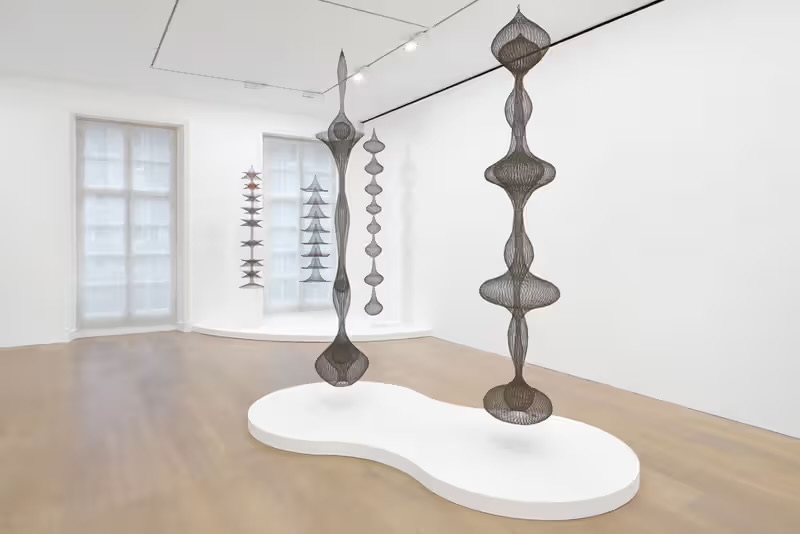
Ruth Asawa
Untitled
A visit to Mexico, where she observed basket weavers working with wire, led to her breakthrough technique of looping and interlacing wire into complex biomorphic forms. Her hanging woven wire sculptures, which she began developing in earnest in the early 1950s, appear to breathe. They are permeable objects, nested forms that contain interior volumes within exterior ones, each readable from every angle and entirely transformed by the quality of light falling through them. Asawa had a solo exhibition at the Peridot Gallery in New York in 1956, and the critical reception acknowledged that she was working in territory that felt genuinely new.
What makes Asawa's work so enduring is how it holds together seemingly opposed qualities. The sculptures are industrially made from a commercially produced material, and yet they feel organic, almost biological. They are labor intensive, hours of hand looping per piece, yet visually weightless. Her work connects the traditions of fiber and weaving to the ambitions of modernist abstraction in a way that felt ahead of its time in the 1950s and reads as prescient today, when the relationship between craft and fine art is one of the more actively reconsidered questions in the art world.
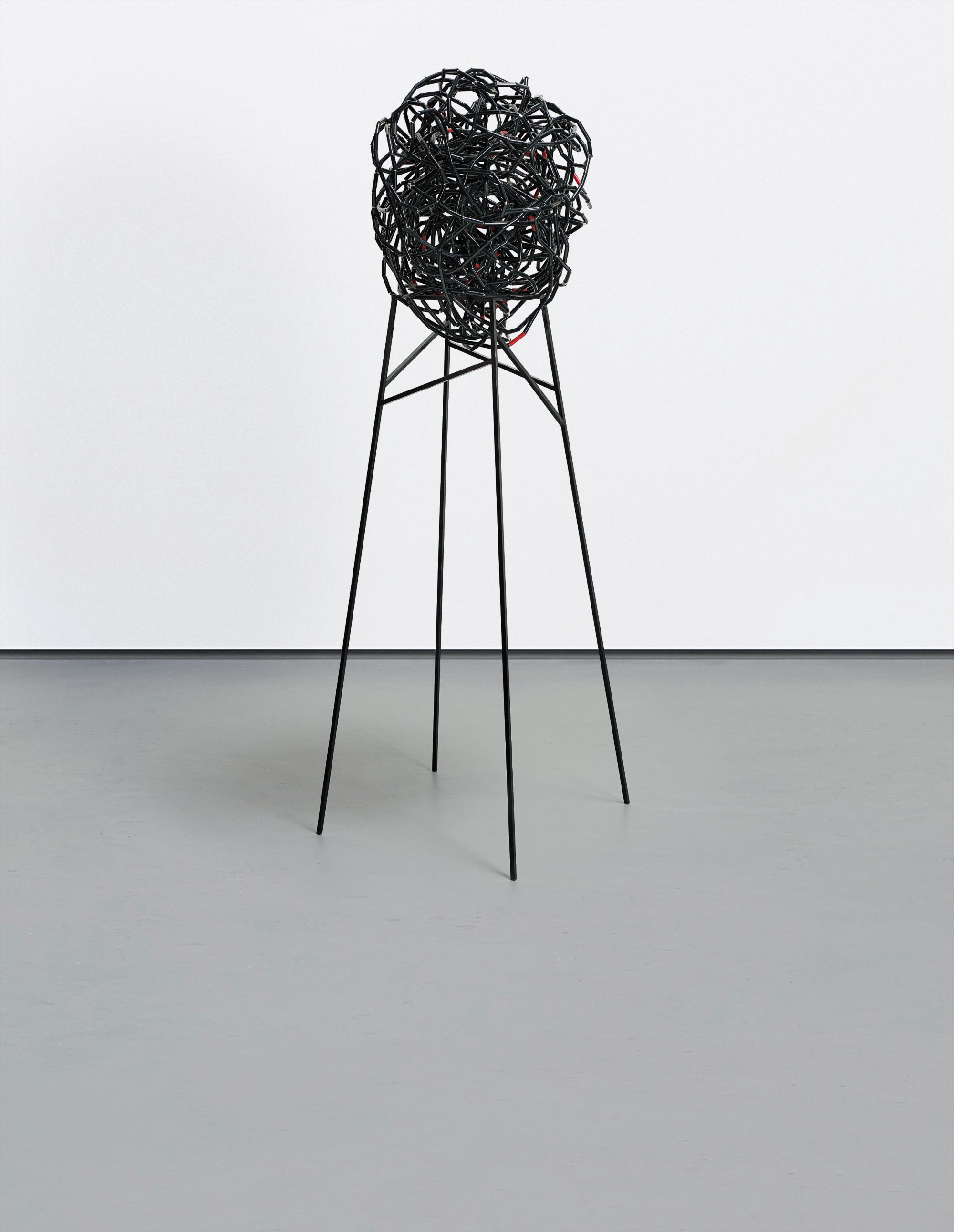
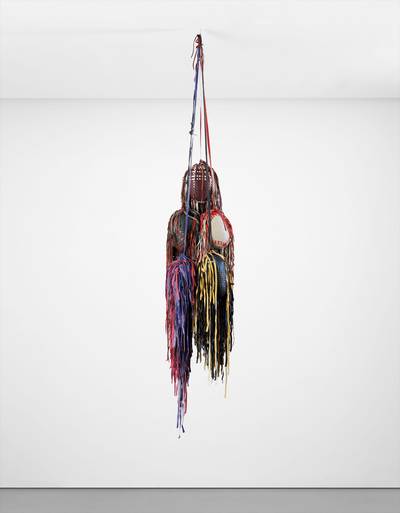
Eva Rothschild
Mr. Messy
The generations that followed took wire's conceptual possibilities in directions that Calder and Asawa could not have fully anticipated. Eva Rothschild, the Irish sculptor now based in London, has worked with wire as part of a broader material vocabulary that includes leather, resin, and found objects. Her installations use wire's linearity to create structures that feel caught between geometry and collapse, rigorous in their logic and yet somehow precarious. Rothschild's work carries a distinctly post minimalist sensibility, interested less in purity of form than in the tensions and contradictions that forms can embody.
Her work on The Collection reflects that interest in sculpture as a space of productive instability. Vik Muniz approaches wire from a conceptually different angle entirely. Known for his work with unconventional materials including chocolate syrup, sugar, and thread, Muniz is interested in the gap between an image and the substance used to construct it, between what we see and what is actually there. Wire in his hands becomes a way of questioning representation itself, using the physical fact of industrial material to create images that seduce from a distance and reveal their own artifice up close.
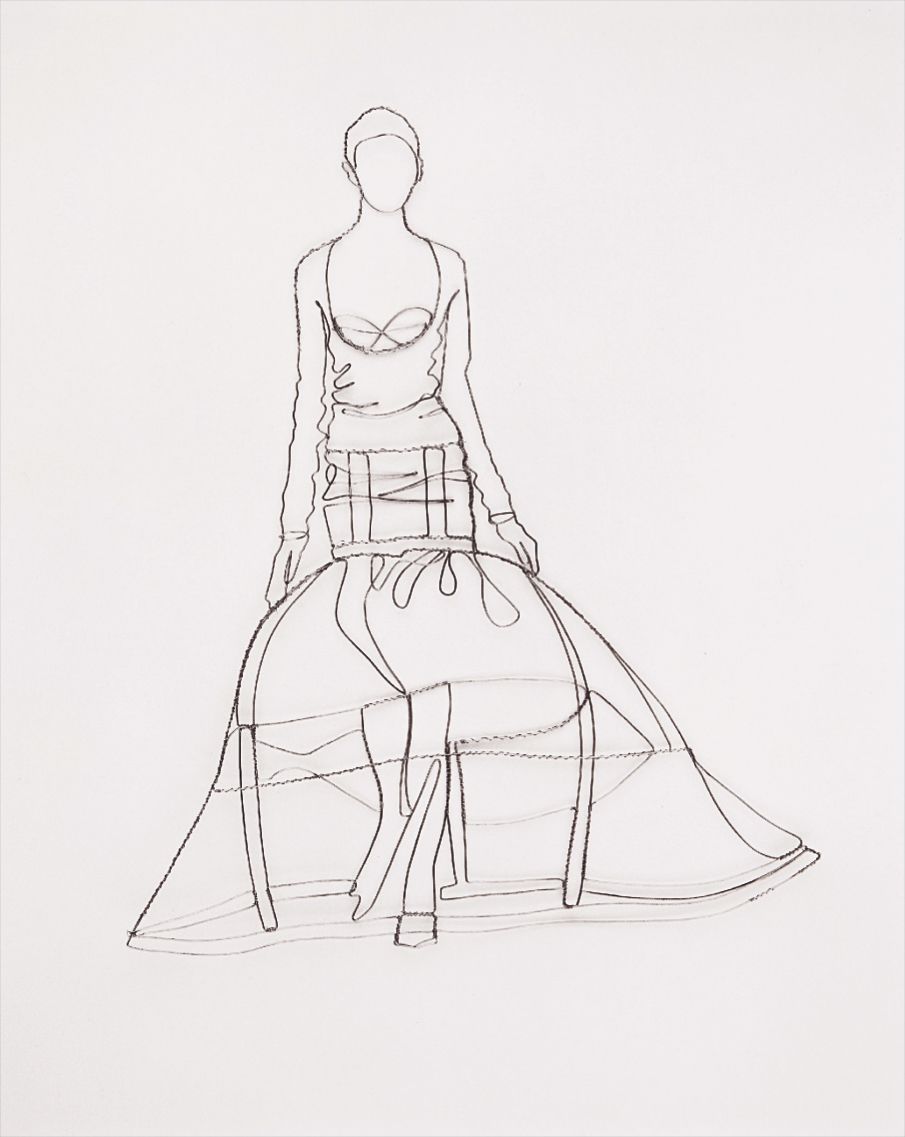
Vik Muniz
Rochas from Pictures of Wire
His practice is a meditation on how perception is constructed and how easily it can be manipulated, which places him in a lineage that runs from trompe l'oeil painting through Pop Art and into the image saturated present. Across these very different practices, a shared set of concerns emerges. Wire sculpture tends to be interested in line, in drawing, in the idea that form can be implied rather than declared. It tends to be interested in light, in the way a transparent structure changes depending on illumination and angle of view.
And it tends to be interested in process, in making visible the act of construction rather than concealing it behind a polished surface. These concerns have made wire sculpture a surprisingly persistent mode of inquiry, one that keeps attracting artists precisely because it refuses to resolve itself into easy categories. The critical standing of wire sculpture has risen considerably in recent decades as the art world has become more attentive to materials historically associated with craft and domestic labor. Asawa's work has been the subject of major retrospective attention, and her influence is openly acknowledged by younger sculptors working across fiber, metal, and installation.
Calder remains a touchstone for anyone thinking about sculpture and movement. What wire sculpture offers collectors and viewers alike is an encounter with art at its most elemental, a line, an intention, a space held open for your own looking. That combination of intellectual clarity and perceptual richness is rarer than it sounds, and when you find it, in the work of any of these artists, it repays extended attention.