Pakistani
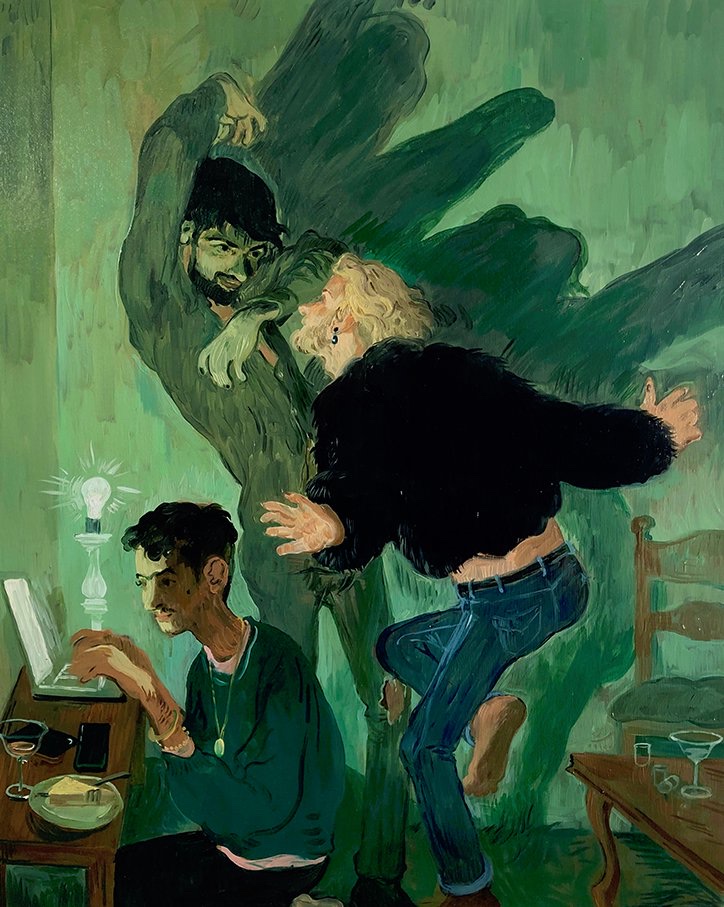
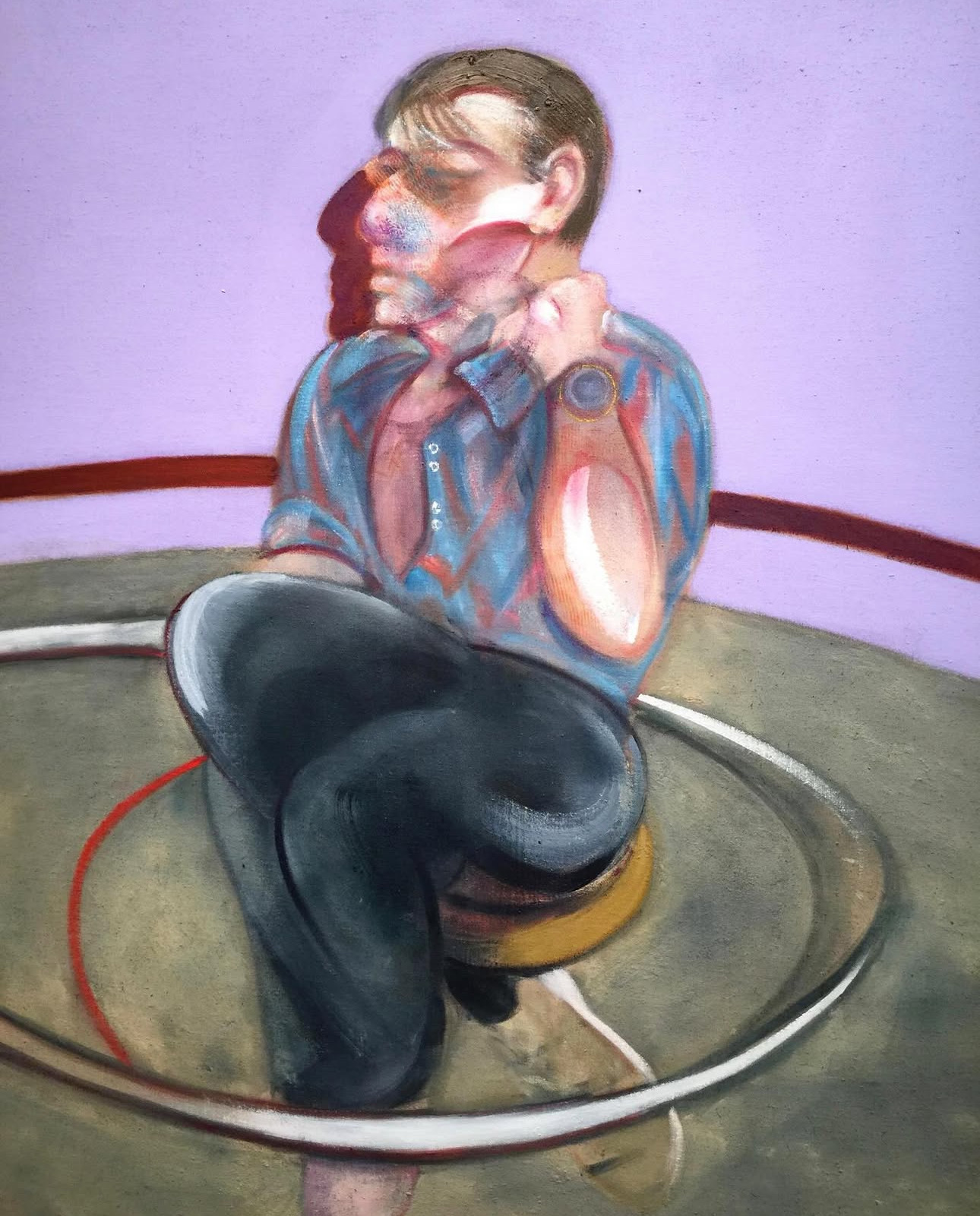
Salman Toor
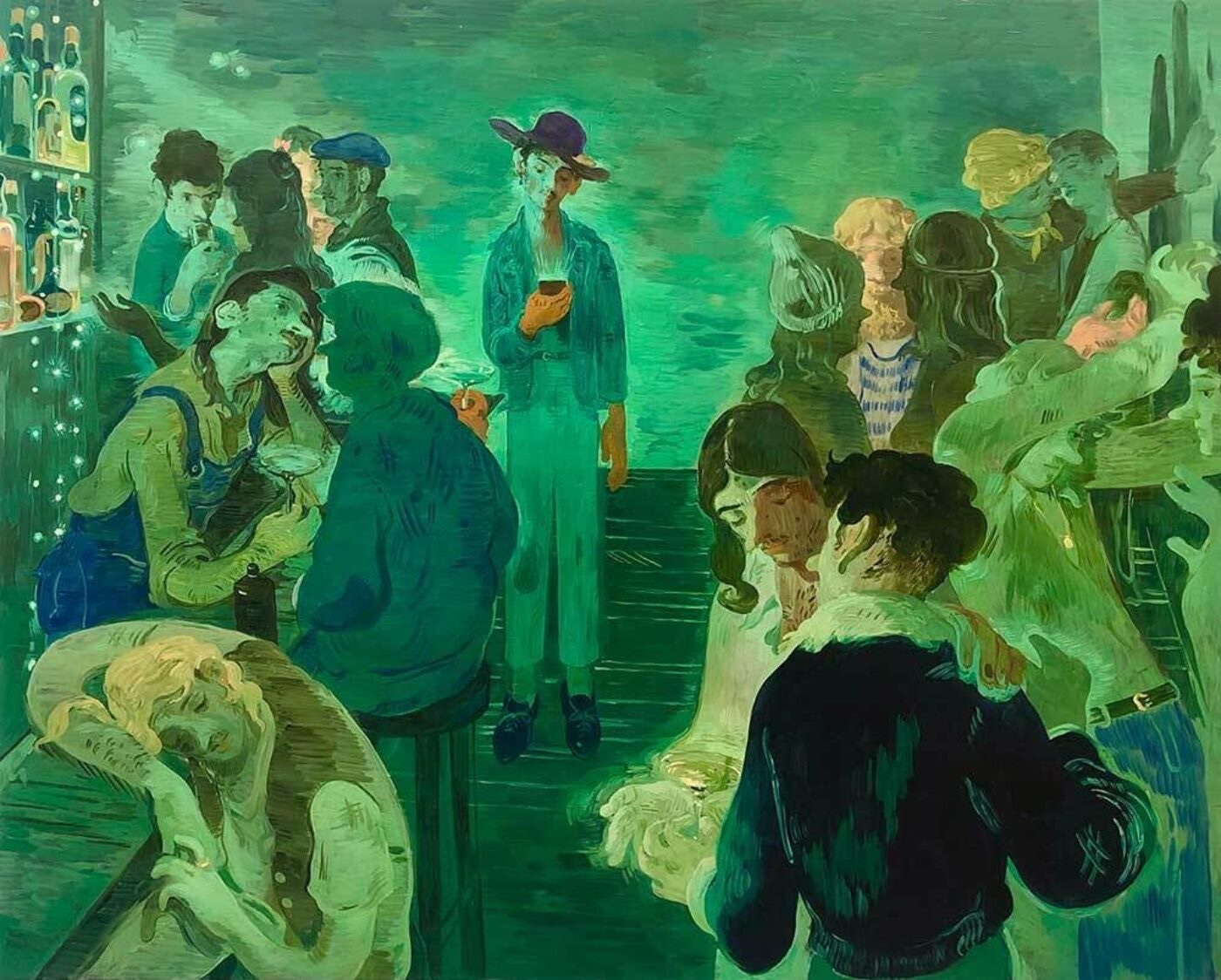
Green Trio, 2019
The Art Pakistan Made the World Notice
There is something about living with Pakistani art that changes the way you move through a room. The works carry a density of reference that rewards slow looking, a layering of Islamic geometry, Mughal miniature traditions, postcolonial anxiety, and deeply personal iconography that never resolves into a single easy read. Collectors who come to this space often describe a similar experience: they bought one piece thinking they understood it, then found themselves returning to it weekly, finding new pressures and new pleasures in it each time. That quality of inexhaustibility is rare and it is what serious collectors are increasingly willing to pay for.
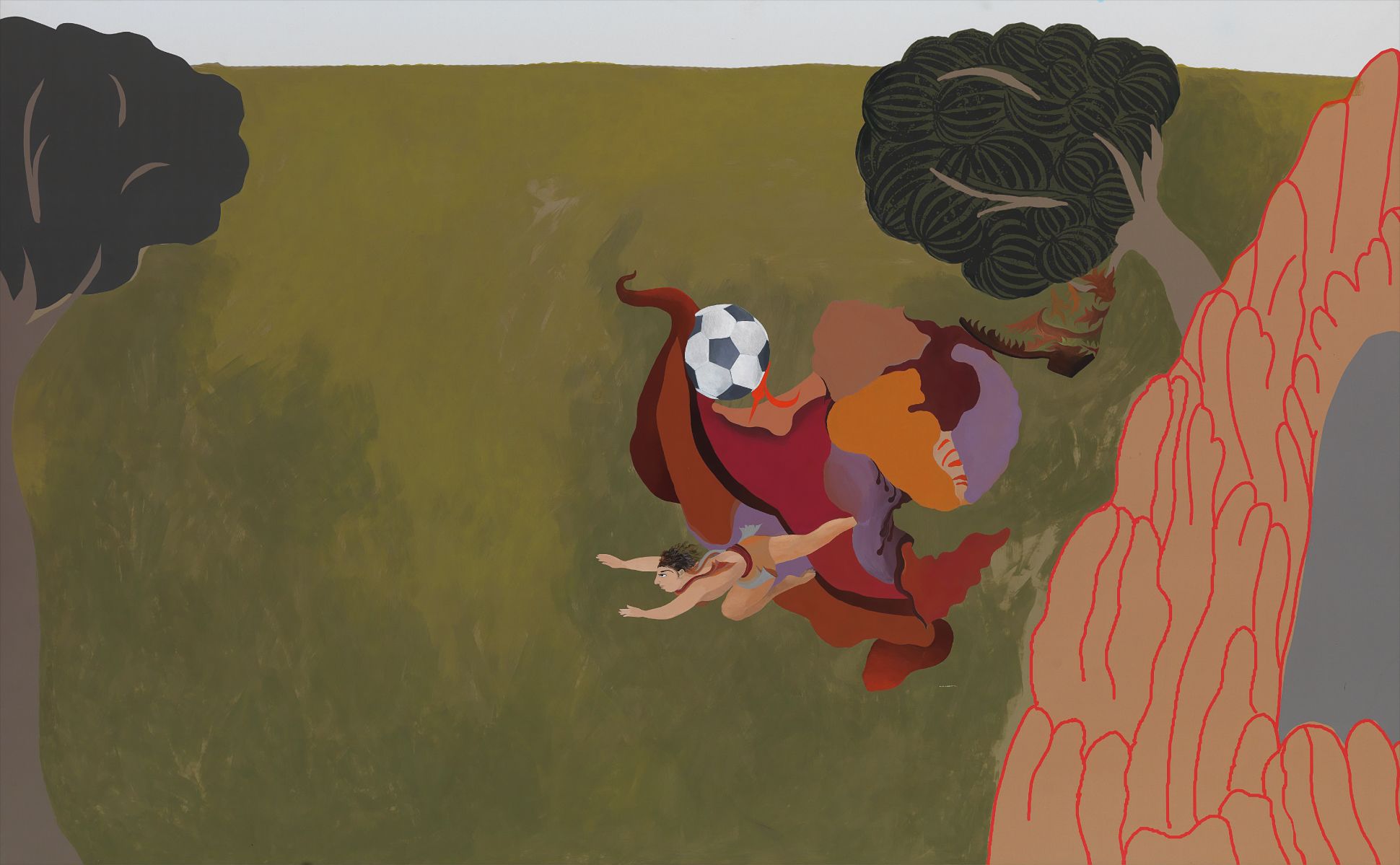
The contemporary Pakistani art scene draws from a remarkably coherent set of visual inheritances while producing work that is thoroughly global in its ambitions. The miniature painting tradition, carried through institutions like the National College of Arts in Lahore, gave generations of artists a technical foundation that most Western painters simply do not have. When artists trained in that tradition turn that precision toward contemporary questions of identity, desire, displacement, or political violence, the results carry an unusual authority. It is not pastiche.
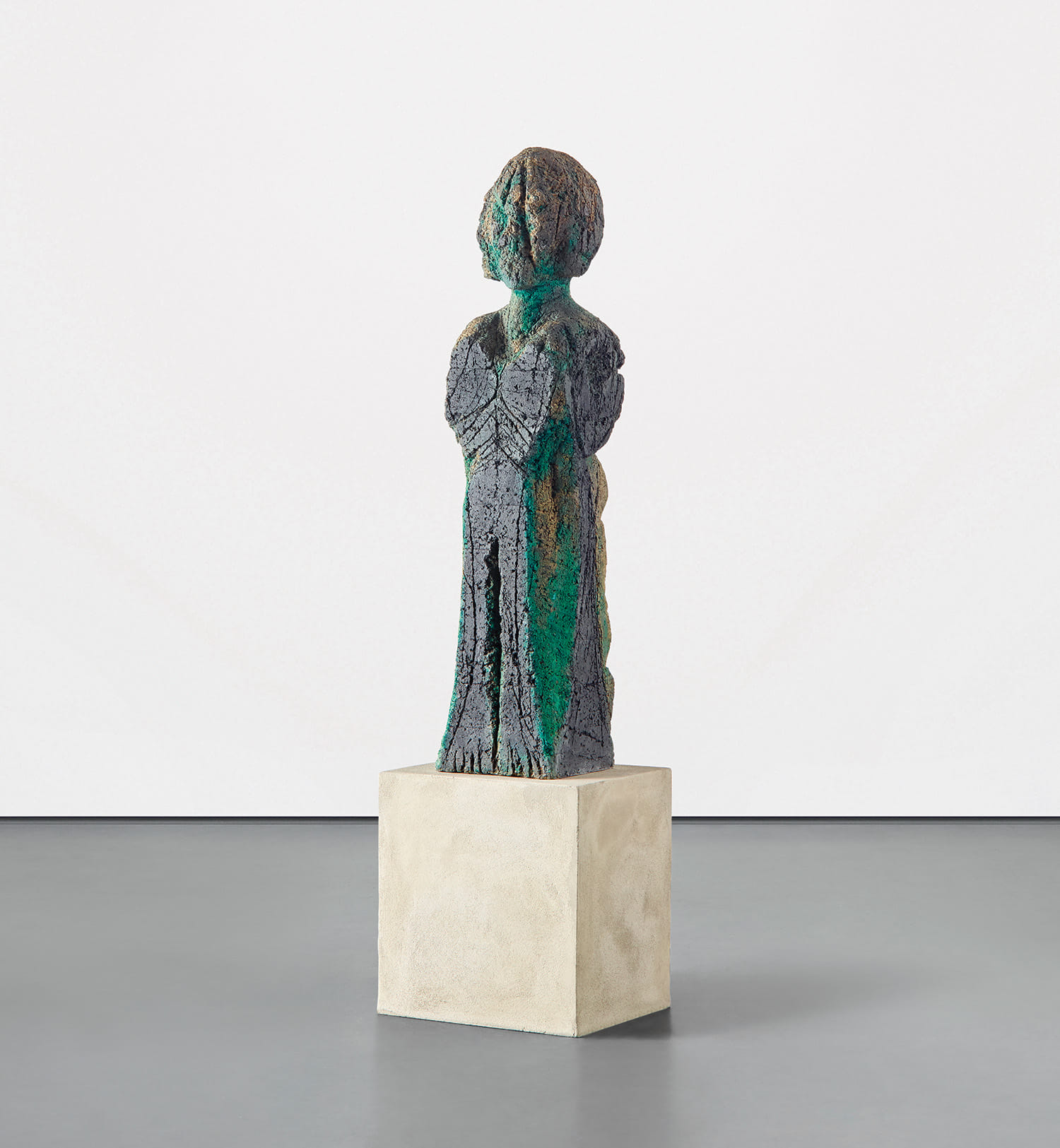
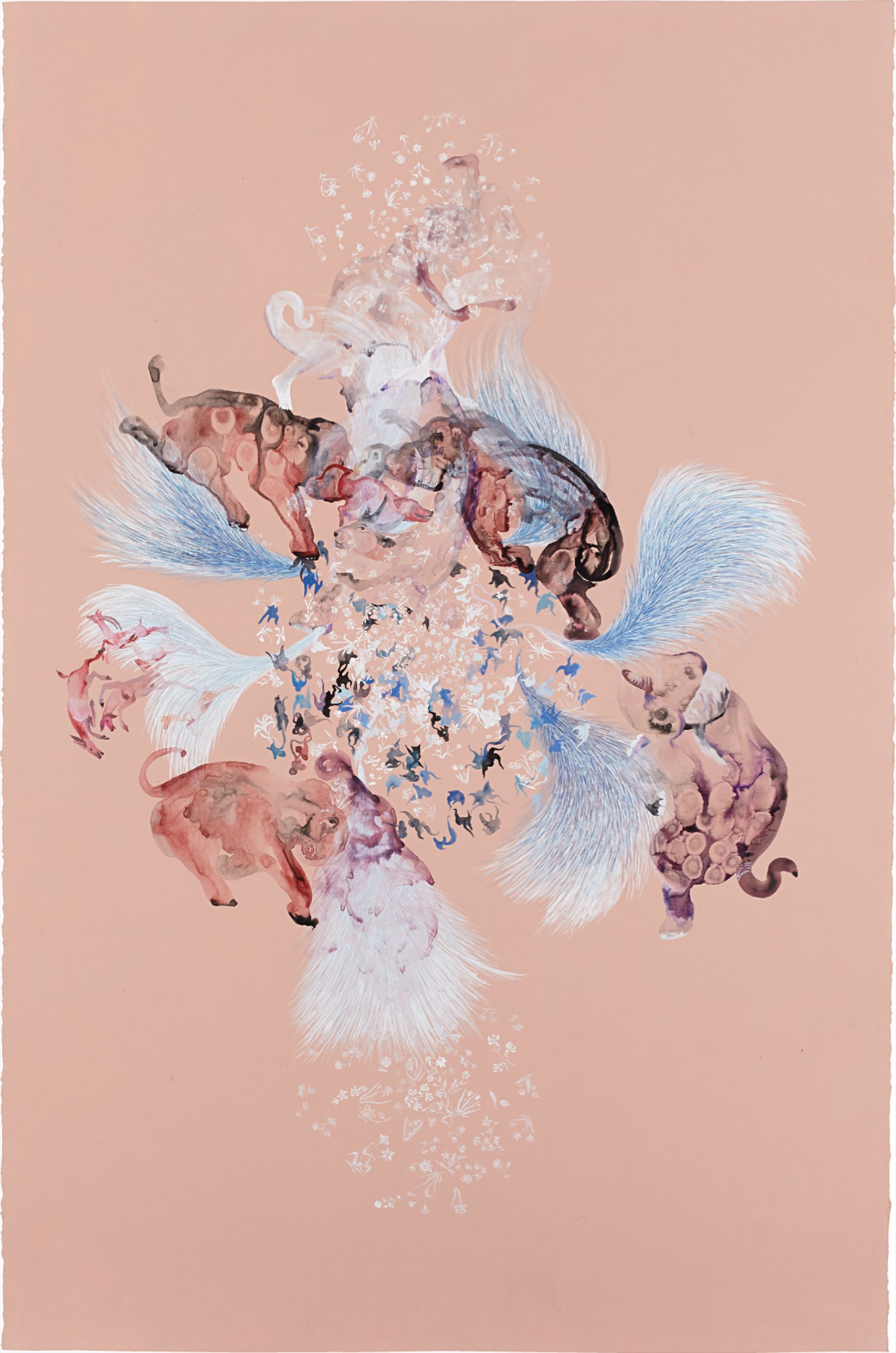
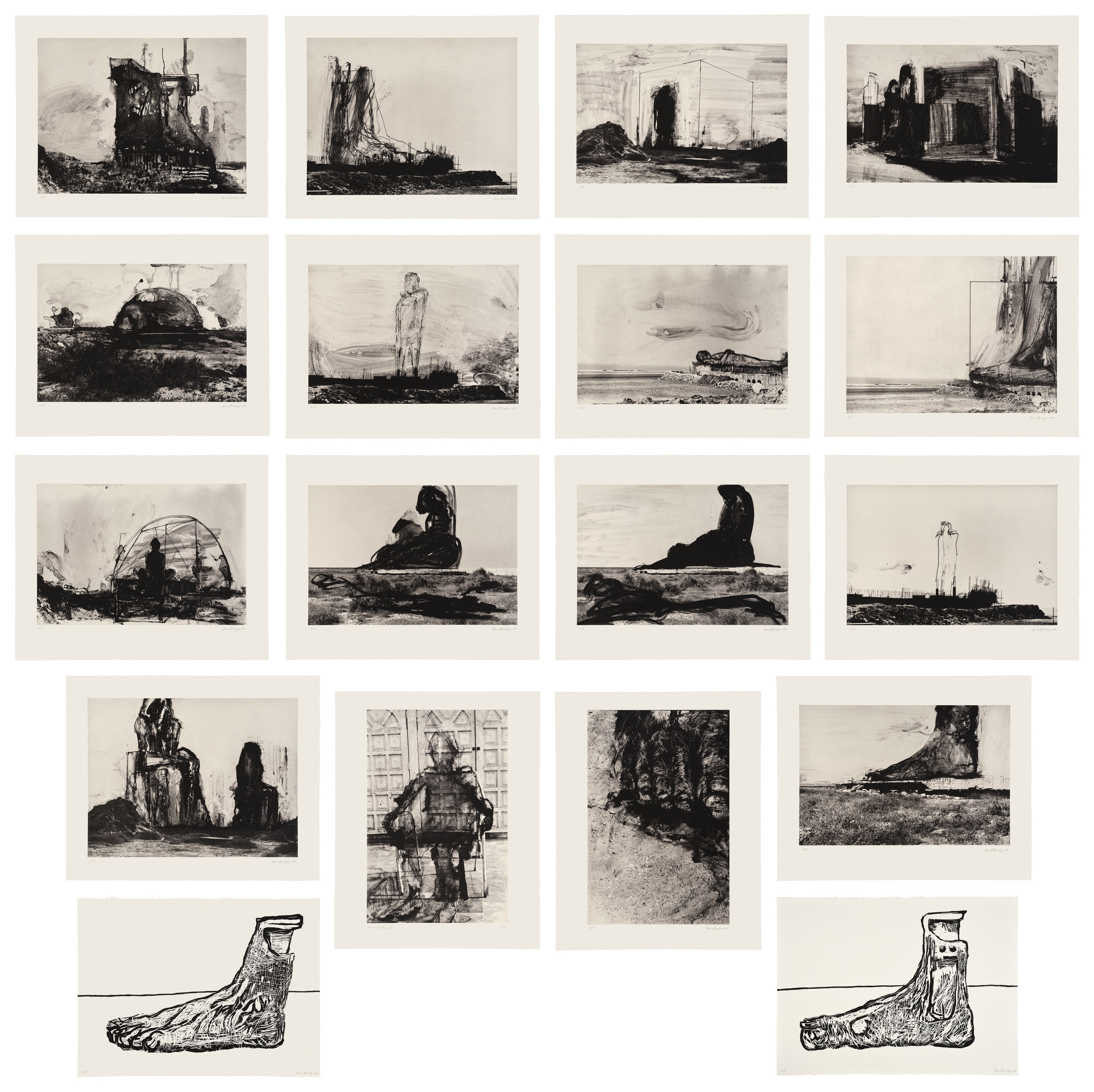
Huma Bhabha
Lecturer, 2010
It is transformation. And transformation is what drives the art market. Knowing what separates a good work from a great one in this space requires some fluency with that miniature tradition. Collectors should look for works where the inherited language is genuinely in tension with the contemporary subject matter, not merely decorated onto it.
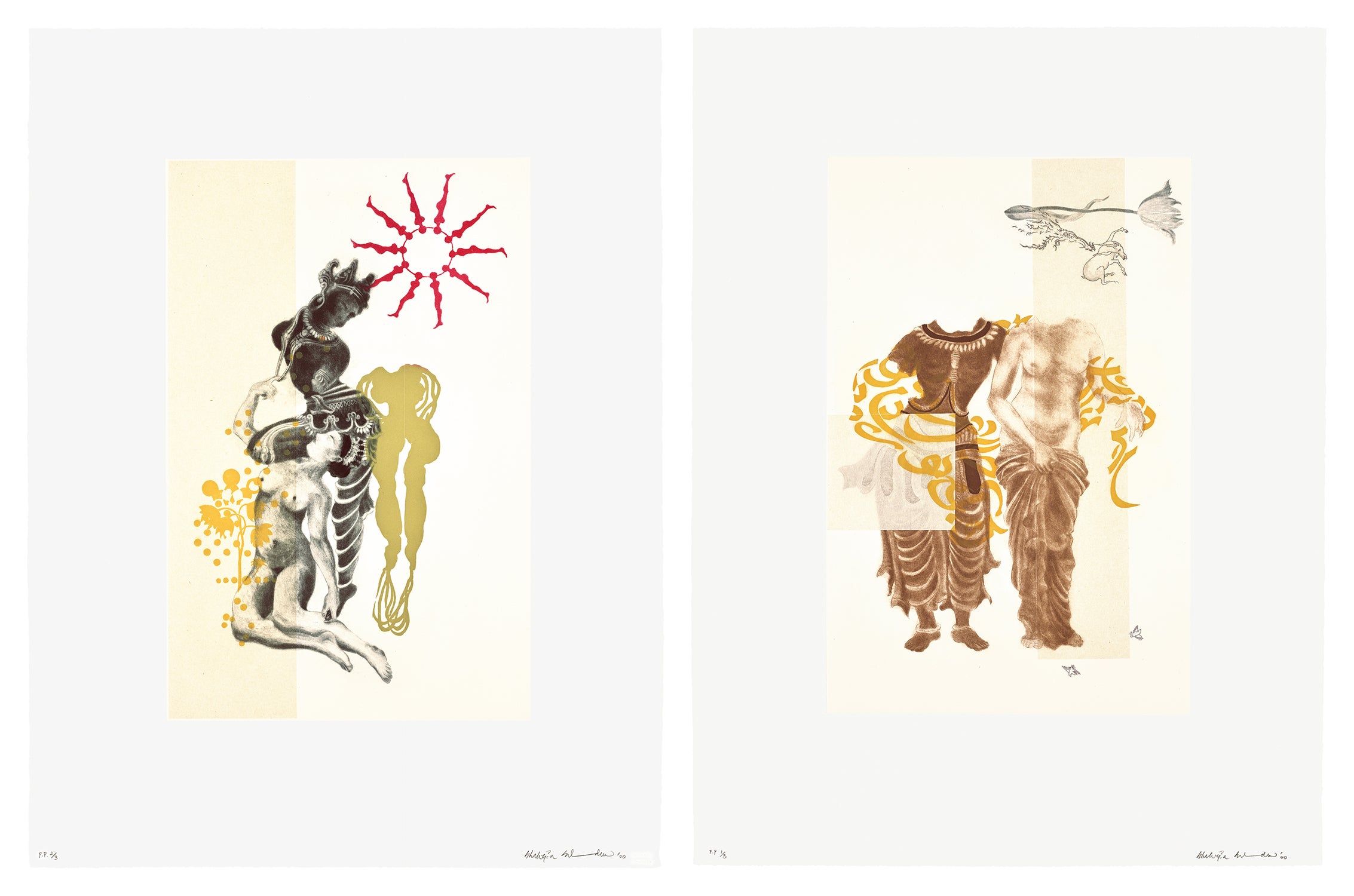
Shahzia Sikander, who studied at the NCA in Lahore before going on to the Rhode Island School of Design, is the standard against which that tension is measured. Her work of the 1990s and early 2000s destabilized the miniature form from the inside, inserting hybrid figures and unresolved narratives into spaces that the tradition had always kept orderly. When a work feels truly unsettled by what it is attempting, when you sense the artist wrestling with form rather than mastering it comfortably, that is usually a sign of genuine ambition. Salman Toor represents something different but equally significant.
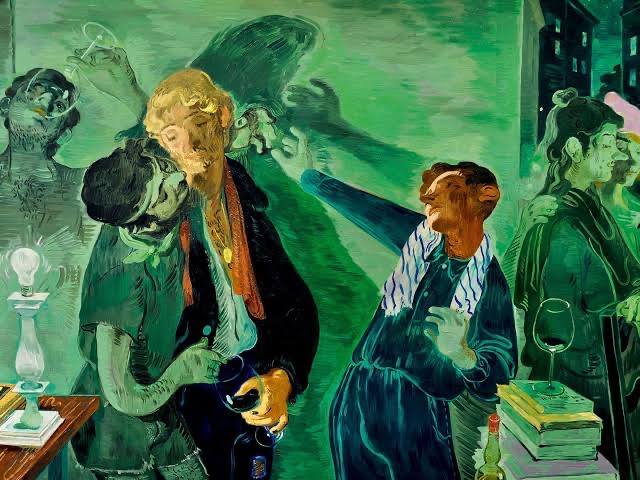
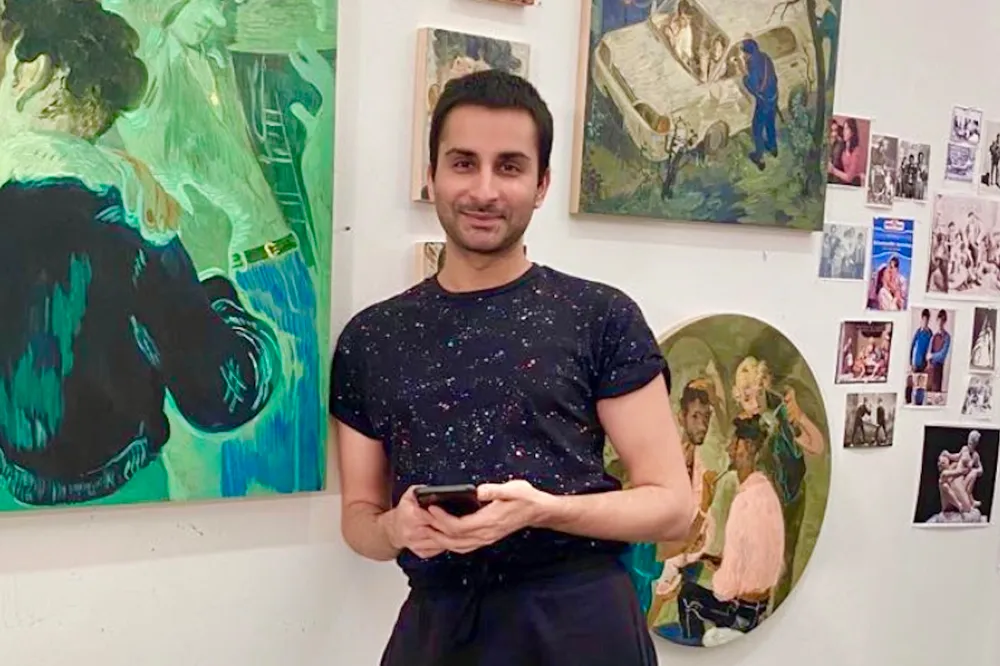
Salman Toor
The Green Room, 2019
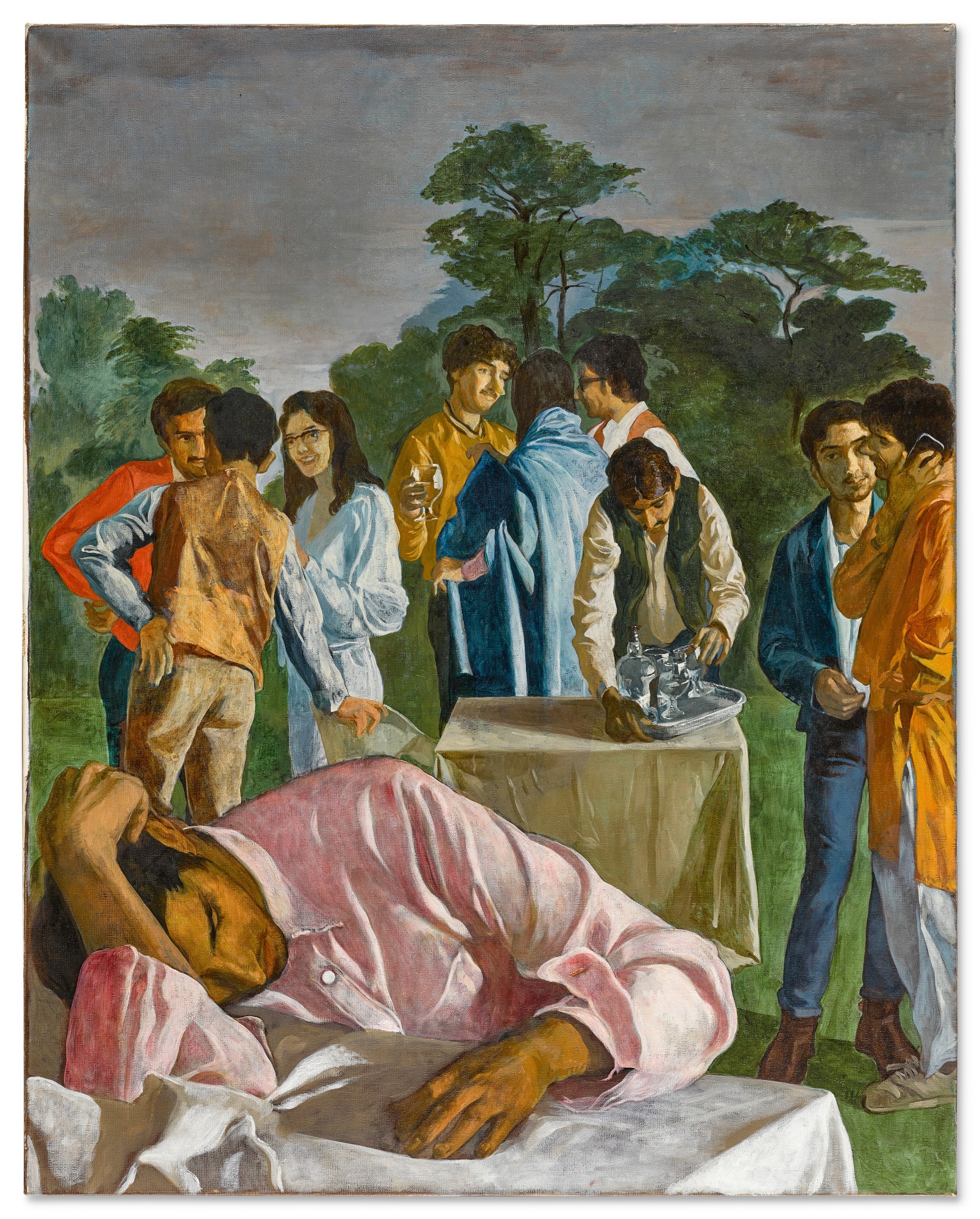
His intimate paintings of queer South Asian men in domestic and social settings carry a tenderness and a melancholy that speaks to both the Pakistani diaspora experience and to a broader human longing for visibility and safety. Toor is perhaps the artist on The Collection whose market trajectory has been most dramatic over the past decade. His solo show at the Whitney Museum of American Art in 2020 and 2021, titled How Will I Know, announced him to a museum audience that quickly translated into sustained collector demand. Works from his earlier career, made before that institutional recognition arrived, now represent a different kind of opportunity than they did even five years ago.
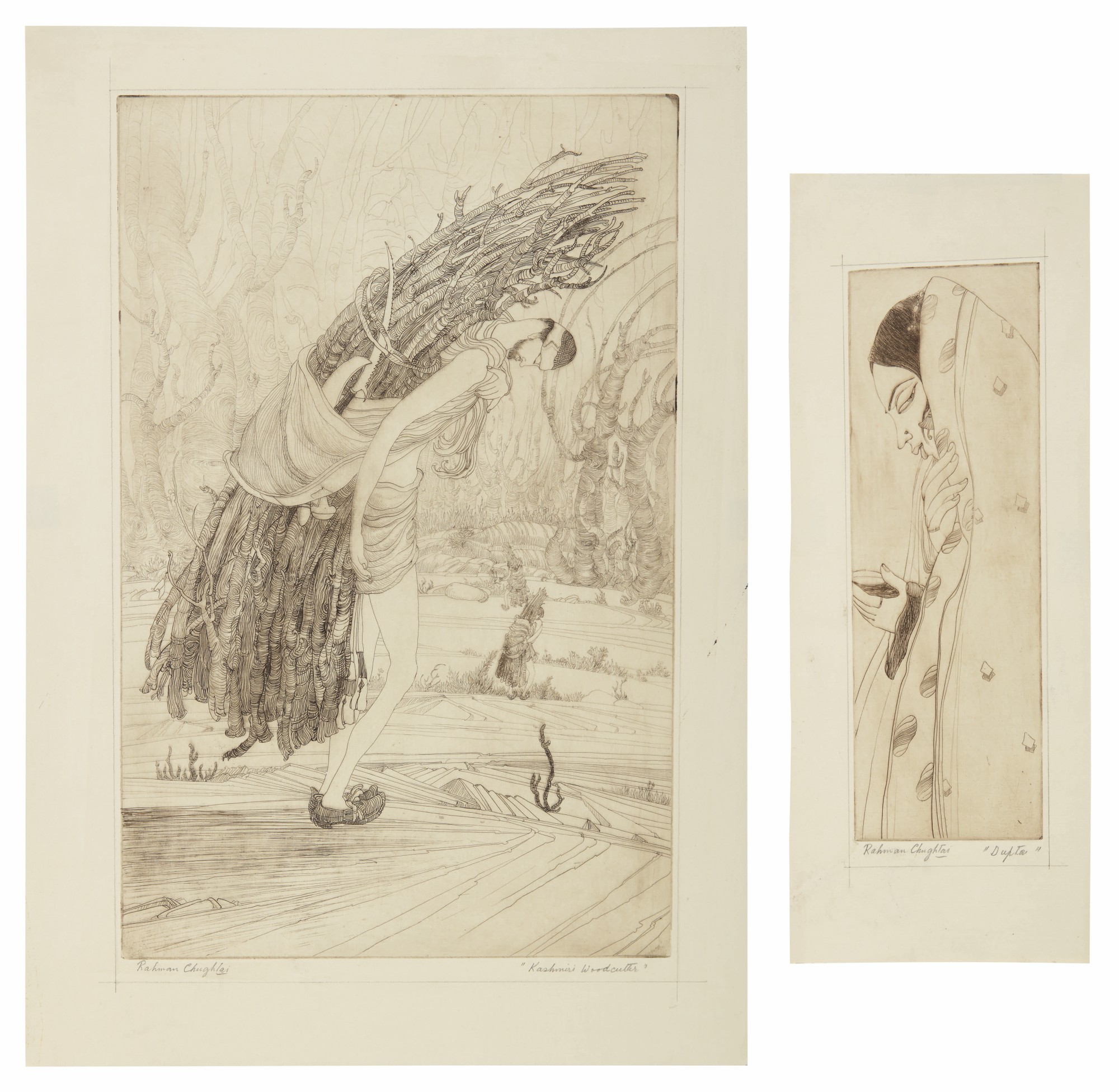
The secondary market for his paintings has been active and prices have moved accordingly. For collectors interested in the deeper historical arc of Pakistani modernism, Abdur Rahman Chughtai offers an essential anchor. Chughtai, who worked through the early and middle decades of the twentieth century, developed a synthesis of Mughal painting and Art Nouveau influence that was deeply original for its time and remains visually distinctive. His works do not appear frequently on the market and when they do, condition becomes a paramount concern.
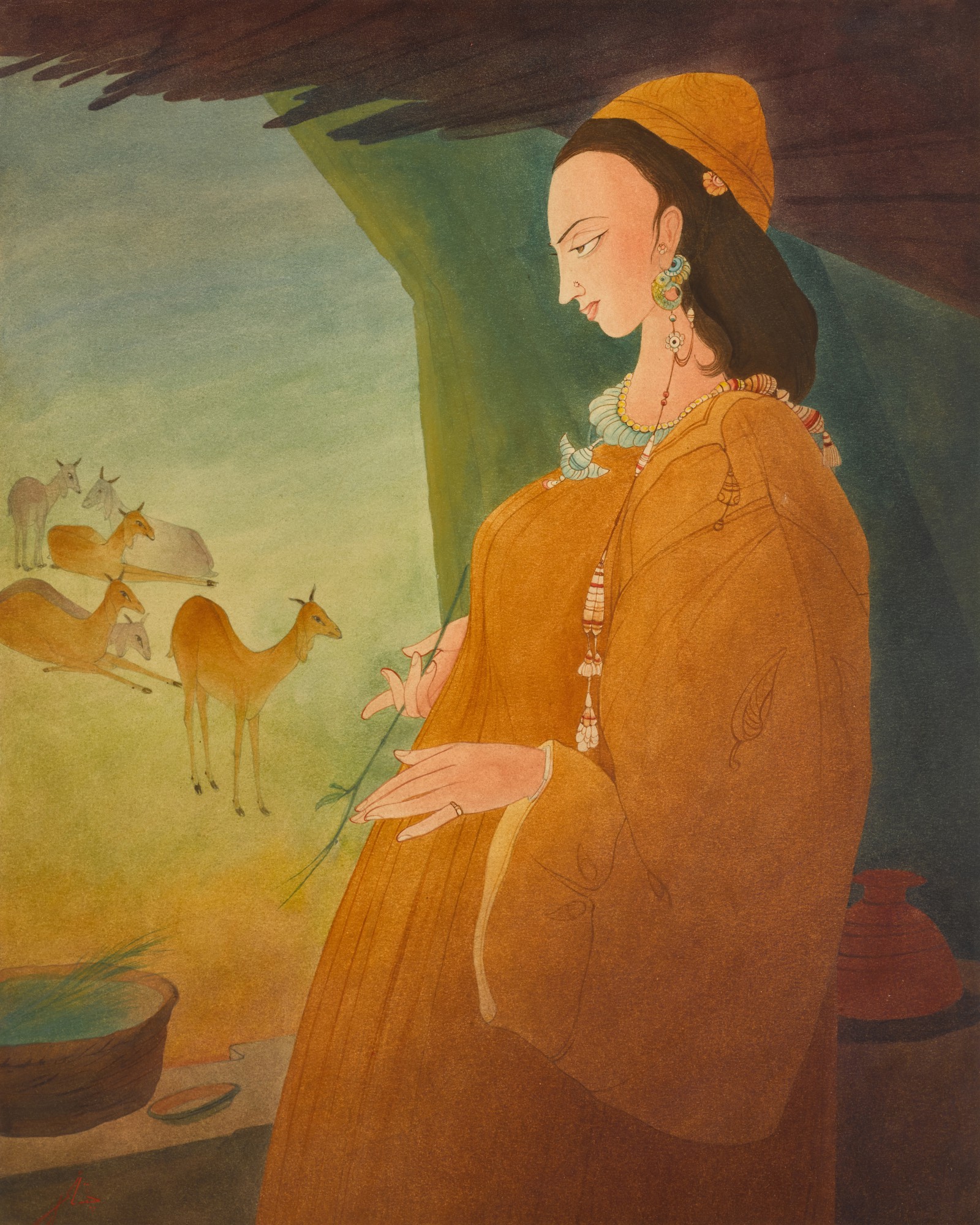
Abdur Rahman Chughtai
Untitled
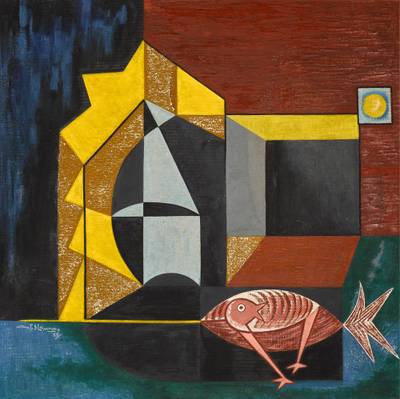
Works on paper from this period require close inspection of foxing, fading, and any evidence of previous restoration. Anwar Jalal Shemza, who emigrated to Britain and developed a rigorous abstract practice drawing on Arabic calligraphic forms and geometric Islamic patterning, is another figure whose reputation has grown significantly through reassessment of mid century South Asian modernism. His work was included in important survey exhibitions at Tate Britain and the revaluation of his contribution is still unfolding in the market. Among artists whose market positions remain in productive flux, Imran Qureshi and Hamra Abbas are both worth careful attention.
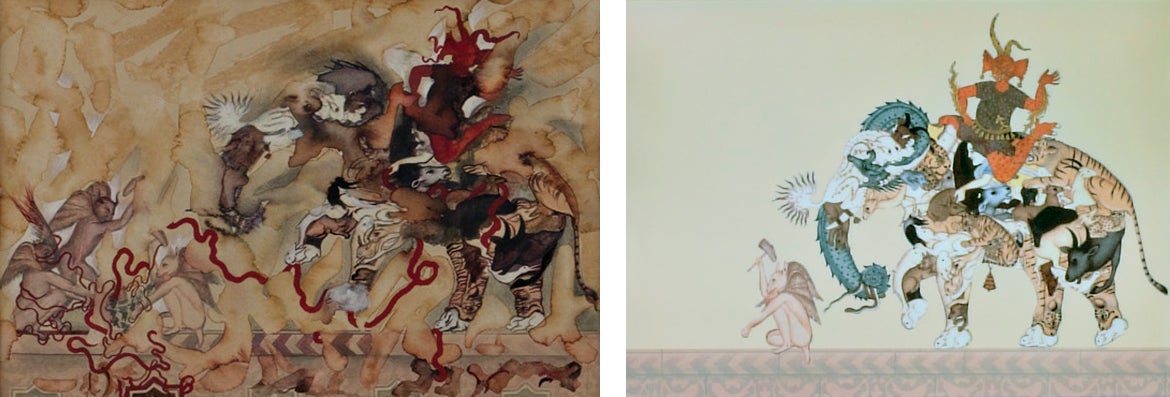
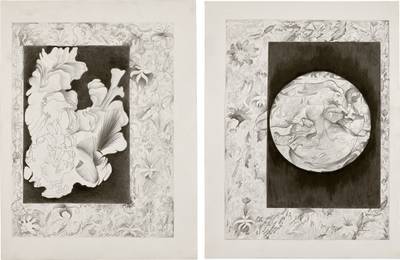
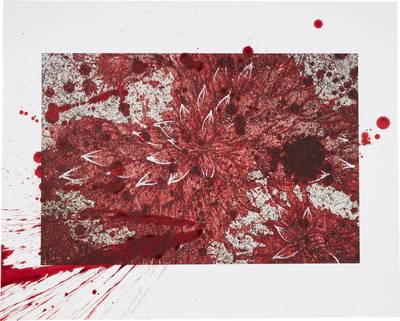
Qureshi, also NCA trained, has extended the miniature tradition into installation and large scale work, most notably with his rooftop commission for the Metropolitan Museum of Art in 2013. His works on paper, which retain the intimacy of the miniature tradition while opening toward something more expansive, represent a compelling entry point. Hamra Abbas works across sculpture, video, and works on paper, drawing on popular religious imagery and the visual culture of devotion in ways that are formally inventive and conceptually precise. Artists who work across media in this way can present a challenge for the collector who is focused primarily on the secondary market, but that versatility also tends to produce careers with unusual longevity.
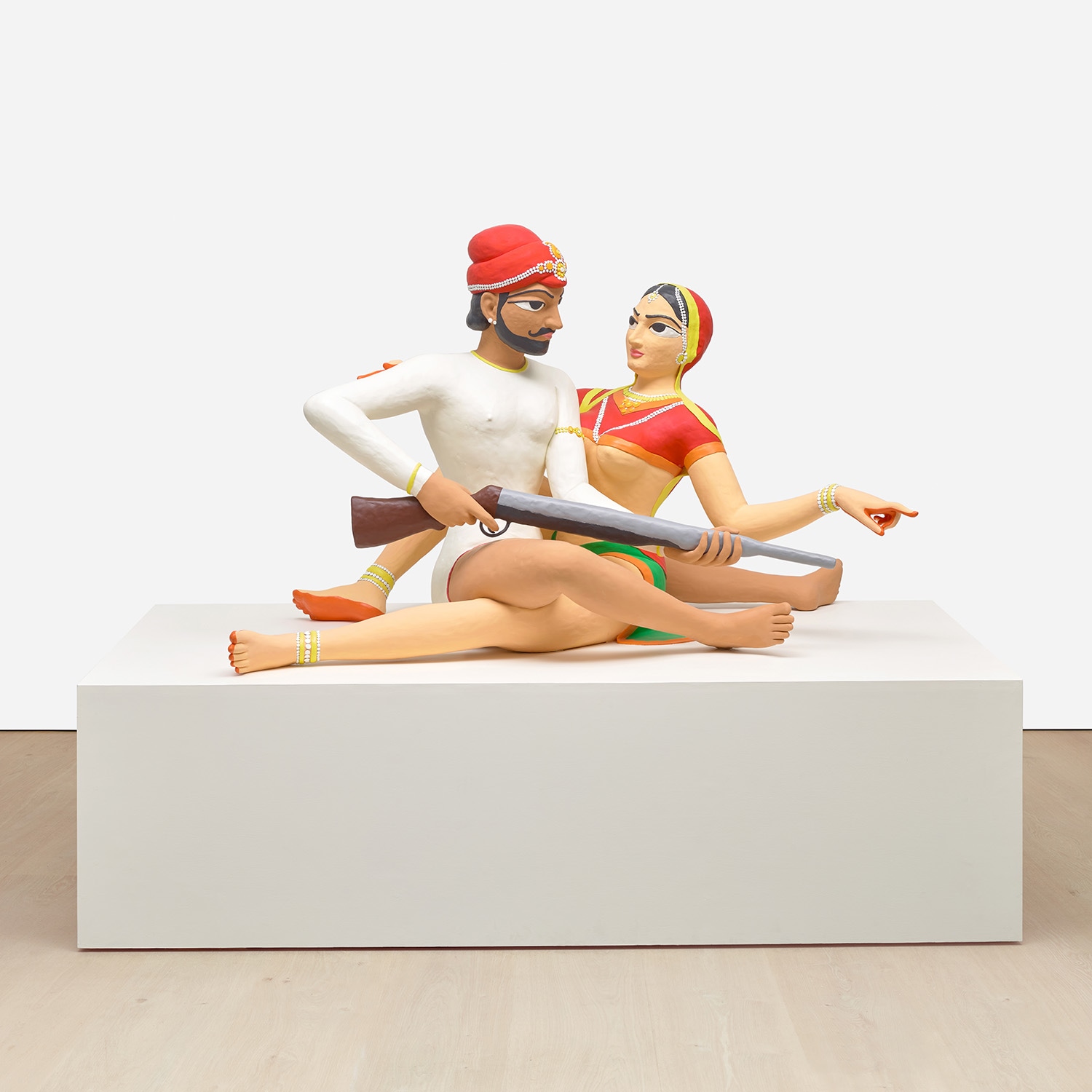
Hamra Abbas
Lessons on Love, 2007
The secondary market for Pakistani contemporary art has matured considerably since the mid 2000s, when auction houses in Dubai and later South Asian focused sales in London and New York began giving these works consistent visibility. Results have not always been linear. Market enthusiasm in the late 2000s was followed by a period of recalibration, and collectors who had bought at peak prices in that first wave sometimes found themselves waiting longer than expected for the market to catch up. The lesson most experienced collectors draw from that period is to prioritize quality and rarity over momentum.
The works that have performed most consistently are those with strong exhibition histories, institutional collection presence, and published scholarship behind them. Practically speaking, condition is non negotiable in this area, particularly for works that draw on miniature painting techniques. Ask any gallery you are working with for a full condition report and the provenance chain going back as far as possible. For works on paper, inquire specifically about how the piece has been stored and framed, whether UV protective glazing has been used, and whether there is any history of restoration.
For paintings on canvas or board, ask about the stability of the ground and any history of lining. Editions in photography and print based work by artists like Sikander and Abbas offer accessible entry points, but unique works consistently perform better over time and carry more of the relational weight that makes living with Pakistani art so compelling in the first place. The best question you can ask a gallery is simply: what would this artist say is their strongest work from this period. The answer usually tells you everything.