Mount Fuji
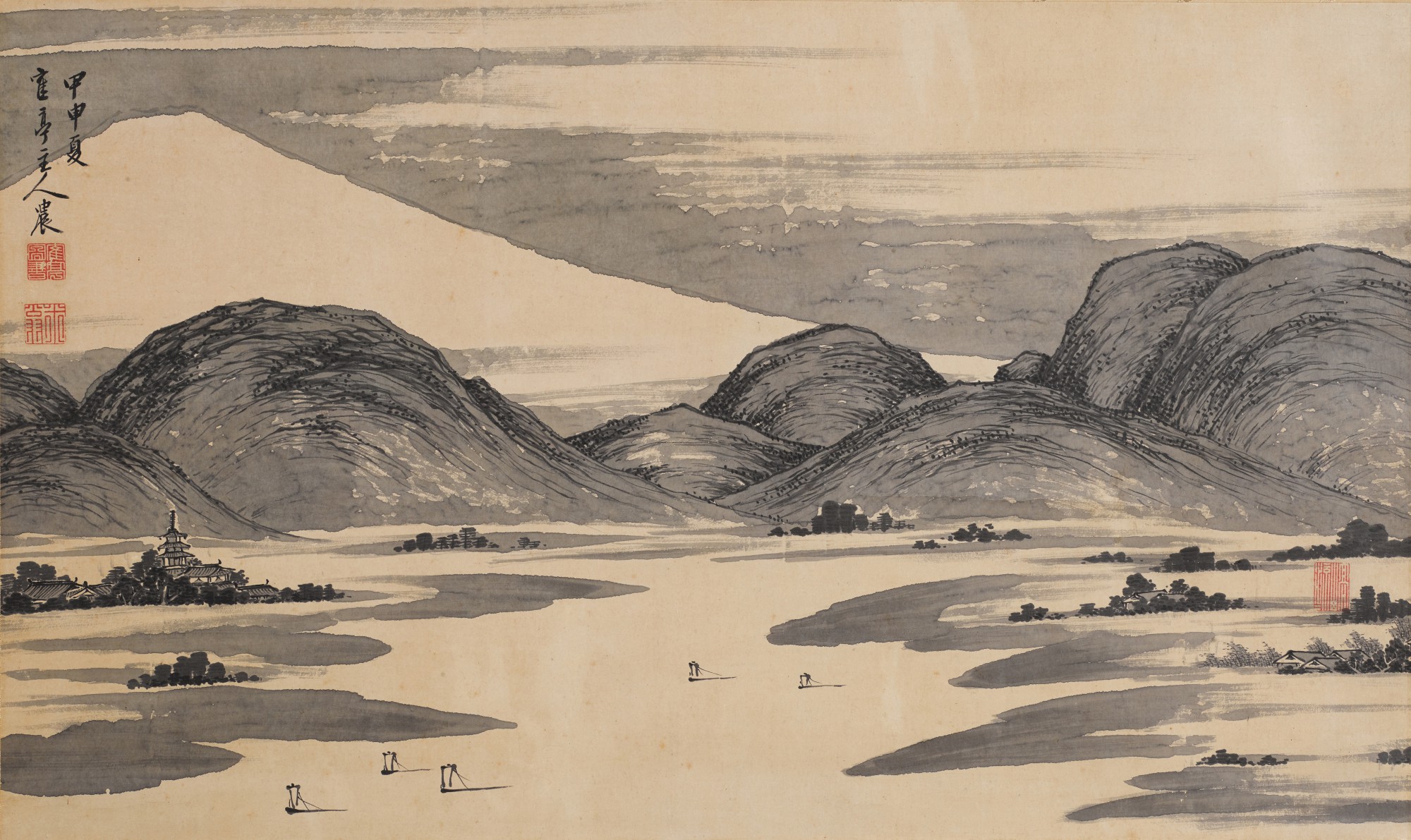
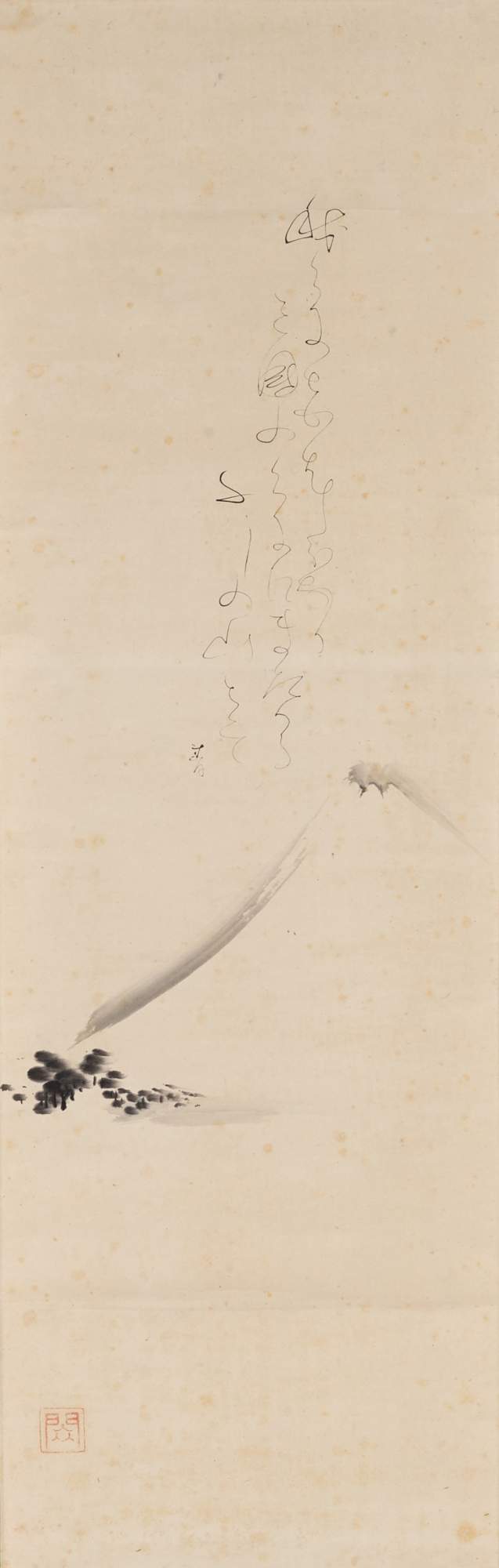
Unknown
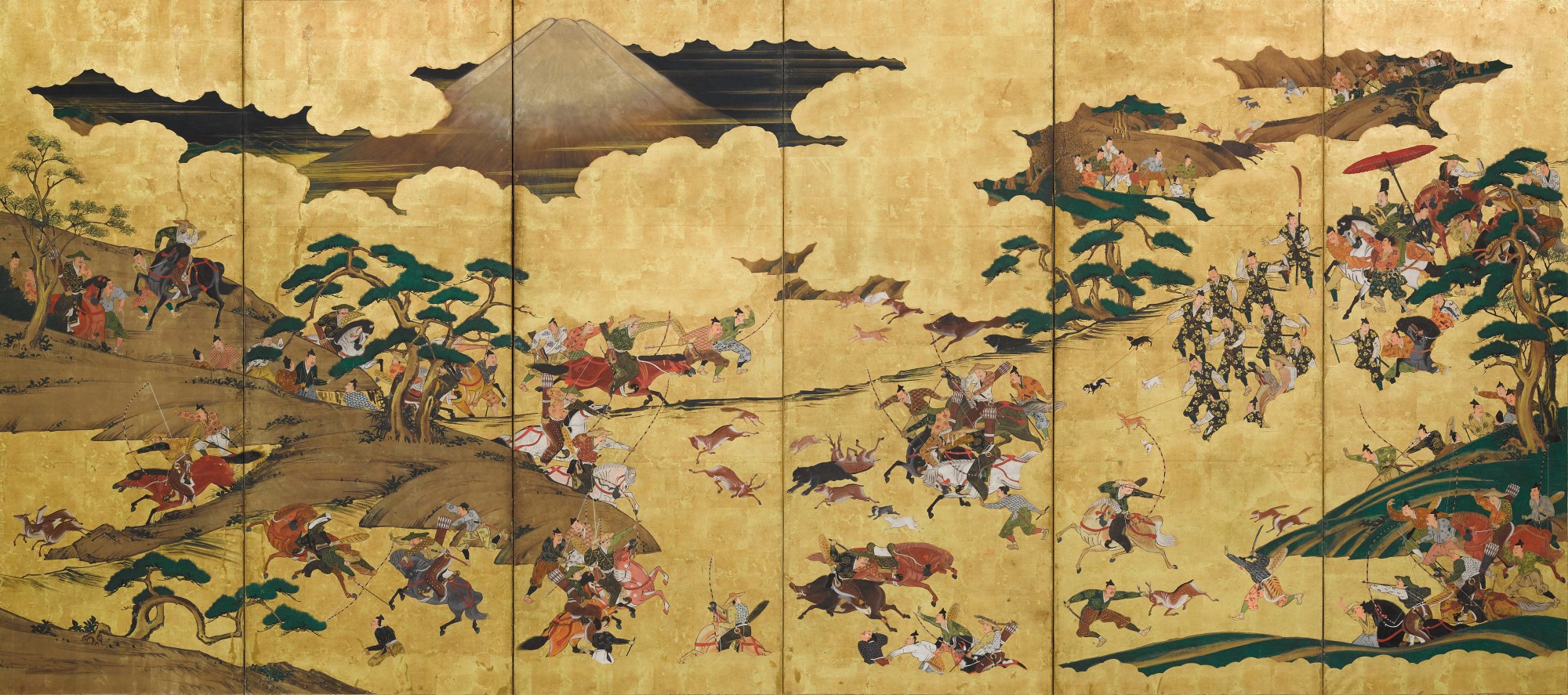
Mount Fuji | Edo period, dated Kinoe saru natsu (Summer, 1764)
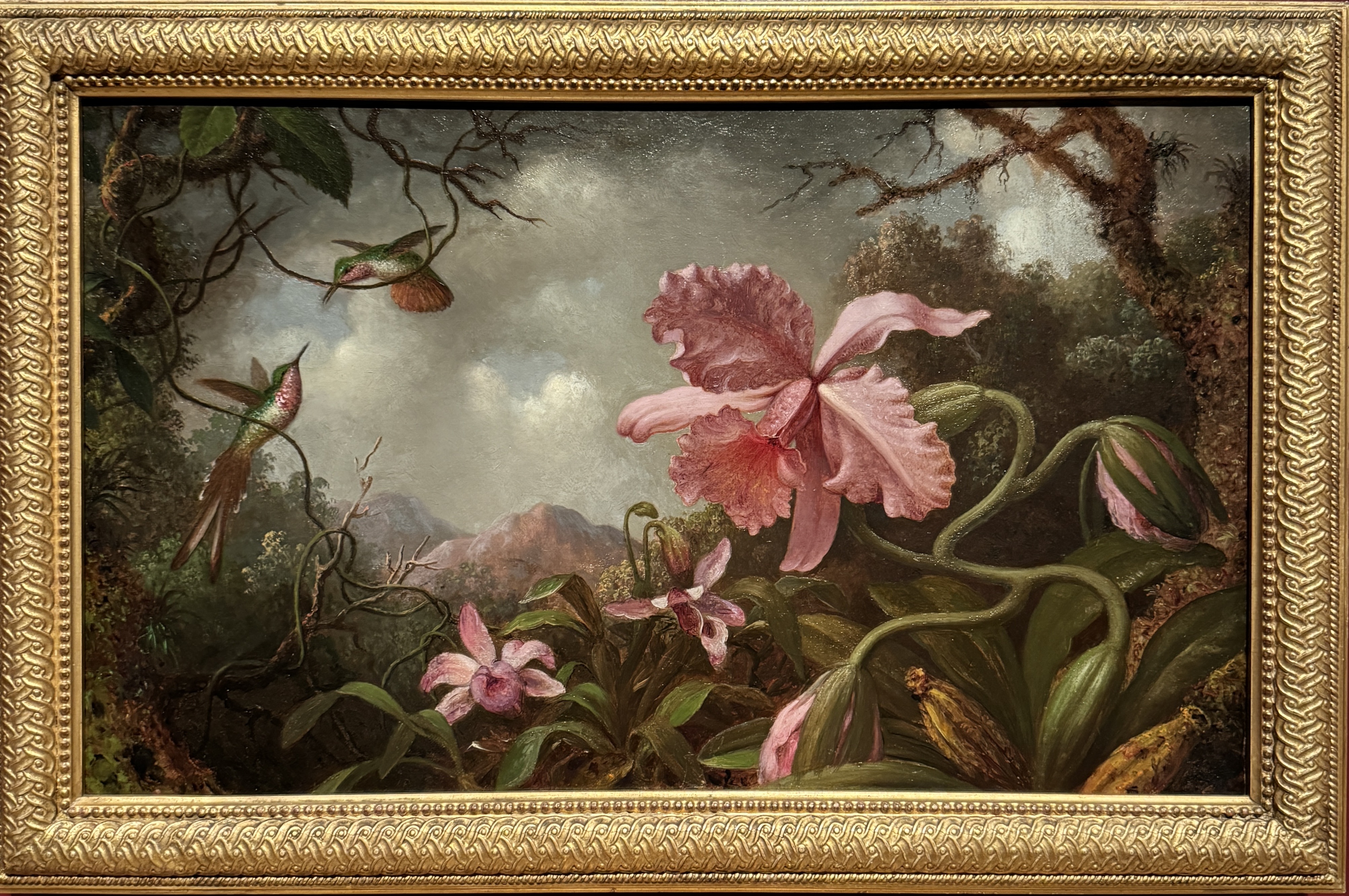



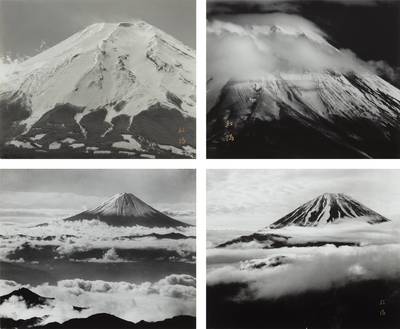
The Mountain That Never Stops Calling
There is something almost unreasonable about how strongly collectors respond to images of Mount Fuji. It is not simply nostalgia, nor is it the comfort of the familiar. Works centered on the mountain carry a peculiar emotional gravity, a feeling that the world has been stilled and made legible. Collectors who live with these pieces often describe a quality of presence in the room, something that resists the noise of contemporary life without ever feeling escapist.
That tension, between the serene and the charged, is precisely what makes this category so rewarding to build. The mountain has attracted serious artistic attention for centuries, and the depth of that tradition gives collectors an unusually rich field to navigate. What draws people in is rarely the subject itself in isolation. It is the relationship between the artist and the subject, how a particular hand or sensibility transforms an iconic silhouette into something that feels genuinely discovered rather than reproduced.
![Katsushika Hokusai — Kanagawa oki nami ura (Under the well of the Great Wave off Kanagawa) [“Great Wave”]](https://rtwaymdozgnhgluydsys.supabase.co/storage/v1/object/public/artwork-images/auction-lots/japanese-and-korean-art-24346-nyr-lot84.jpg)
Katsushika Hokusai
Kanagawa oki nami ura (Under the well of the Great Wave off Kanagawa) [“Great Wave”]
The best works in this space resist the postcard. They offer a specific weather, a mood, a time of day that feels chosen rather than generic. That quality of necessity, of an artist needing to make this particular image, is what elevates a work from decorative to essential. Knowing what separates a good work from a great one requires looking beyond surface beauty.
Condition is paramount in older woodblock prints, where the vibrancy of color and the crispness of the impression tell you almost everything about how a work has been handled across decades or centuries. Early impressions, typically pulled before the woodblock began to show wear, carry significantly more tonal range and detail than later ones. Collectors should examine the margins, the registration of colors, and whether the paper retains its original warmth. A faded impression at a modest price is rarely the bargain it appears to be.
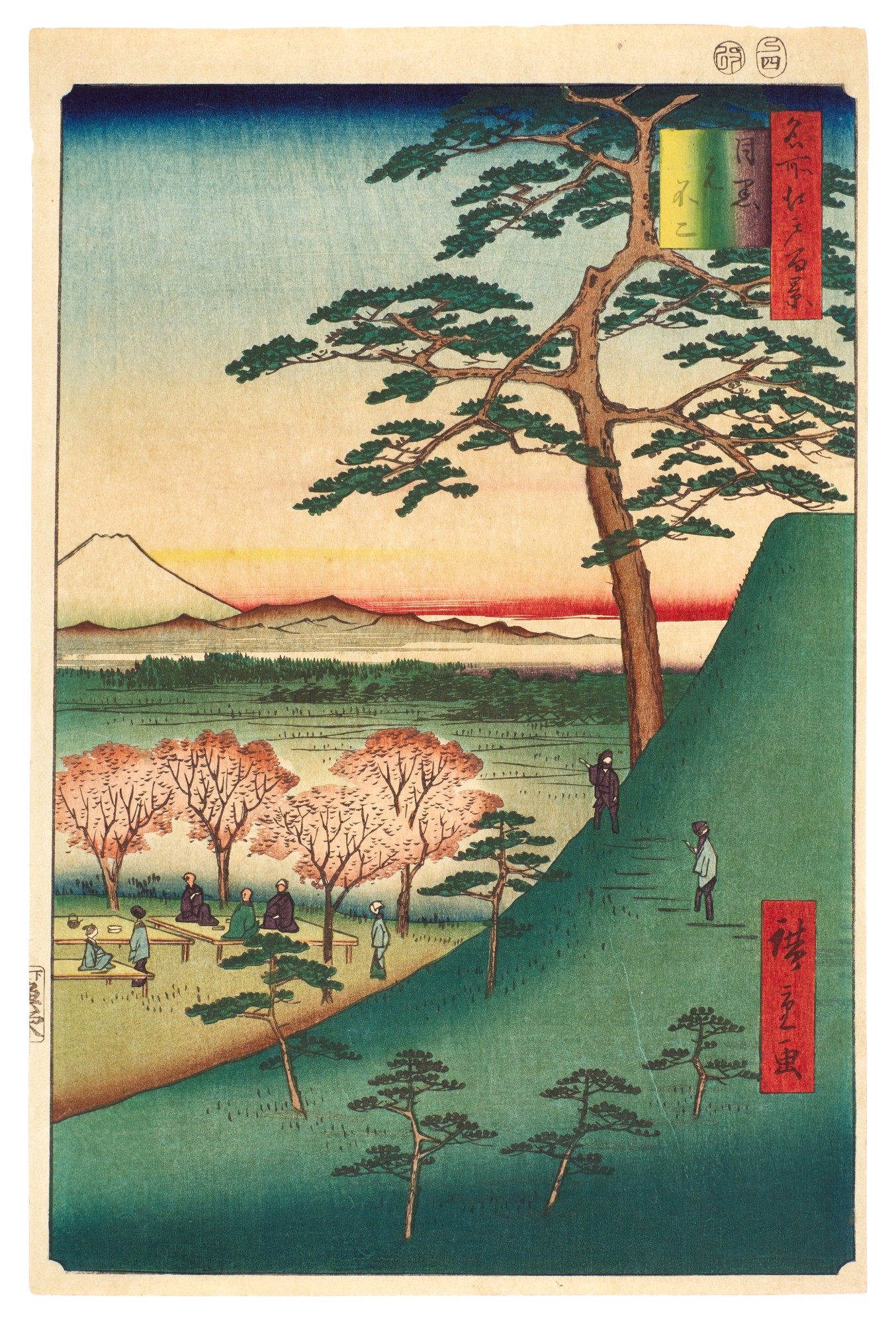
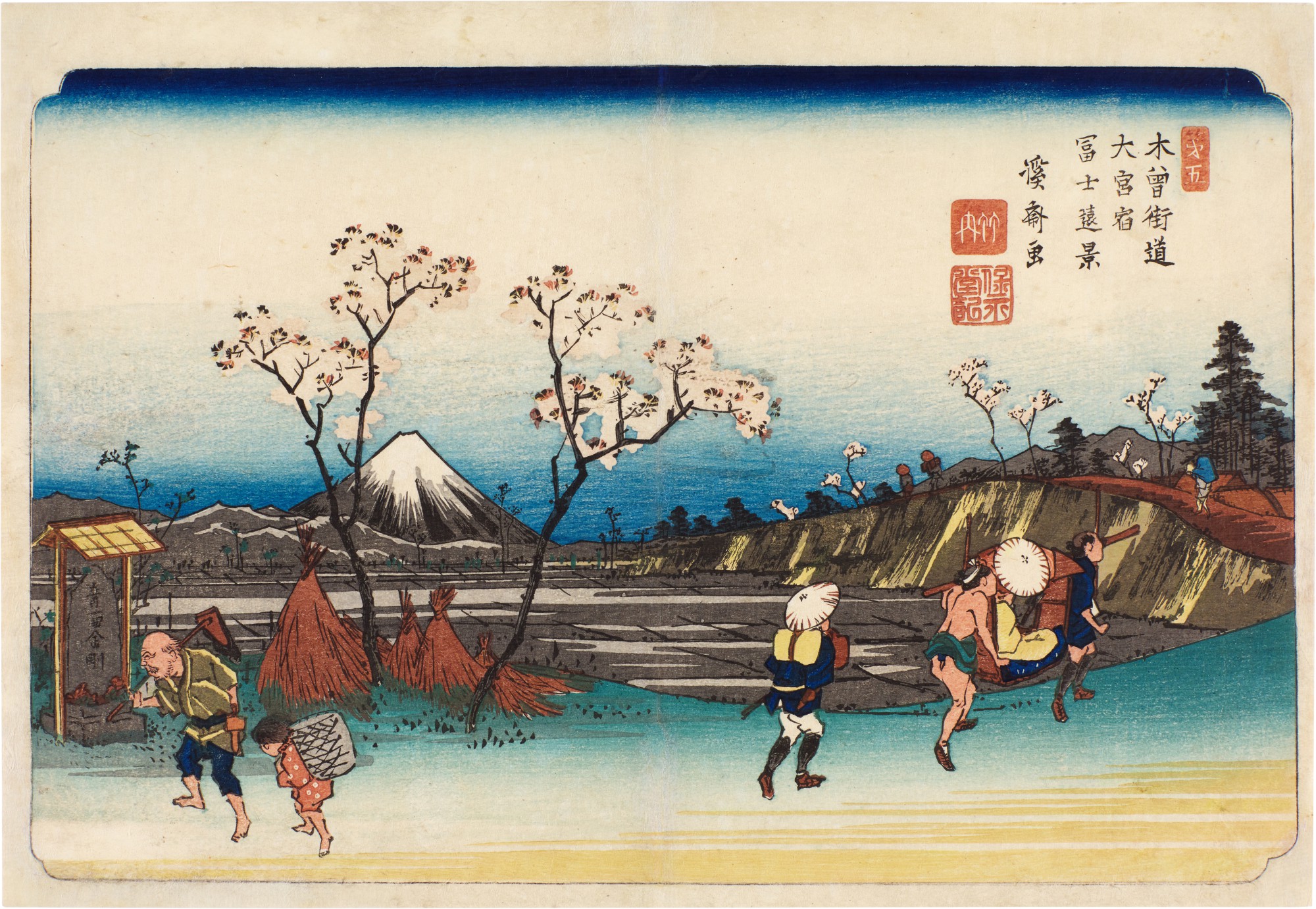
Utagawa Hiroshige
Original Fuji, Meguro (Meguro Moto-Fuji) | Edo period, 19th century
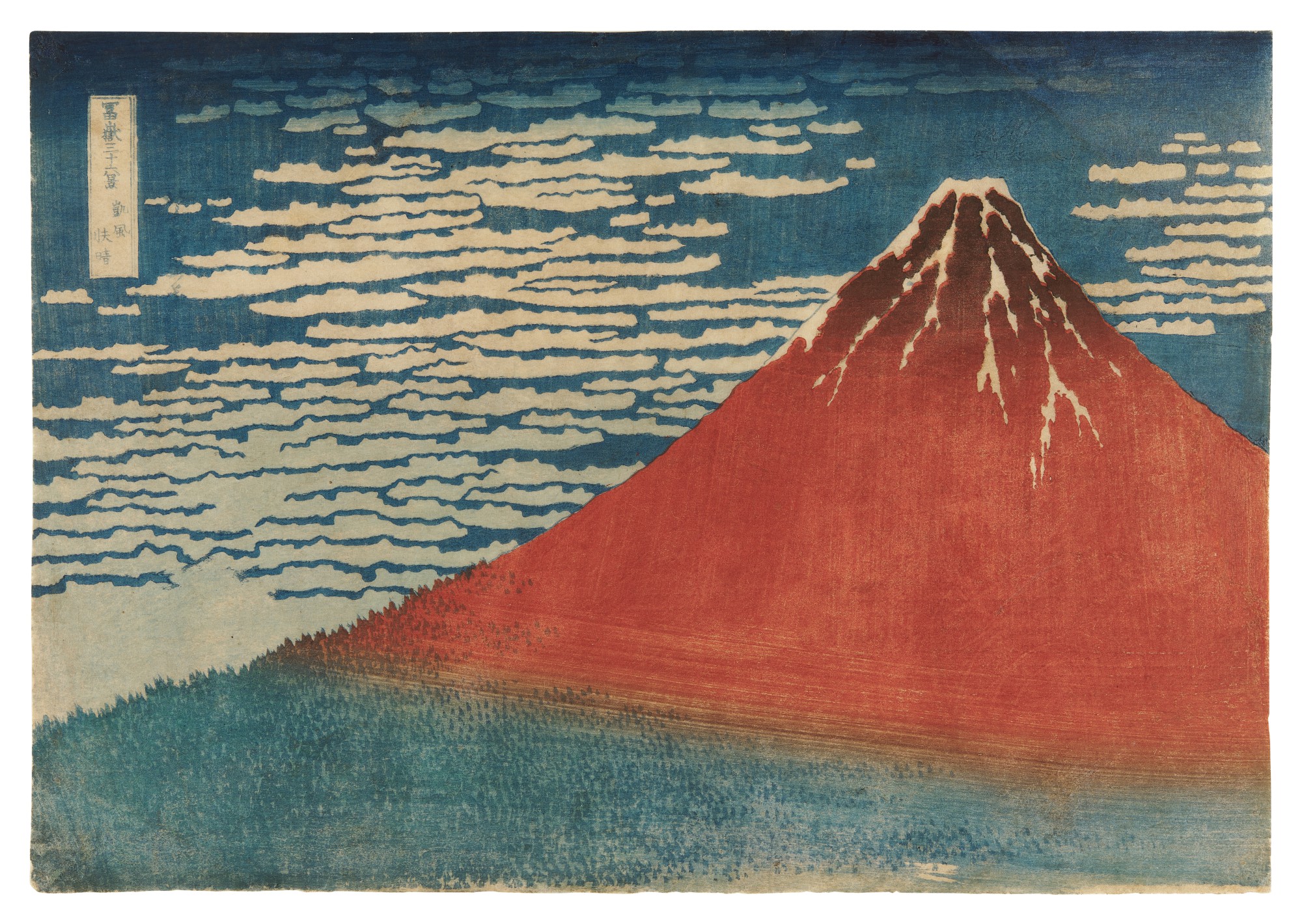
The best examples hold their color with a kind of confidence that immediately separates them from the rest of a group. Among the artists well represented on The Collection, Katsushika Hokusai remains the obvious anchor. His Thirty Six Views of Mount Fuji, produced in the early 1830s, gave the world some of the most consequential landscape images ever made, and strong impressions of works from that series continue to command serious attention at auction. Utagawa Hiroshige brings a different register, more atmospheric and emotionally vulnerable in his handling of weather and season, and collectors who find Hokusai too cerebral often discover in Hiroshige a warmth that is immediately liveable with.
Both artists reward patient looking, and both have well established market histories that provide collectors with genuine benchmarks. Hasui Kawase, working in the early twentieth century, extended the shin hanga tradition into territory that feels surprisingly modern, and his prints offer collectors a point of entry that is still reasonably accessible relative to the giants of the earlier era. The more compelling collecting opportunity right now may lie in artists who sit outside the traditional canon of ukiyo e but who engage Mount Fuji as part of a broader visual conversation. Chinatsu Ban represents exactly this kind of practice, bringing a contemporary sensibility to Japanese visual culture without simply quoting it.
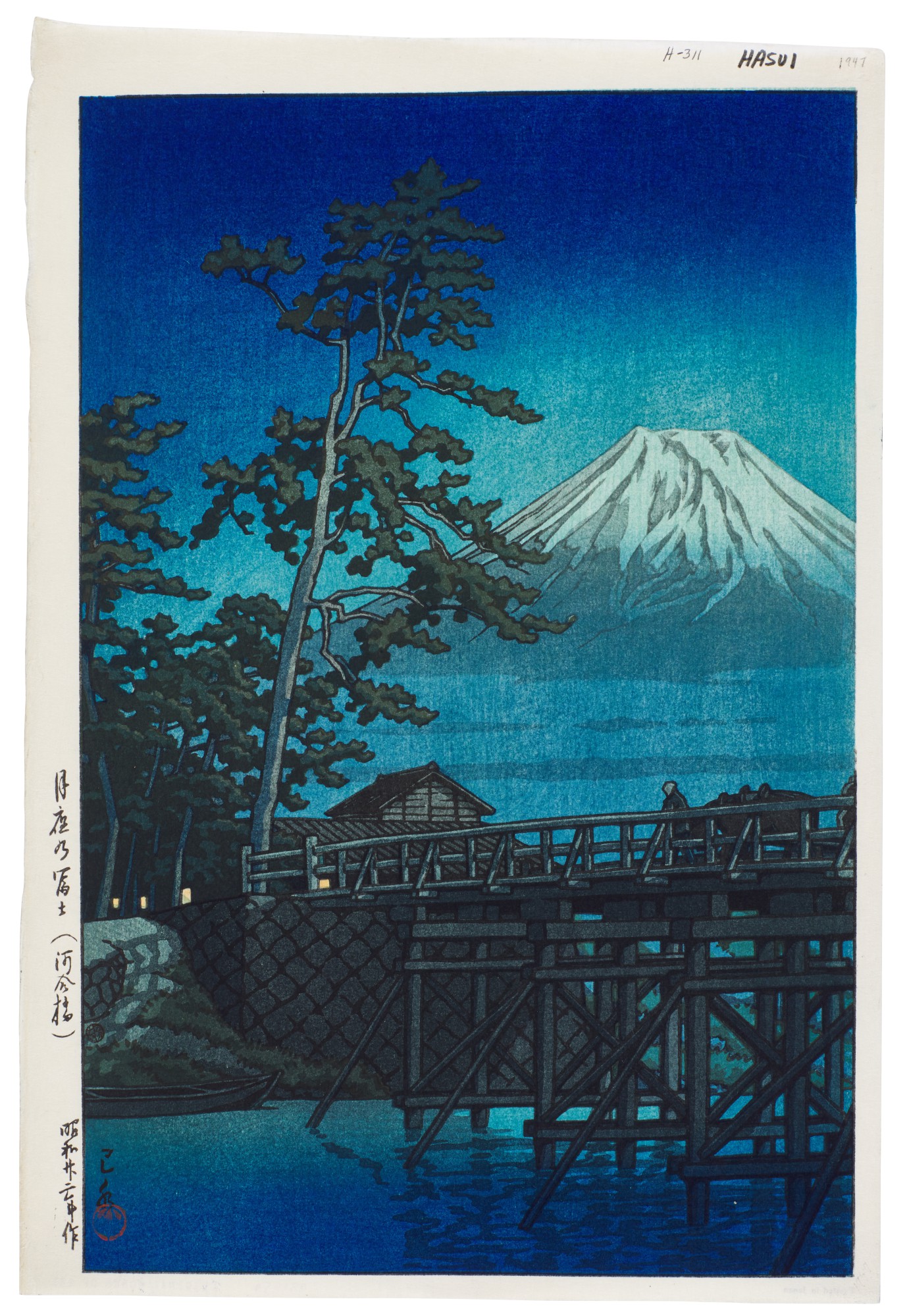
Hasui Kawase
Mount Fuji in Moonlight, Kawai Bridge (Tsukiyo no Fuji, Kawaibashi) | Showa period, 20th century
Works like hers operate in the space between art historical literacy and genuine formal invention, and that position tends to appreciate as the market catches up to the critical conversation. Nakano Kimei and Koyo Okada offer further examples of artists whose engagement with Japanese landscape carries real depth but who remain undervalued relative to their Western counterparts working in similar conceptual territory. These are names worth watching closely. At auction, works featuring Mount Fuji have proven remarkably resilient across market cycles.
Strong impressions of the canonical prints have seen consistent demand at the major houses, with particularly notable results at Christie's, Sotheby's, and Bonhams in their specialist Japanese art sales. The category benefits from a genuinely international buyer base, with serious collectors in Japan, the United States, and Europe all competing for the best examples. Secondary market performance for twentieth century artists like Hasui has accelerated meaningfully over the past decade as Western collectors have come to appreciate the technical mastery involved in the shin hanga tradition. Works that were considered decorative a generation ago are now understood as serious, and prices have reflected that reappraisal.
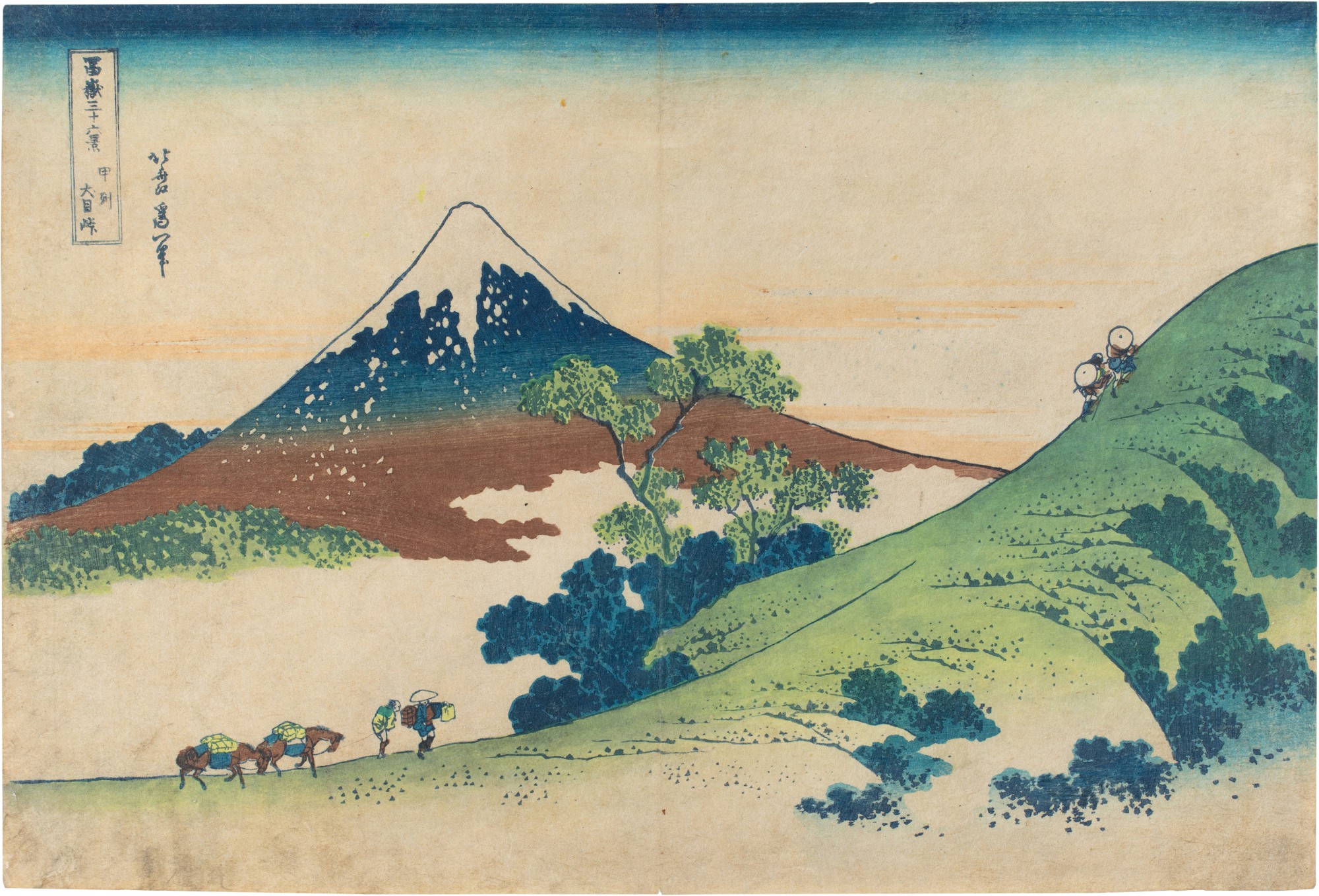
Katsuhika Hokusai
日本 江戶時代 葛飾北斎 《富嶽山三十六景.甲州犬目峠》 木刻版畫
Practically speaking, there are a few things every collector should bring to any acquisition conversation. Ask about provenance and whether the work has been stored in stable conditions, away from light and humidity fluctuation. For woodblock prints, ask specifically about the impression state and whether any conservation has been done. For contemporary works, understand the edition size fully and whether the artist has a history of releasing additional editions that could dilute scarcity.
Display matters enormously for works on paper. UV filtering glazing is not optional, and a work that has been displayed in direct light for years may look fine at a viewing distance but will show its damage under closer examination. These are not alarmist concerns. They are the basic literacy of collecting in this category.
What makes building a collection around Fuji so intellectually satisfying is that the subject functions almost like a tuning fork. Every artist who approaches it is tested by its familiarity, forced to find a reason to look again. The best works in the field answer that test with something genuinely personal, whether that is Hokusai's structural rigour, Hiroshige's emotional generosity, or the more searching investigations of contemporary artists like Chinatsu Ban. A collection that holds several generations of responses to the same subject becomes something more than an accumulation of beautiful objects.
It becomes a meditation on how artists think, and on what endures.