Intimate Composition
Paul Strand
Yellow Vine and Rock Plants, Orgeval, France


The Small Canvas That Changes Everything
When a modest oil sketch by Ernest Meissonier sold at Sotheby's Paris for nearly three times its high estimate, the room went quiet in that particular way that signals something has shifted. The work was not a grand battle scene or a theatrical set piece. It was a figure study, barely larger than a sheet of paper, rendered with the kind of concentrated attention that only comes when a painter stops performing and starts looking. That result, and others like it across the past few seasons, has confirmed what many serious collectors already suspected: the intimate composition is having a genuine moment, and the market is catching up to the eye.
The term itself resists easy definition, which is part of its appeal. An intimate composition is less about scale than about register. It is work that addresses the viewer directly, without the buffer of spectacle or rhetoric. It asks you to come closer.
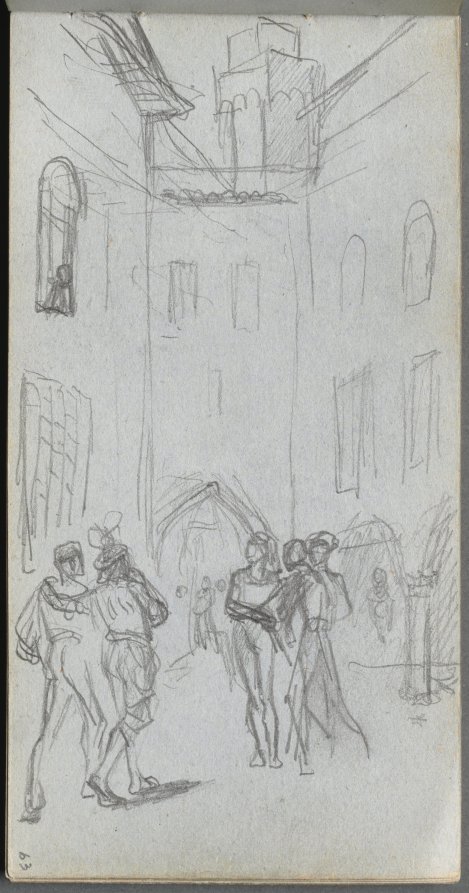
Ernest Meissonier
Sketchbook, page 63: Figures in a Courtyard, 1860
It rewards that closeness. And in a collecting climate increasingly dominated by works designed to photograph well and read from across a fair booth, the turn toward the intimate feels less like nostalgia and more like a correction. Maurice Prendergast is a useful touchstone here. His small panel paintings and watercolors, those shimmering aggregates of figures in parks and along shorelines, have long been undervalued relative to their formal sophistication.
Recent years have seen that begin to change. The 2018 retrospective organized by the Williams College Museum of Art offered a rereading of Prendergast not as a charming regionalist but as a painter deeply in conversation with Post Impressionism, someone who understood Cézanne and Vuillard and brought that understanding to bear on American leisure culture. Auction results have followed the critical reassessment, with major examples now routinely surpassing previous records. His work on The Collection reflects both the range of his output and the ongoing appetite for his particular brand of chromatic intensity compressed into small formats.
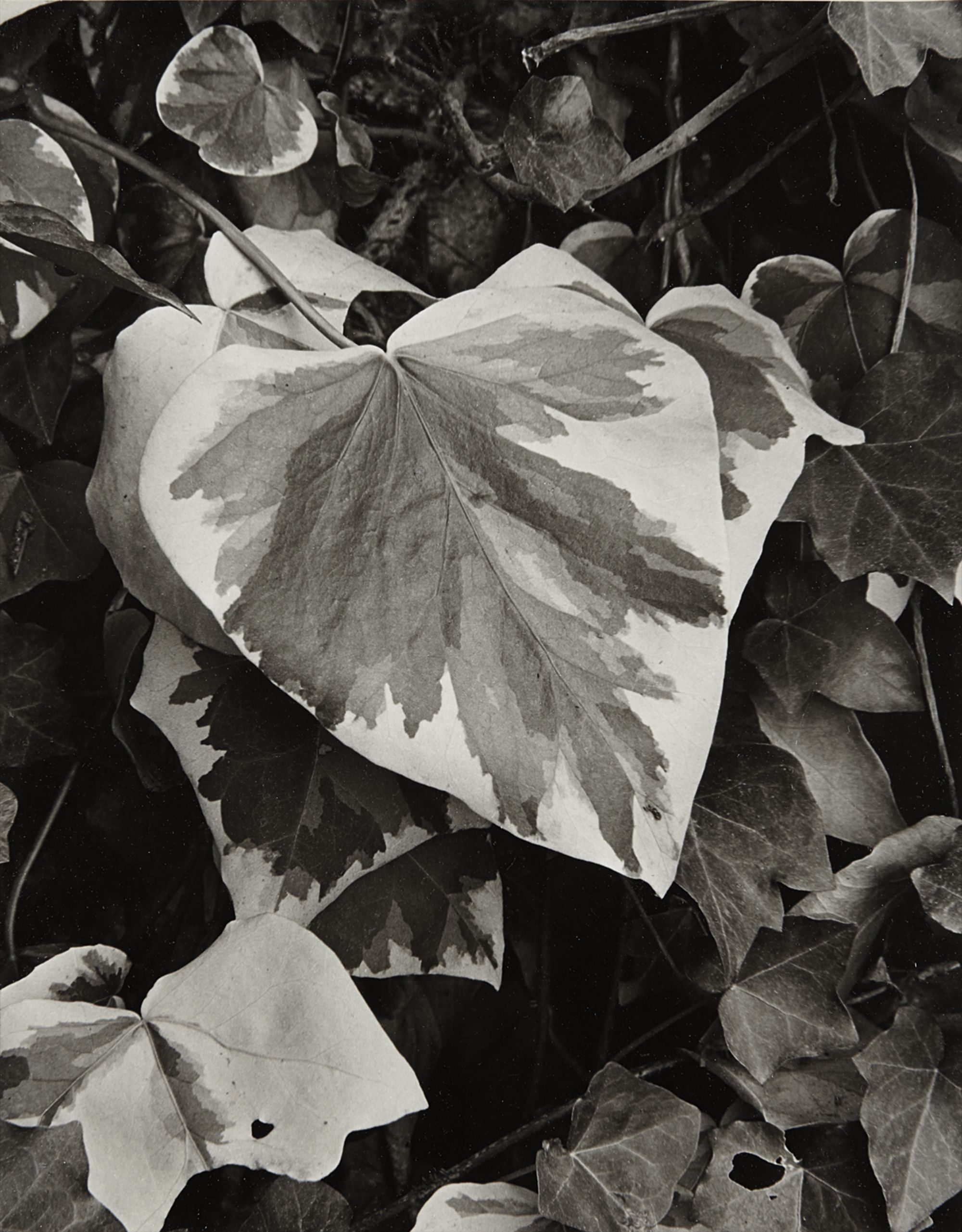
Paul Strand
Yellow Vine and Rock Plants, Orgeval, France
Paul Strand occupies a different but related territory. His early photographs, made between roughly 1915 and 1920, essentially invented a vocabulary for what intimate photographic composition could mean. The close crops, the refusal of sentimentality, the insistence that form carries as much meaning as subject: these were not decorations but arguments. The Museum of Modern Art, which has held Strand's work since the institution's earliest years, mounted a significant reconsideration of his legacy in recent memory, and scholars including Maria Morris Hambourg have continued to refine our understanding of his place in the history of the medium.
For collectors, his prints remain among the most stable and intellectually serious holdings available in photography at any price point. The surrealist tradition adds another dimension entirely. Salvador Dalí's smaller works and works on paper have seen sustained demand, particularly for pieces that demonstrate his technical virtuosity rather than his taste for spectacle. The intimate Dalí, the meticulous draftsman working at close range on a single image, is a different figure from the showman, and the market has grown sophisticated enough to make that distinction.
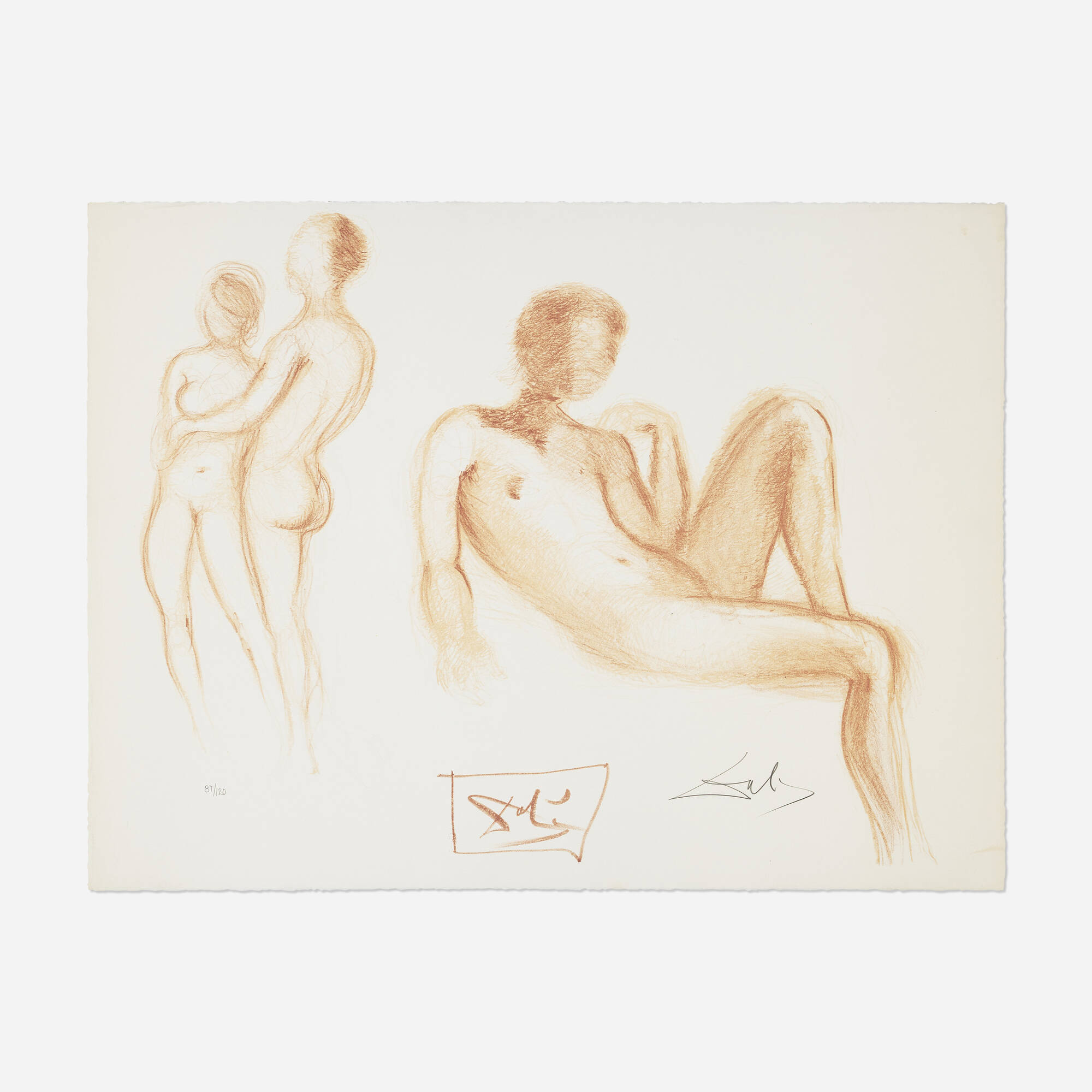
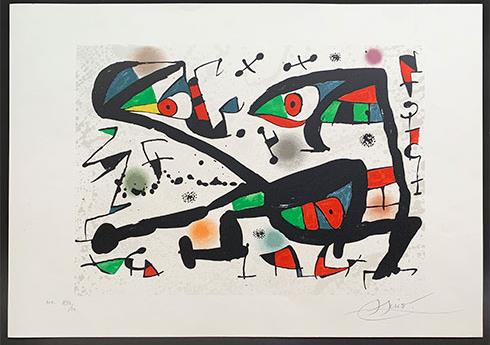
Salvador Dalí
Couples Nus (from the Nudes series), 1972
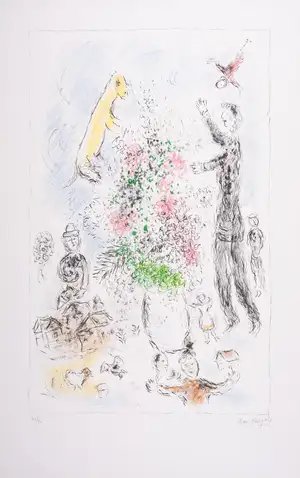
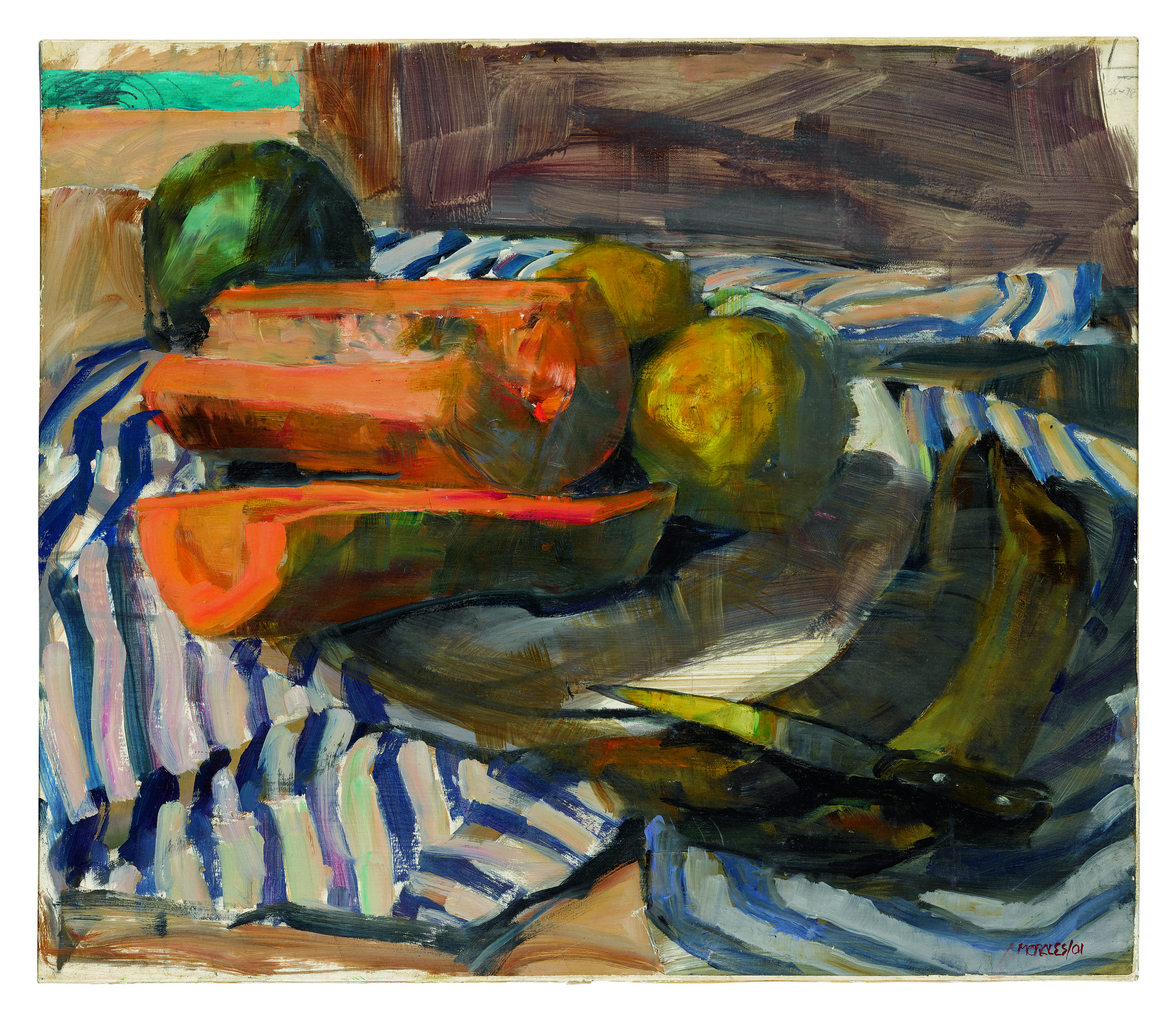
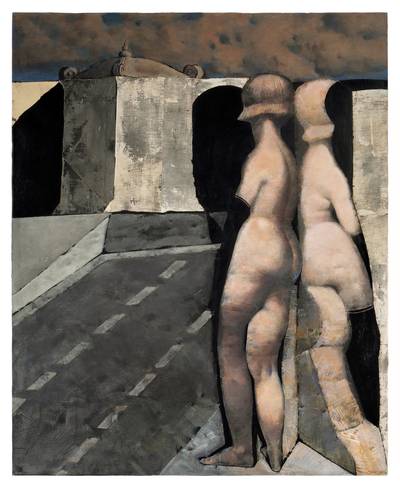
Marc Chagall presents a parallel case. His gouaches and smaller canvases, saturated with personal mythology and chromatic warmth, have found consistent institutional homes across Europe and North America, and collectors who acquired them two decades ago have been rewarded not just financially but in terms of living with genuinely great work. Armando Morales is perhaps the most instructive example of a painter whose intimate compositions reward sustained attention in ways that his larger works, though impressive, do not quite replicate. The Nicaraguan painter's interiors and figure studies carry a density of feeling that seems to concentrate rather than diminish as the format shrinks.
The Museum of Modern Art in New York holds examples of his work, as does the Blanton Museum in Austin, and both institutions have contributed to the growing critical literature around Latin American modernism that is reshaping collecting priorities at the highest levels. When the Blanton substantially expanded its Latin American holdings over the past decade, it was not simply an act of regional advocacy. It was a statement about where the real art historical action had been and where it was heading. The critical conversation shaping this space draws on several overlapping currents.
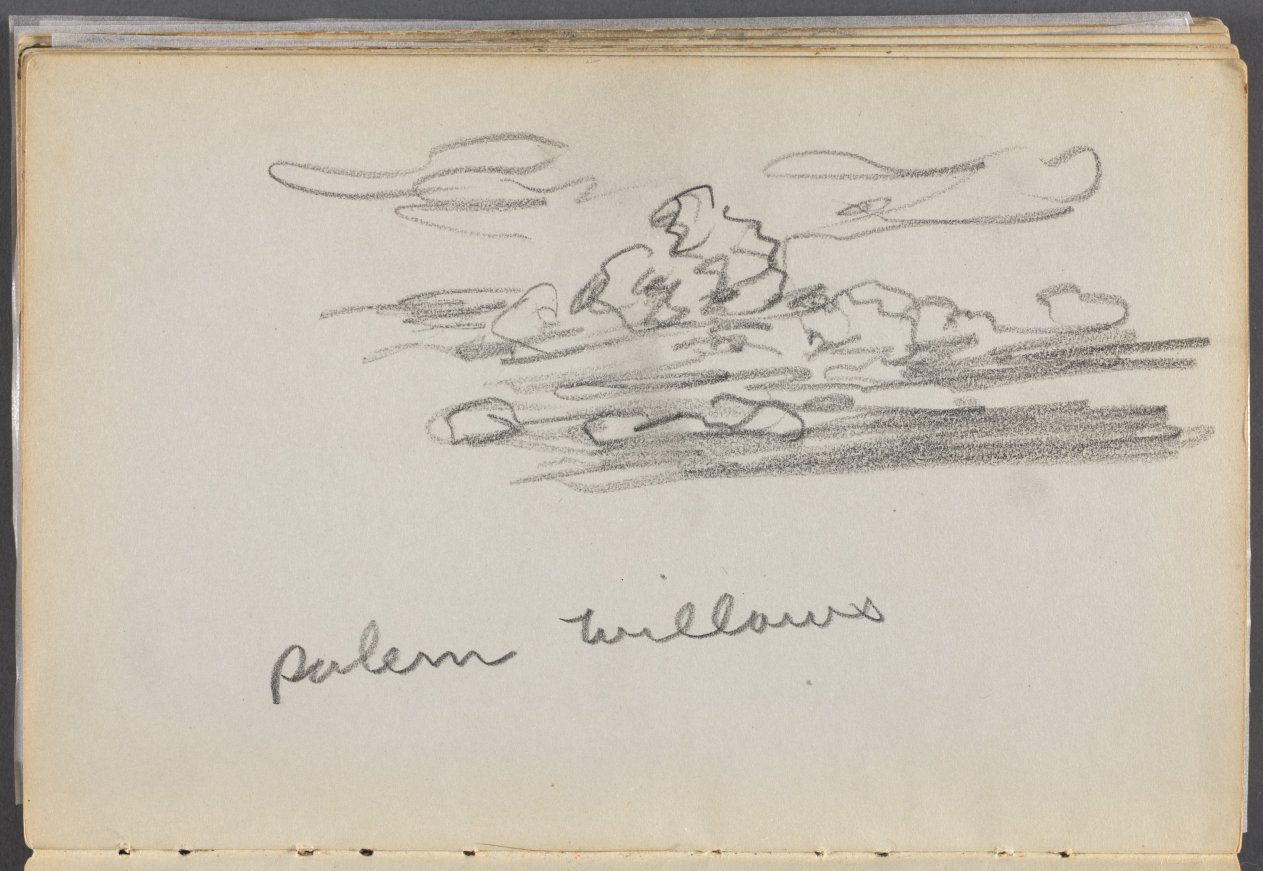
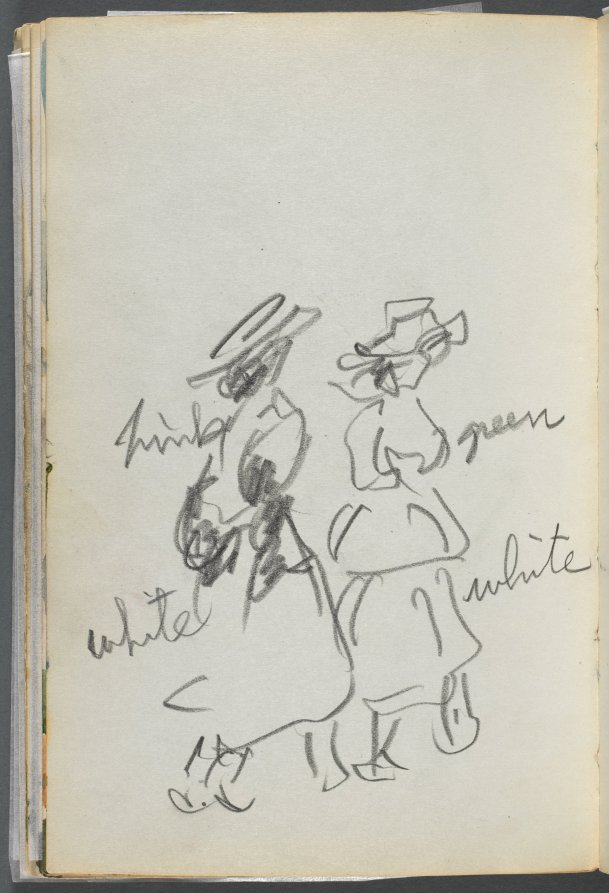
Maurice Prendergast
Sketchbook, The Dells, N° 127, page 184: "Salem Willows", 1919
Writers like Roberta Smith and Holland Cotter have consistently argued for the primacy of attentive looking over theoretical scaffolding, and their influence on a generation of younger critics is visible in the renewed interest in works that reward that kind of looking. Frieze and the Burlington Magazine have both published important essays in recent years on the rehabilitation of intimacy as a critical category, pushing back against the long critical preference for the monumental and the disruptive. Curators at institutions like the Phillips Collection in Washington, which was founded on the premise that scale and importance are not synonymous, have been quietly ahead of this curve for decades. What feels alive right now is the intersection of intimacy and ambition.
The most interesting works circulating through galleries and auction houses in this category are not modest in their aspirations, only in their dimensions. They ask serious questions in a quiet voice. What feels settled is the old hierarchy that once placed the easel painting and the study below the grand tableau. That hierarchy still exists in pockets of the market, but it is losing ground steadily, and collectors who recognized this early have assembled holdings that look increasingly prescient.
What surprises are coming probably involve further reassessment of figures like Morales and Prendergast, artists whose work was genuinely underappreciated for reasons that had more to do with geography and critical fashion than with quality. The intimate composition does not announce itself. It waits. And eventually, if it is good enough, the room comes to it.