Cynical Realism
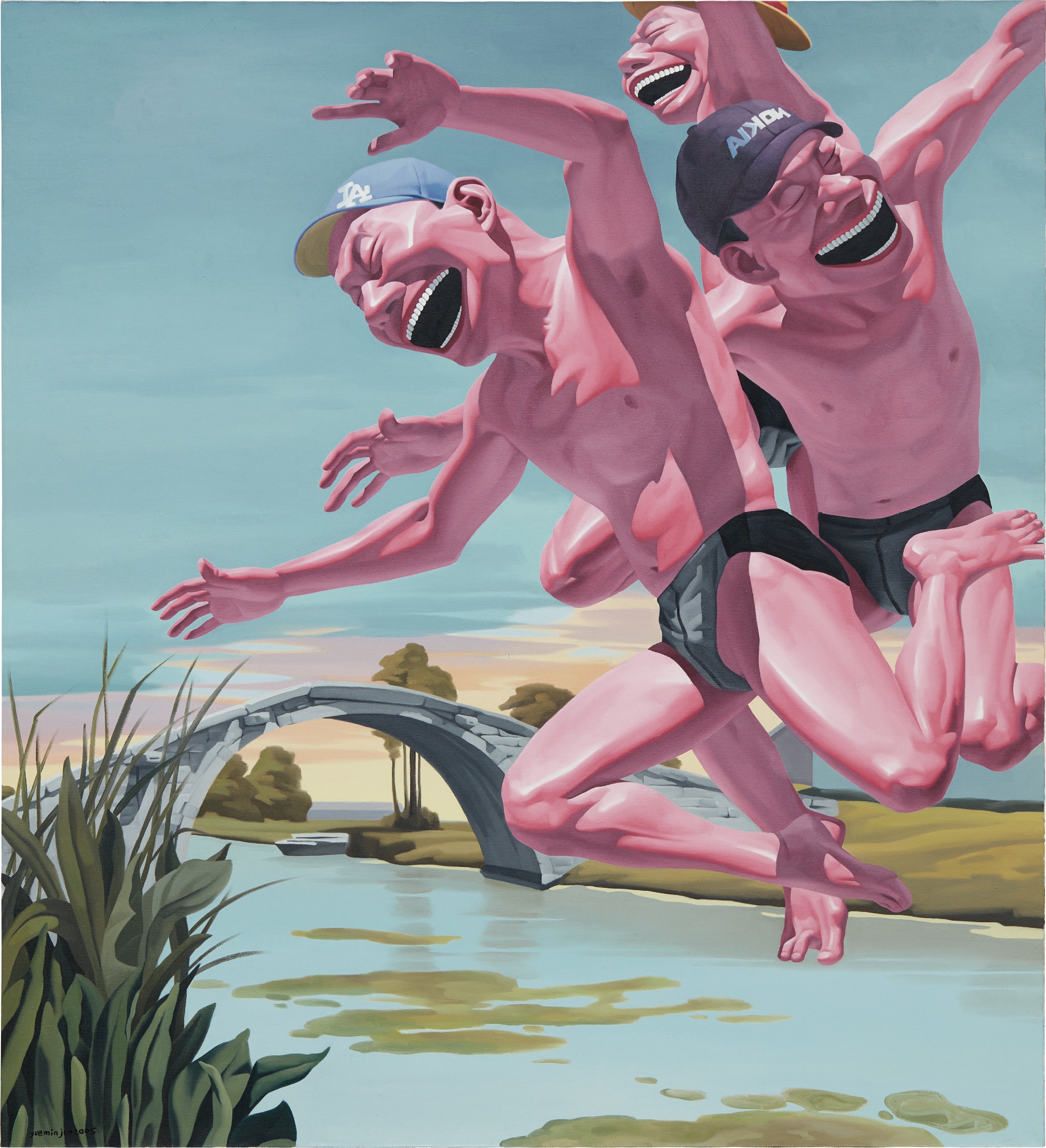
Yue Minjun
Hometown, 2005
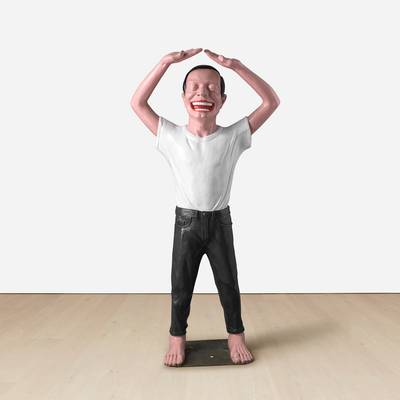
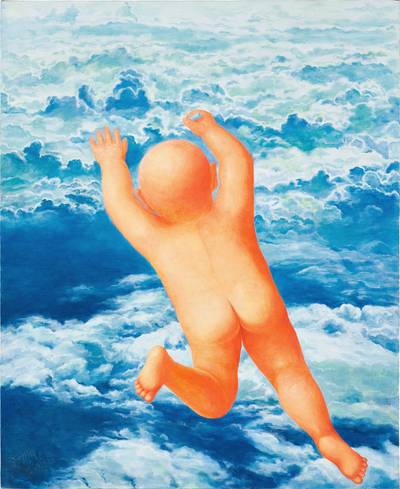
The Laugh That Swallowed an Empire
There is something deeply unsettling about a painting of a man laughing. Not chuckling, not smiling, but laughing with the full force of his body, eyes squeezed shut, teeth bared, face a mask of apparent joy that somehow reads as its own opposite. This is the visual language of Cynical Realism, the movement that emerged from China in the years immediately following the Tiananmen Square crackdown of 1989, and it remains one of the most psychologically complex artistic phenomena of the late twentieth century. To encounter it for the first time is to feel the ground shift slightly beneath you.
Cynical Realism did not arrive with a manifesto or a gallery opening. It grew organically from a specific historical wound. After June 4th, 1989, a generation of young Chinese artists found themselves in a cultural landscape stripped of the utopian idealism that had animated the avant garde movements of the 1980s. The political optimism of that decade, embodied in the short lived '85 New Wave movement, had collided with brutal reality.
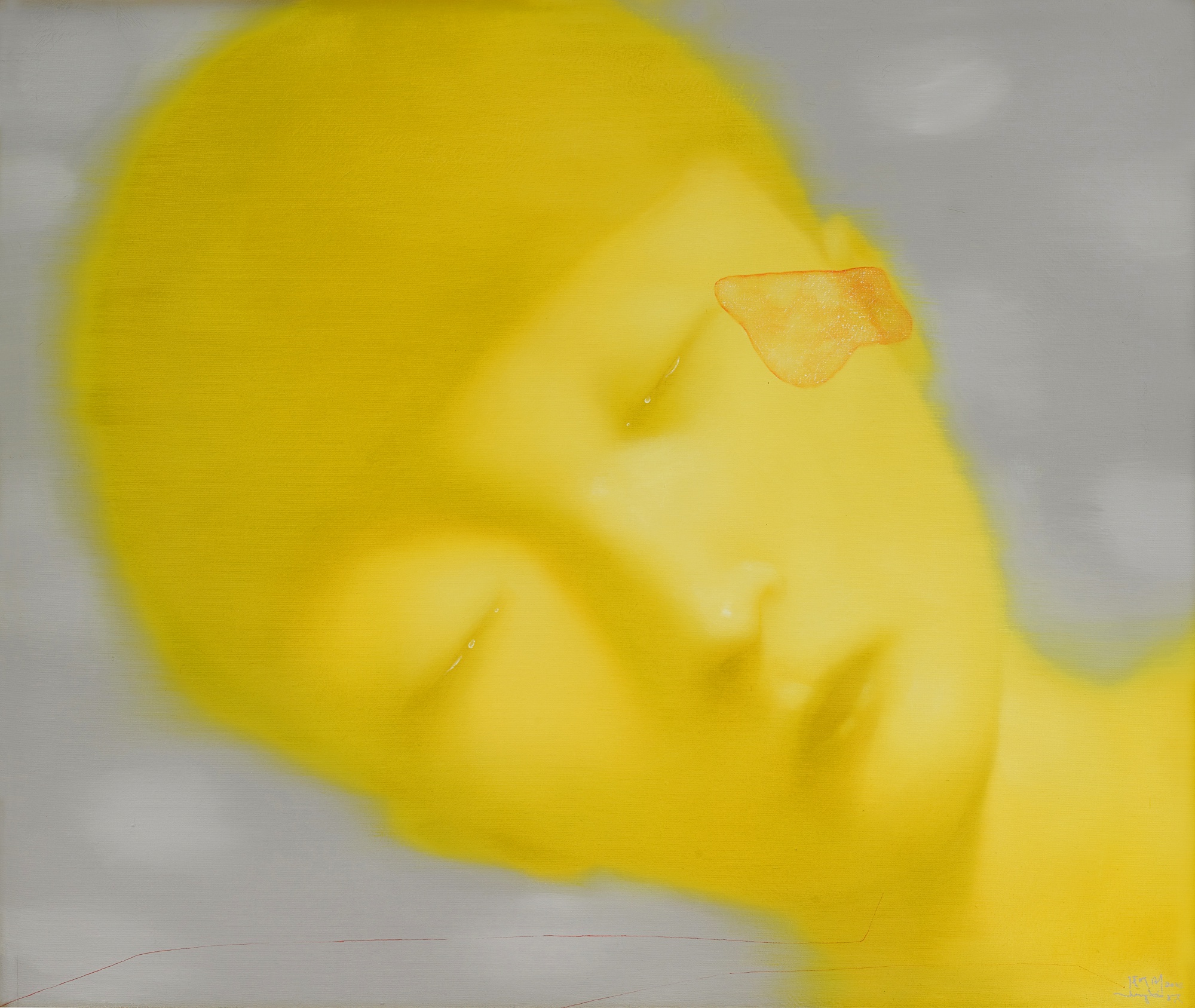
Zhang Xiaogang
Zhang Xiaogang 張曉剛 | Amnesia and Memory 失憶與記憶, 2002
What emerged in its place was something more guarded, more sardonic, and ultimately more penetrating. Artists turned inward and outward simultaneously, studying the faces of people navigating a society undergoing radical transformation while carrying the weight of recent trauma. The term Cynical Realism is generally attributed to the critic Li Xianting, who used it to describe a cluster of artists working in Beijing in the early 1990s, many of them living in the informal artists communities that had gathered around the outskirts of the city. These communities, notably the Yuanmingyuan artists village, became incubators for a new kind of figurative painting that borrowed the monumental scale and studied seriousness of Socialist Realism while hollowing out its ideological content and replacing it with irony, absurdity, and a peculiar floating melancholy.
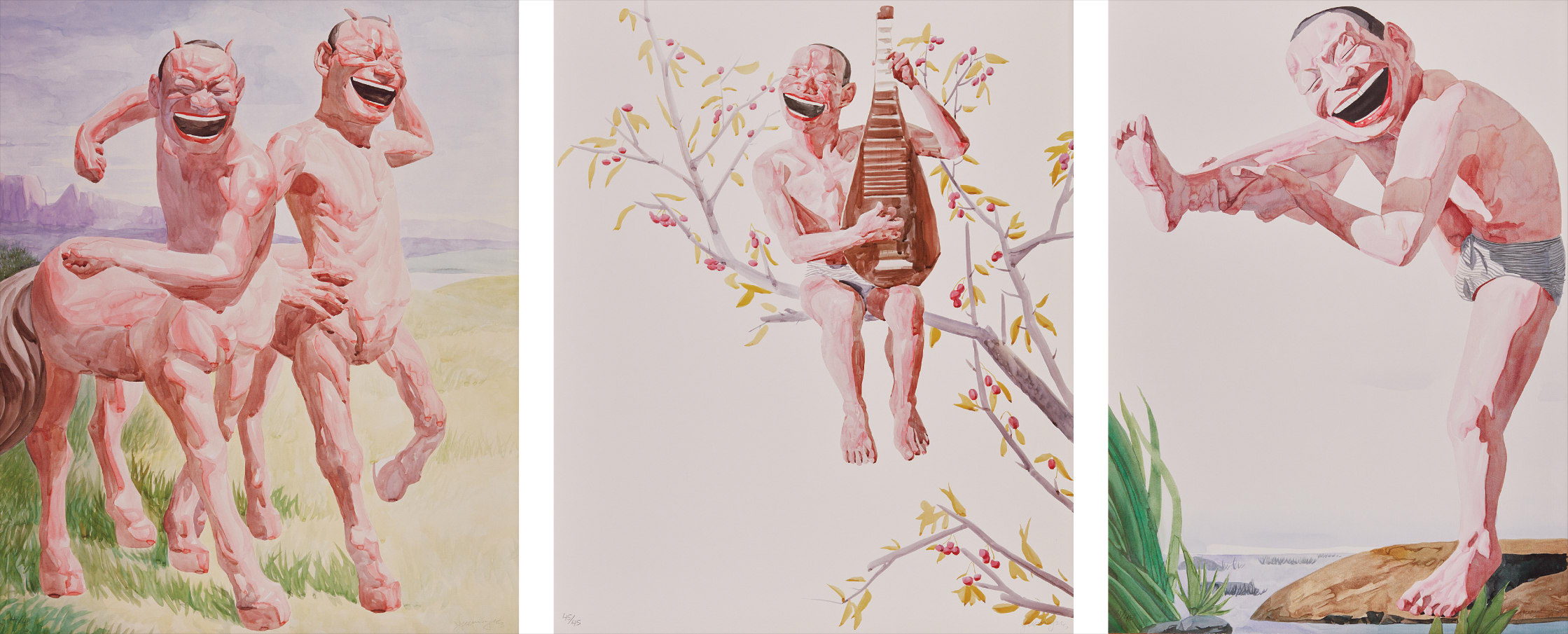
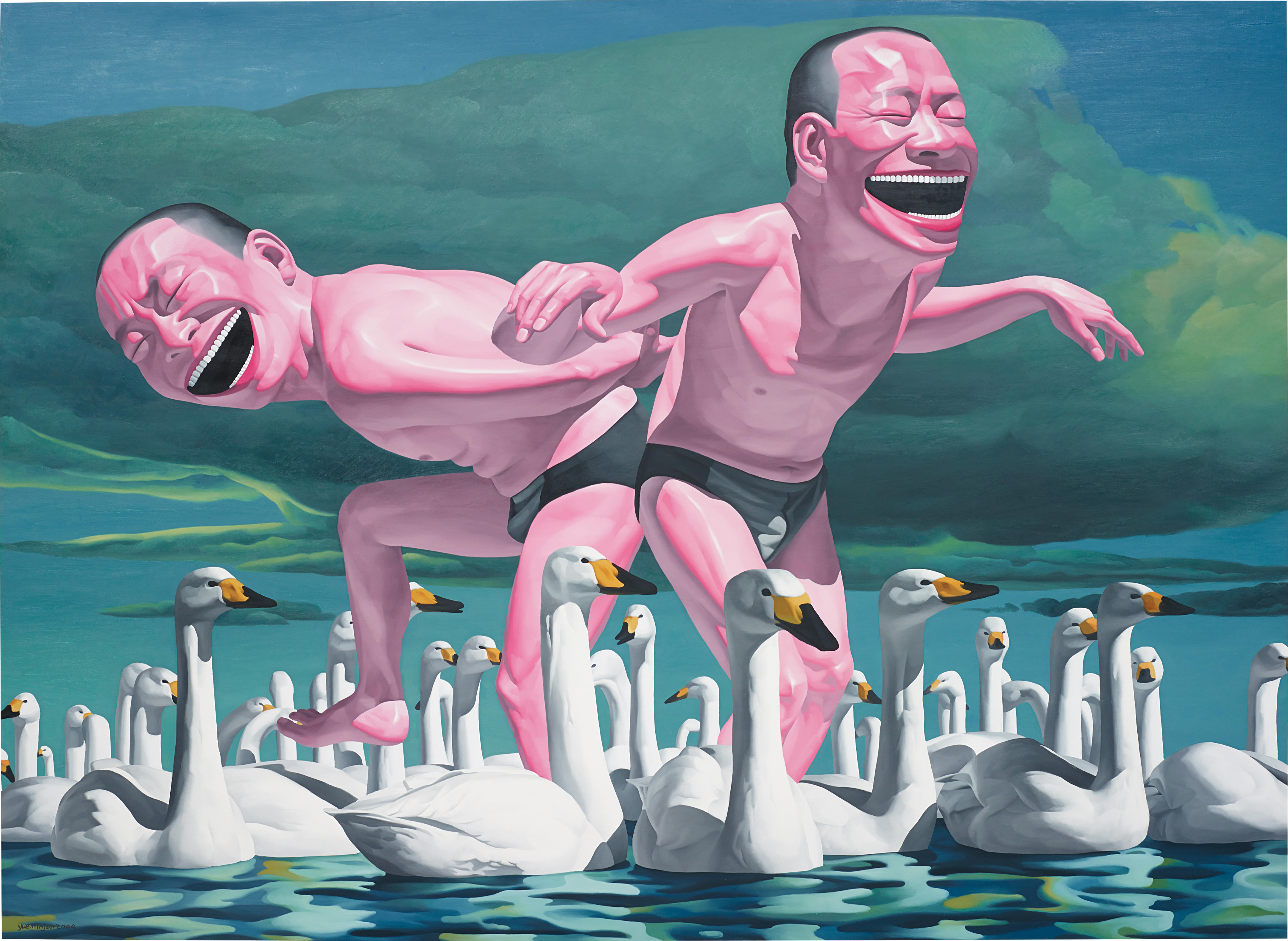
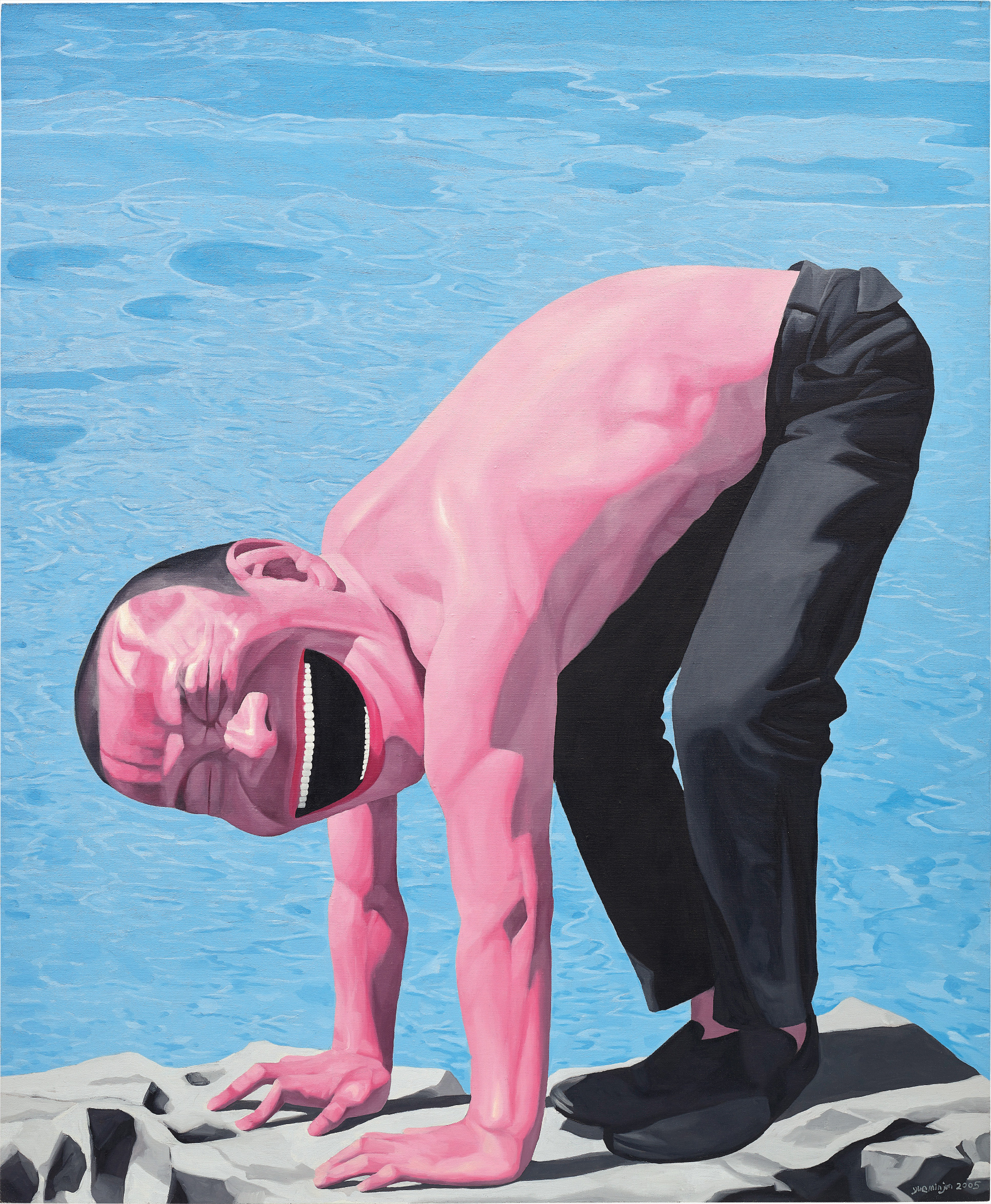
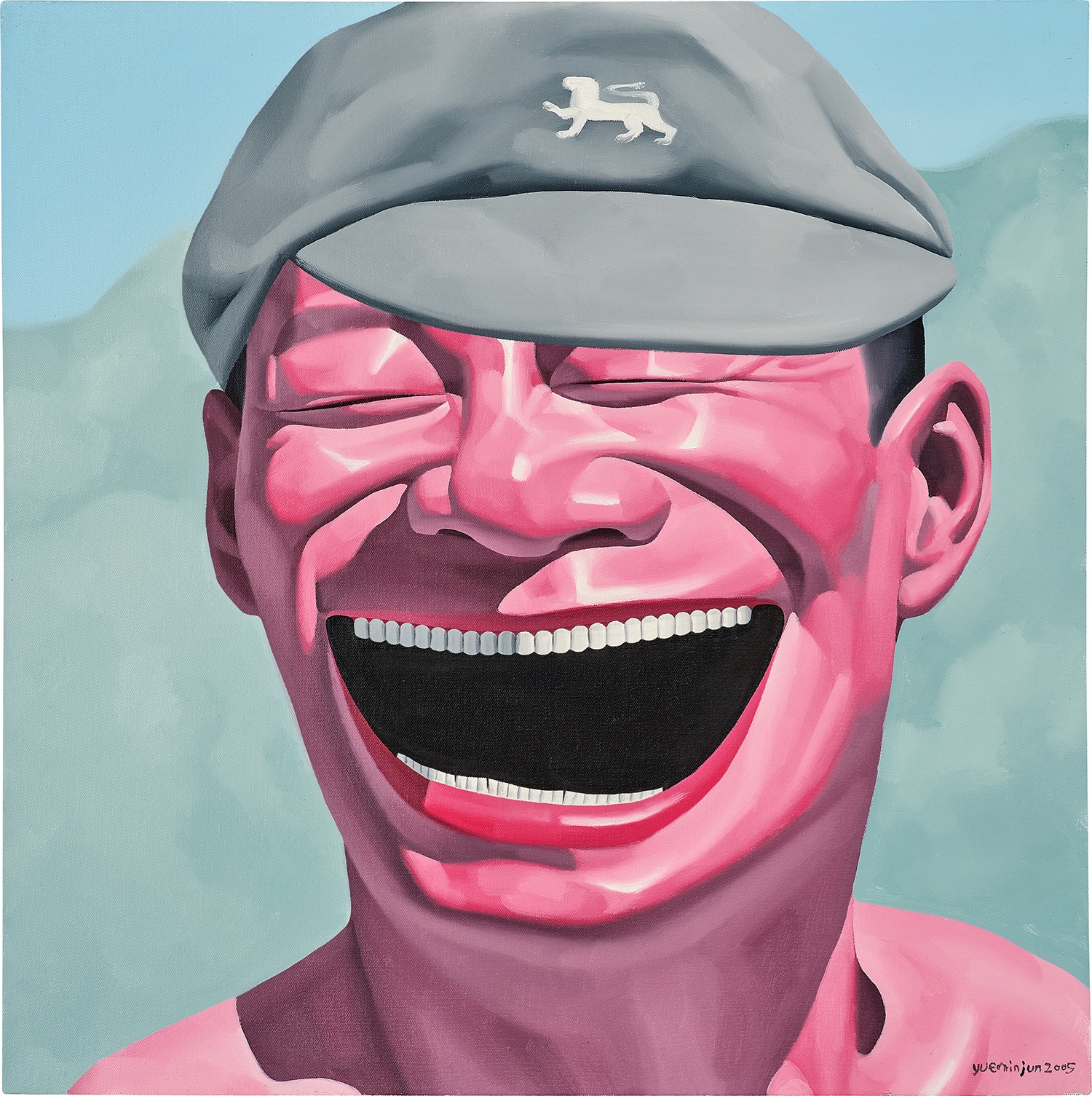
The movement gained international visibility with the landmark exhibition China's New Art, Post 1989, organized by curator Johnson Chang and shown in Hong Kong in 1993 before traveling widely. No artist embodies Cynical Realism more completely than Yue Minjun, whose works on The Collection offer an essential entry point into the movement. His signature motif, the self portrait as laughing everyman, reads at first as celebratory but accumulates a very different charge on extended looking. The laugh has no object.
Yue Minjun
Hometown, 2005
It is not directed at anything in particular. It is the laugh of someone performing happiness in a context where happiness must be performed, a social mask rendered in paint with unsettling precision. Yue began developing this iconography in the early 1990s, and by the time his work entered major international auctions in the 2000s it had become one of the most recognizable visual signatures in contemporary art. The repetition of the figure across canvas after canvas is itself meaningful, suggesting the way ideology flattens individuality into interchangeable type.
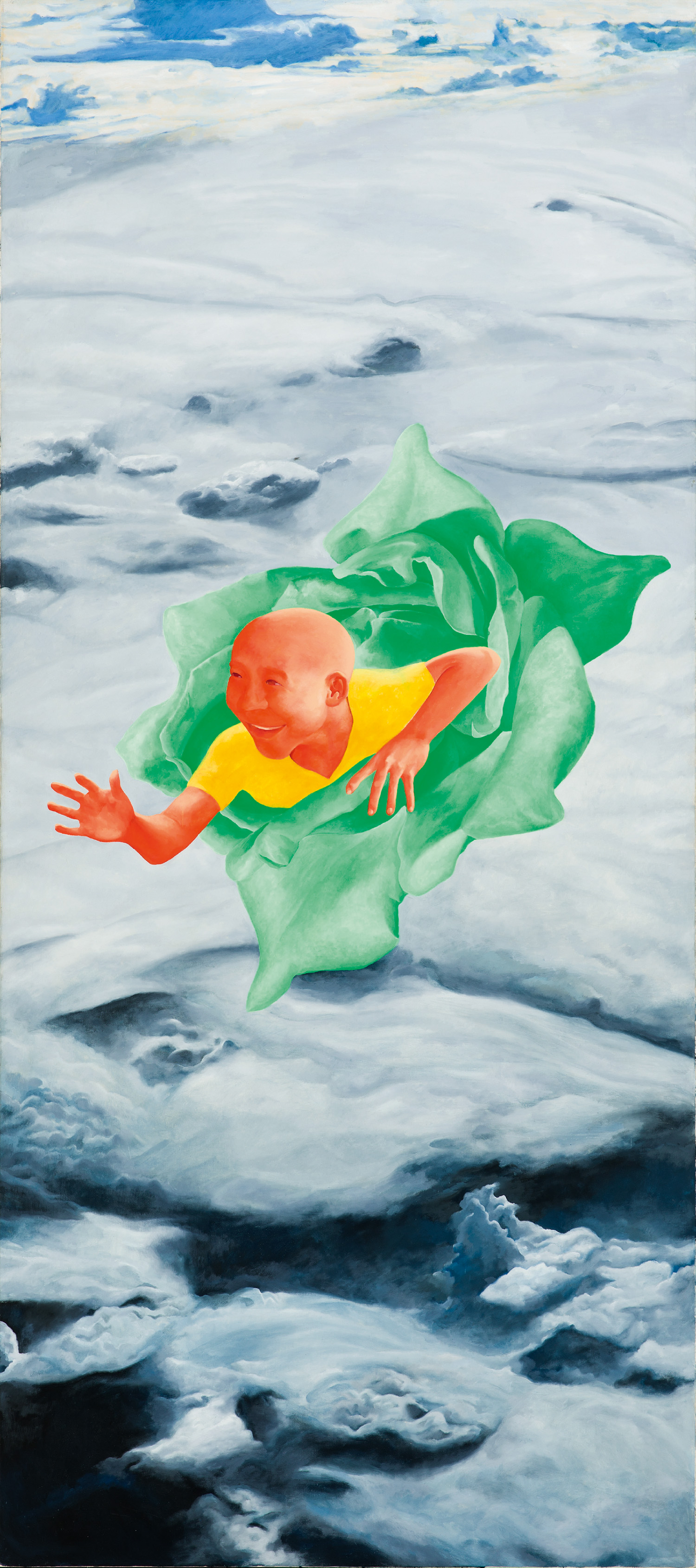
Fang Lijun, whose paintings are also well represented on The Collection, works in a related but distinct register. His bald headed figures drift through vast empty skies or underwater spaces, their expressions caught somewhere between boredom, resignation, and a strange kind of freedom. Fang was among the earliest artists associated with the movement and participated in the pivotal Post 1989 exhibition. Where Yue's work is almost aggressive in its manic energy, Fang's canvases have a quality of suspended animation, as if his figures have simply opted out of history entirely.
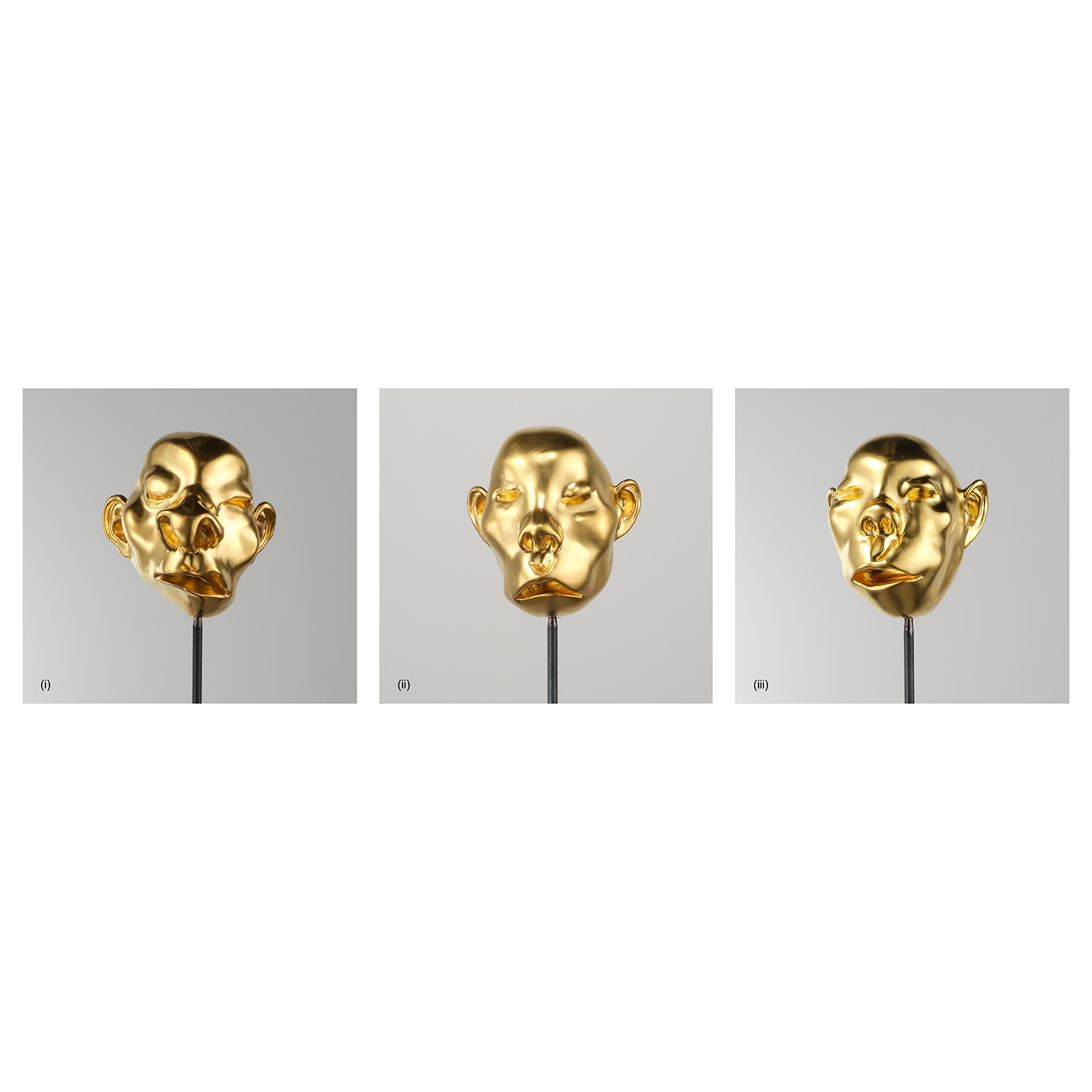
Fang Lijun
Three works: (i) Goldhead No. 6; (ii) Goldhead No. 3; (iii) Goldhead No. 11, 2005
The technical execution is notable too, with smooth surfaces and a palette that evokes both Socialist Realist illustration and something closer to graphic design, a visual vocabulary shaped by the specific aesthetic conditions of post Mao China. Zhang Xiaogang brings yet another dimension to the conversation. His Bloodline series, initiated in the early 1990s, takes the aesthetics of Chinese family portraiture from the Mao era as its raw material. The figures in these paintings stare out with a flatness borrowed directly from photographic studio portraiture of the Cultural Revolution period, their features slightly generic, connected by thin red lines that literalize the concept of bloodline while suggesting something more like transmission of trauma across generations.
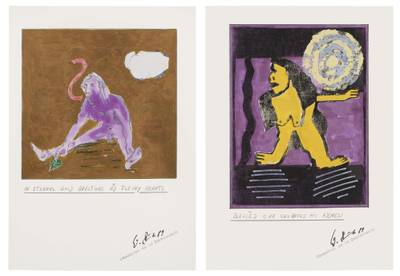
Zhang's approach is more elegiac than sardonic, and his work demonstrates how capacious the umbrella of Cynical Realism actually is. The movement was never about one emotional register but about a shared condition of disillusionment expressed through figuration. The movement's relationship to Western art history is worth examining because it is both real and complicated. These artists were aware of German Neo Expressionism, of Francis Bacon, of the Neue Wilde painters who had emerged in Europe in the late 1970s and 1980s.
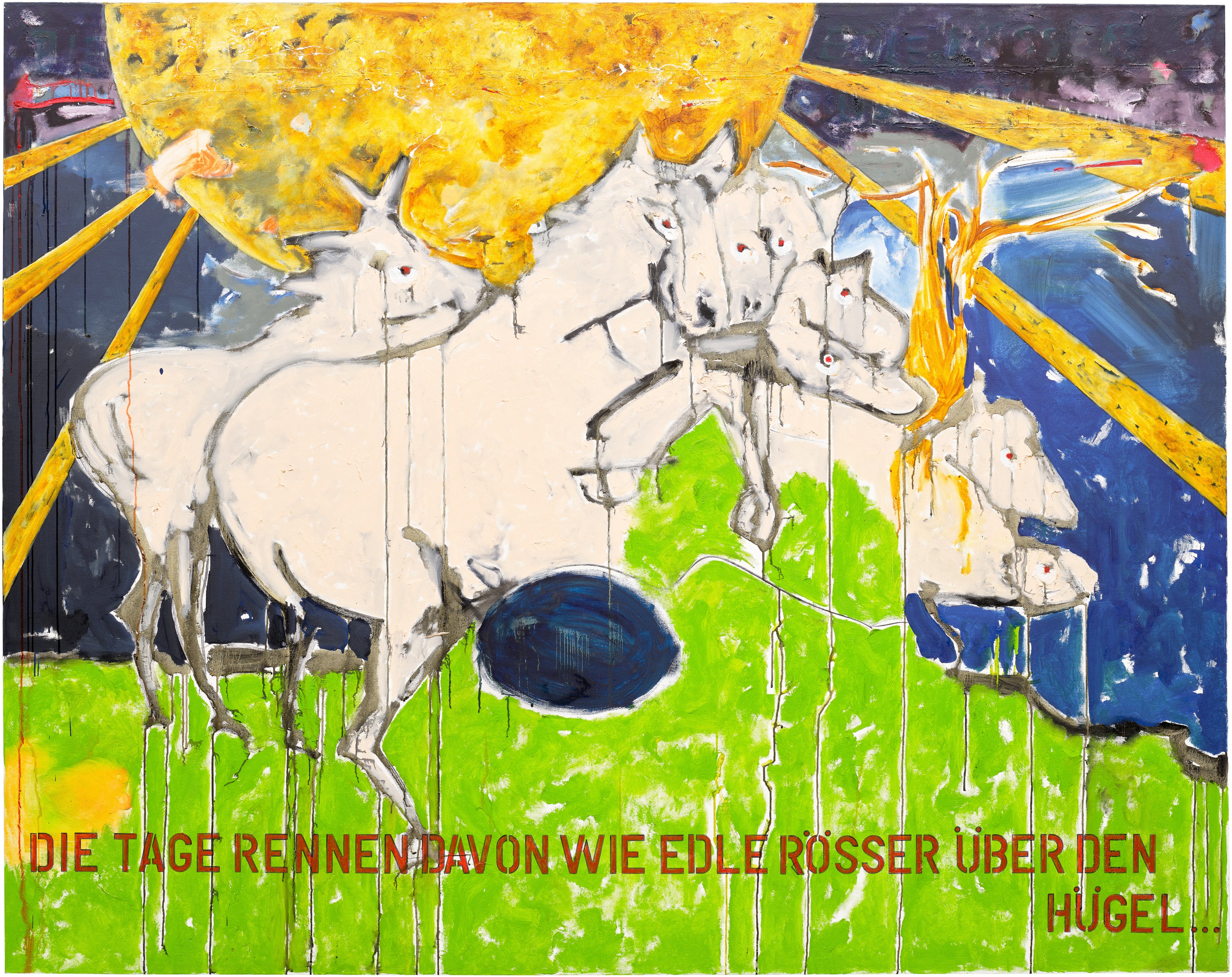
Werner Büttner
Die Tage rennen davon wie edle Rösser über den Hügel, 2011
Werner Büttner, whose work appears on The Collection, represents exactly the kind of German painting that offered a parallel if very different model for how figuration could carry ideological critique. Büttner and his Hamburg contemporaries had developed their own brand of deadpan irony as a response to German postwar culture. The resonances with Cynical Realism are genuine, but the Chinese artists were working from a completely different set of social and historical materials, and the comparison illuminates as much as it risks oversimplifying. What secured Cynical Realism's place in the global art market was the extraordinary appetite for contemporary Chinese art that developed through the 2000s.
Yue Minjun's Execution sold at Sotheby's London in 2007 for over five million pounds, a figure that announced the movement's arrival as a serious collecting category for international buyers. This commercial success brought with it the usual questions about whether market attention distorts critical reception, but the work itself has continued to reward close attention regardless of price. The best of it refuses to resolve into simple satire or simple despair. Today, Cynical Realism stands as a crucial document of a particular historical moment, but it also speaks to something more durable.
The condition it describes, the individual negotiating between public performance and private reality within a system that demands conformity, is not unique to China in the 1990s. That universality, earned through the most specific of cultural circumstances, is what distinguishes the greatest works in this category and makes them essential for any collector serious about understanding the past four decades of global contemporary art.