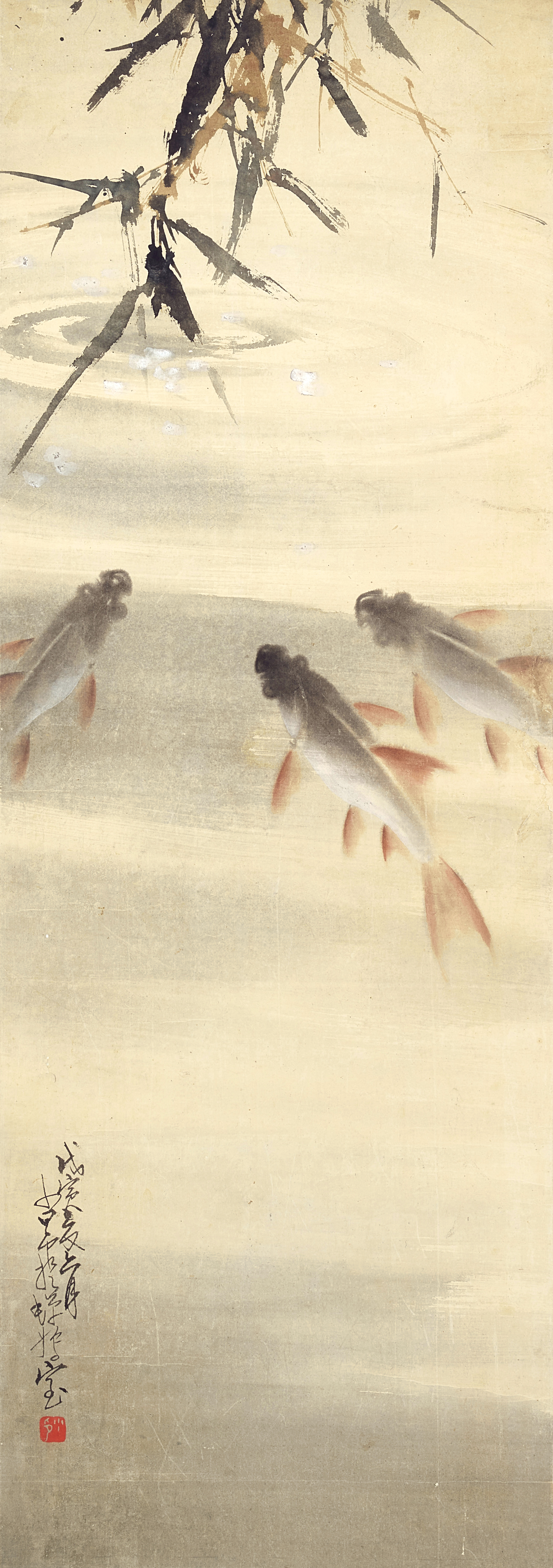
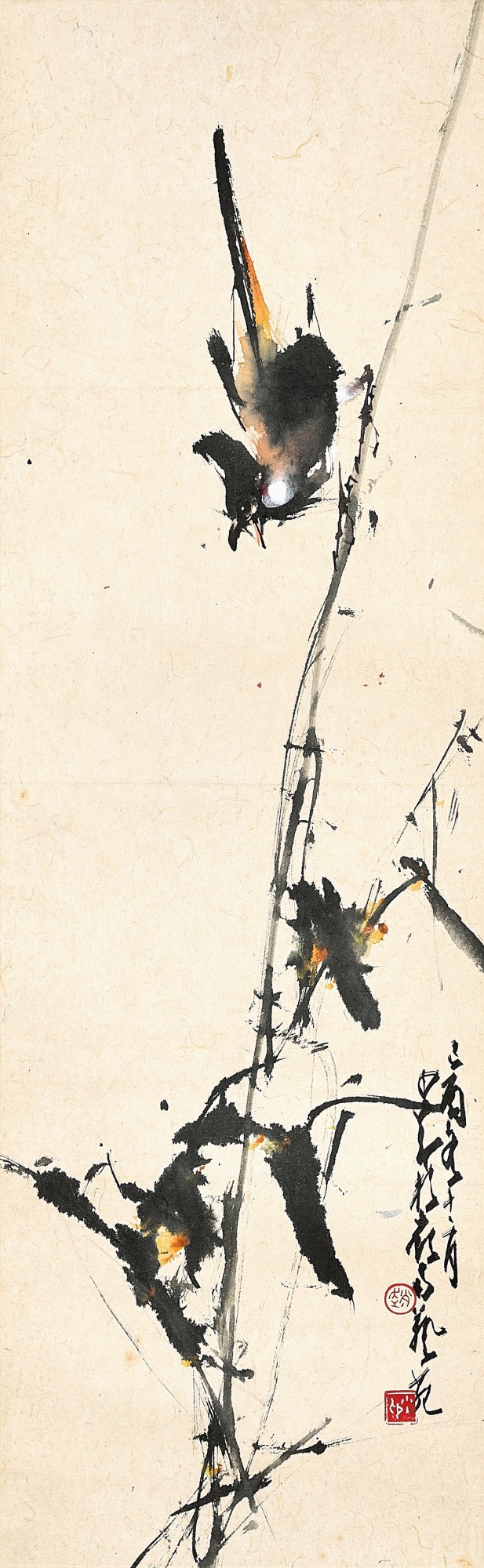
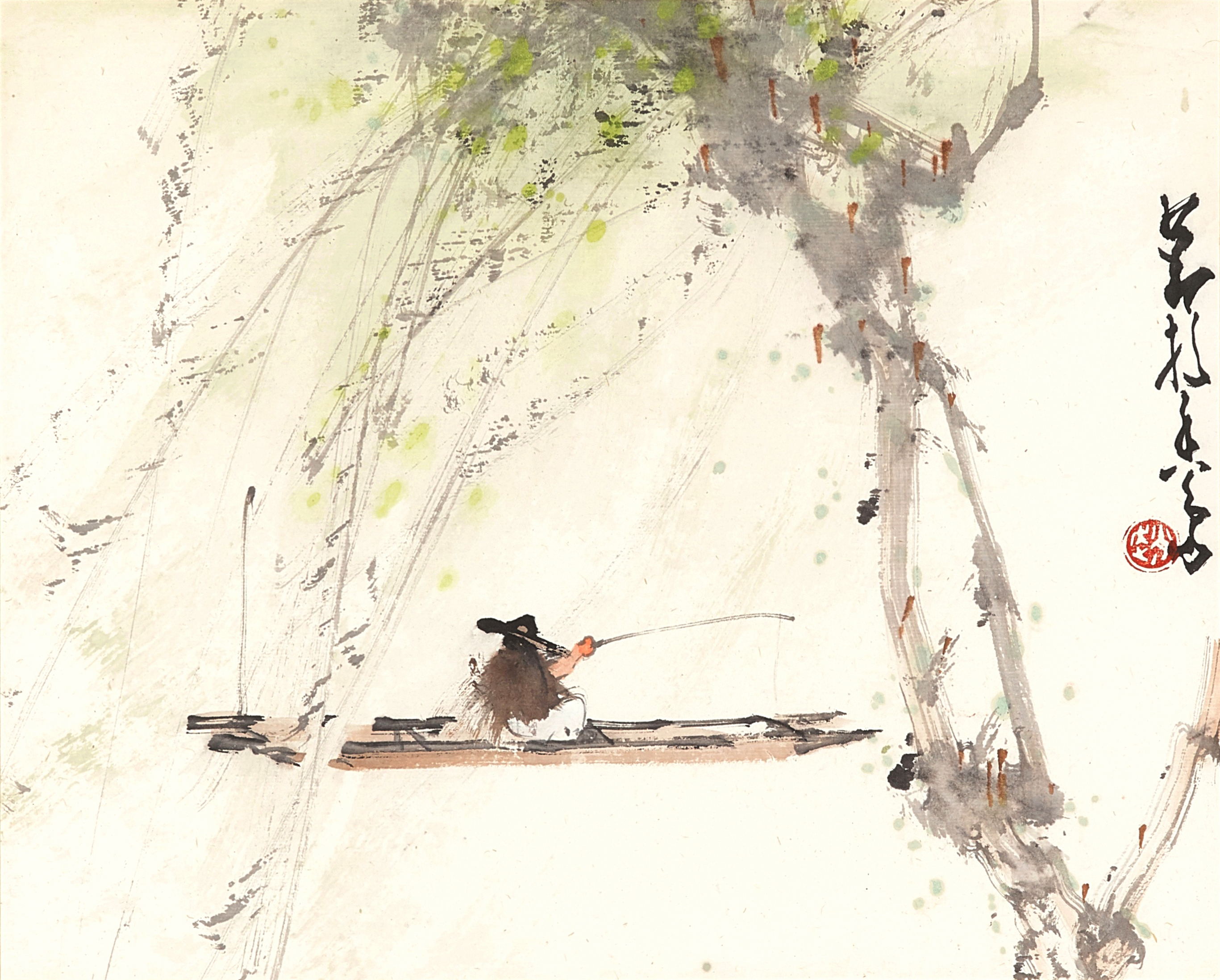
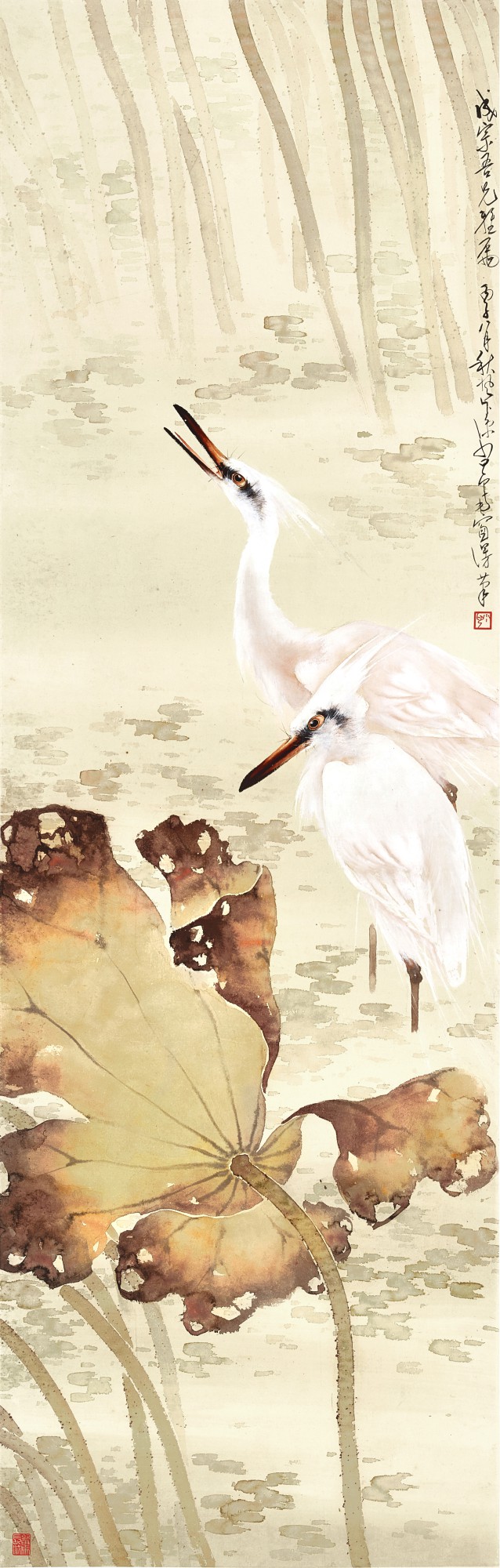
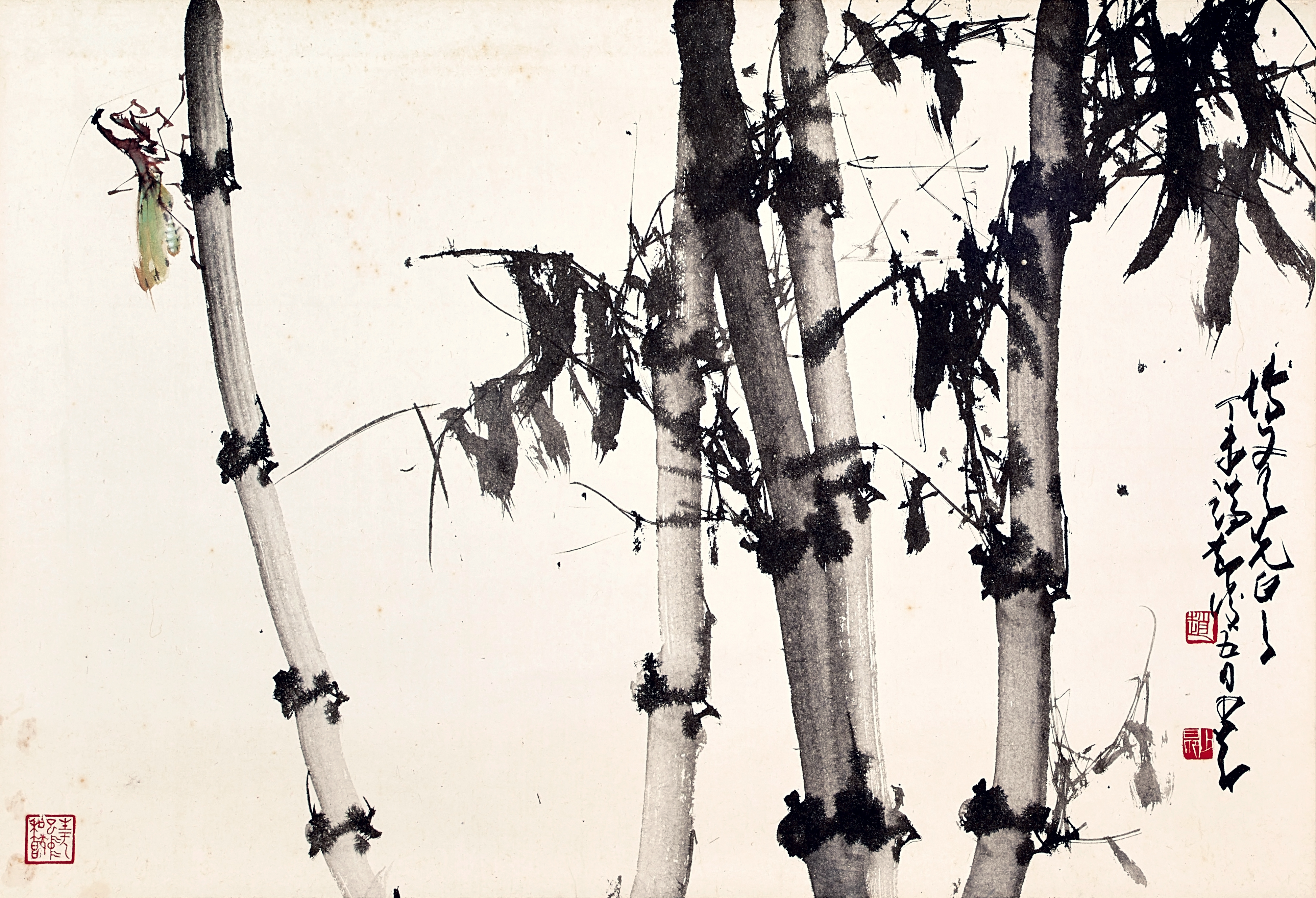
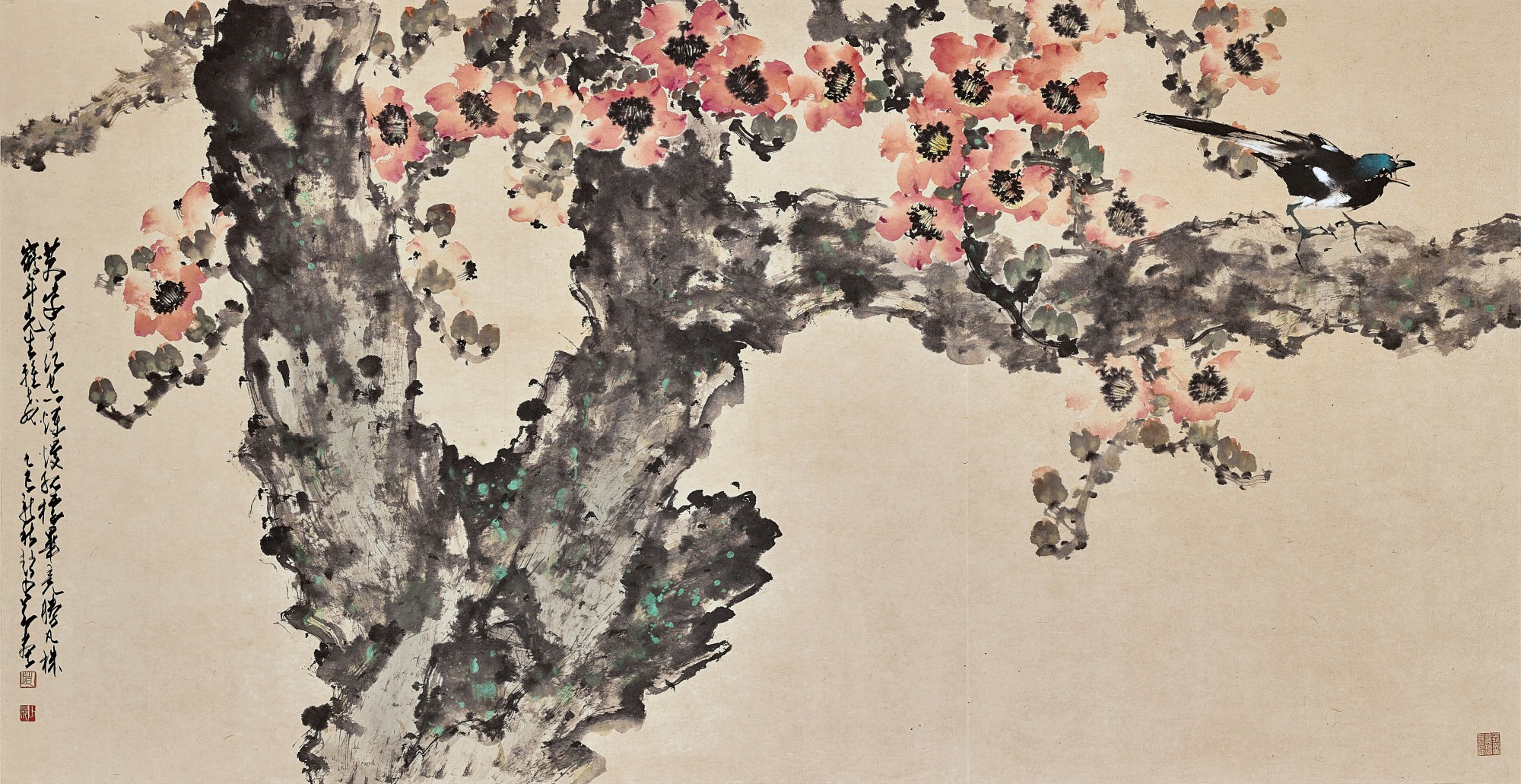
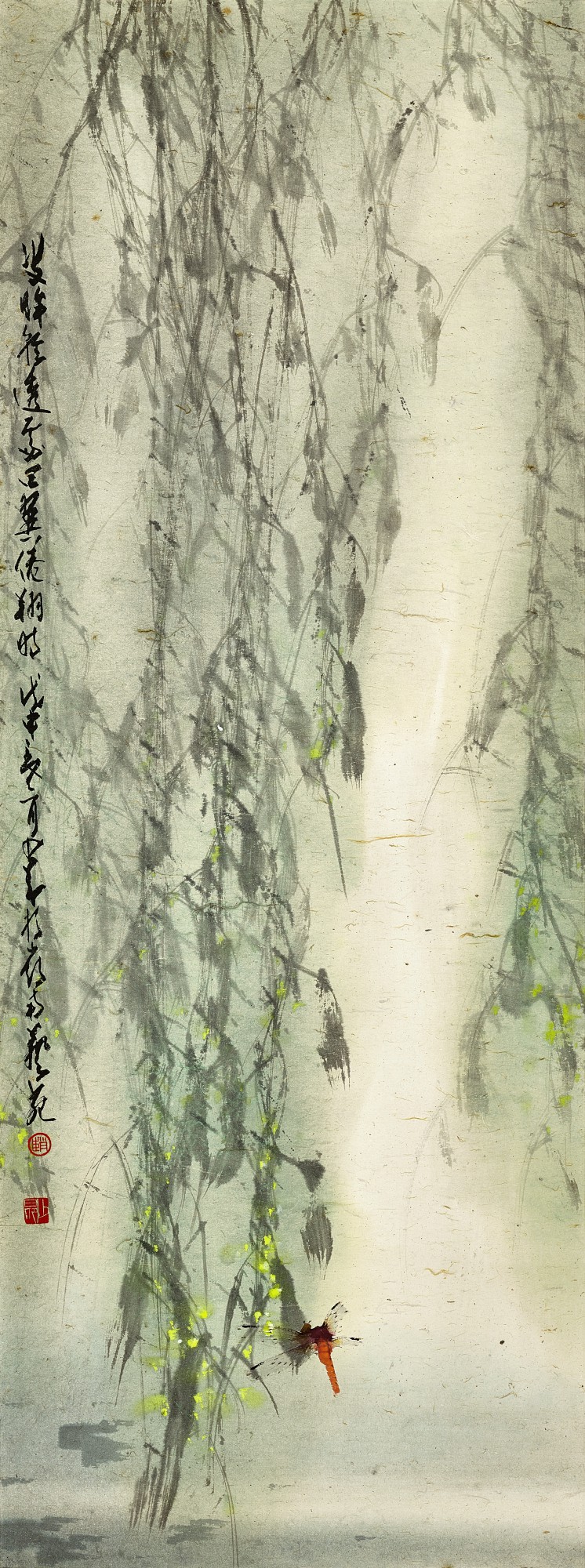
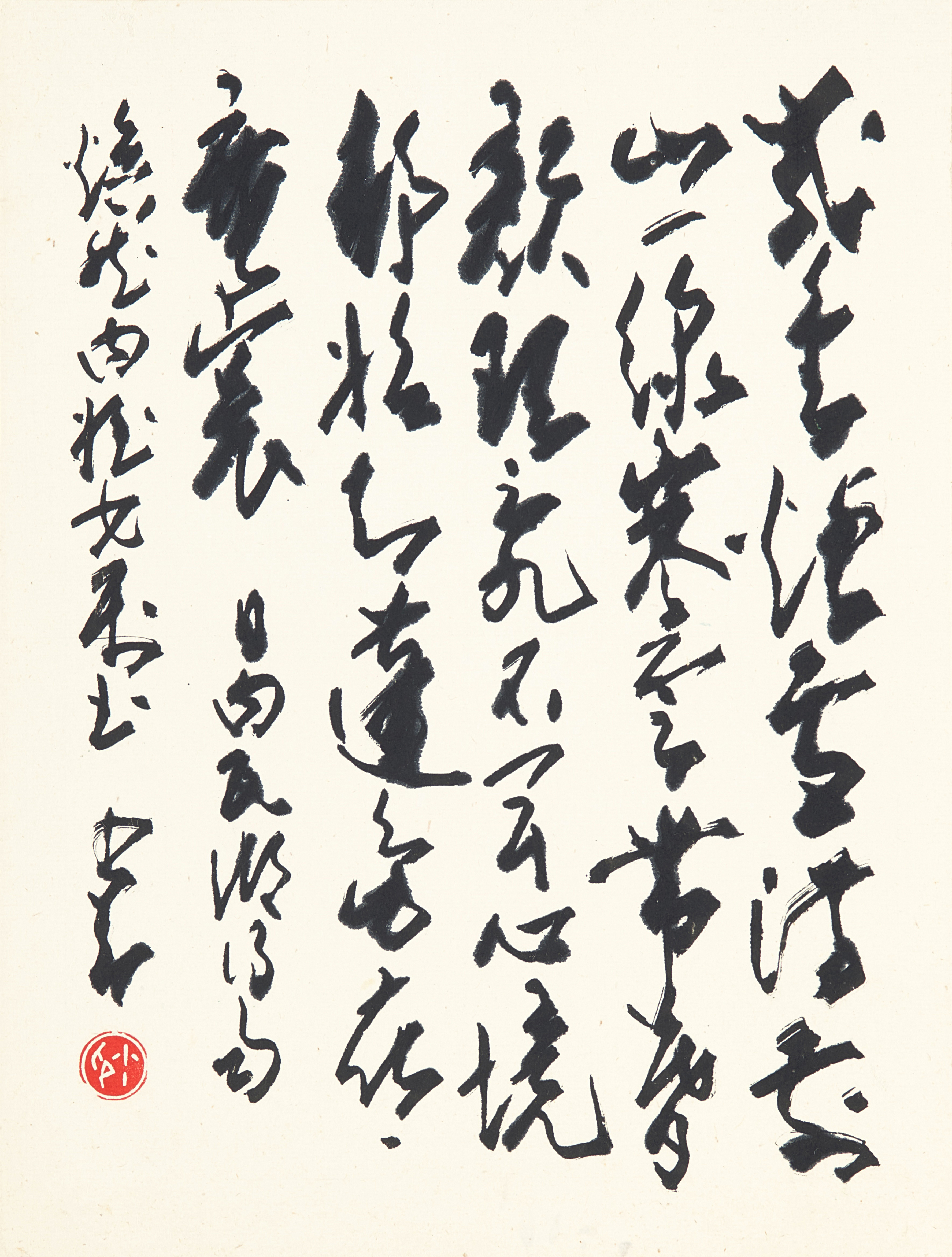
There is a moment, standing before a work by Zhao Shao'ang, when the ink seems still wet, when a dragonfly appears to have just landed on a willow frond, when a heron holds its breath at the edge of still water. This quality, the sensation of life caught mid breath, is not accidental. It is the result of a lifetime devoted to one of the most demanding and rewarding traditions in all of art history: the classical Chinese ink painting lineage, carried forward by a painter of rare sensitivity and technical mastery. As institutions across Asia and the Western world continue to reassess the full breadth of twentieth century Chinese art, Zhao Shao'ang emerges as one of its most quietly essential figures. Zhao Shao'ang was born in 1905 in Guangdong Province, the heartland of the Lingnan region whose artistic culture would define his entire practice. Guangdong in the early twentieth century was a place of extraordinary cultural ferment, a region where traditional Chinese learning met the pressures and possibilities of a modernising world. It was within this charged environment that the young Zhao came of age, and it was here that he encountered the transformative influence of Gao Jianfu, one of the founding masters of the Lingnan School of painting. Under Gao Jianfu, Zhao received a rigorous and visionary education, one that demanded deep fluency in classical Chinese brushwork while remaining alert to the expressive possibilities that Japanese and Western naturalism had introduced into East Asian painting. The Lingnan School occupies a singular position in the history of modern Chinese art. Founded in the early twentieth century by Gao Jianfu and his brother Gao Qifeng alongside Chen Shuren, the movement sought to breathe new life into a classical tradition without abandoning its essential character. The Lingnan painters looked at Nihonga, the reformed Japanese painting tradition, and saw how it had absorbed Western naturalism to create something distinctly new. They brought that same synthetic ambition to Chinese ink painting, introducing atmospheric shading, more immediate observation of nature, and a broader palette, while preserving the meditative quality and philosophical depth of the classical tradition. Zhao absorbed all of this and, over decades of practice, made it entirely his own. By the 1930s, Zhao Shao'ang had developed a practice of remarkable coherence and depth. His 1938 work Three Fishes, rendered in ink and colour on paper as a hanging scroll, demonstrates with quiet confidence everything that made his art so compelling. The composition is spare and precise, the fish suspended in a luminous void that reads simultaneously as water and as the white of the paper itself. There is wit here alongside technical command, a willingness to find the monumental in the miniature, the universal in the particular. This capacity to locate profound stillness within a simple subject became the signature of his mature work. Bird on Bamboo, another work of his middle period, shows the same quality: a single bird settled on a cane of bamboo becomes the occasion for a meditation on balance, weight, and the passage of time. His later works, including Bamboo and Grasshopper from 1967 and Mantis and Bamboo from 1972, reveal a practice that deepened rather than changed with age. The insects in these compositions are rendered with an entomological precision that somehow never tips into mere illustration. They inhabit their painted worlds as living presences, alert and particular. His landscapes, including the luminous Spring Blossoms, carry the breadth and atmospheric tenderness that the Lingnan tradition championed, with washes of colour that evoke the soft light of the Pearl River Delta without becoming sentimental. His calligraphic works, such as the Poem in Xingshu rendered in the flowing semi cursive script, remind the viewer that for Zhao, painting and writing were always two expressions of a single discipline rooted in the educated brush. For collectors, Zhao Shao'ang represents a compelling intersection of accessibility and depth. His works have appeared at major auction houses in Hong Kong, where the Lingnan School tradition commands serious and sustained attention from collectors across the Asia Pacific region and beyond. His hanging scrolls and framed works on paper offer a range of formats and scales that suit both intimate domestic settings and more formal collecting contexts. The range of his subjects, from fish and birds to insects, bamboo, willows, and landscape, means that a collection built around his work can speak with considerable variety while maintaining a strong internal coherence of feeling and technique. What to look for, when approaching his work, is the quality of the brushwork at its most exposed moments: the single stroke that defines a wing, the pooling of ink in a bamboo joint, the restraint that leaves so much of the paper untouched and breathing. Within the broader context of twentieth century Chinese painting, Zhao Shao'ang belongs to a distinguished lineage that includes not only his teacher Gao Jianfu but also contemporaries and successors such as Yang Shanshen, another major Lingnan master, and the Hong Kong painter Lu Shoukun, who pushed the tradition toward abstraction in the postwar decades. Zhao's own contribution was to hold the centre, to demonstrate that classical attentiveness to nature, to the close observation of living things, need not be sacrificed in the pursuit of modernity. He taught extensively in Hong Kong, where he settled and where his influence shaped generations of painters, and his pedagogical legacy is as significant as his painted one. Zhao Shao'ang passed away in 1998, leaving behind a body of work that speaks with increasing force to contemporary audiences. In an era of acceleration and digital saturation, the qualities his paintings embody, patience, attentiveness, the willingness to spend a lifetime in the company of a dragonfly or a heron, feel not merely admirable but necessary. His art is a reminder of what human attention, disciplined by tradition and opened by genuine love for the natural world, is capable of. To live with a Zhao Shao'ang is to keep, in whatever room it hangs, a window that never closes onto something quietly alive.