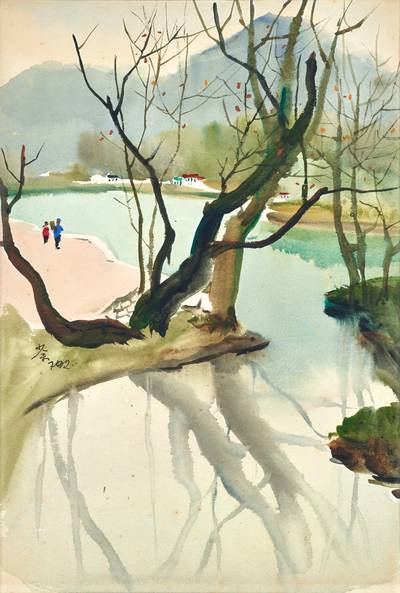
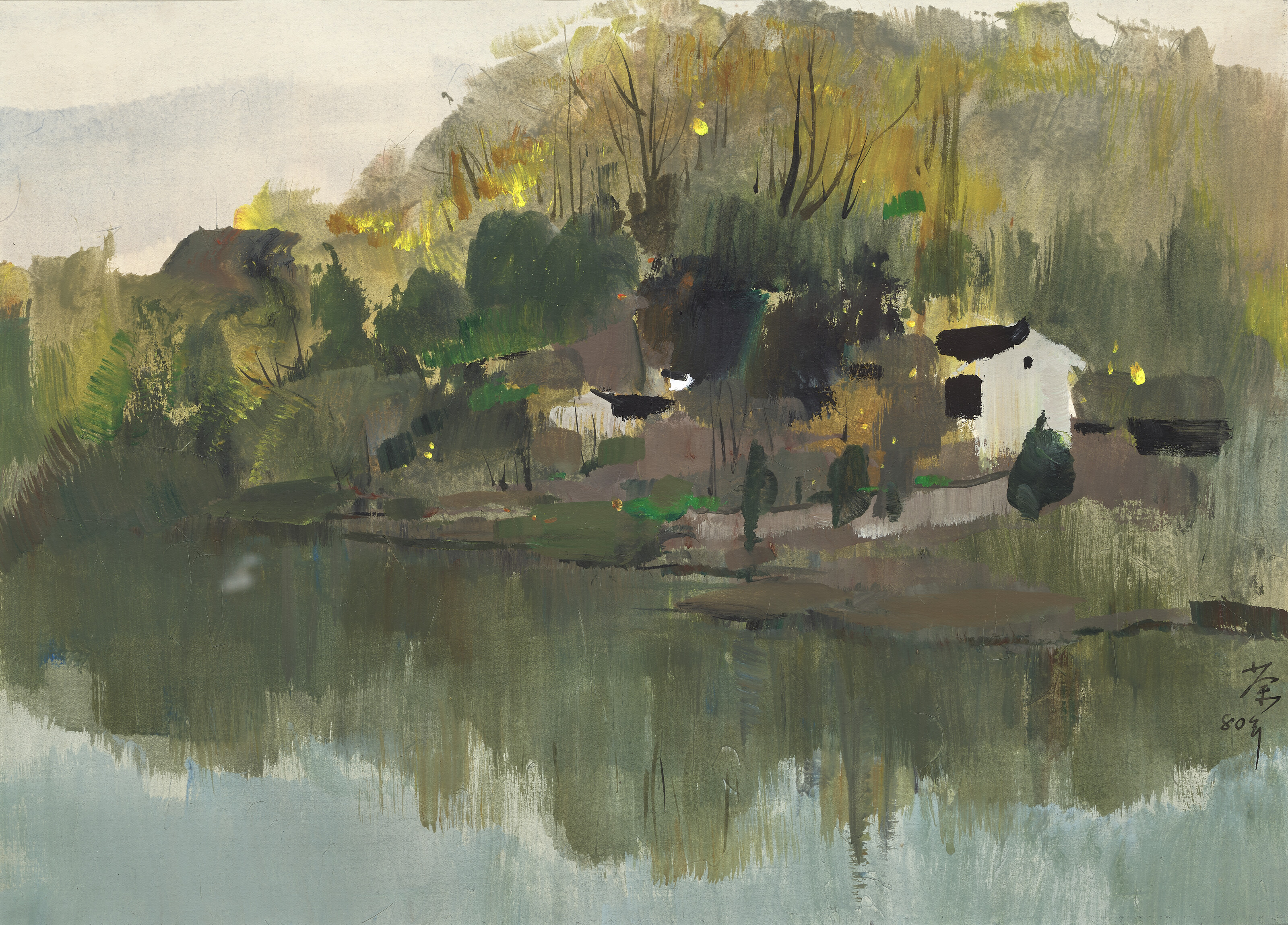
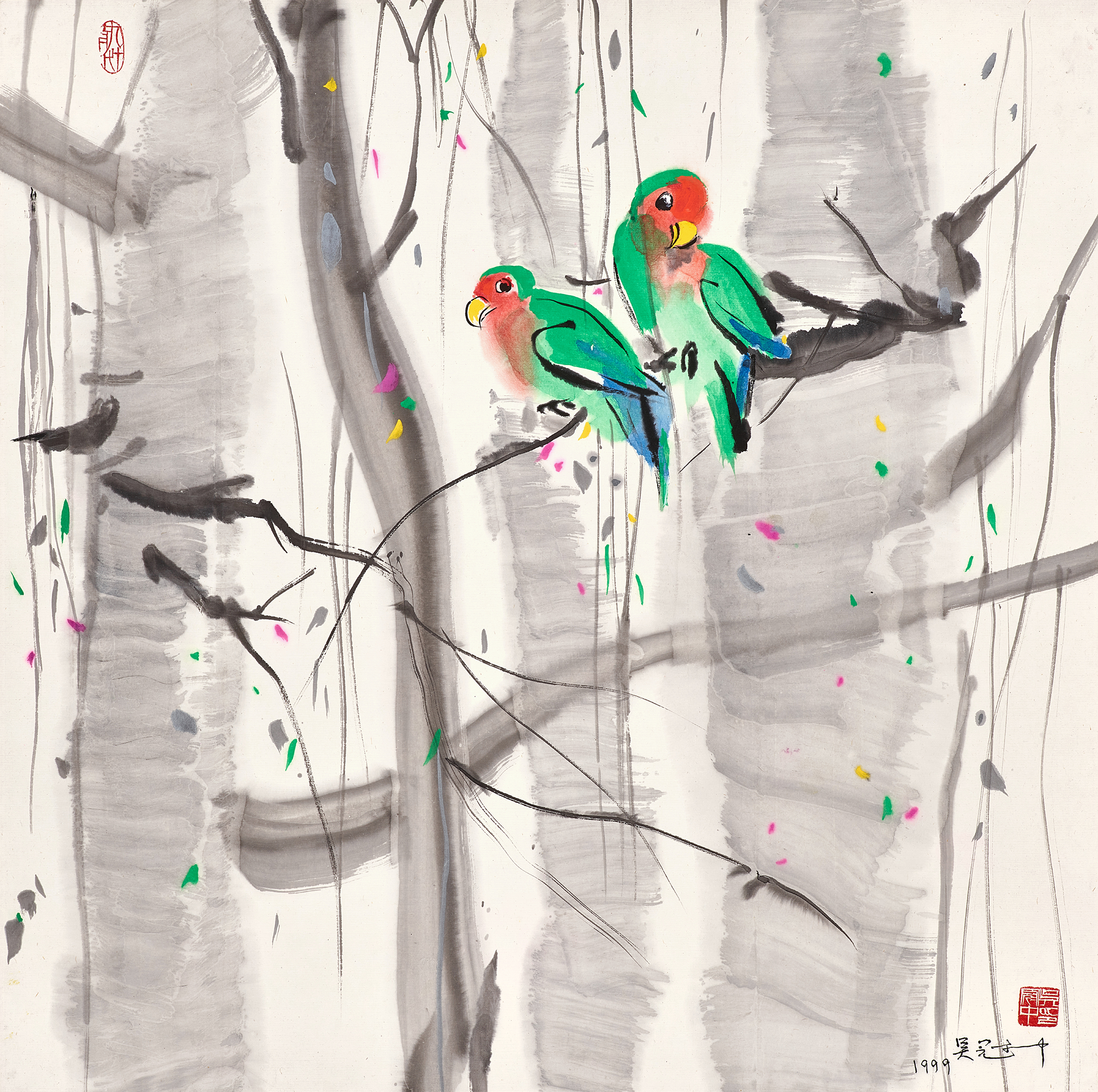
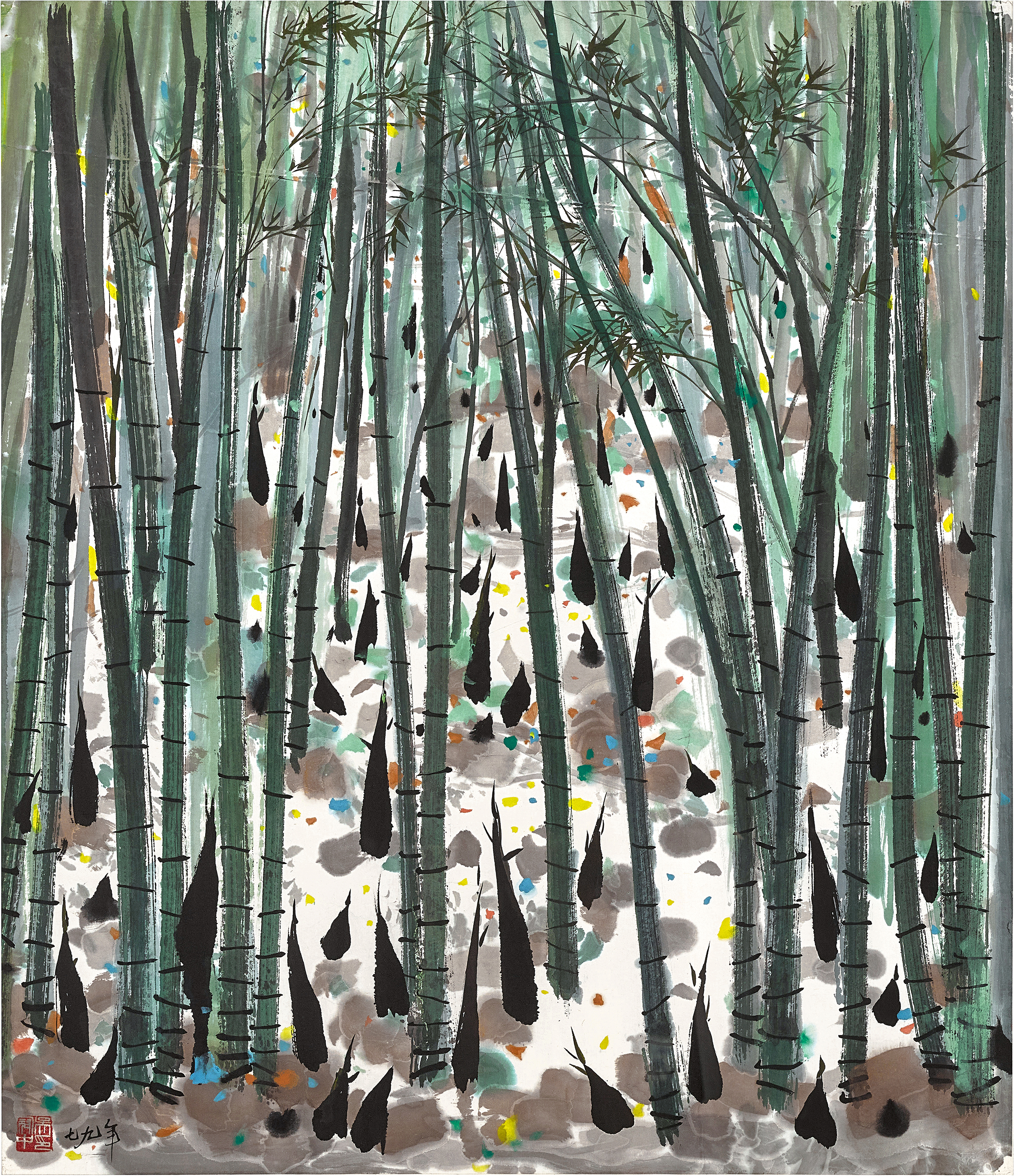
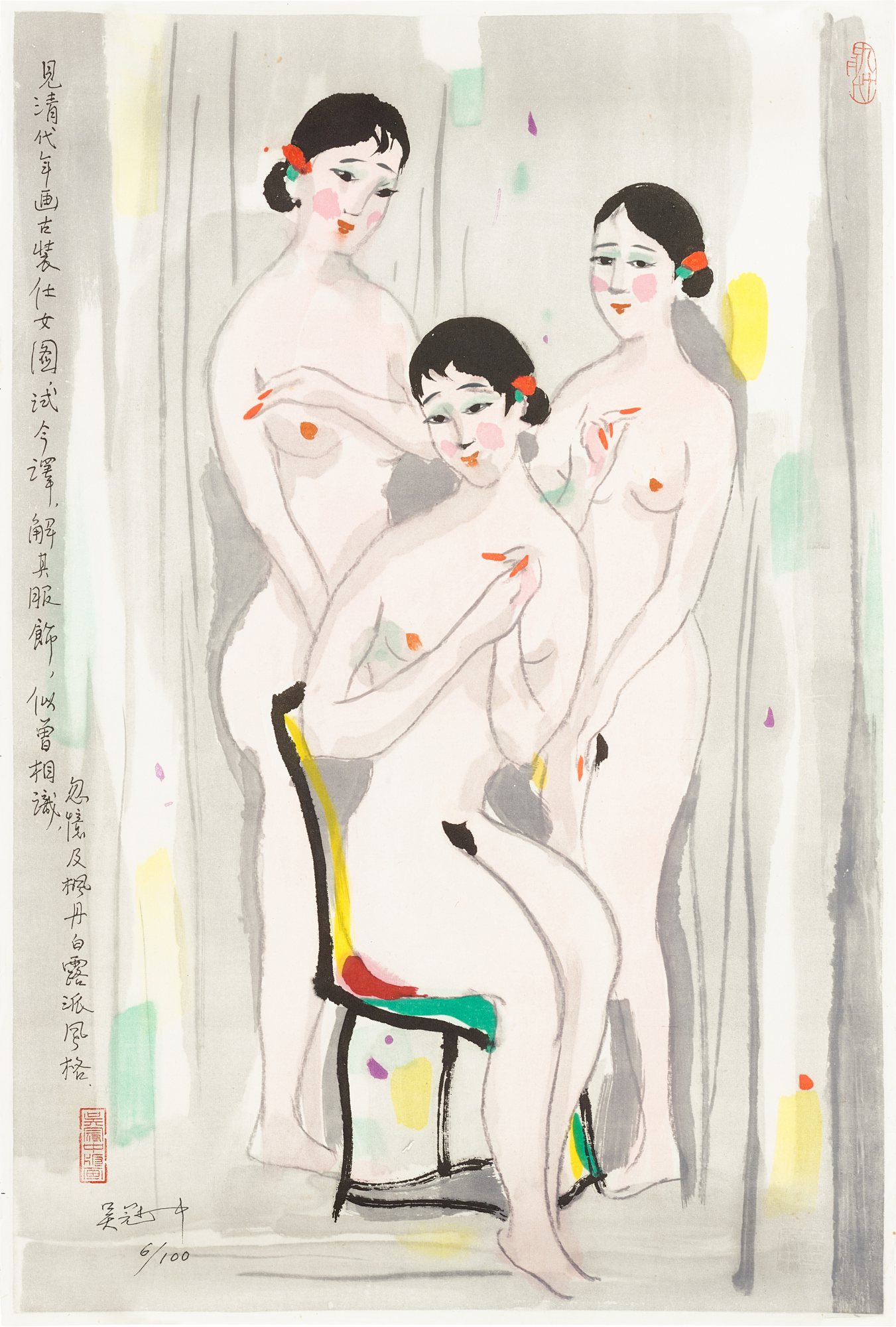
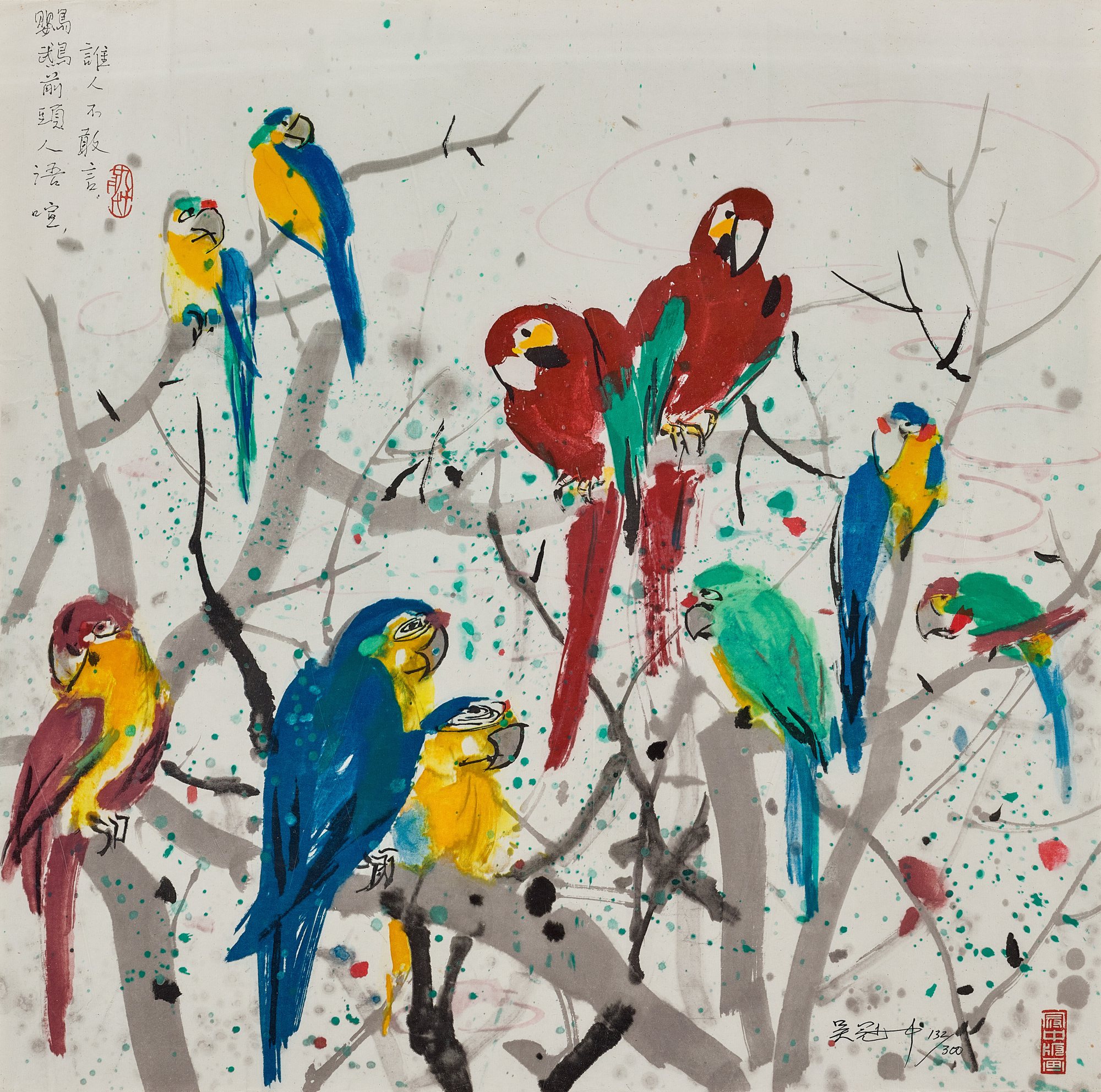
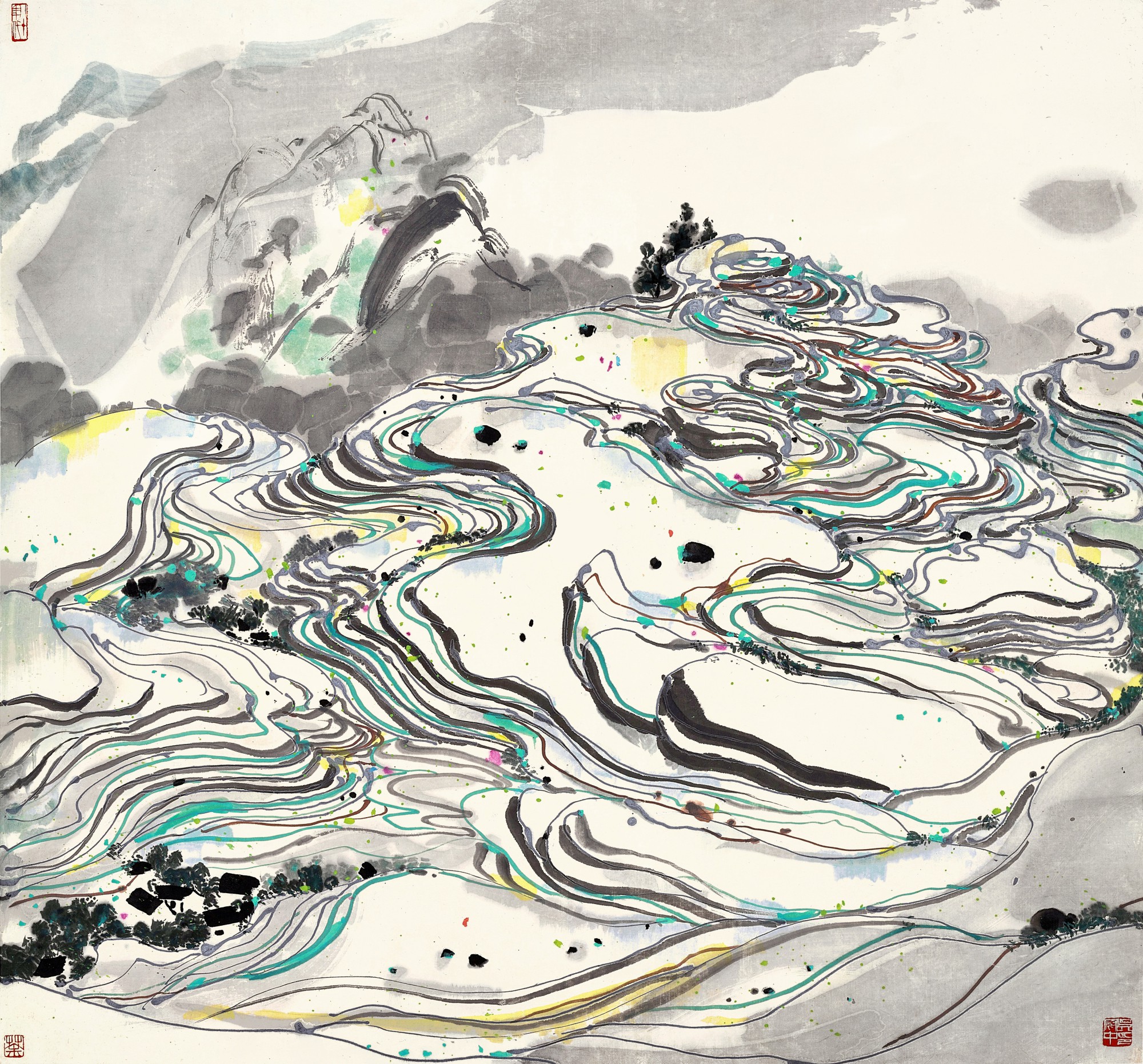
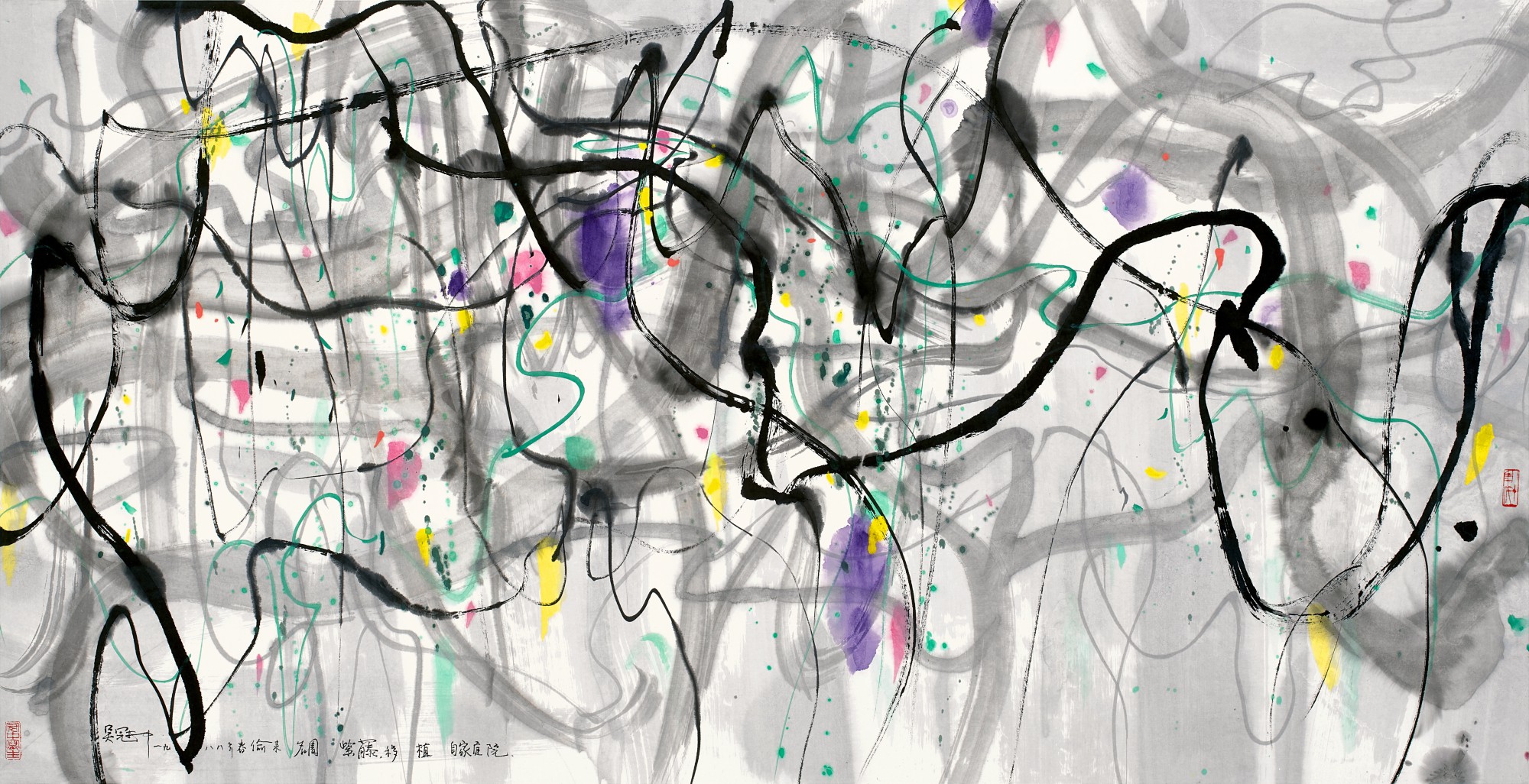
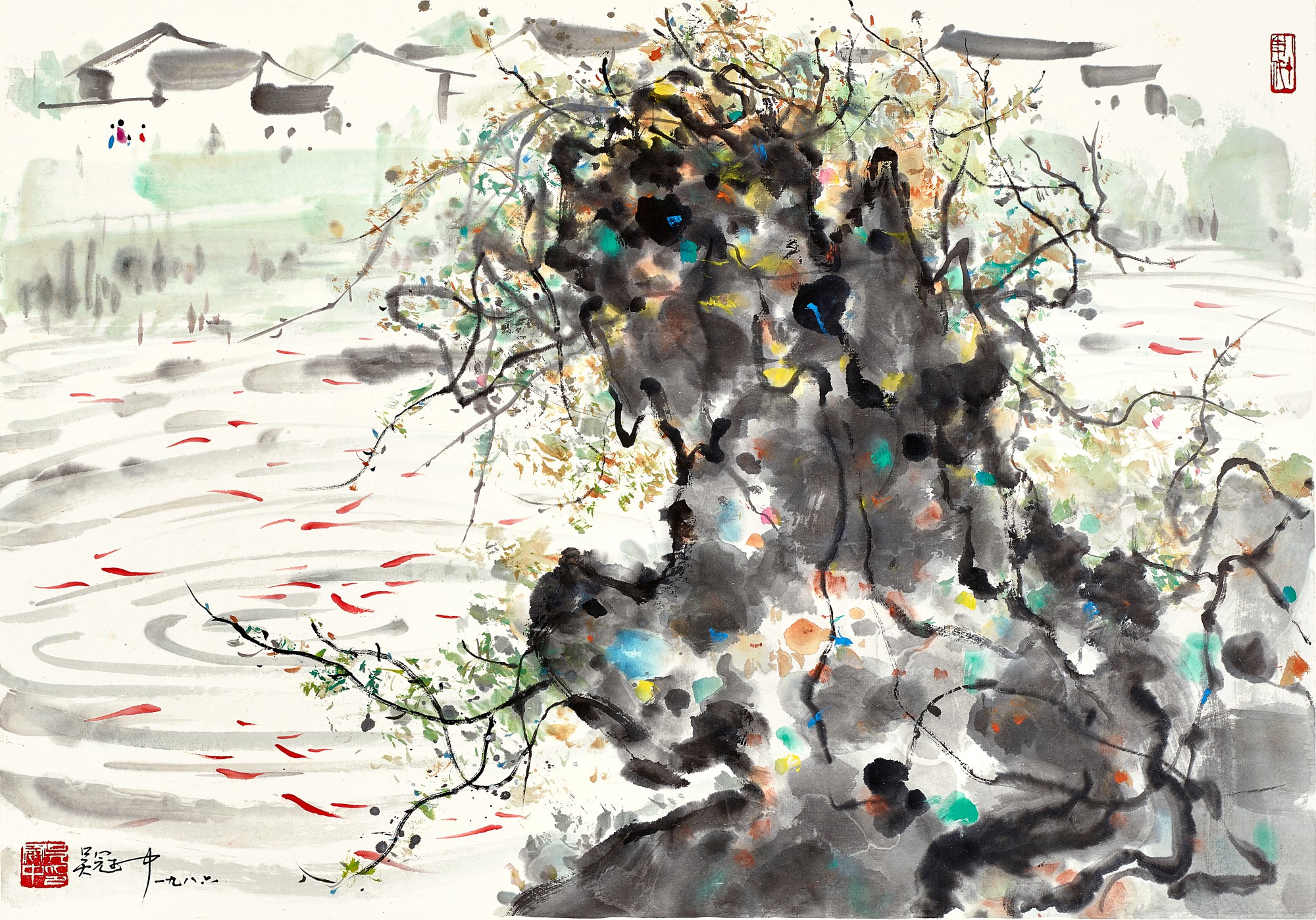
In 2019, the centenary of Wu Guanzhong's birth was marked by institutions across Asia and beyond, with major commemorative exhibitions held in Beijing, Singapore, and Hong Kong celebrating a man who had, across nine decades of living and six of making art, quietly transformed what Chinese painting could be. The National Art Museum of China honoured him with retrospective programming that drew crowds who stood before his canvases and ink works with the particular reverence reserved for artists whose vision has become part of the cultural atmosphere itself. That his work continues to command extraordinary attention at auction, with individual pieces regularly achieving sums in the tens of millions of Hong Kong dollars, speaks not only to market appetite but to a deeper truth: Wu Guanzhong made something genuinely new, and the world is still catching up to what that means. Wu Guanzhong was born in 1919 in Yixing, a small city in Jiangsu province, a region of China whose rivers, waterways, and soft southern light would become the emotional bedrock of his entire life's work. He showed early promise and gained entry to the National Academy of Art in Hangzhou, where he encountered Western oil painting for the first time and felt its pull alongside the classical Chinese traditions already forming his eye. In 1947, he won a government scholarship to study in Paris, enrolling at the École Nationale Supérieure des Beaux Arts, where he absorbed post Impressionism, Fauvism, and the formal rigour of Cézanne with the hunger of someone who recognises a missing piece. Those years in Paris were formative not because they converted him to Western aesthetics, but because they gave him the tools to interrogate both traditions and imagine something that transcended either. Returning to China in 1950, Wu entered a period of intense constraint. The cultural and political climate demanded socialist realism, and the kind of experimental synthesis he was already dreaming of was not merely unfashionable but potentially dangerous. He took up a teaching post, eventually at the Central Academy of Arts and Crafts in Beijing, and channelled his energies into landscape sketching across the countryside, building an intimate visual archive of the land and its people. The Cultural Revolution brought further hardship, and for years open artistic experimentation was impossible. Yet Wu persisted, and when the political climate shifted in the late 1970s and 1980s, he emerged with a practice that seemed fully formed, as though those years of restriction had concentrated rather than diminished his vision. The synthesis Wu achieved is unlike anything else in twentieth century art. He worked in both oil on canvas and ink on paper, and rather than keeping the two traditions separate, he allowed them to bleed into each other with remarkable results. His ink works borrow the spatial compression and gestural energy of abstraction he had studied in Europe, while his oils carry the breathing, suggestive quality of Chinese literati painting. Lines in his compositions are never merely descriptive: they are rhythmic, musical, loaded with feeling. He spoke often about the importance of formal beauty as a universal language, arguing that the emotional resonance of a line or a colour was not culturally bound but deeply human. This conviction gave his work an accessibility that crossed borders even as it remained unmistakably rooted in the Chinese landscape. Among his most celebrated works, Lion Grove Garden, painted in ink and colour on paper, achieved record prices at auction and has become something of a touchstone for the market. But to focus on that single landmark is to miss the full range of his achievement. Works such as The Soul of Pine and Lacebark Pine at Jie Tai Temple reveal his extraordinary ability to animate a single subject with almost spiritual intensity, the pine tree becoming not a botanical specimen but an emblem of endurance and character. River Town in Jiangnan returns again and again to the landscape of his childhood, those whitewashed walls and arching bridges reflected in still water, rendered in a language that is simultaneously ancient and startlingly contemporary. Field Chrysanthemums, painted in oil in 1974 during a period of continued political constraint, is a quiet masterpiece of observation, the ordinary made luminous. Lovebirds and Viewing Fishes carry a tenderness and lightness that remind us Wu was also a poet of intimate feeling, not only of grand landscape. For collectors, Wu Guanzhong represents one of the most compelling propositions in the modern Asian art market. His work occupies a unique position: it is historically significant, aesthetically adventurous, and emotionally immediate all at once. Major auction houses including Christie's, Sotheby's, and Poly Auction have consistently seen strong results for his works across formats, with ink pieces and oils both performing well. Collectors are drawn to the sense that they are acquiring something at the intersection of two great artistic traditions, a work that belongs equally to the history of Chinese ink painting and to the broader international story of modern art. Works on paper, including both original ink compositions and the collotype prints on rice paper that he produced in editions, offer points of entry across a range of collecting levels, and the prints carry a particular beauty given the way the collotype process interacts with the texture and absorbency of the paper. In the broader context of art history, Wu Guanzhong belongs to a generation of Chinese artists who faced the challenge of modernity with unusual ambition and courage. His peers and contemporaries, artists such as Zao Wou Ki and Chu Teh Chun, followed related but distinct paths, also shaped by time in Paris, also preoccupied with the dialogue between Eastern sensibility and Western formal innovation. Where Zao Wou Ki moved toward pure abstraction and Chu Teh Chun toward lyrical colour fields, Wu remained anchored in the visible world, in the specific topography of China, its mountains, its villages, its trees. This rootedness is part of what makes his work so moving: it is never cold or purely intellectual, always warm with the memory of a particular hillside or a particular afternoon. Wu Guanzhong died in Beijing in June 2010 at the age of ninety, having spent his final decades as one of the most publicly engaged and intellectually active voices in Chinese art. He wrote prolifically, gave interviews, and continued to make work with undiminished energy. He donated hundreds of works to museums in China, Singapore, and Hong Kong, ensuring that his vision would remain a living presence in public life rather than retreating entirely into private collections. His legacy is the proof that synthesis, done with genuine conviction and rigour, produces not compromise but something greater than either source alone. To collect Wu Guanzhong is to hold a piece of that rare achievement: an art that belongs to the world.