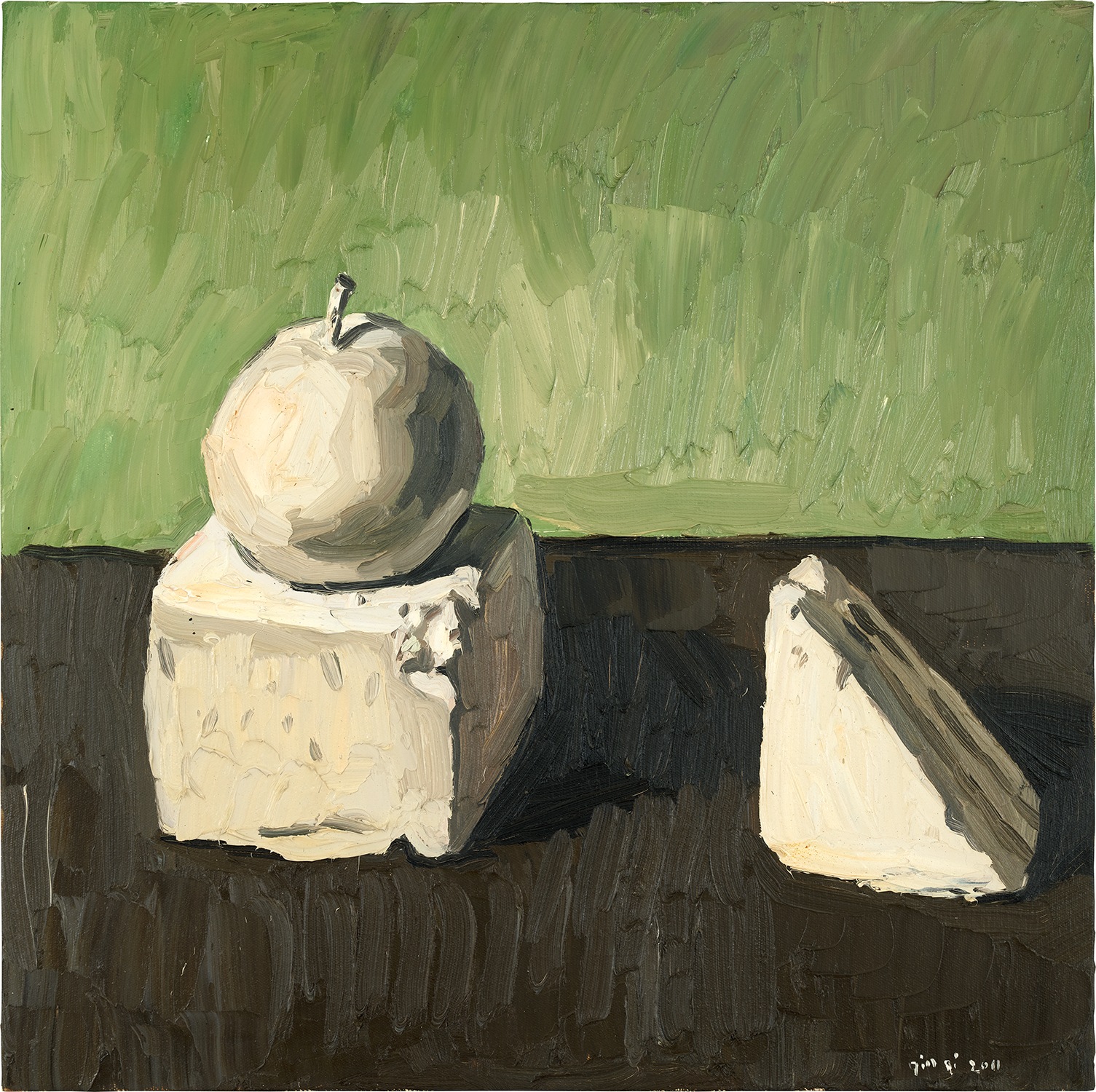
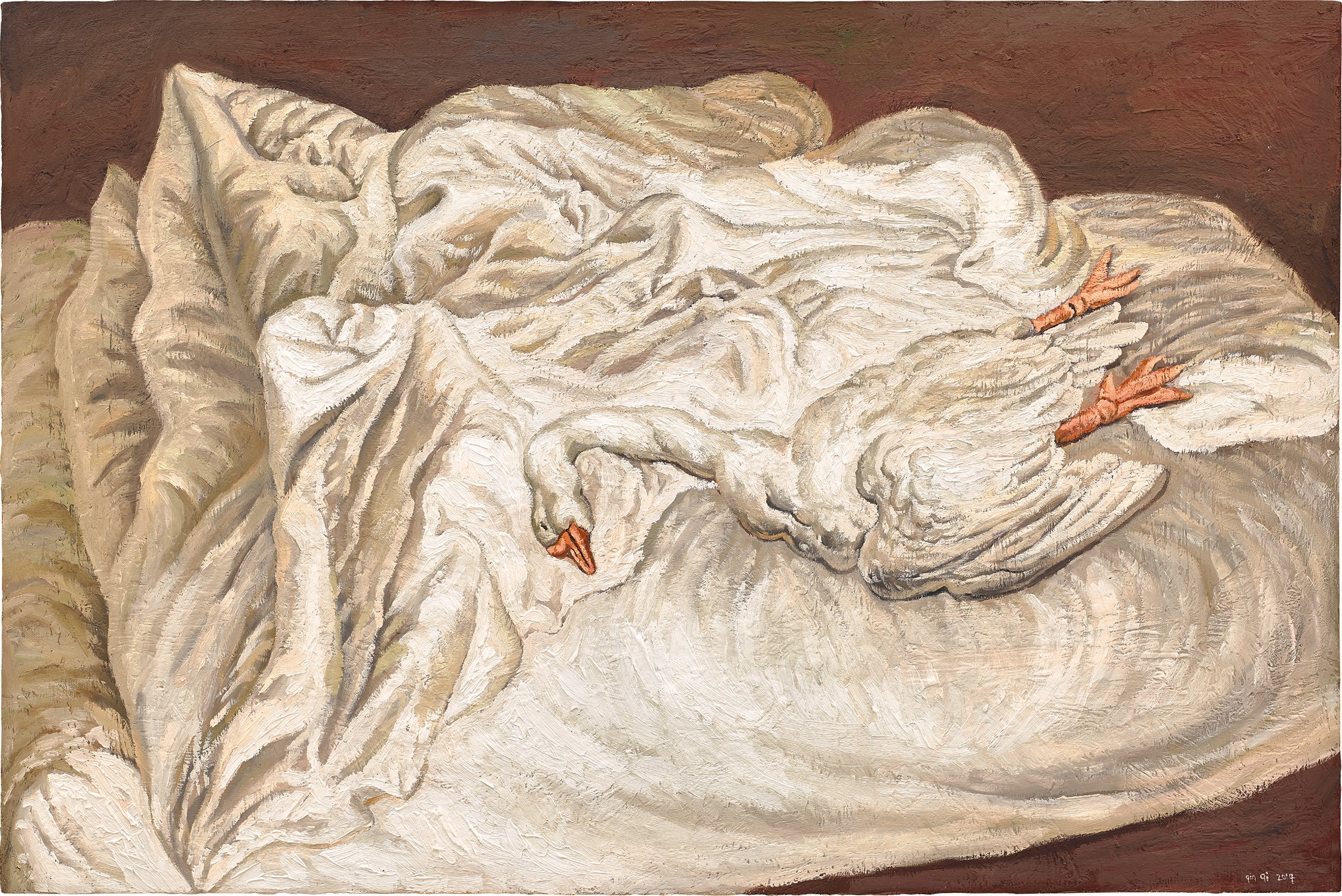
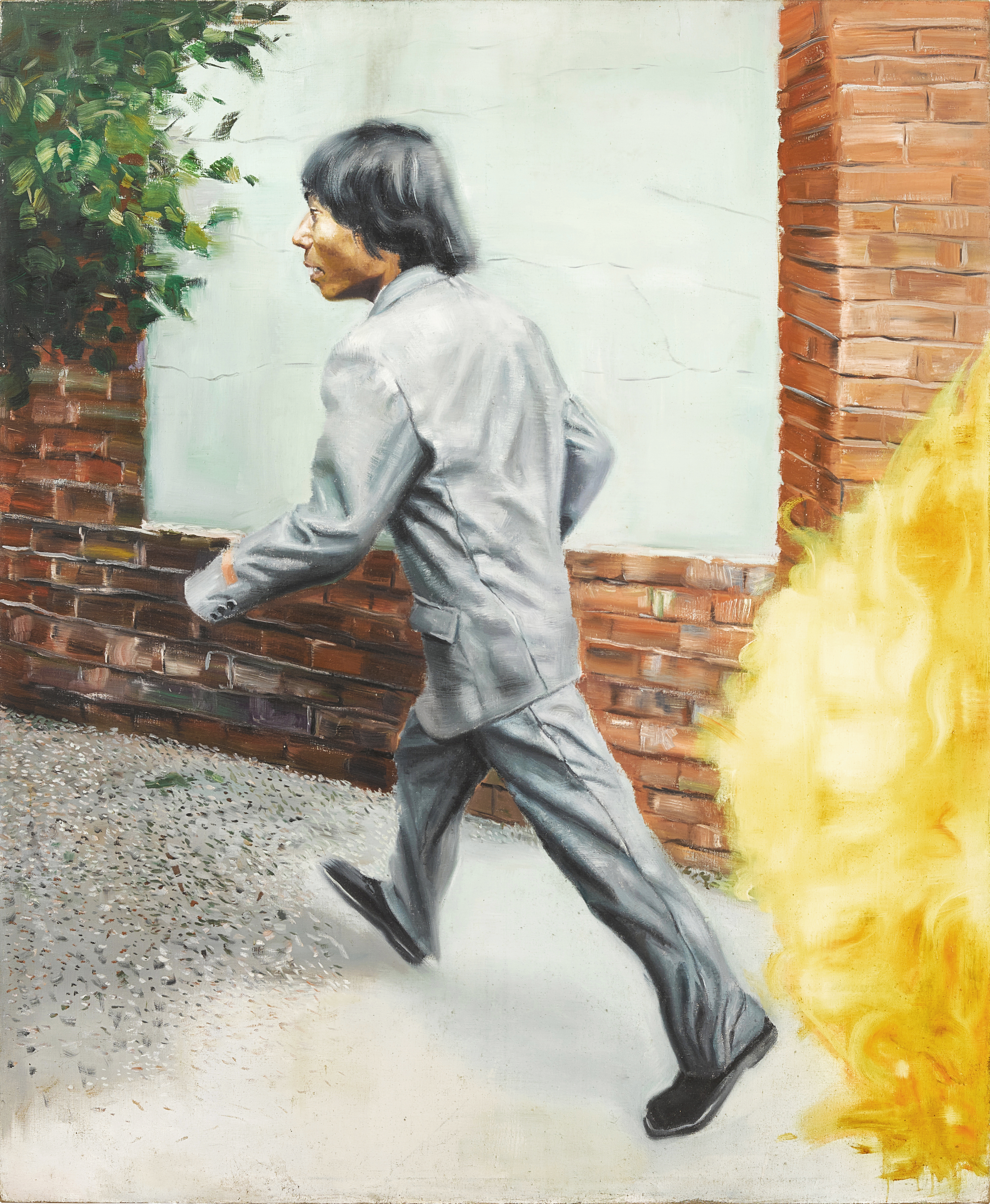
Something quiet is happening in the world of contemporary Chinese painting, and collectors who have been paying attention already know the name at the center of it. Qin Qi, a Beijing based artist whose canvases sit at a rare and fertile crossroads between classical Chinese tradition and a distinctly contemporary visual sensibility, has been drawing sustained attention from Asian auction markets and private collectors alike. His works command a kind of patient looking, the sort of attention that rewards the viewer who slows down and allows the image to speak on its own unhurried terms. In a moment when the global art market is increasingly hungry for voices that feel both rooted and genuinely new, Qin Qi offers something that is difficult to manufacture: authenticity. Qin Qi emerged from the rich and demanding cultural environment of contemporary China, where artists of his generation came of age navigating the tension between a vast classical inheritance and the pressures of rapid modernization. That tension, rather than becoming a burden, became the animating force of his practice. He developed an approach to painting that neither abandons the contemplative spirit of traditional Chinese ink culture nor simply pastiches it, but instead finds a way to let that spirit breathe inside the physical richness of oil on canvas. His formation as an artist took place during a period of extraordinary creative ferment in China, when painters were actively renegotiating what it meant to make images in a post reform era, and Qin Qi absorbed those conversations deeply. The evolution of his practice across the late 1990s and into the 2000s reveals an artist of serious ambition and surprising restraint. Where many of his contemporaries reached for grand gestures or provocative conceptual frameworks, Qin Qi turned his gaze toward the intimate and the overlooked. He found his subjects in the corners of domestic life, in the textures of everyday objects, in the unheroic moments that most painters pass over entirely. This was not naivety but a form of rigorous selectivity. By insisting on the modest and the familiar, he created a kind of pressure inside his paintings, a charged stillness that feels closer to the meditative traditions of Chinese literati painting than to anything produced by the Western still life canon, even as the surface of his work is unmistakably grounded in the language of oil paint. Three works in particular illuminate the range and consistency of his vision. Backyard Fire, painted in 2002, is among his most arresting early canvases, a work that uses the primal drama of fire in a domestic outdoor setting to explore themes of warmth, communality, and the way that light transforms the most ordinary of scenes into something luminous and slightly mysterious. It established early that Qin Qi was not interested in the monumental for its own sake but in the way that small moments carry enormous emotional weight. Pear, Beancurd and Cake from 2011 represents the mature flowering of his still life sensibility, placing humble foodstuffs on the canvas with a combination of directness and tenderness that recalls the great tradition of Chinese painting centered on the contemplation of natural objects, while remaining entirely contemporary in its handling of paint and light. White Goose, completed in 2014, extends this sensibility into the animal world with characteristic quietude. The goose is rendered neither as symbol nor as spectacle but simply as a living presence, dignified and self contained, observed with the kind of care that transforms looking into a form of respect. For collectors, Qin Qi represents a particular kind of opportunity: an artist whose work has found its way into Asian auction markets and attracted serious collector attention, yet who has not yet reached the level of global visibility that his practice clearly merits. His works carry the quality of objects that have been thought about carefully before they were made, and that quality does not diminish with time or familiarity. Quite the opposite: his canvases tend to deepen upon sustained acquaintance, revealing layers of decision and feeling that are not immediately apparent. Collectors drawn to the quieter end of contemporary Chinese painting, those who have followed artists working in the space between tradition and modernity, have found in Qin Qi a voice that repays long term commitment. Within the broader context of contemporary Chinese art, Qin Qi occupies a position that is usefully understood alongside artists who have similarly navigated the inheritance of classical Chinese visual culture while working in Western media. His attentiveness to everyday subjects and his investment in a kind of slow, observational practice places him in conversation with a lineage of artists who have insisted on the dignity of the ordinary as a subject worthy of serious painterly attention. His work does not shout its references or its ambitions but carries them quietly, in the way that a well made object carries the intelligence of its maker without advertisement. The question of legacy is always premature for a living artist still deepening a practice, but it is worth saying that Qin Qi has already achieved something genuinely rare. He has created a body of work that is immediately recognizable as his own, that emerges from a specific cultural and historical context without being imprisoned by it, and that speaks to viewers across different backgrounds through the universal grammar of careful attention. His paintings remind us that the most important things in art are often the ones that resist summary: a particular quality of light, a relationship between objects on a surface, the sense that someone has looked at the world with love and translated that looking into paint. That is a tradition as old as art itself, and in Qin Qi's hands it feels not like a continuation but like a genuine renewal.