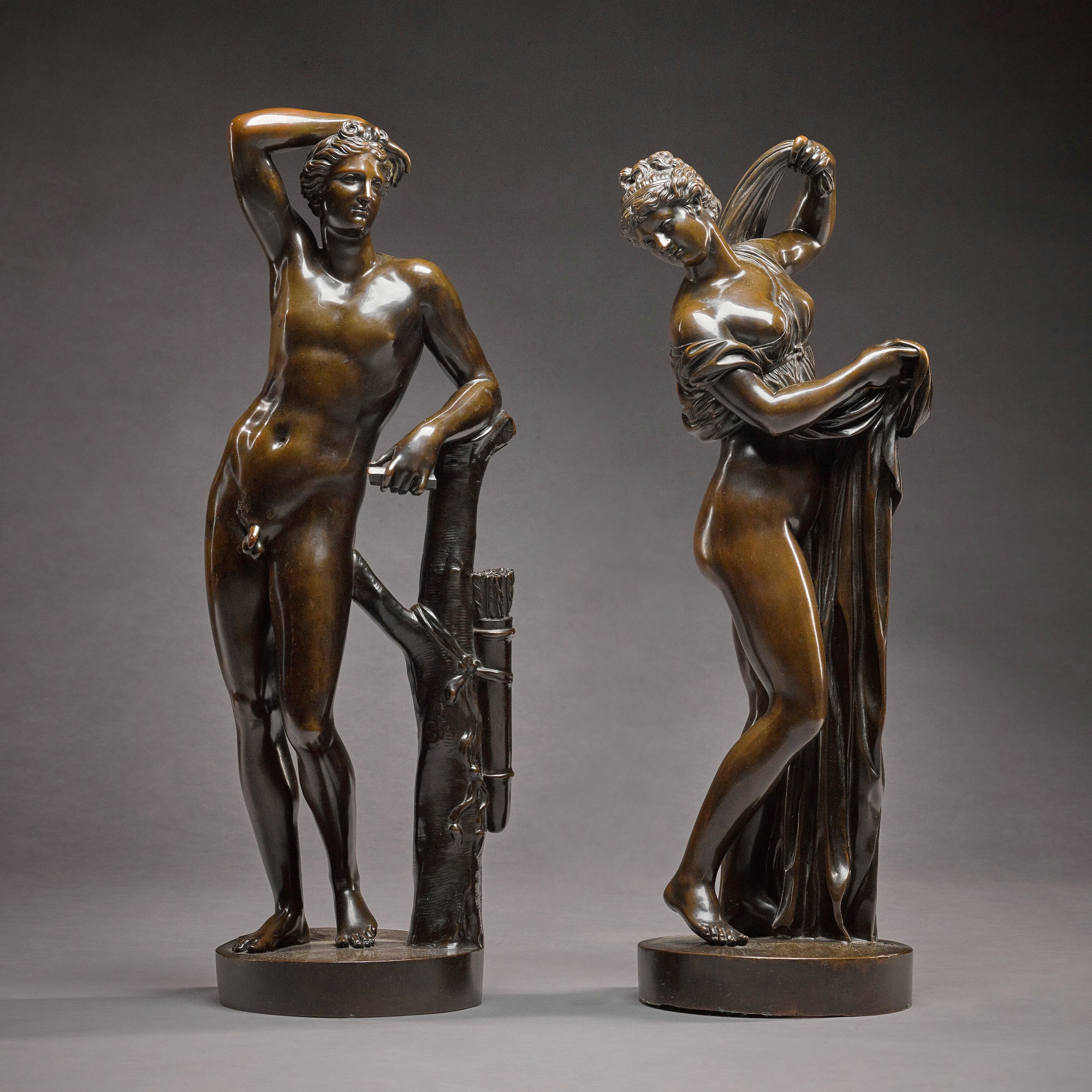
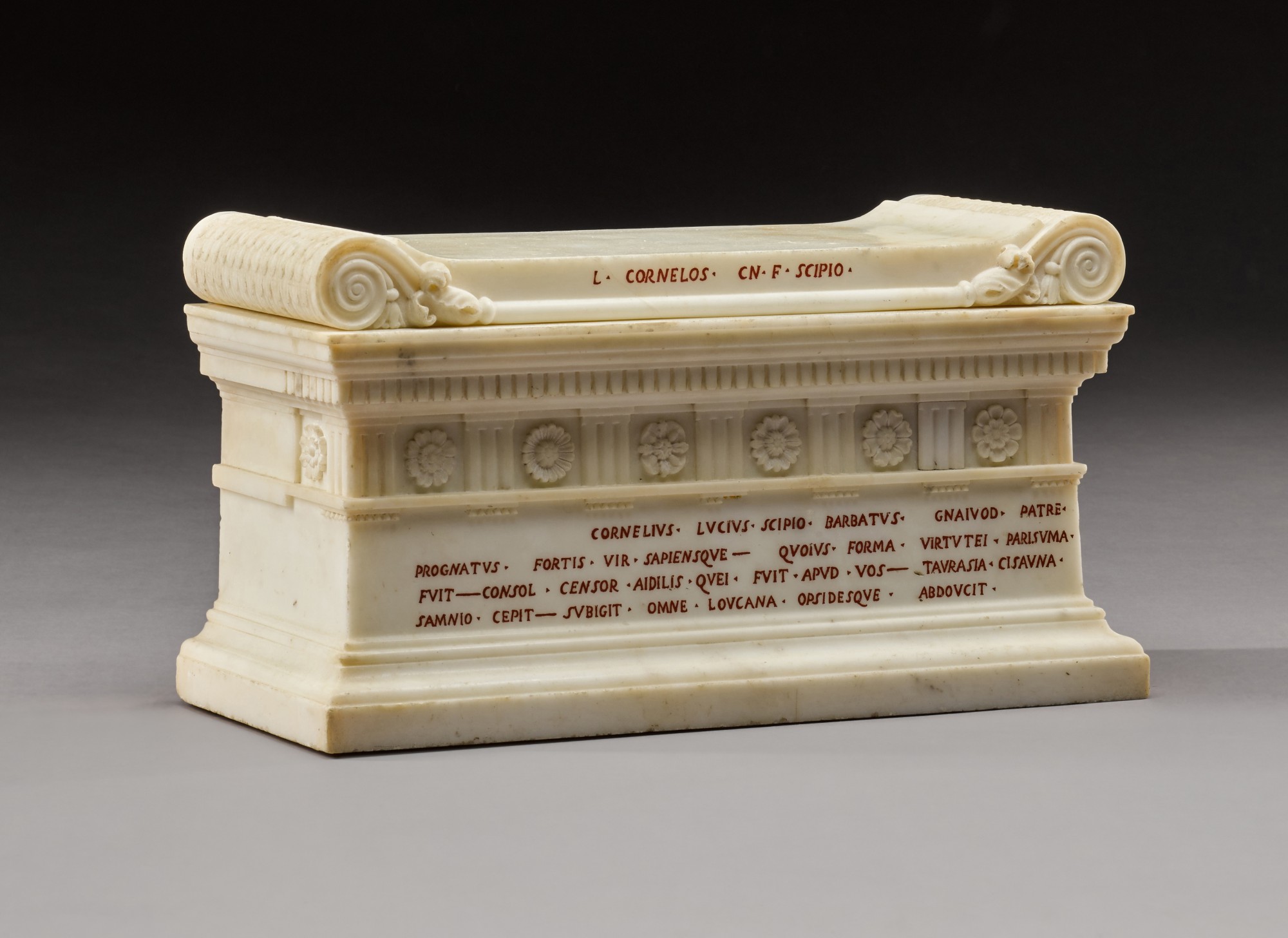
There is a moment, standing before a finely cast bronze in a Roman collection, when the distance between the ancient world and the present simply dissolves. That sensation sits at the heart of what Roman workshops of circa 1800 produced with such remarkable fluency: objects that felt simultaneously archaeological and alive, scholarly and sensuous, rooted in the deep soil of classical antiquity yet polished for a cosmopolitan audience hungry for beauty and meaning. The early nineteenth century in Rome was one of the most fertile periods in the history of collecting and craft, and the works emerging from that milieu deserve to be understood not as mere reproductions of the past but as original contributions to the language of classicism. Rome around 1800 occupied a singular position in the European imagination. The city had been a destination for artists, scholars, and aristocrats on the Grand Tour for well over a century, but by the turn of the nineteenth century something had shifted. The excavations at Herculaneum and Pompeii, ongoing since the 1730s and 1740s, had electrified antiquarian culture. The founding of the Museo Pio Clementino in the Vatican, formalized under Clement XIV and Pius VI in the 1770s and 1780s, had concentrated some of the greatest surviving works of antiquity in a single, accessible setting. Winckelmann's writings on the history of ancient art, published from the 1750s onward, had given the classical tradition a new intellectual framework. Into this charged atmosphere stepped a generation of Roman craftsmen and artists who understood that their city was not merely a repository of the past but a living studio. The formation of any artist working in Rome at this moment was inseparable from the city itself. The workshops, the academies, the private collections thrown open to students and visiting artists, the very streets lined with fragments of carved marble: all of it functioned as an education. The French Academy at the Villa Medici had brought generations of Prix de Rome winners to study from ancient casts and originals. The British sculptors who followed in Canova's wake, figures such as John Gibson and later Richard James Wyatt, absorbed the same atmosphere. Roman craftsmen trained their eyes on the Capitoline Museums and on the private palaces of the Borghese, Doria Pamphilj, and Albani families, where antiquities of the highest quality were held. The sensibility that emerged was exacting, reverent, and deeply technical. The two works representing this tradition on The Collection speak directly to the range and ambition of Roman production around 1800. The bronze pairing of the Apollino and the Callipygian Venus draws on two of the most celebrated ancient sculptures known to connoisseurs of the period. The Apollino, a graceful figure of the young Apollo known from Hellenistic originals and Roman copies held in the Uffizi in Florence, was a touchstone of neoclassical taste. The Callipygian Venus, the celebrated marble then housed in the Farnese collection in Naples and subsequently moved to the Museo Nazionale, was famous for its exquisite naturalism and the quiet, self possessed confidence of its pose. To render both figures in bronze as a paired set was to demonstrate not only technical mastery of the casting process but also a sophisticated understanding of how ancient prototypes could be reinterpreted for a modern interior. These were objects made for collectors who read Winckelmann, who had stood before the originals, and who wanted something of that encounter to live permanently in their homes. The second work, a marble reproduction of the Tomb of Lucius Cornelius Scipio Barbatus with its distinctive red painted inlaid lettering, speaks to a different but equally important strand of Roman production. The original sarcophagus, dating to the early third century BCE and discovered in the Tomb of the Scipios on the Via Appia in 1780, became one of the most discussed archaeological finds of the late eighteenth century. Its archaic Latin inscription, its bold architectural decoration drawing on Doric and Doric adjacent forms, and its direct association with one of Rome's most storied Republican families made it an object of enormous cultural prestige. The decision to reproduce it in marble, preserving the vivid red of the inlaid lettering, was an act of both scholarly fidelity and aesthetic ambition. The work invites the viewer to think about inscription, memory, and the way that language itself can function as ornament. For collectors today, works from Roman workshops of circa 1800 occupy a sweet spot that is only becoming more appreciated. They are, first and foremost, objects of genuine quality. The bronze casting techniques used in Rome at this period drew on long traditions of foundry work, and the finishing of surfaces, the chasing and patination, reflects a standard of craftsmanship that is difficult to overstate. They are also, increasingly, understood as art historical documents in their own right, objects that reveal how the classical tradition was actively interpreted and transmitted rather than passively copied. Auction results over the past two decades for Grand Tour bronzes and neoclassical marbles of documented Roman provenance have shown consistent strength, with significant examples achieving prices well into the six figure range at Christie's, Sotheby's, and Bonhams. The market rewards quality, provenance, and the kind of scholarly pedigree that attaches naturally to objects made in Rome during this exceptional period. The artists and workshops of Rome circa 1800 existed in a rich constellation of talent. Antonio Canova, whose studio on the Via delle Colonnette became a kind of secular temple, set the standard against which all others were measured. Bertel Thorvaldsen, the Danish sculptor who arrived in Rome in 1797 and never truly left, offered a cooler, more austere vision of the classical ideal. The workshops supplying Grand Tour bronzes and marble reductions drew on the same pool of skilled hands that served these giants, and the best of their production shares something of that elevated ambition. John Flaxman, whose outline drawings and relief compositions circulated throughout Europe, was another point of reference. To collect from this world is to enter a conversation that includes some of the greatest names in the history of Western art. The legacy of Roman production around 1800 extends far beyond the objects themselves. The workshops and artists of this moment established a model of engagement with antiquity that influenced decorative arts, architecture, and sculpture throughout the nineteenth century and beyond. The careful study of ancient prototypes, the insistence on technical excellence, the belief that the classical tradition was not a closed chapter but a living resource: these values shaped everything from the Greek Revival buildings of Edinburgh and Washington to the bronzes adorning the great houses of England and the private collections of St. Petersburg. To encounter these works today is to feel the full weight of that inheritance, and to understand why Rome, even two centuries later, still feels like the center of something essential.