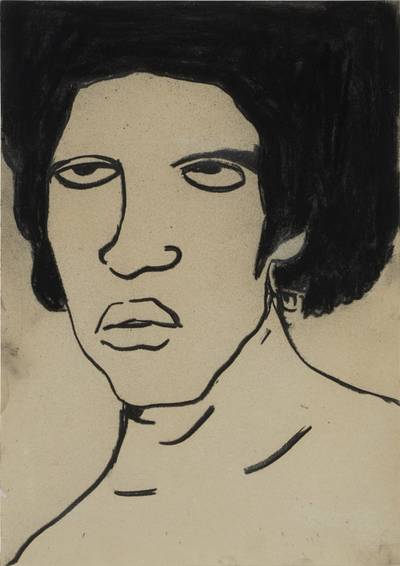
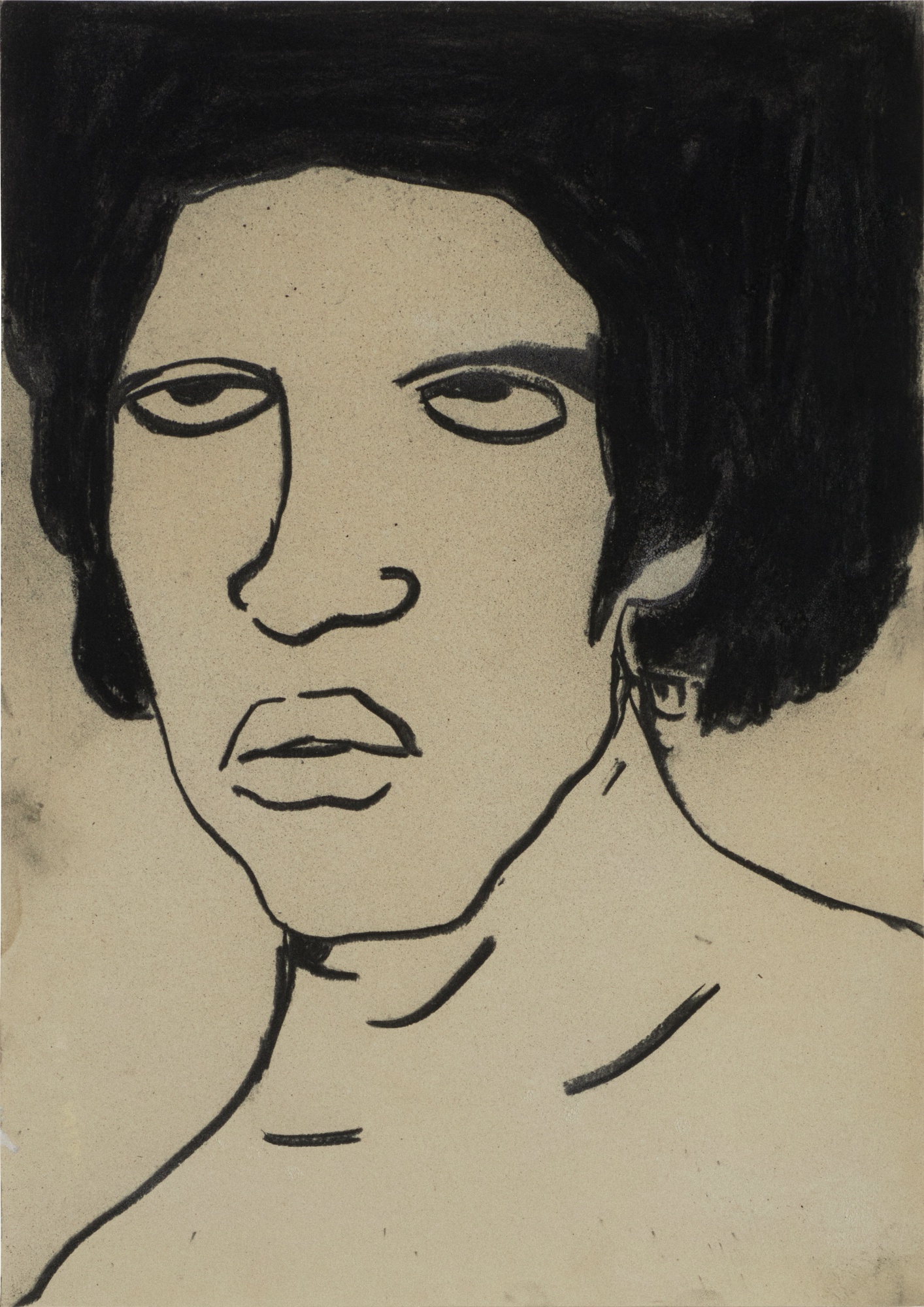
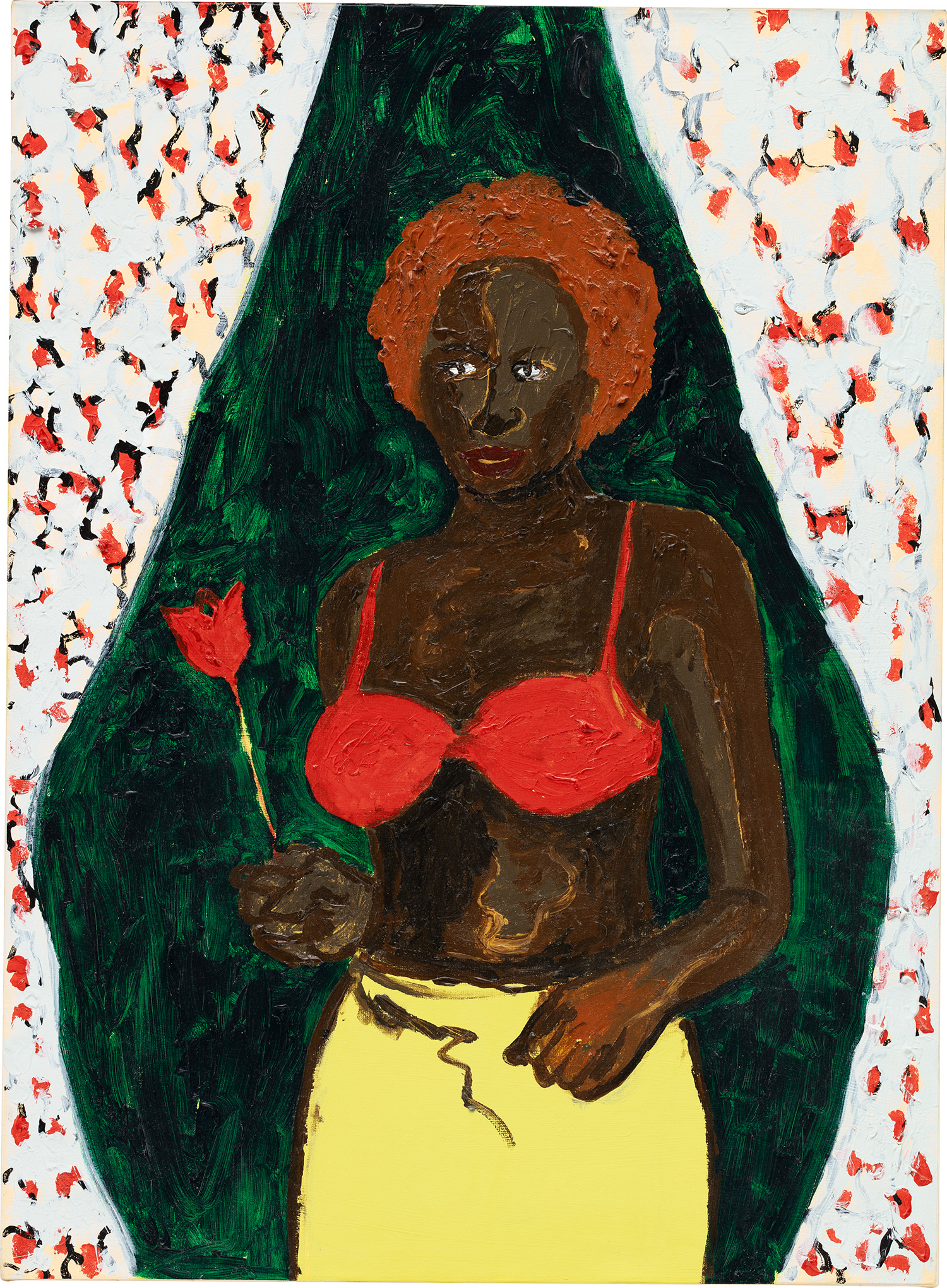
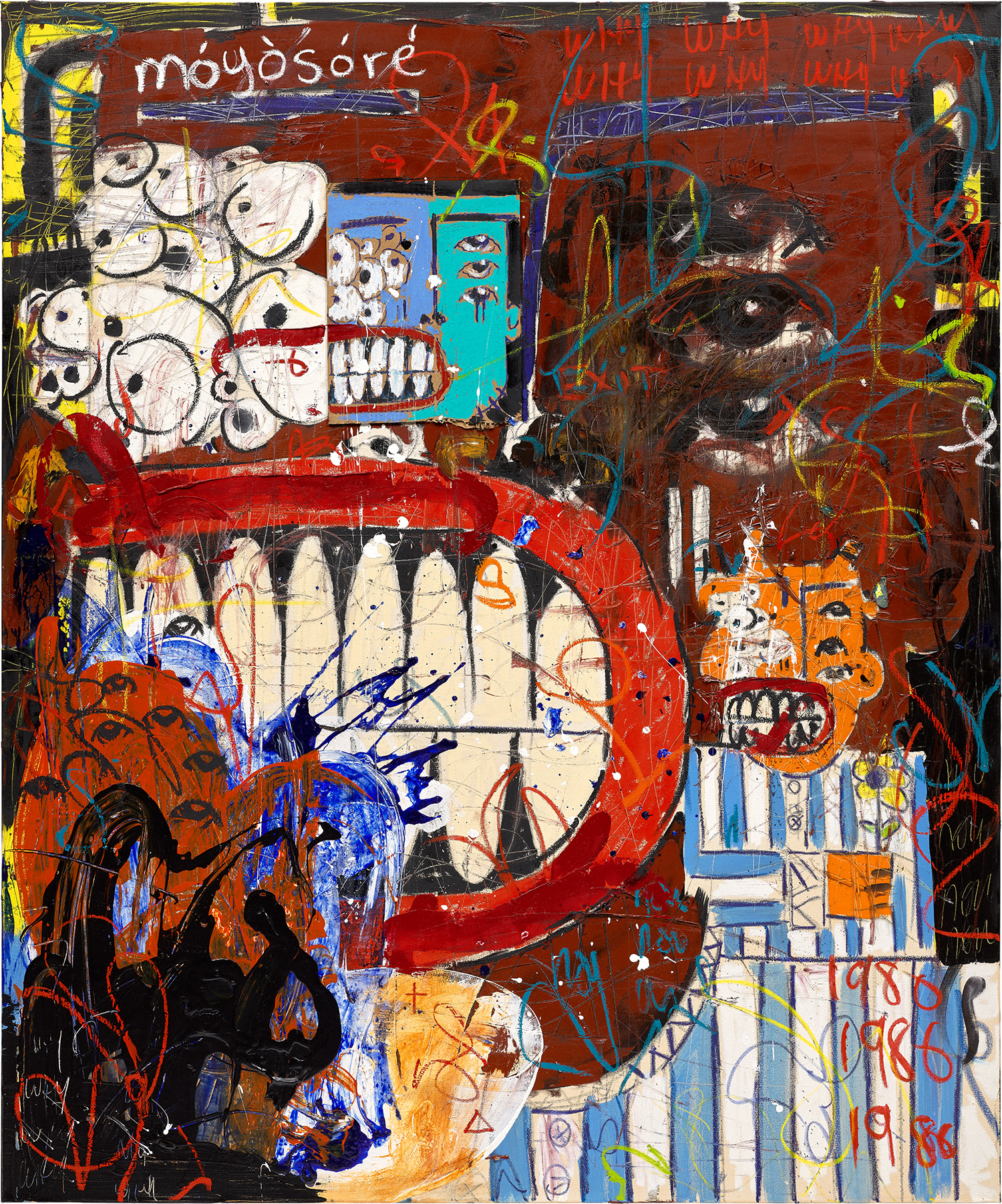
When Gideon Appah's paintings began appearing with increasing frequency at international art fairs and within the programming of forward looking European and American galleries in the early 2020s, it felt less like the arrival of a new talent and more like the surfacing of something long submerged. His canvases, dense with archival resonance and atmospheric color, seemed to arrive already fully formed, as though they had been waiting patiently in some antechamber between history and dream. The Ghanaian painter, born in 1989, has since become one of the most compelling voices in contemporary figurative painting, a distinction earned not through spectacle but through an almost devotional commitment to layering, memory, and the poetics of the image. Appah was raised in Ghana, and the cultural landscape of West Africa, its visual traditions, its colonial inheritances, and its deep reserves of mythological imagination, forms the bedrock of everything he makes. Growing up with access to archival photographs and the visual residue of colonial documentation, he developed an early sensitivity to the way images carry power, specifically the power to define, to erase, and occasionally to restore. This awareness would become the animating tension of his mature practice. Ghana's rich history of textile production, ceremonial dress, and communal portraiture also left unmistakable marks on his sensibility, evident in the tactile quality of his painted surfaces and his recurring interest in fabric, adornment, and the social meaning of how bodies are clothed and presented. Appah studied painting formally, and his training is visible in the structural confidence of his compositions, the sureness with which figures are placed and weighted within their pictorial environments. But the most distinctive aspects of his work feel autodidactic in spirit, born from private obsessions rather than institutional instruction. He began developing his signature approach by mining photographic archives, particularly imagery from the colonial period in Africa, and then subjecting those found images to a process of transformation that is part painting, part dreaming, and part historical reckoning. The result is a body of work that operates simultaneously as portraiture, as mythology, and as a kind of visual archaeology of the Black Atlantic world. The paintings for which Appah is best known share several qualities that collectors and curators have found irresistible. His palette is one of the most immediately recognizable in contemporary painting: warm ochres, dusty pinks, soft teals, and golden browns applied in layers that suggest not just visual depth but temporal depth, as though the paintings themselves have aged into their own beauty. Figures emerge from these backgrounds with a quality of arrested motion, as if caught between one world and another. The work resists easy narrative, preferring instead to hold multiple possible readings in productive suspension. Among the three works currently available through The Collection, this sensibility is beautifully demonstrated. "Head of a Nubian Boy" from 2019, rendered in charcoal on paper, shows Appah's command of draftsmanship at its most concentrated, the medium stripped back to reveal the essential sculptural gravity of the face. "Portrait of Half Nude Woman" from the same year, executed in acrylic on canvas, demonstrates his ability to charge figurative painting with a sense of ceremony and quiet dignity. Perhaps most technically striking is "Boahene 2," also from 2019, painted in acrylic on stitched canvas, a work in which the physical support becomes part of the meaning. The stitching across the canvas surface evokes both the textile traditions of Ghana and the act of mending or suturing history itself. The year 2019 appears to have been a period of particular creative intensity for Appah, and these three works offer a window into a practice that was consolidating its themes and finding its formal confidence. The decision to work on stitched canvas in "Boahene 2" is especially significant, placing him in dialogue with a lineage of artists who have used the materiality of the support as a carrier of meaning. One thinks of El Anatsui's transformations of found material, or of the Ghanaian kente weaving tradition, or of the American quilt traditions associated with the Gee's Bend collective. Appah is not derivative of any of these references, but his awareness of them enriches the work considerably for viewers who encounter it with that context in hand. Within the broader landscape of contemporary figurative painting, Appah occupies a distinctive position that is both rooted in African art history and in active conversation with international modernism. His dreaming, layered quality brings to mind the late canvases of certain Surrealist adjacent painters, but his subject matter and his relationship to the archive place him firmly in the tradition of artists grappling with postcolonial identity and the politics of representation. He shares something of the atmospheric intensity of Lynette Yiadom Boakye, the archival imagination of Zanele Muholi, and the mythological ambition of Kara Walker, though his painterly voice is entirely his own. His work is best understood as part of a generation of African and African diaspora artists who have insisted on expanding the vocabulary of figuration to include histories that Western modernism preferred to overlook. From a collecting perspective, Appah represents exactly the kind of opportunity that patient, discerning collectors have long sought. His international profile continues to grow, with his work appearing in major auction contexts and attracting serious institutional attention across Europe and the United States. Works on paper such as "Head of a Nubian Boy" offer a point of entry that showcases his extraordinary draftsmanship, while the painted canvases reveal the full chromatic and conceptual complexity of his practice. The stitched canvas works occupy a special category, combining painterly ambition with a conceptual dimension that increases their resonance and, most observers would agree, their long term significance. Collectors building collections with an eye toward both cultural importance and aesthetic distinction would do well to look closely at what is available now. Gideon Appah matters today because he is doing something genuinely difficult with genuine grace: he is restoring dignity and complexity to figures that history tried to flatten, and he is doing so with an aesthetic generosity that invites rather than instructs. His paintings do not demand a particular reading; they offer themselves as spaces of contemplation, places where the past and the present can meet without the violence of forced resolution. In a moment when the question of whose histories are told, and how, has never felt more urgent, Appah's layered, luminous canvases feel not just beautiful but necessary.