Repetitive Mark-Making
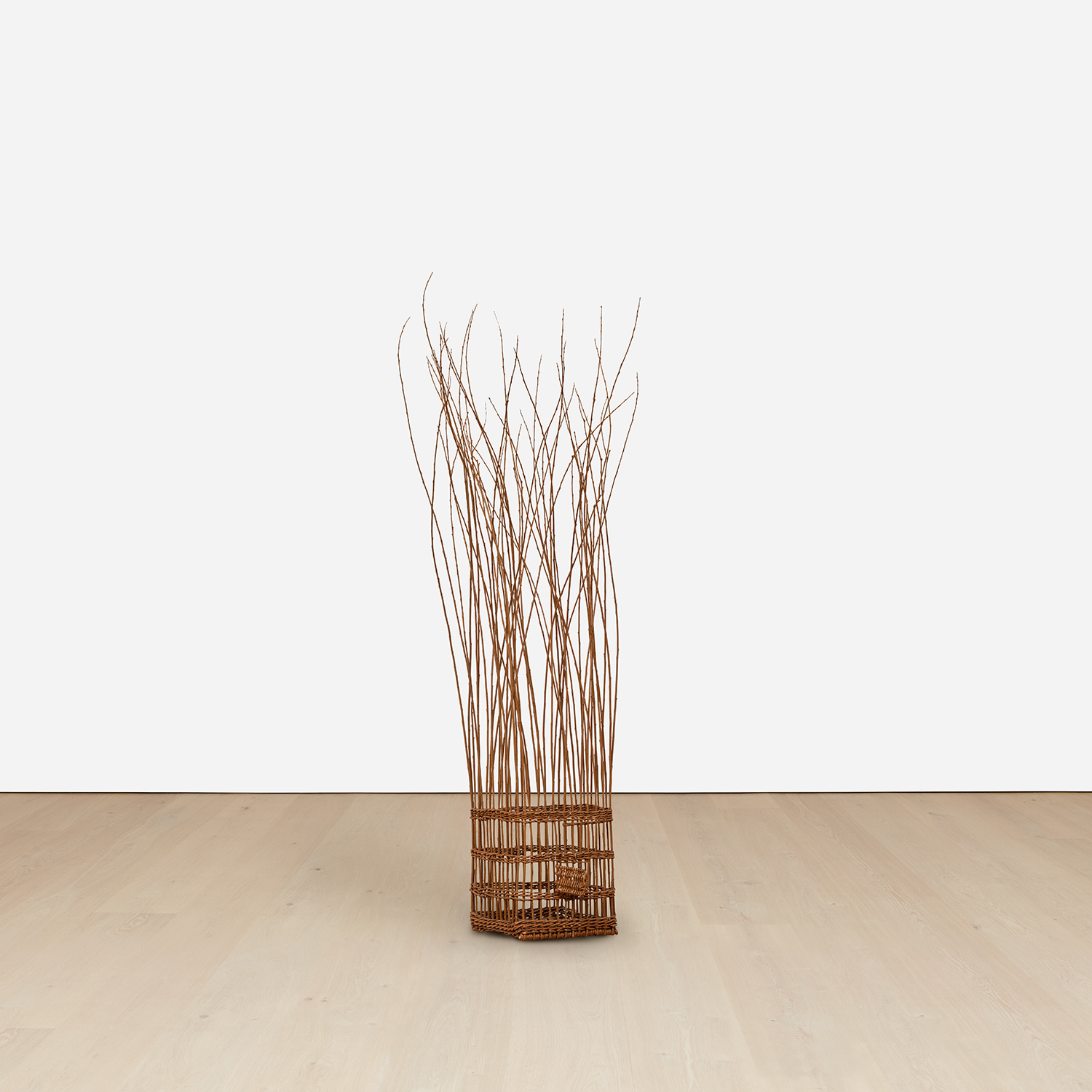
Kim Yong-Ik
Untitled
The Quiet Obsession Collectors Cannot Resist
There is something almost paradoxical about the appeal of repetitive mark making to serious collectors. The work asks you to slow down, to resist the urge to decode or narrate, and simply to be present with the accumulation of gesture across a surface. People who live with these works consistently describe a similar experience: the painting changes depending on how much time you give it, and it rewards you differently in morning light than it does at dusk. That quality of sustained attention, of a work that keeps revealing itself, is precisely what makes this category so compelling to live with over years and decades.
The philosophical stakes are also unusually high. Many of the artists working in this tradition were asking genuinely radical questions about what painting could mean after the upheavals of the twentieth century. The repetitive mark is not decoration and it is not illustration. It is a proposition about consciousness, labor, and the relationship between the human body and time.
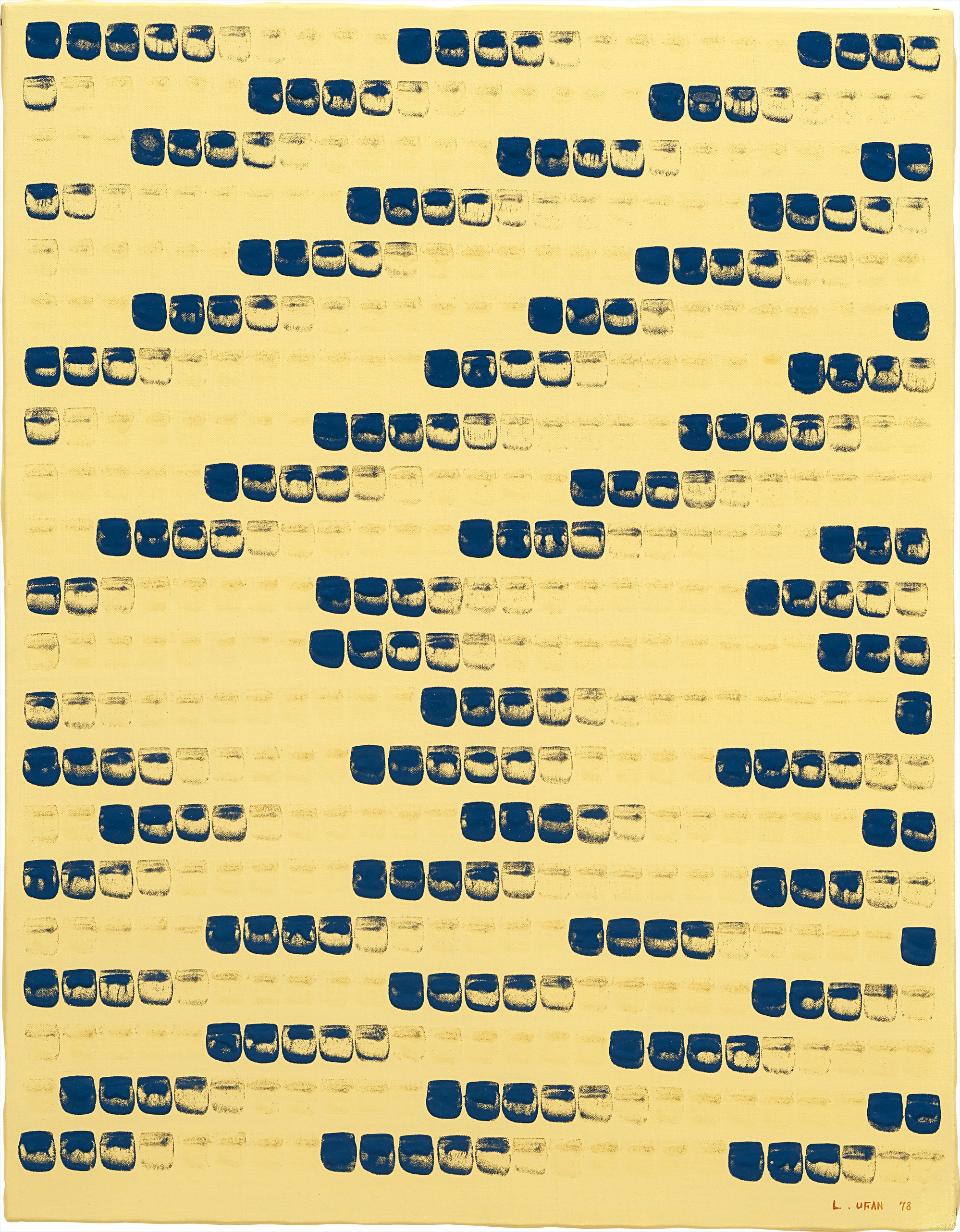
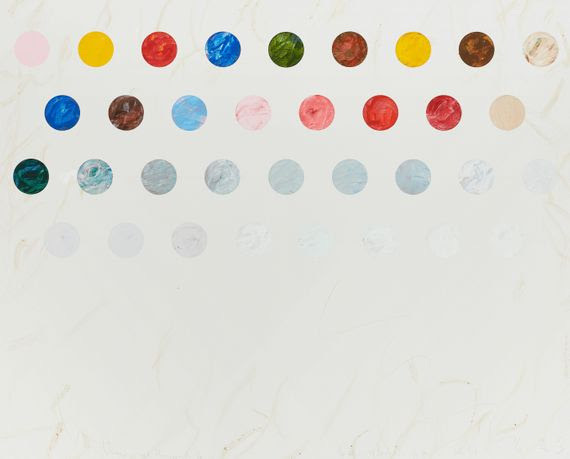
Lee Ufan
From Point No. 780126, 1978
For collectors who care about ideas as much as aesthetics, that depth of intention makes these works feel inexhaustible in a way that more image driven art sometimes cannot sustain. What separates a good work from a truly great one in this category comes down to a few things that experienced eyes learn to read quickly. The quality of presence in the individual mark matters enormously. A weak work in this mode can feel mechanical, as though the repetition is a concept being illustrated rather than a lived experience being recorded.
The greatest examples carry genuine tension between control and release, between the system the artist imposed on themselves and the evidence of the body that carried it out. Look for works where you can feel the artist's breath in the variation between marks, where the surface holds time rather than simply filling space. Scale and format are also meaningful considerations. Many collectors underestimate how much the physical encounter with a large work in this category differs from seeing a smaller study.
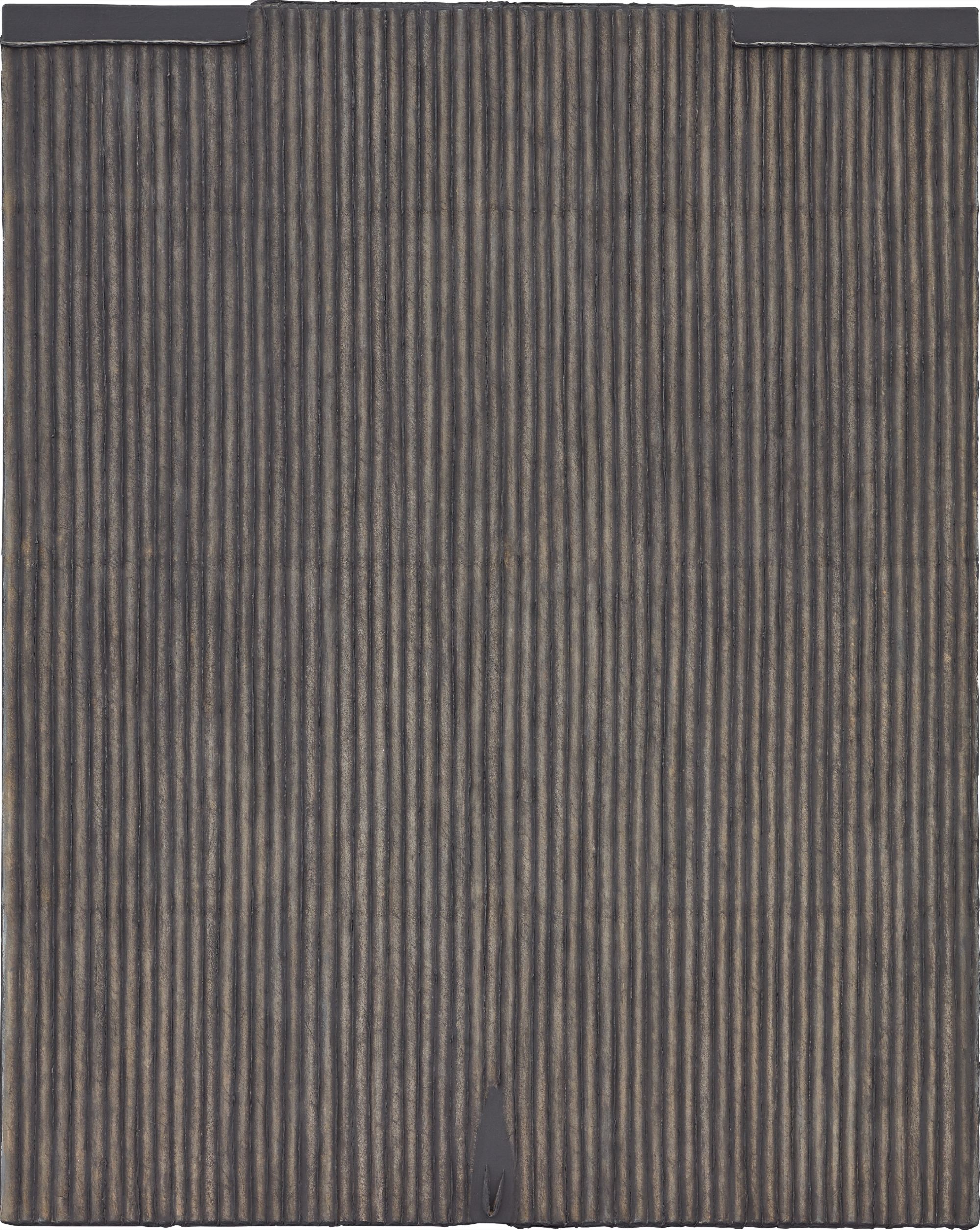
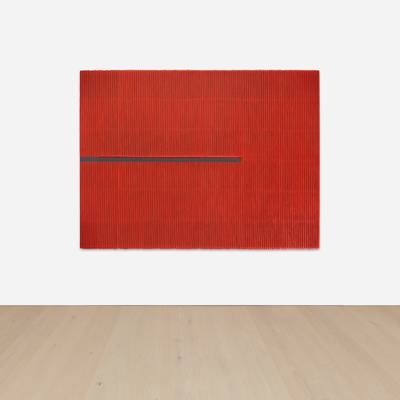
Park Seo-Bo
Écriture No. 960406, 1996
The immersive quality of a substantial canvas by Lee Ufan, for instance, is not simply a magnification of a smaller piece. It becomes environmental, and it changes the room it inhabits. Ufan's Mono ha roots give his mark making a philosophical precision that rewards close looking and extended cohabitation, and works from his strongest periods in the 1970s and 1980s carry an authority that has only been confirmed by major institutional surveys including his 2011 retrospective at the Guggenheim Bilbao. For collectors thinking about value and positioning, the artists on The Collection represent some of the most significant voices in this tradition.
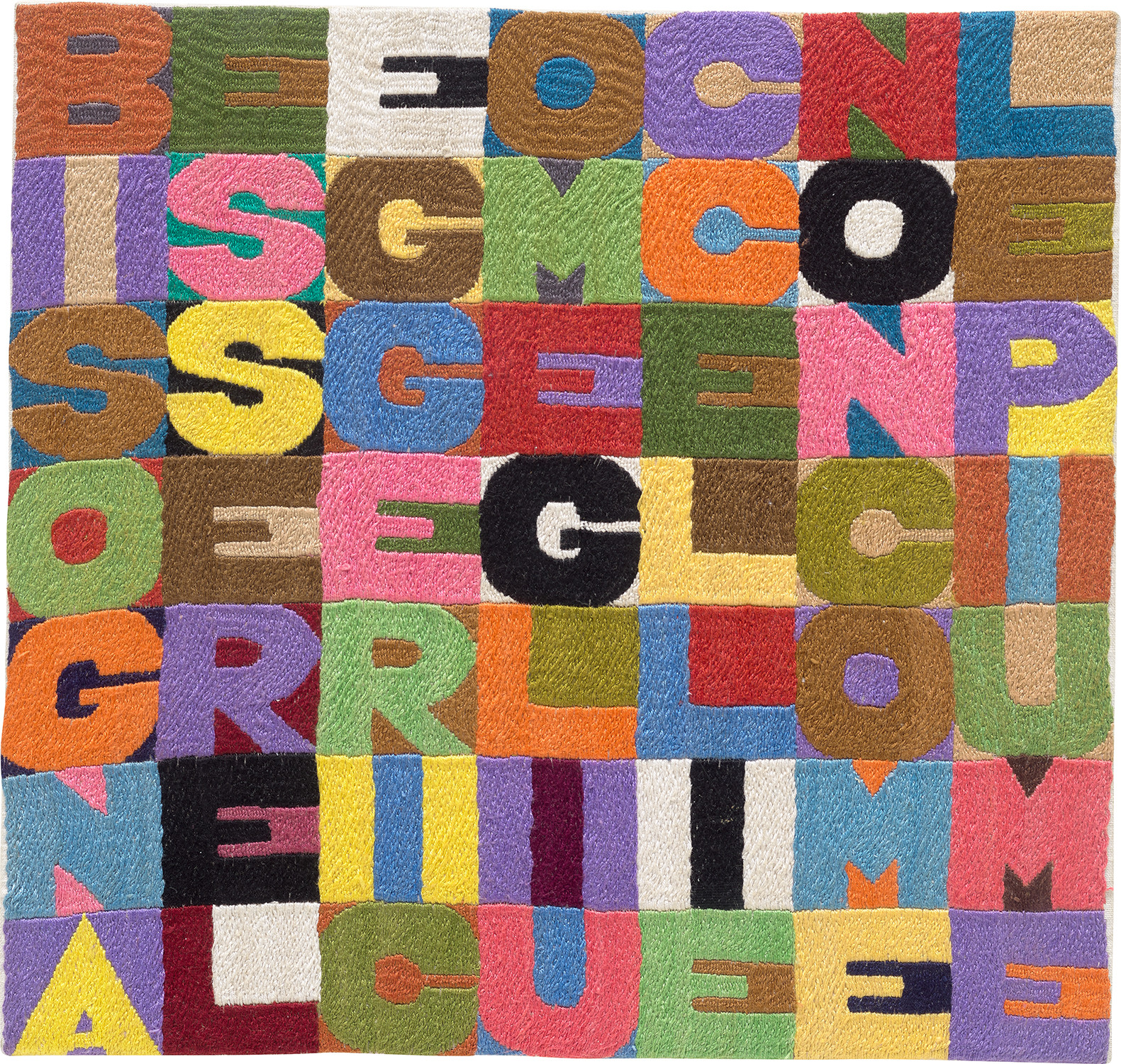
Park Seo Bo is arguably the central figure in the history of the Korean Dansaekhwa movement, and his Ecriture series, developed from the early 1970s onward, has seen extraordinary institutional and market validation over the past decade. His works now appear regularly at the major auction houses and command prices that reflect both their art historical importance and the growing global appetite for Korean modernism. Alighiero Boetti occupies an equally important position in the Italian context, and his embroidered works, which outsourced the repetitive act to Afghan craftswomen while retaining the conceptual architecture, are among the most philosophically nuanced objects in postwar art. The secondary market for Boetti has been consistently strong, with works appearing at Christie's and Sotheby's across categories from modest entry points to significant institutional level prices depending on scale and period.
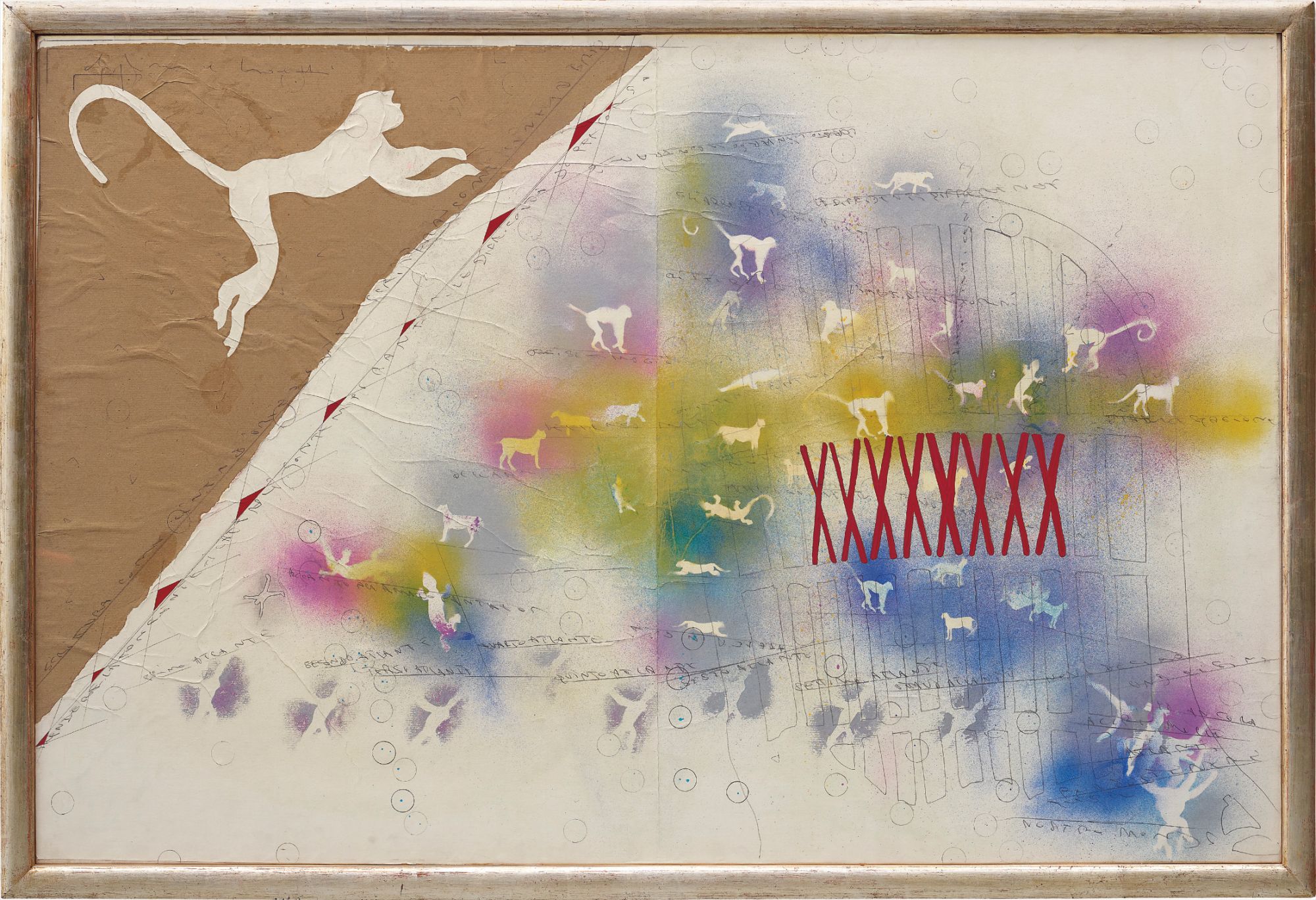
Alighiero Boetti
Senza titolo (scrittura come linea d’orizzonte), 1987
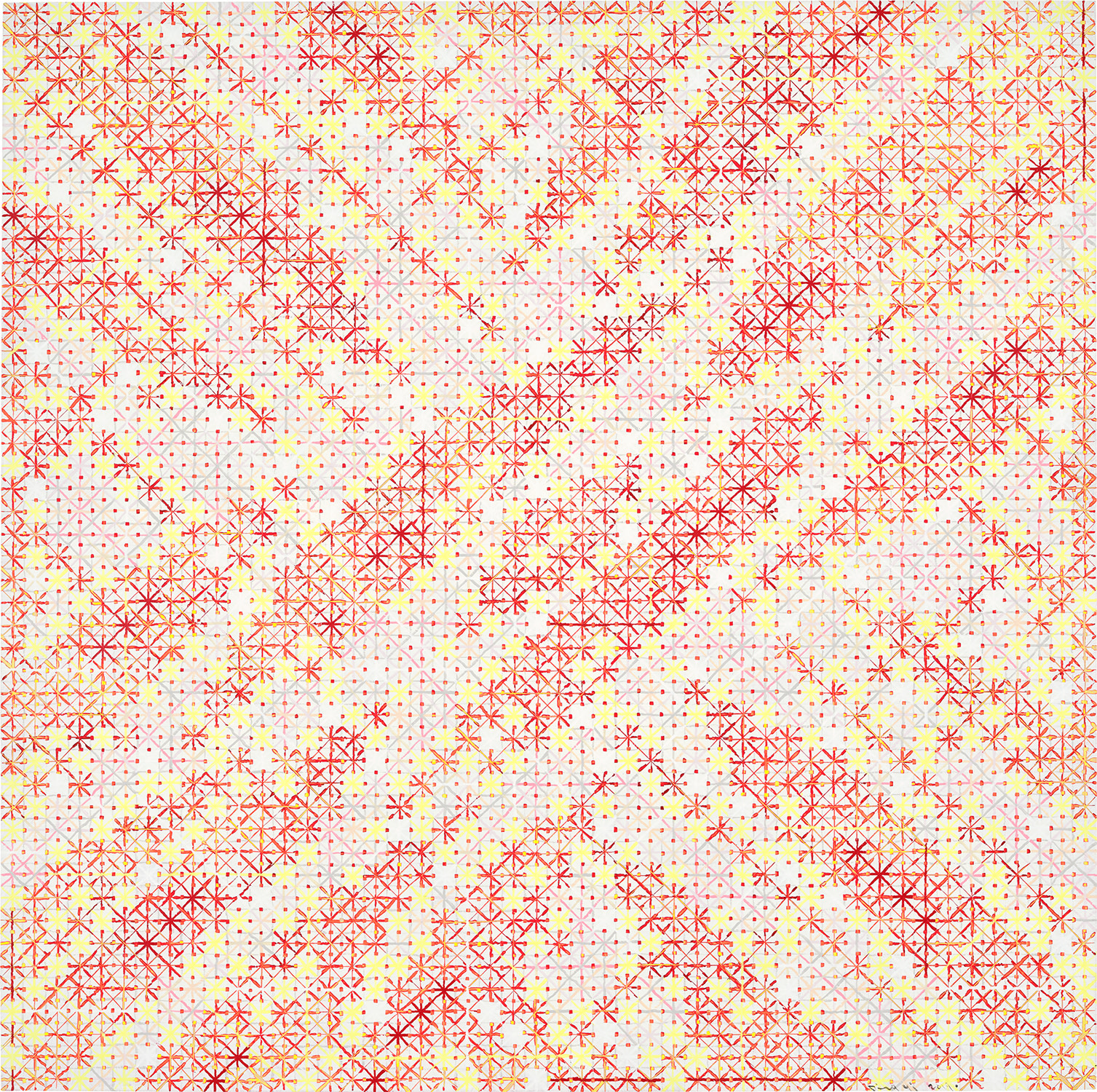
Ding Yi presents a particularly interesting case for collectors paying attention to the Chinese contemporary market. His cross and tartan mark making systems, developed from 1988 onward, have a rigor and consistency that places him in genuine dialogue with global geometric abstraction while remaining deeply rooted in his Shanghai context. His market has matured considerably, and serious collectors have taken note that his institutional profile continues to grow. Kim Yong Ik, a Korean artist working with careful, meditative mark accumulation, represents the kind of deeply committed practice that rewards patient collecting.
His work sits in an interesting position where critical recognition has outpaced market prices, which is precisely the moment when thoughtful collectors tend to pay closest attention. For collectors with an appetite for emerging positions, the field of younger artists engaging seriously with repetitive mark making is genuinely rich right now. Artists working across Asia, Europe, and North America are returning to the handmade mark as a counterweight to the speed and saturation of digital image culture. The conversation has expanded beyond its original geographic centers, and galleries in Seoul, London, New York, and Berlin are all presenting emerging practitioners worth tracking.
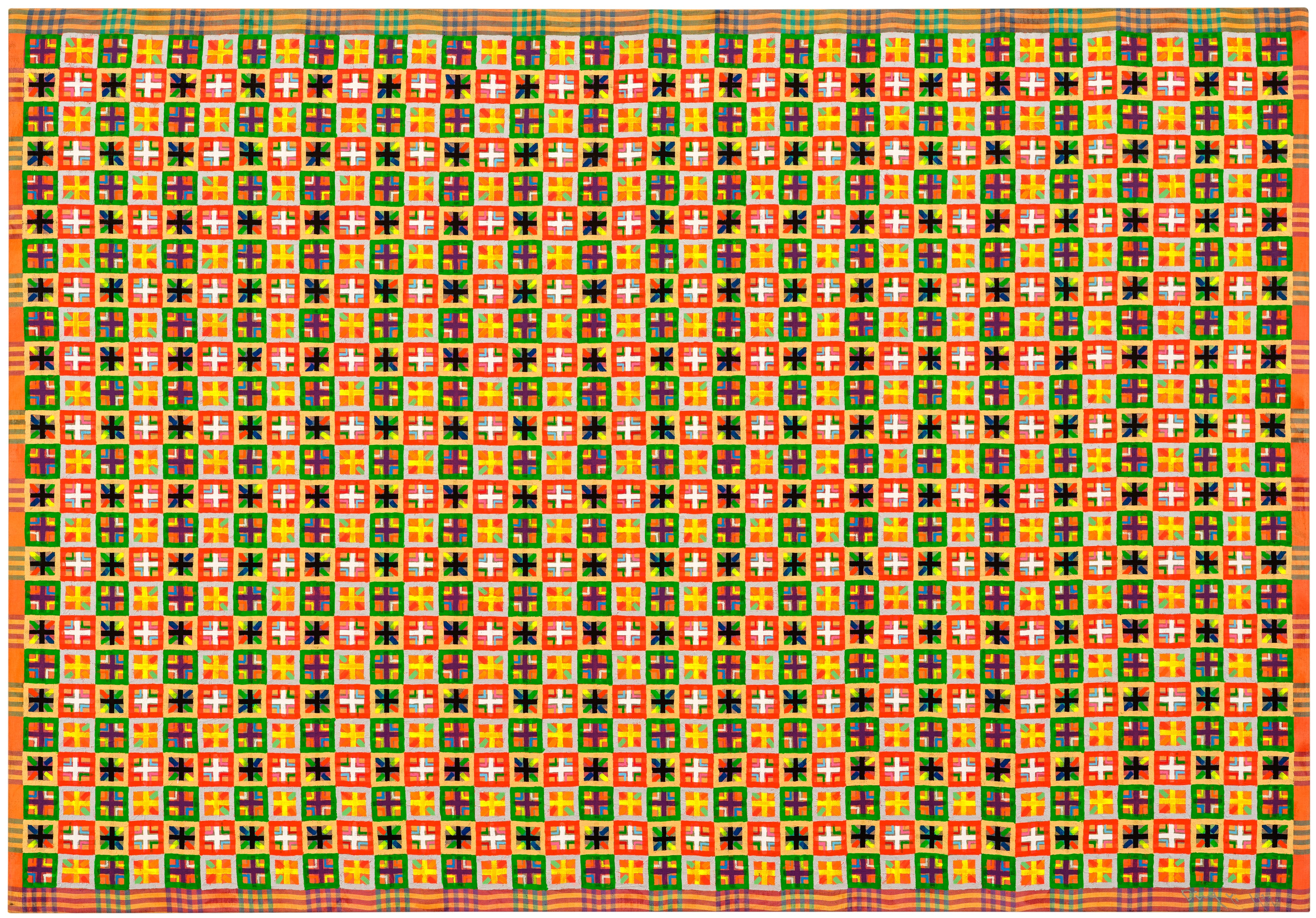
Ding Yi
Appearance of Crosses 99-9, 1999
The key is to look for artists who have a genuine philosophical relationship with the act of repetition rather than those who are simply adopting it as a style. At auction, works in this category have proven remarkably resilient. The Dansaekhwa painters in particular have seen sustained growth since their landmark presentation at the 2015 Venice Biennale, and the market has deepened beyond a handful of major names. Secondary market liquidity for the strongest works is now genuinely good, though as with any category, the gap between museum quality examples and lesser works is significant.
Condition is especially important here because the surfaces of these works are often uniquely vulnerable. Ufan's canvases, for instance, can show handling damage that is extremely difficult to address without affecting the integrity of the marks. Always ask for full condition reports and provenance documentation, and be cautious about works that have been kept in storage for extended periods without climate control. When approaching a gallery about a work in this category, there are several questions worth asking directly.
Find out whether a work is unique or part of a limited edition, since some artists in this tradition have produced prints and multiples alongside their singular works and the distinction matters both for value and for the experience of ownership. Ask about the specific period within the artist's practice, since most of these artists have gone through distinct phases and some periods are considered more critically significant than others. Ask whether the work has been exhibited, and where. And ask, simply, how the gallery recommends displaying it, because orientation, lighting, and the wall color behind a work can fundamentally change how the marks read.
These are not naive questions. They are the questions that distinguish collectors who are building something meaningful from those who are simply acquiring.