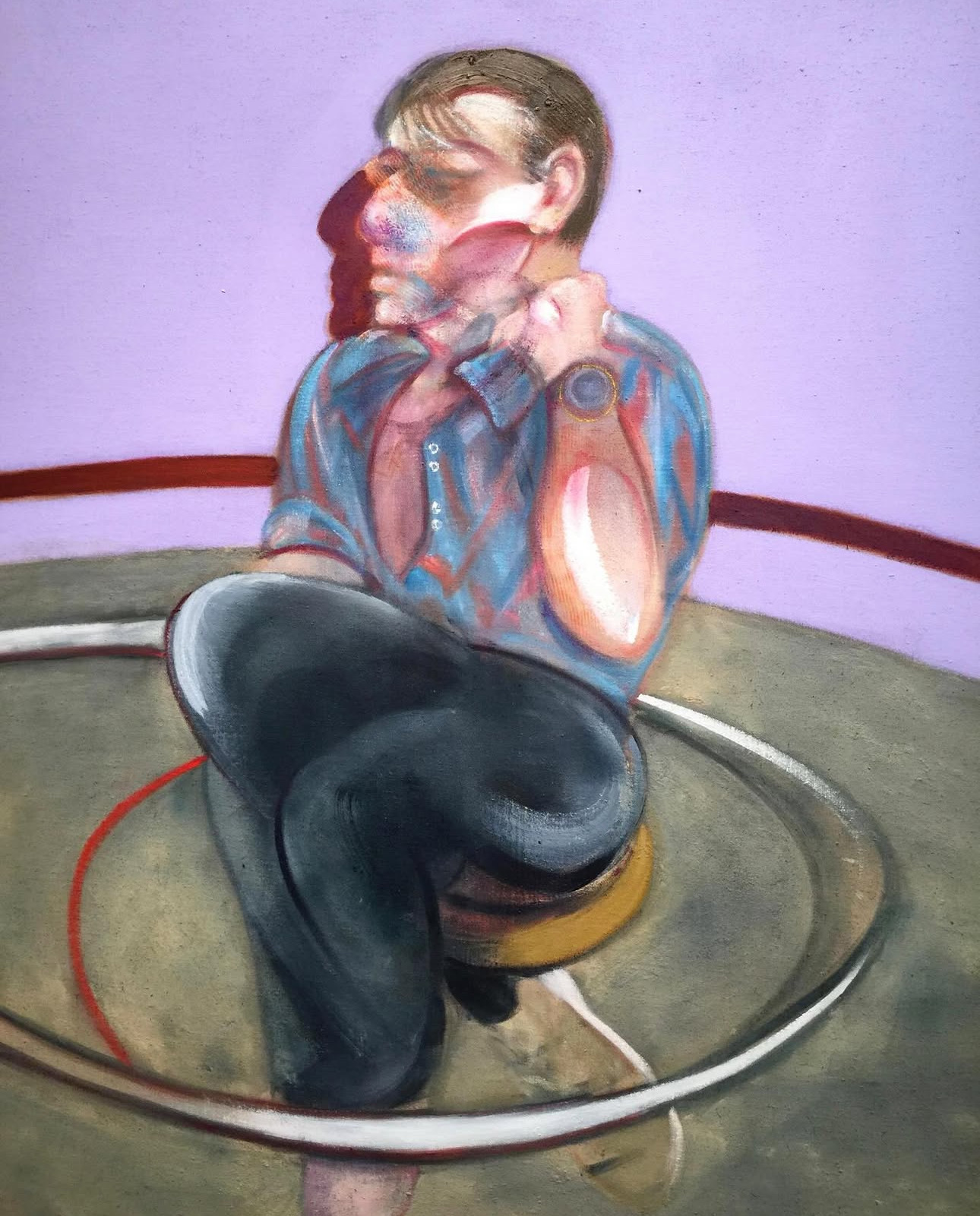
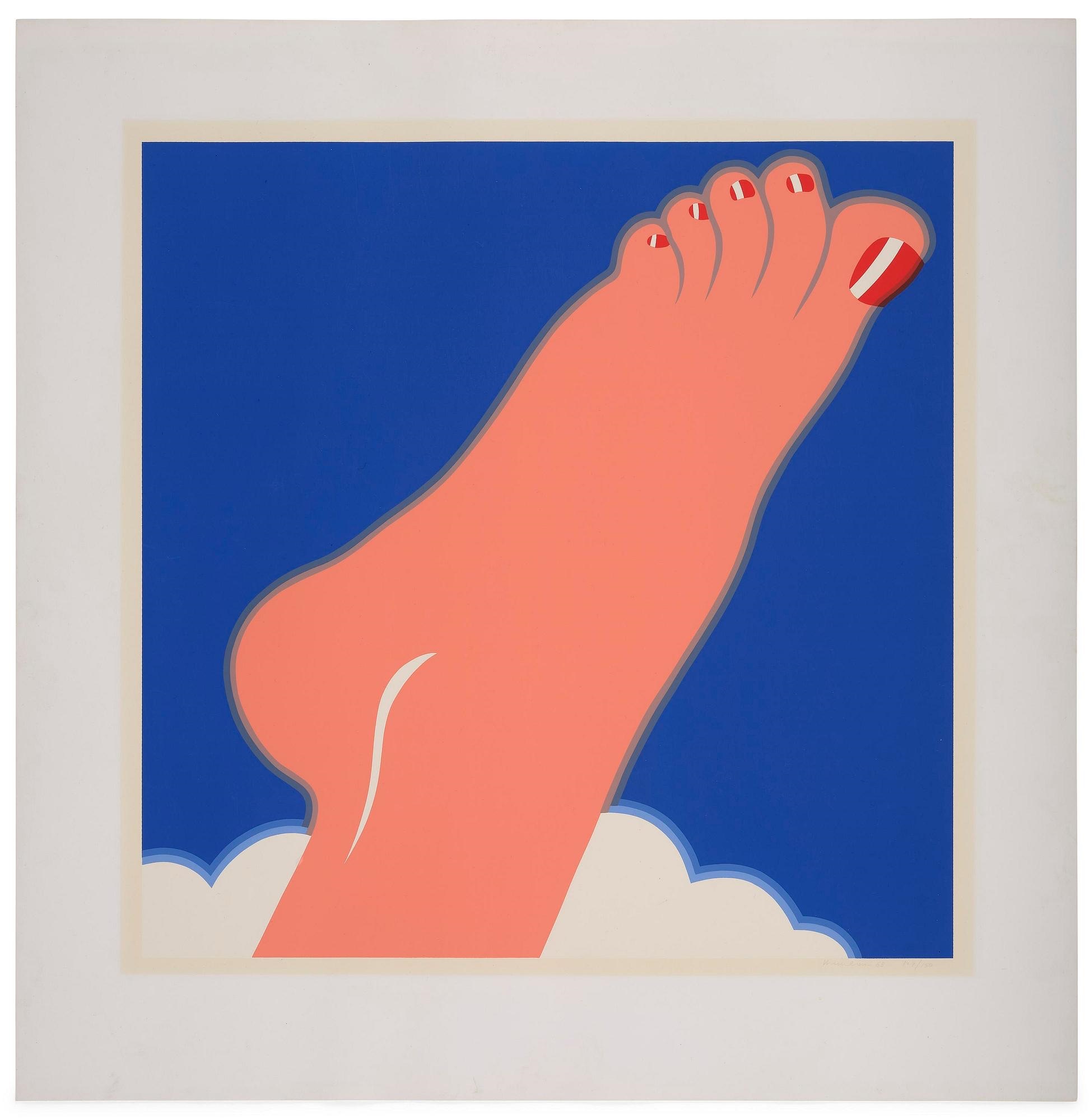
Psychedelic Art
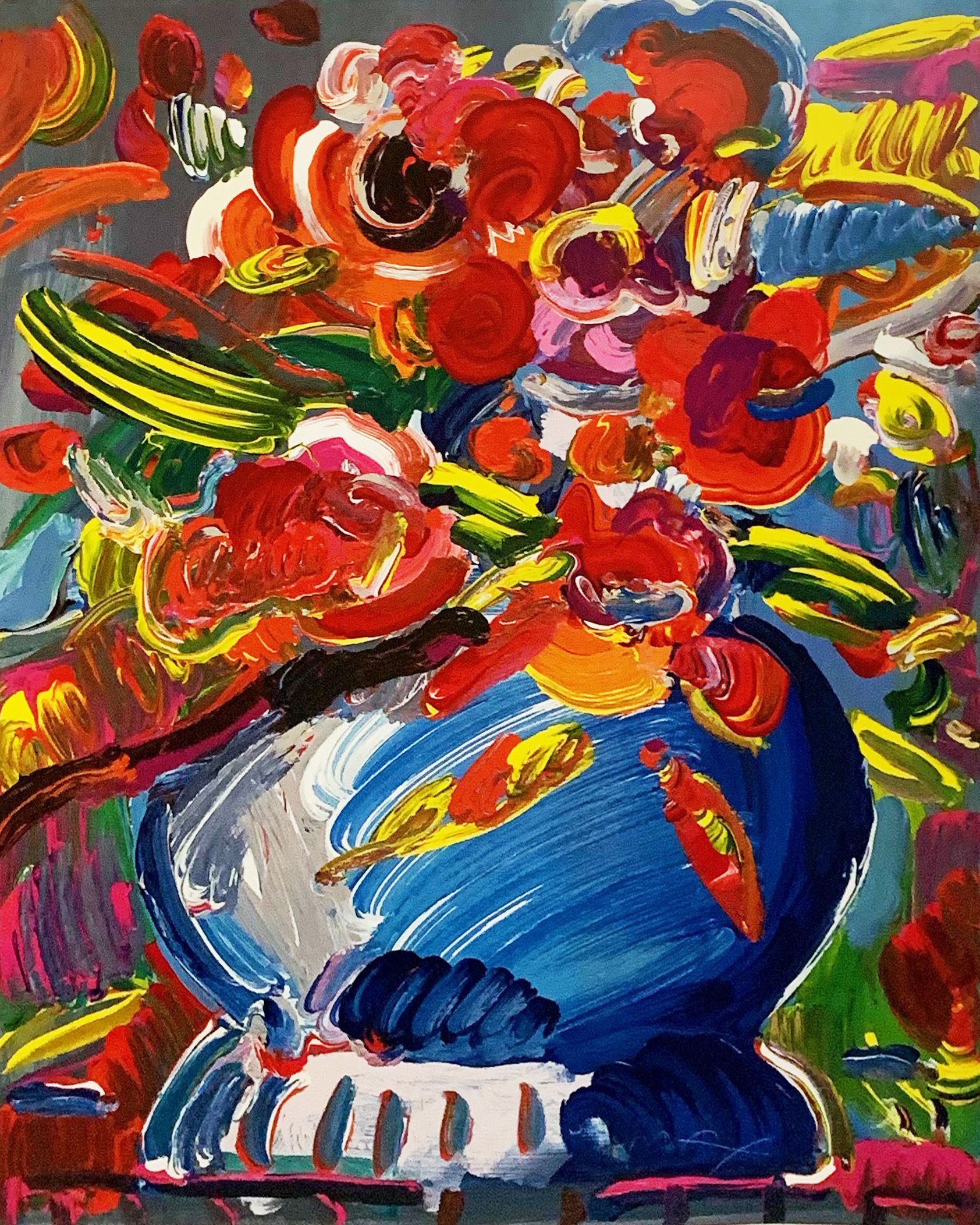
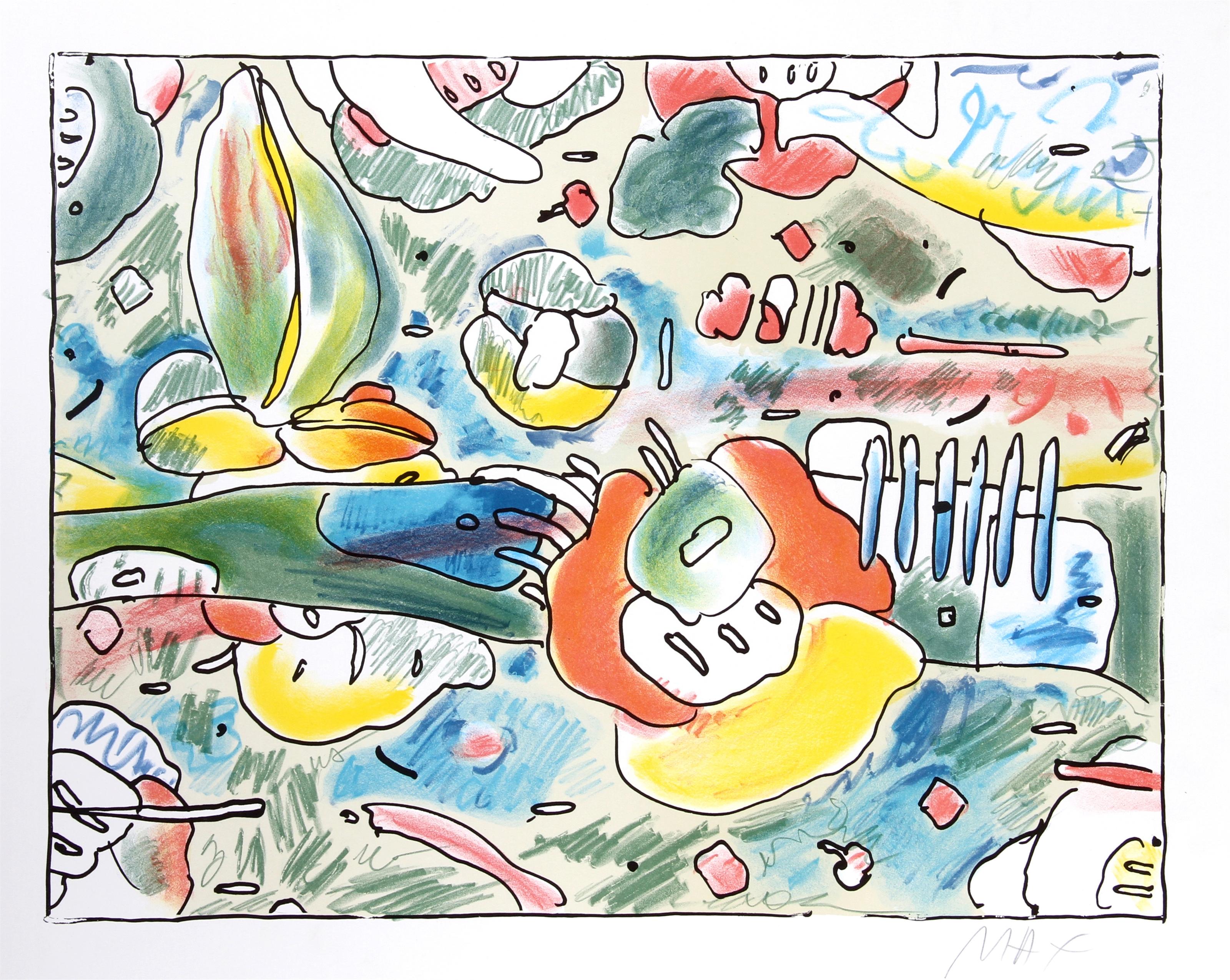
Peter Max
Untitled (Vase & Flowers), 1992
The Art That Rewires Your Brain
There is a particular kind of collector who gravitates toward psychedelic art, and they tend to share a quality that is difficult to name but easy to recognize. They are not interested in art that sits quietly on a wall. They want work that does something to them, work that shifts the air in a room, that makes guests stop mid conversation and stand there for a moment longer than expected. Psychedelic art, at its most sophisticated, operates on a frequency that bypasses the critical mind entirely and lands somewhere more instinctual.
That is an extraordinary thing to live with, and collectors who discover it rarely turn back. The term itself carries baggage, which is part of what makes this category so interesting from a collecting perspective. Mention psychedelic art in certain company and you will immediately conjure blacklight posters and dormitory walls. But the serious tradition running through this space is genuinely rigorous, deeply connected to questions about perception, consciousness, and the limits of representation.
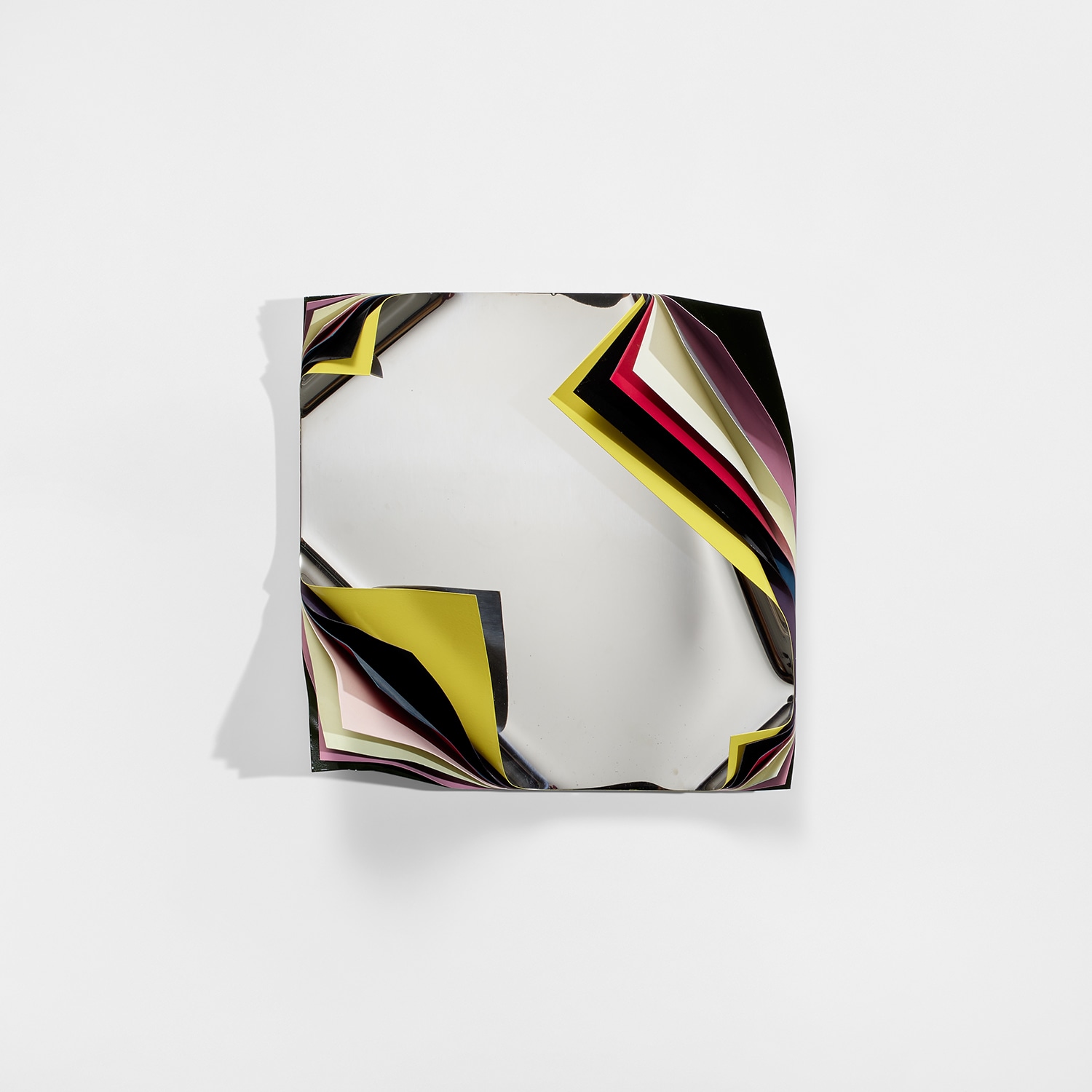
Jim Lambie
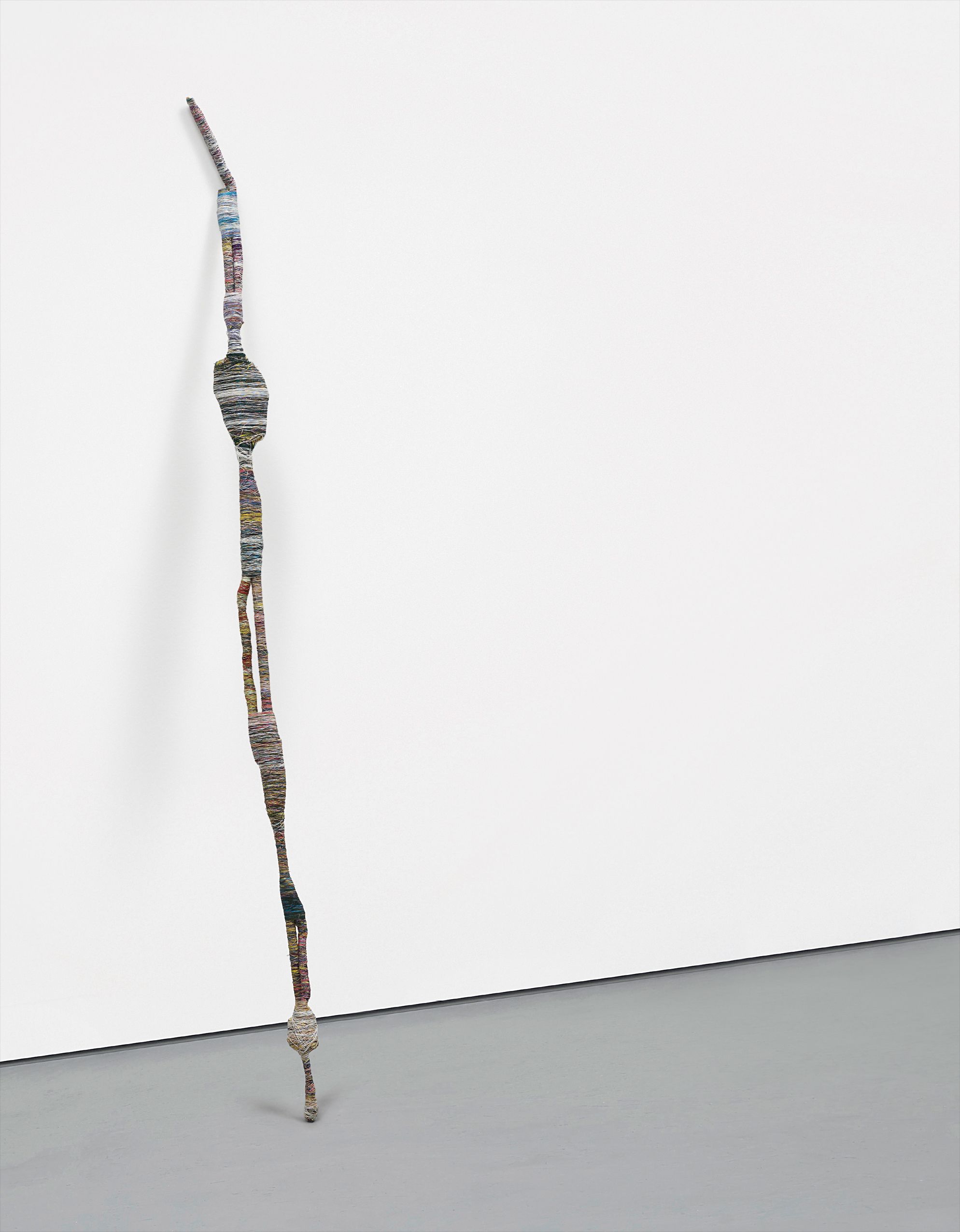
Psychedelicsoulstick #8, 1999
Collectors who approach it with that understanding find themselves in a rich and still undervalued corner of the market, where the most important works continue to surprise in terms of both cultural resonance and financial return. What separates a good work from a great one in this category comes down to intention and resolution. The surface appeal of optical intensity is easy enough to achieve, and there is plenty of work that mistakes visual noise for genuine vision. The works that hold up over time and across viewings are the ones where the formal decisions feel inevitable rather than arbitrary, where color relationships create genuine perceptual instability rather than mere decoration, and where there is an underlying conceptual or emotional logic that rewards sustained attention.
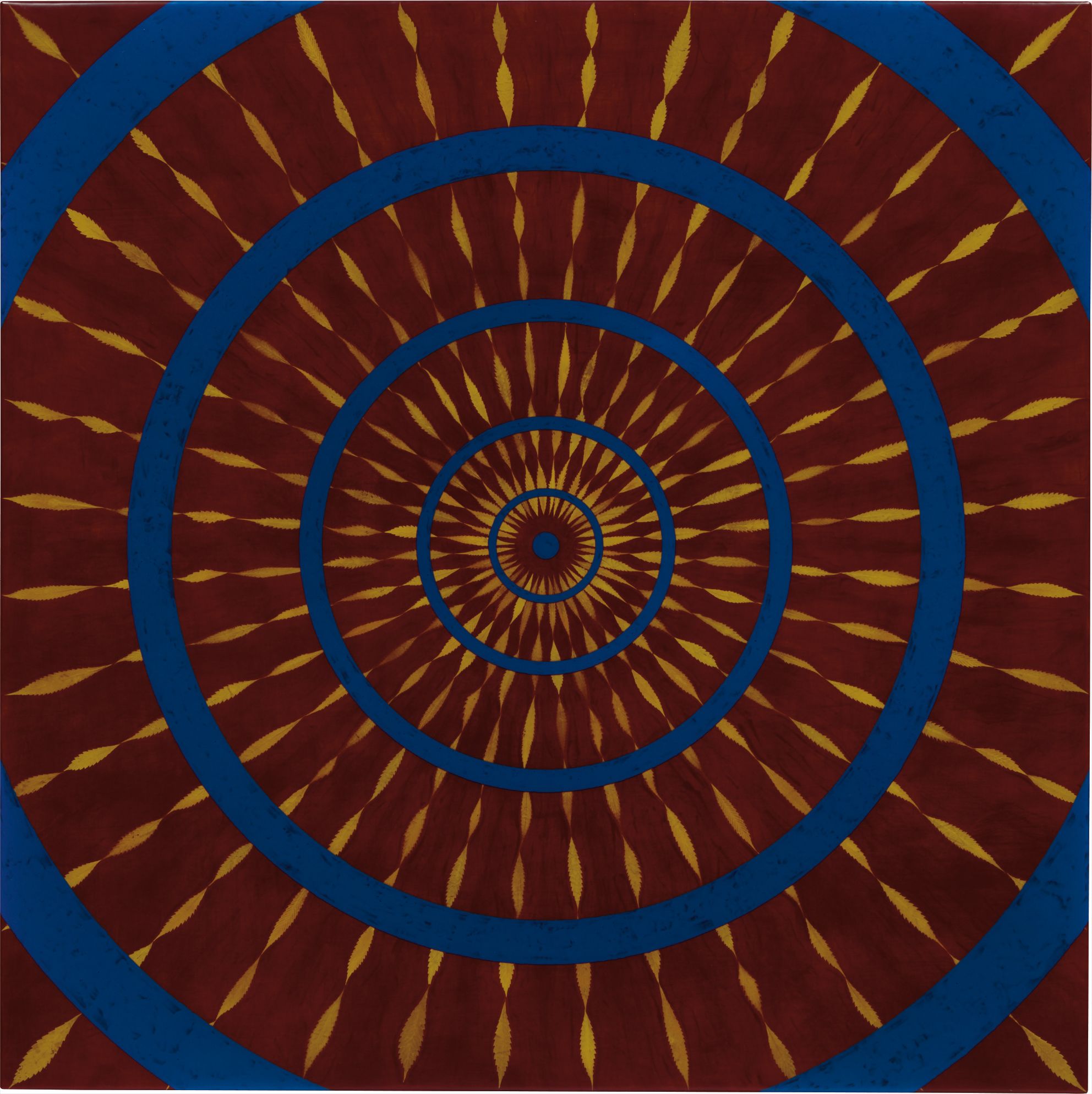
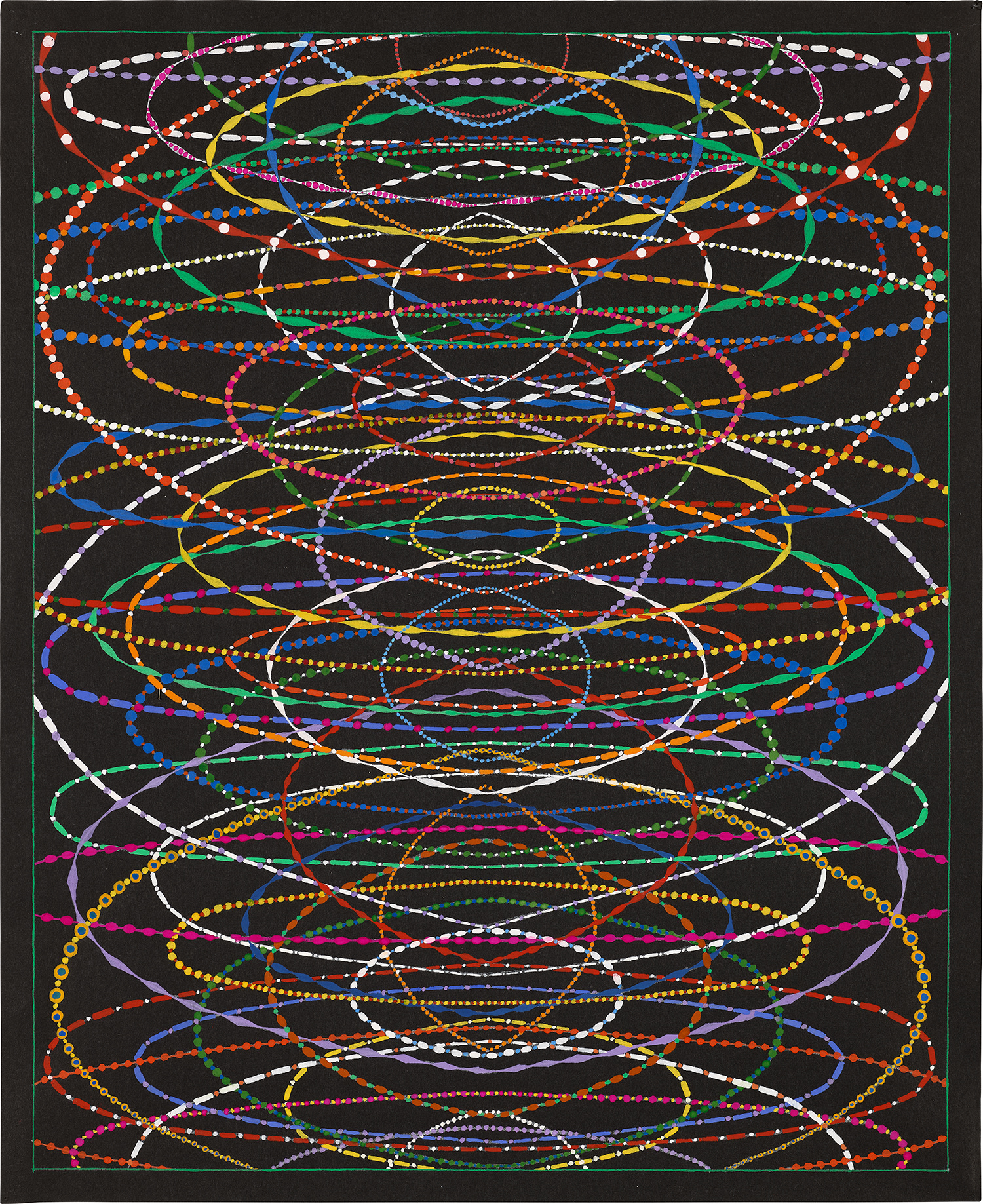
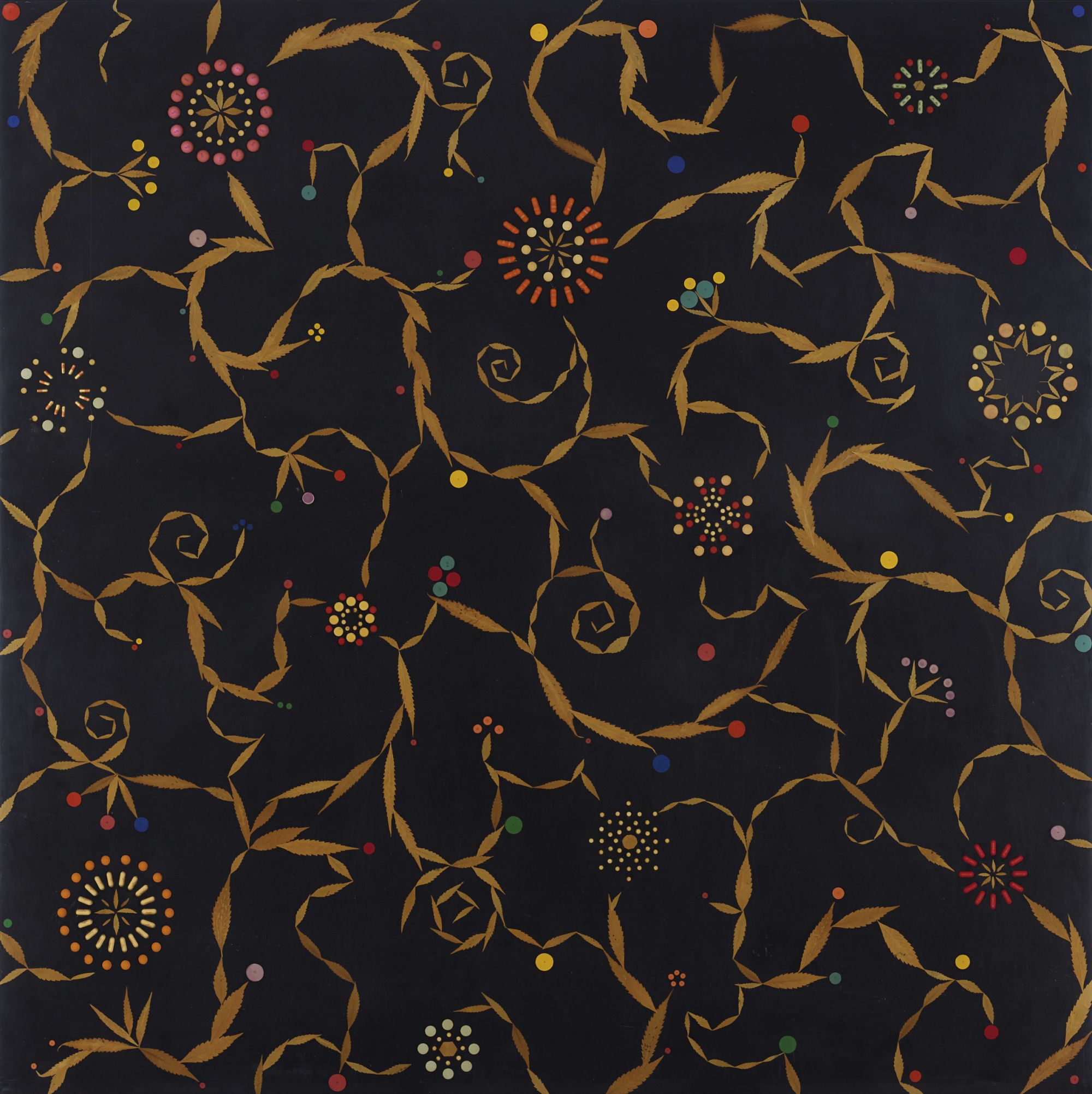
Collectors should spend real time with a work before acquiring it, ideally across different lighting conditions and different times of day. Psychedelic art can shift dramatically depending on how it is lit, and discovering that a piece you found electric in a gallery reads as exhausting at home is an expensive lesson. Fred Tomaselli represents perhaps the most intellectually compelling case for collecting in this space right now. His works, which incorporate actual plant matter, pills, insects, and other found materials embedded in layers of resin, occupy a completely singular position in contemporary art.
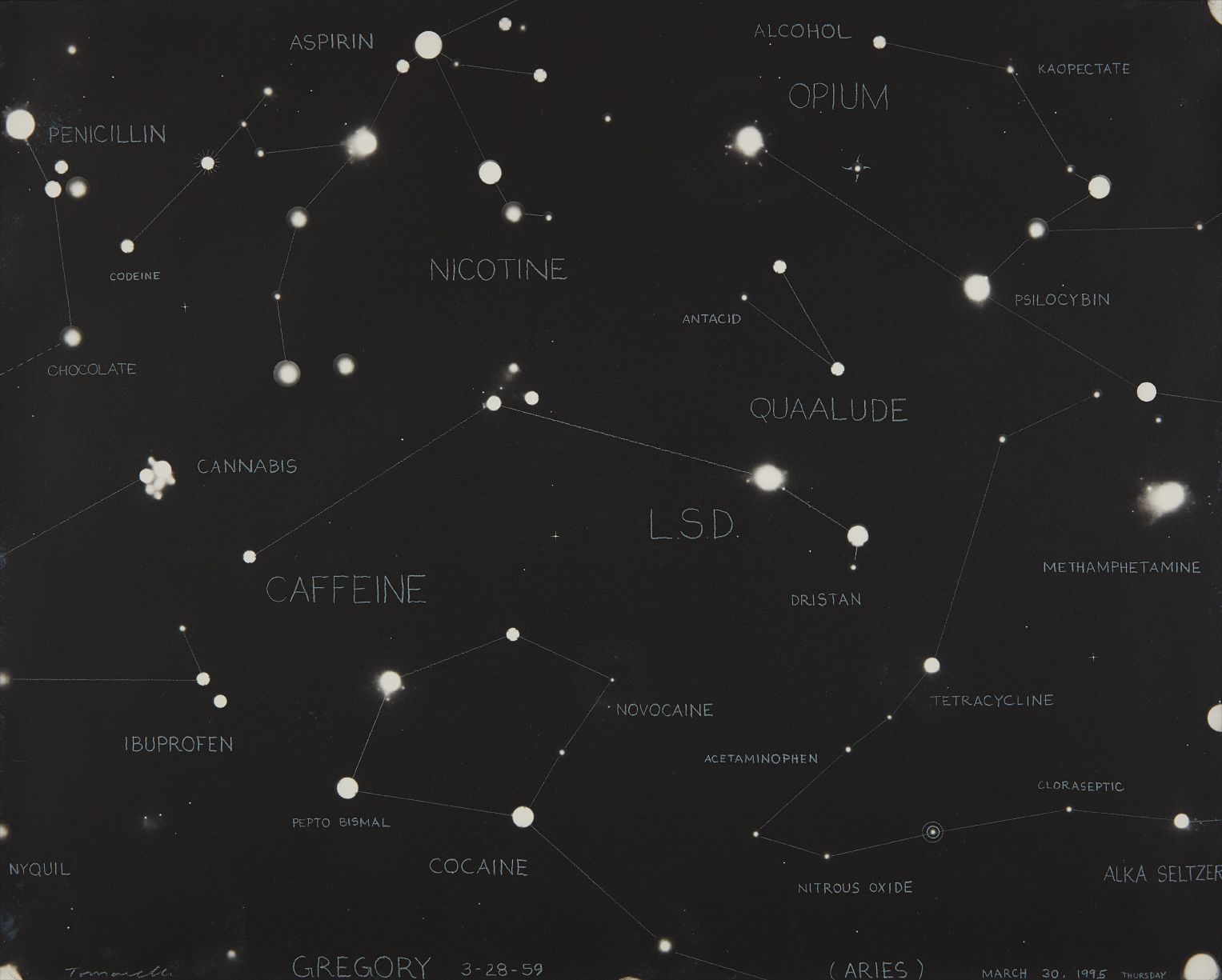
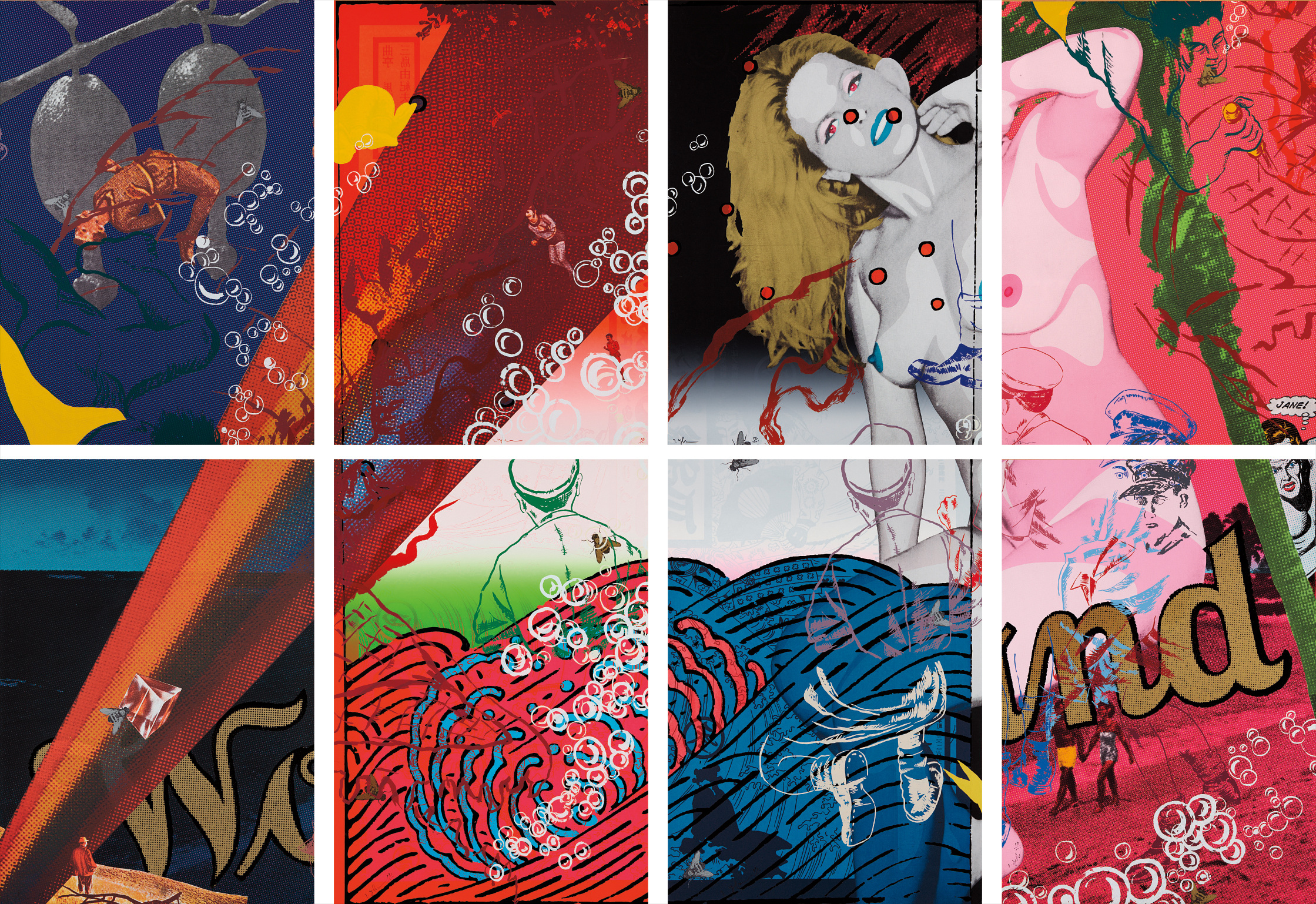
Fred Tomaselli
Fade into You, 1980
They are psychedelic in the most literal and most sophisticated sense simultaneously, images that appear to vibrate between the scientific and the hallucinatory. Tomaselli has been collected by major institutions including the Whitney and the Museum of Contemporary Art in Los Angeles, and his market has proven remarkably consistent over the past two decades, with strong results at auction suggesting that the institutional validation has translated cleanly into secondary market confidence. His works on The Collection represent a serious opportunity for collectors who understand what it means to acquire an artist at the height of his powers and with a body of work that has genuine art historical weight. Jim Lambie operates in a different register, transforming architectural space itself into something perceptually destabilizing.
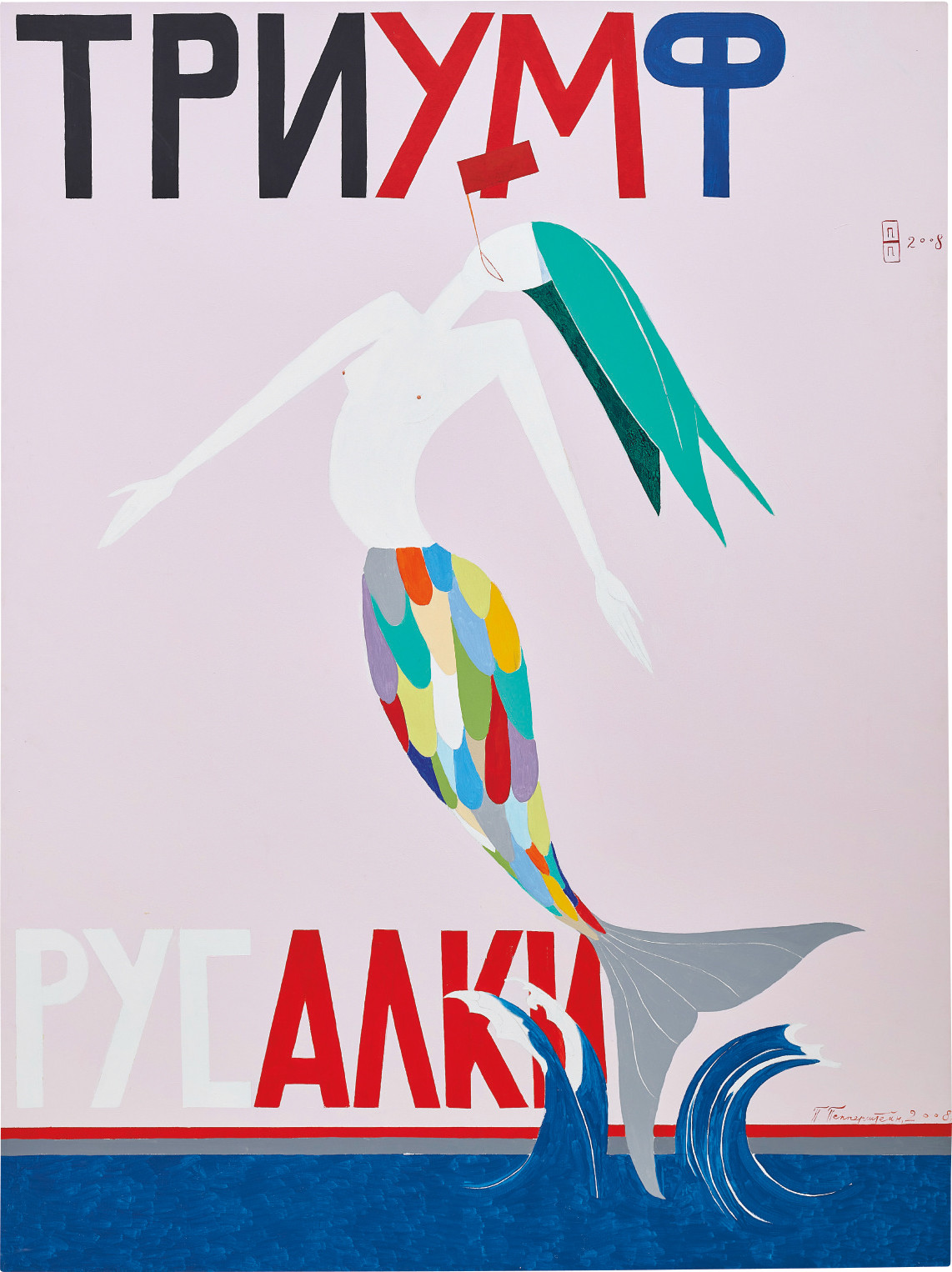
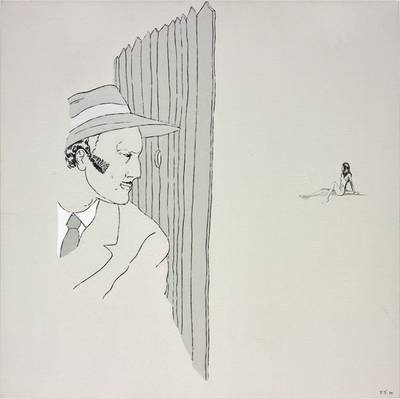
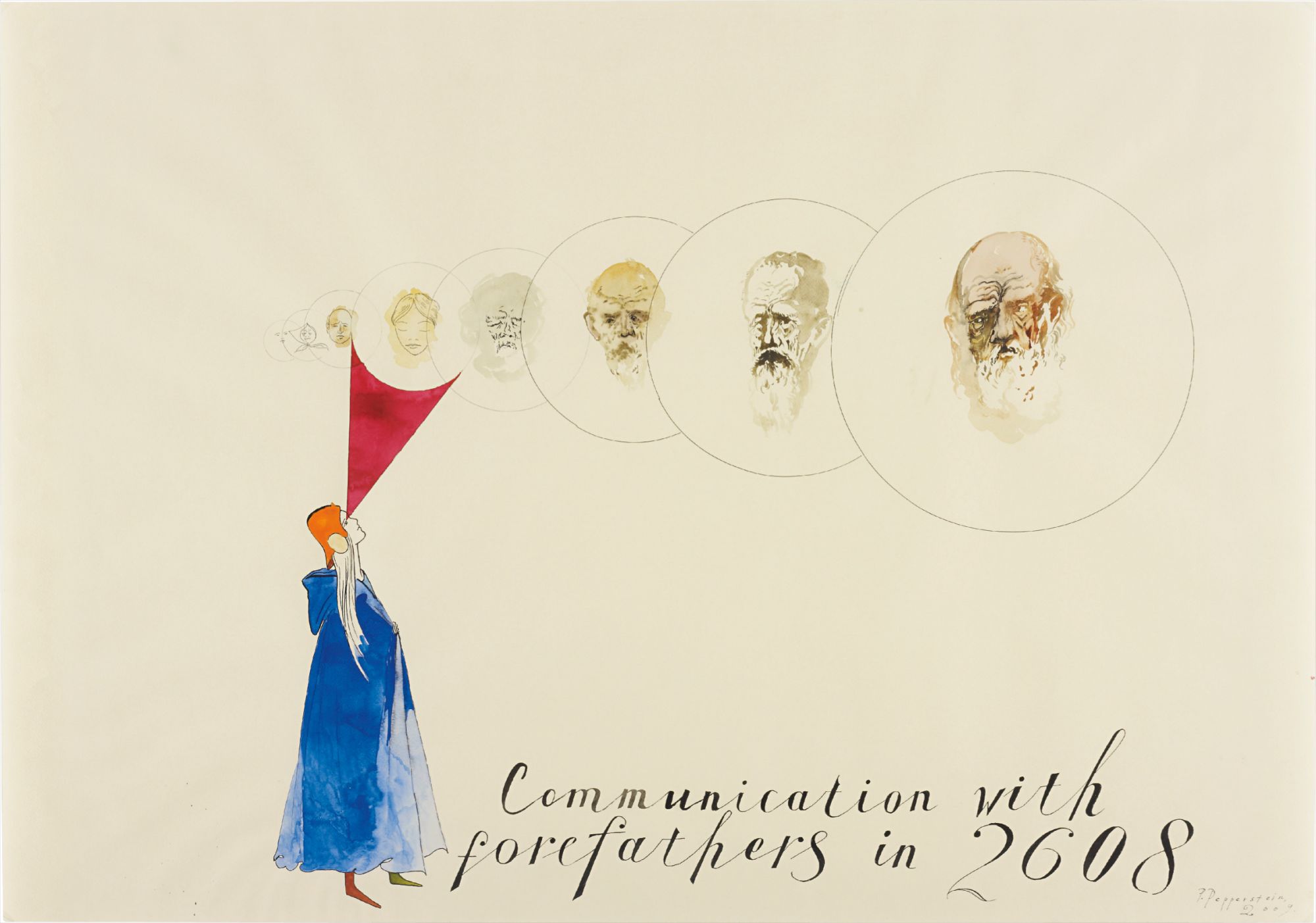
His floor installations using colored vinyl tape, most famously the ongoing Zobop series begun in 1999, are among the most viscerally effective works of the past thirty years at producing genuine disorientation through purely formal means. Collecting Lambie requires some willingness to commit to installation, but the payoff in terms of living with something genuinely transformative is considerable. Pavel Pepperstein, whose work emerges from the Russian conceptualist tradition and filters psychedelic imagery through a lens of mythology, political irony, and surreal narrative, offers a completely different entry point that appeals to collectors who want work with strong literary and intellectual dimensions alongside its visual intensity. Tadanori Yokoo, the Japanese graphic artist whose connections to both the international psychedelic movement and to Japanese pop culture make him a genuinely crossover figure, has seen growing institutional and market attention in recent years that has not yet fully resolved into secondary market premiums.
Pavel Pepperstein
Communication with forefathers in 2608
That gap represents a real opportunity. Peter Max remains the most commercially visible name associated with American psychedelic art from the late 1960s onward, and his market tells an interesting story about how cultural ubiquity can both elevate and complicate an artist's collecting profile. His works are widely available, which makes access easy, but it also means that condition and edition status require careful scrutiny. With an artist whose output has been as prolific as Max's, understanding exactly what you are buying, original works versus prints, signed versus unsigned, and the specific publication history of any edition, is essential before any acquisition conversation goes further.
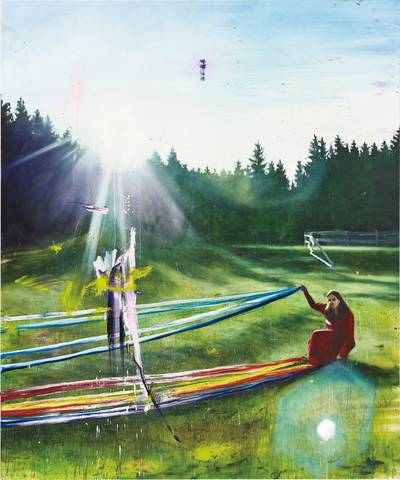
Ask the gallery for full documentation and do not accept vague answers. For collectors with an appetite for emerging positions, the most interesting younger artists working in this space tend to be approaching it obliquely, through digital processes, through textile, or through a fusion with abstraction traditions that distances them from the more literal associations of the genre. Till Gerhard is worth particular attention. His paintings combine figuration with a kind of atmospheric psychedelia that owes as much to Northern European Romanticism as it does to any countercultural lineage, and his market is still at a stage where significant works can be acquired at prices that seem unlikely to hold as his international profile continues to build.
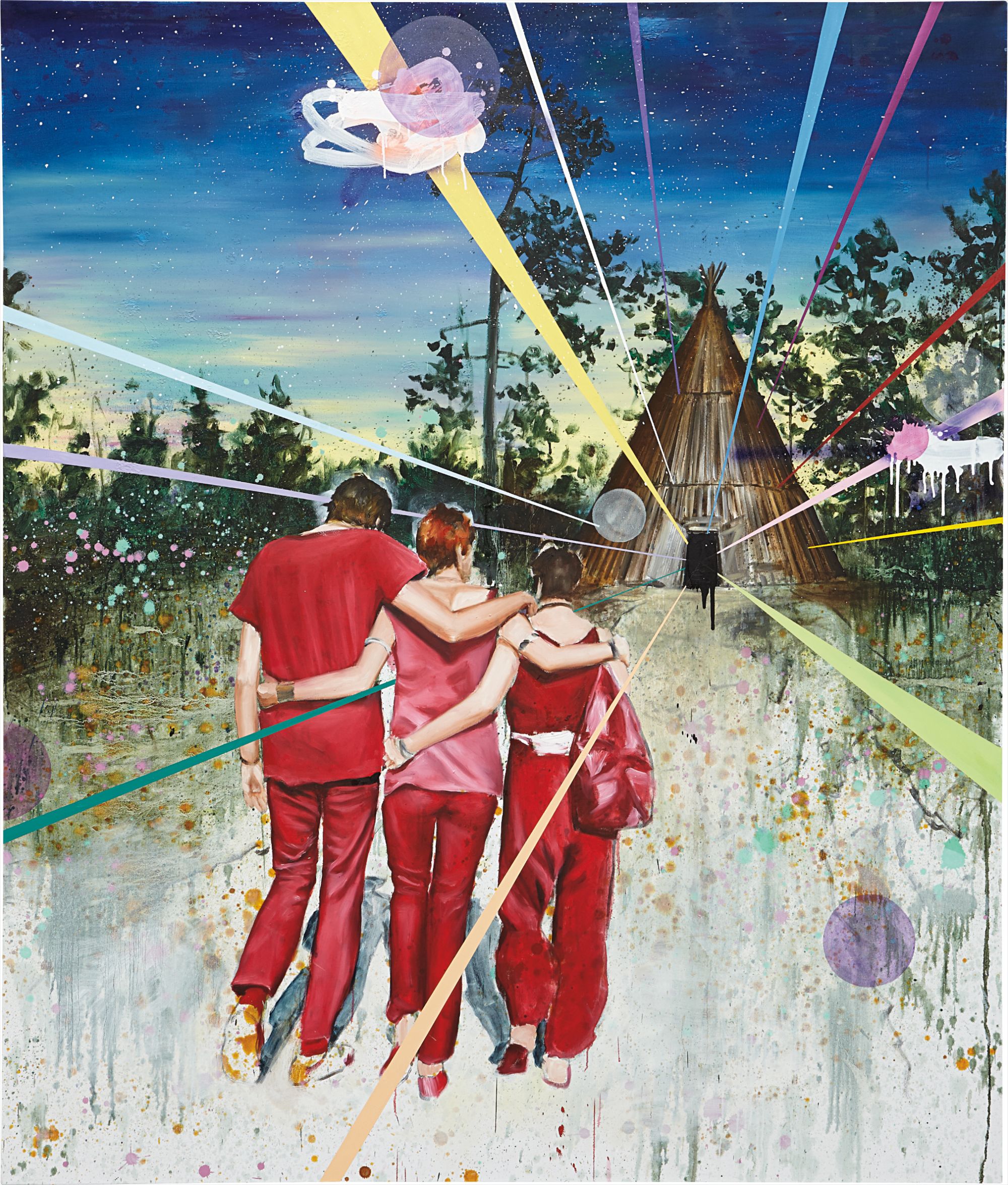
Till Gerhard
Love Shack
At auction, works in this category have performed with increasing consistency since the mid 2010s, driven partly by a broader reassessment of art from the 1960s and 1970s and partly by renewed cultural interest in questions of consciousness and perception that these artists were engaging with long before those questions became mainstream. The practical advice here is to focus on works with clear provenance, strong condition reports that specifically address any light sensitivity or material vulnerability, and a collecting thesis that extends beyond pure aesthetics. The most enduring collections in this space are built around ideas, and the most satisfying works to live with are the ones where the visual experience and the conceptual substance are genuinely inseparable.