Pictograph Style
Adolph Gottlieb
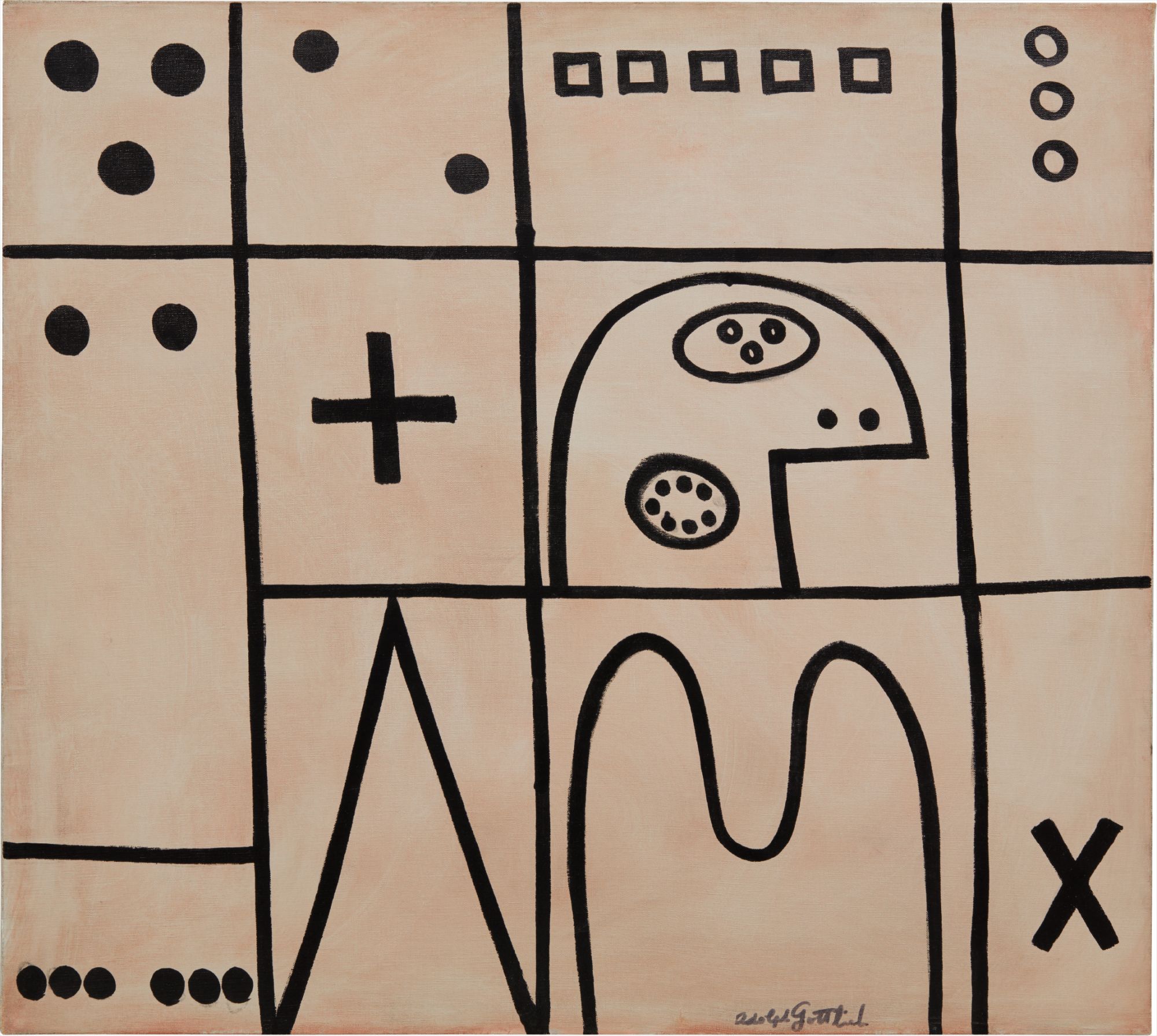
Pink Ground
Artists
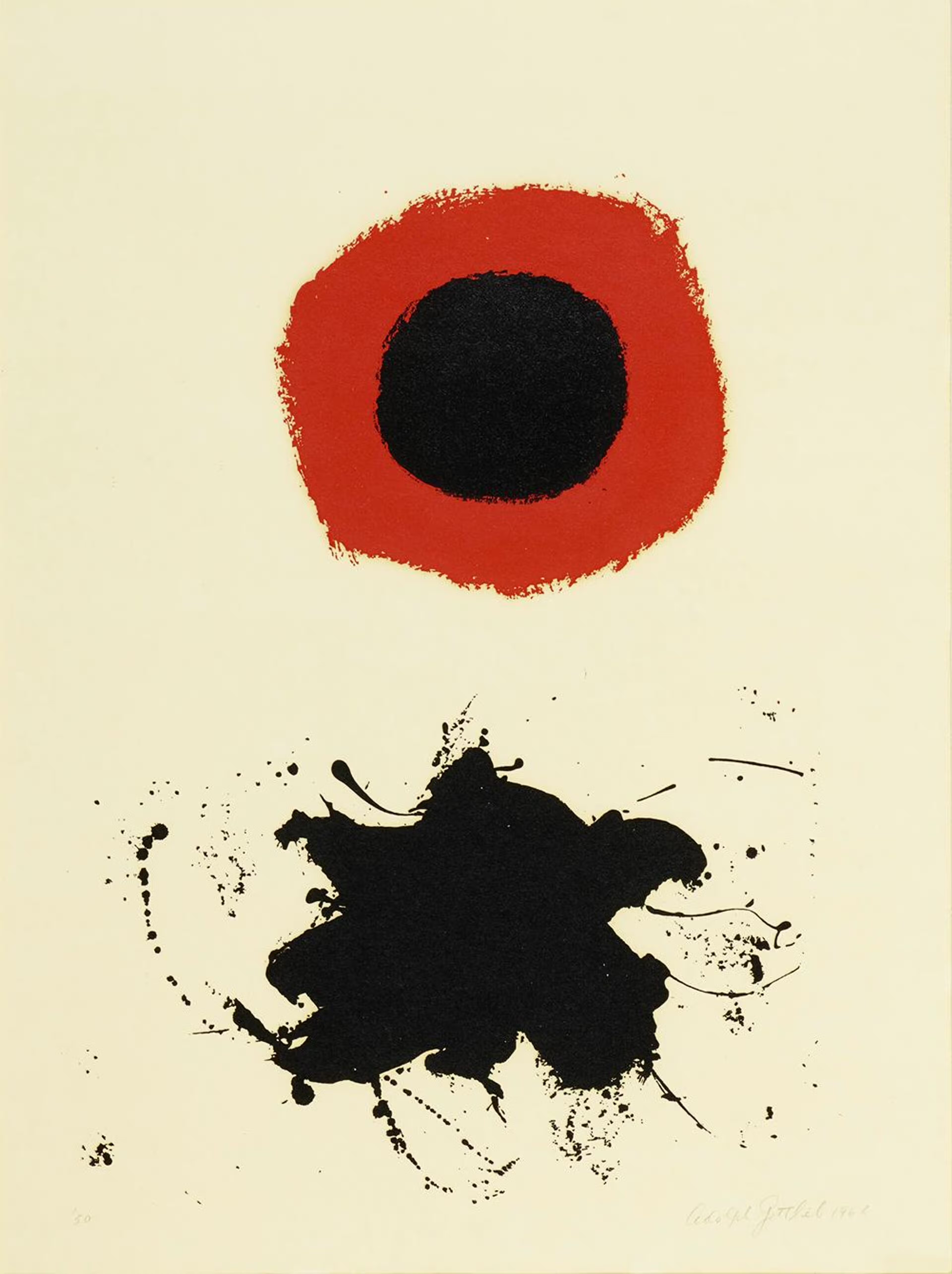
The Symbols That Never Stop Speaking
There is something almost primal about living with a Pictograph. Collectors who acquire works in this idiom often describe the same experience: you hang the piece, step back, and feel addressed by it rather than simply observed. The vocabulary of signs, grids, and archaic markings that defines the Pictograph style carries an intimacy that pure abstraction sometimes refuses. It asks you to look slowly, to wonder whether you are reading something ancient or something entirely invented, and that productive uncertainty is precisely what makes these works so compelling in a domestic or institutional setting.
The style emerged most urgently from the New York avant garde of the late 1930s and 1940s, when artists were grappling with Surrealism, Jungian ideas about the collective unconscious, and a genuine hunger for a visual language that felt both universal and deeply personal. The compartmentalized grid became a kind of stage set where individual symbols, biomorphic and totemic by turns, could coexist without narrative hierarchy. Living with this work means living with ongoing conversation rather than resolved statement, which suits collectors of a certain temperament very well. When it comes to separating the good from the great in this category, the quality of the internal logic matters enormously.
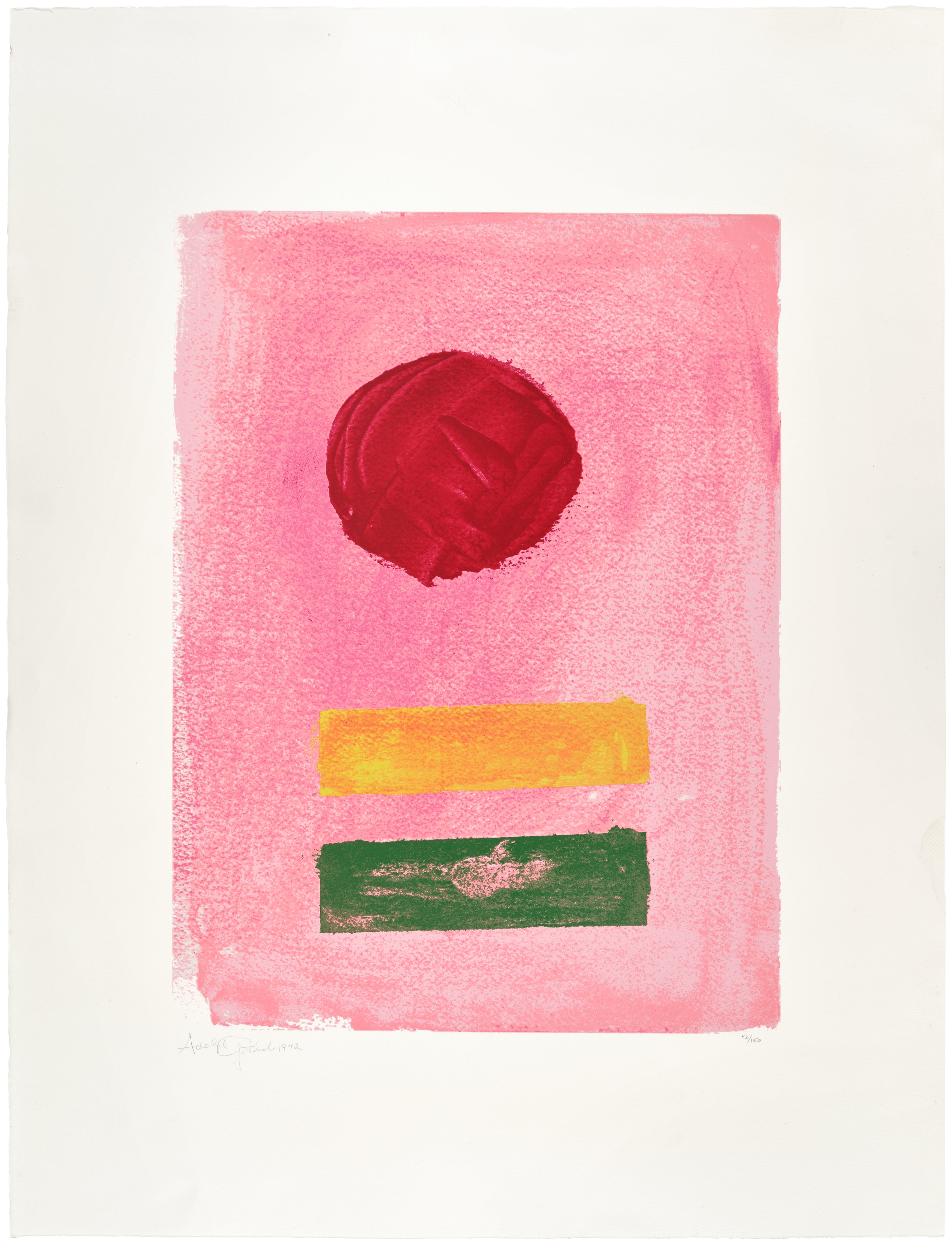
Adolph Gottlieb
Pink Ground
A strong Pictograph holds its compartments in genuine tension, so the eye moves between zones of the canvas without ever feeling choreographed. The symbols themselves should resist easy decoding while still radiating presence. Weak examples in this mode tend to feel decorative or schematic, as though the grid was imposed rather than discovered. The best works carry a sense that the artist found the structure rather than constructed it, and that distinction is usually visible within the first thirty seconds of close looking.
Scale and surface also reward attention. Collectors should spend time with the physical facture of a work before committing to it. In the finest Pictographs, the paint surface carries evidence of revision and commitment simultaneously, areas scraped back, marks redrawn, zones where a symbol was reconsidered and then reasserted with authority. This kind of pentimento is not a flaw; it is the record of genuine searching, and it elevates a work from accomplished to essential.
Ask the gallery or specialist whether you can examine the work under raking light before purchase. Adolph Gottlieb is the central figure for any serious collector approaching this territory, and his works on The Collection represent a strong entry point into understanding what the mode can achieve at its highest level. Gottlieb began developing his Pictographs in earnest around 1941, and by the time of his 1944 show at the Wakefield Gallery and Bookshop he had established a formal language of remarkable coherence and ambition. What separates Gottlieb from his peers is the degree to which his symbols feel genuinely inhabited rather than borrowed.
He drew on Northwest Coast Indigenous art, on Freudian imagery, on his own invented iconography, and wove them together with a painter's instinct rather than a program. Works from the mid 1940s through the early 1950s are considered the heart of his Pictograph period, and they occupy a firm and well argued position in the canon of postwar American art. For collectors interested in the broader ecosystem of artists working in this symbolic register, there are rewarding figures who remain underrecognized relative to their historical importance. Lee Krasner developed her own grid based symbolic paintings in the early 1940s, and while her critical rehabilitation has been substantial, her market has not yet fully reflected the seriousness of that scholarship.
Similarly, certain works by Perle Fine from this period, made in direct dialogue with the New York School conversations happening around her, occasionally surface at auction at prices that still feel like genuine opportunities. Younger artists today who work in a register of invented personal symbolism and grid structures are drawing renewed curatorial attention, particularly those approaching the vocabulary through a lens of non Western or indigenous visual traditions. It is worth following institutional acquisitions and residency programs for names that have not yet crossed into the primary market in a significant way. At auction, canonical Pictographs by Gottlieb have performed with notable consistency over the past two decades.
Works from the core period regularly appear at Christie's, Sotheby's, and Bonhams, and they tend to hold their estimates or exceed them when in strong condition and carrying solid provenance. The market for second tier Pictograph works, meaning pieces from lesser known artists working in the same mode, is more volatile and therefore more interesting from a collecting standpoint. A scholarly exhibition or a major catalogue can move those prices meaningfully in a short period, and collectors who have done their research are positioned to benefit from that movement. On the practical side, condition is a more nuanced question with Pictographs than with many other categories of postwar painting.
Many works from the 1940s were made on materials that were experimental or simply economical, and some have experienced subtle but consequential changes to their surfaces over the decades. Before acquiring any significant work, commission a conservator's report and ask specifically about paint adhesion, ground stability, and any history of lining or relining. These are not disqualifying issues in themselves, but they should inform your price negotiation and your long term care planning. Display deserves real thought as well.
Pictographs reward being seen at close range as much as from across a room, so hanging height and ambient lighting both matter. Avoid strong directional spotlighting that flattens the surface; instead, a more diffuse light source will allow the texture and the signs to breathe. When speaking to a gallery about a potential acquisition, ask about the exhibition history of the work, who has previously owned it, and whether any restoration has been undertaken. Ask to see any available correspondence or documentation about the work's dating and context.
The answers will tell you as much about the gallery's seriousness as they do about the work itself, and that knowledge is part of what you are buying.