Fashion Subject
Archived article
You are reading a previous version of this article.
Read the latest version```json { "headline": "Dressed to Be Seen, Forever", "body": "There is something quietly radical about an artist who turns to fashion as subject matter. Not fashion as backdrop, not clothing as costume signaling character or status in a portrait, but fashion itself, the garment, the shoe, the collar, the fold of fabric, regarded with the same seriousness we bring to a landscape or a nude. This particular mode of looking strips away the body and replaces it with an object that is nonetheless charged with human presence. The result is a genre that sits at one of the most productive intersections in modern art: between the decorative and the conceptual, between commerce and desire, between surface and depth.
", "Since the mid twentieth century, fashion as subject has evolved from a curiosity into a genuinely rich field of inquiry. The pop artists were among the first to treat it systematically. Andy Warhol understood fashion not merely as a theme but as a lens through which to examine consumer culture and the circulation of images. His screenprints of shoes from the late 1970s and early 1980s, drawn from his earlier career as a commercial illustrator, returned to the object with deadpan affection.
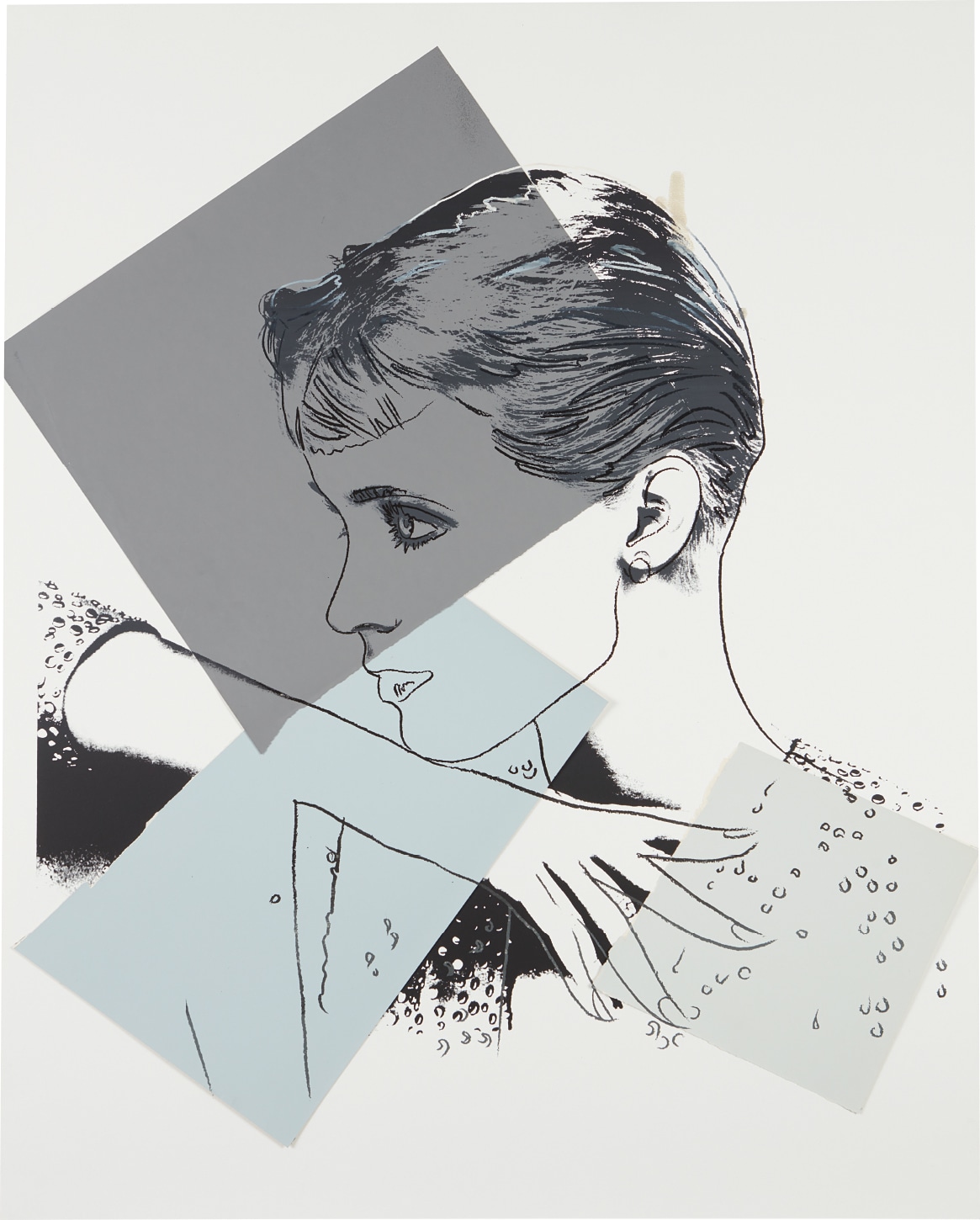
Andy Warhol
Unidentified Woman (Halston Model), 1982
Warhol saw the shoe as a kind of portrait, a vessel for identity that happened to contain no person at all. His work on The Collection speaks directly to this lineage, positioned where glamour and repetition converge.", "Domenico Gnoli arrived at similar territory from a very different direction. Working primarily in the 1960s, the Italian born painter and illustrator became famous for his monumental close ups of fabric, collars, buttons, and the incidental details of dress that we normally overlook entirely.
A collar fills the entire canvas. A parting in the hair becomes a landscape. Gnoli treated these surfaces with meticulous, almost hallucinatory precision, rendered in gouache and acrylic with a texture that feels both familiar and deeply strange. He died in 1970 at the age of 36, leaving behind a body of work that feels more prescient with each passing decade, anticipating the hyper detailed photorealism and conceptual object painting that would follow.
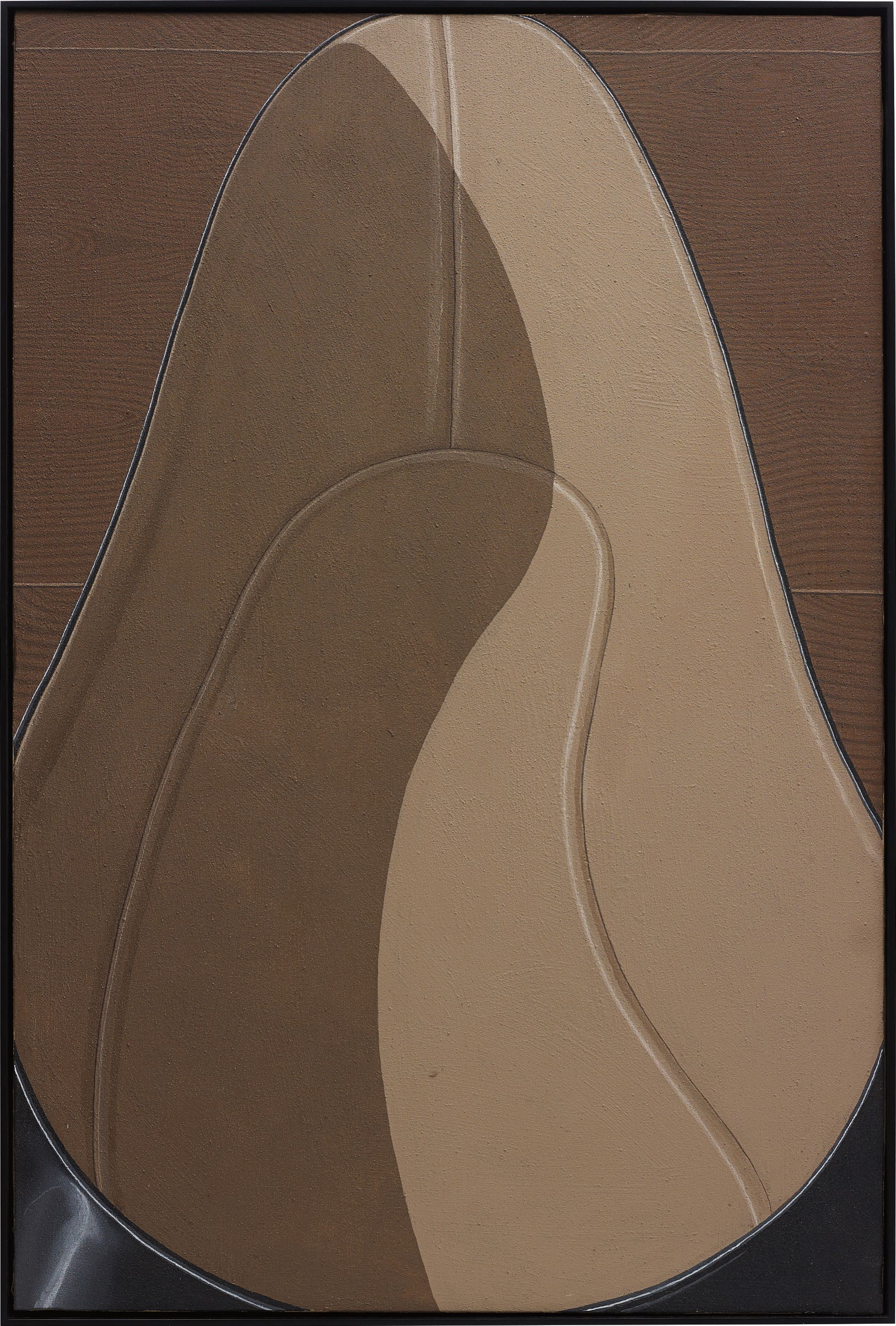
Domenico Gnoli
Inside of Lady's Shoe
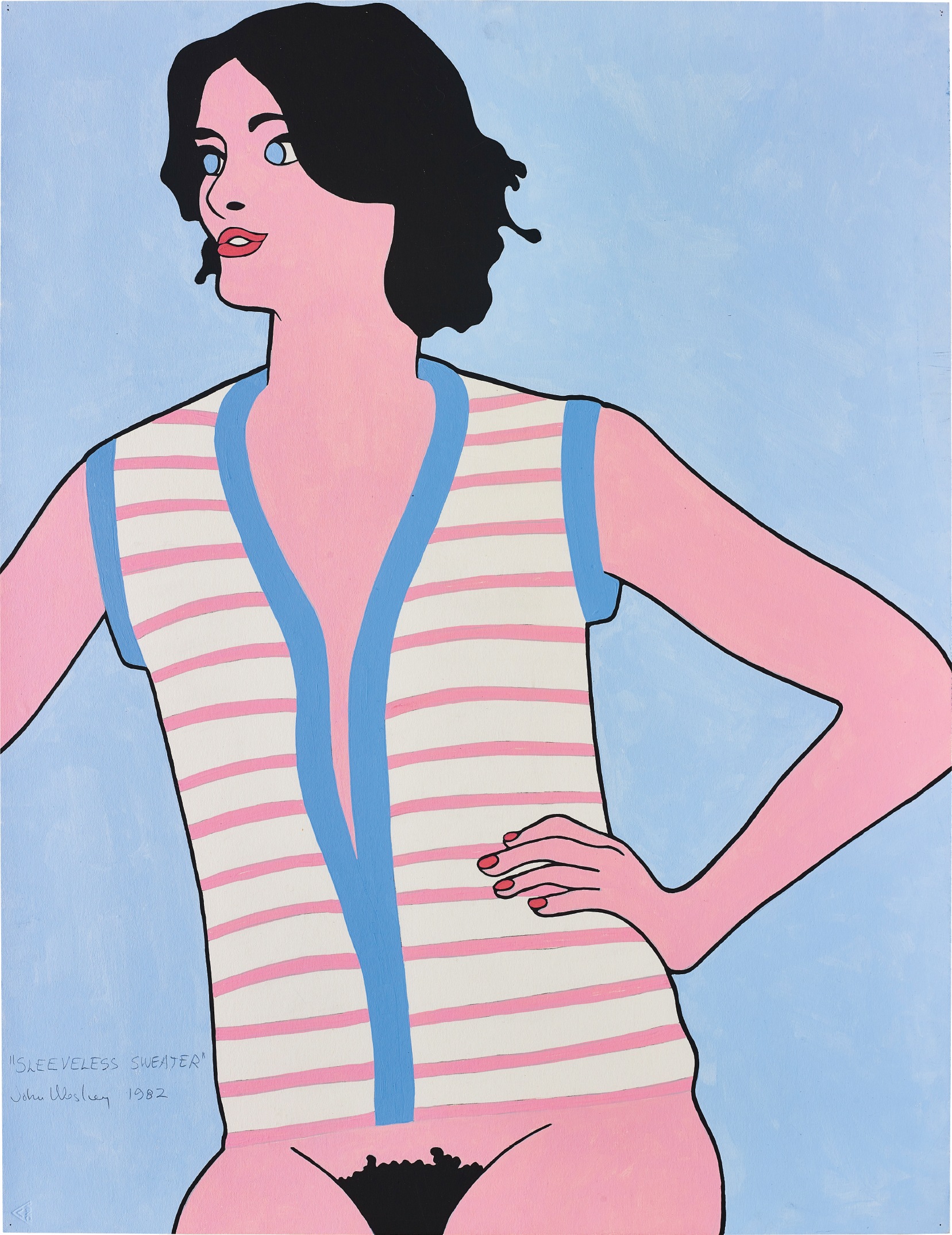
", "John Wesley, the American painter whose career stretched across more than half a century, brought a different kind of flatness to the question of clothing and desire. His graphic, almost cartoon smooth canvases often featured women in various states of dress and undress, rendered without shadow or psychological depth, as if fashion illustration had been stripped of its commercial warmth and left to cool into something more ambiguous. Wesley showed at the Pace Gallery and gained renewed critical attention in the 2000s when younger painters began citing him as a foundational influence. His work occupies an interesting position in this conversation because it refuses to sentimentalize the garment even while clearly finding it fascinating.
", "The British painter Lisa Milroy took yet another approach, one that feels almost classically still life in its structure. During the 1980s she began making paintings of grouped objects, shoes arranged in loose clusters, garments laid flat, items of clothing repeated across the canvas with a rhythm borrowed from catalogue photography. Her 1987 exhibition at the Nicola Jacobs Gallery in London announced a painter who was thinking carefully about how we look at things we consume and discard. Milroy's work asks whether repetition creates distance or, paradoxically, a more intense form of attention.
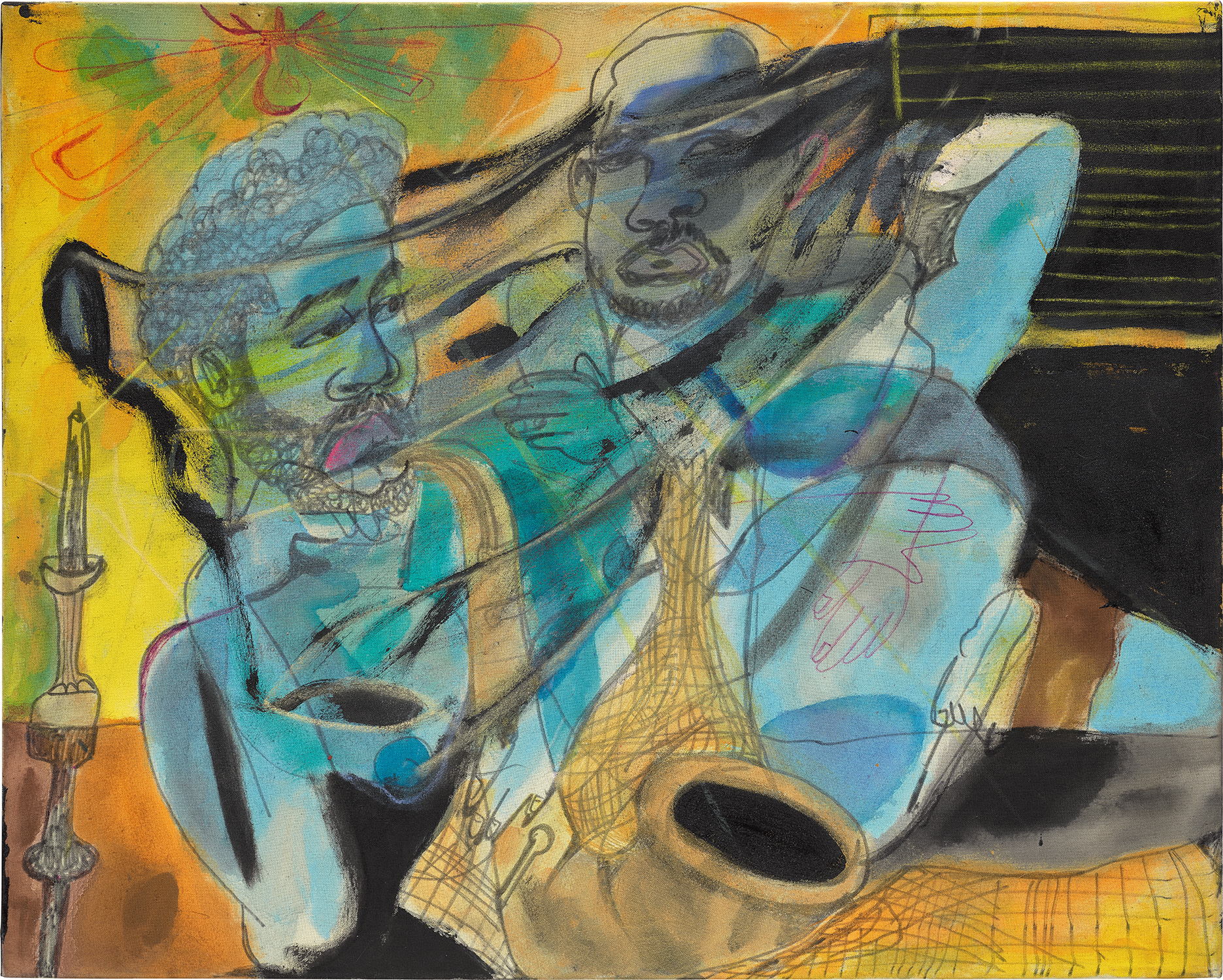
Anthony Cudahy
Dress, 2021
That question remains entirely alive in contemporary practice.", "Among younger painters, Anthony Cudahy has brought a tender and personal register to the subject. His figurative work often incorporates clothing as a site of memory and intimacy, garments remembered rather than observed, reconstructed from photographs or the residue of lived experience. There is nothing clinical about Cudahy's approach.
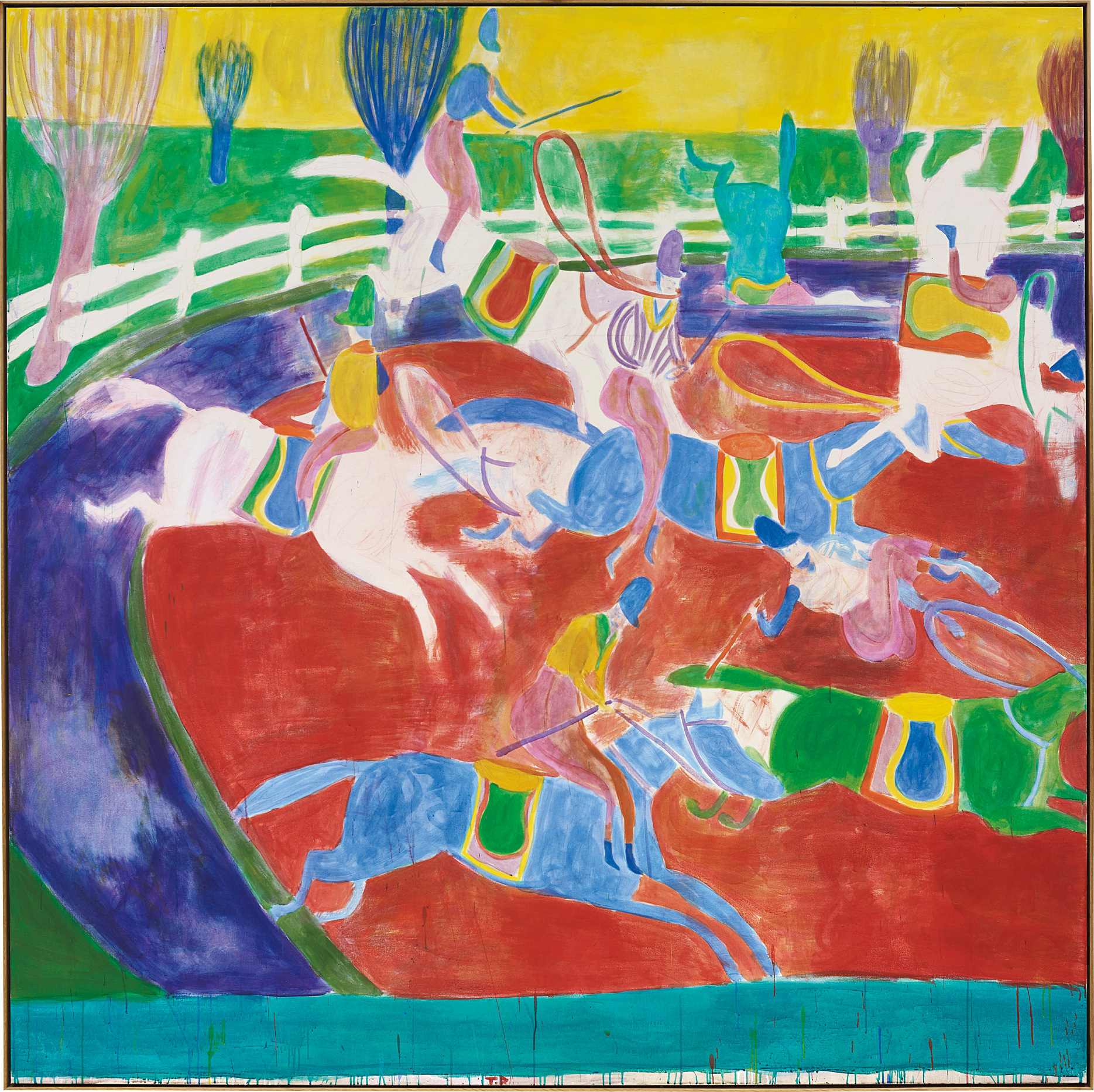
Color is warm and slightly unreliable, as if recollection has softened the edges. This emotional quality sets his work apart from the cooler, more ironic tradition that stretches from Warhol through Gnoli, and it signals how expansive the category of fashion as subject has become.", "Anastasia Bay and Tal R each represent strands of European painting that engage with clothing and surface in ways that resist easy categorization. Bay's work has a surreal domesticity, interiors charged with the presence of absent bodies, while Tal R, the Copenhagen based painter of Tunisian origin, brings a nearly folk art exuberance to pattern, textile, and the material culture of everyday life.
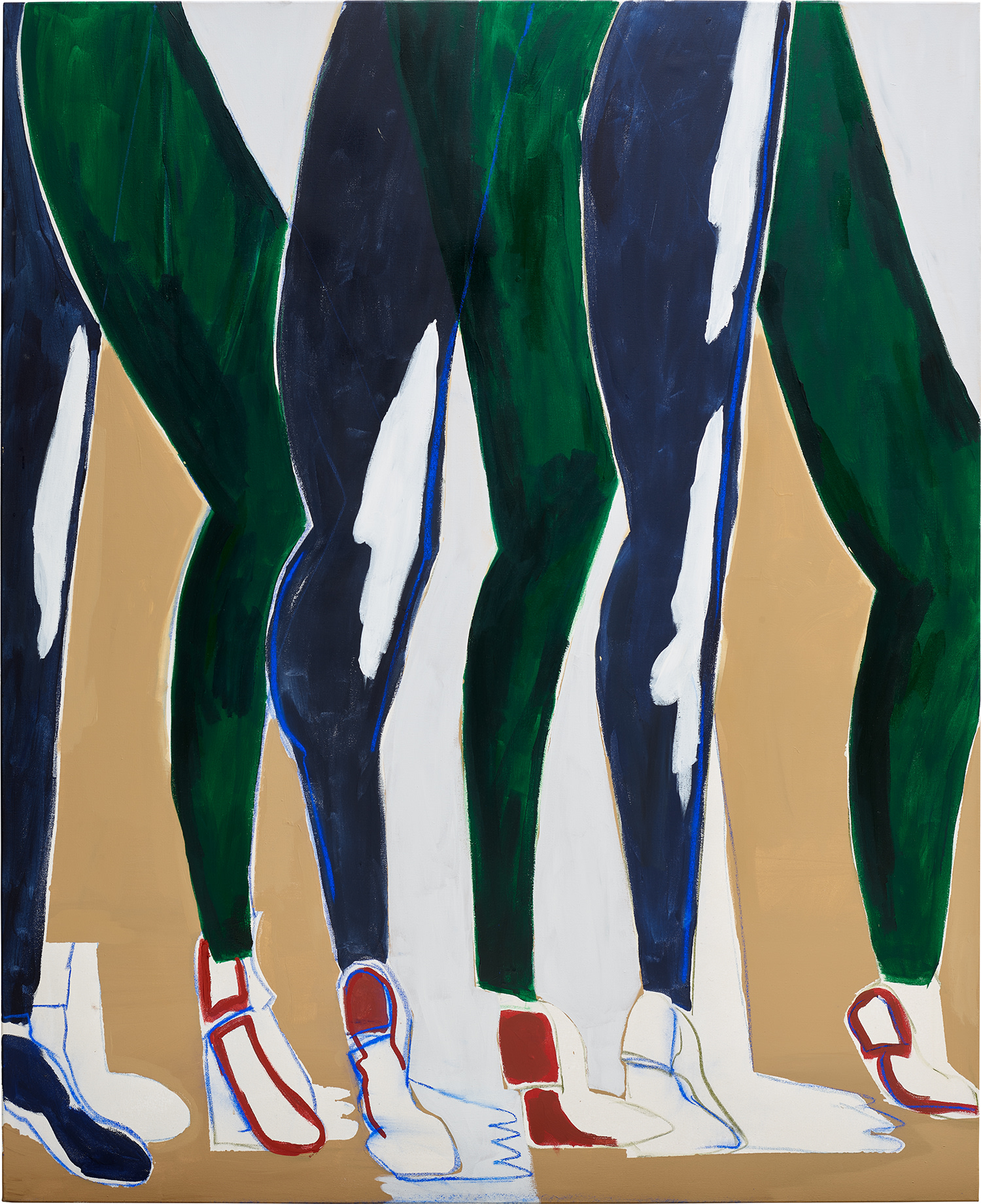
Anastasia Bay
Leggings 1, 2019
His paintings throb with color and refuse the hierarchies that have traditionally separated fine art from the decorative arts. For Tal R, a printed fabric and a painted canvas occupy the same territory of human making.", "What unites these artists across decades and geographies is a conviction that clothing is not merely illustrative. Fashion, as subject, insists that the things we put on our bodies carry meaning, memory, class, aspiration, and vulnerability, and that painting those things is a legitimate way to understand ourselves.
The genre gained significant institutional recognition in the 1990s and 2000s as museums began reassessing the boundaries between art and fashion, with landmark exhibitions at the Metropolitan Museum's Costume Institute and collaborations between artists and fashion houses making the relationship between the two fields newly visible to critics and collectors alike.", "Today the conversation continues to expand. Painters working now are as likely to reference a fashion campaign as a seventeenth century Dutch still life, and the two references are not considered incompatible. The works gathered on The Collection under this theme offer a compelling cross section of how artists have approached the dressed surface: with irony, with longing, with formal rigor, and with a genuine curiosity about what it means to look very closely at something most of us wear without thinking.
That act of sustained, serious looking is ultimately what fashion as subject offers. It is an invitation to reconsider what we already know, or thought we knew, by looking at it one more time.
Works tagged Fashion Subject