Burmese
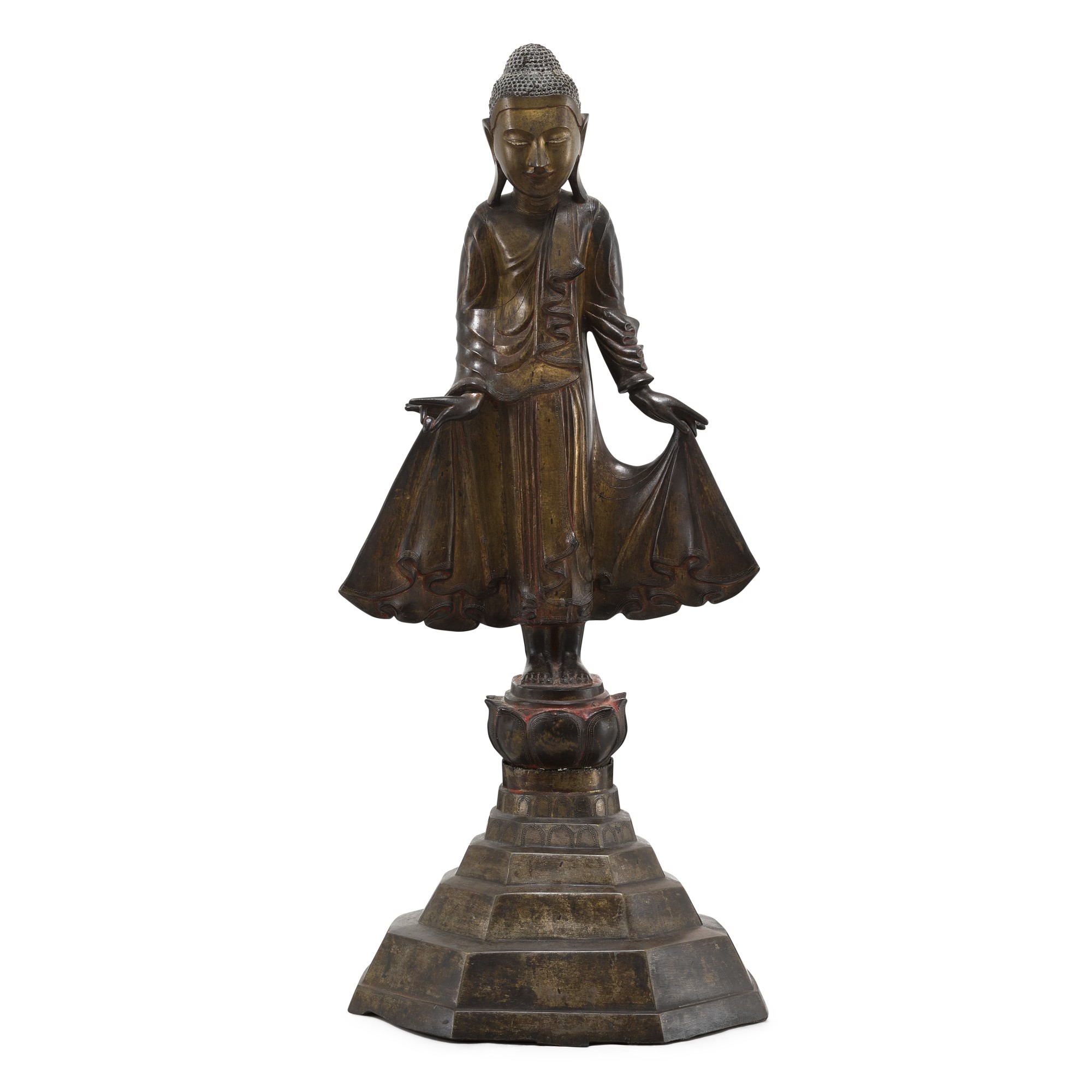
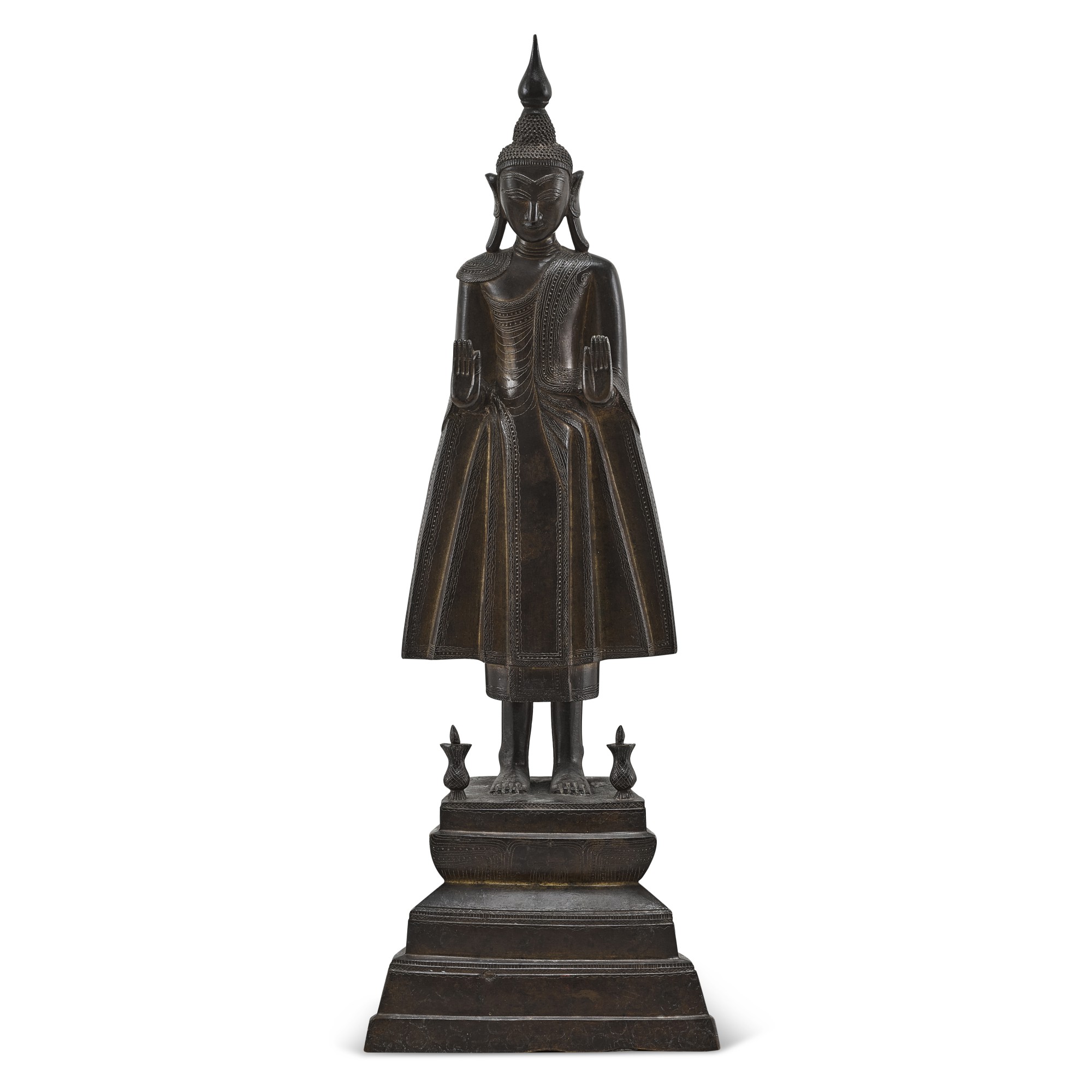
A large copper-alloy figure of Buddha,
A large copper-alloy figure of Buddha, Burma, 17th - 19th century 十七至十九世紀 緬甸 銅佛像
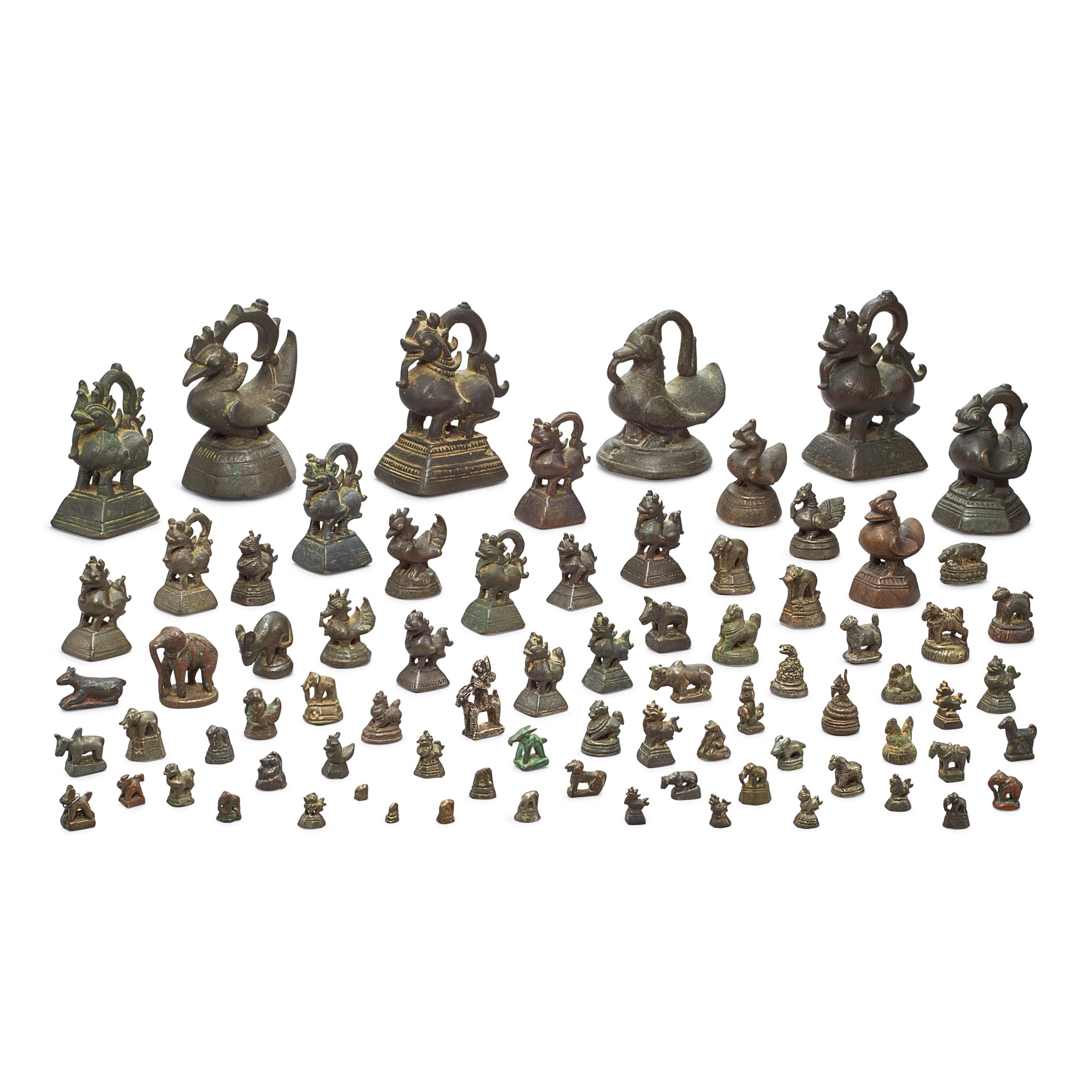
Sacred Metal, Eternal Presence: Burma's Divine Bronze
There is a quality of stillness in Burmese Buddhist sculpture that is unlike almost anything else in the canon of world art. It is not the stillness of absence but of absolute presence, a concentrated calm that seems to radiate outward from the metal itself. To stand before a well cast Burmese Buddha figure, whether a seated Shakyamuni in the earth touching gesture of bhumisparsha mudra or a standing Maitreya gesturing toward the future, is to understand that these objects were never merely decorative. They were made to embody something, and centuries on, they still do.
The tradition of casting Buddhist icons in Burma stretches back well over a thousand years, drawing on influences that arrived through complex networks of trade, pilgrimage, and cultural exchange across Southeast Asia. By the Pagan period, which reached its height between the 11th and 13th centuries, Burmese craftsmen had already developed a distinctive visual vocabulary rooted in but increasingly independent from the Indian and Sri Lankan models that had seeded it. The great temple complexes at Pagan became not just sites of worship but workshops of an evolving aesthetic, places where the formal conventions of Buddhist iconography were absorbed and then quietly transformed into something uniquely Burmese. Copper alloy became the dominant material for portable devotional figures, prized both for its workability and for the warmth of its finished surface.
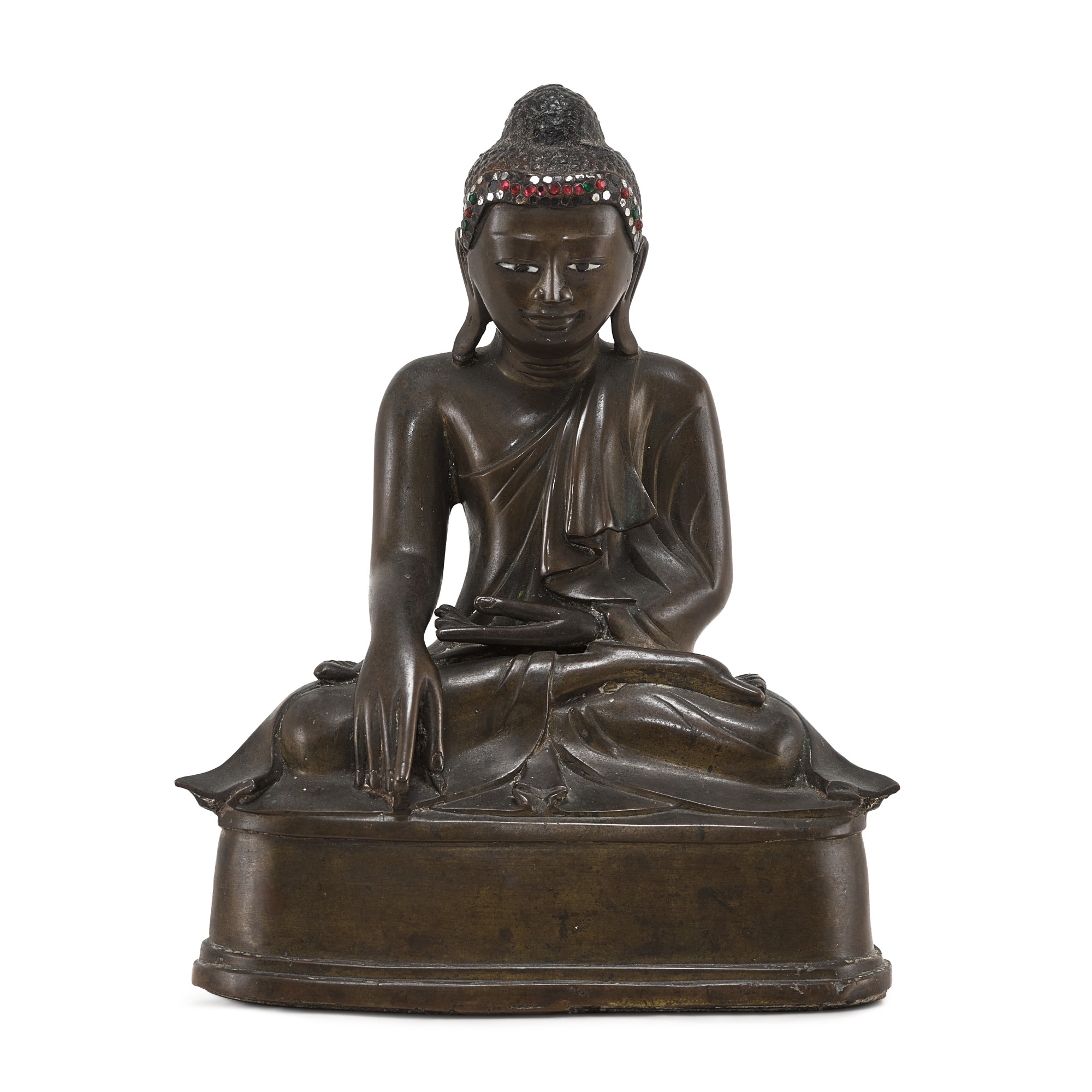
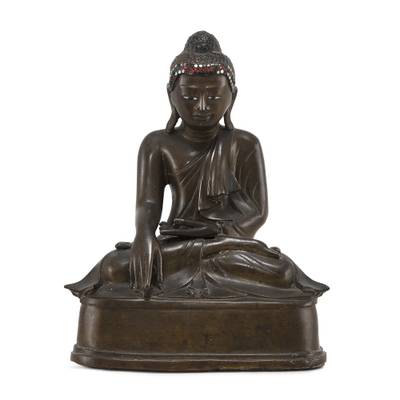
An embellished copper-alloy figure of Buddha,
An embellished copper-alloy figure of Buddha, Burma, Mandalay Period, 19th century 十九世紀 緬甸曼德勒時期 銅嵌寶佛坐像
The alloy typically combined copper with tin, zinc, and sometimes lead, and skilled founders developed proprietary formulas passed down through generations of workshops. The lost wax method, known as cire perdue, allowed for extraordinary detail in the casting, from the precisely rendered ushnisha crowning the Buddha's head to the fine pleating of monastic robes. Gilding was often applied afterward, and in later periods, particularly during the Mandalay era of the 19th century, figures were further embellished with lacquer, inlaid glass, and applied ornament that gave them an opulent, jeweled presence quite different from the austere early style. The Konbaung dynasty, which ruled Burma from 1752 until the British annexation in 1885, represents one of the great final flowerings of this tradition.
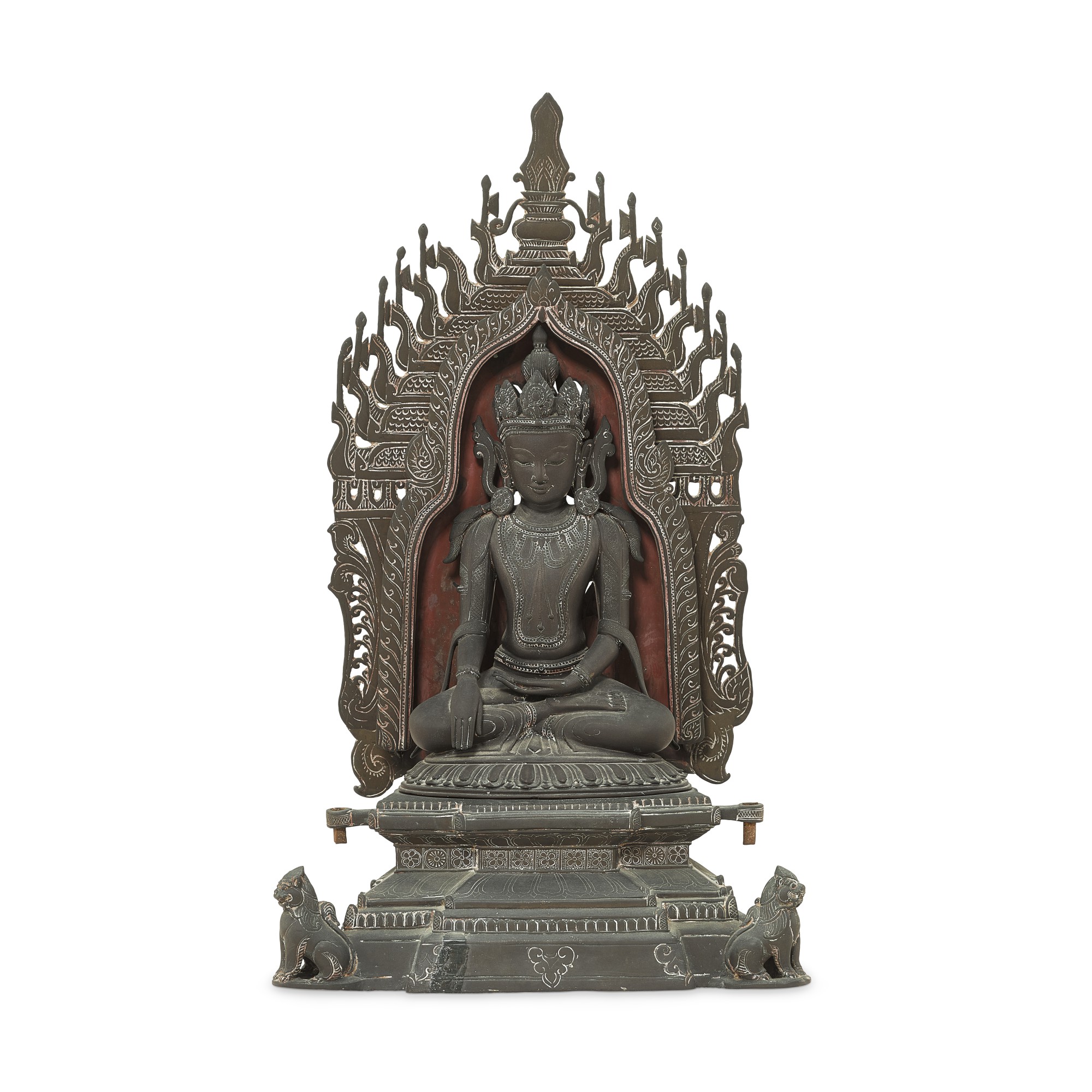
Under royal patronage centered at Mandalay, workshops produced figures of remarkable scale and refinement. The copper alloy figures from this period that appear in the collection here reflect that mature aesthetic with confidence. A Mandalay embellished and lacquered copper alloy figure of Buddha carries all the hallmarks of this late court style: the elongated features, the flame shaped ushnisha, the elaborate surface treatment that speaks to a culture pouring enormous resources into devotional image making at a moment when it sensed, perhaps, that the world it knew was about to change. Alongside such embellished works, the collection also holds copper alloy seated figures of quieter disposition, pieces that prioritize the meditative purity of form over decorative display and which connect more directly to the earlier classical tradition.
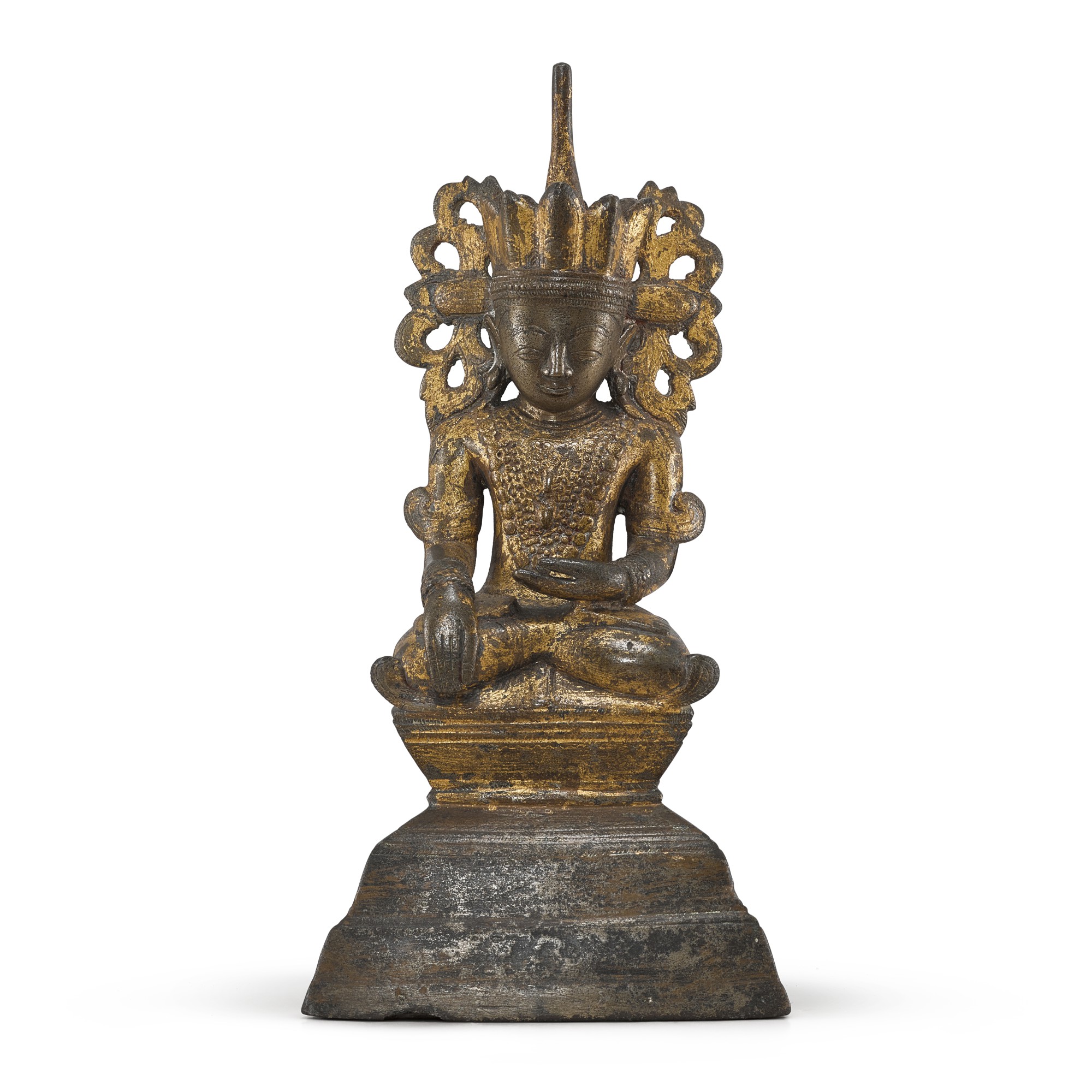
A gilt-bronze seated figure of Buddha,
A gilt-bronze seated figure of Buddha, Burma, Shan State, 17th - 19th century 十七至十九世紀 緬甸撣邦 鎏金銅佛坐像
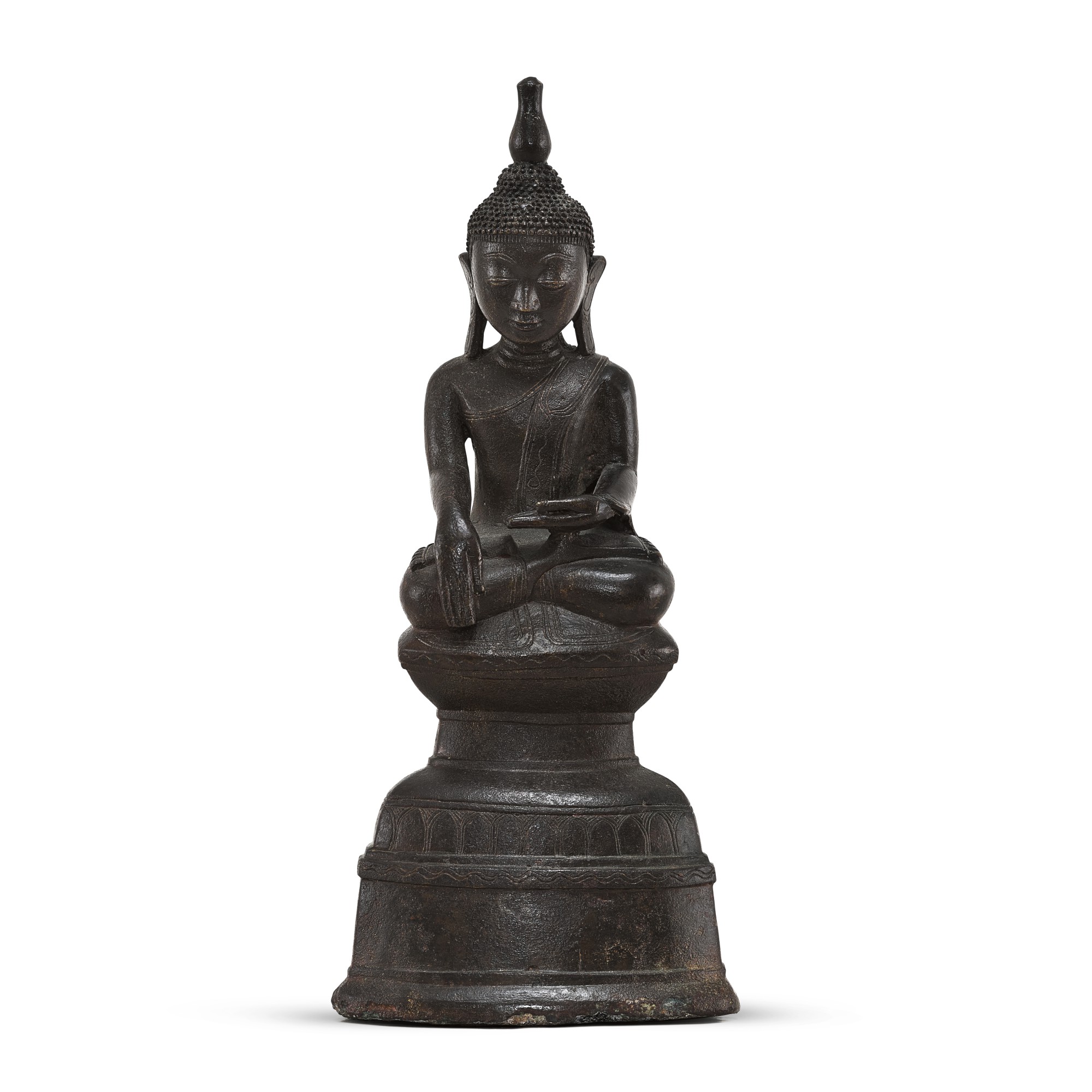
Inscription is another dimension of these objects that rewards attention. Several figures in the tradition, including inscribed copper alloy seated Buddhas and a notably large inscribed copper alloy standing figure of Maitreya, carry text that performs a function beyond documentation. Dedicatory inscriptions were acts of merit making, the physical words binding the donor to the image and extending the spiritual efficacy of the gift across time. To read such an inscription, even at this remove, is to overhear a conversation between a particular human being and the infinite.
The inscribed bronze standing figure of Buddha held in the collection extends that conversation into the present, its text a kind of devotional anchor keeping the work tethered to its original purpose even as it circulates in a very different world. The figure of Maitreya, the Buddha yet to come, holds a particular place in Burmese Buddhist cosmology. Represented standing and often gesturing in the vitarka mudra of teaching, Maitreya images proliferated in Burma during periods of social disruption as expressions of millennial hope, the belief that a future age of renewal and enlightenment was not only possible but promised. An inscribed large copper alloy standing figure of Maitreya is therefore never merely an aesthetic object.
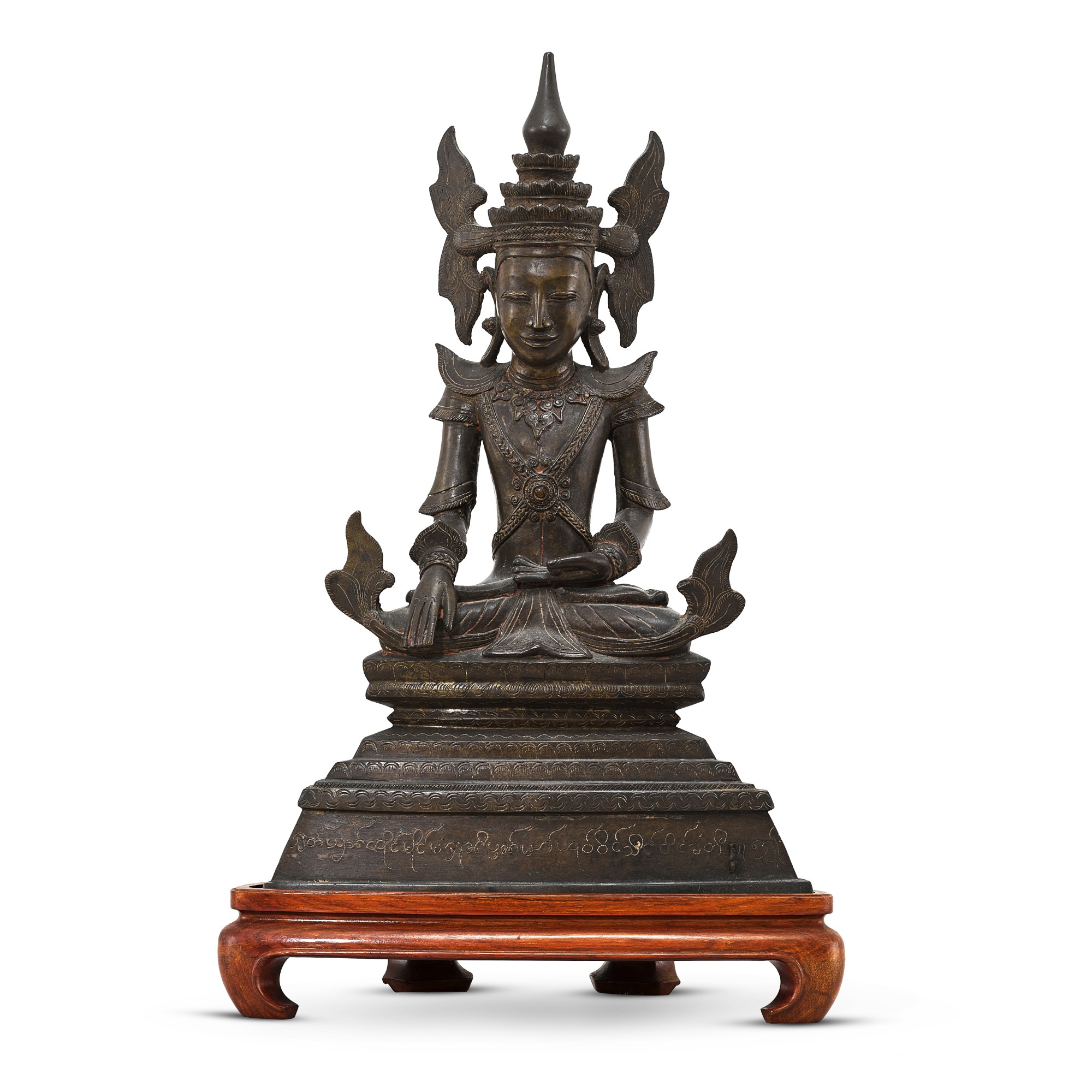
An inscribed copper-alloy seated figure of Buddha,
An inscribed copper-alloy seated figure of Buddha, Burma, Shan State, 17th - 19th century 十七至十九世紀 緬甸撣邦 銅刻銘文佛坐像
It is a theological statement, an act of forward projection across time that contemporary collectors and scholars are only beginning to fully appreciate. The 19th century also produced a category of work that sits in fascinating tension between devotional function and artistic ambition. A large copper alloy figure of Buddha from this period communicates scale as a spiritual argument: size conferred presence, and presence conferred merit on those who commissioned it and those who came to worship before it. The bronze seated Buddhas and copper alloy figures held across the collection demonstrate the range of scale within which Burmese founders worked, from intimate personal devotional objects to commanding icons capable of anchoring a shrine room.
In the broader landscape of Asian art history, Burmese bronze has sometimes been overshadowed by the more extensively studied traditions of Thailand, Cambodia, and China. That is beginning to change. Major museum retrospectives and growing scholarly literature over the past two decades have drawn attention to the distinctiveness of the Burmese contribution, its synthesis of Indian philosophical content, Sri Lankan formal influence, and a native aesthetic sensibility that is recognizable once you learn to see it. The works gathered within The Collection offer an unusually coherent opportunity to develop that kind of seeing, to move between figures and notice how the tradition breathes and shifts across periods and workshop styles.
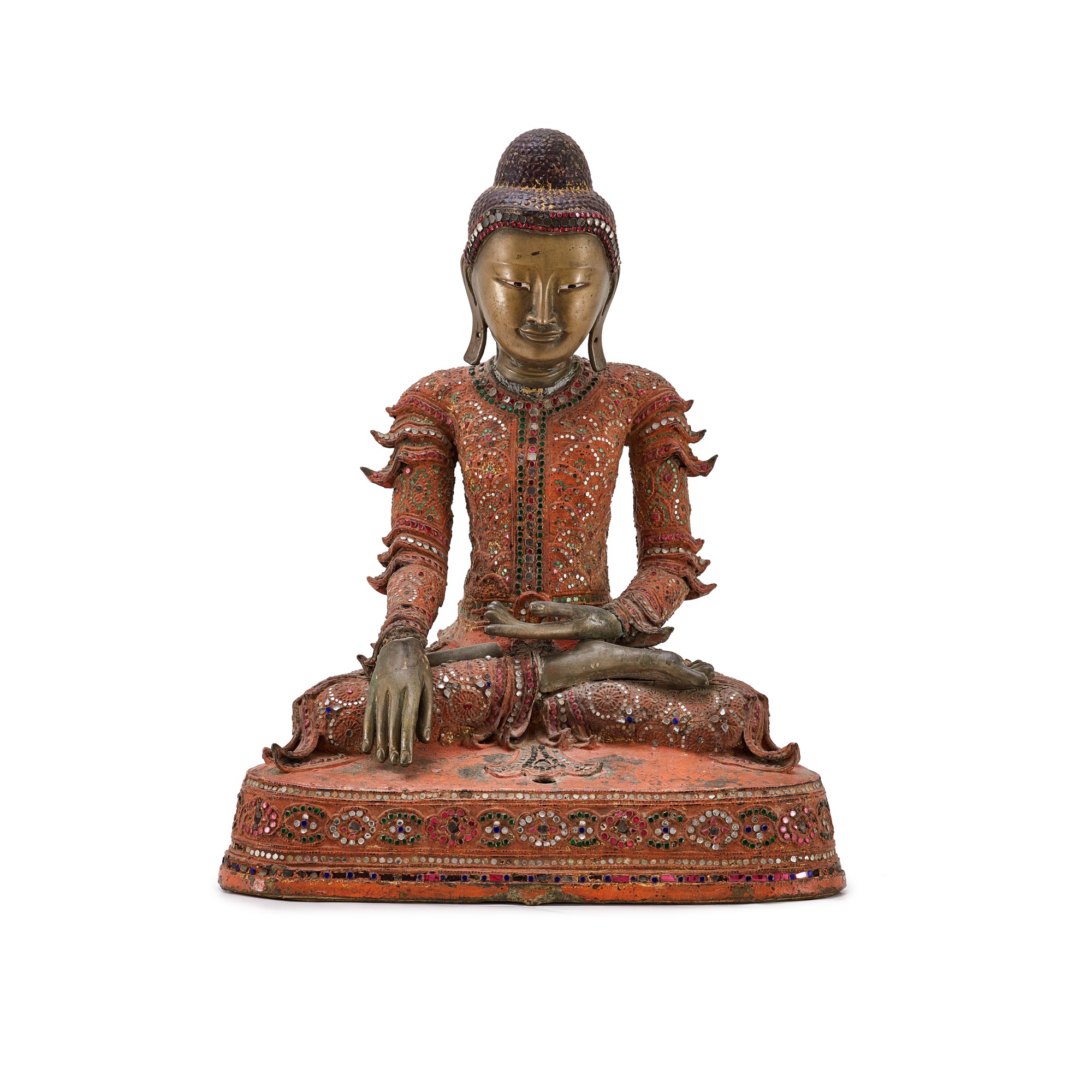
A Mandalay-embellished and lacquered copper-alloy figure of Buddha,
A Mandalay-embellished and lacquered copper-alloy figure of Buddha, Burma, Mandalay Period, 19th century 十九世紀 緬甸曼德勒時期 紅漆銅合金釋迦牟尼佛坐像
What strikes the attentive collector most, returning again to these objects after the historical and technical context has been absorbed, is that the scholarship never quite explains the experience of being in their presence. These are works made by people who believed in what they were making at a level that went beyond craft pride or patronage obligation. That belief is somehow still in the metal. It is what makes Burmese Buddhist sculpture not simply a field of collecting but a genuine encounter.