Personnage
1960
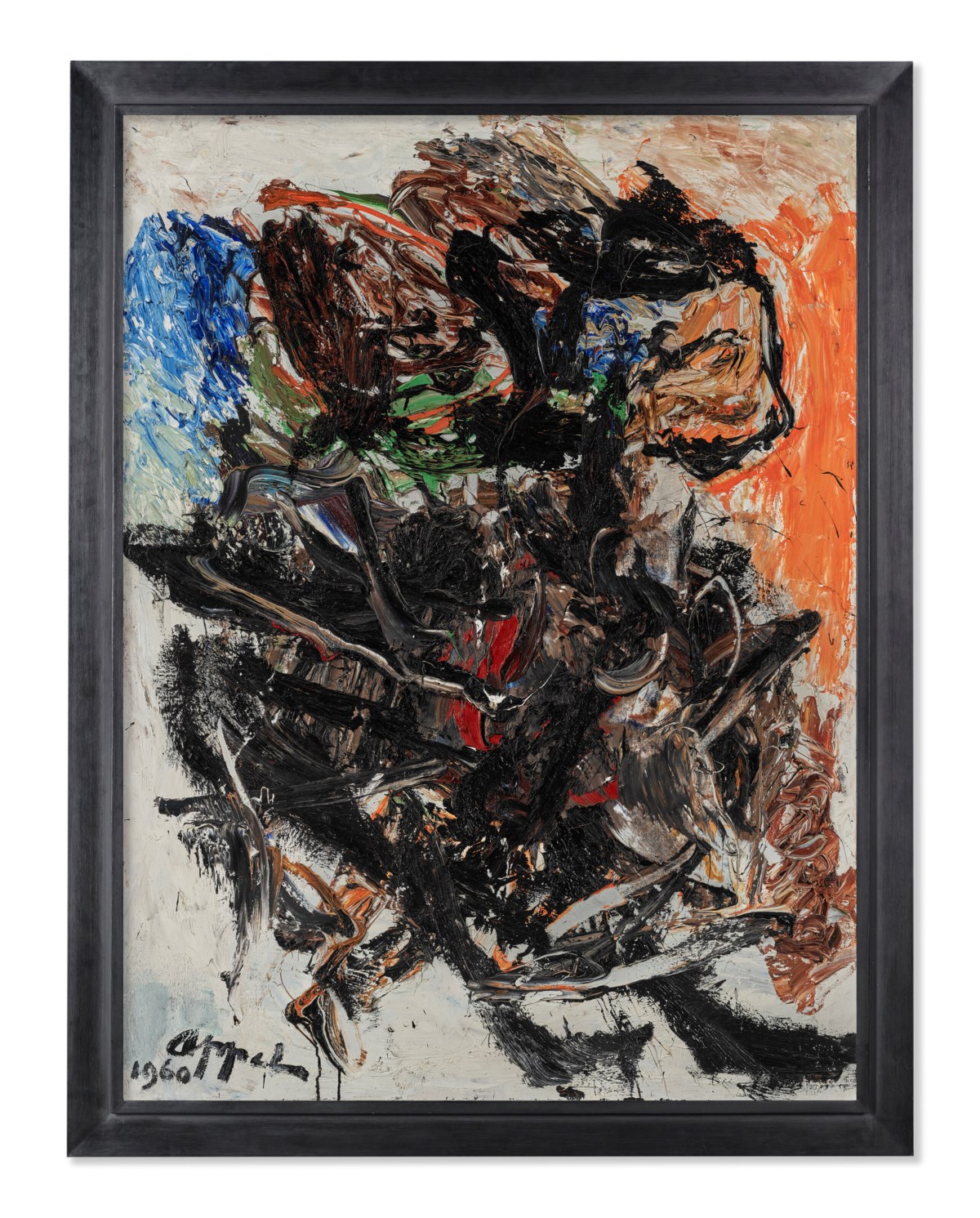
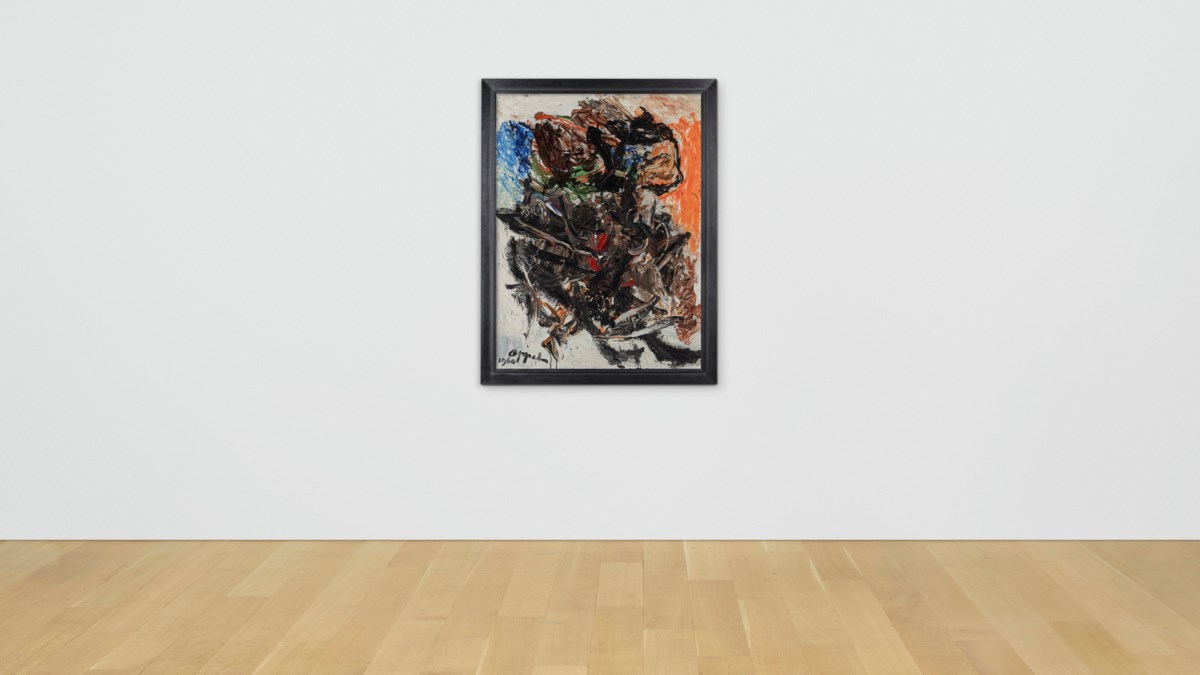
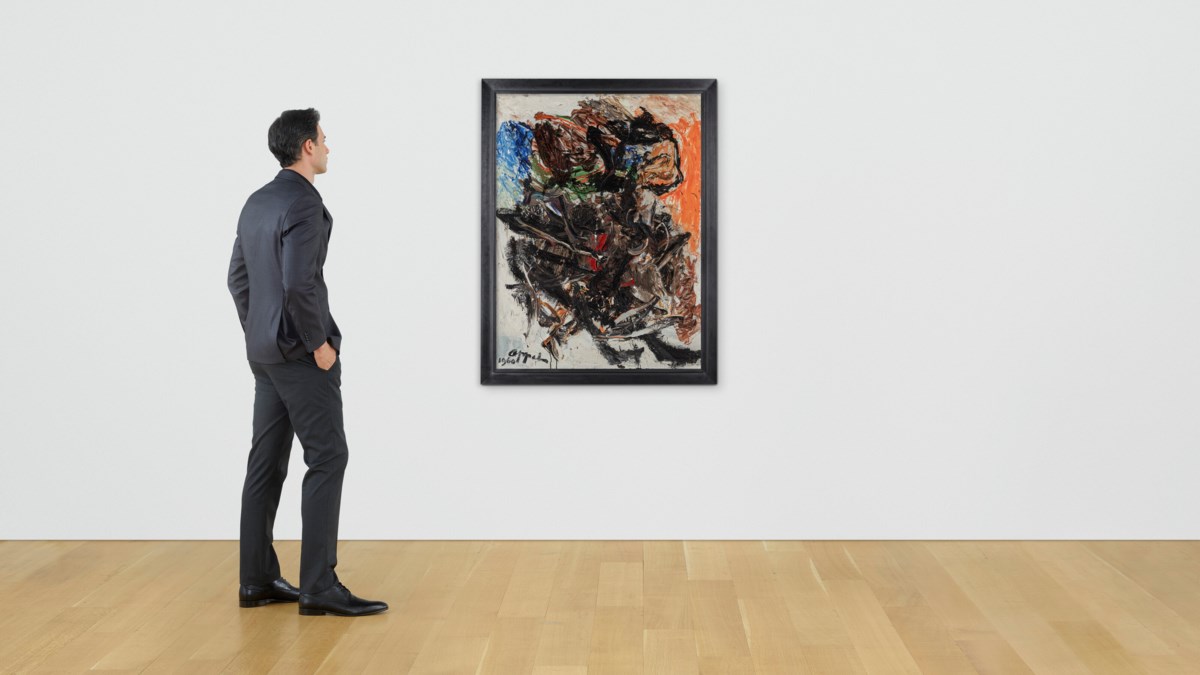
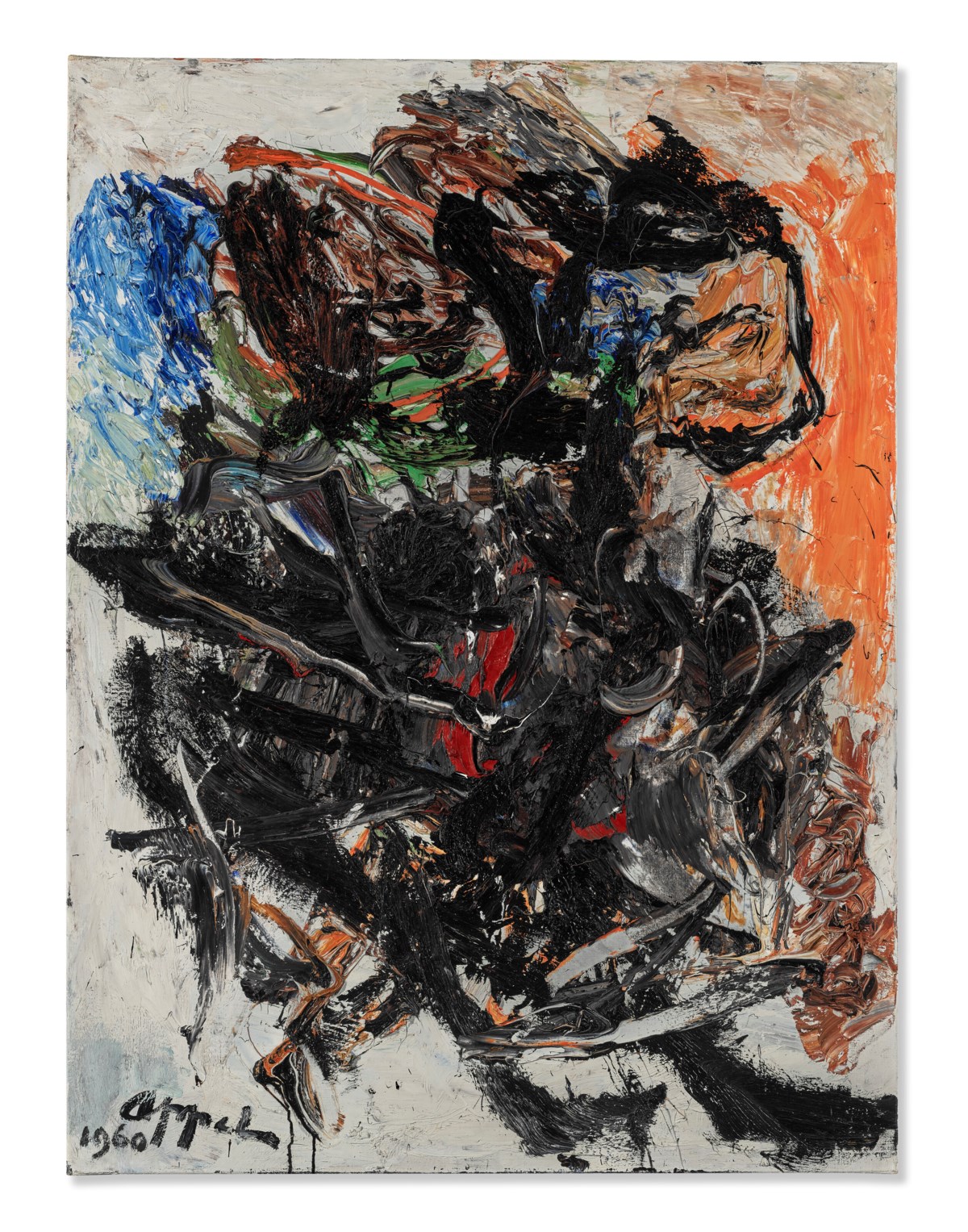
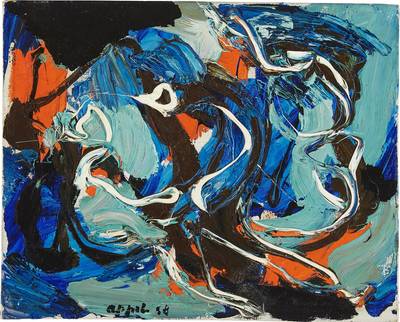
A bold and expressive work by Dutch CoBrA movement artist Karel Appel, *Personnage* showcases his signature raw, gestural style through thick, energetic brushstrokes and a vibrant palette. The figure emerges from the canvas with a primitive, almost childlike intensity, reflecting Appel's belief in spontaneous creation and the uninhibited power of pure expression. The painting pulses with a visceral energy that blurs the line between abstraction and figuration.
- Medium
- oil on canvas
- Dimensions
- Signed
- Yes
- Spotted At
- Auction House · Christie's
Notes
LOT ESSAY Skip to main content FRANÇAIS ENGLISH Je vois désormais toutes les formes et les choses comme une nature morte, une nature morte vivante […] les couleurs et les coups de pinceau sont tout aussi importants que les formes et les choses qui composent la scène et qui peuvent être suggérées en quelques traits et quelques nuances du pinceau. […]. Des couleurs vivent participent à la saisie de l’instant présent, tout cela dans une tentative de saisir ou d'atteindre l'essence, la véritable substance des choses. Karel Appel Dans la première moitié des années 1950, la manière de peindre de Karel Appel connaît une transformation décisive. Le style primitif et naïf qui caractérisait ses œuvres de jeunesse, dont la filiation avec le dessin enfantin était revendiquée, laisse place à une peinture résolument matérielle, où la couleur devient le vecteur principal de l'expression. L'empâtement, la texture, la gestualité traduisent désormais des états émotionnels et psychiques d'une grande intensité. Cette évolution stylistique s'inscrit dans les recherches collectives du groupe CoBrA, dont Appel est l'un des membres fondateurs. Le mouvement réagit aux tendances qu'il juge sclérosées du modernisme européen, notamment le Surréalisme, dont la formalisation croissante et la systématisation théorique lui semblaient trahir l'élan vital originel. CoBrA cherche ses références en dehors des circuits institutionnels : dans l'art enfantin, l'art populaire et l’art primitif, dont la spontanéité incarne un idéal d'expression libéré de toute contrainte académique. Cette quête de spontanéité trouve une expression aboutie dans Personnage, daté de 1960, exemple saisissant de ce que la critique a désigné comme la « peinture-matière » d'Appel. L'œuvre frappe d'emblée par la densité physique de sa facture : la pâte, appliquée en épaisseurs généreuses forme des reliefs prononcés qui confèrent à la surface une présence presque sculpturale. La touche est véhémente, accumulée par strates successives, témoignant d'un geste pictural à la fois impulsif et maîtrisé. La palette, dominée par des noirs profonds, est ponctuée d'éclats chromatiques, du bleu, du rouge, de l’orange et du vert qui semblent surgir de la matière comme des fragments d'un monde enfoui. Cette tension renforce l'impression d'une énergie intérieure cherchant à se frayer un passage à travers la peinture elle-même. Les contours se dérobent, absorbés par le mouvement général de la pâte : c'est cette dissolution de la forme dans la substance qui illustre le tournant stylistique amorcé par Appel au milieu des années 1950, lorsque la matérialité du medium devient à elle seule porteuse de signification émotionnelle et psychique. Karel Appel, 6 mai 1962. Photo © Ben van Meerendonk / AHF, collectie IISG, Amsterdam, via Wikimedia Commons. Licence CC BY-SA 2.0 (https://creativecommons.org/licenses/by-sa/2.0/). © Karel Appel Foundation / Adagp, Paris 2026. I now see all shapes and things as a still life, a living still life […] the colours and the brushstrokes are just as important as the shapes and things which make up the scene and which can be evoked with just a few strokes and some shadings of the brush. […]. Loud colours are involved in portraying the present moment, all this in order to try to catch or hit on the essence, the true substance of things. Karel Appel In the first half of the 1950s, Karel Appel’s painting method underwent a decisive transformation. The primitive and naïve style that characterised his early works—which he claimed were inspired by childlike drawing—gave way to a resolutely material form of painting, where colour was the primary vehicle of expression. The layers, textures and sweeping gestures now conveyed emotional and psychological states of profound intensity. This stylistic evolution forms part of the collective explorations of the CoBrA group, of which Appel was a founding member. The movement reacted against what it perceived as the ossified tendencies of European modernism, particularly Surrealism, whose increasing formalisation and theoretical systematisation seemed to betray its original vital impulse. CoBrA sought its references outside institutional circles: in children’s art, folk art and primitive art, whose spontaneity embodied an ideal of expression free from all academic constraints. This quest for spontaneity finds its fullest expression in Personnage, dated 1960, a striking example of what critics have termed Appel’s “matter-painting.” The work immediately strikes the viewer with the physical density of its execution: the paint, applied in generous layers, forms pronounced reliefs that give the surface an almost sculptural presence. The brushwork is forceful, built up in successive layers, revealing a pictorial gesture that is both impulsive and controlled. Dominated by deep blacks, the palette is punctuated by bursts of colour—blue, red, orange and green—which seem to emerge from the material like fragments of a buried world. This tension reinforces the impression of an inner energy seeking to force its way through the painting itself. The contours recede, absorbed by the overall movement of the paint: it is this dissolution of form into substance that illustrates the stylistic shift initiated by Appel in the mid-1950s, when the materiality of the medium alone became a vehicle for emotional and psychological meaning. Karel Appel, 6 mai 1962. Photo © Ben van Meerendonk / AHF, collectie IISG, Amsterdam, via Wikimedia Commons. Licence CC BY-SA 2.0 (https://creativecommons.org/licenses/by-sa/2.0/). © Karel Appel Foundation / Adagp, Paris 2026. READ MORE OF THE LOT ESSAY
🔨 Auction Lot
Art Contemporain
Lot 242
Start the Discussion
Request access to join the discussion