Join The Collection to save, track, and explore works like this.

Tetsumi Kudo — The artist of provocation, Tetsumi Kudo was part of the emerging Anti-Art sentiment during the late 1950s to the early 1960s in Japan. Although educated at the prestigious Tokyo University of the Arts, Kudo’s unbridled experimentalism led him to incorporate a broad range of unconventional materials into his sculptures and installations. Often charged with socio-political critique and tabooed sexual connotations, his work pushed the limit of postwar Japanese art to a new level of imagination.
Tetsumi Kudo

The artist of provocation, Tetsumi Kudo was part of the emerging Anti-Art sentiment during the late 1950s to the early 1960s in Japan. Although educated at the prestigious Tokyo University of the Arts, Kudo’s unbridled experimentalism led him to incorporate a broad range of unconventional materials into his sculptures and installations. Often charged with socio-political critique and tabooed sexual connotations, his work pushed the limit of postwar Japanese art to a new level of imagination.

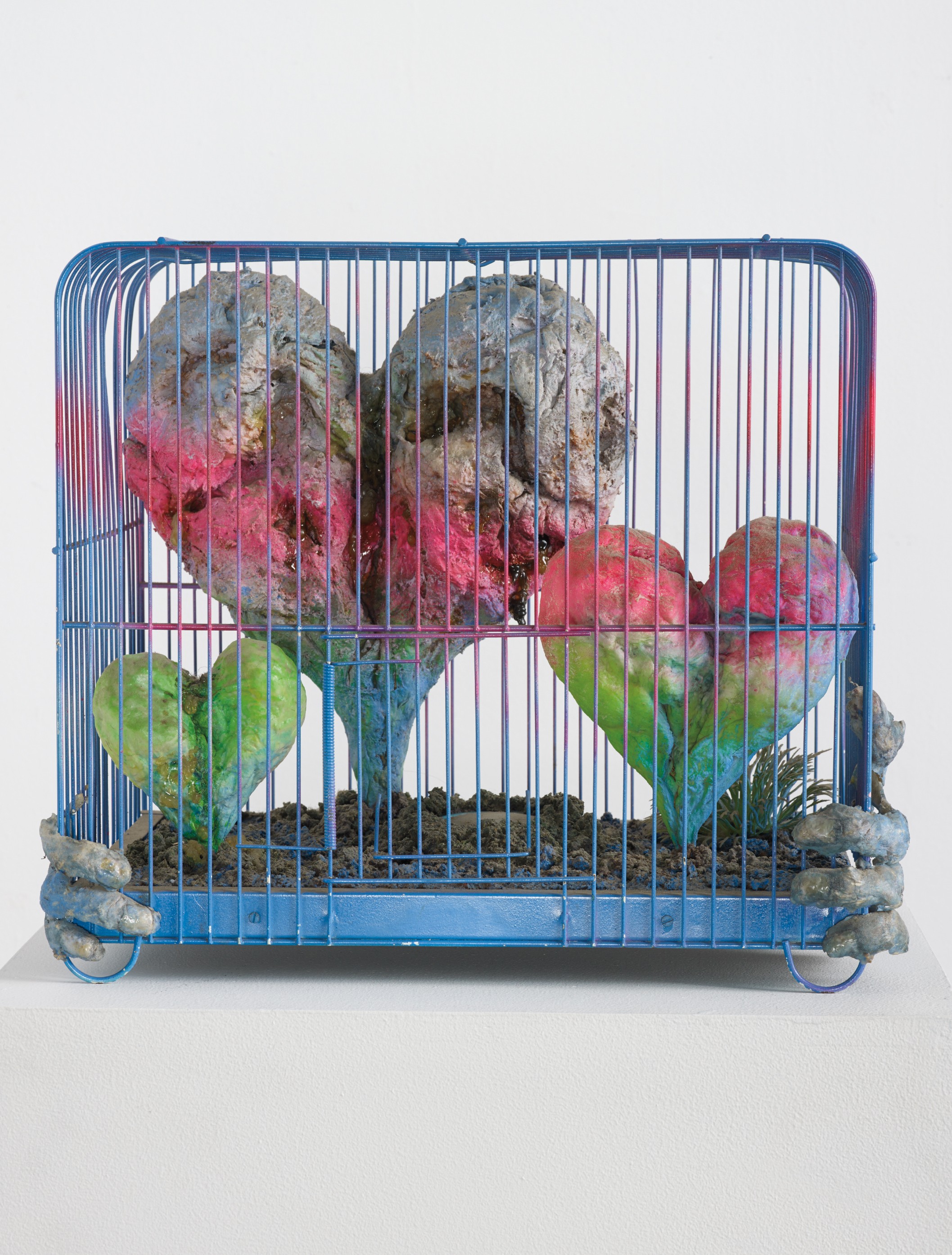
Tetsumi Kudo's provocative assemblage encloses unsettling organic and synthetic elements within the confines of a birdcage, juxtaposing the natural and artificial through cotton, plastic, and polyester forms nestled in artificial soil alongside synthetic plants. The inclusion of a thermometer introduces a clinical, almost scientific sensibility, suggesting themes of surveillance, confinement, and the measurement of life under controlled conditions. This work exemplifies Kudo's radical Anti-Art philosophy, using unconventional materials to challenge postwar consumer culture and the boundaries of the human body within a rapidly modernizing Japan.

Medium
birdcage, cotton, plastic, polyester, adhesive, thermometer, artificial soil and plant

🔨 Auction Lot

20th Century & Contemporary Art Day Sale

November 10, 2015

Start the Discussion

Request access to join the discussion

About this work

Tetsumi Kudo, The artist of provocation, Tetsumi Kudo was part of the emerging Anti-Art sentiment during the late 1950s to the early 1960s in Japan. Although educated at the prestigious Tokyo University of the Arts, Kudo’s unbridled experimentalism led him to incorporate a broad range of unconventional materials into his sculptures and installations. Often charged with socio-political critique and tabooed sexual connotations, his work pushed the limit of postwar Japanese art to a new level of imagination.

Tetsumi Kudo's provocative assemblage encloses unsettling organic and synthetic elements within the confines of a birdcage, juxtaposing the natural and artificial through cotton, plastic, and polyester forms nestled in artificial soil alongside synthetic plants. The inclusion of a thermometer introduces a clinical, almost scientific sensibility, suggesting themes of surveillance, confinement, and the measurement of life under controlled conditions. This work exemplifies Kudo's radical Anti-Art philosophy, using unconventional materials to challenge postwar consumer culture and the boundaries of the human body within a rapidly modernizing Japan.

Medium
birdcage, cotton, plastic, polyester, adhesive, thermometer, artificial soil and plant
Seen at
Phillips, New York, London, Hong Kong

Related themes

Mid-Twentieth Century, Postwar Japanese Art, Anti-Art Movement, Socio-Political Commentary, Male Artist, Experimental Art, Avant-Garde, Provocative Themes, Japanese Artist, Installation Art, Mixed Media Sculpture, Postwar Era

More works by Tetsumi Kudo