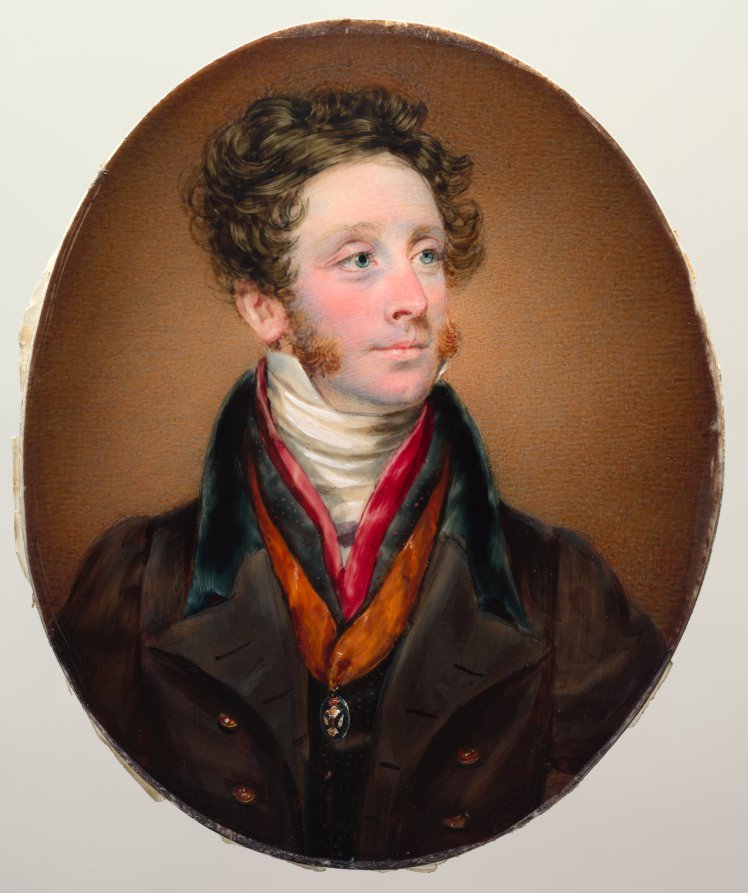
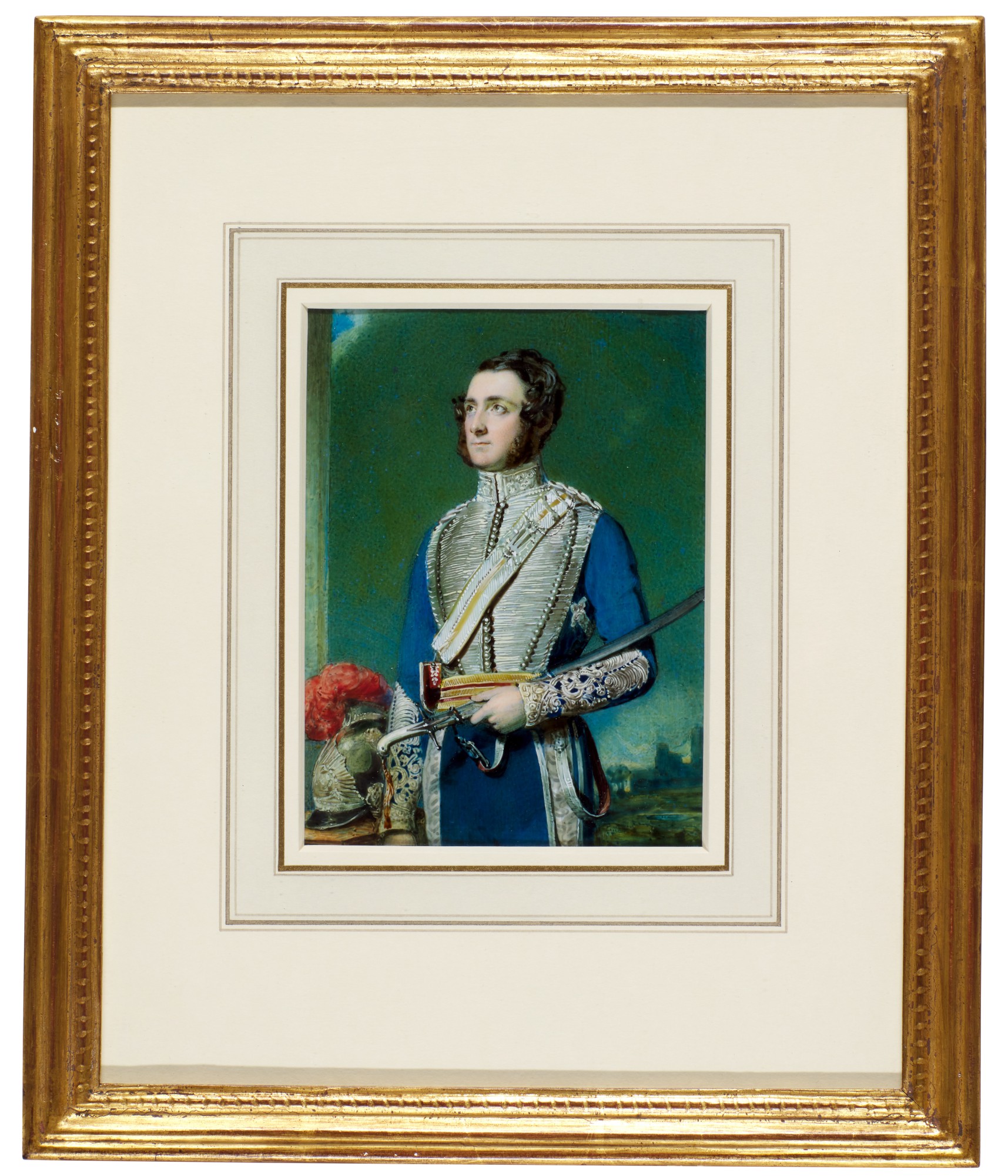
There is a particular quality of stillness that descends when you stand before a miniature portrait painted with genuine conviction. The ivory glows faintly, the brushwork resolves into a face, and suddenly a person who lived two centuries ago is present in the room with you. This is the experience that Kenneth Macleay's work consistently delivers, and it is why collectors and curators return to him again and again. His paintings occupy a privileged space in the Scottish artistic tradition, sitting at the intersection of technical mastery, historical witness, and intimate human connection. Kenneth Macleay was born in 1802 in Oban, on the western coast of Scotland, a landscape of extraordinary drama and austere beauty. He trained in Edinburgh, which during the early nineteenth century was experiencing one of its great cultural flowerings. The Scottish Enlightenment had seeded institutions, salons, and a hunger for portraiture among the rising professional and aristocratic classes. The city's artistic community was tightly woven, ambitious, and in dialogue with the broader currents of British painting. Macleay came of age in this environment, absorbing its standards of draughtsmanship and its deep regard for the documentary function of art. He became a member of the Royal Scottish Academy, which granted him both institutional standing and access to the patrons who would sustain his career across several decades. His training aligned him with the watercolour and miniature tradition that flourished across Britain in the late Georgian and early Victorian periods, a tradition that demanded extraordinary precision. Working on ivory, a surface that required absolute confidence and offered little forgiveness, Macleay developed a technical command that placed him among the foremost miniaturists of his generation in Scotland. The intimacy of the format suited both his temperament and the expectations of his clientele. Macleay's practice divides broadly into two registers: the private commissioned portrait and the historically inflected document of Scottish highland life and dress. He is perhaps best known beyond specialist circles for his work on the Highlanders of Scotland, a project of remarkable cultural ambition in which he recorded the dress, physiognomy, and presence of Highland figures at a moment when that culture was undergoing profound and irreversible change. Published in 1870, this body of work functioned simultaneously as artistic achievement and ethnographic record, a combination that gives it a significance extending well beyond aesthetic pleasure. The project placed Macleay in conversation with the broader Victorian fascination with Scottish identity, a fascination energised by the Romantic movement and by the enormous popularity of Sir Walter Scott. Among the works that best represent Macleay's gifts as a portraitist, the 1825 watercolour on ivory depicting John Francis Miller Erskine, Earl of Mar and Earl of Kellie, stands as a particularly distinguished example. Erskine was a man of considerable Scottish aristocratic lineage, and Macleay approaches the commission with appropriate gravity while never sacrificing warmth. The ivory support lends the image a luminosity that oil on canvas cannot replicate, and the handling of the sitter's features reveals Macleay's gift for psychological presence. The date of 1825 places this work squarely in the period when Macleay was establishing his reputation, and it demonstrates that his powers were fully formed at a relatively early stage in his career. Equally revealing is the pair of portraits depicting John Neil Dyce of Castlebank House in South Lanarkshire, and his wife Elizabeth Hamilton Bowie, painted around 1840. The pairing of companion miniatures was a deeply meaningful social and emotional act in the nineteenth century, and Macleay understood this with great sensitivity. Both works are executed in watercolour and bodycolour on ivory, presented in wash card mounts within gilt wood frames, a presentation format that speaks to the care and ceremony with which such commissions were undertaken. To see the two portraits together is to understand something about Victorian marriage, about the aspirations of the Scottish gentry, and about the way in which a skilled painter could dignify the lives of his subjects. The Dyce portraits are a reminder that miniature painting was never a minor art form. It was the medium through which families preserved their most cherished likenesses. For collectors approaching Macleay today, several considerations merit attention. His works appear at auction with reasonable regularity, typically through Scottish specialist sales and the major London houses when estates containing Scottish material come to market. Works on ivory in good condition, with strong provenance tracing to original commissions or established collections, command consistent interest. The pairing of companion portraits is particularly desirable, as the survival of both a husband's and a wife's portrait intact and together is genuinely uncommon after nearly two centuries. Collectors drawn to the Scottish school will find Macleay a natural companion to figures such as Sir Henry Raeburn, the great Edinburgh portraitist who worked in oil on a grander scale, and John Phillip, who though slightly later represents a similar intersection of Scottish identity and rigorous technical practice. Within the miniature tradition specifically, Macleay belongs in conversation with Andrew Robertson and Sir William John Newton, contemporaries whose work defined the highest standards of British miniature painting in the early Victorian era. Macleay's legacy rests on several foundations that feel increasingly relevant to contemporary collecting. The documentary impulse in his Highland work anticipates photography's role as cultural witness, and his portraits preserve faces and identities that would otherwise have been entirely lost. In a cultural moment when questions of Scottish identity, history, and self representation carry genuine weight, his work offers a window into the formation of the very images and archetypes that continue to shape how Scotland understands itself. He died in 1878, leaving behind a body of work that rewards close looking and patient scholarship. For a collector willing to engage with the intimacy of his scale and the precision of his technique, Macleay offers one of the genuinely rewarding discoveries that Scottish nineteenth century painting has to give.