Narrative Illustration
Archived article
You are reading a previous version of this article.
Read the latest version```json { "headline": "Pictures That Tell the Stories We Can't Forget", "body": "When Christie's brought a major Tsukioka Yoshitoshi woodblock print to sale a few years ago, the room paid close attention. Yoshitoshi, who spent much of his career in the 1870s and 1880s producing sequences of prints that dramatized ghost stories, historical battles, and the psychological torment of individuals caught in impossible situations, has become something of a touchstone for collectors reassessing where narrative illustration sits in the wider canon. The result that day exceeded its estimate by a significant margin, and it said something important: pictures that tell stories, that arrest the viewer mid breath and demand to know what happens next, are commanding serious attention again.", "The appetite for narrative illustration has never entirely disappeared, but right now it feels genuinely urgent.
Partly this is a reaction against decades of conceptual art that asked us to engage with ideas rather than images. Partly it reflects a growing acknowledgment that some of the most psychologically complex art ever made arrived in the form of prints, drawings, and illustrations that were never quite welcomed into the highest tier of the market. The work of Auguste Brouet, the French etcher whose prints of Parisian street life and social margins carry an almost unbearable moral weight, exemplifies this tendency. His work circulates among serious collectors who understand that the line between illustration and fine art was always a political distinction as much as an aesthetic one.
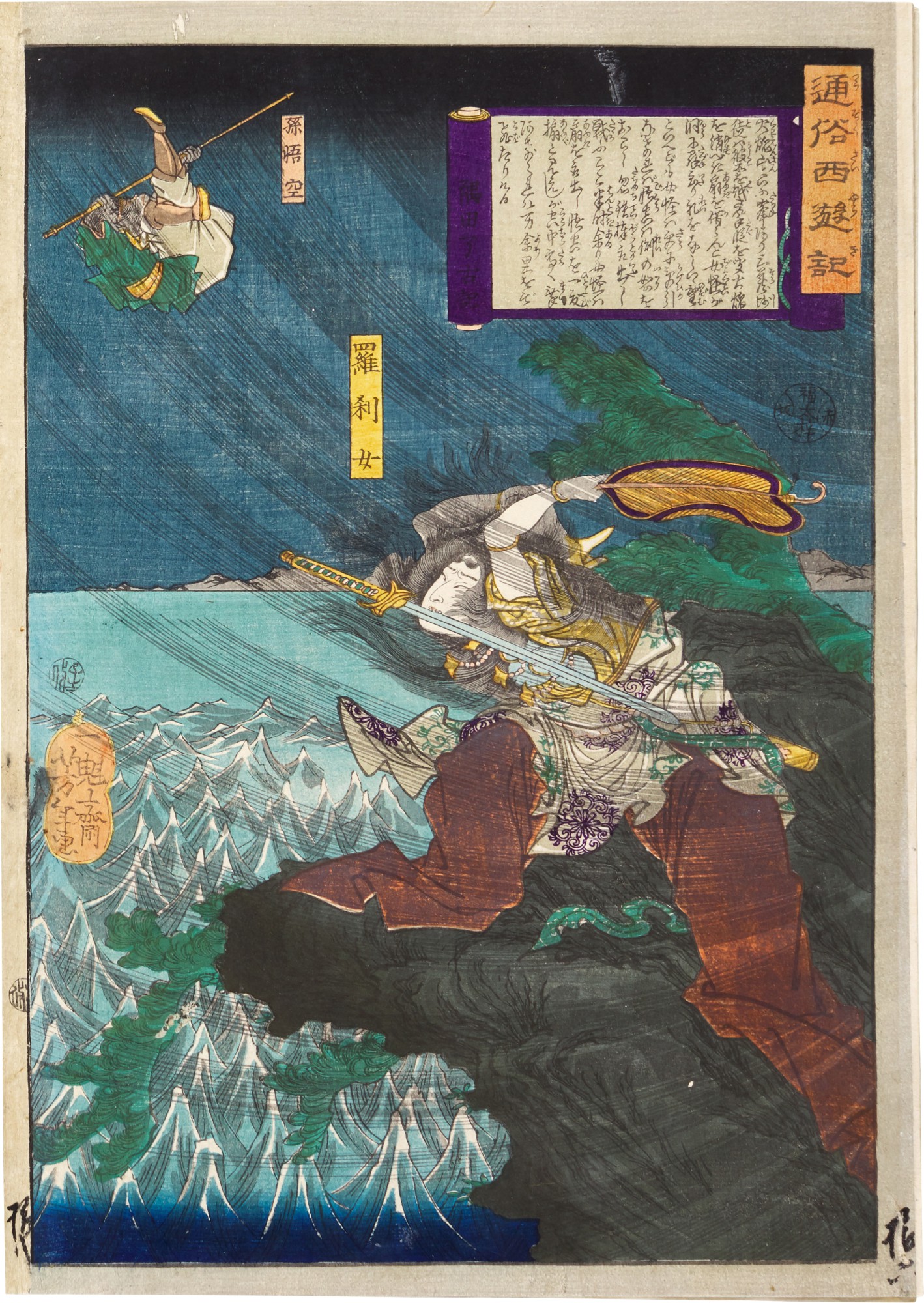
Tsukioka Yoshitoshi
Tsukioka Yoshitoshi (1839-1892) The complete set of The Journey to the West, A Popular Version (Tsuzoku saiyuki), Edo period, 19th century
", "Museum programming has reflected this reassessment with real consistency over the past decade. The Art Institute of Chicago mounted a substantial survey of narrative printmaking that traced connections between Japanese woodblock traditions and Western graphic arts, a pairing that felt overdue. The British Museum has continued to treat its holdings of illustrated works with the scholarly seriousness they deserve, and exhibitions focused on the illustrated book as an art object, rather than merely a vehicle for text, have drawn strong attendance at institutions including the Victoria and Albert Museum in London. These shows matter because they shift the frame.
They ask visitors to look at works by artists like Stephen Gooden or Charles Méryon not as documents or curiosities but as fully realized aesthetic achievements.", "Méryon deserves particular mention here. His etchings of Paris from the 1850s are, in the strict sense, topographical illustrations, yet they carry an atmosphere of dread and wonder that has attracted collectors and critics for generations. Baudelaire admired them.
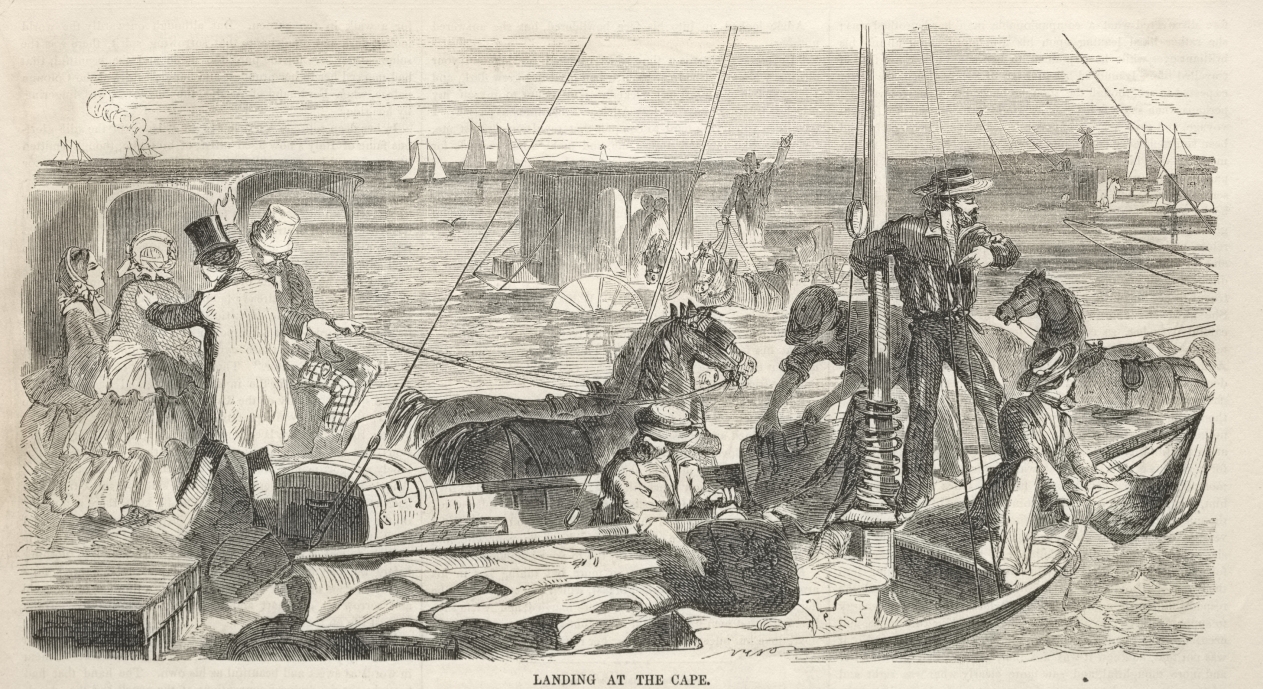
Winslow Homer
Camp Meeting Sketches: Landing at the Cape, 1858
The surrealists claimed him as a precursor. When his prints appear at auction, which is not frequently, they are contested with real energy. The same seriousness now attaches to the work of Lucien Pissarro, whose prints and illustrated books occupy an interesting space between the Post Impressionist tradition his father Camille represented and the Arts and Crafts sensibility he absorbed in England. Collectors of narrative illustration increasingly understand that Lucien Pissarro offers access to two important worlds at once.
", "The auction market has been particularly revealing about which corners of this field carry genuine momentum. Works on paper by Marcel Dzama, the Canadian artist whose pen and ink drawings populate an entirely coherent fictional universe of dancers, bears, and revolutionary violence, have climbed steadily over the past several years. Dzama's work is technically illustration in the sense that it tells stories and deploys a consistent visual language, yet it sits comfortably in the most ambitious contemporary collections. Rachel Goodyear occupies similar territory, her delicate pencil drawings staging small dramas between human figures and animals with an unnerving precision.
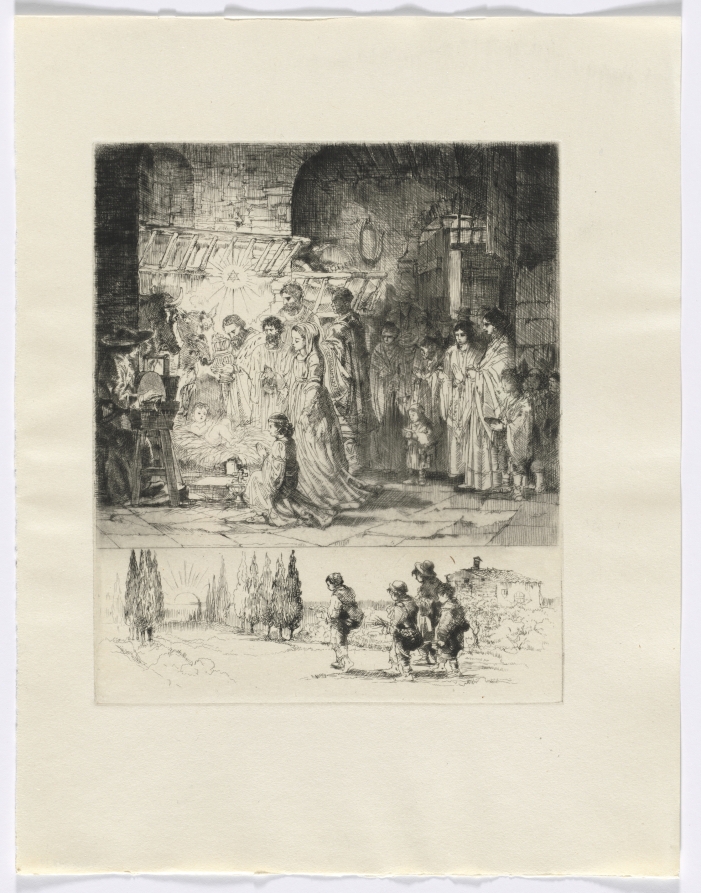
Auguste Brouet
Frédéric Mistral: Mémoires et Recits by Frédéric Mistral: nativity/ figures walking on a road (insert after p. 32), 1937
Both artists suggest that the next generation of collectors is entirely comfortable dissolving the old boundaries.", "The institutional collecting picture confirms this. The Museum of Modern Art has continued to build its holdings of works on paper in ways that blur the line between fine art printmaking and illustrated narrative. Tate Modern's acquisitions in recent years have included works that would once have been categorized as graphic art and therefore considered secondary.
When major institutions treat these works with the same seriousness they bring to painting, the market follows, and collector confidence deepens. It is worth noting that Winslow Homer, whose work in watercolor and illustration for publications like Harper's Weekly preceded his reputation as one of America's great painters, now commands prices at the highest level regardless of medium. His illustrated work is no longer seen as a footnote to the paintings.", "The critical conversation is being shaped by a generation of writers who came of age without the old hierarchies firmly installed.
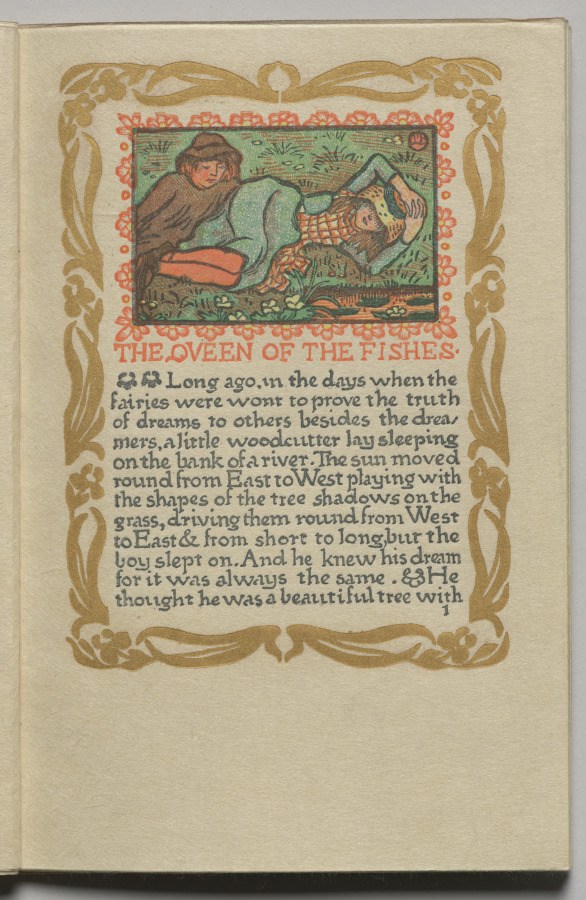
Lucien Pissarro
The Queen of the Fishes: Plate 1, 1894
Roberta Smith at the New York Times spent years arguing for works on paper and narrative art with a directness that influenced how collectors thought about acquisition. Frieze has published serious criticism of contemporary artists working in illustrative traditions, treating the lineage from Marc Chagall through to artists like Jordi Ribes without condescension. Chagall himself is instructive: his illustrated books, including the famous Gogol and La Fontaine series, are now understood as central works rather than peripheral productions. The Maeght Foundation has held multiple exhibitions reinforcing this reading, and the market has absorbed that message.
", "What feels genuinely alive right now is the intersection of narrative illustration with questions of mythology, folklore, and collective memory. Artists working in this space, including Christoph Schmidberger and Georg Wilson, are drawing on visual traditions that span cultures and centuries while making work that feels entirely contemporary. The energy around Yoshitoshi is part of this: his One Hundred Aspects of the Moon series from the 1880s feels, to a contemporary eye, like an investigation into psychological states as much as a vehicle for narrative. What feels more settled is the market for nineteenth century European illustrative prints, which has found its level with some confidence.
What feels genuinely surprising, and worth watching, is the growing appetite for illustrated books as total objects, not just sources for individual prints. Collectors are beginning to understand that the book itself, the sequence, the pacing, the relationship between image and text, is the work.
Works tagged Narrative Illustration
Tsukioka Yoshitoshi
Tsukioka Yoshitoshi (1839-1892) The complete set of The Journey to the West, A Popular Version (Tsuzoku saiyuki), Edo period, 19th century
Winslow Homer
Camp Meeting Sketches: Landing at the Cape
Auguste Brouet
Frédéric Mistral: Mémoires et Recits by Frédéric Mistral: nativity/ figures walking on a road (insert after p. 32)
Lucien Pissarro
The Queen of the Fishes: Plate 1
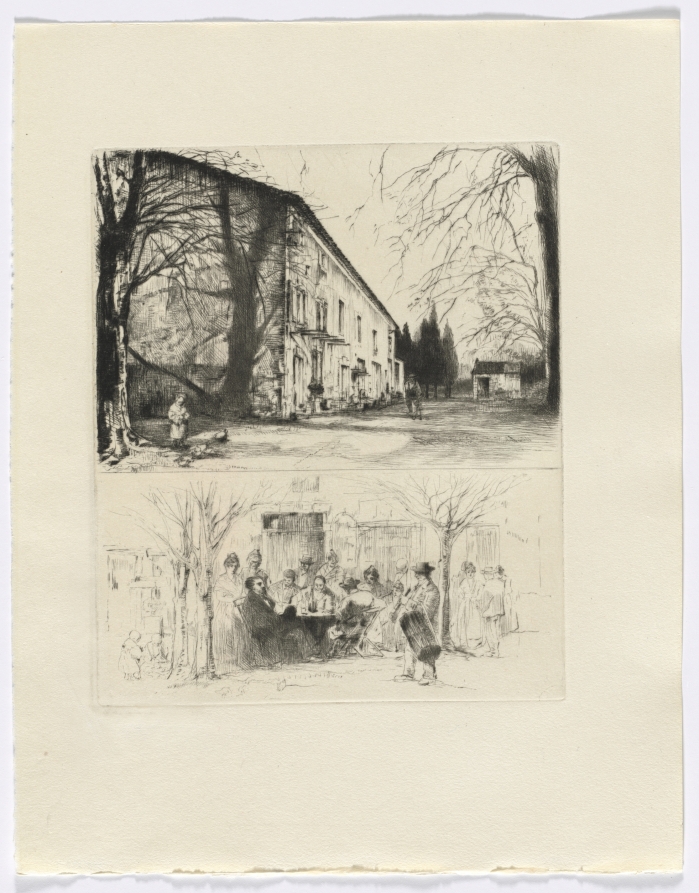
Auguste Brouet
Frédéric Mistral: Mémoires et Recits by Frédéric Mistral: street scene/ people at outdoor table (insert after p. 24) DUPLICATE
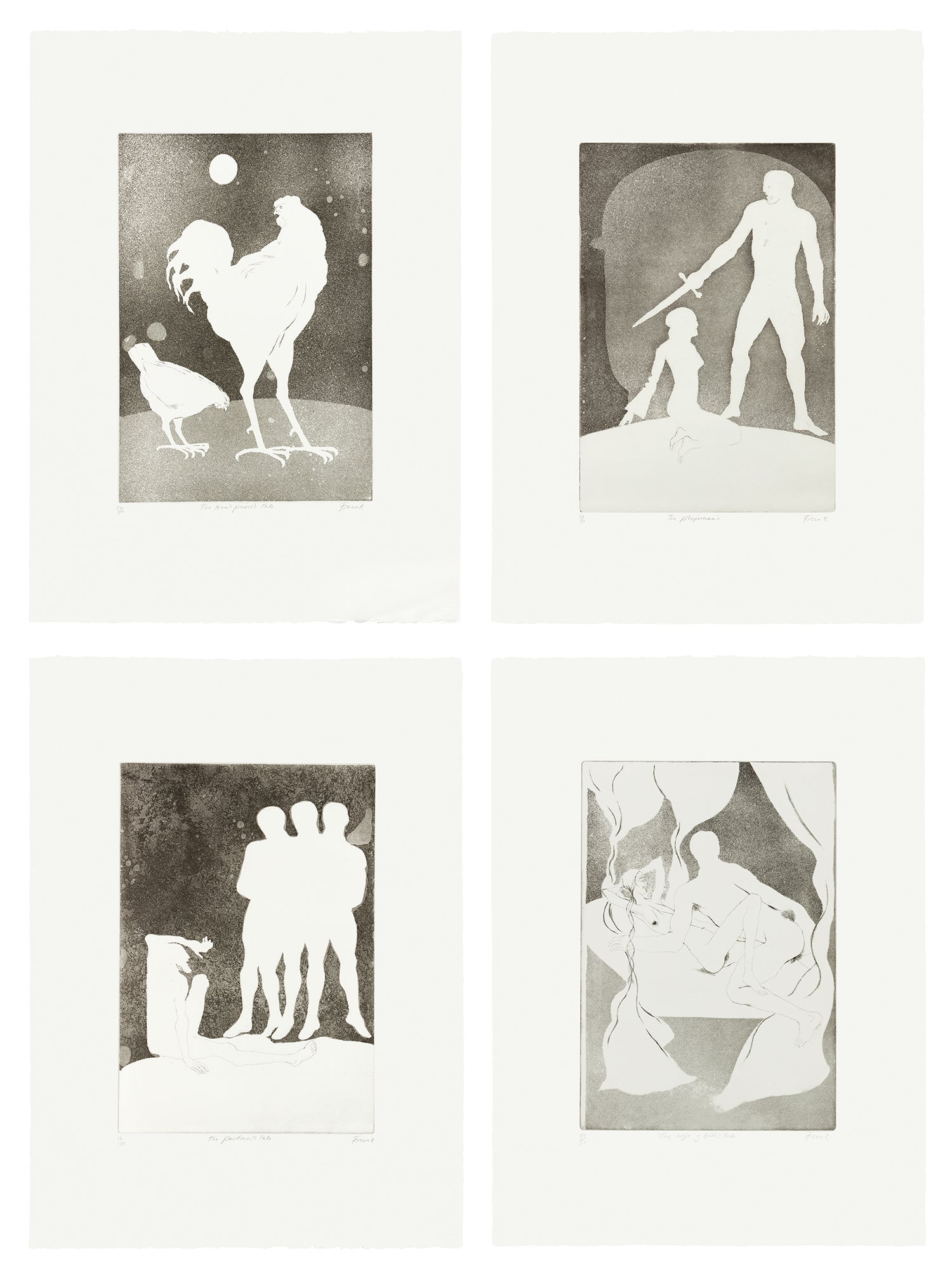
Elisabeth Frink
The Canterbury Tales I: three plates; and The Canterbury Tales II: thirteen plates
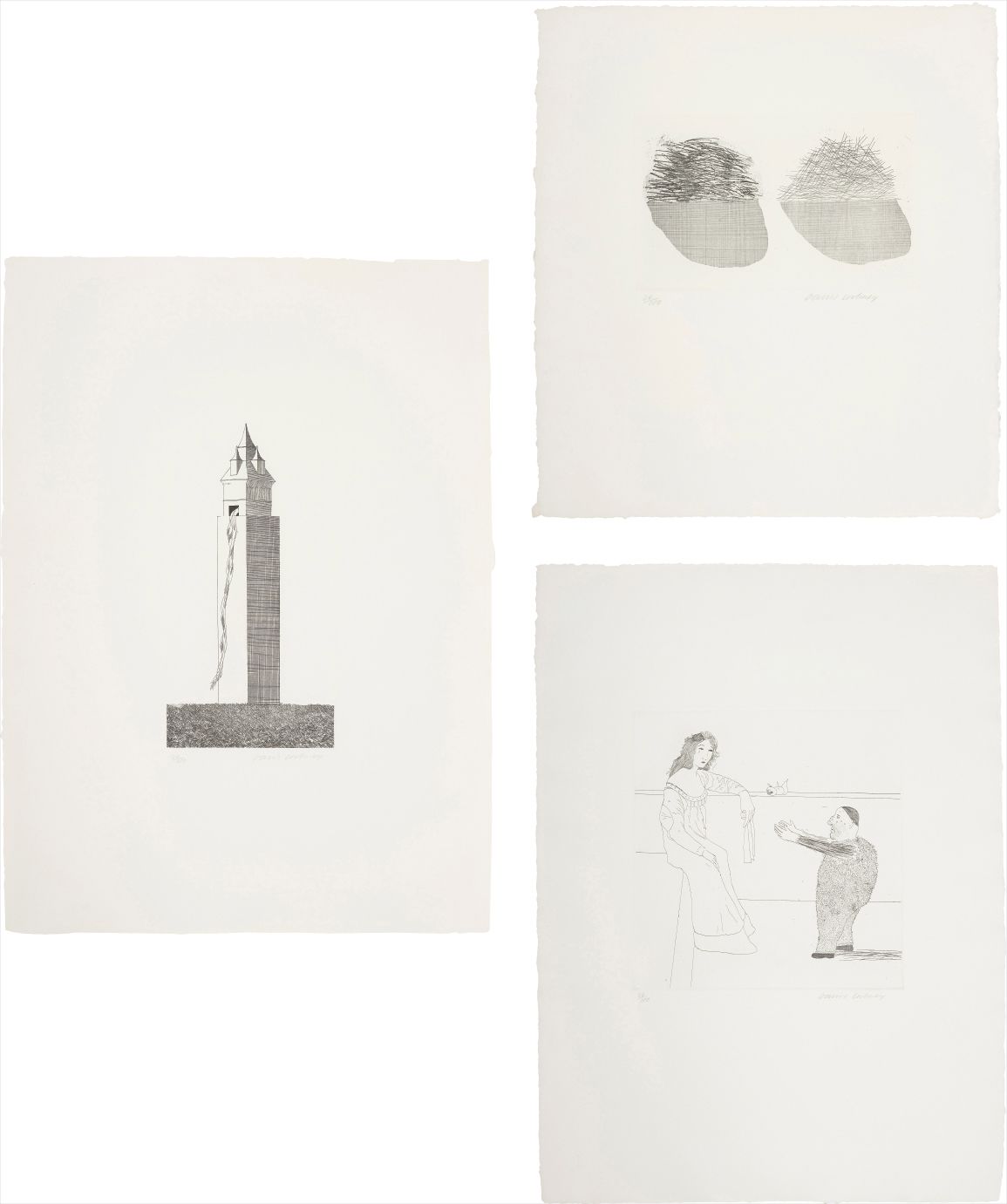
David Hockney
The Tower Had One Window; Straw on the Left, Gold on the Right; and Pleading for the Child, plates 16, 36 and 37 from Illustrations for Six Fairy Tales from the Brothers Grimm
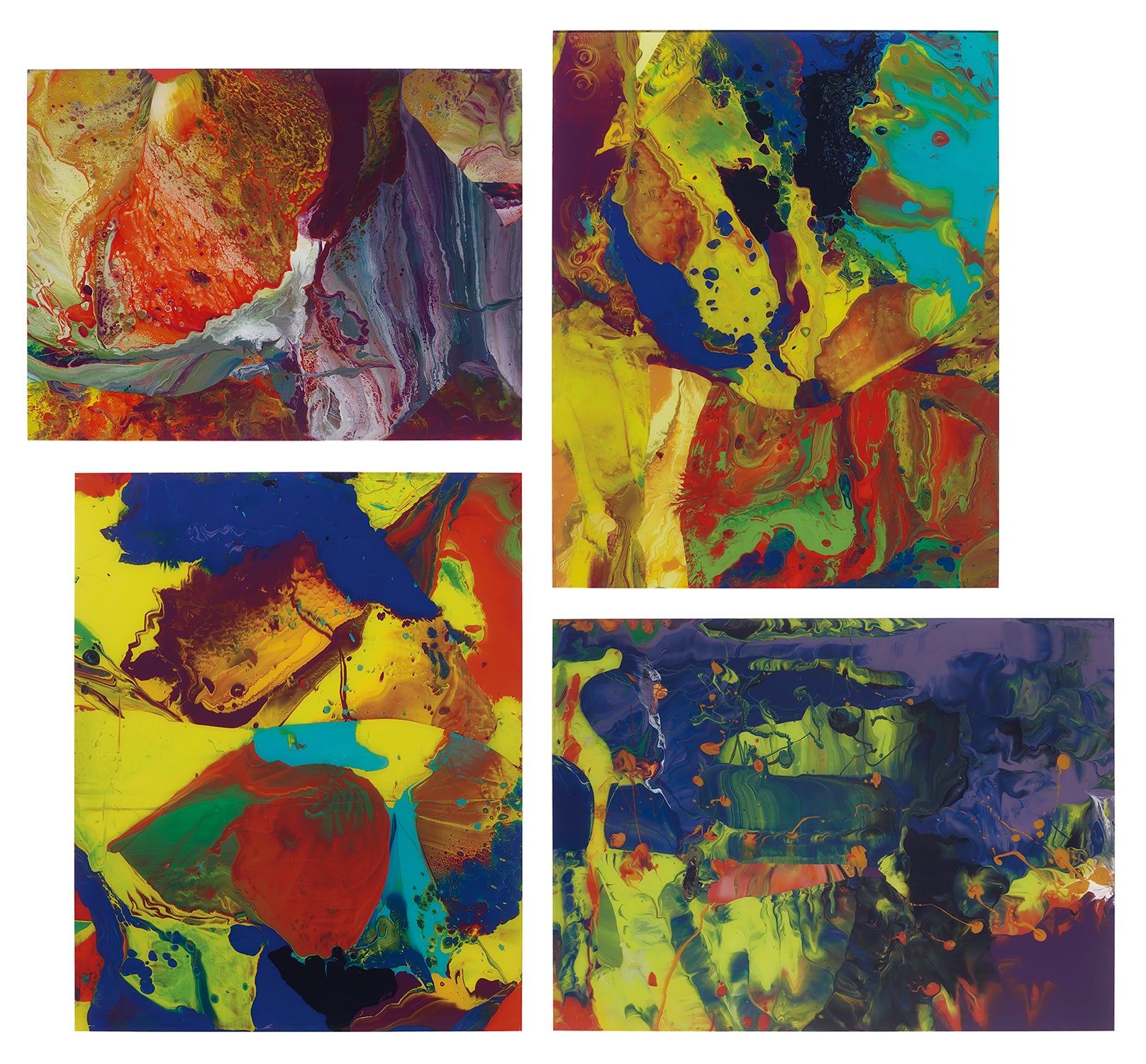
Gerhard Richter
Ifrit; Bagdad; Bagdad; and Aladin (P8-P11)
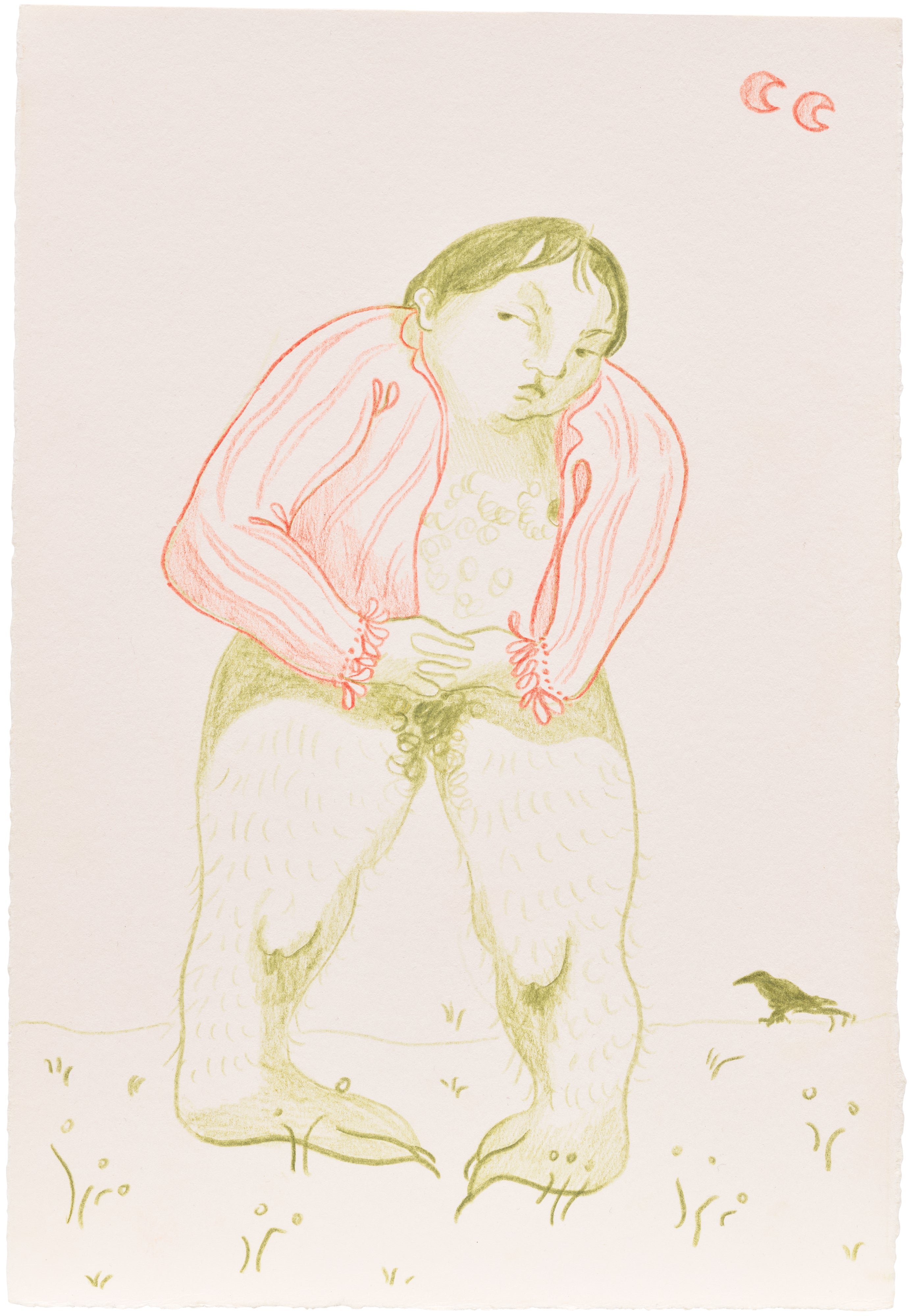
Georg Wilson
The Button Thief
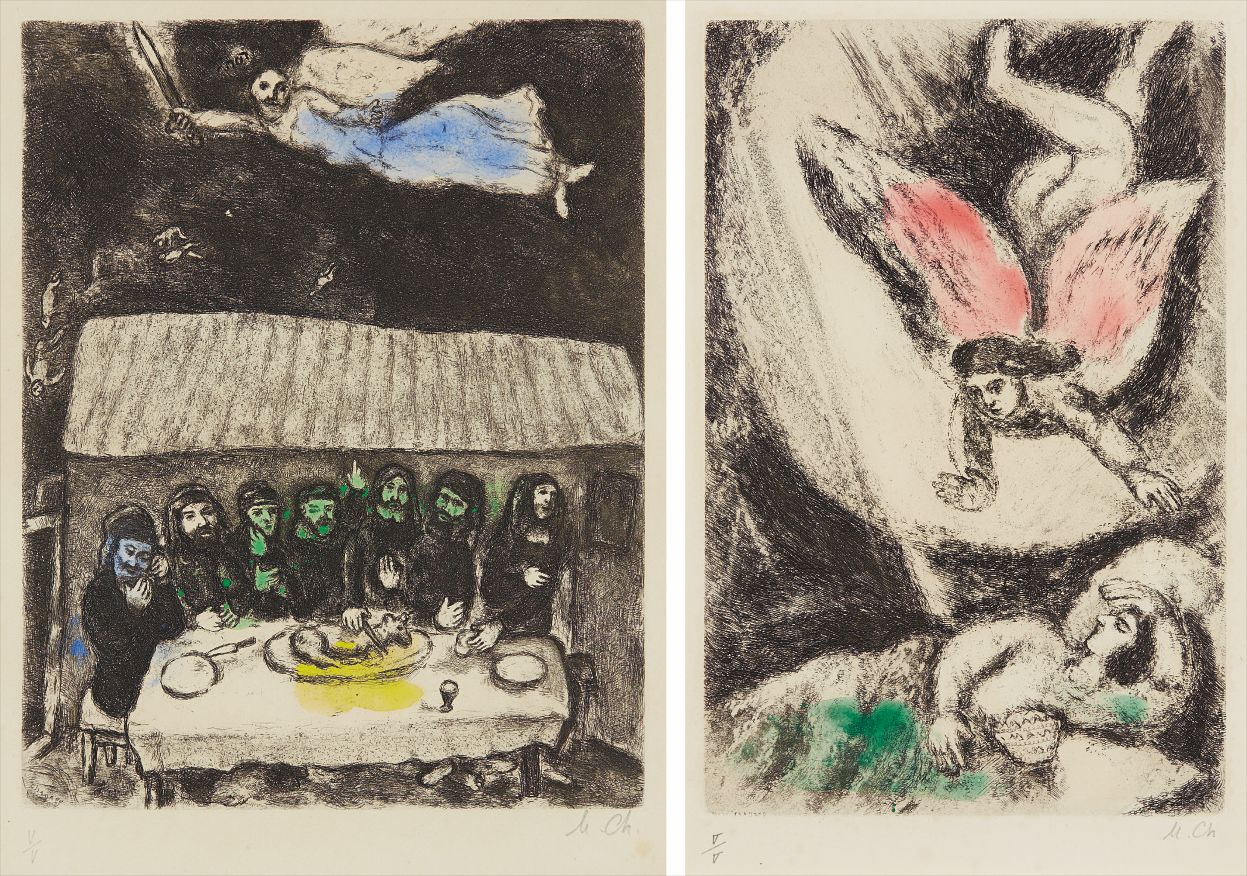
Marc Chagall
Repas Pessa'h (Passover Meal); and Le rêve de Salomon (Solomon’s Dream), from La Bible
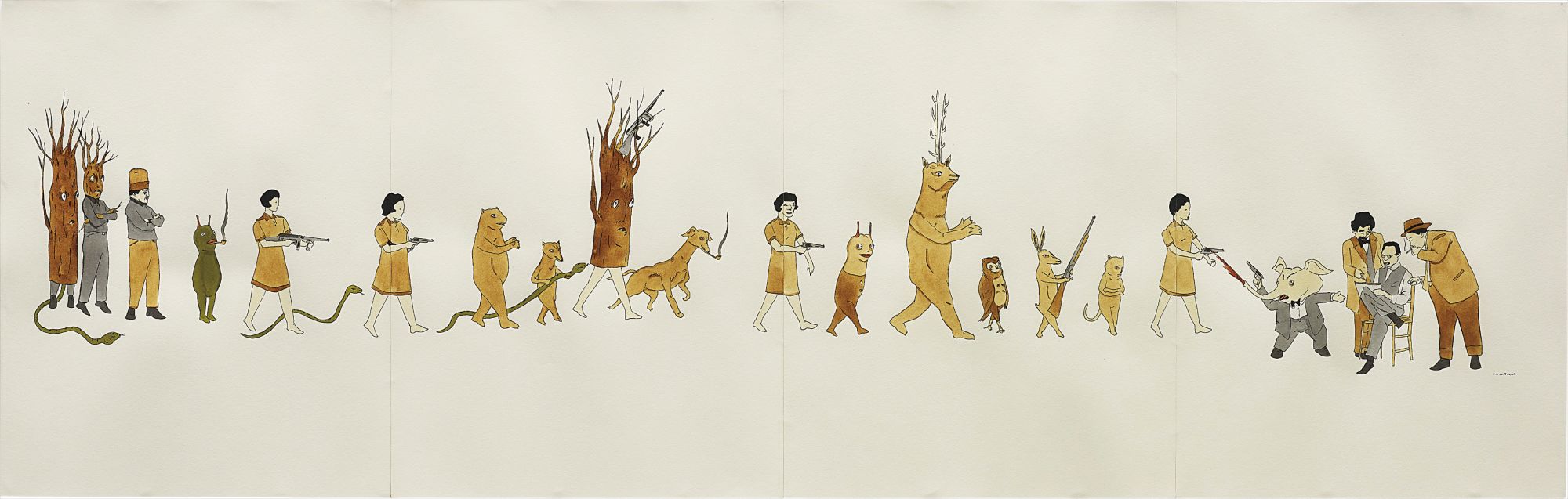
Marcel Dzama
Keep with Me
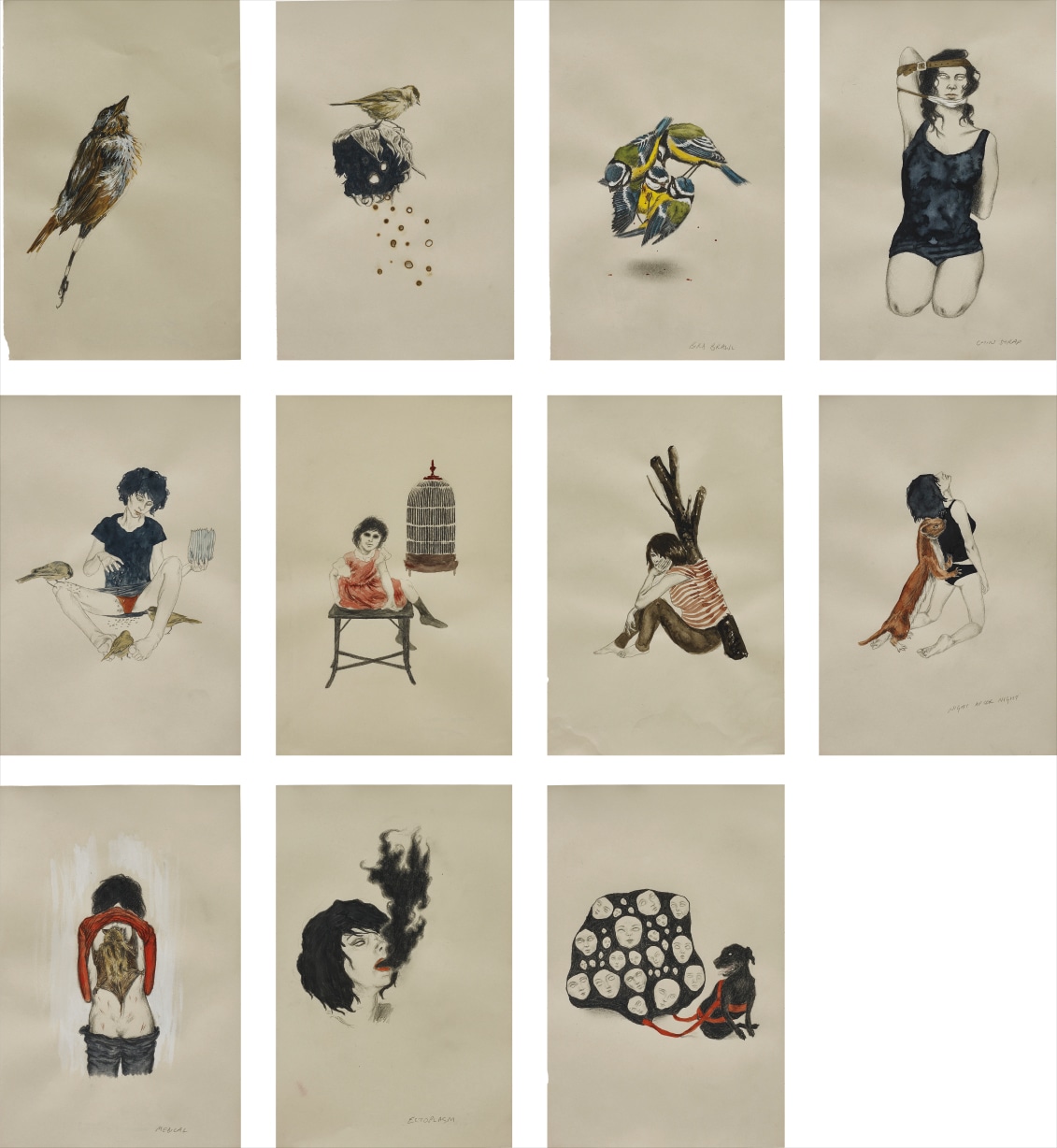
Rachel Goodyear
Nature Notes
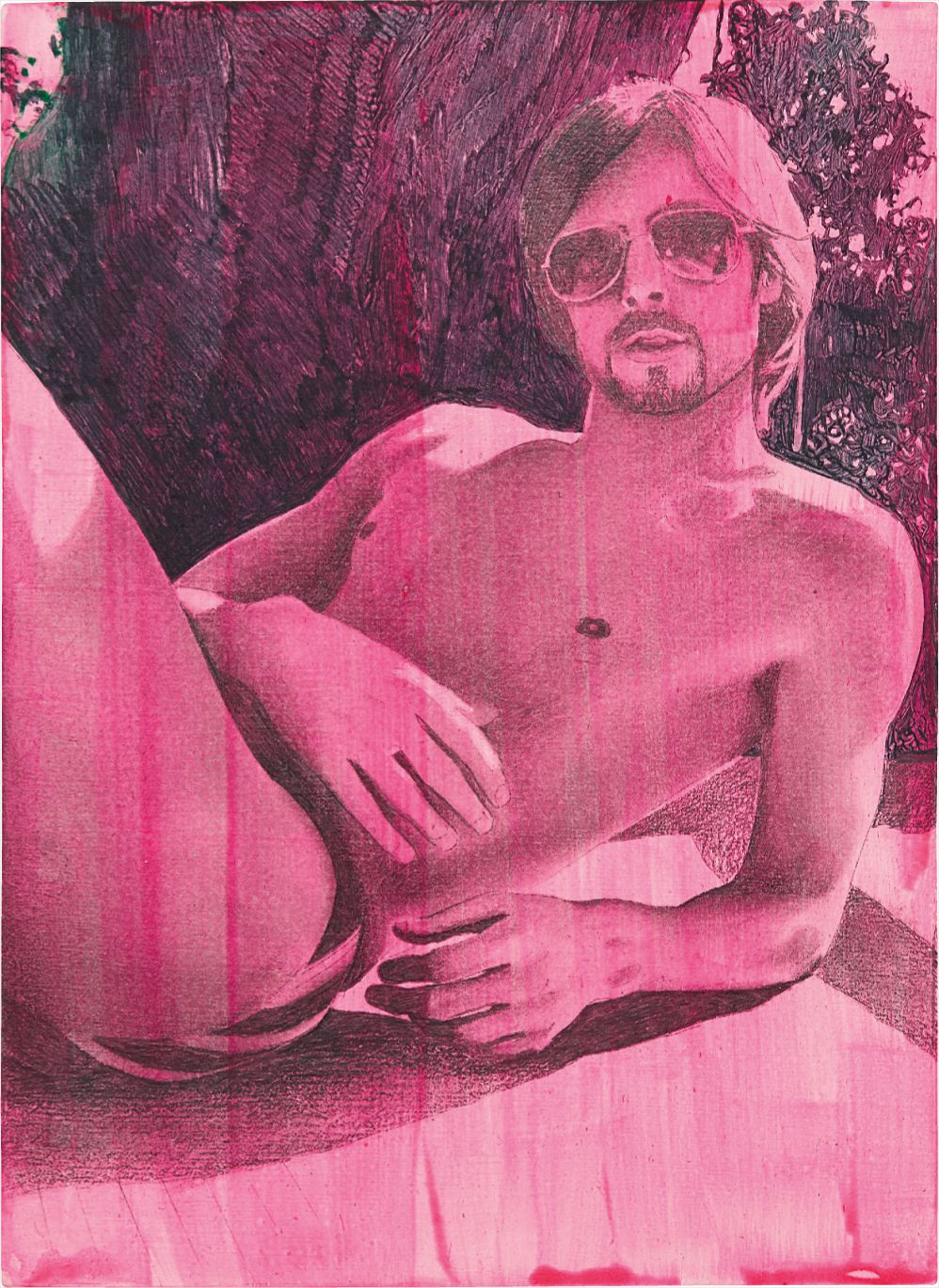
Christoph Schmidberger
I Will Never Do That Again
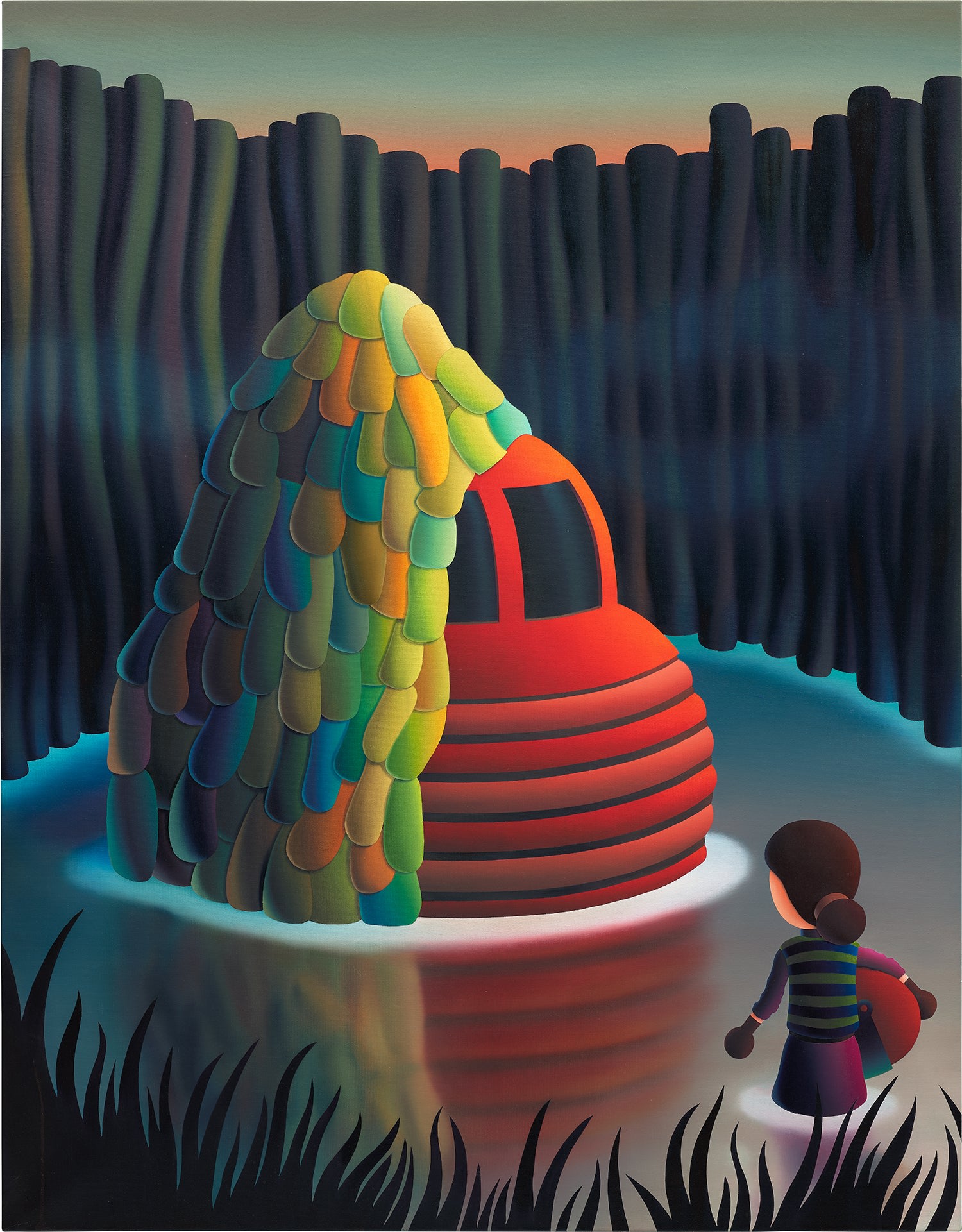
Jordi Ribes
Amazing Stories
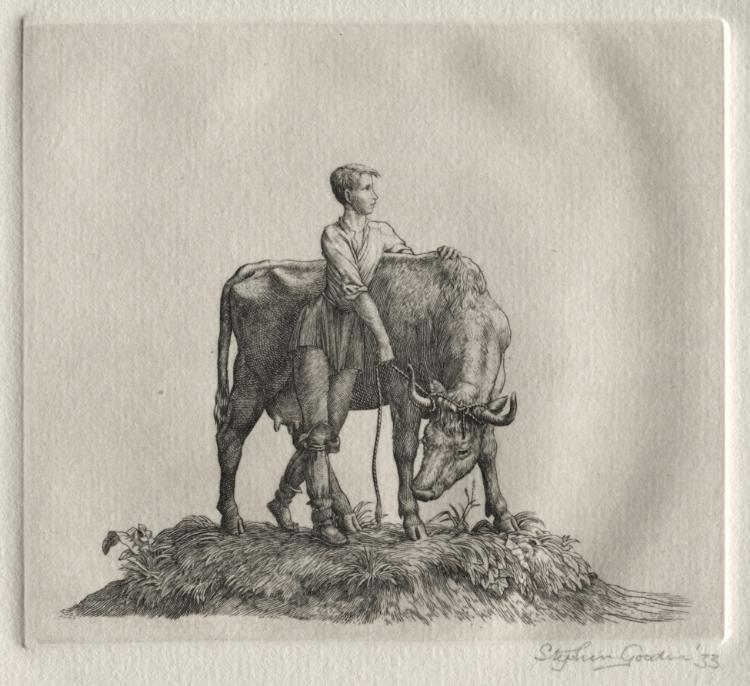
Stephen Gooden
Illustration for "Peronnik the Fool": Frontispiece
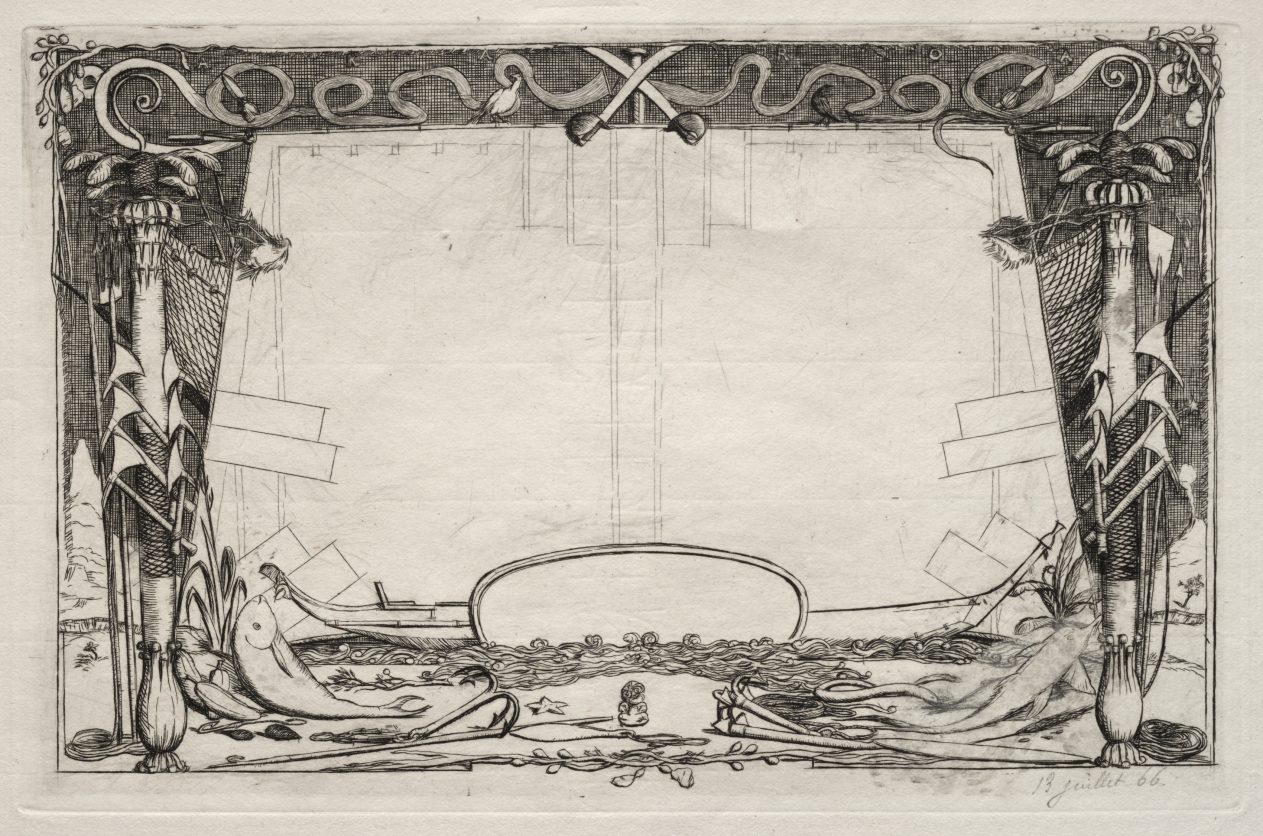
Charles Méryon
A Voyage to New Zealand (1842-1846): Cover
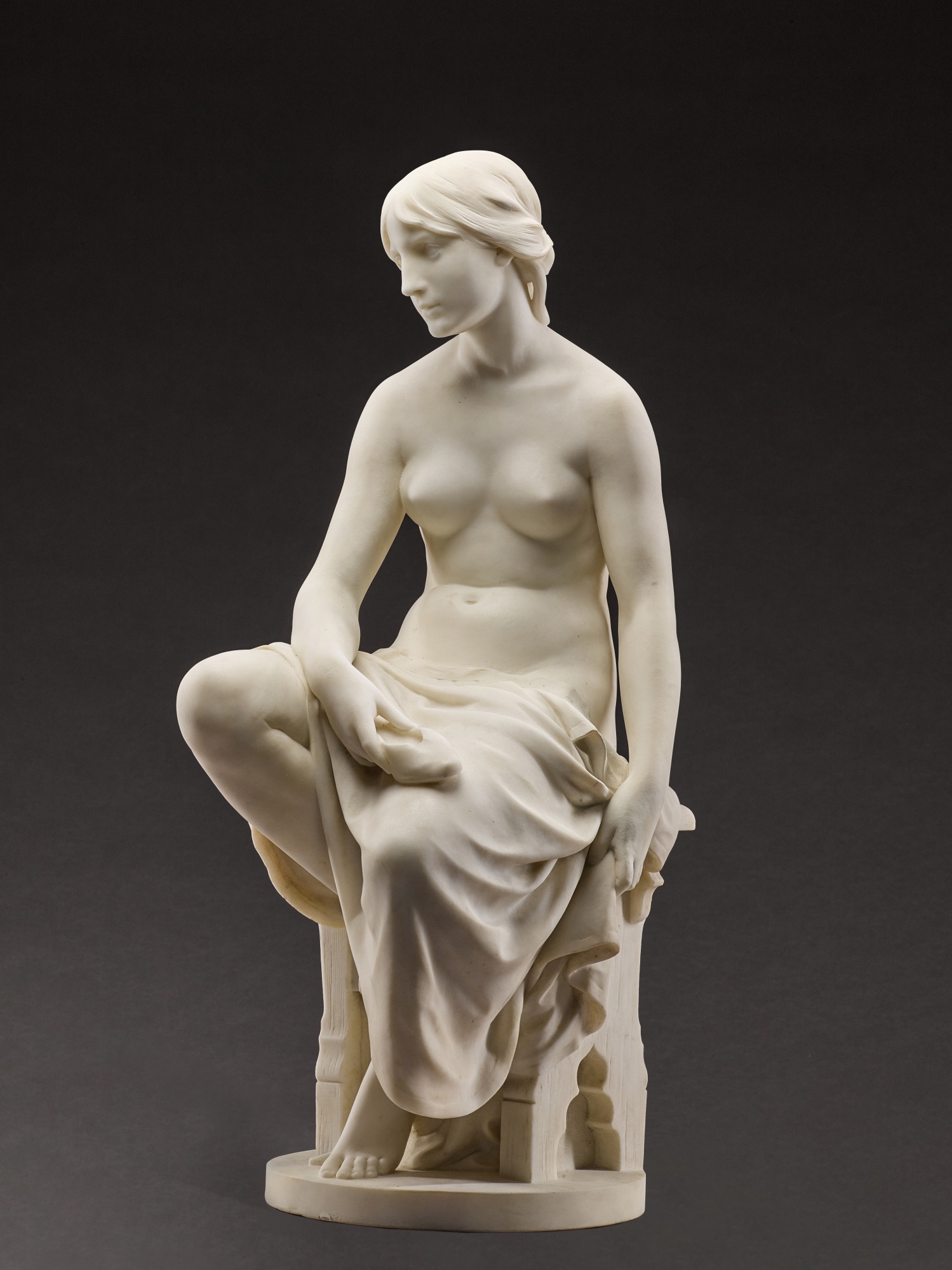
Émile Namur
Cendrillon (Cinderella)
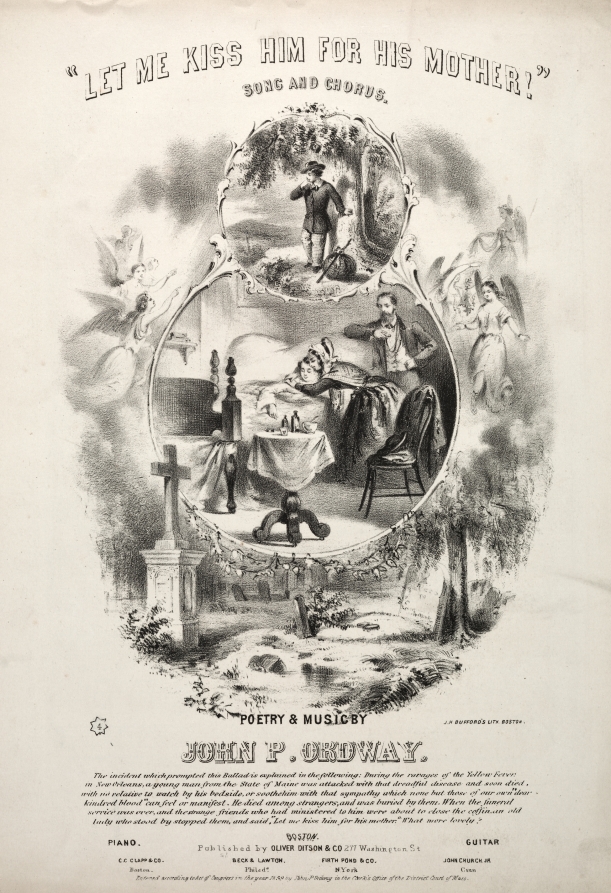
Winslow Homer
Let me Kiss him for his Mothers - Sheet Music Cover