Embossed Print
Archived article
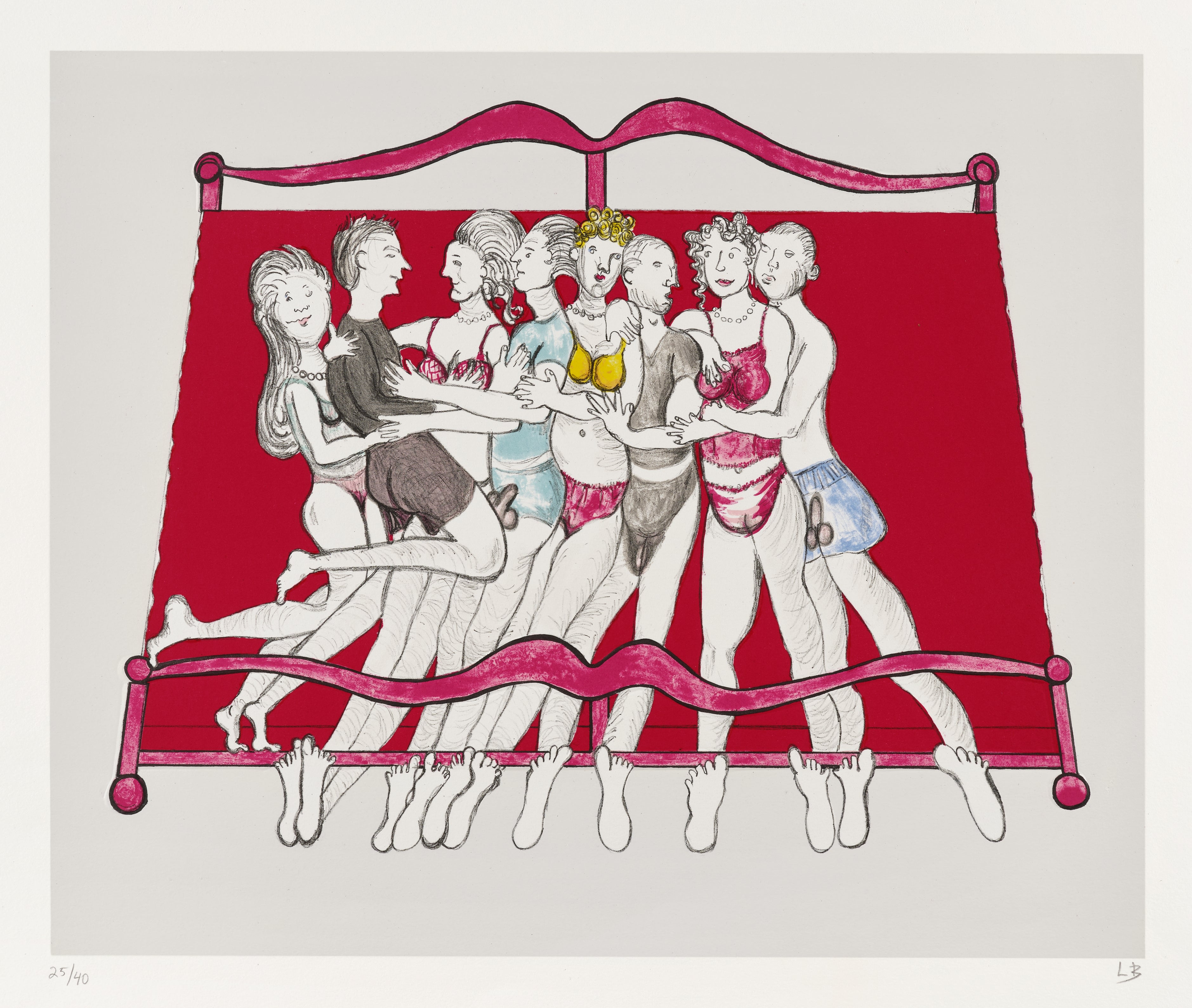
Louise Bourgeois
Eight in Bed
You are reading a previous version of this article.
Read the latest version```json { "headline": "Relief, Pressure, Presence: Embossed Print's Tactile Power", "body": "When a Louise Bourgeois embossed print sold at Christie's in the early 2020s, the bidding room went quieter than usual, the kind of quiet that signals genuine attention rather than indifference. The work held something that a flat lithograph simply cannot: a physical memory pressed into the paper itself, a record of force and intention that you can feel before you fully see it. That result, like so many in the embossed print category over the past decade, told a story about where serious collectors are putting their energy and why the tactile is having its moment in a world saturated with the purely visual.", "Embossed printmaking occupies a fascinating middle ground between sculpture and works on paper.
The technique, which involves pressing a matrix into dampened paper under significant pressure to create raised or recessed surfaces without the use of ink in the embossed areas, produces what are sometimes called blind embossments. The result is an image that exists in relief, shadow, and light rather than in pigment. It rewards physical proximity in a way that digital reproduction utterly fails to capture, which is part of why institutions and collectors have been circling back to it with renewed seriousness.", "The market for embossed prints has been shaped significantly by a handful of artists whose commitments to the form went beyond casual experimentation.
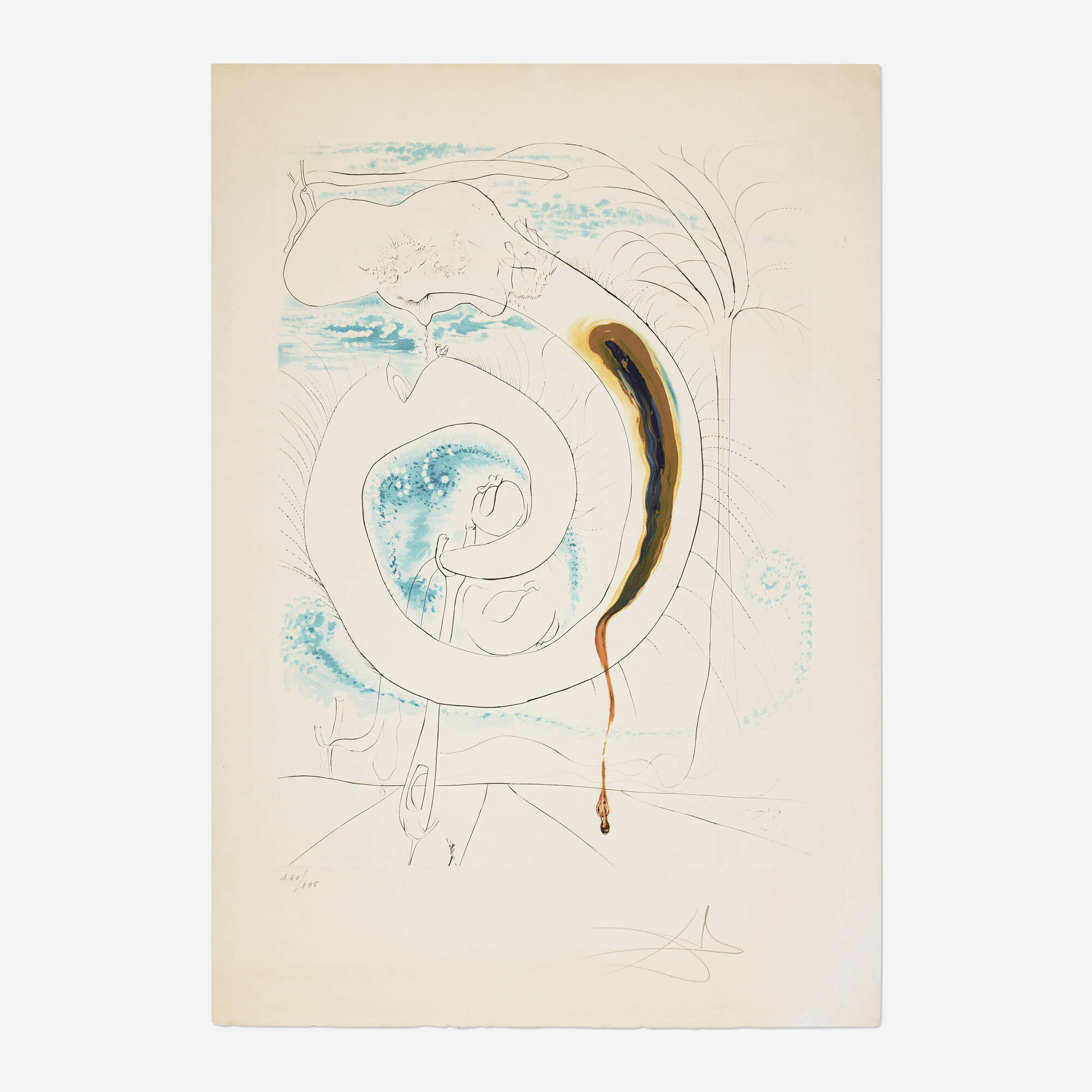
Salvador Dalí
Le cercle viscéral du cosmos (from the La Conquête du cosmos I portfolio), 1974
Josef Albers, whose rigorous investigations into color and perception defined much of his career, also produced works that engaged deeply with the material properties of paper itself. His interest in how perception shifts with surface and structure translates with remarkable coherence into the embossed format. Works from his circle command steady institutional attention, and prices at auction reflect an understanding that his output in this area is both finite and conceptually coherent, not a side project but an extension of a lifelong inquiry.", "Keith Haring brought an entirely different sensibility to the form.
His embossed prints carry the same visual urgency and symbolic density as his street work and canvas paintings, but the dimensionality adds something unexpected: a kind of insistence, as if the image is trying to push out of the paper and into the world. Haring produced embossed works during the 1980s at a moment when print editions were central to his broader project of accessibility and distribution. The works on The Collection reflect that ambition well. At auction, Haring prints with tactile embossed elements have consistently outperformed expectations when they appear in dedicated prints and multiples sales, particularly at Phillips and Swann Galleries, where younger bidders have been especially active.
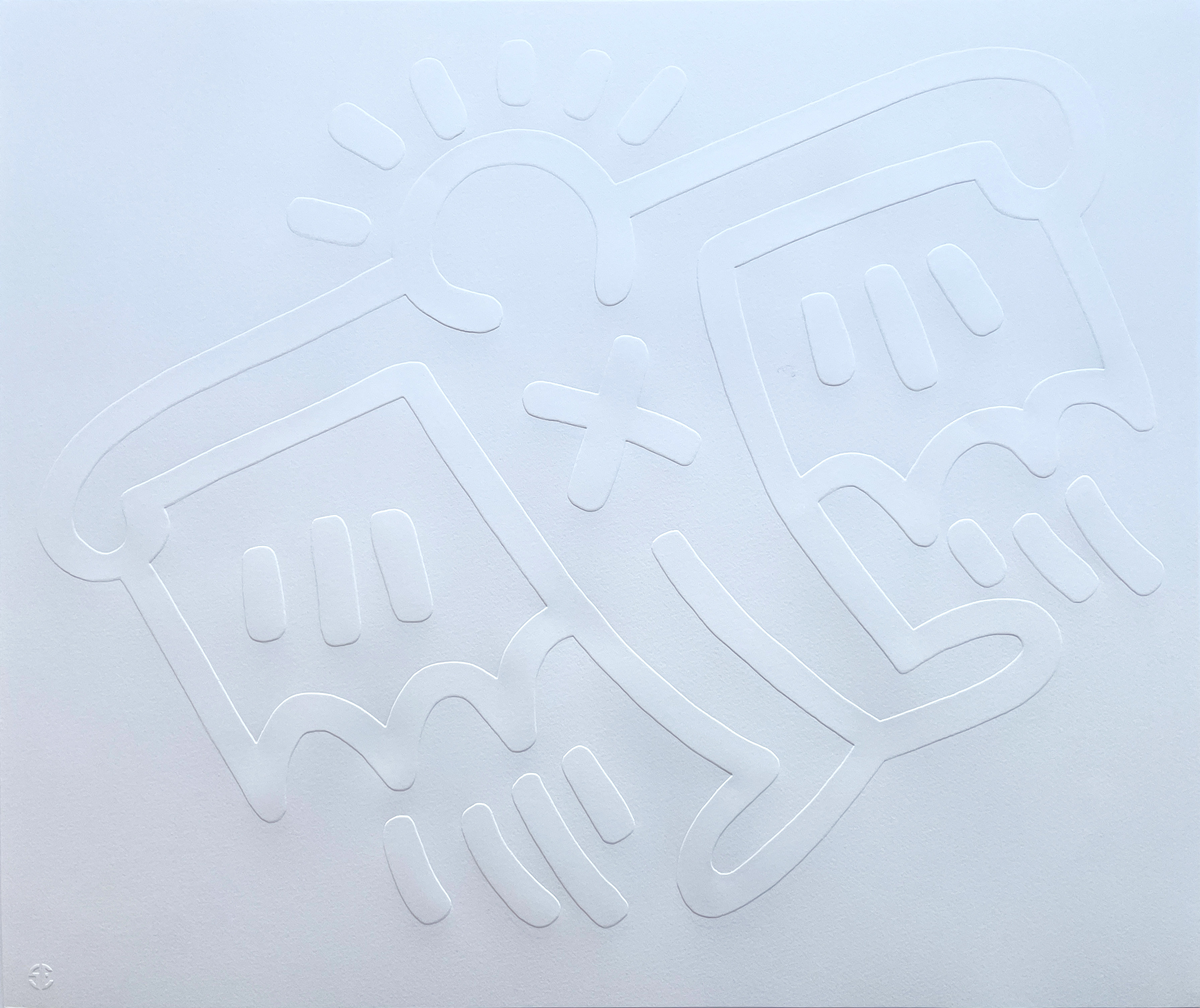
Keith Haring
White Icons (D) - X-Man , 1990
", "Salvador Dali's engagement with printmaking was prolific and, at times, commercially complicated, but his best embossed work demonstrates a genuine alignment between technique and subject matter. Surrealist imagery and dimensional surface manipulation are natural partners: the raised form destabilizes the flat plane in the same way that Surrealism destabilized the rational image. Authenticity and provenance are always the first questions with Dali multiples, and well documented embossed works with clean histories have held their value firmly, particularly in European markets where his cultural presence remains especially strong.", "On the institutional side, the Museum of Modern Art has consistently championed works on paper that push the boundaries of what print can do, and their curatorial writing around the materiality of print has shaped critical vocabulary in useful ways.
The International Print Center New York has been particularly active in staging exhibitions that contextualize embossed and relief printing within contemporary practice, giving younger artists a framework and a conversation to enter. The Jordan Schnitzer Museum of Art at the University of Oregon, one of the more underrated print collections in North America, holds significant embossed work that researchers and curators have been mining with increasing frequency.", "The critical conversation has been shaped in part by writers like Deborah Wye, whose long tenure as chief curator of prints and illustrated books at MoMA produced some of the most rigorous thinking about printmaking's conceptual ambitions. More recently, publications like Print Quarterly and Tanya Harrod's broader writing on craft and material culture have helped bridge the gap between printmaking specialists and a wider audience of collectors and critics who might otherwise overlook the form.
The question of whether embossed prints are collected as paper works or as sculptural objects is genuinely alive in curatorial circles right now, and the answer has real implications for how they are displayed, insured, and valued.", "Louise Bourgeois understood this ambiguity intuitively. Her late career printmaking, which extended well into her nineties, treated paper as a site of psychological inscription. The embossed elements in her works carry the same psychic weight as her large scale installations, which is a remarkable achievement of scale inversion.
When her works appear at auction, they tend to attract both the prints and multiples bidders and the contemporary art collectors, which creates a competitive dynamic that drives prices upward. Her presence in this category is not decorative but foundational, a reminder that the most serious artists treat print as a primary medium rather than a vehicle for reproduction.", "Where is the energy heading? There is a growing appetite for embossed works by artists who came of age in the 1990s and 2000s and who are now revisiting the technique with fresh intentions, often in dialogue with digital processes that begin with three dimensional modeling and end with physical impression.
The conversation between virtual topography and pressed paper is genuinely new territory. At the same time, the historical market for canonical embossed works feels increasingly settled and confident, with strong floors under the major names and steady institutional acquisition reinforcing those values. The surprise, if there is one coming, will likely arrive from a younger artist who makes the technique newly necessary in a way that reframes everything that came before. That is how printmaking has always renewed itself: not through nostalgia for the hand, but through a fresh argument for why pressure on paper still has something urgent to say.
Works tagged Embossed Print
Salvador Dalí
Le cercle viscéral du cosmos (from the La Conquête du cosmos I portfolio)
Louise Bourgeois
Eight in Bed
Keith Haring
White Icons (D) - X-Man
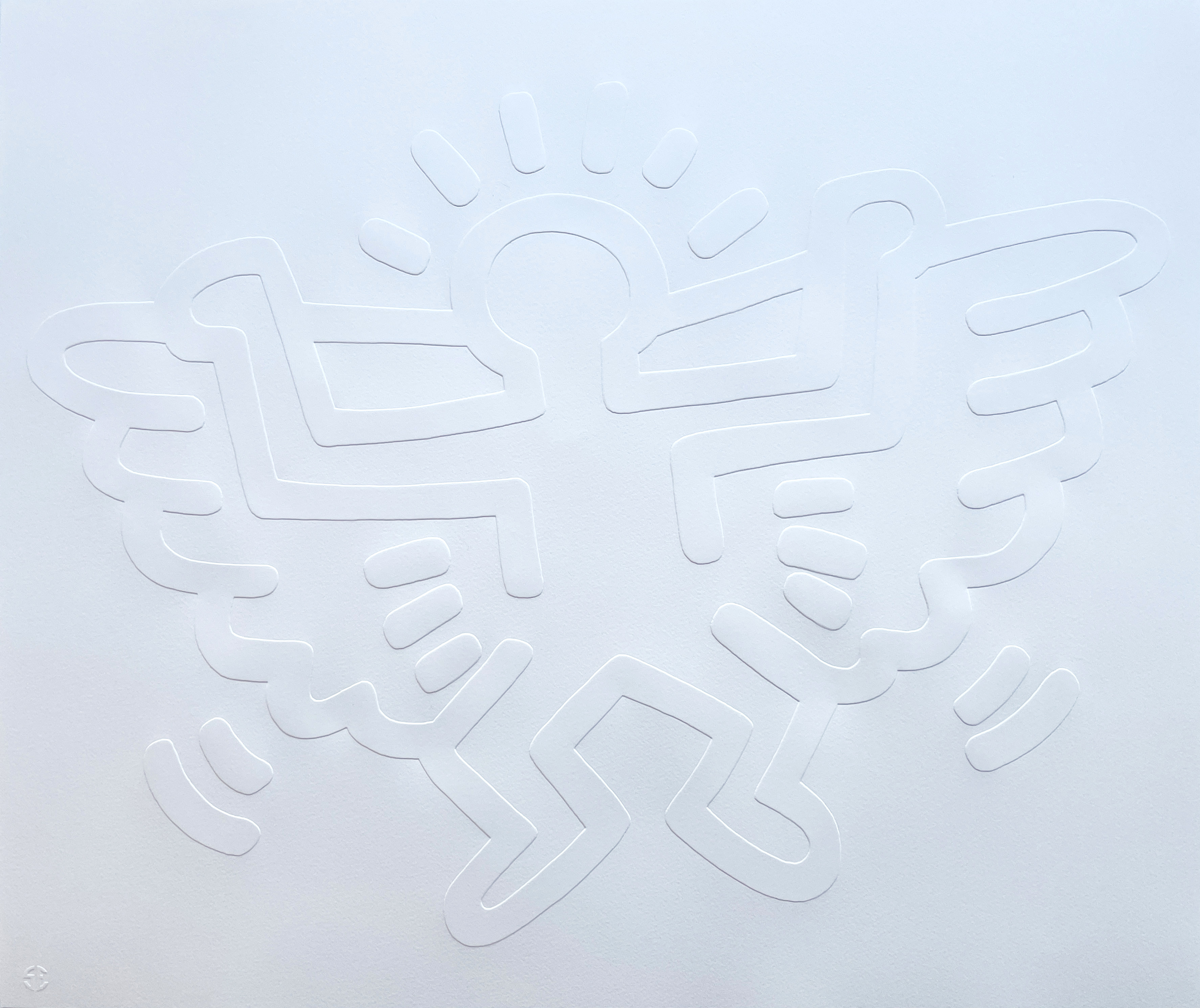
Keith Haring
White Icons (C) - Winged Angel
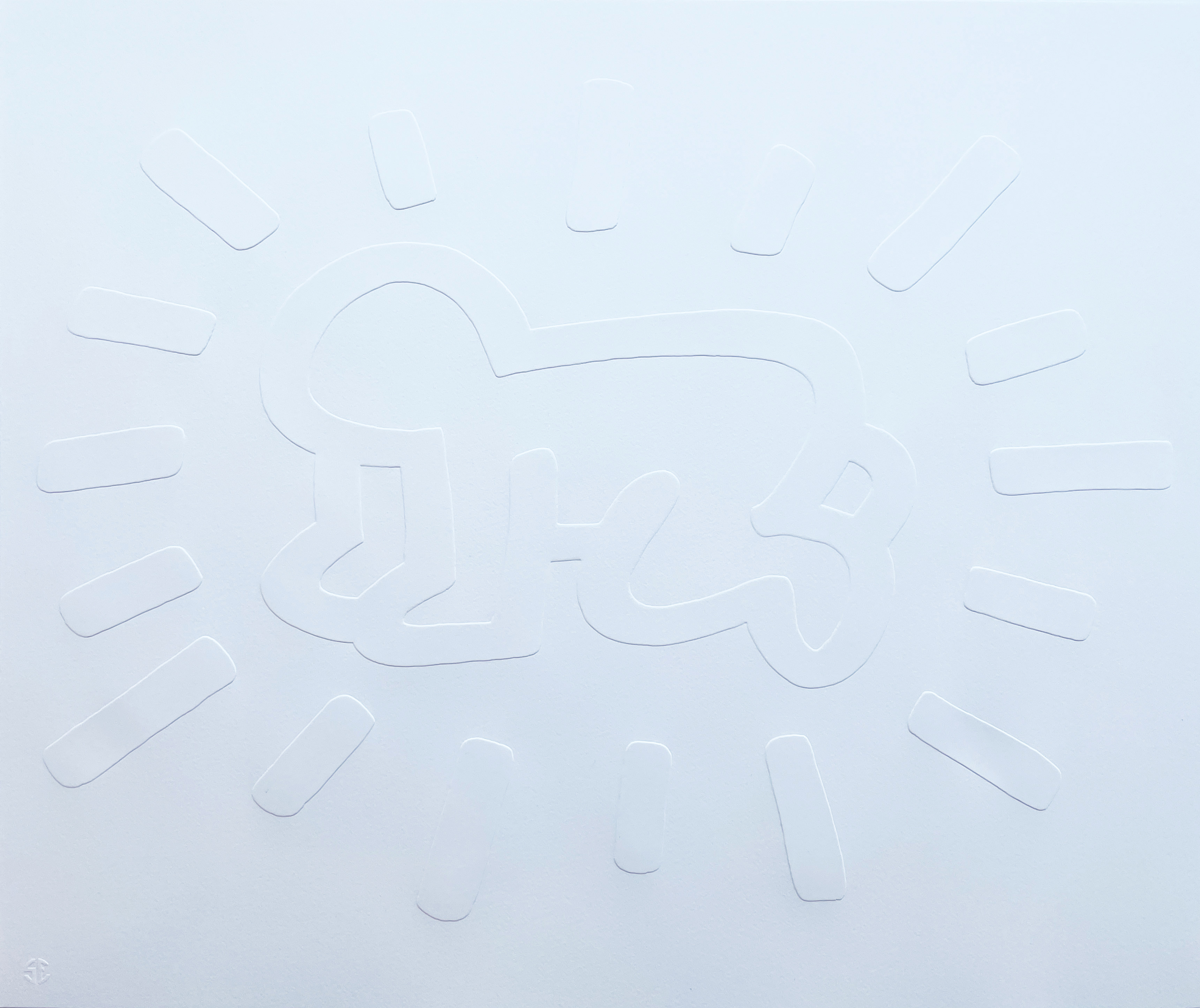
Keith Haring
White Icons (A) - Radiant Baby
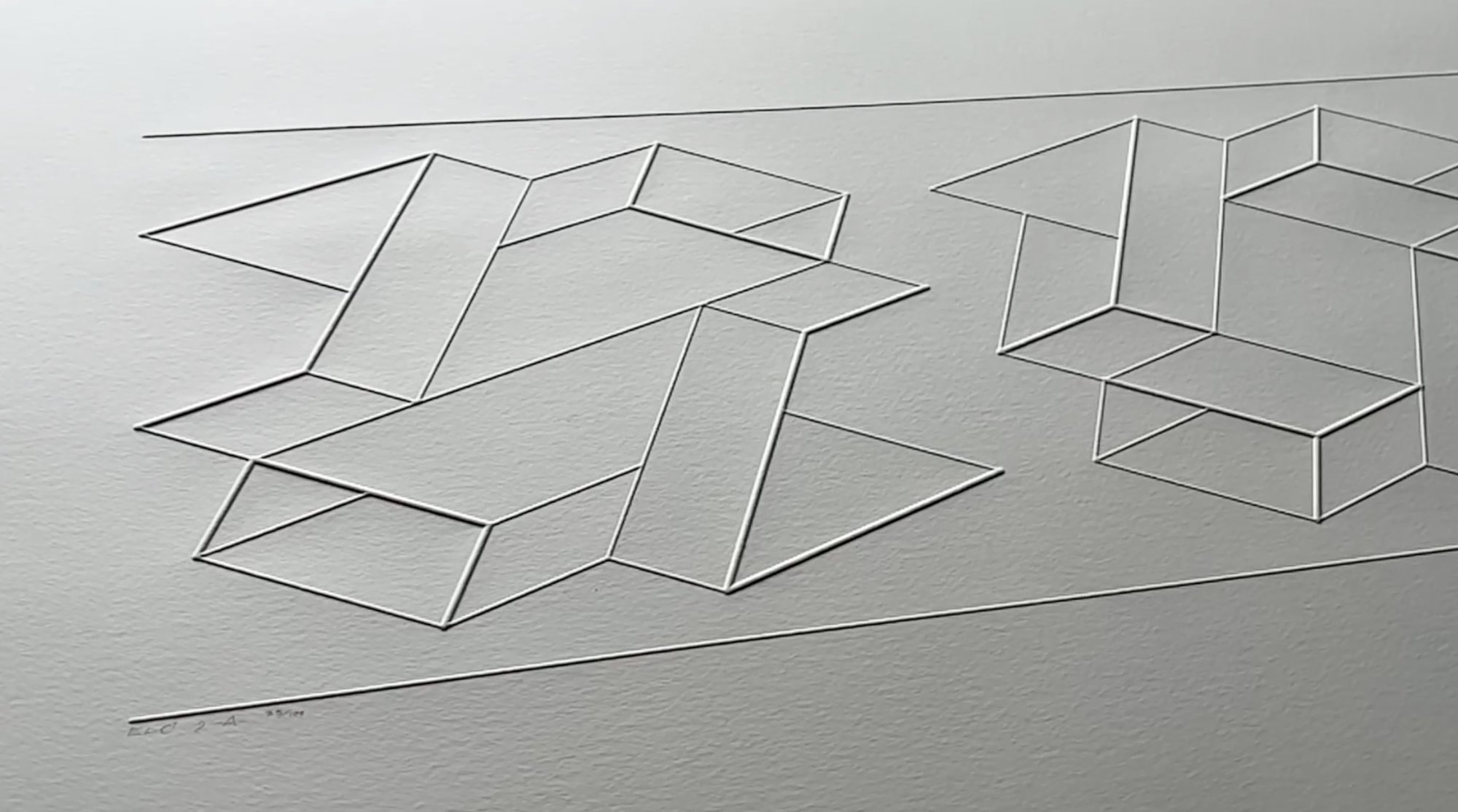
Josef Albers
Embossed Linear Constructions (ELC) 1-C
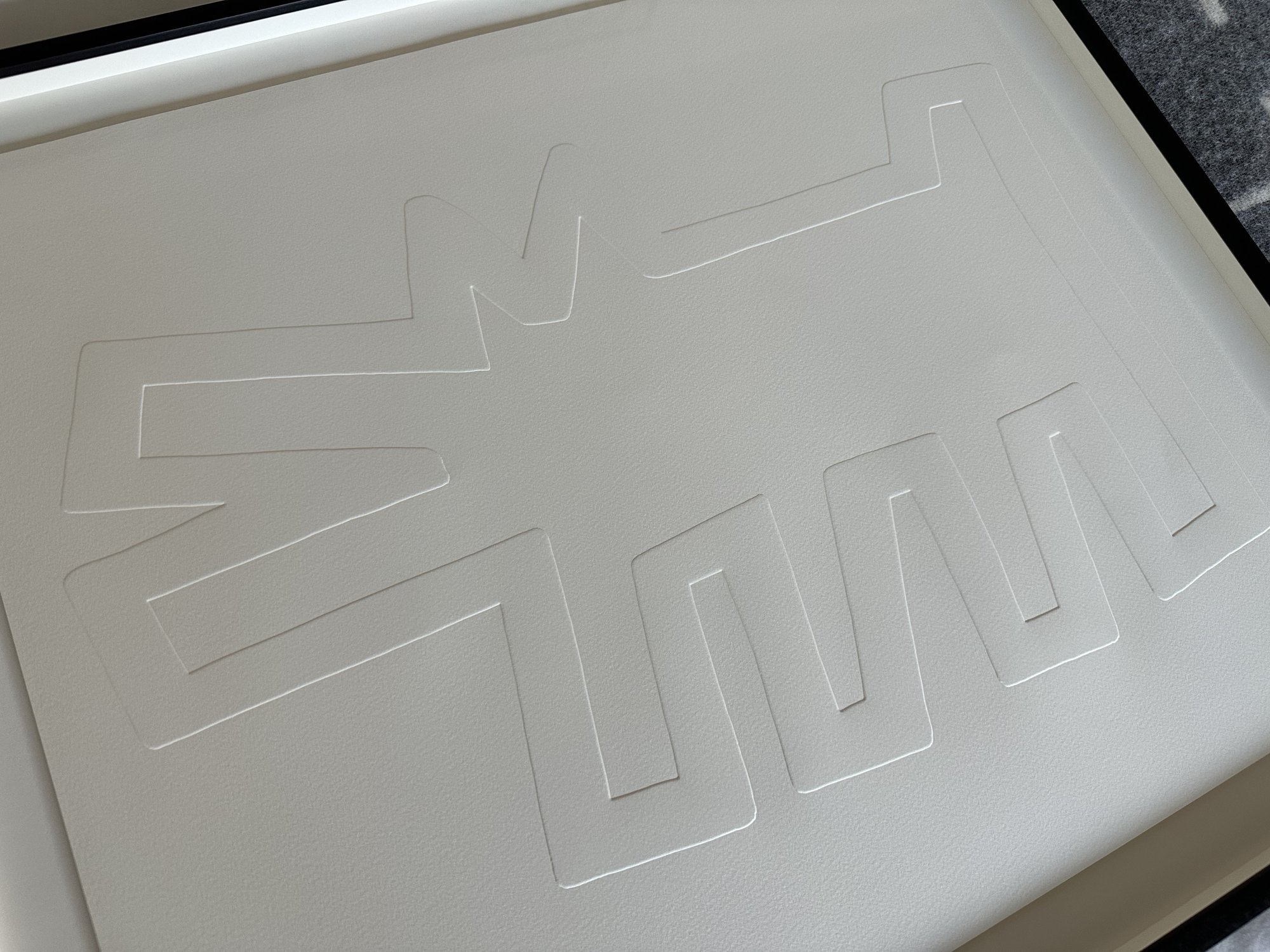
Keith Haring
White Icons (B) - Barking Dog