Date Painting
On Kawara
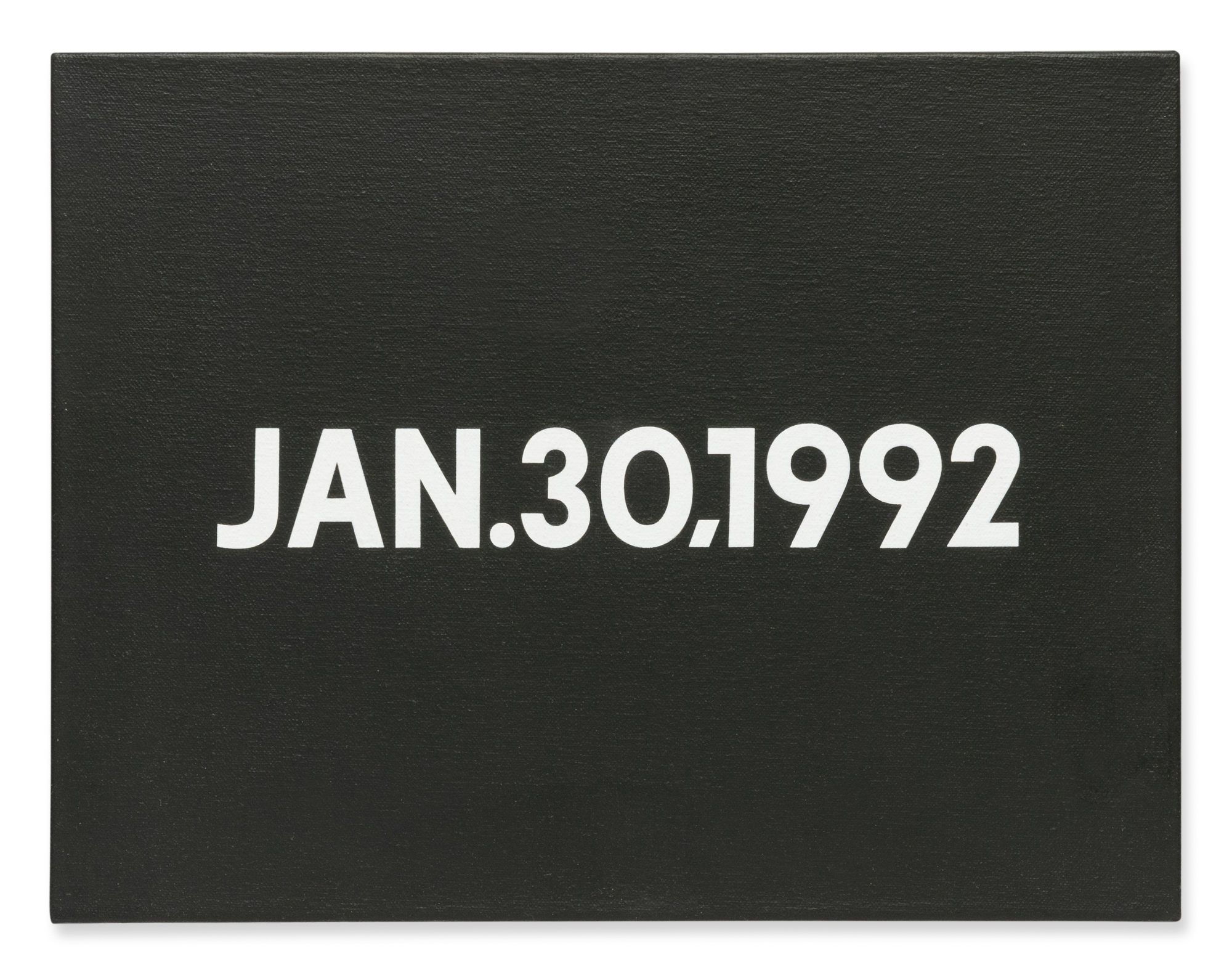
Jan. 30. 1992, 1992
Artists
Every Day Counted: The Art of Time
There is something quietly radical about a painting that announces nothing more than the date it was made. No subject, no narrative, no symbolic freight beyond the simple fact of a day having passed. And yet collectors who live with Date Paintings describe an almost gravitational pull to them, a quality that resists easy explanation but accumulates meaning over years of proximity. Part of what draws serious collectors to this area is precisely that resistance.
These are works that ask something of you, that reward patience and a certain philosophical disposition, and that shift in character depending on what you yourself bring to them on any given morning. The intimacy of living with a Date Painting is unlike almost anything else in contemporary art. Because the work is fixed to a specific moment in calendar time, it develops a kind of biography independent of your own. A painting dated January 4, 1972 was made on a Tuesday in New York during a specific winter, by a specific hand, under conditions you can only imagine.
On Kawara
Jan. 30. 1992, 1992
Over time, that specificity becomes strangely personal. Collectors often speak of developing almost proprietary relationships with certain dates, choosing works that correspond to birthdays, anniversaries, or significant historical events. The selection process itself becomes an act of meaning making. When thinking about what separates a good example from a truly great one in this category, condition is the first consideration, but it is not the only one.
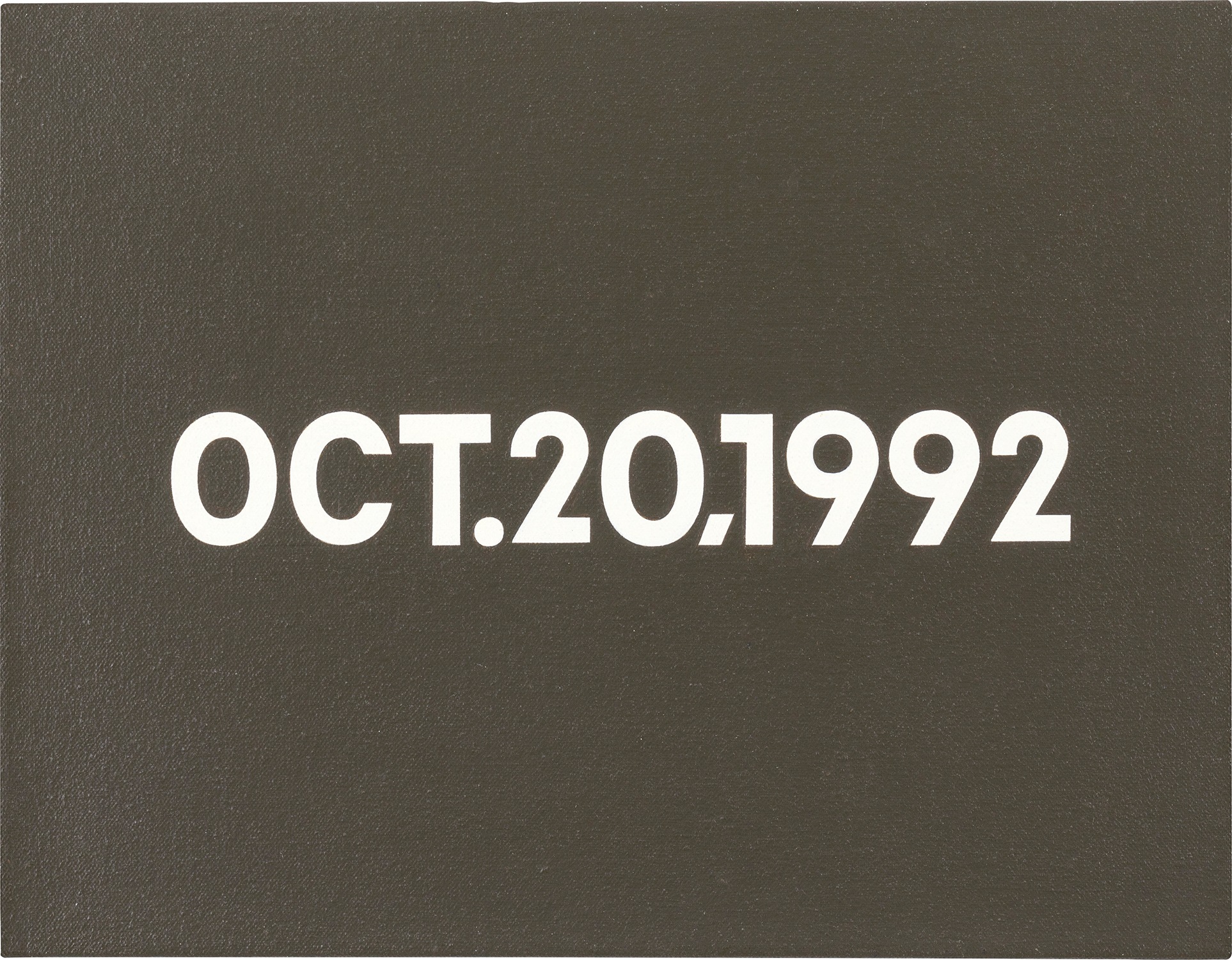
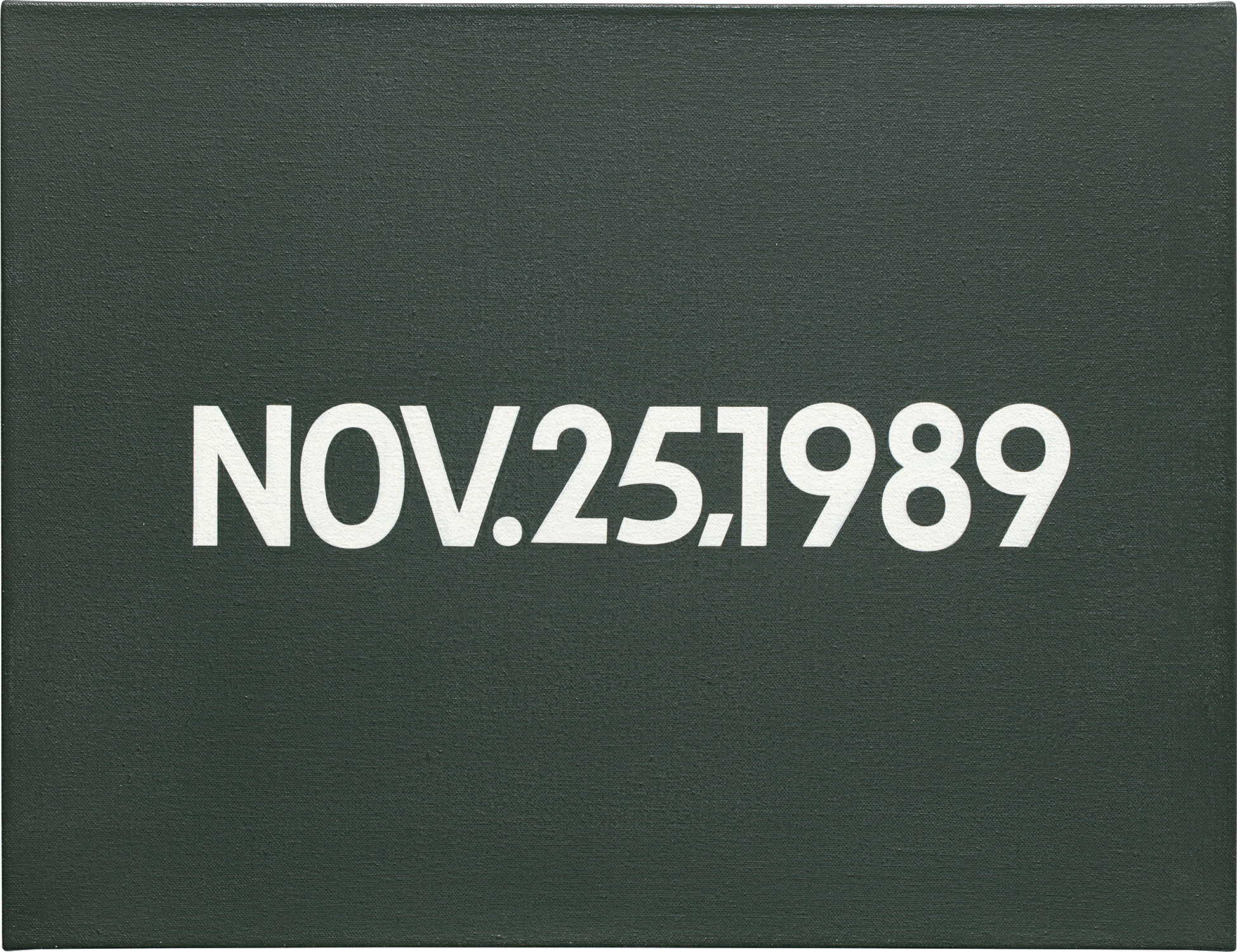
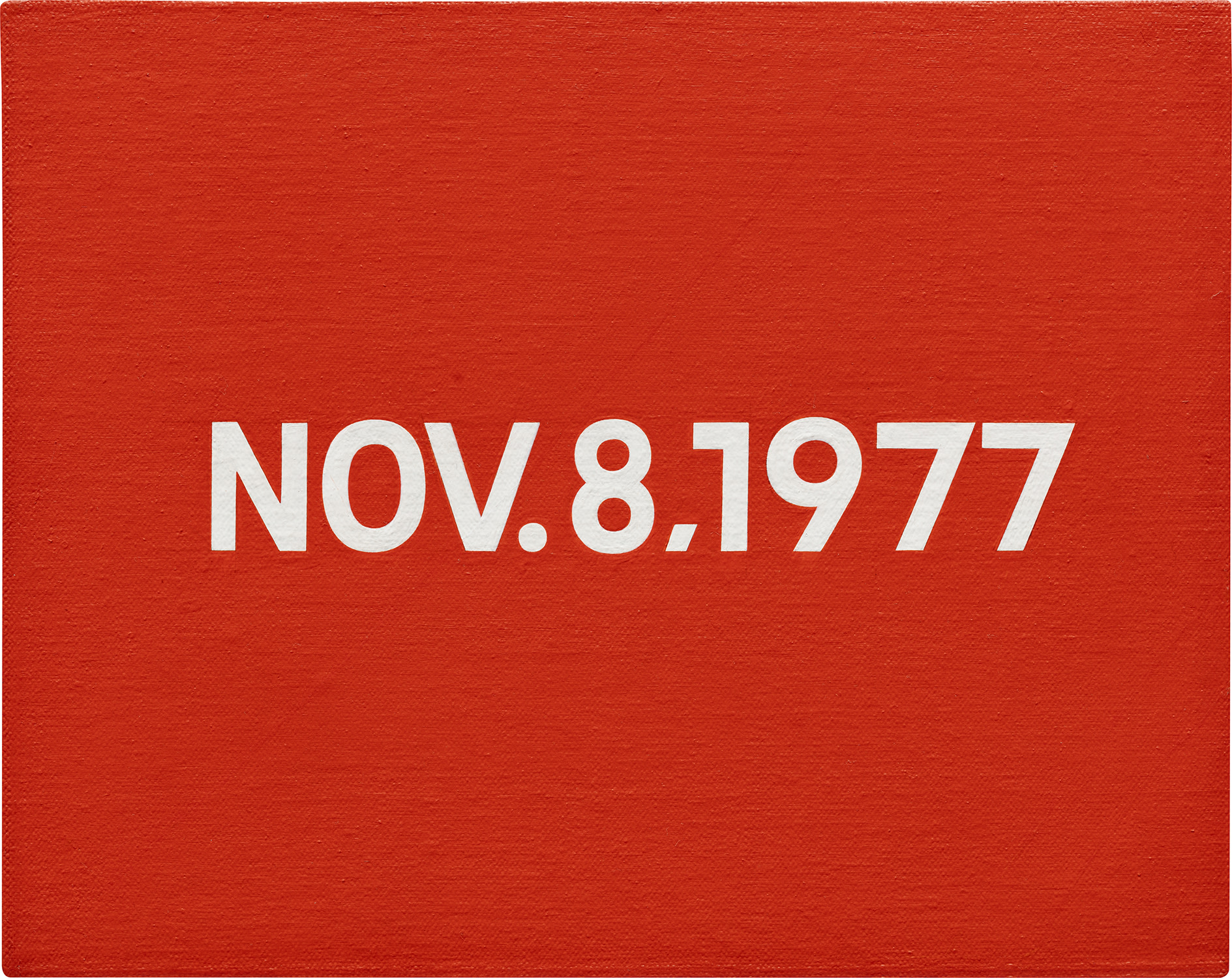
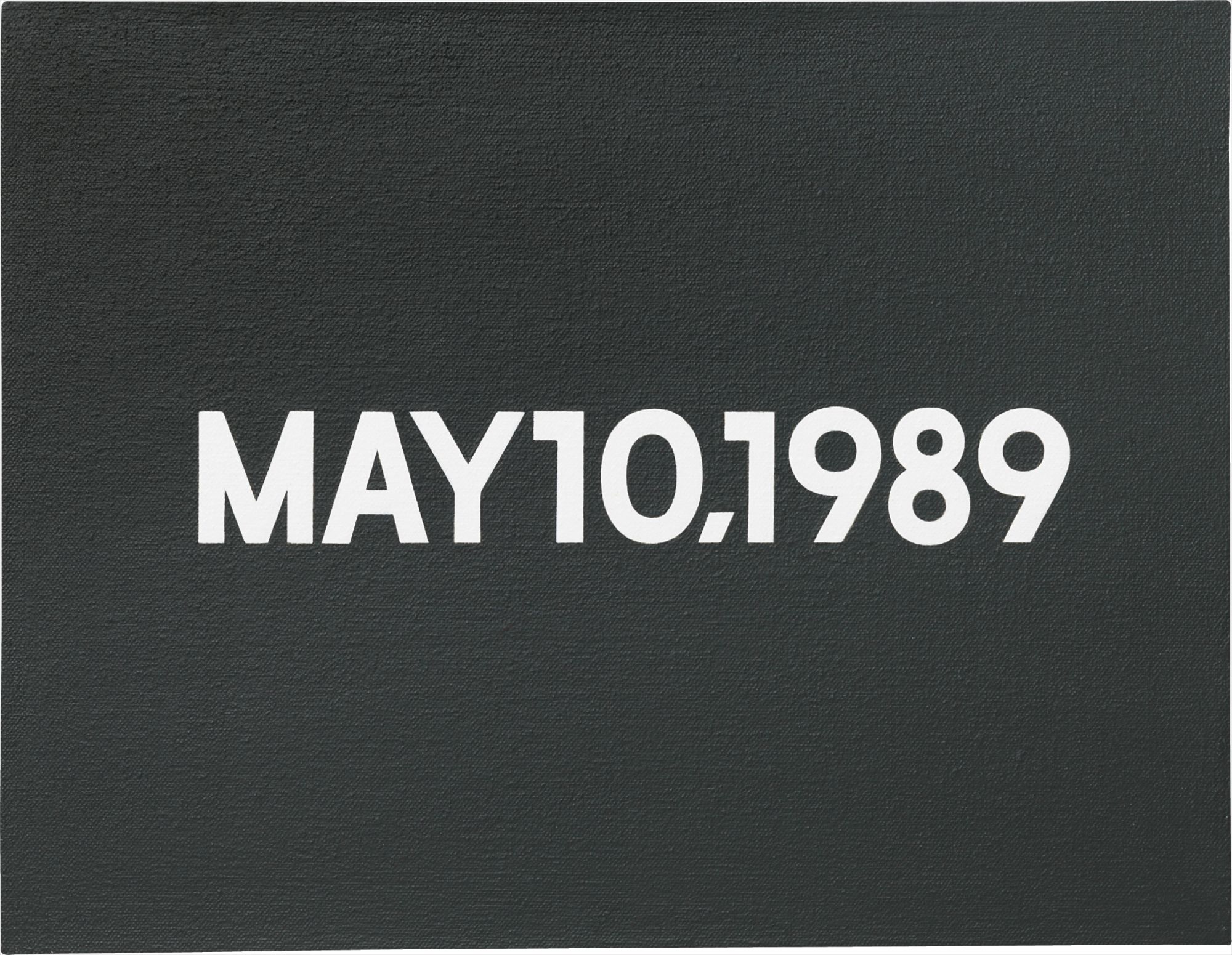
On Kawara, whose Today Series spans from 1966 until his death in 2014, produced works in a consistent format: acrylic on canvas, the date rendered in white lettering against a monochrome ground, in the language and calendar system of the country where he was working that day. The color of the ground matters enormously to experienced collectors. The grays, blacks, and deep reds carry different tonal weights, and certain color grounds appear more rarely in the market than others. A work painted in a city that Kawara visited only briefly, or during a period of intensive travel, carries additional interest.
Provenance matters too. Works that appeared in landmark exhibitions, or that passed through collections of genuine distinction, carry an authority that transcends their physical modesty. On Kawara represents the absolute summit of this category and his works are well represented on The Collection. He is not simply the most recognized practitioner of Date Painting.
He is, in many meaningful ways, its originator in the conceptual tradition, the artist who understood that the genre could carry the full weight of philosophy, mortality, and the nature of consciousness itself. His works have appeared at the Guggenheim, at documenta, at the Venice Biennale, and in virtually every major survey of Conceptual Art mounted over the past four decades. The secondary market for his Today Series has remained remarkably stable, with strong demand from institutional buyers as well as private collectors, which creates a kind of floor beneath prices that more volatile categories simply do not have. When a Kawara appears at Christie's or Phillips it tends to attract serious bidding from multiple continents, and estimates have climbed consistently over the past fifteen years.
For collectors looking beyond the canonical, there is genuine opportunity in artists working with temporal and process based methodologies that share the spirit of the Date Painting tradition without being derivative of it. Artists engaging with calendrical systems, repetitive mark making, and the poetics of daily practice have emerged from East Asia, South America, and Eastern Europe with bodies of work that have yet to be fully absorbed by the mainstream market. The smart move for collectors building at a certain scale is to research artists whose practices were shaped by exposure to Fluxus or Mono Ha, movements that intersected with Kawara's ideas through parallel rather than direct routes. Works that can be situated within that broader intellectual genealogy will age well in any serious collection.
At auction, Date Paintings and works in this conceptual tradition perform best when the sale context is right. A Kawara in a strong evening sale with good catalogue scholarship attached to it will routinely outperform the same work placed in a day sale without contextual support. This is a category where narrative matters, where the auction house's ability to articulate the intellectual stakes of the work directly affects the hammer price. Collectors acquiring in the primary market should ask their galleries for thorough documentation: exhibition history, publication references, any correspondence or certificates that came with the work.
Kawara himself supplied small cardboard boxes with newspapers from the day of each painting's completion. The presence or absence of this accompanying material is not a minor footnote. It is a significant factor in value and in the long term integrity of the object. Practical considerations for collectors in this space deserve serious attention.
Because Date Paintings are typically acrylic on canvas, they are relatively stable, but the matte grounds can be sensitive to improper handling and atmospheric fluctuations. Framing choices are consequential: Kawara was specific about presentation, and works that have been reframed without reference to the artist's intentions can lose something essential. Display in direct sunlight should be avoided not only for conservation reasons but because the contemplative quality of these works benefits from even, diffuse light and a certain visual quiet in their surroundings. When speaking with a gallery, ask directly about the work's exhibition history and whether the condition report has been prepared by a conservator.
Ask whether the work has ever been cleaned or touched up. Ask about the back of the canvas, where Kawara recorded the date and location of each painting's making. That inscription is part of the work. What ultimately makes this area so compelling for the long view collector is that it sits at the intersection of the deeply personal and the genuinely universal.
A date is the most democratic of subjects: everyone has them, everyone loses them to time, everyone understands what it means to mark a day as having existed. The best works in this tradition transform that ordinary fact into something that stops you cold. That is a rare and durable achievement, and the market, over time, tends to recognize it.